Article Source: Decode
Image Source: Generated by Wujie AI
In 2003, a butterfly-like logo became one of the trendiest decorations on laptops at that time.
Along with it came a new term, Centrino, which couldn't be found in any major English dictionary. Later, Intel itself explained that it was a combination of Center and Neutrino, implying small, fast, and powerful.
This is a true portrayal of the first generation of Centrino mobile technology: Intel made wireless network cards a standard configuration, allowing laptops to truly be portable and mobile.
Just as Intel's slogan "Wireless your limitless" suggests, laptops truly entered the wireless era. Centrino mobile technology is not just a technological advancement, but also Intel's interpretation of a new way of working and living for users.
Unfortunately, Intel has not had a "Centrino moment" in the past twenty years.
However, during the second quarter earnings call this year, CEO Pat Gelsinger revealed that the upcoming Meteor Lake 14th generation Core processor will become Intel's next "Centrino moment."
Intel's CEO bringing up Centrino again clearly indicates that they are not just looking to relive the glory days.
1 Is Another Moment for PCs Coming?
Intel, which is eager to create buzz before the product is even launched, is ultimately suffering from the perennial sluggishness of the PC market.
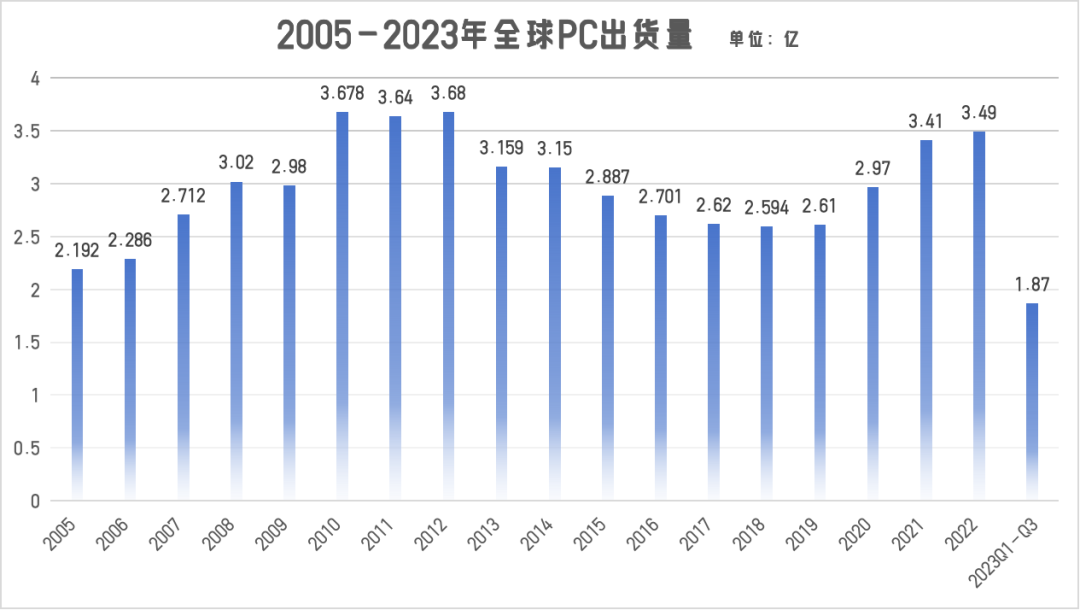
Since 2011, the PC market has shifted from an incremental market to a stock market, with slow technological development leading to gradually weakening demand. After a surge in PC shipments driven by the increase in online office demand after 2019, shipments plummeted as soon as the black swan event passed.
In Q1 2022, Lenovo, HP, and Dell had shipments of 18.3 million, 15.8 million, and 13.7 million, which dropped to 15.5 million, 13.2 million, and 10.8 million by Q4.
As we enter 2023, the situation continues to deteriorate, with IDC reporting a 17.1% year-on-year decline in global PC shipments in the first three quarters of this year, totaling 187 million units, dropping to the level of 2005.
After over 30 years of development, with the transition from desktops to laptops to tablets, the penetration rate of PCs has reached a ceiling, and the entire industry lacks sufficient innovation. People's demand for traditional PCs mostly comes from natural replacement cycles.
The most recent natural replacement cycle is expected to occur in 2025, when Windows 10 is set to end support.
According to information disclosed on the Microsoft official website, Windows 10 will end support for all versions on October 14, 2025. Higher-level systems will require higher configuration PCs, meaning that personal computers supporting only Windows 10 or lower configurations will be difficult to use.
However, Southwest Securities previously predicted in a survey that there will be a wave of PC replacements in 2024. The main reason, in addition to the Windows version update, is that the increase and innovation of AI functions in personal computers will drive new market demand.
Canalys even predicts that AI-compatible personal computers are expected to reach a penetration rate of 37% in 2025, and AI-compatible personal computers will account for about 60% of all personal computer shipments in 2027.
Therefore, for Intel and various PC manufacturers, AI has become a lifeline.
In addition to Meteor Lake, Intel has also launched the AI inference and deployment runtime tool suite OpenVINO. This version includes pre-trained models optimized for integration across operating systems and various cloud solutions, including multiple generative AI models such as Meta's Llama 2 model.
Lenovo has also introduced the "AI Twin" for both personal and enterprise-level AI, as well as a hybrid AI framework covering large models for personal and enterprise use. At the 2023 Lenovo Tech World Innovation and Technology Conference, it was revealed that they will launch PC products with large models on the edge side in September next year, and will also enter the automotive field in the future.
Dell, HP, Acer, and other PC manufacturers have also stated that they will launch new AI PC solutions in 2024-2025.
The reason for the excitement of PC manufacturers is not difficult to guess. Although the peripherals expanded due to AI functions (32GB memory + 2TB hard drive) can increase the price of PCs, compared to the historic opportunity to break away from the status of assembly factories for thousands of years, this amount of money is insignificant.
More importantly, applications with more personalized, complex, or professional functions may become the main force for the growth of the AI PC ecosystem, while single-function applications may be replaced by AI assistants built into AI PCs.
Drawing on the development experience of Tesla FSD and Microsoft 365 Copilot, terminal manufacturers and their application ecosystem partners are expected to gain more value-added by providing AI services and solutions in addition to hardware.
2 Is It Too Optimistic?
In the past few months, many industry leaders have expressed optimism about AI PCs. HP CEO Loures excitedly said, "I've been in this (PC) industry for decades and have never seen such an opportunity."
Lenovo's Yang Yuanqing provided a specific timetable, saying, "Next year, we will see AI PCs that can be used offline." Acer's Chief Operating Officer Gao Shuguo also eagerly showcased an Acer AI laptop with an Ultra Core processor at Intel's ON Technology Innovation Summit last month.
However, some have expressed a cautiously optimistic attitude. Acer's Chairman Chen Junsheng believes that "this is a gradual process, and AI PCs will not be available overnight; it will be a gradual occurrence."
Asus Co-CEO Hu Shubin believes that AI PCs are expected to gradually mature in the third quarter of next year, and a major premise is that the overall economy next year will be better than in the past two years.
But no one is slowing down as a result. For PC manufacturers, in the context of severe homogeneity in traditional PC hardware, the ability of their own AI large models, as well as the matching capability of the overall design of AI PCs with large models, may be the only correct way to rebuild the competitiveness of PC brands.
Even though PC manufacturers are currently more focused on the latter part, which is the matching capability of the overall design of AI PCs with large models.
For example, Lenovo's previously high-profile "AI Twin" was jointly developed with Microsoft, and the reason Lenovo is able to run edge-side AI is fundamentally because of Intel's launch of Meteor Lake.
In other words, nothing, whether it's underlying computing chips or upper-layer software applications, belongs to Lenovo, posing a serious problem for all major PC manufacturers.
As for Intel, the overly optimistic risk comes from the new challenge that Arm has launched against X86.
In the latest version of Windows to be released by Microsoft in 2024, the Copilot algorithm will be integrated into PC hardware, providing real-time personalized services, including information query and answering, assisting in document generation, and audio-visual entertainment assistants. The integration of AI algorithms may not lead to major changes in the appearance of PCs, but it will significantly increase the hardware requirements.
One of the points is related to the computing power of the chips.
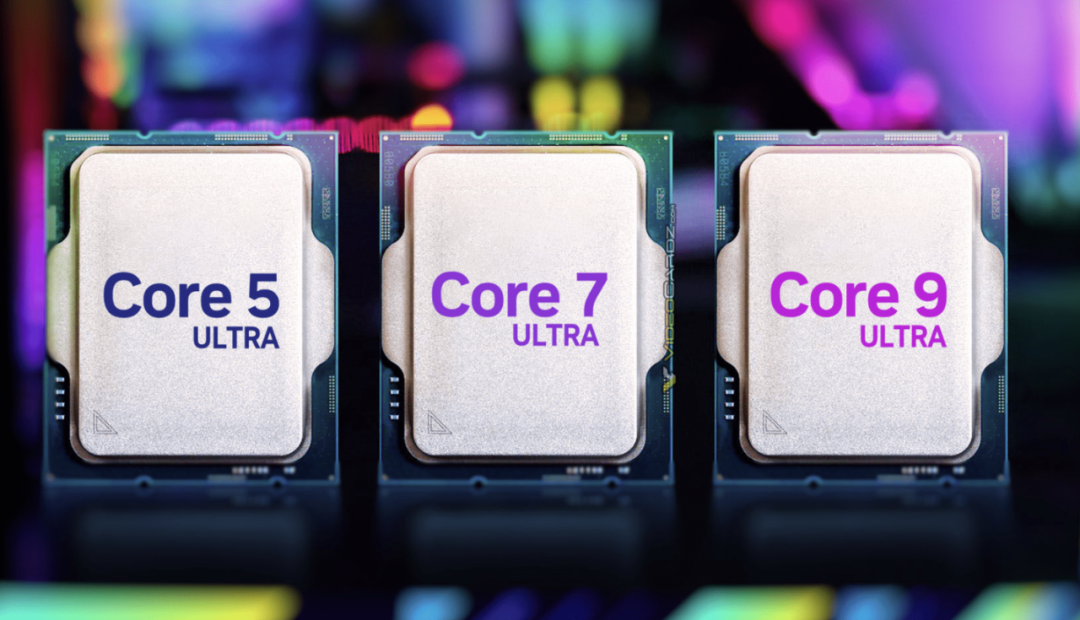
The Taiwanese media reported that the threshold for computing power for PCs with integrated Copilot is 40 TOPS, and the upcoming Core Ultra (Meteor Lake architecture) from Intel may not meet this threshold, with the next generation Lunar Lake expected to do so. Lunar Lake is expected to be manufactured using the 18A process in 2024 and may be launched in 2025, potentially lagging behind products from other manufacturers by a year.
In contrast, the parameters of the Snapdragon X Elite platform showcased by the Arm architecture camp, Qualcomm, can meet the above threshold, and the Ryzen 8000 series from AMD, set to be released in 2024, can also meet the requirements.
Although Intel has been known for its incremental innovation since the Centrino era in 2003, it has always left AMD behind and prevented Qualcomm, which has been watching closely, from surpassing it. The biggest reliance lies in the fact that in the PC or IT field, the company that is not the most technologically advanced or does not have the most advanced products does not necessarily win the market. It depends on the overall market ecosystem and partner support.
Therefore, Qualcomm faces not only the joint suppression from Intel and AMD (same architecture against different architecture) but also more widespread ecological barriers.
In 2019, Huawei released the MateBook E with a Qualcomm processor, but due to issues with Windows support, including software ecosystems, the response was mediocre. Users who purchased the Matebook E Go 2022 found that several of Huawei's services, including PC Manager, are still based on the x64 architecture.
For Qualcomm, re-entering the PC market with a relatively advanced product and gaining support and recognition from Microsoft can be seen as a step forward, but whether it can gain support from all PC manufacturers remains a major question.
Because from a global market perspective, the number of models based on Qualcomm's design that ODM manufacturers will have next year or the year after will fundamentally determine the fate of this CPU.
For example, Lenovo is currently the world's largest PC manufacturer, with a large market share. Lenovo may have 200 models in the market for each generation of products, but whether Qualcomm will have 5 or 150 models will indirectly determine Qualcomm's market fate.
In addition, there have been recent reports that both AMD and NVIDIA are developing client PC processors based on the Arm architecture, further challenging Intel.
Although Patrick Gelsinger stated, "ARM chips and the goal of replacing Windows desktop systems have been downgraded to a fairly insignificant role in the PC market. Even if ARM-based CPUs are successful, this may be an opportunity for Intel's foundry services (IFS) division."
Although Patrick Gelsinger exudes confidence, the analysis firm theregister has evaluated this and believes that recent history tells Intel that they should be worried. While Arm will not dominate the PC market overnight, calling Arm a "negligible" threat to Intel's PC business is short-sighted.
3 Conclusion
At the current stage, AI PCs are still in the early stages of product development, but one foreseeable trend is that as the AI computing power of terminal devices develops, lower-complexity training tasks will also be migrated to the terminal. AI PCs will become the trend in the industry.
The reason is that although AI inference has lower requirements for computing resources, it is overall much higher than AI training, and with the increasing scale of applications at the application end, relying entirely on cloud resources will result in high usage costs. The scale and commercialization of downstream applications of AI large models require the use of AI processing capabilities at the terminal, and the increase in the total neural network computing power of terminal devices will promote targeted development of hardware architecture.
Although the product hype of current AI PCs exceeds actual user experience, Lenovo's terminal demonstrations, Intel's AI PC acceleration plan, and the deep integration with many ISVs in the cooperative ecosystem all indicate that the upgrade of AI at the terminal side has advantages that the cloud side does not have.
However, the problems facing Intel, PC manufacturers, and even the Wintel alliance remain thorny:
Regardless of whether it is Qualcomm or NVIDIA under the Arm architecture, they are formidable opponents for Intel; Microsoft is integrating Copilot into the operating system, and PC manufacturers also need their own large models; otherwise, there is no value-added at the software level.
In the end, the most precarious situation is still faced by the assembly factories of thousands of years, as the chips and systems are still controlled by others.
References:
[1] Who Achieved Centrino: A Perspective on the History and Development of Wireless, Pacific Computer Network
[2] Electronic Industry Special Report: Outlook for the Future of AI PCs, Minsheng Securities
[3] AIPC: In-depth Transformation of the PC Industry, Southwest Securities
[4] Terminal AI Deep Tracking Report: 2024·AI "Descends to Earth", Zheshang Securities
[5] Communication Industry: AI Ecosystem Extends to Hardware, 2024 AI PC Year, Huaxi Securities
Disclaimer: This article is based on publicly available information or information provided by interviewees, but Decode and the article author do not guarantee the completeness or accuracy of such information. In any case, the information or opinions expressed in this article do not constitute investment advice for anyone.
免责声明:本文章仅代表作者个人观点,不代表本平台的立场和观点。本文章仅供信息分享,不构成对任何人的任何投资建议。用户与作者之间的任何争议,与本平台无关。如网页中刊载的文章或图片涉及侵权,请提供相关的权利证明和身份证明发送邮件到support@aicoin.com,本平台相关工作人员将会进行核查。


