Original Source: Metaverse Metaverse

Image Source: Generated by Wujie AI
AI singers were a fresh concept just last year.
However, entering this year, with the intensive bombardment of many AI singers led by "AI Sun Yanzi," it has become no longer novel, and even somewhat aesthetically fatiguing.
The development over the past year has not reduced the challenges faced by AI singers: controversies surrounding AI singers persist, whether it's infringement of the rights of the parties involved, disputes over copyright, or the potential fraudulent risks of synthetic content.
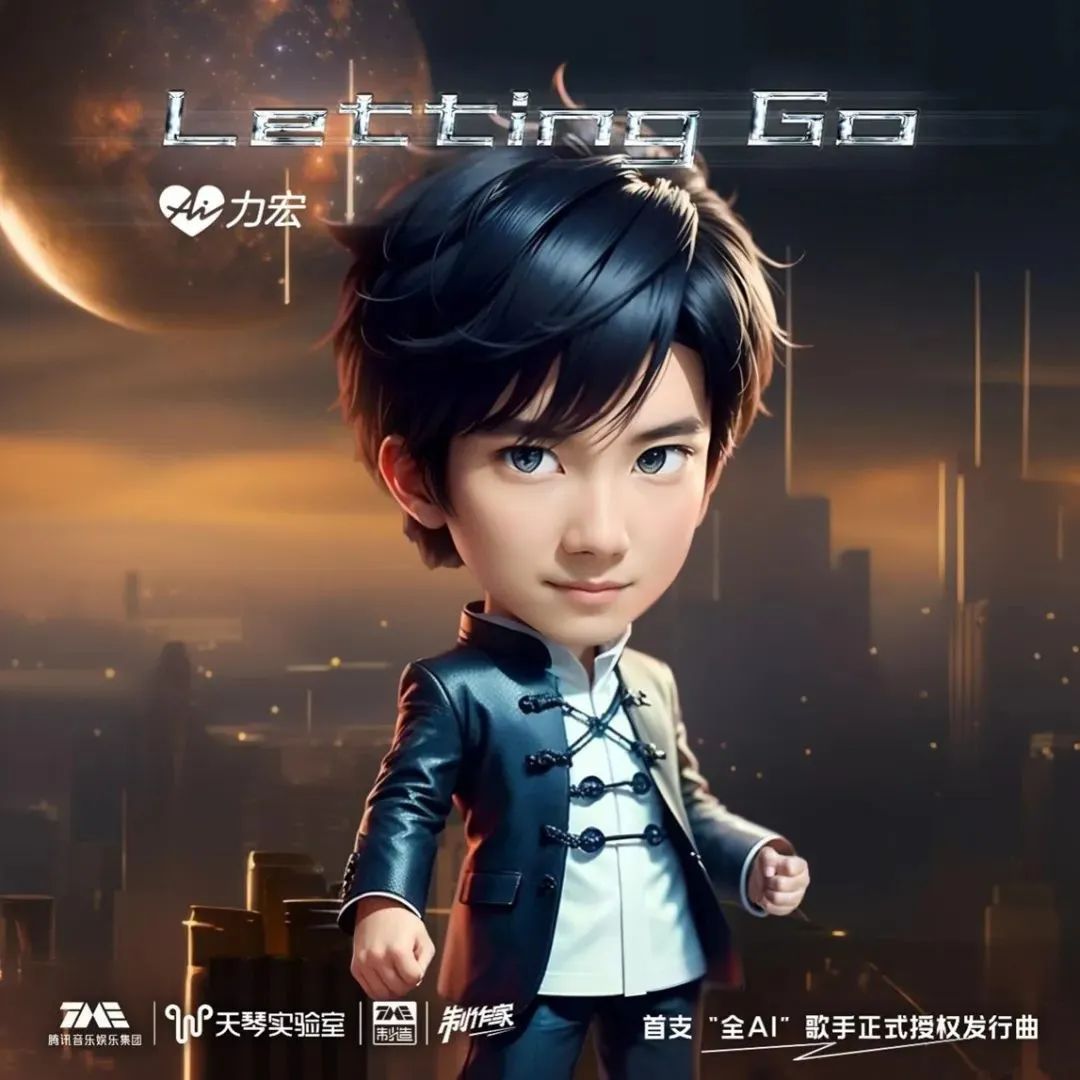
Recently, Wang Leehom officially released AI Leehom and published the cover single "Letting Go" in an authorized manner, undoubtedly providing a new way for the gray area of AI singers - while avoiding risks, the emotions dormant in memory are also continued.
1 Comprehensive Customization: Metaverse Re-debut
The cover of "Letting Go" by AI Leehom was jointly produced by the Tianqin Laboratory under TME, the Producer Studio, and the MUX design team.
The sound part relies on the AI synthesis technology "Qin Yun Engine" of the Tianqin Laboratory. The engine uses "voice synthesis" and "voice conversion" techniques to make AI Leehom's voice as deep and moving as Wang Leehom's own singing, significantly improving the similarity and naturalness of the voice compared to unofficially released works.
In fact, the current production of AI singer songs is basically using open-source generative speech training models, which do not require a large amount of data compared to ordinary language models.
In simple terms, first, it is necessary to obtain original voice without accompaniment and reverberation, and then input these materials as the target voice into the model for training, in order to obtain a model that can generate similar voices. Then, this model can be used to transform the singing voice of any voice. Finally, some post-processing and tuning can produce a song that sounds like the singer's own performance.
The "Qin Yun Engine" used in the production of "Letting Go" not only allows the machine to quickly learn and imitate the singer's voice and singing characteristics through "voice synthesis" and "voice conversion" technologies, but also adjusts the relevant parameters of singing techniques.
These parameters include breath, vibrato, and true and false voice, and by adjusting them, the Qin Yun Engine can further improve the naturalness of the singing voice and the similarity of the voice, making the AI's singing more akin to a real singer's performance.
In terms of visual presentation, the team used the "MUSE AI Visual Generation Engine" to simulate Wang Leehom's facial features and expressions through data learning, making AI Leehom's image more affable and natural.
At the same time, the team also designed a new Chinese-style dress for AI Leehom, effectively allowing Wang Leehom to make a re-debut in the metaverse.
However, compared to the production of songs and virtual images, the MV made using AI can only be described as "better than nothing": the AI traces in the visuals are more obvious, and the scenes mainly use a biased "stream of consciousness" visual language, giving a feeling of writing a proposition essay based on the lyrics. At the same time, the coherence between different frames in the same scene also needs to be improved.
As a complete musical work, AI Leehom's version of "Letting Go" can be said to be basically qualified, but given the limitations of AI in generating continuous images, there is still a long way to go to truly produce a complete MV.
However, compared to the technological breakthroughs and shortcomings, the more important significance of the singer's personal release of AI works may lie in providing the audience with a new emotional experience while avoiding risks.
2 Technological Changes, Emotions Locked In
In many previous cases of AI singer covers, discussions about the rights of the parties involved, copyright protection, and legal regulations and management have never ceased.
While deep synthesis technology can accurately imitate the voices of well-known singers, it may also infringe on the rights of the imitated voices, as voices have personal attributes, and counterfeiting, forging, or using others' voices may damage the personal and property rights of the voice subjects.
In addition, AI singer songs also involve copyright protection, and the legitimate rights and interests of the original lyricists, composers, performers, and recording producers may be infringed, requiring corresponding measures to protect these rights.
To address these issues, in November last year, the Cyberspace Administration of China, the Ministry of Industry and Information Technology, and the Ministry of Public Security jointly issued regulations on the management of deep synthesis of Internet information services, providing institutional arrangements for the standardized application of deep synthesis technology.
In this context, the singer's personal release of AI cover singles undoubtedly becomes an ideal way to address these issues, alleviating the tension between technology, law, and rights protection, and providing valuable reference for the future development of technology on the basis of respecting and protecting the rights of all parties.
As aging singers such as Wang Leehom accompany a generation, the greater significance of official AI singers lies in continuing the emotional resonance between the audience and the singers. Unlike the controversies often sparked by unofficially released AI works, the QQ Music comment section for AI Leehom's "Letting Go" is very harmonious:
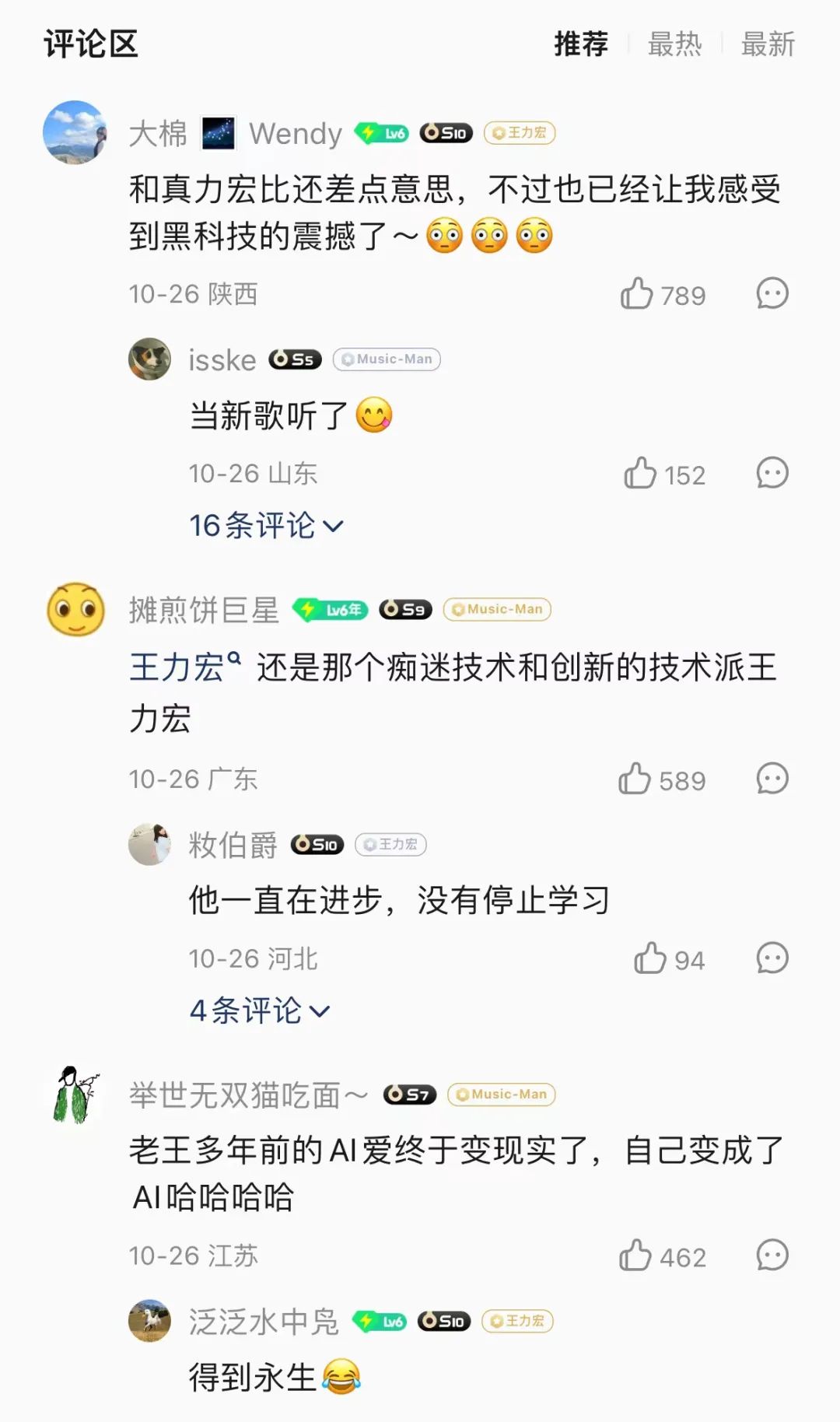
Actually, this also reflects the audience's acceptance of the official AI cover form from another perspective - it's a good thing to hear new works released by beloved singers, especially for singers like Wang Leehom with special experiences.
Although the previous farce about Wang Leehom's marriage has long ended with the woman's defeat in the lawsuit, the negative impact of this event on Wang Leehom's image continues to exist. Therefore, preparing for a formal comeback in the form of an AI singer is actually a good attempt and also in line with Wang Leehom's image of actively exploring in the music field.
As early as 2017, Wang Leehom attempted to explore the relationship between AI and human society and released the work "AI Love." Although it was criticized at the time for its lack of musicality, its exploration of the relationship between AI and humans still has positive significance to this day.
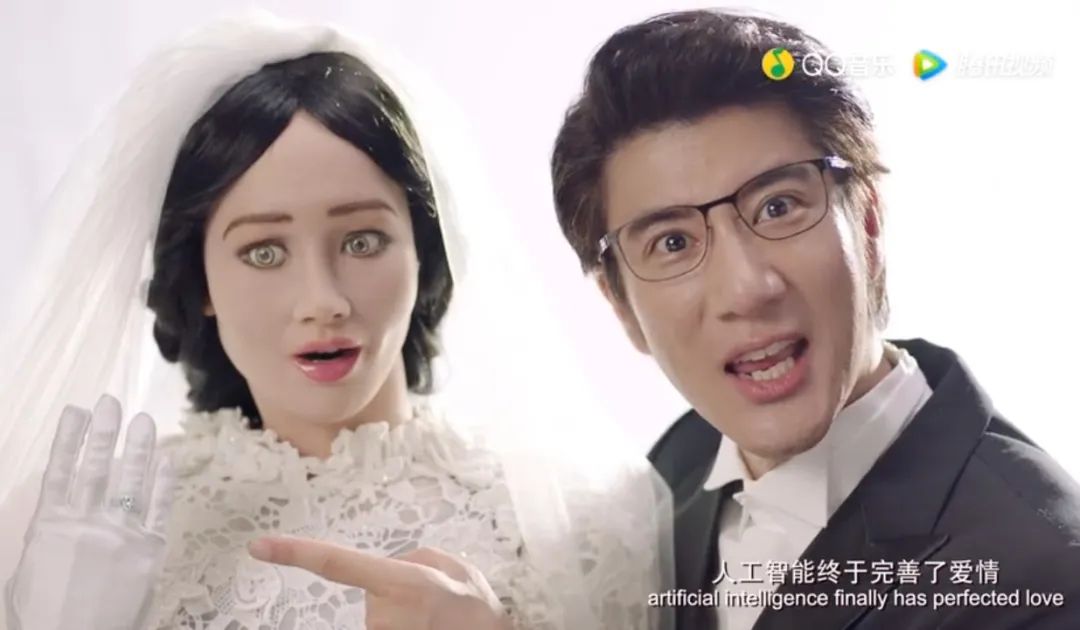
In the MV for "AI Love," Wang Leehom invited the first-generation humanoid robot Sophia to participate in the recording, telling a love story between humans and AI robots, solving many real-life problems in the process of living together - to some extent, six years ago, Wang Leehom foresaw the current level of AI technology, so it is not surprising that he embraces the newly emerging AI technology.
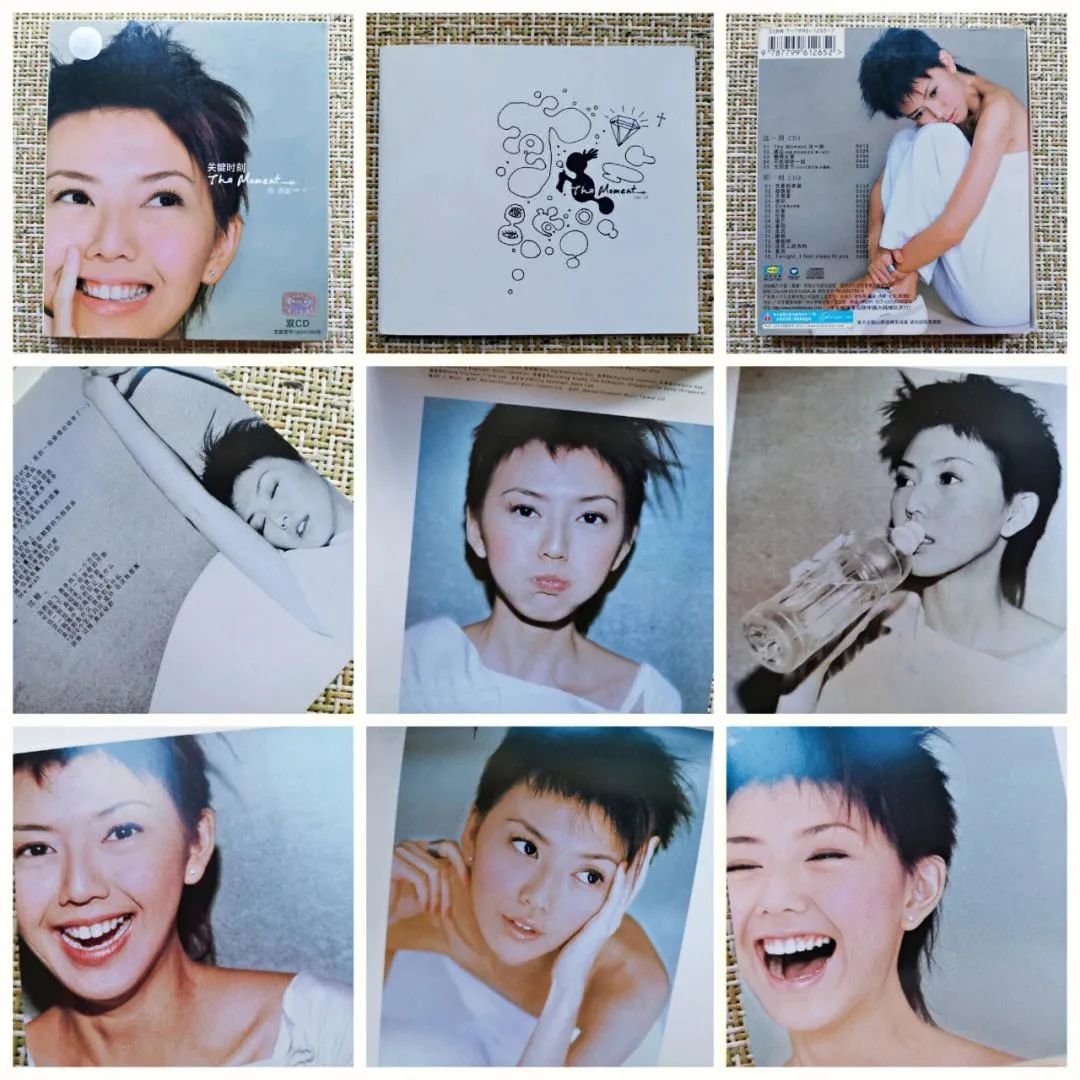
And these high-quality singers who have accompanied a generation clearly have a forward-looking vision. Previously, Sun Yanzi gave positive comments on the trend of AI Sun Yanzi covers, saying, "In this boundless ocean, everything is possible, and nothing matters. I believe that pure thoughts and being oneself are enough." In March of this year, Chen Shanni also released a single "Teach Me How to Be Your Lover" with AI-replicated vocals, and she did not declare that the work was generated by AI when the song was released, almost fooling all music fans.
In a subsequent interview, she said, "If we can spend less time and reduce the threshold for participating in popular music, can we make the popular music industry accommodate more different creativity and imagination?"
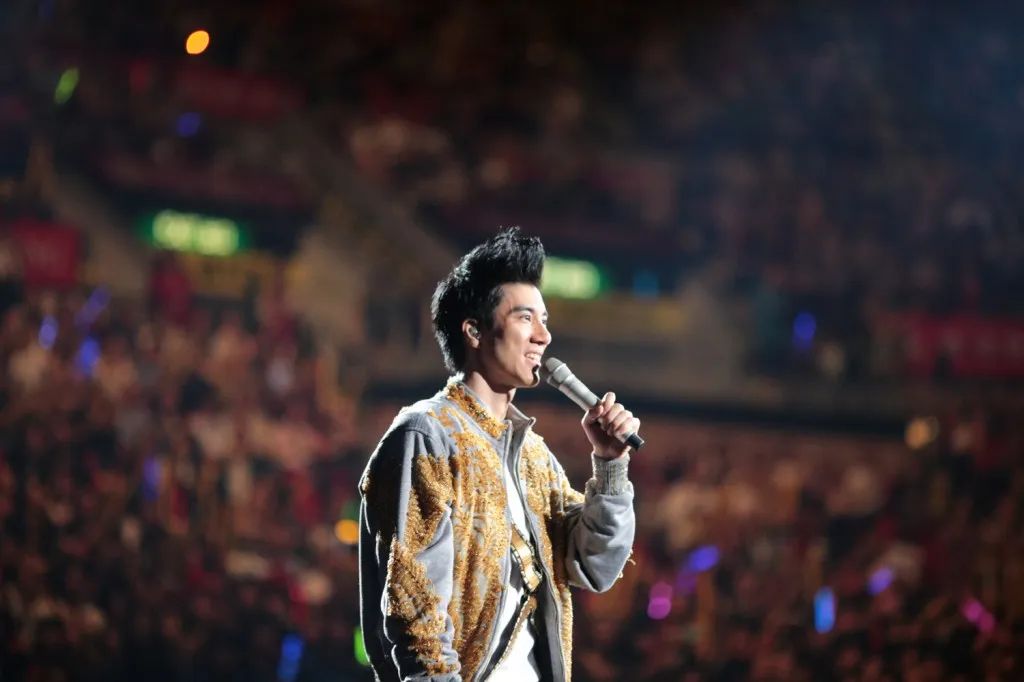
While accommodating creativity and imagination, the emergence of AI singers is more like a collective reminiscence:
As time passes, we are gradually moving away from the most glorious era of Chinese music, and it has been a long time since we heard new songs from those classic singers in the Chinese music scene, and there are rarely opportunities to attend their concerts in person; for the aging singers who are currently on tour, people often go to their shows with the mentality of "seeing one less." Under the shroud of this collective nostalgia, compared to the resistance to AI painting and other AI evolution directions, both creators and audiences show a significantly higher acceptance of AI singers.
At the same time, whether it's Wang Leehom or Sun Yanzi, these gradually retiring singers continue to release works in the form of AI, injecting new vitality into their own artistic lives and serving as a means to attract the younger generation of audiences.
After all, the memories of a generation may be briefly awakened by a "rarely heard singer" one day, but the vitality burst forth by AI will continue forever.
免责声明:本文章仅代表作者个人观点,不代表本平台的立场和观点。本文章仅供信息分享,不构成对任何人的任何投资建议。用户与作者之间的任何争议,与本平台无关。如网页中刊载的文章或图片涉及侵权,请提供相关的权利证明和身份证明发送邮件到support@aicoin.com,本平台相关工作人员将会进行核查。


