

Author: danny
Did you know? There are 33 direct flights from South Korea to Macao every week, while there are about 21 direct flights from Incheon Airport to London Heathrow Airport each week. The number of flights connecting Seoul to Macao is greater than those connecting to London.
Can you guess why?
Macao does not have universities that South Koreans aspire to attend, nor does it have the headquarters of Samsung. A South Korean citizen can access casinos that their own laws restrict them from entering within four hours of departing from Seoul.
But South Korean gambling tables are not only in Macao.
They are also hidden within mortgage loans for Seoul apartments, within margin financing of brokerage accounts. They are also buried within the double-leveraged products of cryptocurrency exchanges, Samsung Electronics, and SK Hynix.
II. What Kind of Life Do South Koreans Want?
Some say that South Koreans have a strong “gambling nature”? Is it true? Before discussing the “gambling nature” of South Koreans, let’s look at how they evaluate their own lives.
The "World Happiness Report 2026" ranks South Korea as 67th in the world, scoring 6.040 based on life evaluations from 2023 to 2025. South Korea ranks high among developed economies in terms of per capita income and healthy life expectancy, but feels "freedom of lifestyle choices" ranks 101st - interestingly, this metric measures whether respondents feel they have the space to choose their own life paths. (aka whether my fate is controlled by me, not by fate)
It should be noted that South Koreans do not live in poverty or lack education and healthcare. The problem is many people have a good social foundation but feel that the paths available for choice are limited.
The 2025 Social Survey by the Korean Statistical Office shows that only 15.6% of heads of households believe that their family's income has enough leeway beyond the minimum living standards. Those who believe that their family's finances will improve in the next year comprise 27%. The overall job satisfaction rate for wage workers is 38.3%. In career choices, 40% prioritize income. Among those aged 13 to 34, the desired occupations are predominantly large companies, comprising 28.7%; public enterprises and government agencies follow.
Their aspirations for life are not unusual. South Koreans wish to travel and want time to cultivate interests. In a survey, 65.7% listed travel among leisure activities they wish to engage in, and 41.7% wish to develop interests or pursue self-improvement. Among those dissatisfied with their leisure lives, 48.7% cited economic burdens as the reason.
What people want is a stable income job, a reasonably located home, and room to arrange their lives. The problem in South Korea is:
The prices of these ordinary desires are increasingly dictated by the asset market.
Entering large companies can provide stable salaries, but the positions are limited. Those not entering the chaebol system can purchase chaebol stocks. Those who cannot afford a Seoul apartment can increase their loan ratio. Those lacking enough capital yet wishing to participate in the semiconductor cycle find brokerages offering margin financing and double-leveraged ETFs.
When life goals require fulfillment through asset prices, investment becomes a necessary question.
III. Life and Death, Taxes, and Samsung
Franklin said that one cannot escape death and taxes during a human life. In South Korea, one must also add Samsung. (Now they have to include 2x ETFs as well)
A South Korean can live without a Samsung phone, but it is very hard to escape the economic structure represented by the chaebols. Large enterprises dominate exports, R&D, and quality jobs. The weight of Samsung Electronics and SK Hynix within indices links pensions, funds, and personal accounts to the stock prices of these two companies.
This structure and development path stem from Korea's developmental history.
During the industrialization period, Korea lacked capital, and the government supported the export industry through the banking system and foreign debts. Companies built steel mills, shipyards, and semiconductor factories with loans, repaying with future export income. Leverage shortened the time needed for industrialization and fueled chaebol expansion.
By the end of 1997, the debt-equity ratio of Korea's top 30 chaebols reached 509%. The overall debt-equity ratio of manufacturing industries rose from about 300% in 1996 to about 400% in 1997. After foreign currency financing was interrupted, many companies went bankrupt. (Don't laugh; this is similar to the situation after foreign capital withdrew from Kospi the past two weeks.)
The state once built factories using future export income. Ordinary households later used future salaries to buy apartments. This method has created growth in Korea's history and shaped a social understanding: waiting to accumulate takes time, and borrowing funds is necessary to catch up with cycles—over time, Korea has gradually formed a path dependency.
IV. Policies Encourage Entering the Future with Loans
The South Korean government strictly controls gambling, so it is even less likely to issue policies encouraging it. But, does this make much of a difference for the clever South Korean public?
The South Korean government encourages home buying, capital market development, and the localization of financial products. Policy goals are all justified, but their execution has lowered the threshold for using leverage.
In 2022, the Financial Services Commission of Korea raised the maximum loan-to-value ratio for first-time homebuyers to 80%, no longer distinguishing between the area and price of residential properties. The policy also extended the maximum term for government-supported mortgage loans from 40 to 50 years and designed a front-low, back-high repayment method for young people and newlyweds. The authorities explained these measures as reducing the initial burden of home buying and helping residents enter the "housing ladder."
The special policy mortgage of 2023 allows qualified first-time homebuyers to borrow 80% of the home price, with a loan term up to 50 years, and some loans are exempt from the usual debt service ratio rules. Extending loan terms can lower monthly repayment amounts, allowing families to bring more future income into home buying contracts.
The aim of these policies is to help families with essential housing needs. However, the impact has not only occurred at the essential level. With increased borrowing capacity, families can accept higher property prices. Sellers know buyers can borrow more, and new credit may enter property prices.
The government later began tightening loans in the Seoul area, limiting mortgage amounts and lowering loan-to-value ratios in some regions. This back-and-forth in policy illustrates that South Korean authorities are trying to resolve the conflict between two goals: they want families to afford housing but cannot allow credit to drive up property prices.
The issue is not merely about a single loosening or tightening. South Korea's housing policy has long treated loans as a tool for solving housing burdens. When housing prices become too high, the response typically given by policies is often to extend repayment periods, or to have buyers increase loan ratios.
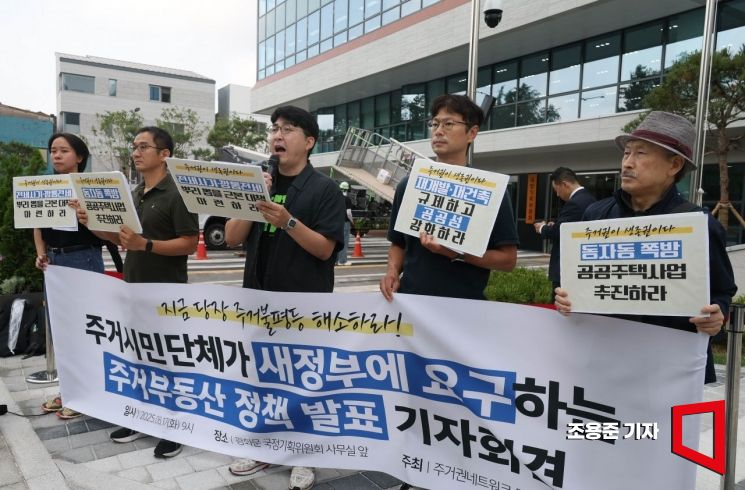 But the result is: house prices have not fallen; they've merely managed to obtain more time to repay.
V. Housing Brings Leverage into Households
By the end of March 2026, South Korea's household credit balance reached 1,993.1 trillion won, with household loans accounting for 1,865.8 trillion won. In one quarter, household loans increased by 12.9 trillion won.
South Korea's housing leverage also includes the jeonse rental system. Tenants pay landlords a deposit equal to 50% to 70% of the property's value in exchange for lower monthly rent. Tenants may obtain loans from banks to raise the deposit while landlords use the deposit to repay their mortgages or purchase another property.
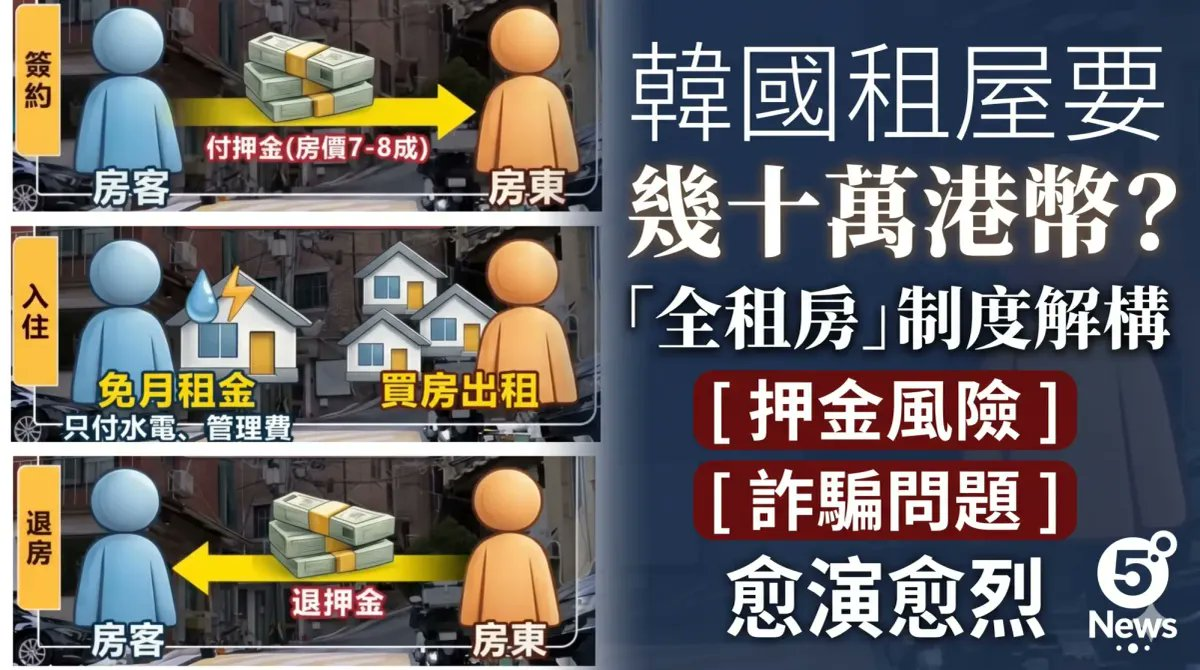 Assuming an apartment is worth 1 billion won. The landlord invests 100 million won, borrows 400 million from the bank, and receives 500 million won in full rental deposits from tenants. The landlord uses 100 million of their own capital to control 1 billion won in assets.
If the property price increases by 10%, the asset appreciates by 100 million won, equivalent to the original investment. If the property price decreases by 10%, the landlord's equity goes to zero. If the next tenant is only willing to pay a deposit of 400 million, the landlord must find 100 million won to refund the old tenant.
During the price increase phase, this structure is described as the path of asset appreciation; when prices fall, the hidden oil barrel beneath the apartment can explode. This is especially true when the landlord uses tenant rent to trade stocks and cryptocurrencies, only to lose everything when the bank repossesses the property.
Interestingly, in South Korea, taking on a “mortgage” is a socially recognized act. If a person borrows money to buy stocks, family may question the risks involved; but if borrowing money to buy a house, it is often seen as starting a family. South Korean society links real estate to marriage, education, and retirement planning, thereby giving leverage a meaningful aspect of life.
VI. A Phone Gives Double Products to Everyone
In the past, leveraged products were exclusive to trading floors and professional investors. Korean mobile brokerages have changed the way they reach people.
In April 2026, the Financial Services Commission of Korea approved single-stock ETFs and ETNs to enter the local market, providing up to two times daily exposure. The reasons given by regulators include meeting investor demand, preventing funds from flowing overseas, and improving trading convenience. Policy documents also indicated that Korean investors had previously been able to purchase similar products listed in the US and Hong Kong through domestic brokerage mobile applications.
Investors only need to complete a course, add an hour of intensive learning, and maintain a base margin of 10 million won in their accounts to trade single-stock leveraged products. Double-leveraged Samsung Electronics and SK Hynix thus entered thousands of households.
The risk warnings indeed described many issues, but did not inform investors that this position might affect marriage and housing.
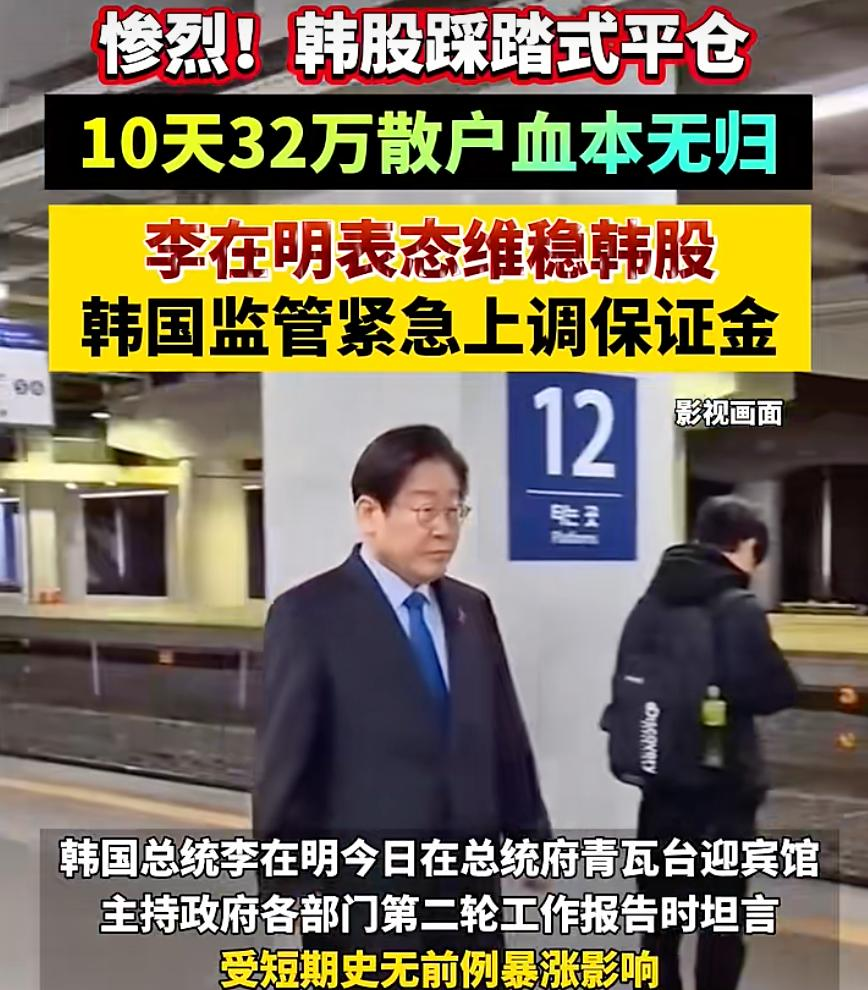 A 24-year-old South Korean university student told Reuters that he used margin financing to turn a principal of 10 million to 20 million won into nearly 300 million won. After a market reversal, his earnings disappeared within weeks. He still plans to borrow money to try again. This case does not represent all retail investors but illustrates how leveraged products change one’s perception of capital.
When the first success comes from borrowing, people easily consider leverage as part of their capability. The profits brought by increased positions are interpreted as correct judgments, while the amplifying effect of debt fades from memory.
VII. Hynix Became National Wealth News
Faith needs a figure, and leveraged products need a target. In 2026, SK Hynix played this role.
On April 23, SK Hynix announced a first-quarter operating profit of 37.61 trillion won, a year-on-year increase of 405%. This performance made it into television news and prompted brokerages to raise target prices. A well-known investment bank raised its target price from 1.6 million won to 2 million won.
In May, SK Hynix's stock price broke through 2 million won during trading hours, and "2 Million Hynix" became news headlines. Subsequently, the stock price also hit 2.5 million won. As the stock price continually surpassed round numbers, the contagion and spread were no less than Faker winning the LOL World Championship.
The income of company employees also became social news. Based on annual profit forecasts from 17 securities firms, SBS estimates that if the relevant profit and bonus distribution formulas are fulfilled, the average performance bonus for SK Hynix employees could exceed 600 million won. Various memes erupted during this time. There were negotiations between Hynix and employees over salary issues, which only calmed down after government intervention.
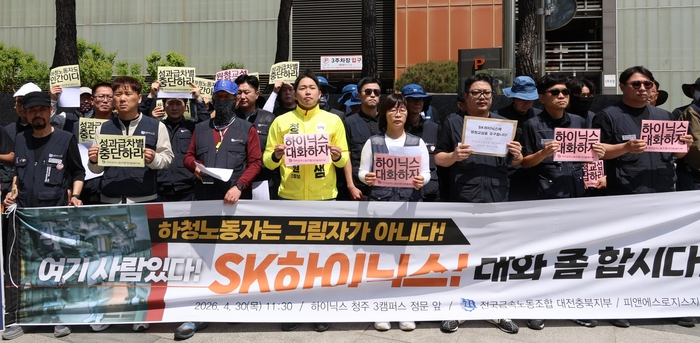 Another report described the admissions competition for Hynix-related fields as the "Hynix Exam," with the average application competition ratio at three related institutions reaching 30.98 to 1.
These social events are not advertisements but resemble them more than anything else.
Content seen by an ordinary family is very direct: Hynix's profits quadrupled, stock prices crossed one integer after another, and employee bonuses reached levels that are multiple years' worth of ordinary income. Corporate performance transformed from financial news into wealth demonstrations.
Those without positions do not feel an increasing stock. They might doubt they have missed South Korea's next round of industrial upgrades.
This sentiment enters family chat groups and lunchtime discussions. Friends hold Hynix stocks while they only possess their salary; colleagues buy double products, making their ordinary stocks seem too slow. Leverage no longer seems like a dangerous tool; it has become a means to catch up with others.
VIII. Policies Bring Products Back Domestic, Then Start Hitting the Brakes
Single-stock leveraged products entered the South Korean market at the end of May. Regulators hoped to bring overseas demand back home. After capital flowed in, double products of Samsung Electronics and SK Hynix became the center of retail trading.
By the end of May, the stock loans formed by South Korean investors through financing and leveraged products reached about 60 trillion won. In July, regulators announced a halt to new single-stock leveraged ETF listings and raised the minimum cash margin from 10 million won to 30 million won.
On July 28, the KOSPI closed down 10.84%, with Samsung Electronics and SK Hynix both dropping about 14%. The next day the index fell another 12.6% during trading. Leveraged ETFs needed to adjust positions, and margin requirements entered the next cycle of selling.
On July 29, the South Korean Minister of Finance and the Chairman of the Financial Services Commission publicly apologized for approving the single-stock leveraged ETFs. They acknowledged that the policy design had not sufficiently considered the risks that the products might pose.
The journey from opening products to public apologies took less than three months.
IX. Cryptocurrencies, Gold, and the Dollar
Leveraged life does not stop at the Korean stock market.
By the second half of 2025, the daily trading volume and total market value of South Korea's cryptocurrency market decreased, yet the number of tradable users increased by 360,000, and deposits in exchanges grew by 31%. After the market weakened, accounts and funds did not leave. Participants await the next opportunity.
Cryptocurrencies are suitable for this wait. They trade all day, requiring no down payment, and have no chaebol hiring threshold. Small amounts of principal can lead to highly volatile outcomes. Most people will not change their lives through tokens, but each market cycle brings several successful stories that can be shared.
Gold has also entered the same mobile device. South Korean exchanges allow investors to trade gold by the gram through computer or mobile securities systems. Assets that previously required a trip to a gold store have transformed into real-time prices in accounts.
The scale of South Koreans purchasing overseas securities reached $140.3 billion in 2025, up from $67 billion in 2024. The ratio of overseas securities investment to GDP rose from 3.6% to 7.5%. Buying US stocks is both investing in companies and holding dollars.
After the Korean won depreciates, those holding US stocks and gold reap currency gains. Those without overseas assets observing a decrease in purchasing power will enter forex transactions. Personal self-protection forms money flow, which, in turn, influences currency expectations.
A South Korean’s salary is settled in won, and their mortgage is also repaid in won. However, their perception of wealth is determined by Seoul's real estate prices, Hynix's stock prices, and dollar exchange rates.
X. Gambling Nature, or System
Are South Koreans really “strong in gambling”?!
Flight frequencies, gambling, and leveraged accounts can prove the level of participation, but this is just the tip of the iceberg. South Koreans face a systemic environment influenced by their own history. The state completed industrialization relying on credit, housing policies help families enter the market through loans, and capital market policies retain funds through leveraged products.
Each policy has its rationale. Combined, they communicate a message: insufficient capital is not a problem; future income can be utilized.
The happiness index shows another side. South Koreans' life evaluations do not match its economic scale, and the “freedom of lifestyle choices” ranks even lower. In family surveys, fewer than one in six believed there was surplus income, and fewer than four in ten were satisfied with their jobs. Many wish to travel and enhance their personal lives, yet first need to tackle housing and retirement.
When people believe salaries cannot fulfill these goals, the asset market will bear the task of social mobility. Policies provide loans and products, news presents successful examples, and mobile applications facilitate transactions.
Thus, South Korea's leverage culture cannot simply be explained by a phrase "love to gamble." It is the outcome of a system promoting and personal choices interacting with one another.
For those with sufficient capital, leverage is a financing tool. Ordinary families using leverage are mortgaging unearned salaries. Though both seem to be buying the same asset, the waiting time involved is different.
Korea’s industrialization proves that leverage can compress the time required to build industries. Households and retail investors face restrictions as they lack the state’s taxation rights or the chaebols' banking connections. When prices drop, debts will not defer just because the long-term outlook is positive.
The 33 flights to Macao are merely the entry point of this article. South Korea's gambling tables are not only set up in casinos; they also exist within ordinary people's life plans. When housing, retirement, and social status must all be achieved through asset appreciation, refusing to take bets can also be perceived as a risk.
Leverage can allow early entry but cannot realize value ahead of time.
However, if you attribute all the responsibility to leverage, Archimedes would undoubtedly disagree.
Postscript
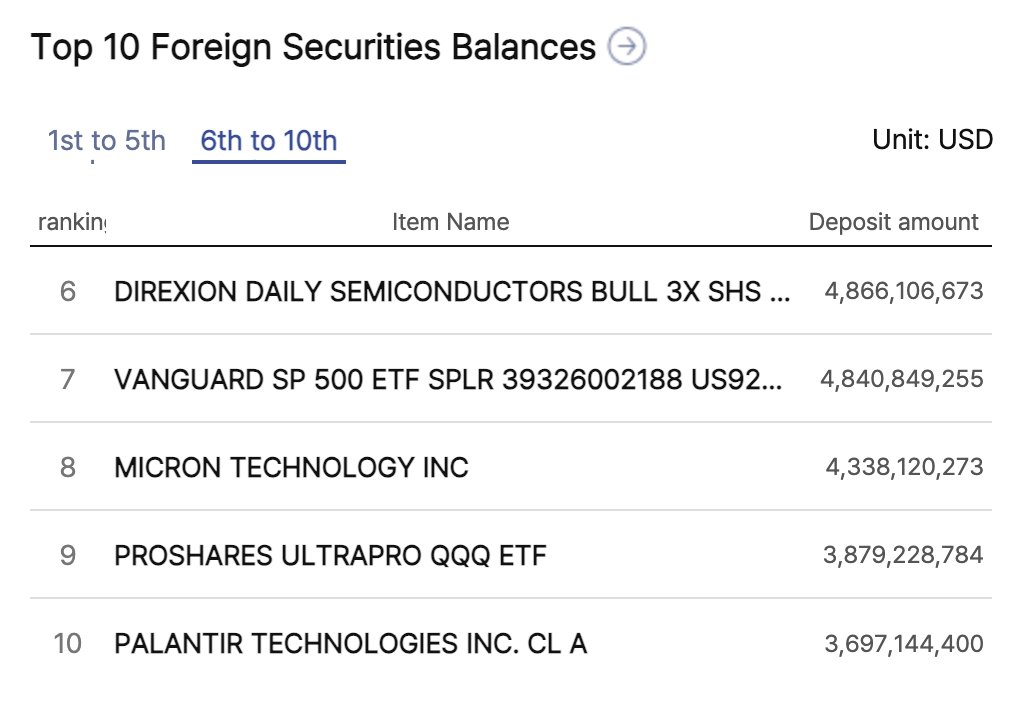
Even in today's widespread lamentation, (U.S.) leveraged ETF products remain a favorite of South Korean stock investors.
免责声明:本文章仅代表作者个人观点,不代表本平台的立场和观点。本文章仅供信息分享,不构成对任何人的任何投资建议。用户与作者之间的任何争议,与本平台无关。如网页中刊载的文章或图片涉及侵权,请提供相关的权利证明和身份证明发送邮件到support@aicoin.com,本平台相关工作人员将会进行核查。


