Author:Xiao Xiang, Financial Associated Press
For Kevin Warsh, credibility is crucial.
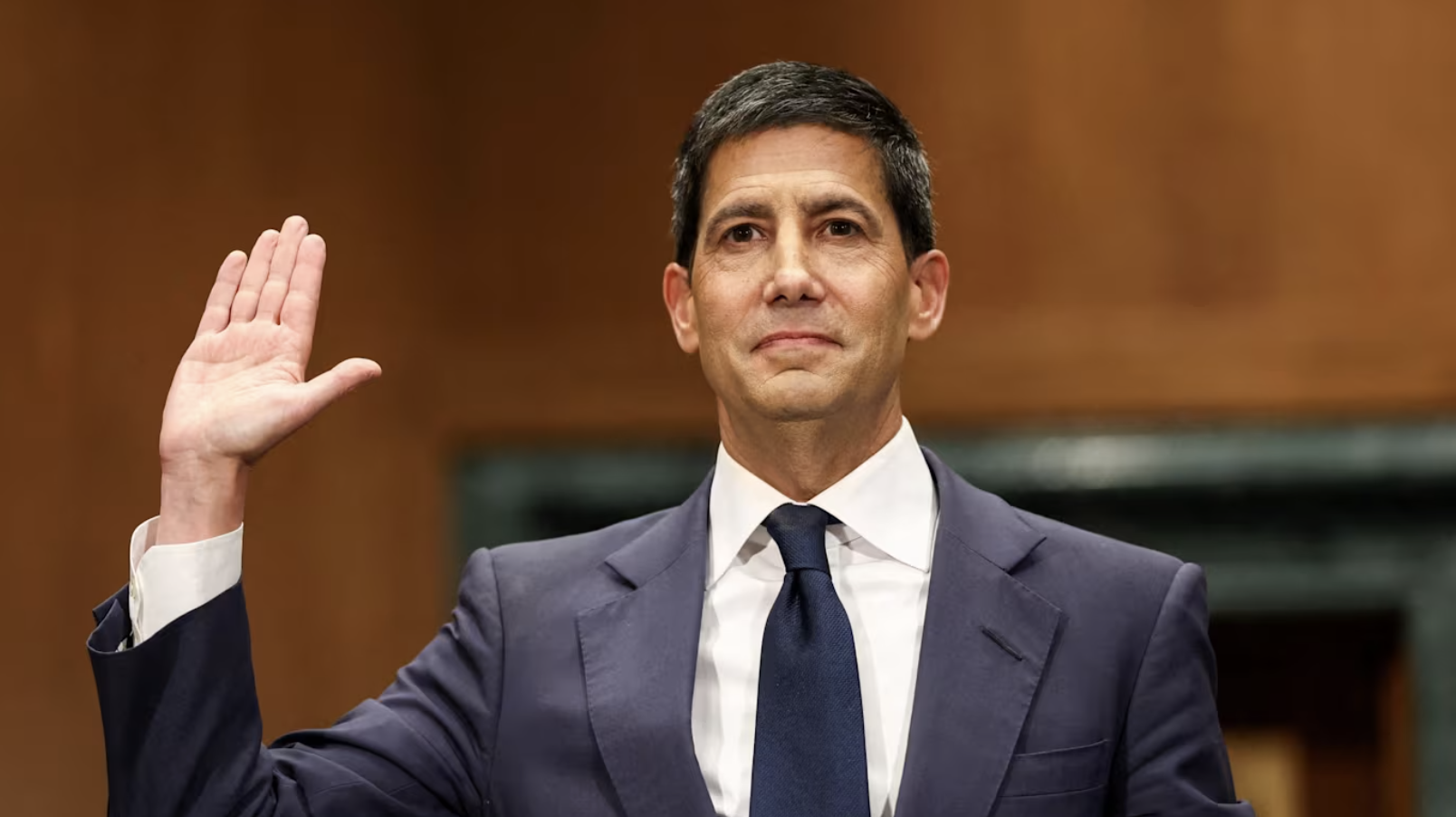
This week’s first visit to Capitol Hill after Warsh took office indicates how challenging it is for the new Federal Reserve chairman to maintain credibility.
Just seven weeks into his term, Warsh attended hearings for two consecutive days before the House Financial Services Committee and the Senate Banking Committee. Faced with repeated questioning from Democratic lawmakers regarding his independence, internal reforms, and policy transparency, the new Fed chief barely passed muster with a relatively hawkish stance and decent rhetoric, but under the political spotlight, the trust challenges he faces are only just beginning.
As a man appointed by President Trump as the "central bank head," Warsh has been confronting skepticism from the outset about his ties to the White House.
"To prove your independence, you will face a tough battle," Massachusetts Senator Elizabeth Warren bluntly stated during the hearings.
For a long time, Trump has openly pressured the Federal Reserve to lower interest rates, making the current Fed's policy independence a focal point. In his testimony, Warsh repeatedly emphasized that combating inflation would be his top priority and clearly stated that he is "fully prepared" to cope with any political pressures that might arise. At a critical moment during the questioning, Warsh even delivered a memorable line to clarify matters: "Trump chose an independent person to do an independent job."
In addition to the questions surrounding the Fed's independence, a series of internal reform initiatives recently introduced by Warsh also became the focus of Democratic attacks. Among these, the plan to establish an AI productivity and employment task force led by billionaire venture capitalist Marc Andreessen sparked the most controversy.
New York Representative Nydia Velázquez harshly criticized Warsh for outsourcing the Fed's core responsibilities "to a secret task force lacking transparency." Meanwhile, Minnesota Senator Tina Smith hit the nail on the head: "How could it be credible for a group likely to profit from AI to lead this task force in the eyes of ordinary people?"
In response, Warsh downplayed the power of the task force, emphasizing that it would only be advisory, while the Fed would remain the "sole decision-maker" for all policy changes.
On the policy tools front, Warsh's abandonment of the traditional "forward guidance" policy was similarly attacked. Warren and Michigan Representative Rashida Tlaib expressed concerns that reducing public forward guidance could lead to core insider information being available only to the privileged elite. Warsh promised on the spot that the Fed "will never grant any special privileges to the powerful," and all policy decisions will be fully disclosed the moment they are made.
However, this seemingly "charged" hearing did not ultimately evolve into a full-blown confrontation. The Washington political sphere exhibited a pragmatic attitude of "listening to words and observing actions" towards Warsh.
Industry insiders also provided a brief summary of five areas of market focus covered during the two-day testimony:
① Monetary Policy
During his two days of testimony, Warsh spoke little about his views on interest rates, consistent with his stance that the Fed should not preemptively signal its next actions.
Nevertheless, although he did not explicitly state that monetary policy would tighten, Warsh made it clear that options for curbing inflation include utilizing interest rates.
He stated that interest rates should be the main driving force of monetary policy.
Warsh also highlighted the need for decision-makers to engage in lively internal discussions regarding the extent and timing of tool usage.
② Inflation
Warsh emphasized zero tolerance towards inflation and firmly committed to restoring price stability.
He downplayed the importance of single-month CPI data and expressed a desire to avoid overinterpreting any single data point (the US June CPI unexpectedly dropped before his testimony on Tuesday). “Some may look at this morning's data and say, 'Well, mission accomplished, everything is fine.’” He said, “But I don't see it that way.”
Warsh believes that the labor market aspect of the Fed's dual mandate looks quite good, but the price stability part does not fare as well.
Warsh stated he is unsatisfied with any current inflation metrics — including the Dallas Fed's trimmed mean measure, as he thinks these indicators do not reliably capture underlying price pressures. Warsh believes the Fed needs new metrics to understand potential changes in inflation.
③ Independence
Warsh emphasized his independence, stating that Trump chose an "independent person to do an independent job."
He mentioned that Trump has not attempted to influence monetary policy formulation, "and even if he really tried to do so, I would continue to focus on doing my work."
Warsh also pointed out that he would not feel uncomfortable receiving a call from the President. He will follow the Fed's past practices regarding the public disclosure of his personal schedule.
He pledged that political factors would not be considered when setting interest rates.
④ Artificial Intelligence
Warsh believes that the price increases driven by the AI boom do not necessarily stimulate inflation.
He noted that the impacts of the AI boom are different from external conflicts because the supply side will respond, "I do not believe that one-time price changes necessarily drive inflation up."
Warsh also predicted that given time, AI will enhance productivity and wages.
⑤ Fed Reform
Warsh expressed his enjoyment of the current overall structure of the Fed Board of Governors and regional reserve banks.
He emphasized the need for policy system reform and a reevaluation of current practices. He stated that the need for comprehensive reform arises because past Fed policies were the root cause of the current inflation.
Warsh indicated that the five task forces he currently established will start from a blank slate and he is willing to regularly share the research outcomes and ideas of the task forces by the end of this year.
When discussing whether he commits to establishing fixed standards for holding press conferences, Warsh remarked that any adjustments in the Fed's future communication methods would not be intended to conceal information.
The Conclusion of the Two-Day Capitol Hill Visit
According to US law, such congressional hearings for the Fed chairman will be held twice a year.
As House Financial Services Committee Chairman French Hill humorously summarized at the end of the first day’s hearing: “Ladies and gentlemen, this is the first season, first episode of Warsh at the helm of the Fed. We look forward to the release of the second episode.”
For Warsh, passing the "test" in the first episode relied on his eloquence and relatively hawkish statements, but to truly establish and maintain the Fed's credibility in the coming months, he needs to deliver a credible response to the market and Congress through concrete actions in combating inflation and resisting political interference.
免责声明:本文章仅代表作者个人观点,不代表本平台的立场和观点。本文章仅供信息分享,不构成对任何人的任何投资建议。用户与作者之间的任何争议,与本平台无关。如网页中刊载的文章或图片涉及侵权,请提供相关的权利证明和身份证明发送邮件到support@aicoin.com,本平台相关工作人员将会进行核查。


