Organized & Compiled: Shenchao TechFlow
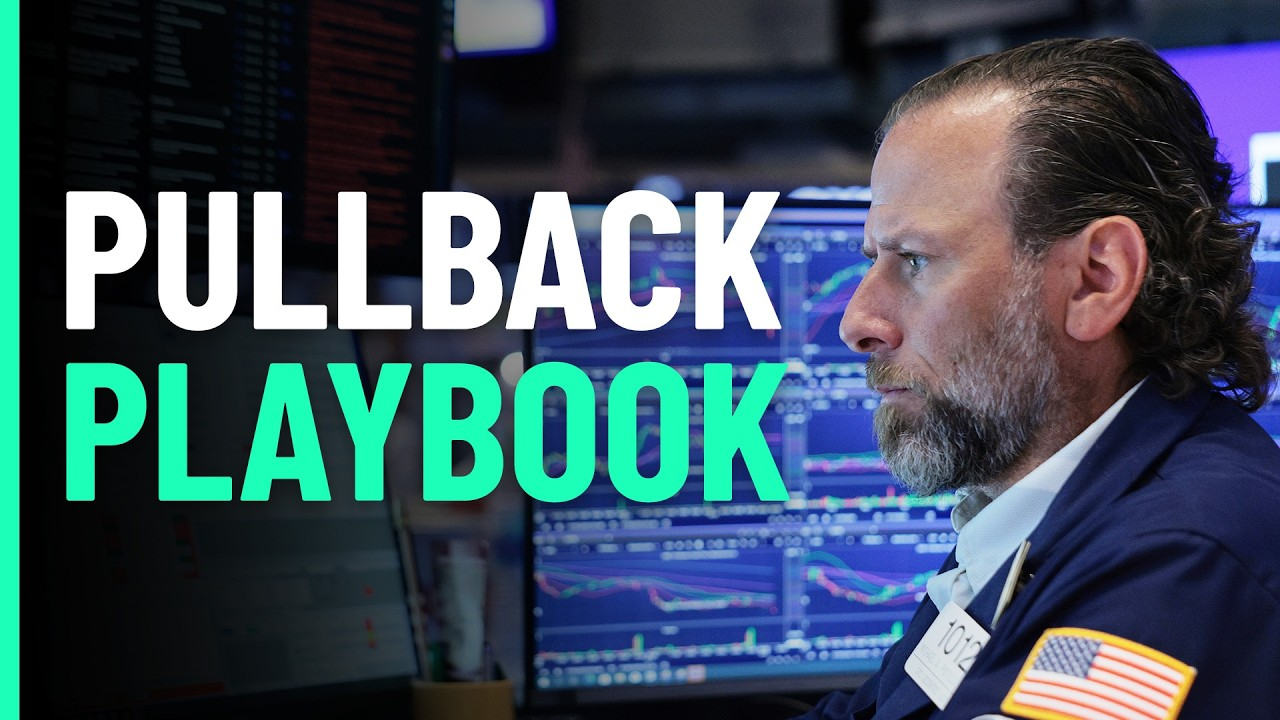
Guest: Art Hogan, Chief Market Strategist at B. Riley Wealth
Host: TheStreet
Podcast Source: TheStreet
Original Title: Playbook for the Next Market Pullback (Buy These Stocks Now)
Broadcast Date: July 13, 2026
Key Takeaways
Art Hogan has worked on Wall Street for over thirty years, previously serving as Chief Market Analyst at Jefferies, Director of Research at Lazard Capital, and currently as Chief Strategist at B. Riley Wealth, frequently appearing on CNBC/Bloomberg. This episode is titled "Pullback Playbook," but the core is actually a debate about concentration versus diversification: when your Nvidia position rises from 5% to 12%, do you continue to enjoy the benefits of concentrated bets, or do you acknowledge that the portfolio has become unbalanced?
Hogan's answer involves a barbell strategy: holding his three favorite tech stocks (Apple, Nvidia, Microsoft) on one end, while increasing positions in three recovering sectors (Industrials, Financials, Healthcare) on the other. He has given a year-end target for the S&P 500 of 7800 points, biased upwards and possibly testing 8000. However, he also clearly articulates the sword of Damocles: if the situation in Iran drags on until Labor Day and oil prices remain in the $75-80 range, Q3 earnings growth might be directly cut in half.
Notable Insights
Three Overlooked Sectors Outperforming
"The second quarter earnings will be the first time in five quarters that all 11 sectors of the S&P 500 have achieved earnings growth simultaneously. It's no longer just technology and communication services dominating."
"The three sectors of Industrials, Financials, and Healthcare have shown significant improvement this year, and on days when tech stocks are crashing, they are often the best performers."
Tech Stocks: Sell Shovels, Don't Bet on Winners
"Don't guess who the ultimate winner of LLM is; that's a horse race where only the top three can survive. Be the one selling shovels."
"Nvidia is currently the best name in tech: undervalued below market average, nearly 80% gross margin, and still expanding its reach with free cash flow. This year, it has actually become a source of funds, presenting a buying opportunity."
Opportunities with Fallen Angels
"If there is only one portfolio adjustment to make in the second half, I would buy a beaten-down 'fallen angel.' Brands like Nike or Lululemon have been severely hurt, but the opportunity is right there."
Inflation is the Real Enemy
"American consumers are something you should never bet against. But sticky inflation can lead consumers to start budgeting carefully, and that's what we really need to worry about."
Main Body
Chapter One Barbell Strategy: Tech + Three Sectors
Host: The market is currently all red. What kind of portfolio can withstand a larger market downturn without relying on cash?
We should always ask ourselves one question: Is the portfolio solely composed of AI and its driven tech sector, or are there other directions worth diversifying into? The answer is that there are always alternatives.
AI is driving a large portion of earnings growth, but it’s not everything. In the coming weeks, you will see that the second quarter of this year will be the first time in five quarters that all 11 sectors of the S&P 500 have achieved positive earnings growth simultaneously. For a long time, only technology and communication services (where the Mag 7 is located) contributed to growth. That has now changed.
So this is a good time for investors to rethink "what else is there." "What else" can include many things. Small-cap stocks have become part of the answer. But I want to specifically point out three sectors: Industrials, Financials, and Healthcare. They are all outperforming this year, with significantly improved earnings, and M&A activity is providing them with additional catalysts.
How to implement this? It’s simple: if you initially allocated 5% to Nvidia and it has now risen to 12%, rebalance once every quarter by pulling some out of the over-allocated position and putting it into healthcare, finance, and industrials. That’s the structure of the barbell.
Chapter Two The Other End of the Barbell: Why Industrials, Financials, and Healthcare are Outperforming
Host: We understand the tech growth end of the barbell, but what specifically is on the other end?
We believe that Industrials, Financials, and Healthcare are the three sectors with the most upside surprise potential this year.
The logic for Industrials is straightforward. The construction of data centers requires significant industrial investment, and the urgent need for infrastructure rebuilding in the U.S. is also pressing. Industrials are experiencing a renaissance, and this will continue.
The Financial sector has several driving forces. Capital markets are extremely active, and in recent months we have seen a wave of large IPOs, with more to come. Last quarter’s M&A volume was eight times that of the same period last year. But more importantly, the Financial sector has been ignored for too long, and it has just started to regain attention. Last quarter, it was already one of the best-performing sectors in the S&P 500, and we believe this will continue throughout the year.
Healthcare is my favorite. Currently, there are many exciting new drugs in phase three clinical trials, and while small biotech companies have no issues with R&D and clinical trials, they can barely commercialize their products. So you see big pharma companies are on a buying spree; Eli Lilly has already completed six deals this year. The regulatory environment for M&A approvals is also loosening, speeding up the entire process.
These three sectors make up the other end of the barbell.
Chapter Three Buy Individual Stocks or ETFs
Host: How to allocate these three sectors? Directly pick specific bank stocks, healthcare stocks, industrial stocks?
There are two methods. We have a recommended list; one of the top picks in the industrials sector is ATI, in finance we’re optimistic on JPMorgan and Visa, and in healthcare, Eli Lilly and AbbVie have consistently been the best performers on the list over the past few years. You can definitely stock pick.
But there’s also a simpler way: buy sector ETFs. Each sector of the S&P 500 has corresponding index products; by directly allocating to ETFs of these three sectors, you can participate in their upside without needing to do the research yourself.
If you want to do the simplest barbell, buy a tech ETF on one end and ETFs of these three sectors on the other; the effect will be the same.
Chapter Four Wait for Earnings Reports to Make Moves
Host: This week, large banks and regional banks will report their earnings. Do you suggest increasing positions in financials before the earnings reports, or wait to hear the numbers first?
I suggest waiting. This is a good question.
When a company's stock price is already near historical highs, like JPMorgan, which has a market cap close to $900 billion, its earnings report—even if the numbers are very good: strong revenue, good profit, good guidance—may yield a market reaction that is counterintuitive. "Buy the rumor, sell the news" often happens during earnings season.
So wait until all the major banks have reported, let the dust settle, and then look back after a week or two. By then, JPMorgan will probably still be at a similar price point, but you won’t have to worry about the violent fluctuations on the day of the earnings report.
Host: Are regional banks also worth watching?
Absolutely. The U.S. has the highest number of banks among developed countries, we are somewhat "overstaffed." The compliance and technology costs of operating a bank are rising. In the next 24 months, you will see a lot of consolidation and mergers among regional banks. Small community banks will be absorbed into larger regional banks, and even super-regionals and money center banks will take the opportunity to expand their geographical footprint. This is the core reason we are optimistic about regional banks: the number of banks will decrease in the future, and the value of the survivors will increase.
Chapter Five What Tech Stocks to Buy on a Pullback
Host: We’ve talked about the defensive end of the barbell; now back to the offensive end. Today, Sandisk is down 8%, ARM is down 8%, Micron is down 4%, what will you increase positions in on the tech side during this pullback?
These stocks have risen 50% to 125% from the start of the year, such intraday volatility will be the norm rather than the exception.
On the tech side, we are most optimistic about three stocks.
Apple ranks first. It has finally laid out an AI strategy: a fast follower that collaborates with multiple companies to make Apple Intelligence more practical. Everyone was previously tangled up trying to figure out how Apple would engage with AI, and it has now answered that. The new iPhone release is also coming up. They have ample cash on hand, with management friendly to shareholders, and while the stock price is near historical highs, I believe there’s still room for growth.
Microsoft is undervalued. It was thrown out along with the whole software sector because the market believes AI will disrupt all software. We disagree with that assessment, especially regarding Microsoft. It is embedded in the workflows of 95% of companies in the S&P 500, making it extremely difficult to replace. It’s currently one of the cheapest names in the tech sector.
The best name remains Nvidia. Its valuation multiples are below the market average, with a gross margin approaching 80%, and it continues to expand its business using free cash flow. This year, it has actually become a source of funds; as others sell it to pursue other opportunities, that’s precisely the buying opportunity.
Chapter Six What to Reduce and Avoid
Host: Which stocks would you currently reduce in the tech sector?
First, be cautious of newly popular entries. SK Hynix's ADR just listed in the U.S., having risen about 160% in the past 12 months—I would be chasing at a high point. More importantly, long-term shareholders in Korea finally have an exit strategy. This structure is difficult to navigate, and I would remain cautious.
Second, the debt financing pipeline for mega AI companies is showing cracks. In the first half of the year, they raised $300 billion in debt very easily, but it won’t be as easy in the second half. However, the need for spending won’t stop. Those public companies and soon-to-be-listed companies that burn cash continuously to run models, what you're really buying is a belief in "future capital returns." I prefer to be the one selling shovels.
Host: Can you name some companies you are avoiding?
SpaceX's IPO looks spectacular, but that depends on whether you believe their $18 billion revenue last year will turn into $380 billion by 2030. This window is not clear to the average person. Its valuation has already factored in today's stock price; essentially, you are betting on what will happen in five years, and that could be right or wrong. This is not meant for those with weak hearts.
Another perspective: large language models are a horse race, but there won't be seven or eight winners on this racetrack, only a champion and a runner-up. Now everyone believes that Anthropic's B2B route is the strongest, but that means other five or six competitors might not make it to the finish line. Betting on who will win now is very difficult.
Chapter Seven Best Moves for the Second Half: Pick Up Fallen Angels
Host: If you can only make one portfolio adjustment in the second half, what would it be?
Buy a beaten-down "fallen angel." Nike or Lululemon.
These brands have been hurt too much, but precisely because they have dropped significantly, the opportunity is substantial. I’m not saying which one to pick, but if you ask me to do one thing, it would be to pick up those quality consumer brands that have been overly punished.
Chapter Eight The Biggest Risk: Iran Situation → Oil Prices → Inflation → Earnings
Host: You have given the S&P 500 a year-end target of 7800 points. What is the biggest risk?
You have already spoken the answer. The longer the Iranian conflict drags on, the longer energy prices stay high, which increases inflationary pressures, and raises interest rate pressures, and all of these together constitute the biggest headwind for the market.
In the past month, we have assumed that an exit would be found quickly. Last week, oil prices temporarily fell back to pre-conflict levels, but then the situation escalated again. If we are still discussing Iran by Labor Day with WTI in the $75-80 range and gasoline near $5, economic growth would slow, and earnings expectations would be downgraded. The U.S. is a consumption-driven economy, and when consumers' disposable incomes are squeezed by gasoline prices, that’s when the problems start.
Currently, the crude oil market is still in backwardation, with near-month prices higher than future months, which means that the market believes oil prices will drop in the fourth quarter. If the forward premium reverses, and speculators start to think that oil prices will maintain high or even higher levels, then corporations' and consumers' decisions will change accordingly. The S&P 500 earnings growth in Q2 could be close to 20%, but by Q3 it might be cut in half. You do the math on what that means for the stock market.
Host: If the economy really slows down, will the defensive end of the barbell hold up?
It will hold up. You can save on many things, but you can't avoid medical care or banks. Healthcare and financial services are necessities, not options. That’s why these three sectors inherently possess defensive attributes. They are "needs," not "wants."
Chapter Nine Rapid Fire: Quick Judgments (Selected)
Host: What has a greater impact on the market, CPI or bank earnings reports?
CPI. Bank earnings reports will not have problems; CPI determines how the Federal Reserve will proceed next, which is what the market really cares about.
Host: If CPI falls, should you bottom-fish immediately or wait for confirmation?
Wait for confirmation. CPI often jumps up and down. You need to see two consecutive months of decline, not just one month.
Host: What worries you more, sticky inflation or slowing consumption?
Sticky inflation. Betting on the collapse of American consumers has never won in a hundred years. Inflation is what leads consumers to start budgeting carefully.
Host: Will the Federal Reserve cut rates this year?
No. This year the only move will be to hold steady. Rate cuts will most likely happen in the first half of next year.
Host: In the second half, which has more upside potential: tech growth or small-cap value?
If rates bounce up a bit, tech will lead again, and small caps will slow down.
Host: Industrials or Financials?
Financials have more upside potential. Industrials have been performing well over the past couple of years and will continue to do so, but Financials have only just begun to be recognized.
Host: Hold or reduce tech?
Let the bullets fly. Especially those that started being sold off since last October, nearly all Mag 7 and all software stocks. The tech sector still has a lot of stocks that have yet to rally; as long as the fervor for memory chips cools down a bit, funds will rotate back to them. If only chips are rising now, once they cool off, that money will go elsewhere.
Host: Is the boom in storage chips overhyped or undervalued?
The supply-demand imbalance is real, and building fabs is difficult; supply will not catch up to demand anytime soon. But some stocks are indeed overvalued.
Host: If you could only buy one tech stock today, what would it be?
Apple. It’s the best among this batch and has many positive catalysts ahead, especially with the launch of the new generation iPhone.
Host: Which tech stock must be avoided?
Meta. I’m not very clear on where they are headed. They have indeed had a nice rebound, but the business model is jumping around. Among the Mag 7, it’s the one I’m least interested in.
Host: Year-end target for S&P 500?
The current official target is 7800, biased upwards. If companies generally raise guidance during this earnings season, and the full-year EPS goes up, with the same valuation multiple, it might reach 8000. Ask me again in three weeks.
Host: What could take us to 8000?
Earnings.
Host: What could ruin it?
Inflation eating into earnings.
Host: What level of inflation?
CPI rising from the 3s to the 4s, and sustained into Q1 of next year. That would be a true headwind for earnings.
免责声明:本文章仅代表作者个人观点,不代表本平台的立场和观点。本文章仅供信息分享,不构成对任何人的任何投资建议。用户与作者之间的任何争议,与本平台无关。如网页中刊载的文章或图片涉及侵权,请提供相关的权利证明和身份证明发送邮件到support@aicoin.com,本平台相关工作人员将会进行核查。


