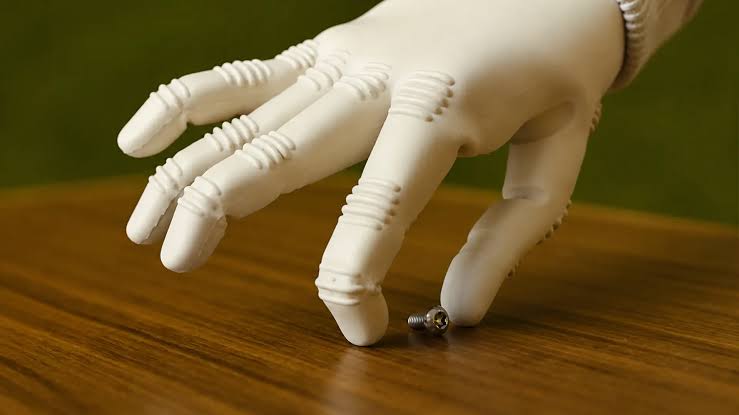
Source: 1X Technologies
Editor: Felix, PANews
On July 10, humanoid robot company 1X Technologies launched the next generation NEO humanoid robot tendon-driven mechanical hand, featuring 25 degrees of freedom (DOF), achieving dexterity, strength, safety, and reliability close to human levels.
This article is based on the official introduction from 1X Technologies, giving you a glimpse of the details of this mechanical hand.
The mechanical hand aims to break the bottleneck in humanoid robot hardware capabilities, making data the only barrier to improving robot performance. By achieving or even surpassing human hand performance in key dimensions, it ensures that AI models are no longer limited by dexterity. The NEO robot can now perform nearly any task that human hands can complete, with the precision, adaptability, and gentleness required in real-world environments.
A humanoid robot is a computer with hands as its API
The model, perception stack, and legs determine the extent to which the machine interacts with the world. The hands, however, determine what it can do, what it can perceive, and what any developers building on it can accomplish. A humanoid robot with dual-finger grippers shows developers only three actions: grasp, place, and push. Every application written on this platform is a combination of these three actions. The ceiling of capability is not in the software but at the end of the arms.
Experience the world through fingertips
Observing a person facing a strange object, you will find that they press it to feel hardness, slide their fingertips to sense texture, weigh it, trace its contours to judge shape, and squeeze and release to feel its elasticity. Touch is not passively relaying information like a camera; it is an experiment. The hands pose questions vigorously, receiving answers through the joints that pose those questions. This is how humans comprehend objects and how they initially learn to operate: from infancy, through millions of explorations.
This means the hands are not simply actuators fixed at the end of a perception system; they themselves are a perception system, a tool. The quality of that tool is determined collectively by the entire system. Posing questions requires precise force control. Reading answers requires reverse drive and transparency of force so feedback can return through the transmission mechanisms rather than stagnate in the actuators. Posing questions necessitates degrees of freedom and precision. Sensing subtleties requires skin. Quickly capturing answers requires bandwidth. And millions of explorations require robustness because exploration is contact, and contact inevitably causes wear.
Joints themselves are sensors
Most robotic hands are read-only devices. You issue a positional command, and the hand moves there, but it returns no meaningful information. The reason lies in the actuators: at common gear ratios of 100:1 and 200:1, friction will absorb the contact force before it reaches the motor. Since the joints of the hand themselves have no sensation, designers need to install external sensors on them and infer what is happening at the fingertips, much like capturing an insensate hand with a camera.
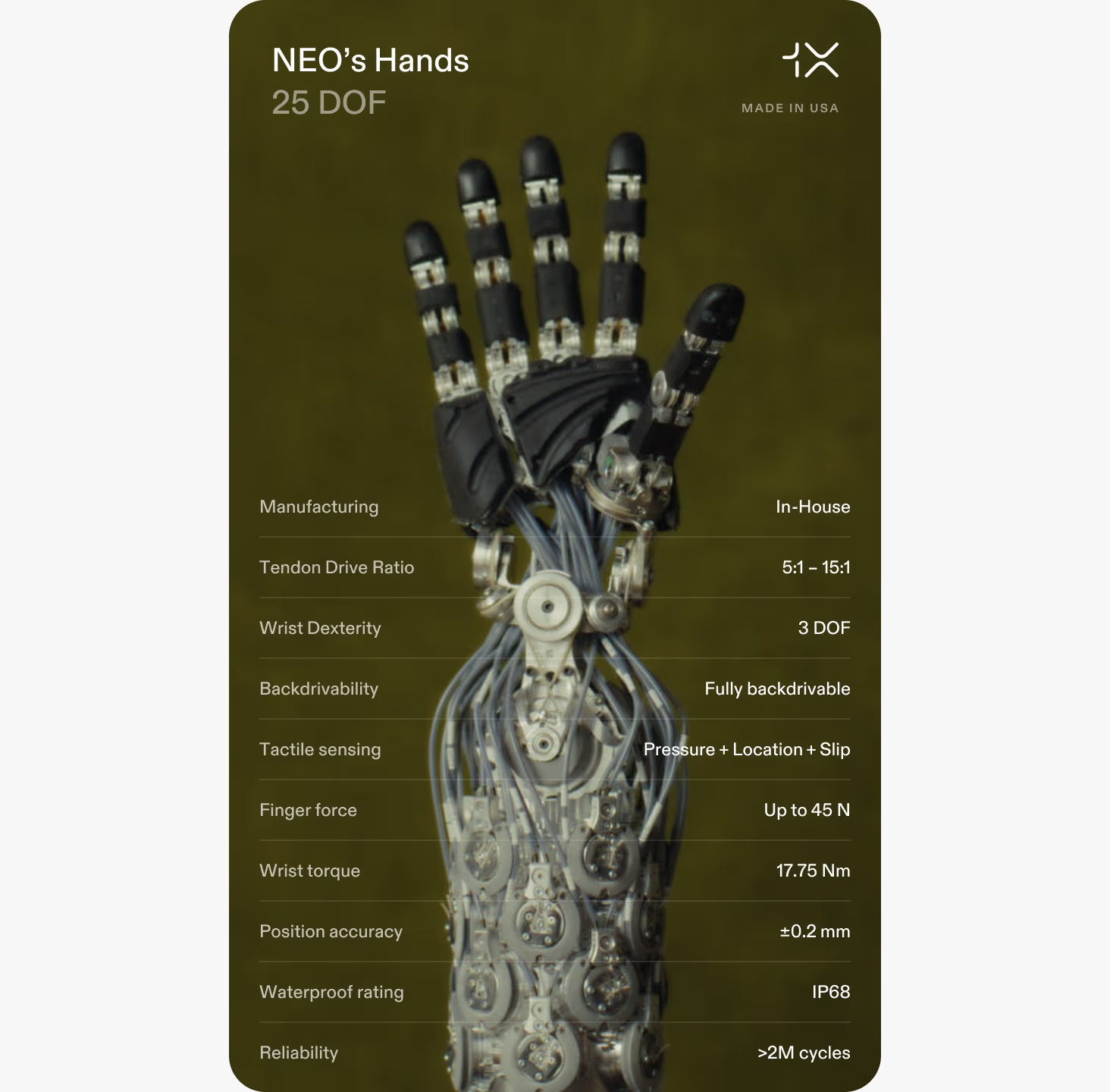
The dual hands of the NEO are read-write. Developed from scratch by a top engineering team, they operate the aligned drive actuators through a 1X tendon driver running at a low gear ratio of approximately 5:1 to 15:1. All 25 degrees of freedom (22 fully actuated degrees of freedom in the fingers and palm, plus three in the wrist) have native force control functionality and can be fully reverse-driven. When you press a finger, it responds and accurately reports the magnitude of the force you apply. Force flows out, and information flows inward along the same physical pathway. This is force transparency; it converts thrust into measurements.
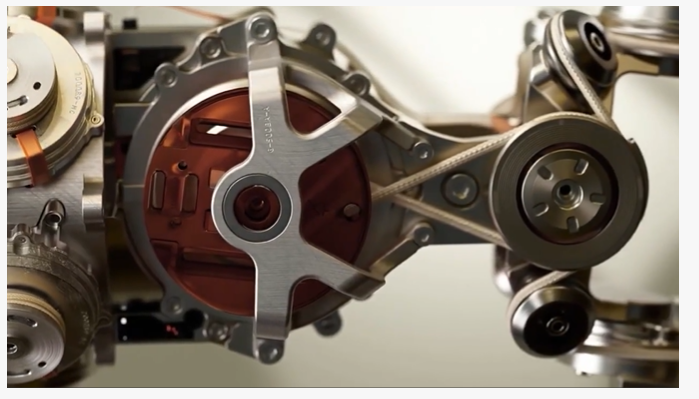
There is a parallel, more subtle mechanism: proprioception. Because each joint is closed-loop, the hand can always sense its own posture even if not looking, just as fingertips can touch when eyes are closed. Posture combined with force is always achieved through the same 25 joints.
25 ways to pose questions
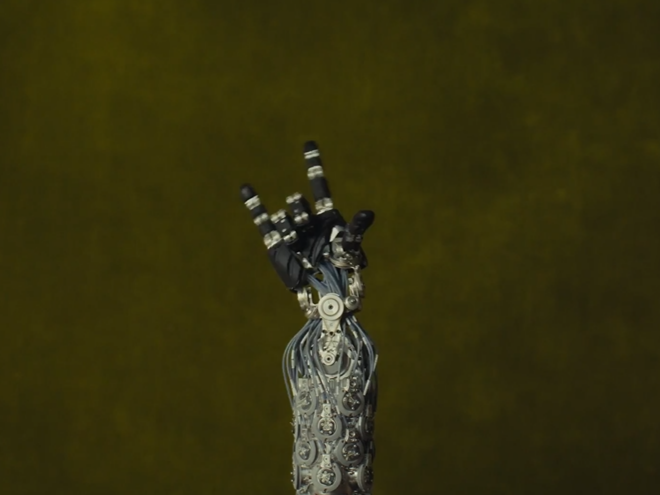
What can 25 force-sensing degrees of freedom bring? Not for the joints themselves, but for a series of gripping actions and ways of posing questions. The distribution of degrees of freedom is more important than the number: the distribution of NEO's degrees of freedom aligns with human anatomical structures and leans towards a truly opposable thumb. This architecture aims to achieve the best balance between robotic manipulation capabilities and practical manufacturing, control, and maintenance.
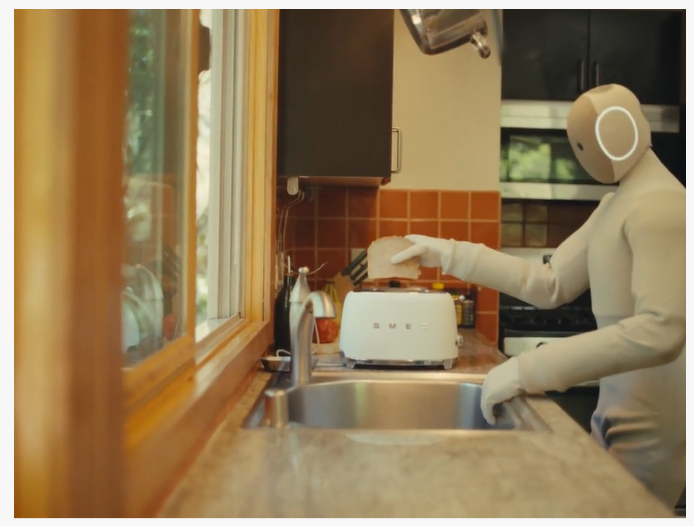
These new mechanical hands can achieve or even surpass human-level fine manipulation. NEO can assemble Lego blocks, retrieve screws and coins from a wallet, rotate and install light bulbs, use screwdrivers, rotate objects in hand, pull up zippers on coats, sort grapes by color, pour tea from a kettle, catch soft balls, insert USB-C chargers, pick up wine glasses, wipe surfaces with tissues and sprays, communicate via sign language, and much more.
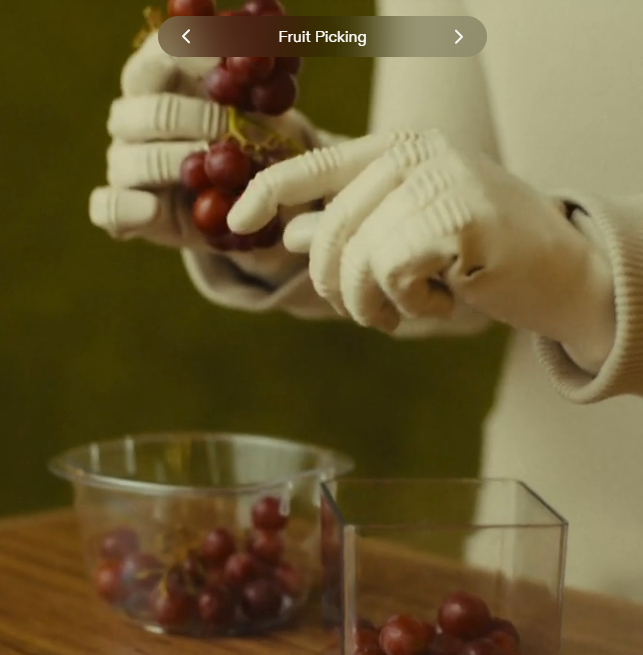
This pair of mechanical hands with 25 degrees of freedom has an IP68 waterproof rating and food safety standards, allowing NEO to wash hands like a human. The peak torque of the thumb's metacarpal joint can reach 3.5 Nm, the peak torque of the finger's metacarpophalangeal joints can reach 2.6 Nm, and the distal flexion force can be as high as 45 N. The wrist joint torque can reach 17.75 Nm. These specifications enable the mechanical hand to perform full-handed grasps, tool usage, lifting and transporting, opening doors, pushing loaded carts, and precise pinching even under load, while maintaining complete flexibility. With a positioning accuracy of ±0.2 millimeters, they can perform small range work (and sense objects).
The final half millimeter
The skin increases information channels. Haptic data is an image. It has dynamic range, resolution, channels, and field of view. The hands are equipped with rich, high-resolution tactile sensors at the fingertips and surfaces, measuring normal forces, contact positions, and shear forces. This allows NEO to detect when objects begin to slide and respond in real time. Visual data shows the normal vectors of contact surfaces, pressure heat maps during handshakes, and the ability to finely grasp fragile origami without causing any damage.
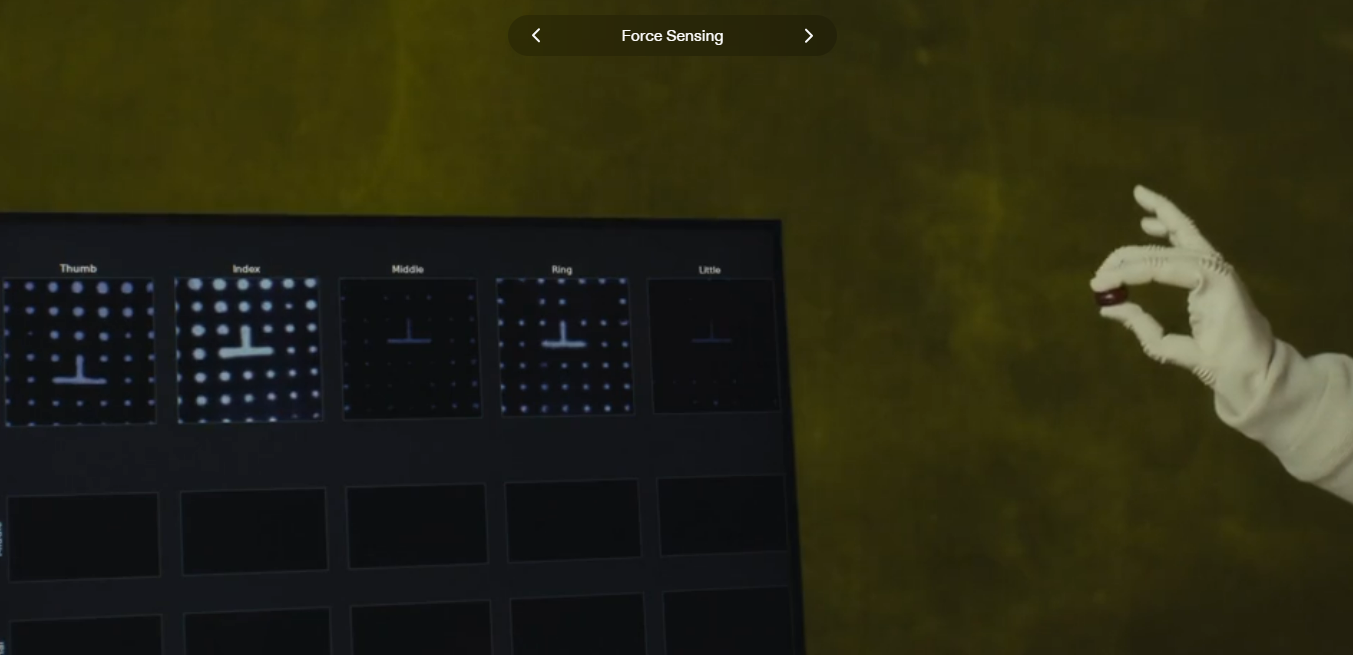
The design of the skin works in conjunction with internal sensors and the tendons behind them. It is a functional material, not a decorative one. Since visual perception alone is insufficient for many tasks (especially when dealing with small, transparent, deformable, or occluded objects), this tactile feedback is crucial for adaptive intelligent operations.
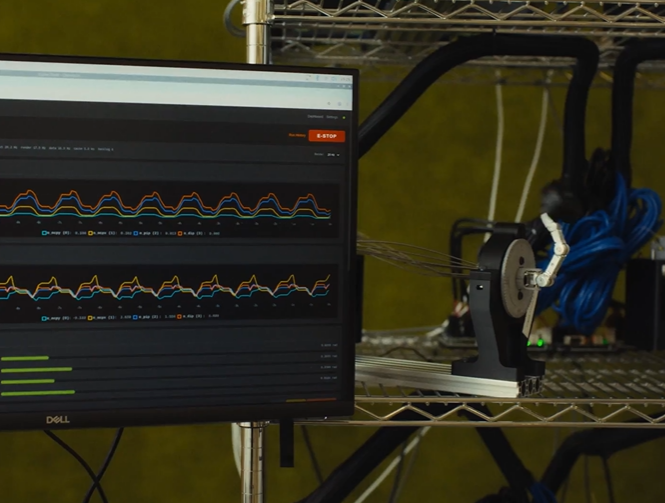
Moreover, these mechanical hands are designed for continuous operation, maintaining performance even after millions of interaction cycles. Reliability is integral to the design of every subsystem and component: tendon routing, bearings, finger structures, cable wiring, tactile integration, electronic components, and assembly processes. Components and complete finger assemblies have undergone millions of testing cycles, drive units have been tested at extreme temperatures, and wrist joints have undergone over 2 million cycles of reliability validation under high loads.
The entire hand complies with IP68 standards to further ensure safety: extremely low gear ratios combined with tendon drive and low distal inertia allow the fingers to be safely reverse-driven even under external impacts. Slow-motion videos show the hand reacting when slapped, struck, trapped in a closing drawer, or impacted against foam.
The hardware behind it
The performance of the application programming interface (API) depends on its physical layer. The motors are located in the forearms, where most of the grip strength in the human body is located, powered by dedicated tendons in the wrist. This is how the lightweight hand generates such powerful force while maintaining sufficiently low temperatures, enabling continuous operation.
The mechanical hand tightly integrates self-developed motors, custom electronic components, embedded sensors, dedicated tendon systems, compact drive units, and hand-specific firmware. This deep vertical integration facilitates rapid iteration and cumulative improvements. Each device is fully produced in-house, from tendon materials and 1X motors to final soft polymers, skins, and tactile sensor components, with the capacity to produce 10,000 mechanical hands this year.
Related reading: Robot company 1X launches a new generation of humanoid robot hands, unbelievably flexible!
免责声明:本文章仅代表作者个人观点,不代表本平台的立场和观点。本文章仅供信息分享,不构成对任何人的任何投资建议。用户与作者之间的任何争议,与本平台无关。如网页中刊载的文章或图片涉及侵权,请提供相关的权利证明和身份证明发送邮件到support@aicoin.com,本平台相关工作人员将会进行核查。


