No announcements, no abnormal fluctuations. In the eyes of most traders, it was just a very ordinary trading period.
However, in those lightning-fast minutes, a massive sum of 280 million dollars quietly vanished as if swallowed by a black hole.
Multiple core funding pools of the established DeFi protocol Drift Protocol on Solana were instantly drained in milliseconds of frantic interaction. Assets were rapidly concentrated, exchanged, and transferred in one go. By the time the first warning appeared on Twitter, those funds had already disappeared like ghosts, crossing layered cross-chain bridges, completely retreating into darkness.
This was not an ordinary hacker attack.
This was a meticulously planned and silent hunt—attackers acted like lurking shadows, delivering a fatal blow to the protocol without anyone noticing.
8 Days of Preparation: This is Not an Attack, But "Long-term Infiltration"
A review of on-chain traces reveals that the attacker exhibited a high level of tactical sophistication. The address had been dormant for nearly 8 days before taking action.
During these 8 days, the address acted exceptionally low-key:
- Almost no large transfers, avoiding triggering various monitoring thresholds;
- Very low interaction frequency, drawing no attention from security protocols;
- Isolated through multiple intermediary addresses, cutting off the traceability of initial funds.
Until a specific moment, the attacker initiated the execution:
Exploiting the pricing or collateral logic vulnerabilities of the protocol at certain depths, they instantly inflated the collateral value and then withdrew on a large scale from multiple liquidity pools.
Asset Laundering Path: Why Ultimately Shift Towards ETH?
The diverted assets were extremely varied, but the attacker completed a textbook-style asset consolidation in no time: converting all non-standard assets into Ethereum (ETH).
This step is the "watershed" of the entire escape process, with the core logic being:
- Eliminating project labels to reduce association during tracking;
- Enhancing liquidity, as ETH has the highest throughput in cross-chain and subsequent mixing phases;
- Hedging against freezing risks, as the native properties of ETH are harder to lock down quickly.
Subsequently, the funds entered the Ethereum mainnet through cross-chain bridges like Wormhole and entered mixing services. With each node processed, tracking difficulty significantly increased.
Changes First Appeared in Data, Not News
Many people learned about the incident with Drift only after media alerts surfaced, but for professional traders who are deep in the market, the alarms had already manifested.
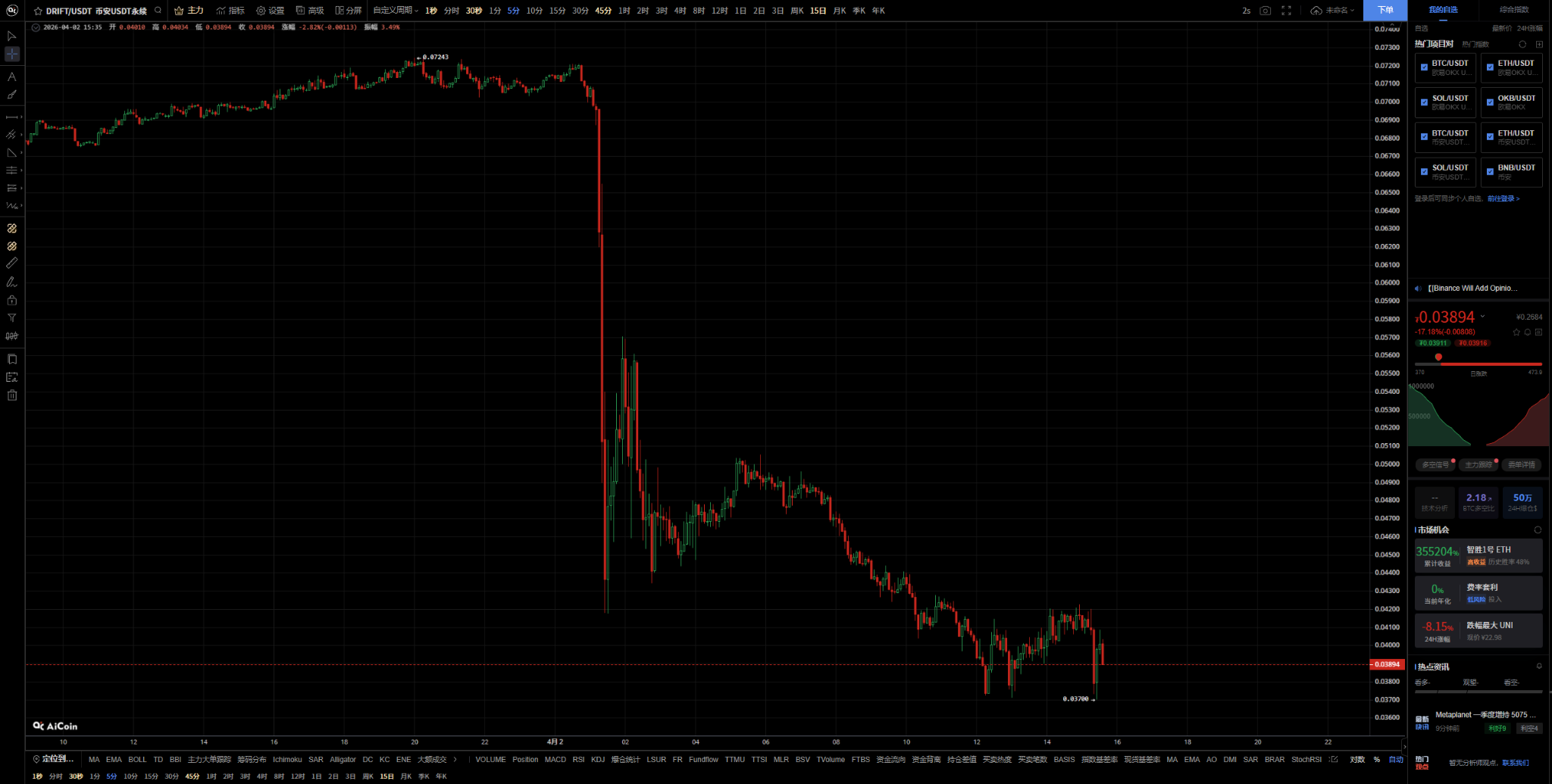
Experienced traders habitually use on-chain monitoring tools as constantly open windows. For instance, in AiCoin's major order flow and liquidation heatmap, the unnatural price deviations and the cliff-like drop in open interest (OI) of Drift-related pools had already become "blindingly red" minutes before the incident.
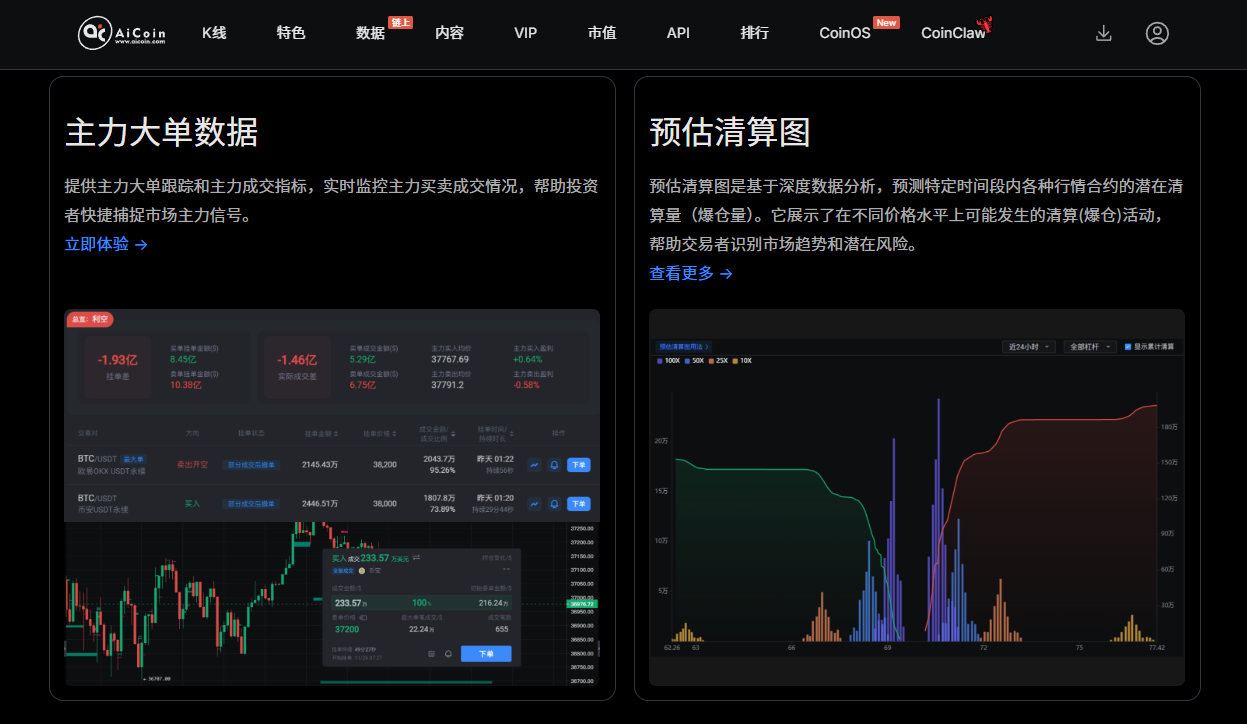
When market depth rapidly collapses and slippage greatly increases, these signals may not immediately translate into news, but they will faithfully reflect in real-time alerts of anomalies. In such extreme market conditions, "liquidity" is no longer just a term on a PowerPoint, but the only ladder determining whether your assets can be safely withdrawn.
In the crypto market, risks often first appear in the data, and only later in the news. While most people are still asking "what happened," those who continuously observe chip distribution and data distortions may have already completed their hedging actions ahead of time.
Many large order traders working deeply with AiCoin usually transfer quickly to centralized exchanges (CEX) with more mature matching mechanisms for risk aversion when they detect unusual deviations or dried-up depths in on-chain DEX (decentralized protocols) pools.
According to recent data from the BTC/ETH perpetual market, BitMart has shown remarkable resilience in terms of market depth and liquidity stability. This "resilience" means three things in practice:
- Ample market depth: Ensuring your stop-loss orders won't "liquidate" due to a massive sell-off.
- Extremely low trading slippage: Saving you the unseen costs in milliseconds of competition.
- Stable execution experience: Even if market sentiment is crazy, the matching engine won't "silently collapse" like on-chain protocols.
As an established platform running smoothly for 8 years, BitMart's continuously optimized liquidity environment essentially provides traders with a transparent "safe haven."
If you are also searching for such trading certainty, you can plan in advance through the exclusive link below:
https://jump.do/zh-Hans/xlink-proxy?id=13
(Invitation code: cBMfHE, $14,000+ welcome gifts available easily)
After all, instead of praying for miracles on-chain, it is better to cash out in a smoother market.
Conclusion: The Market Only Rewards Those Who Remain Sensitive to Anomalies
Similar incidents will not be the last. In a market that is increasingly complex and cross-chain flowing, risks never give advance notice.
The real difference lies in: some panic after seeing the news; some notice and act as soon as the data begins to distort.
Data itself has no emotions, but it never lies. In this "code is law" battleground, sharp tools and calm judgment are your assets' best firewall.
(The above content is a simplified interpretation based on public information and is for reference only; it does not constitute investment advice. The market has risks; investment requires caution.)
Join our community to discuss and become stronger together!
Official Telegram Community: t.me/aicoincn
AiCoin Chinese Twitter: https://x.com/AiCoinzh
BitMart Welfare Group:
https://aicoin.com/link/chat?cid=54wgQno6O
免责声明:本文章仅代表作者个人观点,不代表本平台的立场和观点。本文章仅供信息分享,不构成对任何人的任何投资建议。用户与作者之间的任何争议,与本平台无关。如网页中刊载的文章或图片涉及侵权,请提供相关的权利证明和身份证明发送邮件到support@aicoin.com,本平台相关工作人员将会进行核查。