On March 19, 2024, the Bank of Japan ended negative interest rates and pulled the policy interest rate back to around 0%. With this decision, the market's questions shifted. People no longer debated whether Japan would exit ultra-loose monetary policy, but rather began to ask a more immediate question: since the first step has been taken, will the second step come sooner than expected?
From late March to mid-April, discussions surrounding "the next rate hike" began to intensify. On the surface, everyone was speculating whether action would happen in April; on a deeper level, what the market really wanted to confirm was whether the Bank of Japan was ready to continue normalizing its policy.

Figure 1: After exiting negative interest rates in March 2024, market focus quickly shifted to "when will the next action occur"
1. Why April is repeatedly mentioned by the market
Because several signals coincided. On March 15, the Japanese Trade Union Confederation announced the results of the first round of spring labor negotiations, with an average wage increase of 5.28%. The so-called spring labor negotiations are an annual round of wage and labor condition discussions concentrated in spring. As many companies begin their new fiscal year in April, the results of these negotiations are often viewed as one of the most important leading indicators of Japanese wage trends. Four days later, the Bank of Japan officially ended negative interest rates. By April 19, Kazuo Ueda released a key statement: if significant fluctuations in exchange rates affected prices, that could become part of policy considerations. Naturally, the market began to ask further questions: since wages and exchange rates are both moving, will the next rate hike come sooner?
However, looking at these dates in connection reveals that the Bank of Japan's judgment framework has changed. It is no longer in a "should we exit" phase, but rather in a "how to proceed after exiting" phase. This is why April is repeatedly brought up. What the market is really focused on is not a specific date, but whether the Bank of Japan will acknowledge that the conditions supporting the second step are gradually forming.
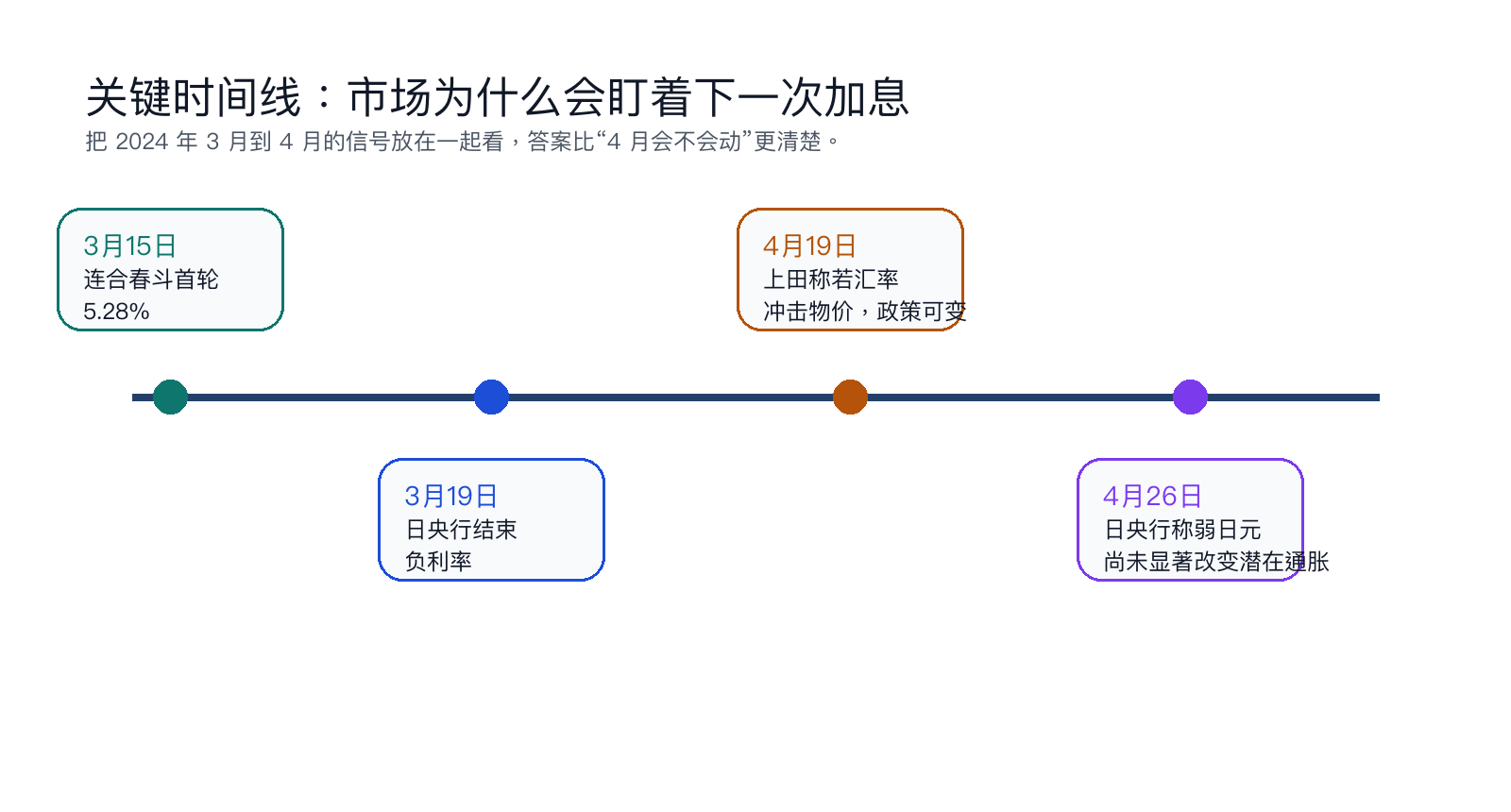
Figure 2: Key timeline surrounding "the next rate hike" from March to April 2024
2. What truly pushes the Bank of Japan forward is still wages
In this round of discussions, wages are more important than exchange rates. The reason is simple. A weaker yen can raise import costs, but if wages do not keep pace, inflation feels more like a passive squeeze on household purchasing power; only when wages also rise does the central bank find it easier to believe that the upward movement of prices is sustainable. For Japan, this distinction is significant. The former is merely imported inflation, while the latter is closer to the "positive cycle of wages and prices" that the Bank of Japan wants to see.
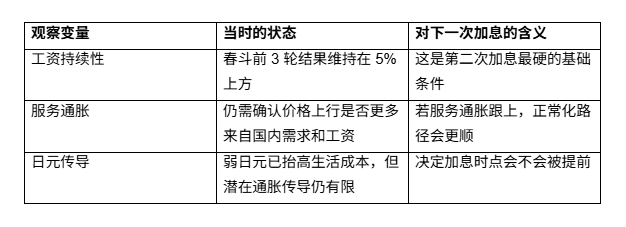
The later rounds of spring negotiations showed no significant decline. The second round was 5.25%, and the third round was 5.24%. This does not mean Japan has completely shaken off its low-inflation mentality, but it at least indicates that the data from the first round is not an isolated spike. For the Bank of Japan, this "not quickly dropping back down" state is itself crucial, as it provides space for policy to continue moving forward.
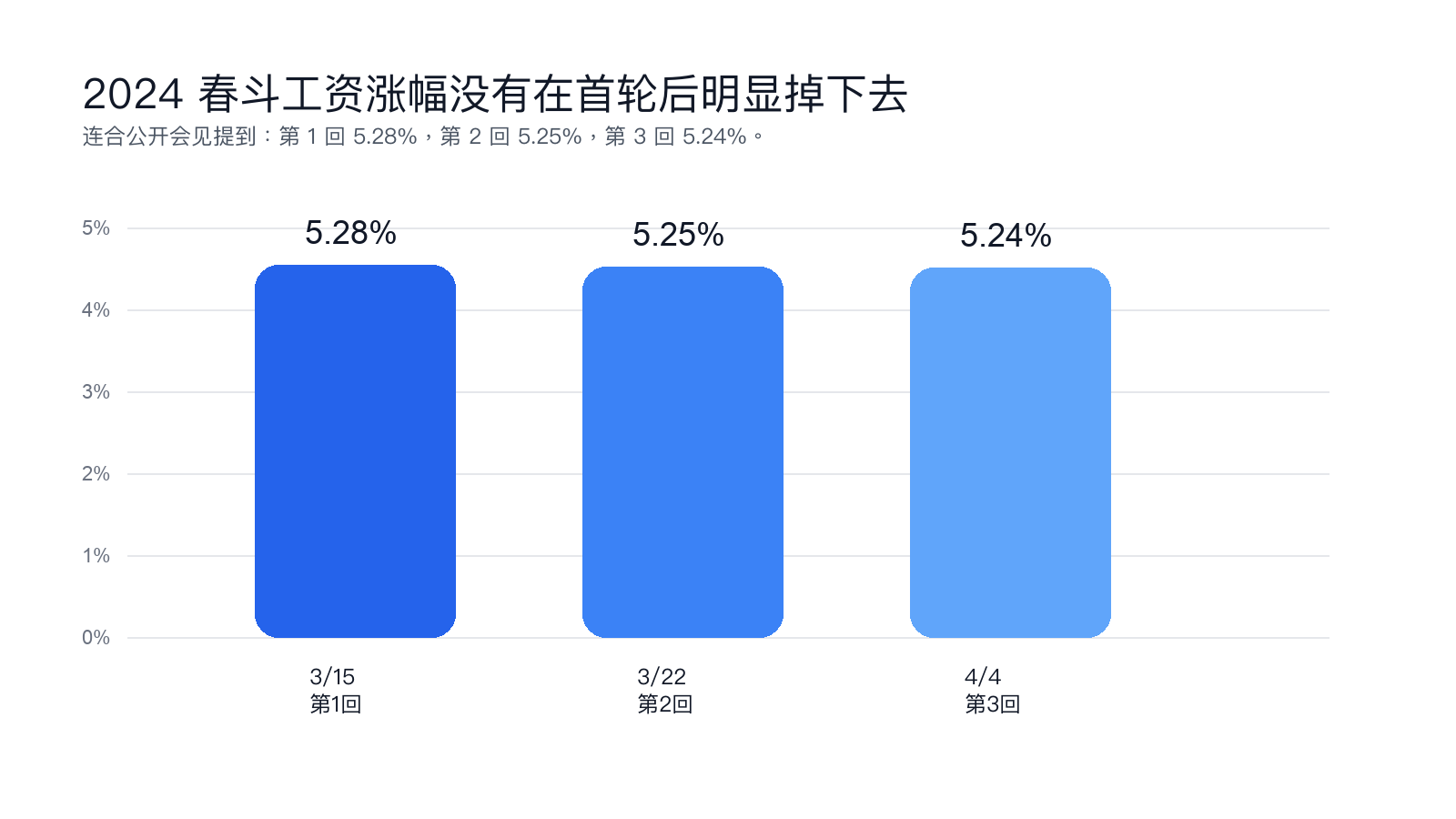
Figure 3: The first three rounds of the 2024 spring negotiations maintained results above 5%
3. The exchange rate is important, but it is not a sufficient condition
It is easy for outsiders to directly link "weak yen" with "continued rate hikes," but the Bank of Japan's statements are not that straightforward. The signal on April 19 was hawkish because Ueda clearly stated that if the exchange rate continued to push up prices, monetary policy could not completely ignore it. However, on April 26, the Bank of Japan tempered the market a bit: it believed that the depreciation of the yen had not significantly changed its judgment of potential inflation.
Putting these two statements together presents the Bank of Japan's true thinking. The exchange rate is certainly important, but it is only a trigger; it is not a button that can solely determine rate hikes. Only when a weak yen consistently raises food and living costs, and this pressure continues to influence wages, service prices, and inflation expectations, is policy more likely to advance.
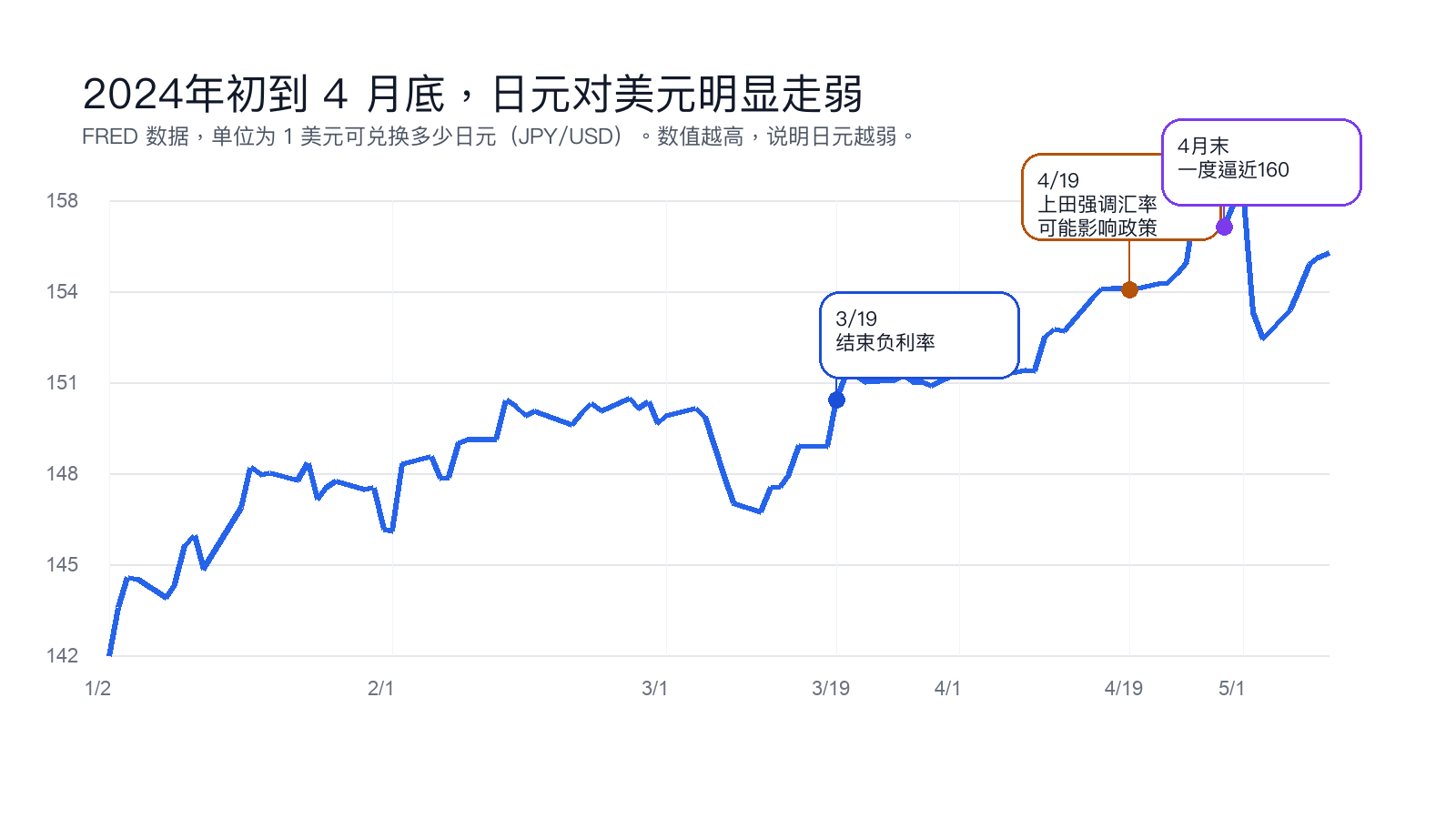
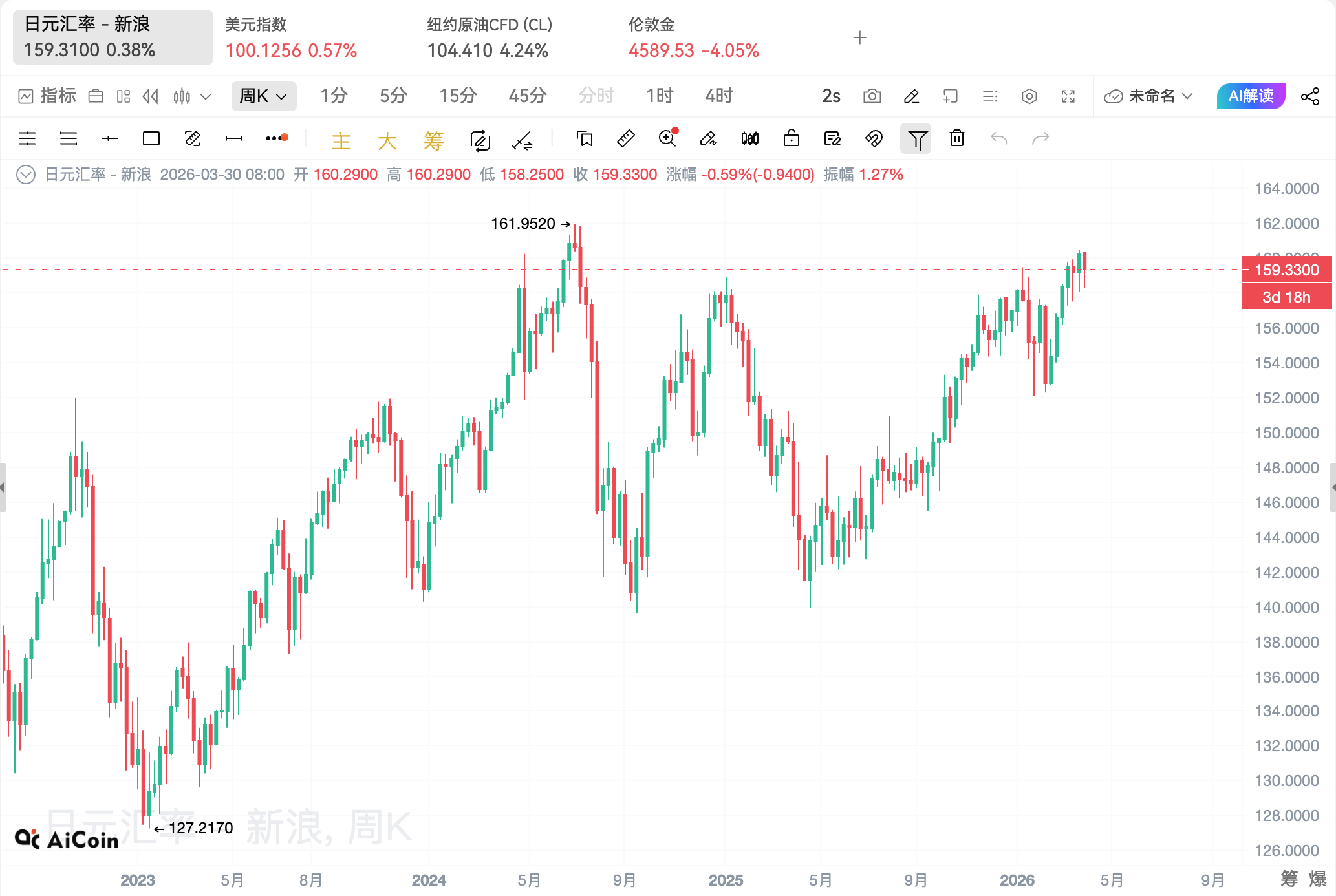
Figure 4: From January to April 2024, the USD/JPY exchange rate rose, with the weak yen pushing imported inflationary pressures back up
4. Do not overlook the external variable of the Strait of Hormuz
Another easily overlooked but very sensitive variable for Japan is the Strait of Hormuz. Japan's crude oil imports rely heavily on the Middle East. Data from the Japanese Ministry of Economy, Trade and Industry shows that Japan's dependence on the Middle East for crude oil imports exceeds 90%; the U.S. Energy Information Administration also pointed out that the Strait of Hormuz remains one of the world's most critical maritime oil transportation routes. For Japan, this means that once transportation in the strait is disrupted, the shock of oil prices will not stay at the level of international news but will quickly transmit to costs for domestic fuel, electricity, logistics, and food.
Such shocks do not automatically equate to the idea that "the Bank of Japan will raise rates." It is more likely to lead to a trickier situation: on one side, energy prices and import prices are pushed up again, while on the other side, households' actual purchasing power is squeezed, and economic growth faces pressure. If the risks from the Strait of Hormuz combine with the weak yen, the Bank of Japan's tolerance for imported inflation may decrease, and the tone may become more hawkish; but if the oil price shock feels more like a short-term supply disruption, the central bank may not be willing to hastily tighten due to external events. What really changes is often not the direction, but the timing and wording.
If you want to translate macro judgment into practical preparation
If you are already following this kind of topic, what is really useful is not to conclude after reading an article, but to prepare your accounts, market lists, and observation frameworks in advance. Variables like yen, crude oil, gold, and U.S. Treasury yields often move together. When the day of a policy or geopolitical event arrives, trying to find trading entries at the last minute will usually be too late.
If you do not have a trading account yet, you can prepare one using AiCoin's OKX account opening link.
Link:
https://jump.do/zh-Hans/xlink-proxy?id=2, invitation code `aicoin20`, permanent commission rebate of 20%.
5. Why the Bank of Japan won't lay out the path too clearly
Because it knows that the Japanese economy is not strong enough for it to confidently tighten policy. Consumption recovery is not solid, and companies' pricing power does have its limits. If price increases mostly stem from import costs rather than genuine stability in domestic demand, then too early and too quickly continuing to raise rates might push the just emerged positive cycle back down.
This is why both the governor's statements and the overall style of the policy committee tend to lean towards the same core message: make fewer forecasts and pay more attention to data. The market desperately wants a clear roadmap, but the Bank of Japan is more likely to provide conditions without a timetable. It will let the data answer questions one by one rather than commit to a schedule in advance.
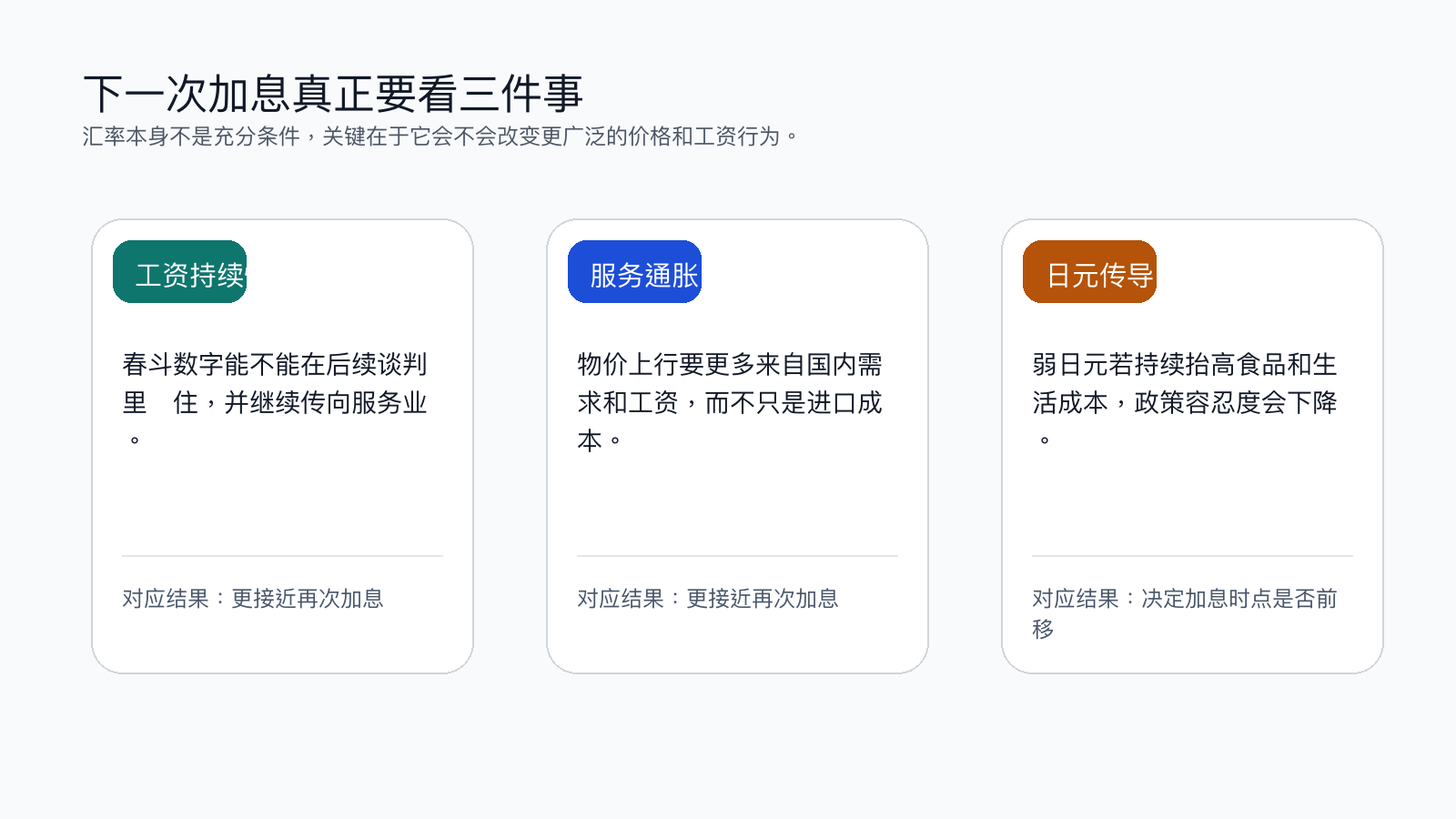
Figure 5: To judge the next rate hike, what to focus on is not the calendar but these three things
6. Conclusion
Therefore, the answer is not "will there definitely be a hike in April." A more realistic statement is that in the period from March to April 2024, the second rate hike has transitioned from a low-probability scenario into a situation that needs serious discussion. What truly determines when it will land is not a hawkish statement, but three slower matters: whether wages can remain stable, whether service inflation can keep pace, and whether a weak yen will continue to push price pressures out to a broader scope.
For the market, this is sufficient. Even if the Bank of Japan's future path remains shallow, as soon as the expectation that "Japan will always stay near zero" begins to loosen, the pricing of the yen, Japanese government bond yields, and global arbitrage will all change accordingly. What to focus on is not speculation the day before a particular meeting, but whether these underlying conditions continue to accumulate in the same direction.
If you want to continue tracking this line
If you want to keep following this line, a more convenient approach is to view USD/JPY, crude oil, gold, and global macro events on the same interface. Compared to monitoring news individually, this makes it easier to judge whether a change in tone is a short-term sentiment shift or is rewriting asset pricing.
On AiCoin, you can directly view relevant markets and event pages, which are suitable for continuously tracking themes intertwined with "central banks + exchange rates + geopolitical risks."
免责声明:本文章仅代表作者个人观点,不代表本平台的立场和观点。本文章仅供信息分享,不构成对任何人的任何投资建议。用户与作者之间的任何争议,与本平台无关。如网页中刊载的文章或图片涉及侵权,请提供相关的权利证明和身份证明发送邮件到support@aicoin.com,本平台相关工作人员将会进行核查。