We are excited to announce that AppWorks has invested in Sanctum's native token $CLOUD. This investment symbolizes our long-term belief in the Sanctum founding team and our recognition of the strong moat they have built over the years.
In this article, we will share why we believe Sanctum is one of the most important infrastructures in the Solana ecosystem; how it will reshape the most misunderstood vertical in the cryptocurrency space, and why Sanctum is on the brink of a breakout.
Sanctum: Breaking the Mold of Solana LST
To understand Sanctum, we first need to grasp the history of Solana's liquid staking tokens (LST).
For a long time, most people assumed that Solana's liquid staking market would follow Ethereum's script: a dominant player (like Lido) would emerge, and the market share of other competitors would gradually be eroded by this leader. Therefore, in the early days of the Solana liquid staking market, many protocols rushed to replicate the Lido model, trying to achieve economies of scale and dominate the space early on.
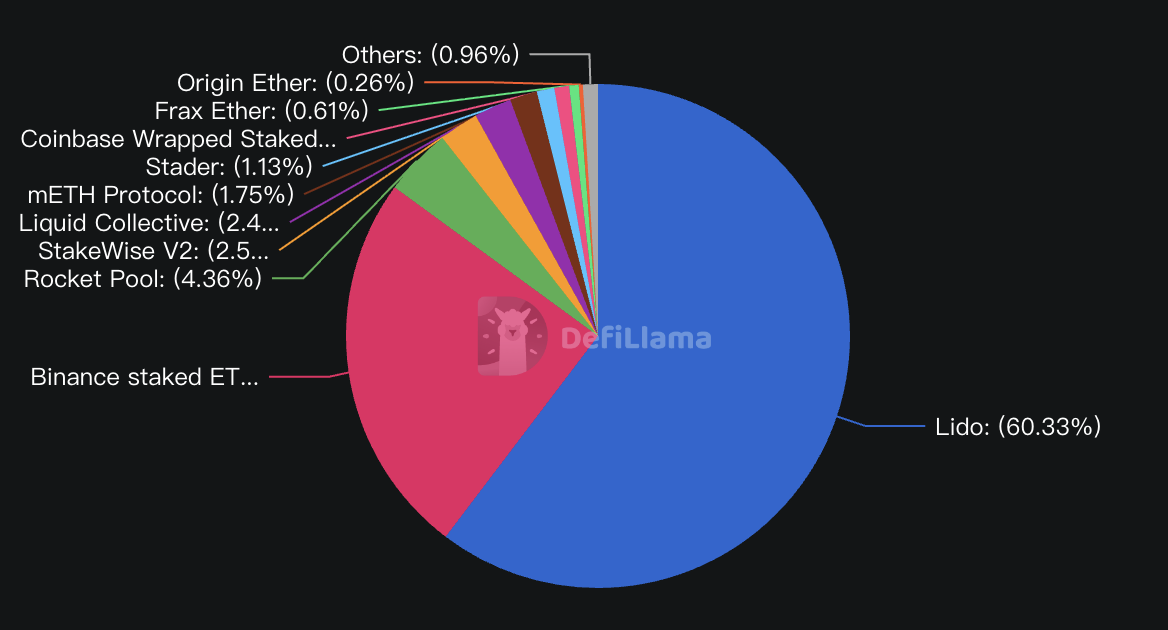
However, the most insightful founders often see details that others overlook.
FP Lee, the founder of Sanctum and a core contributor to the design of Solana's staking account contracts, recognized early on that Solana's architectural setup is fundamentally different from Ethereum's. Each staking account is essentially modular, transferable, and composable. This means that all LSTs on Solana are fundamentally fungible at their core; they are just different wrappers of the same underlying staking account.
With this understanding, the next question becomes obvious: What are we missing in a world where a diverse range of LSTs is destined to exist?
Upon closer inspection, staking pools serve three distinct purposes:
Tokenization: Converting native staking accounts into yield-bearing SPL tokens.
Delegation: Achieving high staking yields and decentralizing the network.
Liquidity: Providing instant liquidity for staked SOL.
For FP, his answer was "liquidity."
The reason is simple: Ethereum has already conducted this experiment. Lido's dominance in Ethereum is largely due to stETH being integrated into all major DeFi protocols, with extremely high composability. Years of integration have made it one of the most composable assets on the network, and its advantages in distribution have gradually helped Lido achieve dominance.
On Solana, the same conclusion is even clearer: staking accounts are interchangeable; each staked SOL carries the same economic weight in the transaction flow. In this world, the future of "multiple LSTs coexisting" is a given, and whoever can coordinate liquidity will win this competition.
Thus, FP did not attempt to compete to become the single largest staking pool but saw a bigger opportunity: to become the liquidity layer connecting all LSTs on Solana.
This is the starting point of Sanctum.
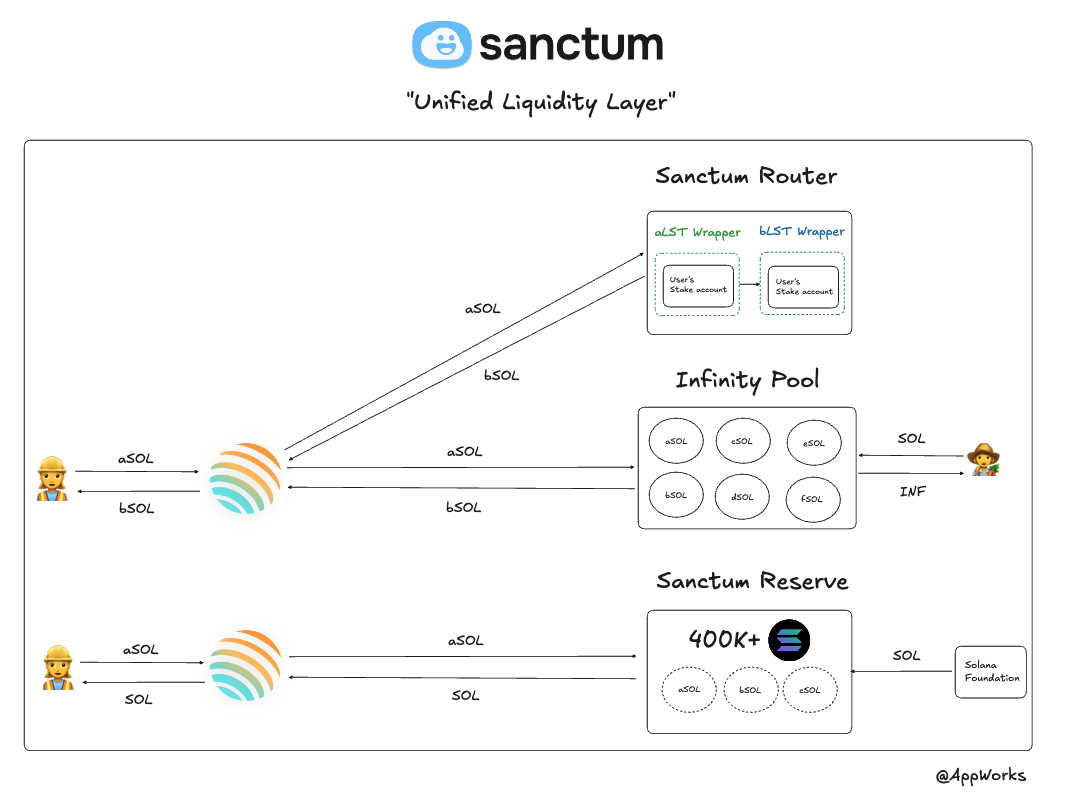
Their approach to solving this problem is closely related to the insights mentioned above. First, they created the "Sanctum Router" to facilitate exchanges between thousands of LSTs. This exchange can be accomplished simply by "unwrapping" and "re-wrapping" the underlying staking accounts.
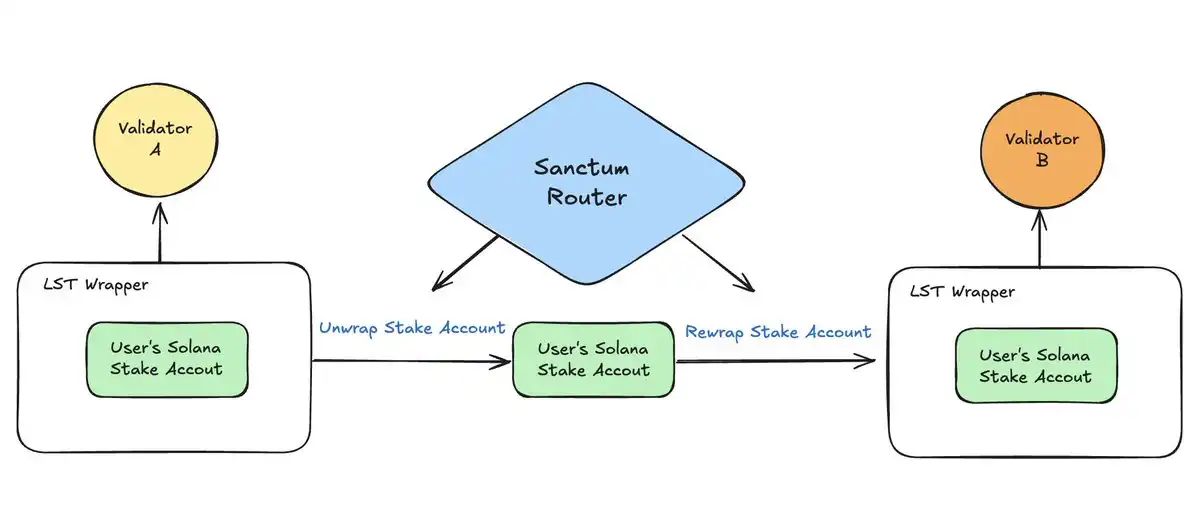
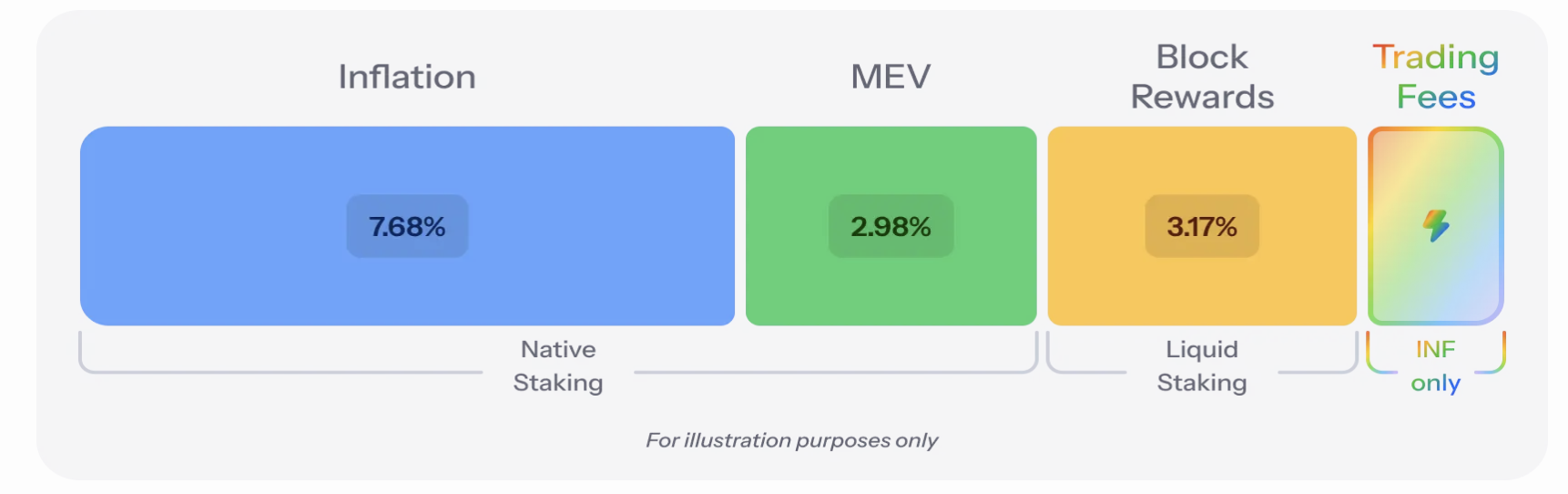
When necessary, these swaps can also be routed to the Infinity Pool, which can be seen as a basket of LSTs managed by Sanctum, all operating under Sanctum's LST issuance infrastructure. When swaps are routed into Infinity, transaction fees are distributed to the liquidity providers of the Infinity Pool (i.e., $INF holders).
This design enhances the liquidity of the entire Sanctum LST ecosystem while making $INF itself one of the most attractive LSTs on Solana.
Finally, Sanctum manages a substantial reserve of native $SOL, shared by all LSTs under the Sanctum brand. For any project, they do not need to build millions of dollars in liquidity pools themselves; they can simply issue their LSTs through Sanctum without worrying about the cold start problem of liquidity.
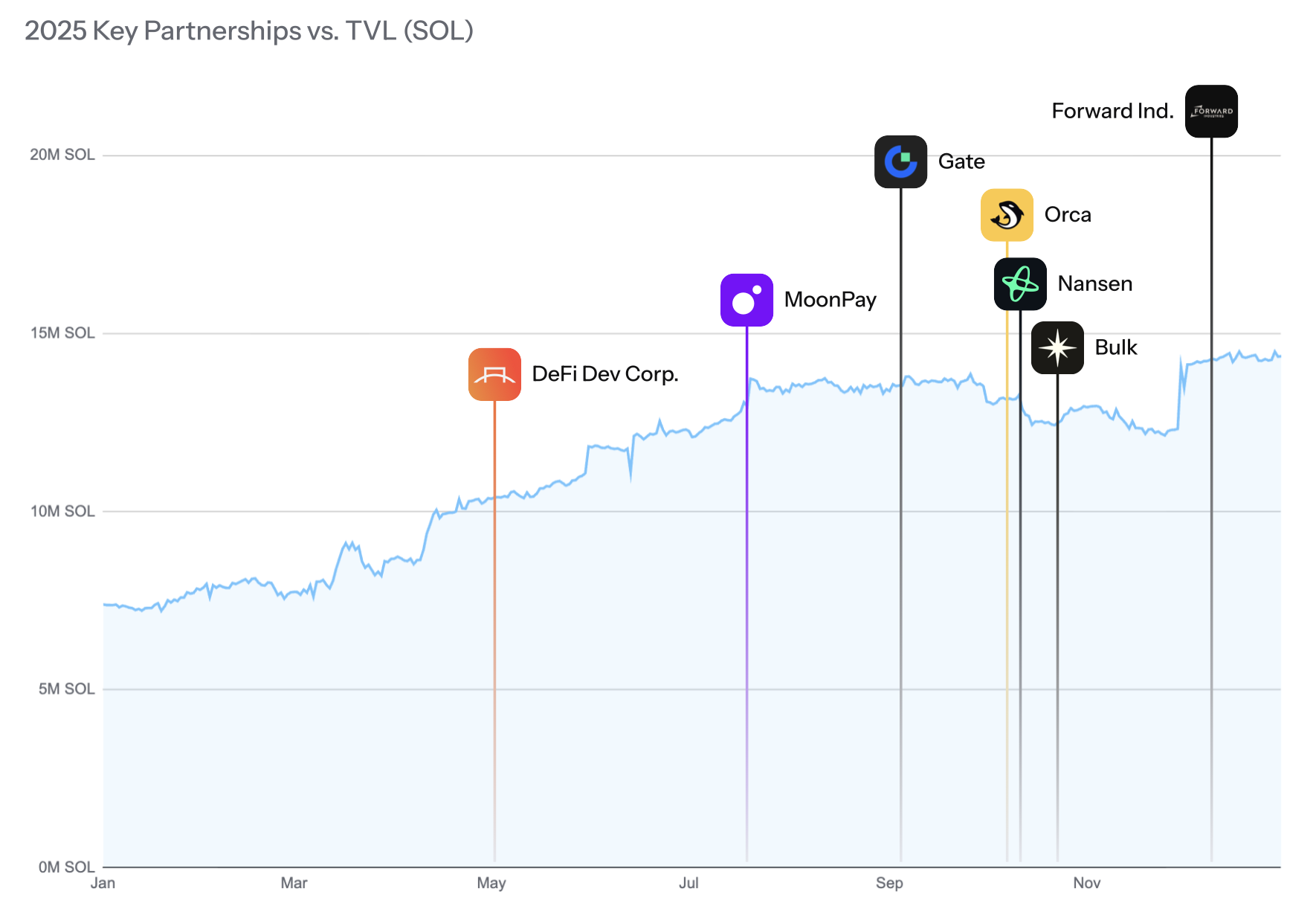
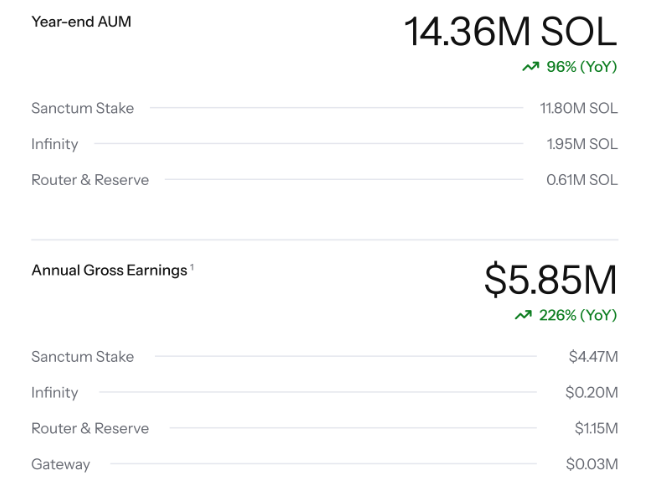
In less than two years, Sanctum has partnered with major players in the field such as Bybit, Crypto.com, and Backpack, managing over $2 billion in $SOL. By the end of 2025, Sanctum ended the year with record metrics: total assets under management reached 14.36 million SOL (a 96% year-over-year increase), and annual revenue reached $5.85 million (a 226% year-over-year increase).
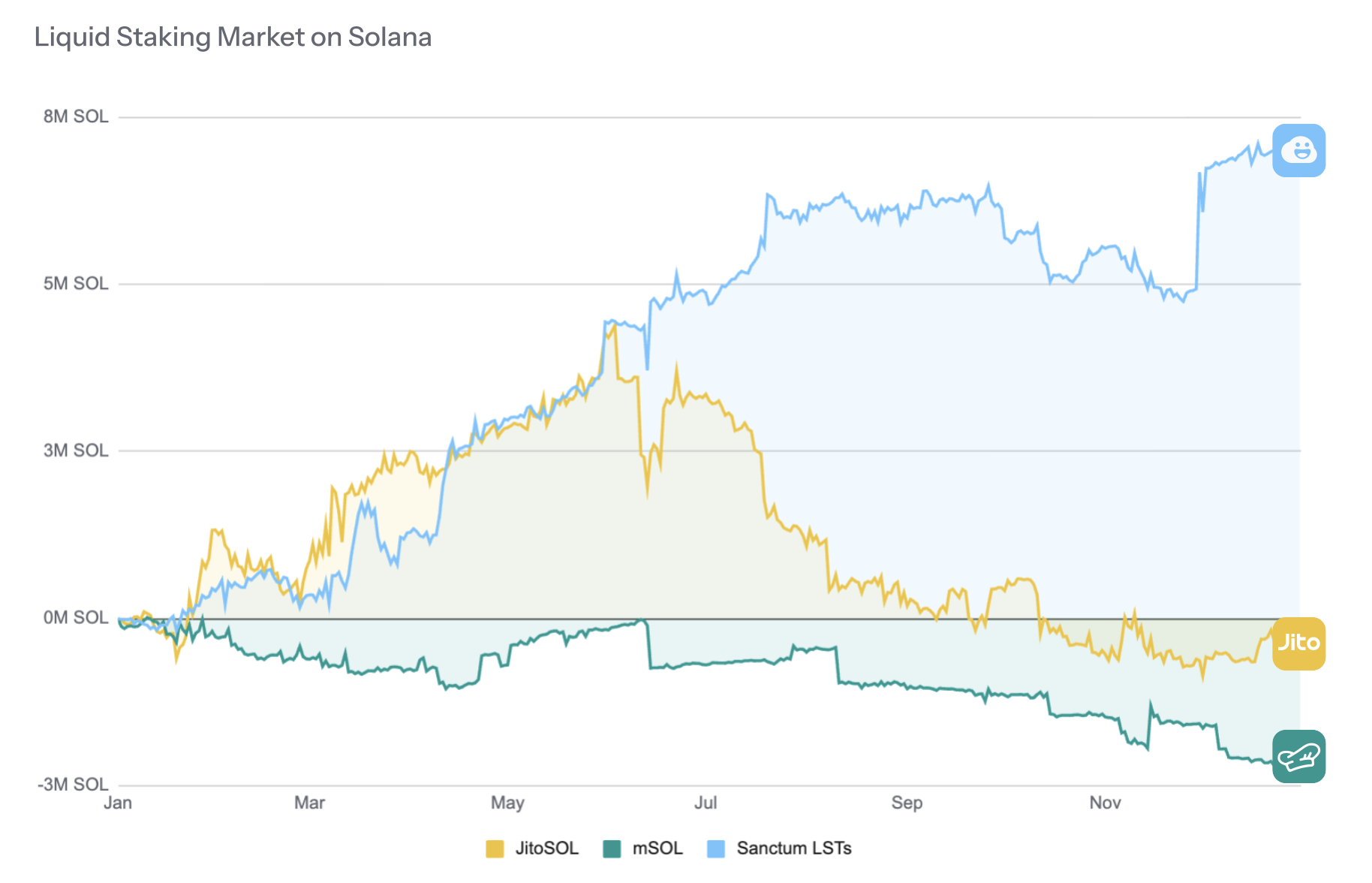
Another impressive metric is Sanctum's dominance in the Solana LST category in 2025; Sanctum achieved a net cumulative inflow of nearly 8 million $SOL, while its two main competitors, Jito and Marinade, ended the year with net outflows in their LST products. This gap highlights Sanctum's compounding competitive advantage in liquidity moats within the LST market.
Looking back, it is easy to think that all of this was inevitable, as if Sanctum's rise was destined. But the truth is that it is the result of the Sanctum team's relentless perseverance, continuous iteration, and maintaining faith during the market winter over the past five years. This leads us to the first and most important reason for our investment: founder FP Lee.
Investment Thesis #1: Our Core Belief in Founder FP Lee
Seeking Non-Consensus Insights
We see a unique ability in FP: he can see what others miss and delve deep into a concept until reverse insights emerge.
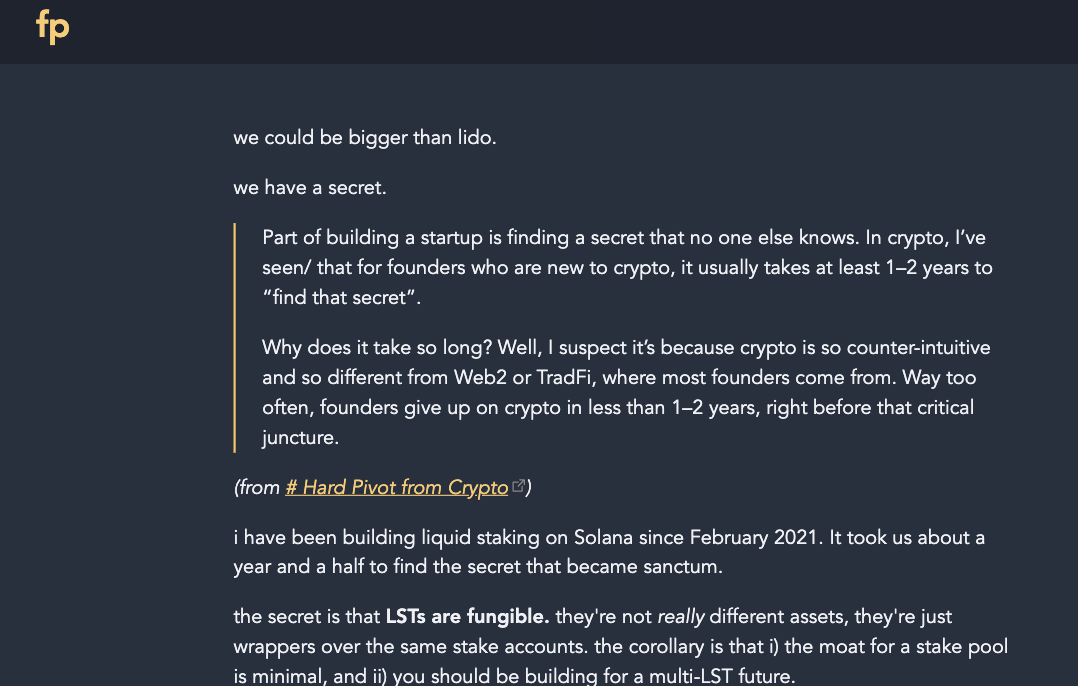
In 2023, when many were racing to build a "Solana version of Lido," FP noticed something upstream: Solana's staking accounts are designed to be modular and homogeneous. This single observation disrupted the entire script. He did not compete to become the largest staking pool but instead built Sanctum as a liquidity layer connecting every LST, fundamentally changing the game.
Now, after years of building in the Solana ecosystem, he has discovered another inefficiency that few have noticed: the unpredictability of the Solana transaction layer. In short, we believe his recent acquisition of Ironforge and the launch of Gateway reflect the same pattern: digging deep enough to find structural bottlenecks and then building the missing infrastructure that others often take for granted.
Deep Connection with the Community
We believe that a founder's ability to build community in the crypto world is often underestimated. For us, FP is one of the few founders who not only "manages" the community but also "co-builds" with the community.
The Wonderland event held by Sanctum before the token generation event (TGE) was not just another points farm; Sanctum turned it into a collaborative, gamified task layer where users staked LSTs to earn experience points and collectively complete community challenges, making participation sticky rather than merely profit-driven.
The results were stunning, with Sanctum's TVL growing by 171% in 38 days, and the community forum spawned regular activities (such as the Cloudfam Emoji Clan competition), allowing members to continue creating and recruiting long after the initial airdrop, showcasing organic momentum rather than paid traffic. Their community (later affectionately called CloudFam) became one of the most powerful grassroots movements on Solana.

What most people do not know is how much effort FP and the team put in to demonstrate this care. When the $CLOUD airdrop occurred, they did not just run a script or calculate numbers in a spreadsheet. They manually sifted through thousands of Discord channels and Telegram chat records to identify true loyal users and rewarded them far more generously than most projects.
Tokens are ultimately the second product of the founder. Doing "Token Investor Relations" well is not just about managing price; it is about building trust, transparency, and a sense of belonging. Many founders say they care about token holders, but few truly walk the talk.
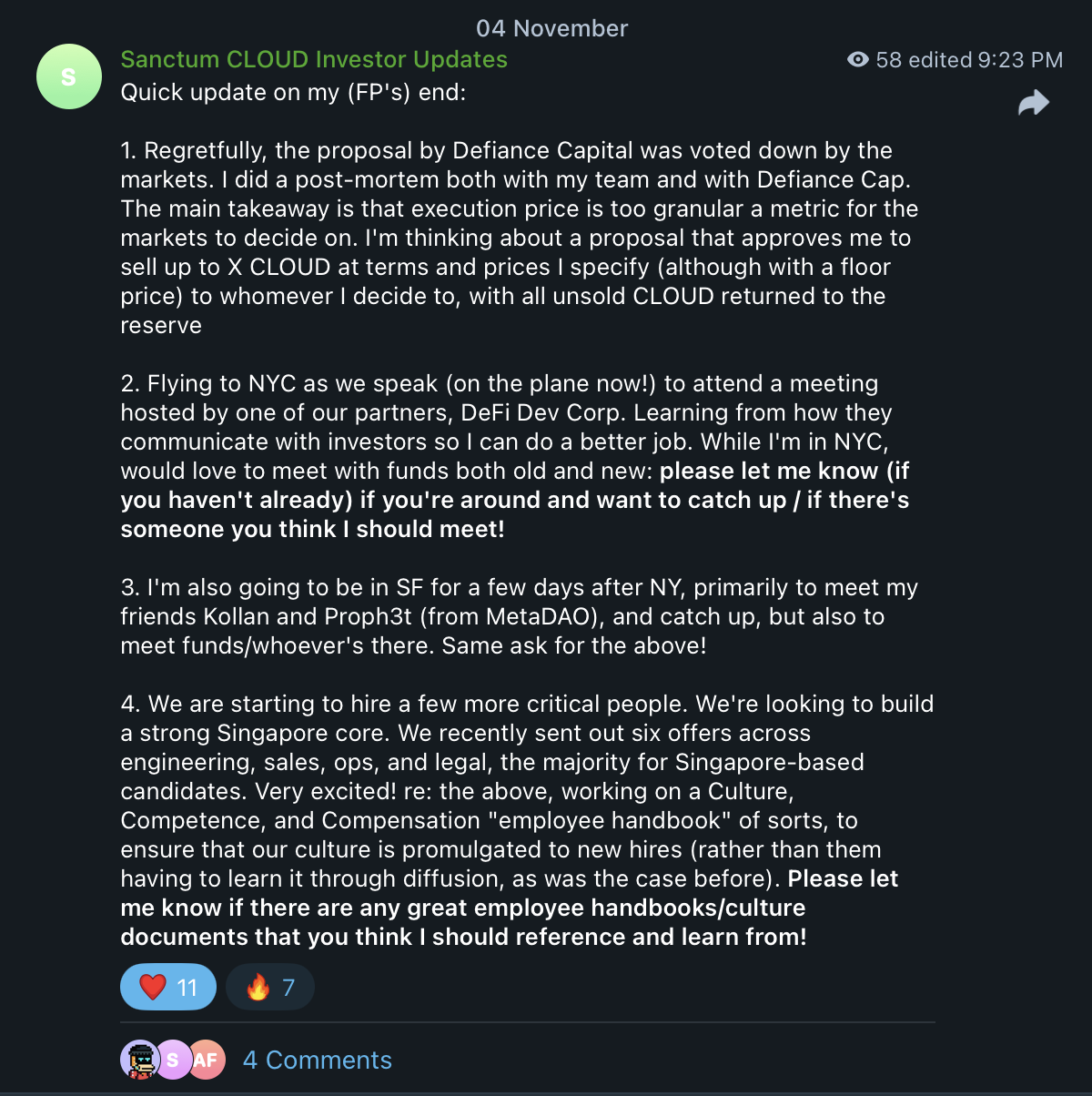
FP is one of the few founders who practice what they preach. From publishing monthly updates to continuously interacting with users on Discord, he views community building as a craft that he is still optimizing and passionate about. Over time, this authenticity will create a compounding effect, transforming the user base into a force closer to a "movement." We believe this will remain one of Sanctum's strongest long-term differentiators.
Finding Destiny
FP did not initially intend to become a founder. Before entering the cryptocurrency space, he was just a young software engineer trying to find his direction. He stumbled into Solana out of curiosity and a desire for growth, and he stayed because he found his destiny along the way.
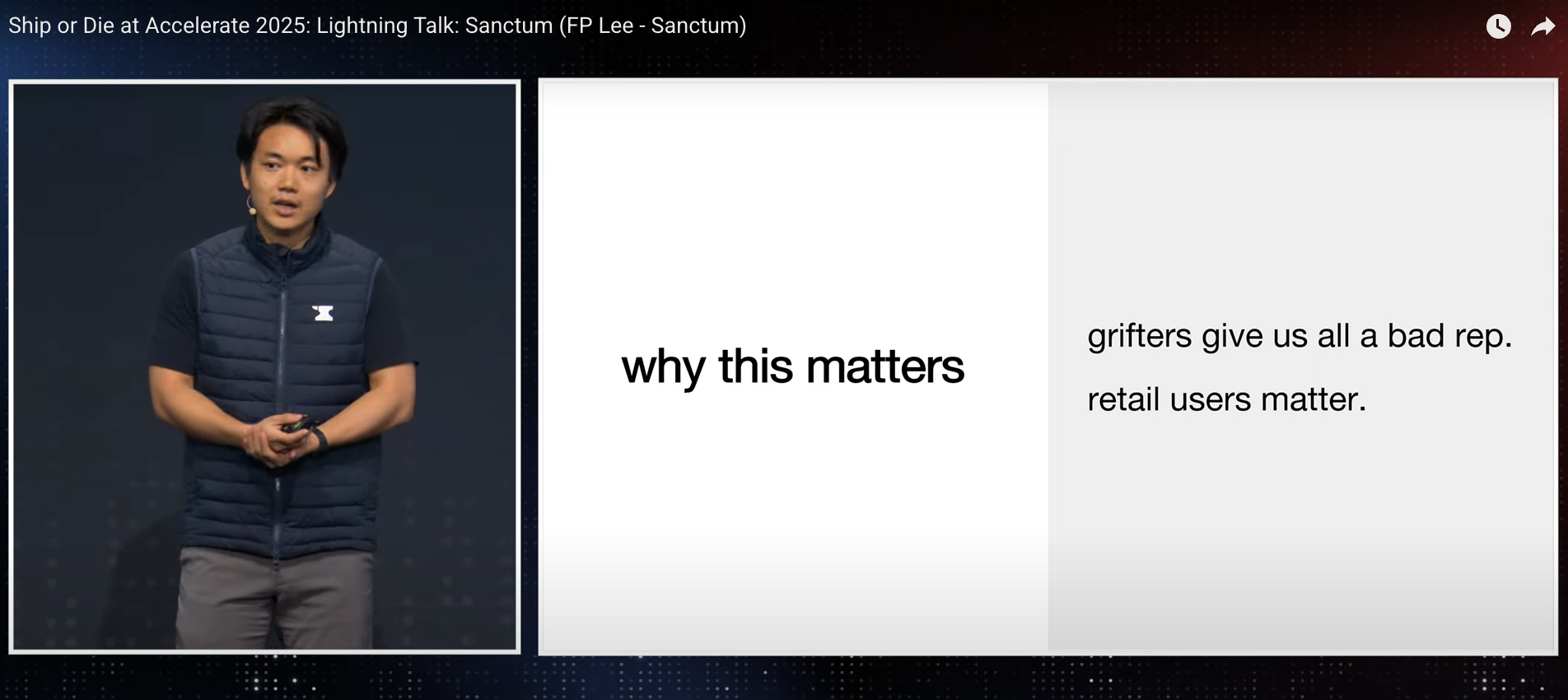
This discovery of destiny comes from engaging in what he truly loves. After years of building in the crypto space, FP has experienced many events: the collapse of FTX, many founders fleeing with user funds, projects recklessly betting away entire treasuries, and so on. In an industry often shrouded in short-termism and greed, FP wants to prove that even in 2026, you can still build a great product, maintain transparency, and succeed in the right way.
While this may sound somewhat ethereal, even cliché, we believe it is one of the most lacking yet powerful driving forces in this industry, and it is precisely the mission we want to support.
Investment Thesis #2: Several Positive Catalysts for Sanctum LST Are Brewing
We see several catalysts for Sanctum LST and firmly believe that everything is in place, just waiting for the right moment.
Solana LST Is Still in Its Early Stages and Growing
The penetration rate of Solana LST has grown 4.4 times in two years, from 3% to 13.3%. This acceleration is actively driven by the emergence of ecosystem infrastructures like Sanctum and the increasing demand from node operators to capture LSTfi market share.
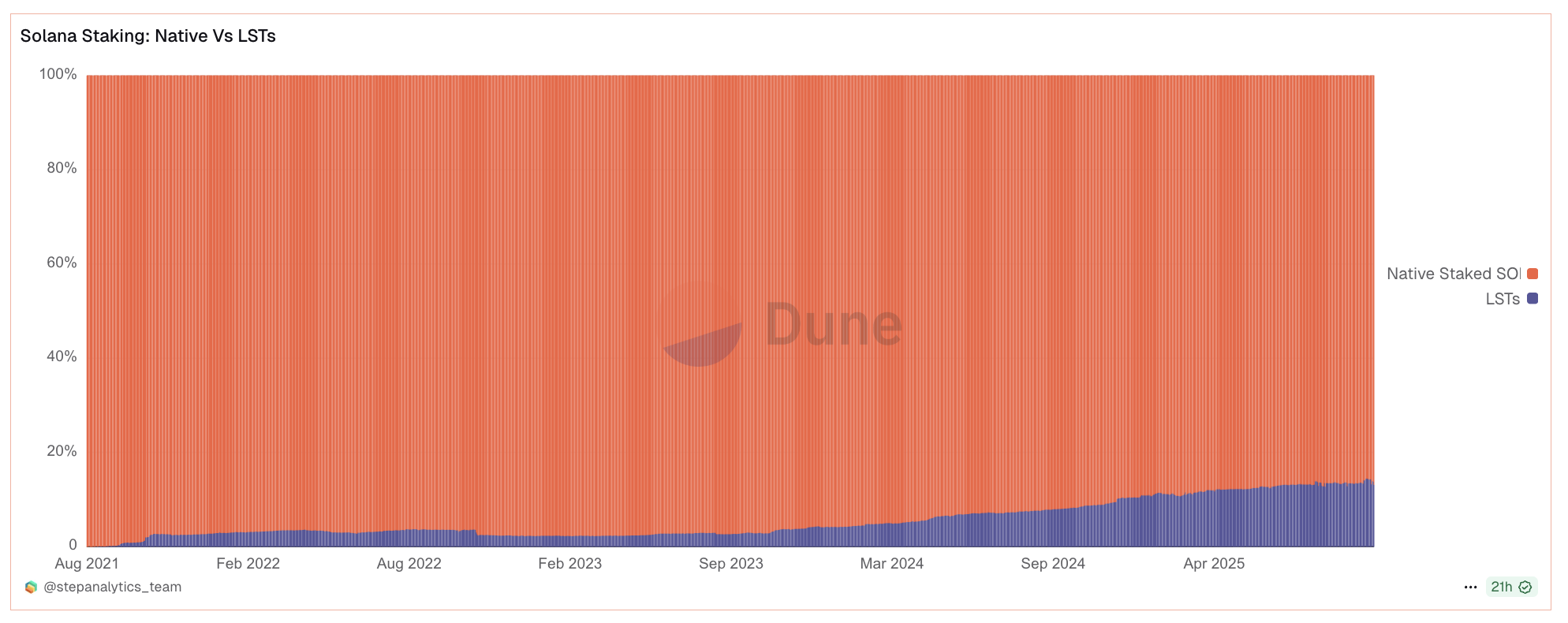
However, this 13.3% penetration rate means that the majority of staked $SOL remains illiquid. Compared to Ethereum's more mature market (with a penetration rate close to 35-40%), it is clear that Solana's liquid staking layer—key to unlocking capital efficiency and composability—is still in its early stages.
In this context, we believe Sanctum is at a turning point. Sanctum's product suite (Router, Reserve, Infinity) is explicitly designed as a neutral liquidity hub. This creates a strong moat, making Sanctum the default aggregation point in this rapidly expanding and fragmented market.
Network Effects of LST
For any protocol issuing new LSTs, they do not want to build millions of dollars in liquidity pools themselves. Instead, the simplest approach is to connect to Sanctum and focus solely on branding, core products, and distribution; Sanctum provides the liquidity layer (Router + Reserve + Infinity), allowing these LSTs to swap with the rest of Solana from day one. This is what we are witnessing. This alliance is becoming stronger every day. So far, Sanctum is serving all the largest clients, such as Jupiter, Bybit, and Backpack.
More integrations → More supported LSTs → More interchangeable paths → Deeper utility across DeFi. This flywheel effect is hard to catch up with.
Institutions Are Also Adopting Solana LST
The competition for Solana yields is rapidly evolving, extending beyond the realm of DeFi-native protocols. A new wave of larger, more mature capital—from traditional financial asset management firms, potential SOL staking ETFs, to publicly listed companies (like DATs)—is entering this arena.
For these entities, the base staking yield is just the starting point. To attract large assets under management (AUM), they must offer compliant, branded, and highly differentiated liquidity products. This requires layering unique validator strategies, transparent reporting, and deep DeFi integration on top of the base LST.
This is where Sanctum becomes a key enabling infrastructure. As a neutral, modular platform, it provides a full-service "Staking-as-a-Service," allowing any entity to issue its own LST. It enables them to retain complete control over financial strategies and branding while outsourcing the deep technical complexities to Sanctum's proven liquidity layer and composable backend.
We have already seen strong validation. In May 2025, publicly listed company DeFi Development Corp (NASDAQ: DFDV) launched dfdvSOL using Sanctum's infrastructure. This marks the first time a publicly listed company has held and used a customized Solana LST. Their explicit goal is to contribute liquidity back to the Solana DeFi ecosystem, creating a flywheel effect that also benefits their own balance sheet.
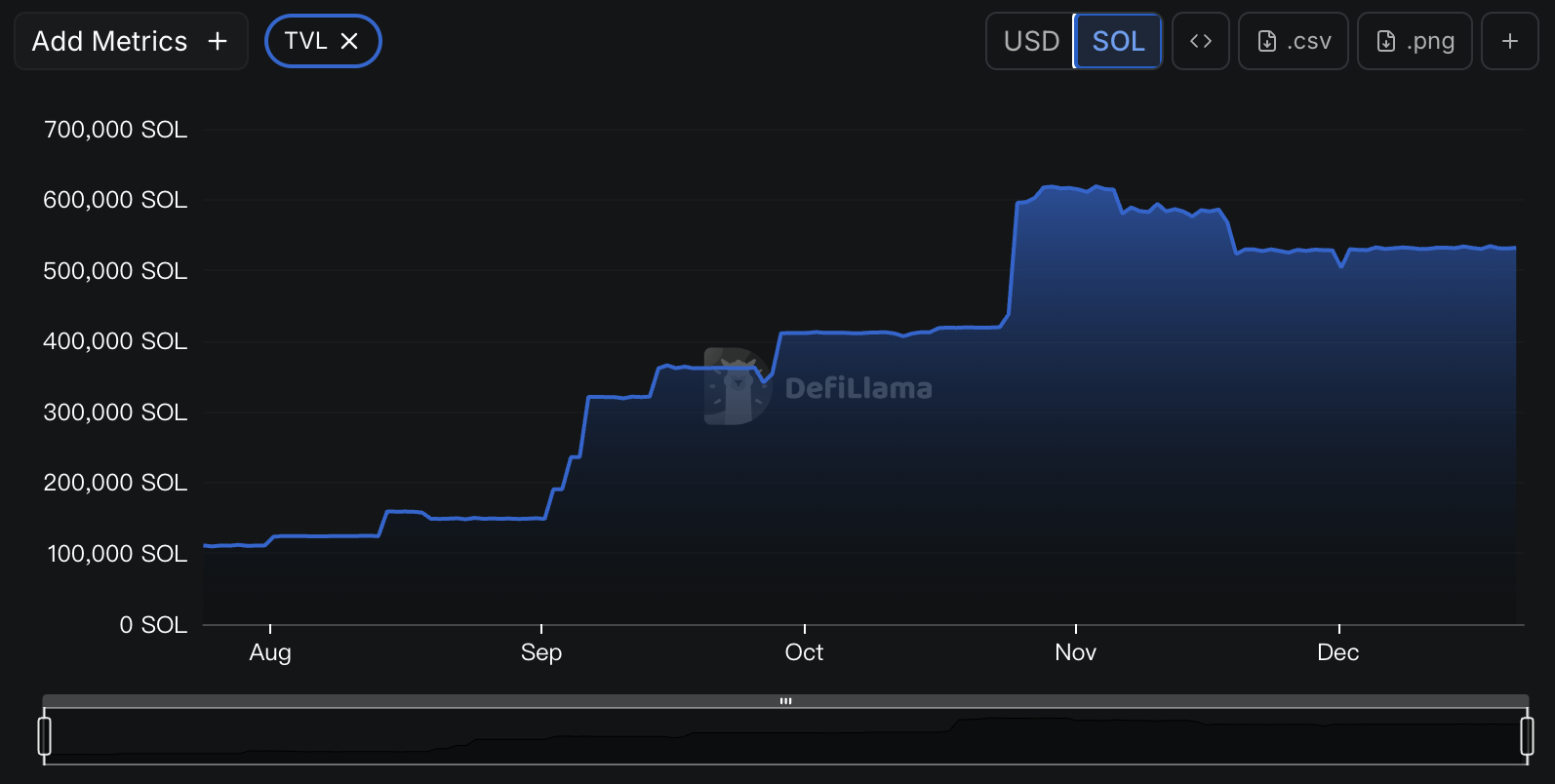
Our core belief is that as more structured SOL products emerge to compete for this new capital, Sanctum will become their default issuance partner and liquidity backbone.
Our argument is clear: in the medium to short term, Sanctum is the most undervalued infrastructure asset in this wave of institutional interest, quietly becoming the necessary pipeline relied upon by every major yield-generating Solana product.
Investment Thesis #3: Sanctum App Will Become the Essential Entry Point for Solana
At the 2025 Solana Breakpoint conference, Sanctum unveiled its latest creation: the Sanctum App. This is a lightweight mobile application designed to help users easily grow their $SOL holdings in a fun, gamified environment through daily rewards.
Returning to our initial argument, the main reason Sanctum LST has not yet reached peak market penetration is the inherent friction in the current DeFi user experience (UX). It is easy to forget that many $SOL holders exist entirely outside the "DeFi bubble." They are not interested in the technical intricacies of Solana's architecture or the complex mathematics behind LST yields; the only way to reach them is to abstract away these complexities.
Following the tremendous success of Wonderland, we are doubly confident that the Sanctum founding team is one of the few with this "gene": not only able to build a community but, more importantly, able to earn the community's lasting trust. From the perspective of team genetics, we are confident they can create miracles again.
From a product perspective, this journey has formed a complete closed loop. The Sanctum team is a pioneer in transforming the complex concept of staking accounts into user-friendly LSTs. Now, they are expanding this mission to a broader audience. Looking ahead, we expect the Sanctum App to become the primary interface and entry point for everyday users, while Sanctum LST continues to serve as the cornerstone of the entire Solana infrastructure.
Conclusion
When we look at Sanctum, we see not just a protocol but the foundation for the next chapter of Solana: at its core is FP, a founder filled with long-term thinking, building products with faith and passion, leading Sanctum from a simple idea to the liquidity fabric of Solana, and now further expanding into trading infrastructure. Additionally, we anticipate that the LST business will continue to generate compounding effects through strong network effects, institutional adoption, and deep integration across ecosystems.
This is why we are investing. FP and Sanctum represent everything we believe in.
About AppWorks
AppWorks was founded in 2010 and is Asia's leading startup accelerator and venture capital firm. Its ecosystem brings together over 2,000 entrepreneurs, with a fund management scale of $386 million. The AppWorks accelerator focuses on helping early-stage startups achieve the leap from 0 to 1, while the AppWorks venture capital fund supports teams in scaling their growth.
免责声明:本文章仅代表作者个人观点,不代表本平台的立场和观点。本文章仅供信息分享,不构成对任何人的任何投资建议。用户与作者之间的任何争议,与本平台无关。如网页中刊载的文章或图片涉及侵权,请提供相关的权利证明和身份证明发送邮件到support@aicoin.com,本平台相关工作人员将会进行核查。


