Primitive Ventures: The crypto world feels a bit dead.

CN
PANews
Follow
2 hours ago

Author: Dovey Wan, Founding Partner of Primitive Ventures

Translation: Dayu

In 2025, the cryptocurrency industry nearly achieved all expected goals. Structurally, it was supposed to be a glorious year.

But why does it feel… so lifeless?

It's not just that "the price hasn't risen" that makes it feel over. Bitcoin reached a new high. But the atmosphere, sentiment, internal confirmations, follow-ups from other cryptocurrencies, and retail enthusiasm have all changed. Perhaps most concerning is that the once "hot money leading asset" has now lost its appeal in terms of wealth effect and volatility.

Related cryptocurrency assets no longer synchronize with Bitcoin and Ethereum as they did in previous cycles:

  1. Memecoins topped the charts from Q4 2024 to Q1 2025, with the launch of Trump tokens pushing this trend to a climax.

  2. Cryptocurrency stocks peaked around the Circle IPO and began to decline from May to August 2025.

  3. Most altcoins never formed a sustained trend. There was asymmetry during the rise, while the decline was completely dominated by all participants.

Looking at it from a broader perspective, the situation becomes even stranger.

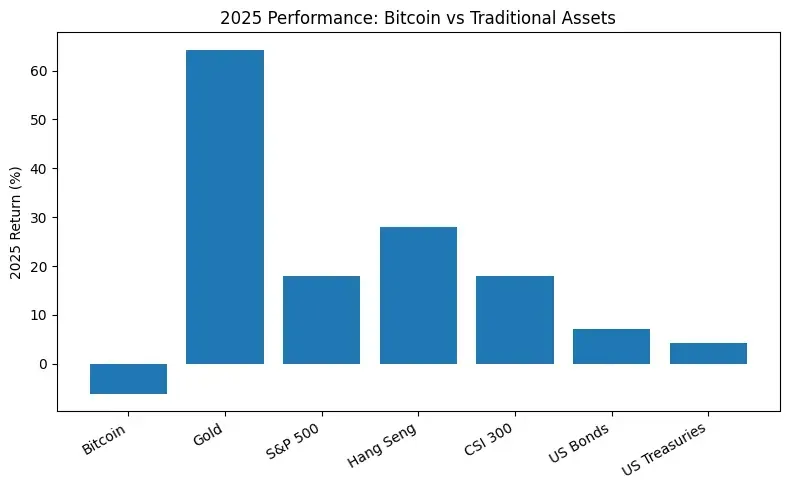
Despite a friendly policy environment, Bitcoin's performance in 2025 was almost worse than all mainstream traditional financial assets, including gold, U.S. stocks, Hong Kong stocks, A-shares, and even some bond benchmark indices.

(Bitcoin compared to other assets, performing poorly)

This is the first time Bitcoin's performance has decoupled from all other asset classes.

This divergence is crucial: prices reached new highs, but internal confirmations were lacking, while other markets performed better. This reveals a simple yet unsettling fact: Bitcoin's liquidity supply chain has undergone significant changes, and its original four-year settlement cycle has been altered by larger forces in other markets.

Therefore, we will delve into who bought at the highs, who exited the market, and where the price bottom lies.

Huge Gap: Onshore Operations vs. Offshore Operations

We have experienced three distinctly different phases in this cycle—

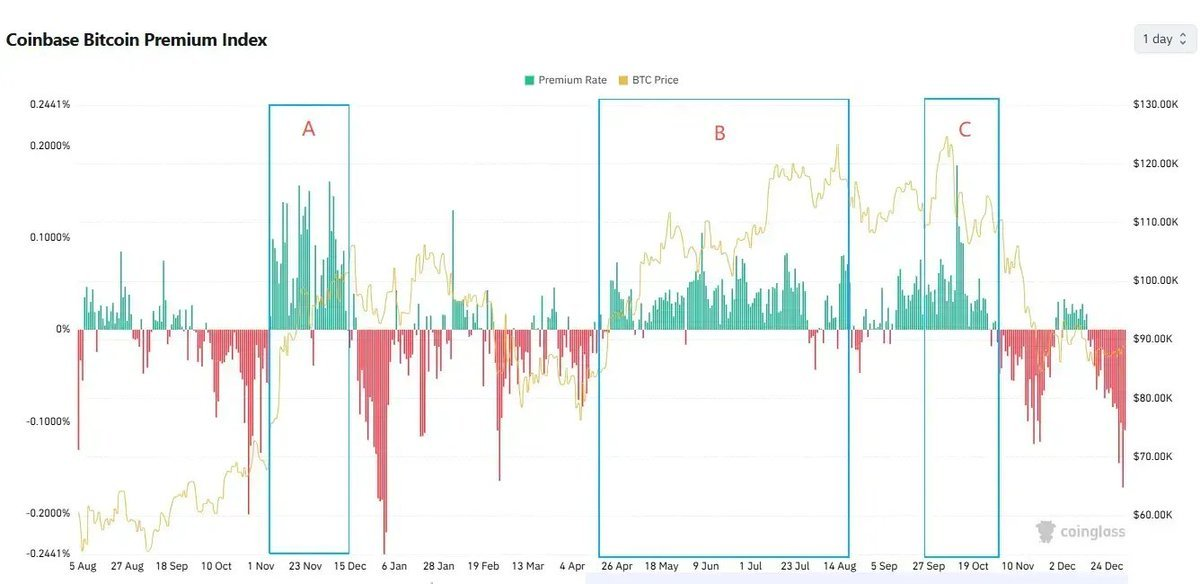
  • Phase A (November 2024 to January 2025): Trump's victory and a more favorable regulatory environment triggered a shared FOMO sentiment among domestic and foreign investors. Bitcoin's price first broke through the $100,000 mark.

  • Phase B (April to mid-August 2025): After a deleveraging sell-off, BTC regained upward momentum and broke through $120,000.

  • Phase C (Early October 2025): BTC reached its current local historical high in early October, then encountered a flash crash on October 10 and entered an adjustment period.

In each phase, we saw a significant difference between U.S. buying and offshore selling—

Spot: Onshore buying breaks through the market, offshore selling strengthens at highs.

  • Coinbase Premium remained positive in phases A, B, and C. High levels of buying demand mainly came from domestic spot funds.

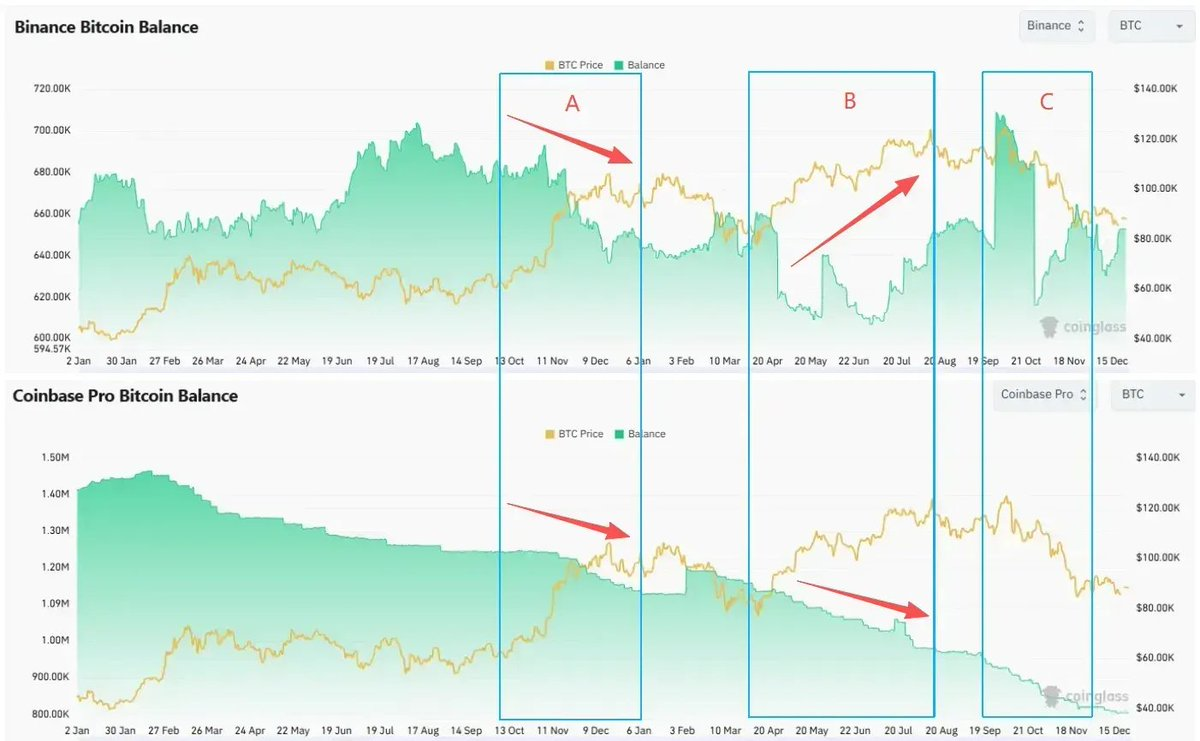
  • Coinbase BTC balances showed a downward trend throughout the cycle. The sellable inventory on the U.S. side decreased.

  • As prices rebounded in phases B and C, Binance balances increased significantly. Offshore spot holders replenished their inventory, leading to potential selling pressure.

Futures: Offshore leverage rises, onshore positions decline

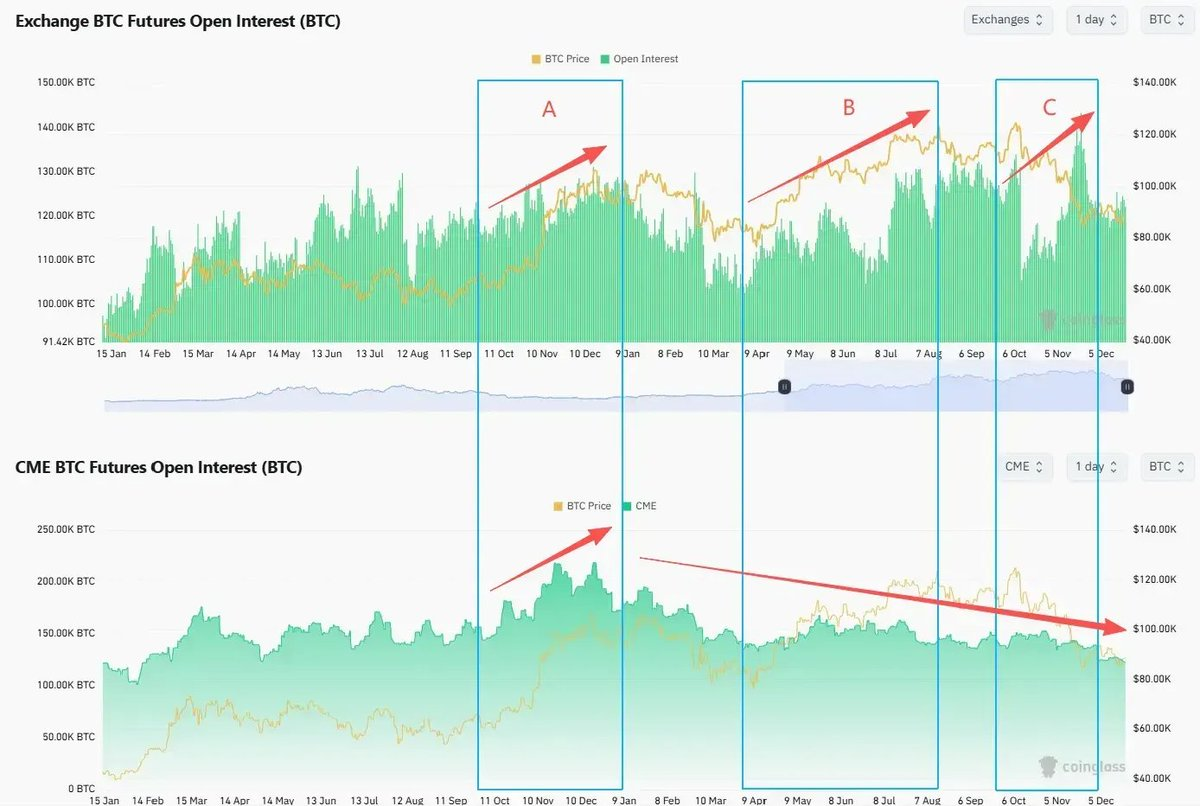
Offshore open interest (Binance and other offshore trading platforms) experienced an increase during phases B and C. Leverage rose. Even after October 10, leverage quickly fell back and returned to or exceeded previous peaks.

Since early 2025, onshore open interest (CME) has shown a downward trend. Institutional investors did not increase their risk exposure despite contracts reaching new highs.

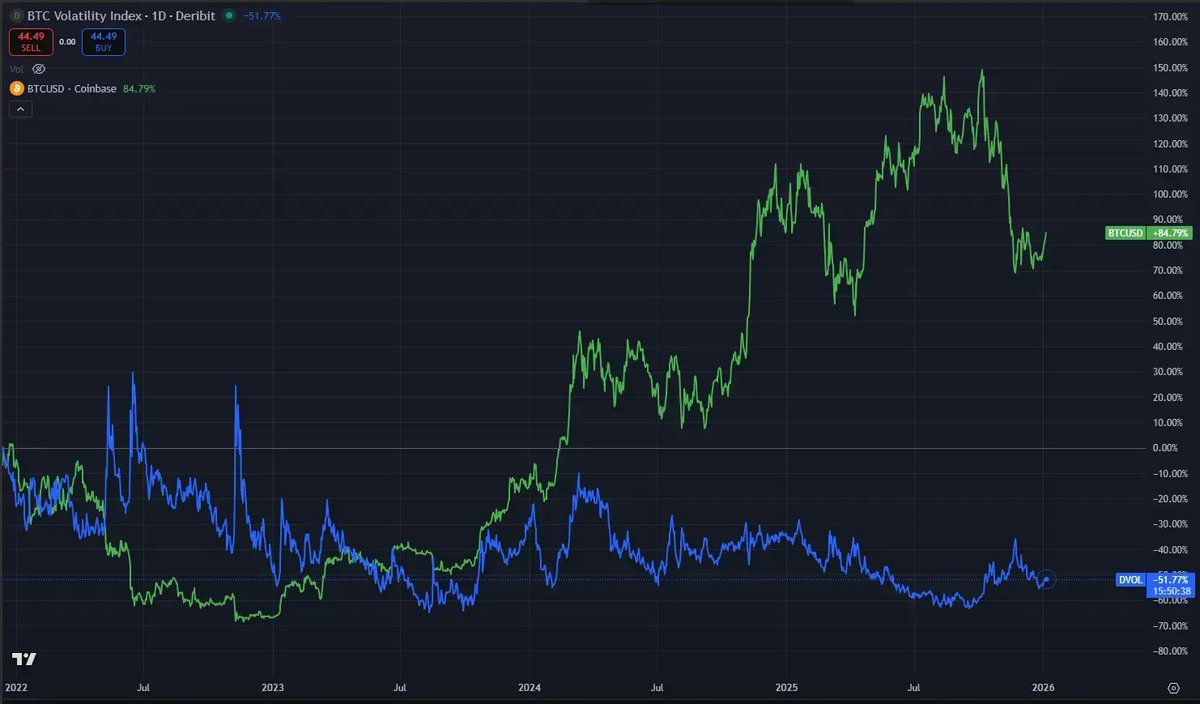
Meanwhile, Bitcoin volatility diverged from price trends.

In August 2025, when Bitcoin's price first broke through $120,000, DVOL approached a local low. The options market did not provide sufficient compensation for ongoing risks.

Each "top" seems to reflect a divergence between domestic and foreign traders. When domestic spot funds pushed prices to break through, offshore spot traders seized the opportunity to sell. When offshore leveraged capital chased prices, domestic futures and options traders reduced their positions and remained cautious.

Where are the Marginal Buyers? Who else can take over?

Glassnode estimates that the number of Bitcoins held by enterprises and DAT-type tools increased from about 197,000 at the beginning of 2023 to about 1.08 million by the end of 2025, a net increase of about 890,000 over two years. DAT has become one of the largest structural investment tools in the Bitcoin system.

Another commonly misunderstood area is ETFs. By the end of 2025, U.S. spot Bitcoin ETFs held about 1.36 million Bitcoins, a year-on-year increase of about 23%, accounting for about 6.8% of the circulating supply.

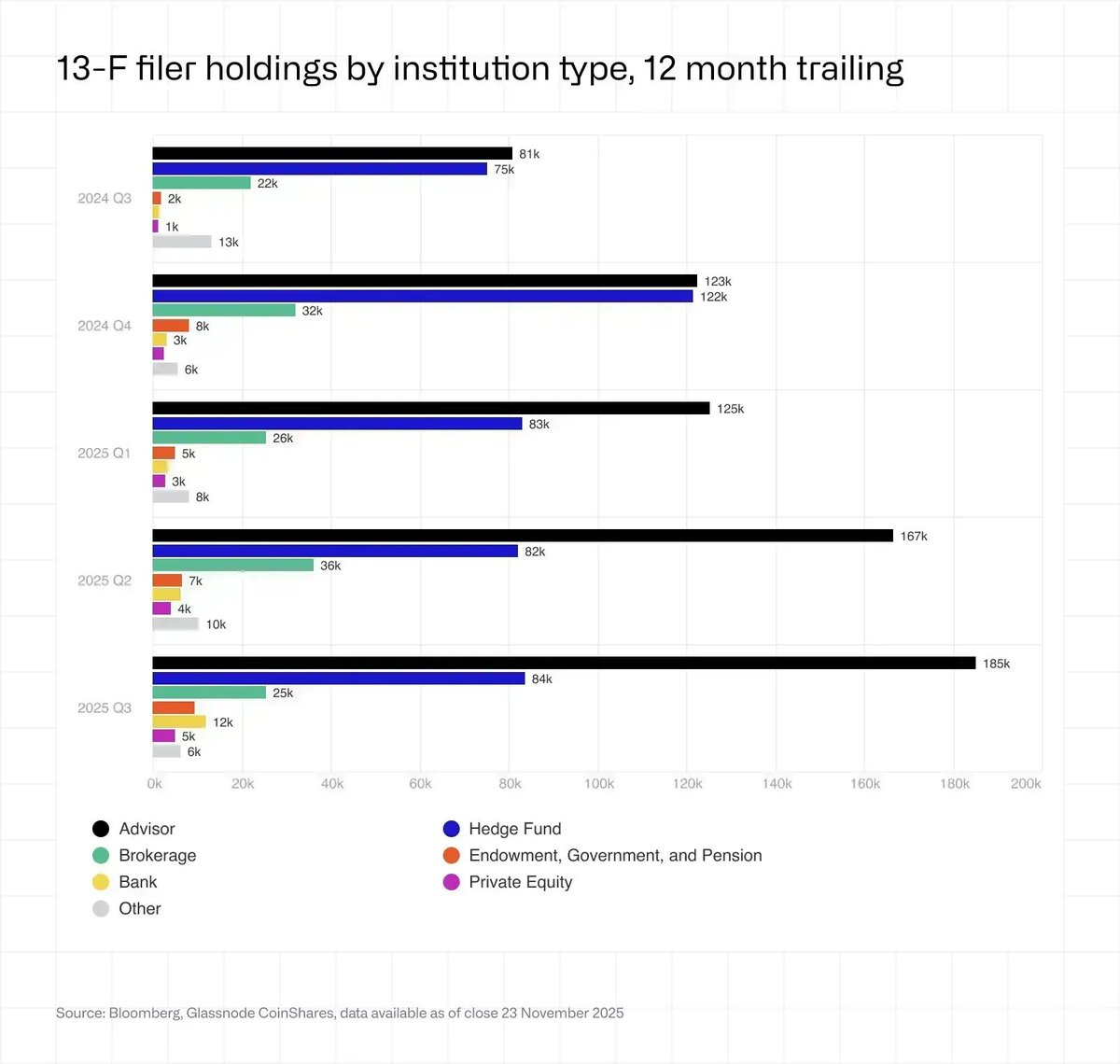
Institutional investors (13F filers) hold less than a quarter of the total ETF amount, and most of it is held by hedge funds and investment advisors, clearly not members of the "diamond hands" family we are familiar with.

Retail Investors are Dying

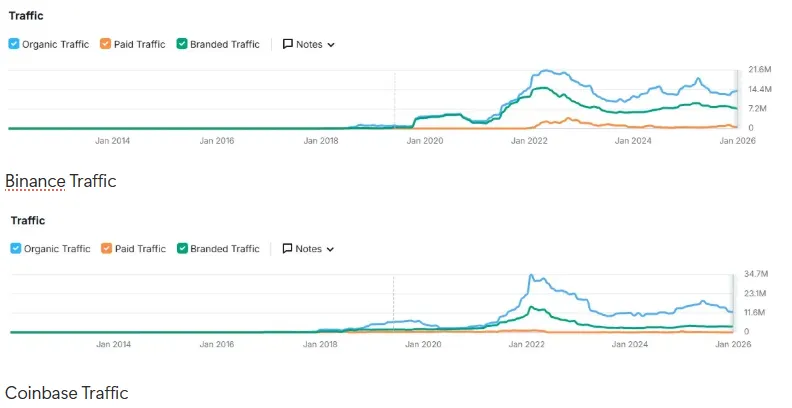
Since the beginning of 2025, traffic data from Binance, Coinbase, and other top exchanges clearly indicate that retail investor sentiment has remained weak following Trump's sale of his "meme coins."

Moreover, since early 2024, the overall social sentiment of retail investors has actually been bearish.

Overall website traffic has shown a downward trend since peaking in 2021.

The new high in Bitcoin prices did not bring traffic back to previous levels.

You can read more about this topic in our article from last year, "Who are the Marginal Buyers?"

Exchanges have also adjusted their strategies. Faced with high customer acquisition costs and low activity from existing users, exchanges have shifted from "seeking growth" to "retaining existing capital through yield-generating products and multi-asset trading (actively listing U.S. stocks, gold, and foreign exchange)."

Elsewhere, the Bull Market is Everywhere

The real "wealth effect" of 2025 is not reflected in the cryptocurrency sector: the S&P 500 (+18%), Nasdaq (+22%), Nikkei (+27%), Hang Seng Index (+30%), and the Korean Composite Stock Price Index (+75%), even A-shares rose by 19%, all achieving strong growth. Gold (+70%) and silver (+144%) also surged, making "digital gold" seem somewhat ridiculous in comparison.

AI stocks, 0DTE (zero-day-to-expiration), and commodities like gold and silver further weakened its appeal.

Speculators' funds did not rotate into alternative investments. Many completely exited, returning to the stock volatility market, while new speculators eagerly profited in the U.S. stock market or their domestic stock markets.

Even Korean retail investors sold off Upbit, betting instead on the KOSPI index and U.S. stocks: Upbit's average daily trading volume in 2025 decreased by about 80% compared to 2024. During the same period, the KOSPI index rose by over 75%. Korean retail investors net bought about $31 billion in U.S. stocks.

Who are the Biggest Sellers?

Every cycle has a leader who sells at local highs, but interestingly, the timing of the sellers in this cycle coincides precisely with the points of divergence in the RS.

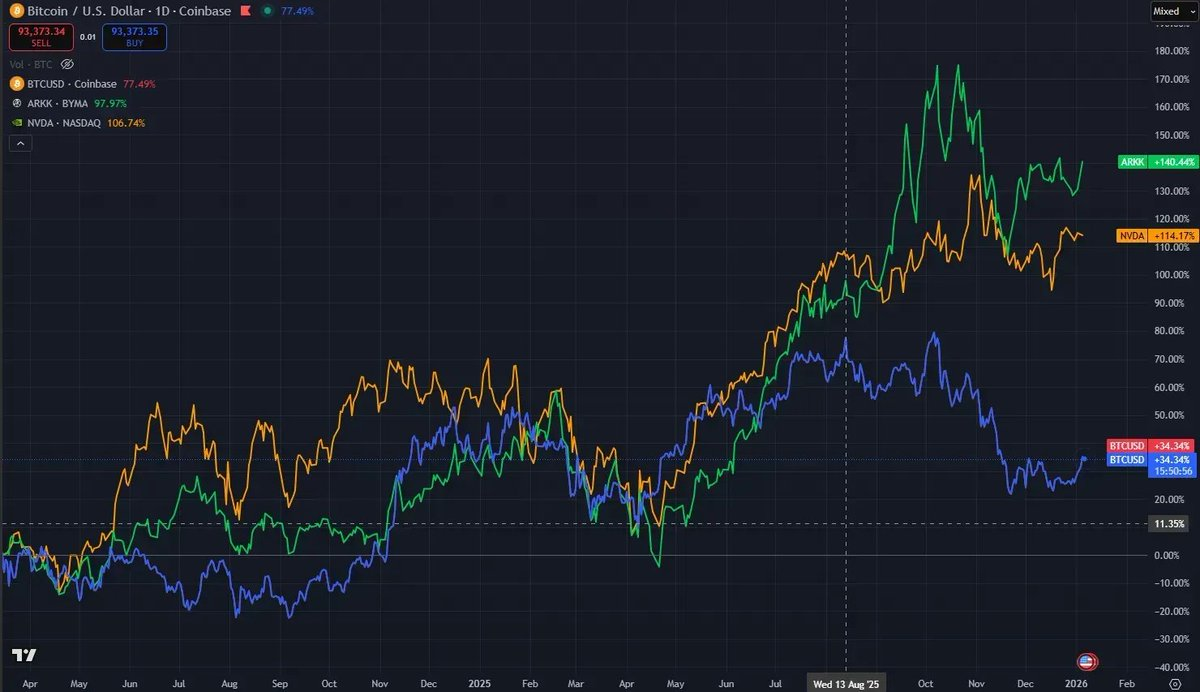
Bitcoin had previously been closely correlated with U.S. tech stocks until around August 2025, when Bitcoin began to lag significantly behind ARKK and Nvidia, followed by the crash on October 10, which has yet to recover the previous gap.

Before this divergence occurred, in late July, Galaxy disclosed in its earnings report and media brief that it executed a sell order of over 80,000 Bitcoins on behalf of a long-time holder. This transaction brought the phenomenon of "whales from the Satoshi era taking profits" into public view.

Mining Companies Selling Assets for AI Capital Expenditures

From the Bitcoin halving in 2024 to the end of 2025, miner reserves experienced the most sustained decline since 2021. By the end of the year, reserves were about 1.806 million Bitcoins. Hashrate decreased by about 15% year-on-year.

  • According to the "AI Outflow Plan," miners transferred Bitcoins worth about $5.6 billion to exchanges to fund the construction of AI data centers.

  • Companies like Bitfarms, Hut 8, Cipher, and Iren are transforming their sites into AI and high-performance computing parks, signing 10 to 15-year computing contracts, viewing electricity and land as "gold in the AI era."

  • Riot is a representative of HODL, announcing in April 2025 that it would begin selling all coins mined each month.

It is estimated that by the end of 2027, about 20% of mining power capacity could be redeployed to AI workloads.

China has taken stricter measures. In December 2025, Xinjiang once again became a target for the People's Bank of China and various ministries. Approximately 400,000 ASIC mining machines were forced offline, leading to a global hashrate decline of 8% to 10% within a few days.

Gray Whales: Bitcoin Black Hangover

Similar to the significant impact of the PlusToken scam during the 2021 cycle, several large-scale fraud and gambling cases that occurred in 2025, including Qian Zhimin's Ponzi scheme/cult network and the Cambodian prince group/Chen Zhi's case, are likely to be major behind-the-scenes drivers of the rising Bitcoin price trend.

Both cases involved the seizure of tens of thousands of Bitcoins, totaling at or exceeding 100,000 black coins.

This may also increase the potential selling pressure from the government while significantly suppressing the long-term holding of Bitcoin in the large gray market, which could create selling pressure in the short to medium term but is overall positive in the long run.

Outlook for 2026

Under this new structure, the original "four-year halving cycle" is no longer a viable self-fulfilling path.

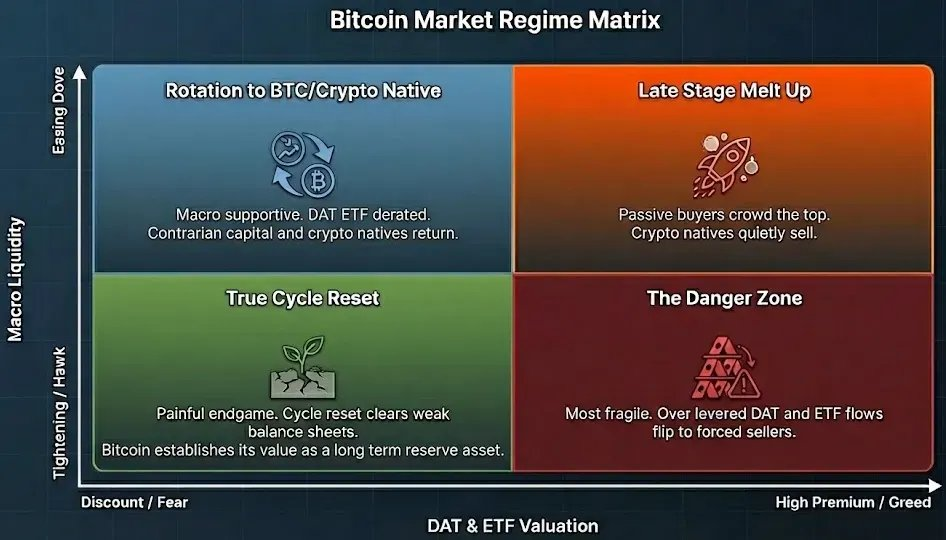
The next phase of governance is primarily driven by two axes.

  • Vertical fields: macro liquidity and credit conditions, interest rates, fiscal stance, artificial intelligence investment cycle.

  • Horizontal analysis: valuations and premium levels of DAT, ETFs, and other Bitcoin alternative assets.

Early winners of Bitcoin, including veteran players, miners, and Asian gray whales, are distributing tokens to passive ETF holders, DAT structures, and long-term national capital.

The development trajectory of Bitcoin seems to resemble that of FAANG from 2013 to 2020: the market is slowly shifting from an early retail and growth fund-dominated high beta investment strategy to a passive allocation strategy dominated by index funds, pension funds, and sovereign wealth funds.

Bitcoin is now a crypto asset that can be easily owned without touching cryptocurrency. You can purchase it through a brokerage account, manage it like an ETF, have clear accounting, and explain it to a trader's investment committee in five sentences.

In contrast, the valuations of most other crypto assets do not stem from their actual utility or legitimacy in the physical market and Wall Street.

We always look forward to a new bull market, but if this bull market is not just about price increases but also about utility increases, capable of transforming the legitimacy of the ETF era into on-chain demand, converting passive holding into active use, and bringing real returns rather than constantly changing narratives, that would be wonderful.

If this happens, today's "standing players" will not appear to be trapped fools of a cycle but rather the first investors of a new cycle.

Bitcoin ultimately becomes national reserve currency.

Code is eating banks.

Cryptocurrency still needs to develop into a new civilizational tool.

免责声明:本文章仅代表作者个人观点,不代表本平台的立场和观点。本文章仅供信息分享,不构成对任何人的任何投资建议。用户与作者之间的任何争议,与本平台无关。如网页中刊载的文章或图片涉及侵权,请提供相关的权利证明和身份证明发送邮件到support@aicoin.com,本平台相关工作人员将会进行核查。

Share To
APP

X

Telegram

Facebook

Reddit

CopyLink