"I think the most important thing in life is 'since I'm here, I shouldn't waste this life.'"
Compiled & Edited by: Deep Tide TechFlow
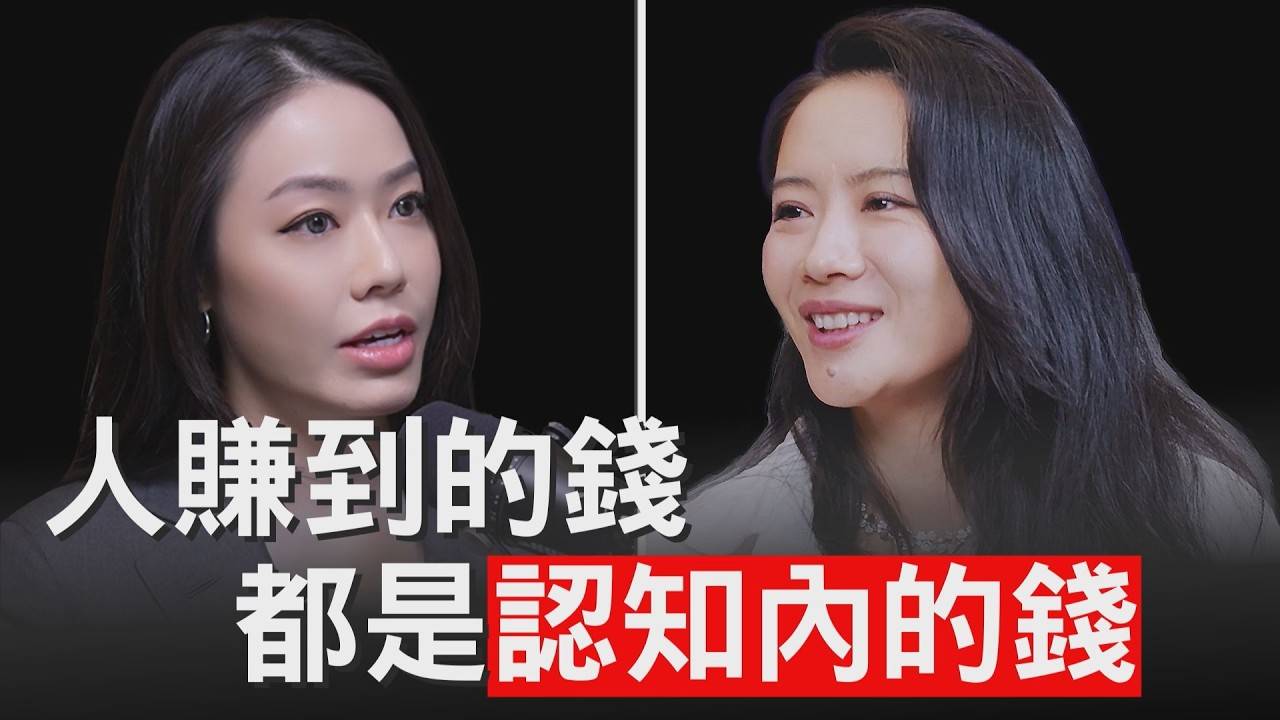
Guest: He Yi
Host: Bonnie
Podcast Source: Bonnie Blockchain
Original Title: Binance's He Yi: The money you can earn is all within your understanding | About Binance, CZ Zhao Changpeng, and stories you haven't heard before【Bonnie Blockchain】
Broadcast Date: December 13, 2025
Key Points Summary
As a co-founder of Binance, He Yi is not only a central figure in the cryptocurrency field but also an irreplaceable key player in the crypto world. How did she lead Binance from a startup to a global leading cryptocurrency trading platform? In the interview, He Yi rarely shed tears as she recalled the hardships and breakthroughs she experienced along the way. Coming from a poor village, how did she gradually enter the cryptocurrency industry and stand at the core of the sector, influencing the development of the entire crypto world?
As a mother, daughter, and career woman, He Yi also shared her advice for women in the new era during the program. She candidly discussed career development, life choices, and views on relationships, using real experiences and unique insights to encourage women to find their strength in the new era. This is a profound dialogue about growth, choices, and women's power, showcasing He Yi's wisdom and courage—don't miss it.
(Deep Tide TechFlow Note: This article has been edited and rearranged from the original podcast content to ensure clearer presentation.)
Highlights of Insights
I feel like I grew up in an environment that encouraged learning. There was a bookshelf at home, and these books made me love reading, feeling different from other kids. As a child, I thought the difference between myself and others was in IQ, but as I grew up, I realized it was actually a difference in understanding.
I read a book called "Desire to Imitate," which mentions that many of a person's desires actually come from imitation. As a child, I hadn't seen a bigger world, so I felt like trying many things without a sense of gain or loss; because my starting point was relatively low, I thought losing was normal, and winning was an extra gain.
In 2013, the price of Bitcoin broke $1,000. A VC investor named Mai Gang asked me to help create an advertisement for a Bitcoin trading company. At the event afterward, I met Star, and Mai Gang said to Star, "Aren't you looking for a marketing director? He Yi is a great fit." This was my opportunity to enter the crypto world.
I might not be very good at handling complex interpersonal relationships because I haven't worked in a big company, but my focus on results makes my work style very direct.
CZ once tentatively asked me if I would like to join his team, but I didn't pay much attention. I remember I told him, "I'm too expensive; you might not be able to afford me."
Not long after, they raised about $100 million through an ICO. CZ contacted me again, saying, "BNB is going to launch tomorrow. If the price of BNB increases tenfold after launch, I won't be able to give you the same offer. So you either agree today, or we can only renegotiate later."
As a woman, whether choosing to support a husband and raise children or to be a good mother and housewife, these are all choices, and these roles are not easy to excel in. I chose to be myself. This is both an active choice and a passive choice.
I think the premise of choice is that they have tried different lifestyles and know what they truly like and dislike.
After giving birth, I didn't take maternity leave but went straight back to work. Many people asked if I experienced postpartum depression, but my answer is that I simply didn't have time to be depressed.
I think the most important thing in life is "since I'm here, I shouldn't waste this life." If you ask me what I value most now, I would still choose family.
Only excellent men can be with excellent women. We shouldn't always think about what we can get from each other but should first consider what we can provide for each other. Only when both parties can create value in the relationship can it truly last and be healthy.
I think it doesn't matter whether I am a CEO or not. Many people congratulate me, saying, "Congratulations on finally becoming a CEO." But I believe this is not about the title; it's about how much responsibility you take on and how many tasks you bear.
Those who support you will always support you, those who like you will still like you, and those who dislike you will not change their views no matter how you explain.
If I were to advise others, I would suggest they be a bit braver. As for myself, there's not much to say because I've always been quite reckless. My past experiences, whether good or bad, are an important part of who I am today.
Along the way, there have really been many benefactors, even those who criticize me, even "haters." They are also benefactors because they make me reflect and help me grow.
He Yi's Growth Journey in the Crypto World
Host: Every time I see your interviews or dialogues, I feel very touched. I really like stories of rising from adversity. I know some of your experiences; you mentioned growing up in a village. Can you talk about what life was like back then?
He Yi:
My family is from a remote mountainous area in Sichuan, and it takes an hour to walk from home to the county town. When I was a child, we had electric lights, but the power supply was unstable. Especially when it was windy, the wires would often break, and we would need to use kerosene lamps. There was no running water at home, nor was there a well, so we had to carry water buckets to fetch water outside.
Before I turned nine, our living conditions were relatively good because my parents were teachers. In the village, our family was well-respected; for example, when there were disputes, people would come to ask my dad to mediate. My dad was quite influential in the village. But then my father suddenly passed away, and our family underwent a significant change. My mother raised us alone while also taking care of the elderly and children, making life very difficult.
But looking back, these experiences, whether good or bad, have become part of my character. I believe that all arrangements are the best arrangements.
Host: Was there any teaching from your family that you feel was a key reason for your current success?
He Yi:
My dad was a teacher and a very curious person. When I was a child, there was a large bookshelf at home with a wide variety of books, from "Compendium of Materia Medica" to "Romance of the Three Kingdoms," from pig-raising techniques to grape planting, and even oracle bone inscriptions. I feel like I grew up in an environment that encouraged learning.
These books made me love reading, feeling different from other kids. As a child, I thought the difference between myself and others was in IQ, but as I grew up, I realized it was actually a difference in understanding. Because of this cognitive difference, I often read books at home instead of playing with other kids.
Host: I saw a report saying that everyone started school at six, but you started at four?
He Yi:
Yes, because I was the middle child in the family, I watched my sister go to school every day and felt very envious. Later, my parents were really at a loss with my persistence, so they sent me to a school where their friends worked.
At that time, I was not yet six years old, but my parents told the school I was six, paid the tuition, and let me try. If it didn't work out, I could repeat the grade. There were no kindergartens or preschool classes in my hometown at that time, so I went straight to first grade at four and a half.
Although I was young and might have had physical and intellectual gaps, I was always first in my class after starting school. The next year, my parents wanted me to repeat the grade, but the homeroom teacher disagreed, saying I had to stay in his class.
Looking back now, I think this was related to my desire to go to school. If a child doesn't want to go to school, forcing them might not yield good results. But if they have a passion for something, they will work hard to do well and not feel it's something special. Passion can transcend the limits of physical and intellectual abilities.
He Yi's Definition of Success and the Trade-offs of Gains and Losses
Host: Did you think about what you wanted to do when you grew up? What is your definition of success?
He Yi:
As a child, I didn't have a clear concept. I read a book called "Desire to Imitate," which mentions that many of a person's desires actually come from imitation. I think my childhood thoughts were simple; for example, my sister wanted to go to school, so I wanted to go to school too. I hadn't seen a bigger world and hadn't formed my own worldview. The ideal professions I could think of were just teachers, doctors, or police officers, and since my parents were teachers, I thought being a teacher might be the definition of success.
Later, after my father passed away, our family conditions worsened, and my mother hoped I could attend a normal teacher training school. She thought that becoming a teacher after graduation would provide a stable job without worrying about living issues. As a child, I actually had my own dreams; I loved painting and wanted to be an artist. Because I often drew on the walls as a child, I thought I might become an artist. I once wanted to apply to Sichuan Fine Arts Institute, but my mother insisted I attend teacher training school. Her idea was very practical; she just hoped I would have a stable job in the future and not be a farmer for life. So I listened to her and chose the teacher training school.
In teacher training school, I began to encounter a larger world. For example, in middle school, my deskmate won first place in a speech competition at school. I didn't know what a speech was before because I had never seen one. After seeing it, I realized, oh, this is what a speech is. Later, in teacher training school, I participated in a speech competition for the first time and won first place.
Host: How did you learn to give speeches without having done it before?
He Yi:
Actually, I didn't specifically learn; I just saw others giving speeches and thought, oh, so that's how it is. It doesn't seem difficult.
Host: It sounds like you encourage yourself to try new things and don't think, 'I can't do it,' but rather, 'It's just like this; I can do it too.'
He Yi:
Yes, that's probably it. When I was a child and saw others winning first place in speeches, I thought I could try it too; things I hadn't done before were the same. Later, there was another interesting experience where a classmate said his dream was to become a model, and he signed up for a modeling competition. He encouraged me to try, so I signed up too. The competition had a print group and a professional runway group, and I surprisingly won an excellence award and entered the provincial competition. Looking back now, I think it was probably just to earn my registration fee.
Host: But didn't that experience give you a lot of confidence at the time?
He Yi:
Actually, no. At that time, I just thought I would give it a try without a sense of gain or loss; I just thought it was fun. I was very curious as a child; for example, after watching a movie about Miss America or beauty pageants, I really wanted to become Miss America.
Host: As a child, seeing certain things can seem glamorous and interesting, making you want to try. I'm also a very curious person, so I can understand. But after participating in competitions, I would feel a sense of gain or loss, like needing to win an award or achieve something. Do you put that kind of pressure on yourself?
He Yi:
No. I think it's okay to lose; what's important is to gain something in the process. For example, you might notice that other contestants walk particularly well during rehearsals and wonder why they have such poise and elegance. Then I realize that I might need to adjust my posture as well. I believe you can learn experiences and lessons from failures; winning is great, but losing is also fine.
Host: But doesn't this attitude towards gains and losses require training to develop? As children, everyone wants to win, but as we grow up, we gradually understand that life isn't just about winning.
He Yi:
No, I think it might be because my starting point was relatively low, so I feel that losing is normal, and winning is an extra gain.
The Opportunity to Enter the TV Station
Host: Later, you entered a TV station, and that experience sounds very interesting. Many people dream of entering a TV station as children because seeing someone on TV feels like a huge success. Your story of entering the TV station sounds more like a legend.
He Yi:
At that time, there was a girl named Wang Danqing. When I met her, we were originally discussing a business collaboration. One day, she called me and said, "I'm currently at a satellite TV station, working with Sunshine Media on a program that will have open auditions. I think you would be perfect for it; come and give it a try." I remember I was standing in the subway when I received the call, with a shaky signal, watching the Beijing subway rush past me. I thought to myself, I'm already 25 years old, I don't have a professional background, and my Mandarin isn't standard; how could I possibly go to an audition to be a host? But she said, "We don't want that kind of broadcasting tone; we want a natural and authentic style. I think you're very suitable; come and give it a try." So I went to participate in the audition.
In the first and second rounds of auditions, I felt I performed quite average. But since Danqing was the director, she insisted on my advancement. Later, one day she told me, "Our producer has resigned. The producer manages the budget, and I'm going to propose my resignation to the chief producer at the station. If he tries to keep me, I'll say I want to be the producer. What do you think?" I thought it made sense, but I didn't really understand how the TV station operated and had never worked in that field. At that time, I was just a contestant and didn't expect her to actually propose her resignation. The next day, she called me to say, "They approved it." She then said, "This might not work out for you." I thought, well, it was already unreliable once, so if it was unreliable a second time, there was nothing to be disappointed about; I wouldn't feel like I lost anything.
Unexpectedly, they still notified me to participate in the finals. On the day of the finals at Sunshine Media's office, everyone drew lots to decide the topics, then had two minutes to prepare, and then went on stage to give speeches. After the speeches, there was a Q&A session, and there were cameras pointed at us. First was the self-introduction; I can't even remember what I said because the content depended on the topic I drew. But the Q&A session left a deep impression on me. At that time, I didn't expect this opportunity to be mine; I thought I might be eliminated. They asked me, "What advantages do you have to be a host?" I answered, "I have a background in psychology; although I haven't finished my master's degree, I have a good sense of empathy and can communicate with different people. Second, I've learned makeup, which can save the cost of a makeup artist. Third, I don't care about the salary because this job is very interesting; it's a travel show. Someone pays you to go out and have fun, and you get paid for it; that's perfect!" After saying that, I went back, thinking I would definitely fail. Because the other candidates were beauty pageant winners, model champions, or already well-known artists. I thought to myself, there's no way this would work out.
Because the other candidates were beauty pageant winners, model champions, or already well-known artists, I felt there was no chance for me, so I didn't hold out much hope. Then one day, I received a call from the new producer, Mu Jie, who wanted to sign a contract with me. I was very surprised; it seemed they valued practicality, perhaps because I was straightforward, not pretentious, and could do my own makeup.
Looking back now, I feel very grateful for Danqing, Mu Jie, and that experience working at the satellite TV station. Many people say the entertainment industry or TV industry is very complex, but for me, that experience is a very beautiful memory.
The Event That Made He Yi Rarely Shed Tears and Its Significance
Host: I have also worked at a TV station, and seeing many things has deeply moved me. In those moments, you know this must be a good story.
He Yi:
Now that I think back, the days I spent working with my prairie sisters were really wonderful. Like Jia Wei, Gao Mei, and Bing Jie, we were all about the same age. We spent one or two years laughing and joking every day, leaving behind many happy memories. They always said, "Hurry up and film; once we're done, we can go back and play mahjong." They really took care of me.
Host: Because of my work at the TV station, I always imagined that everyone is actually very calculating. After all, opportunities are very scarce, and everyone is vying for a small chance to stand out.
He Yi:
That's true, but perhaps because I was doing outdoor programs rather than recorded shows. The places we went were often remote villages, which might not be favored by other hosts. But I really enjoyed that work. The directors in the team were mostly very talented and young people, so we were happy every day, filled with laughter.
Host: I originally thought you would tell me how hard that experience was, but you didn't mention those aspects.
He Yi:
Of course, there were hardships, like hiking, and my partner—a male partner, an older guy. We actually developed a rapport only after filming two or three episodes. He had his own style, and I had mine. He was a very artistic older man who always said, "I can't live without Wi-Fi and coffee." Whenever we arrived at a place, he would talk about the history of that place and compare it to the hundreds of countries he had visited. I, on the other hand, was more of an experiential type, enjoying climbing mountains and going to the sea, doing various physical tasks, like digging lotus roots in the mud. Hiking tasks were usually mine, while horseback riding was his. Although sometimes I also needed to hike, he could ride while I could only walk.
I think this division of labor was reasonable because we each had our own characteristics. If it came to bungee jumping, I would definitely go, and he would say, "Ah, no, no, no, I never do anything that threatens my life." This contrast was really interesting. And because he was a bit older, we gradually developed a rapport during this process. Since we were a male-female duo, regardless of whether people were vying for the spotlight, everyone would ultimately have their chance to shine. So there was no backstabbing between us; instead, we left behind many happy memories. Although the work was tough, those days of finding joy in hardship when we were young are truly worth reminiscing.
He Yi's Journey into the Crypto World
Host: How did you transition from your previous experiences to joining the crypto world? It sounds like a significant shift.
He Yi:
At that time, we had filmed that program for a year, almost covering most parts of China. The following year, because I had experience on camera, new opportunities began to arise, such as invitations from other TV stations or programs. I had two choices in front of me, and the story is quite interesting.
One of the opportunities was introduced by a friend, a producer who was originally the CFO of a company. She achieved financial freedom through entrepreneurship and later had a dream of working in film and television. She wrote a novel about striving and wanted to adapt it into a TV series. Then she established a film and television company, wrote the script herself, and planned to shoot her entrepreneurial story. Her company wanted to sign actors. She interviewed many girls but felt they didn't fit the image of an entrepreneur she had in mind. Later, she met me and expressed her desire to sign me, but the condition was for me to remove the mole on my chin. She thought my appearance didn't quite match the image she envisioned. Additionally, the contract offered a fixed monthly salary, which was not high, and the economic expenses were quite limited. I felt something was off, so I hesitated.
At that time, in 2013, the price of Bitcoin broke $1,000. I knew a VC investor named Mai Gang, who asked me to help create an advertisement for a Bitcoin trading company. He didn't mention compensation, so I asked, "What is Bitcoin?" I then started researching it and read the white paper online. After reading it, I found the concept of Bitcoin very novel because it was the first time I truly understood the essence of "money." As a child, everyone always told you that money is important, but no one explained what money actually is. Through Bitcoin, it felt like I had opened the door to a new world.
So I helped him write a short article, created a free advertisement, and shared it with pictures on my social media. That matter was temporarily put aside. Later, I received a contract from the film and television company while also completing the Bitcoin advertisement activity. Mai Gang organized a karaoke event, inviting everyone who helped with the advertisement to participate and prepared some small gifts, the most expensive of which was an iPad.
At the event, I met Star, and we talked about Bitcoin. Mai Gang said to Star, "Aren't you looking for a marketing director? He Yi is a great fit." So Star said to me, "Come to our company next week to chat and see if you're interested in joining." At that time, I had two choices, and I felt I still had an entrepreneurial spirit. At that time, China's entrepreneurial and angel investment environment was very active, and I wanted to join a startup to experience the entrepreneurial process firsthand. This was my opportunity to enter the crypto world.
Convincing CZ to Join the Startup
Host: Later, you convinced CZ to join the startup, right? After he left his previous company, you also chose to join his team. What was your conversation like at that time? How did you persuade him? How did he persuade you?
He Yi:
Actually, when CZ joined my team, I felt that our market share had already reached a certain scale. At that time, he might have had some minor disagreements with his previous company. I told him, "Look, you have a very strong trading background, but now you're doing wallet business, which doesn't fully utilize your talents and skills. We are an exchange; you've been trading for so many years and have accumulated rich experience in designing trading systems. Why not continue trading? This is your most natural and strongest field." I think this might have been the key point in persuading him.
Why Decide to Be a Partner?
Host: Starting a business and becoming a boss involves taking on such significant risks, which usually makes people hesitate. So why did you decide to become a partner?
He Yi:
This decision is actually closely related to my career experience. Before joining Binance, I worked at Yixia Technology for about a year and a half. At that time, I was responsible for marketing operations, including live streaming, Miaopai, and other mobile products. At that time, our scale was slightly larger than Douyin, and we were in a leading position in the industry.
At that time, I felt that life really has its arrangements. One time, something quite interesting happened. While I was working at Yixia Technology, one day my alarm didn't go off, or I didn't hear it, and I overslept. Coincidentally, that day was when our shareholder, Jiang Nanchun, the founder of Focus Media, came to the company to share about marketing, and I was the head of marketing. I was more than half an hour late, which left a bad impression on the shareholder.
Focus Media is our investor, and they mainly operate elevator advertising. In return, we need to allocate part of our funds to run their advertisements. I am responsible for the advertising placement, and I am very strict about the details, such as whether the ad placement is appropriate, whether the timing is reasonable, and even whether a movie ad is placed first at the opening or last in the countdown; all of these can significantly impact the effectiveness of the advertisement. I often argue with the Focus Media team about these details, to the point where their team feels a lot of pressure. I think they might be somewhat dissatisfied with me, so I recommended a new senior manager to the company owner to be my direct supervisor.
At that time, the company was nearing the IPO stage, having signed many terms, including options, equity, and preparations for the IPO, and had hired a formal CFO to handle the IPO preparations. However, at this stage, a new boss suddenly appeared above my position, which made me feel a bit uncomfortable.
Moreover, my work style is very results-oriented, and I am used to pushing things to the extreme. In my work, I do not compromise just because the other party holds a higher position or is a shareholder or partner; I always adhere to my professional judgment. This style has led to excellent work performance but has also strained my relationships with some colleagues. I may not be very good at handling complex interpersonal relationships because I haven't worked in a large company, but my focus on results makes my working style very direct.
At this time, CZ approached me, saying he planned to conduct an ICO and had already written a white paper, asking if I could serve as an advisor. I told him, "I won't sign my name on a document I haven't thoroughly understood. If you want me to be an advisor, I must be genuinely involved." So I asked him to send me the white paper. At that time, I was in Shanghai attending the Weibo Influencer Festival, and I took the opportunity over the weekend to revise the content of the white paper. In the first version of the white paper, about one-third of the content was written by me personally.
At that time, I wasn't considering compensation; I just thought it was important to get the job done first. This might also be a part of my work values—focusing on the task itself rather than thinking about personal gains from the start. Later, when I returned to Beijing, CZ tentatively asked me if I would be willing to join his team, but I didn't pay much attention. I remember I told him, "I'm too expensive; you probably can't afford me." This was actually a soft rejection on my part because Binance was still just a fledgling company at that time, with its business not fully formed and very limited funds.
Not long after, they raised about $100 million through the ICO. CZ contacted me again and told me, "We now have funds, and we can discuss cooperation." The night before Binance launched BNB on July 14, he called me and said, "Tomorrow BNB will go live. If the price of BNB increases tenfold after it launches, I won't be able to offer you the same deal. So you either agree today, or we can only renegotiate later."
At that time, I was indeed faced with a choice: to continue staying at my previous company, waiting for a visible IPO opportunity, or to choose to join Binance and start a new journey. Ultimately, I chose Binance because I was confident in my abilities. I had successfully built a top brand in China before, and this time I wanted to challenge myself to see if I could build a top exchange globally. Although Binance had not launched yet, I had already clarified my goal: to develop Binance into a top global exchange.
In fact, I had other opportunities at that time, but I ultimately chose Binance. One reason was that CZ had an international background, while most of the other opportunities were with Chinese companies, which had limited international exposure. I wanted to participate in a project with a broader global vision and challenge myself with higher goals.
The Queen of Crypto's Top Communication Philosophy
Host: I think you really have a knack for reading people. From zero to one, and then from one to a thousand, you have done exceptionally well. What I admire most about you is that you speak softly but act decisively. You stand firm when you need to, and you don't back down when you need to resist.
This is called setting boundaries. How do you clearly tell others what is right while maintaining a gentle yet firm approach?
He Yi:
Actually, it's not like that. When I was younger, my communication style was very direct, even to the point of being indiscriminately aggressive. Now it's pretty much the same; I haven't become particularly gentle, and many people say I am a very difficult person to deal with.
Host: But it is this style that has helped you reach the top level, right?
He Yi:
Yes. To reach the top, you must have clear demands and standards. If your attitude towards things is just "good enough" or "passable," you cannot reach the top. I can demand that I reach the top, but as my number of employees increases, it becomes very important to maintain this culture within the company.
My approach is simple: when I discover a problem, I point it out directly, and for those problems I haven't noticed, I let others handle them. I believe the core lies in recruitment. First, do the people you hire align with your philosophy? The world is not black and white. Some people may perform poorly in your company but excel in others. Therefore, the most important thing in recruitment is to see if the person fits your company culture.
The Burdens Successful Women Carry
Host: I believe you must have attended many important occasions where many women might be seen as the companions of successful individuals, while you are the successful one. Many people might mistakenly think that women appearing at such gatherings of successful individuals must be someone's spouse.
In an age of information explosion, the ability to discern information becomes particularly important. There may be countless trending topics in the world, but the key is to know which ones are relevant to you. Everyone has different feelings about the same content, right?
He Yi:
I think as a woman, whether you choose to support your husband and raise children or choose to be a good mother and housewife, these are all choices, and these roles are not easy to excel in. If you pursue excellence, these choices can be very challenging. But for me, I chose to be myself. This is both an active choice and a passive one. The passive reason is that when I was born, I was not a princess, so I had to overcome difficulties and grow through my own efforts. In this process, you will find that you become more resilient and stronger. Only when you are strong enough can you truly clarify what kind of life you want.
In fact, some friends may choose to return to their families after experiencing success in their careers. They may feel they have proven themselves in the business world or a male-dominated environment, but ultimately find they prefer being a mother or wife. I think this is their choice, and the premise of this choice is that they have tried different lifestyles and know what they truly like and dislike.
Balancing the Role of Mother and Career Woman
Host: In your case, how can one perfectly balance the identity of a mother with the role in the workplace?
He Yi:
I think this is not a binary choice. In fact, I really enjoy the process of being a mother, even though I often see discussions about childbirth anxiety online, such as the physical changes, pain, and irreversible damage that childbirth may cause. But I believe being a mother is a wonderful thing. The saying "A mother becomes strong" perfectly summarizes my feelings; I think this is an important transformation in my life.
Yesterday someone asked me how I cope with stress and how I deal with low moods. I feel that it's not that the child needs me, but rather that I need the child. As a mother, you feel the need to become stronger and more resilient because you bear the responsibility of protecting your child. This strength seems to be innate, written in our DNA.
Regarding the topic of childbirth anxiety, I believe women do not need to be overly afraid of giving birth. First, modern medical technology, such as spinal anesthesia, can effectively alleviate the pain of childbirth, making the process more controllable. Second, since I have many female employees around me, I specifically wrote a "Childbirth Guide" (playbook) that includes precautions during pregnancy, psychological preparation, and how to care for the child after birth. This guide was later supplemented and improved by colleagues, becoming a practical resource. I usually share this guide with colleagues when I learn that they are pregnant. I plan to make this guide an internal resource for the company so that more employees can benefit from it.
After giving birth, I did not take maternity leave but returned directly to work. Many people ask me if I experienced postpartum depression, but my answer is, I simply didn't have time to feel depressed. Because work was very busy, I devoted almost all my energy to it.
He Yi's Perspective on Her Achievements
Host: If you look back at the age of 90 or 100, what kind of memories will make you the happiest? Is it your achievements, your career empire, or certain special moments?
He Yi:
I think the most important thing in life is "Since you're here, make the most of it." If you ask me what I value most now, I would still choose family.
Advice for Successful Women on Choosing Partners
Host: We have many male friends in our circle who may hope to find successful women as partners, but successful women are often seen as difficult to pursue. In the past, people might have thought women should be gentle and virtuous, but now many ask, "You are so hard to deal with; how should we pursue you?" Can you give them some advice? For example, how to pursue successful women like you? Not specifically about you, but about successful women in general. Because I think women often have a tendency to admire strength. If a man is already excellent, how can he create space for a woman to showcase her strengths while feeling comfortable?
He Yi:
Only excellent men can be with excellent women.
Oh, I think only truly excellent men can be with excellent women. This "excellence" refers not only to wealth or career success but also to maturity in understanding. There are indeed gaps between people, but these gaps can be gradually narrowed or even reversed through time and effort.
I remember a teacher once said, "The money people earn is all based on their understanding." This statement resonated with me deeply. A person's level of understanding not only determines how they accumulate wealth but also influences their social network. In other words, your interpersonal relationships are based on your level of understanding. The deeper your understanding of the world, the better quality relationships you can build. And this quality of life is not just reflected in whether you have money or what kind of car you drive; more importantly, it is about whether your inner self is rich and peaceful.
So, I think if a man cannot provide value to a woman on the level of understanding, then why would the woman need him? Similarly, if a man is very successful and excellent, then the woman also needs to think about what she can bring to him. Many times, we should not always think about what we can get from the other person, but rather consider what we can offer them first. Only when both parties can create value in the relationship can it truly be long-lasting and healthy.
Expectations for the Future of Binance
Host: What do you think Binance will develop into in the future?
He Yi:
I hope Binance can grow into a rainforest. The Amazon rainforest is full of vitality, where every plant can grow freely, forming a diverse and sustainable ecosystem. I hope Binance can also become such a place, a garden where everyone can grow freely.
Traditional company structures are usually triangular, with the boss at the top issuing orders, while those below simply execute tasks. However, I am working hard to transform Binance into a garden-like organization. In this garden, everyone can have their own voice and space to grow. Many newcomers to Binance, especially in management, may feel confused: Why does it feel like everyone is a boss? This is because we want everyone to proactively grow and find their own place. If you are not strong enough, you may be overshadowed by others' branches and leaves; but if you are strong enough, you can grow into a towering tree in this garden.
My vision is for Binance to ultimately become a rainforest, where every employee can grow into a towering tree, building a rich and powerful ecosystem. In such an organizational structure, whether I am the CEO is actually not important. I hope that in the future, Binance will have more true partners who support the company together, rather than relying solely on me. I may just be a support point at the bottom of this structure. My goal is to make Binance a place where everyone can realize their potential, rather than depending on the leadership of a single person.
Host: When I originally looked at Binance's structure, you and CZ were always the representative faces of Binance. But now that you have become the CEO, what is the logic behind this?
He Yi:
Actually, I think whether I am the CEO is not important. Many people are congratulating me, saying, "Congratulations, you finally became the CEO." But I believe it is not about the title, but about how much responsibility you take on and how many tasks you bear.
I often discuss the logic of promotion with everyone. Many people think, "I want to be promoted; I want a higher position." But my view is that if you first possess the abilities required for that position, you will naturally obtain that title. Of course, sometimes the boss will promote you to take on a larger scope of responsibilities. If you can handle that challenge and do well, that's great; but if you can't, you may fail.
I personally prefer to achieve first and then take on responsibility, so whether I am the CEO is not important to me. The decision to make me CEO may mainly be to give everyone some confidence during the bear market. For the past two years, we have been working hard to close the gap, such as strengthening communication with regulators, applying for licenses, and improving compliance standards, etc. Although this work has been difficult, we have been catching up for two years. I hope that by serving as CEO, I can convey a message to the outside world: the core values of Binance still exist, such as the unchanged principle of "user first," which is our commitment to the entire industry and users.
Why He Yi is Willing to Respond to Netizens
Host: You are now at the top globally, but the most scarce resource is time. I feel like I am a "poor person in time." At Binance Blockchain Week, I saw that no matter where you go, everyone is eager to take photos or communicate with you. This is a process that one must go through to become very successful and popular. But I am curious, you must cherish your time and energy, right? Why are you still willing to respond to some netizens on Twitter?
He Yi:
I occasionally respond to netizens, depending on the nature of the issue. If someone points out a problem at work, we admit our mistakes and improve where we fall short. This is a reasonable process. If someone raises areas where the company or product needs improvement, I think that is very meaningful feedback, and we take it seriously. However, many years ago, before 2019, my online evaluations were almost all positive. At that time, I was younger and often argued with others in groups. But later I found that some people attracted attention by arguing with me, so I learned to avoid arguments as much as possible. When others attack me, I remind myself not to respond and not to give them the opportunity.
Host: Is not responding the best response?
He Yi:
I think if it is an important issue, it still needs a response, but if it is unreasonable troublemaking or deliberately creating traffic, I will choose to ignore it. Because responding to such content only helps them generate traffic; they are just using you. Think a little more openly and just listen to the criticisms. You can't make everyone like you. Just like not everyone likes the dollar, and not everyone likes the renminbi. So you need to believe that the people who support you will always support you, those who like you will still like you, and those who hate you will not change their views no matter how you explain.
Host:
I think learning to accept "haters" indeed takes time and practice. At first, when I saw some negative comments online, I felt very bad. Some criticisms are very unreasonable, such as attacking your gender, background, nationality, etc. These comments are meaningless but can affect your mood.
He Yi:
Since these comments are meaningless, don't pay attention to them.
Host: Is it possible to completely avoid seeing these negative comments?
He Yi:
It is actually very difficult to completely avoid seeing them. If you completely ignore them, you might miss some valuable information, such as understanding the stage of the company's development and the problems with the product. So now I focus more on practical issues on social media rather than emotional content. As for whether others like me or criticize me, those are things I cannot control, right?
Host: Do you stand in front of the mirror and tell yourself, "I just need to like myself"?
He Yi:
There is no need to tell myself; I think the key is to accept myself. People easily view issues in a binary way, such as "I am good, he is bad; I am right, he is wrong." But this way of thinking is incorrect. To view the world more rationally, you are a small universe, and the world is a larger universe. In these two universes, you need to accept your imperfections while also accepting the imperfections of the world. Just as there is night and day, you need to embrace the good and bad that appear in life because these experiences ultimately shape who you are today. I once said when I was young, "Enjoy whatever fate gives you." Looking back now, I have a deeper understanding of this statement.
He Yi's Relationship with Her Mother
Host: Looking back now, do you feel that the environment you were born into was quite difficult, and that your family had a hard time? Now that you can provide them with a better life, do you feel you have done well?
He Yi:
Actually, not really. If we look from God's perspective, we are just a speck of dust in the universe, insignificant, and the universe is indifferent to all things. So even though I have done well in some aspects, I think I am just a person who is relatively lucky and also works hard.
Of course, when I see my family being able to live a better life and enjoy things they have never experienced before, I do feel a sense of accomplishment. I am a relatively simple person, and my mother is the same. For example, we still prefer to buy things on Taobao, and our lives remain simple.
Host: Did your mother have something she particularly wanted when she was young that you can now easily provide for her?
He Yi:
No. My mother's expectations are very simple; she thinks it would be great if I could be a rural teacher. So every step I take forward actually exceeds her expectations. She must be proud of me, but in her eyes, you are always that little child who needs care. No matter how old you are, in your parents' hearts, you will always be a child.
I wasn't very close to my mother when I was young. After my father passed away, my mother's emotions became quite unstable. At that time, she was a middle-aged woman, with elderly parents to care for and a group of children to raise, facing immense pressure in life, which made her temperament quite irritable. So in my memory, there wasn't particularly close mother-daughter interaction during my childhood.
I think this is also a typical characteristic of parents from our generation. They are not used to educating children through encouragement or praise but rather adopt a suppressive approach. However, this educational method had an unexpected effect on me. The more I was suppressed, the more it stimulated my growth motivation. So I consider myself an "exception" who grew up under this suppressive education. After I turned 18 and started earning money, I took the initiative to send money to my mother, hug her, and buy her things. It was then that my parents gradually learned how to express love more directly.
My mother is a very strong person; otherwise, how could she support this family? She not only held the family together but also continuously supported me. We used to live together, and we still do now.
Host: When communicating with your children, how do you tell them how their mother has come this far?
He Yi:
I tell them, "If you don't eat well, I will take you to Nepal for a month to see how those poor children live." When they hear this, they say they don't want to go. I think because my mother was quite strict with me when I was young, I now pay more attention to expressing my love for my children in a warm way, often saying sweet words to them.
Host: Are your children a release point for your stress? For example, do you hug them when you are under pressure?
He Yi:
Yes, seeing the smiles on my children's faces makes all the pressure disappear. Moreover, because I have children, I feel I need to be stronger to protect more people. I do not set any strict rules for them, such as they must grow up in a certain way to succeed. I believe educating children should be about guidance, not coercion. Let the flowers bloom naturally and let the trees grow naturally.
In fact, whether it is with children, parents, friends, or even partners, I believe everyone is inherently an independent individual. No one can completely rely on another person. But when you are strong enough, you can be like a continent that can support them.
Host: Do you need others to understand you? Or do you feel it is unnecessary?
He Yi:
Actually, I think there is no need for too much understanding. As long as you are strong enough, it is not about feeling strong; it is about being able to accept misunderstandings between people, accept different ideas, while clearly knowing who you are and where you want to go. That is enough.
Advice for Everyone Who Wants to Succeed
Host: If you could go back to when you just entered society and have a conversation with yourself, what would you say?
He Yi:
If it were advice for others, I would suggest they be a little braver. As for myself, there is actually not much to say because I have always been quite reckless. The experiences of the past, whether good or bad, are an important part of shaping who I am today. Every failure and every pitfall has taught me something. If I hadn't stumbled around in those pits for a long time, I might not have the understanding I have today.
It's like playing a game; you might get stuck on a level and try repeatedly until you find a new solution. In this process, it not only hones your patience but also builds your resilience. It's as if God gives you the same hand of cards; if you keep playing poorly, you will be stuck there until you find a new way to play. And when you succeed, He will give you an even harder hand of cards.
Host: You just mentioned advising others to be a little braver, and I completely agree with that. Many people are afraid to step out of their comfort zones and try things they are not familiar with.
He Yi:
Many times, we set limits for ourselves, such as "As a female executive, how do I balance family and career?" I think the balance is quite good. When you see it as a challenge, or even think of it as an impossible triangle, you will be limited by this thought. But if you believe you can do it, it is no longer a problem.
For example, when I was young, I could never have imagined standing on an international stage expressing myself in a language I was not familiar with. But now, I often stand on stage speaking English, even though my grammar and vocabulary may not be perfect, as long as the meaning is correct, that is enough. I do not like to prepare speeches in advance, nor do I have time to design PPTs. I usually think about what to say at the entrance of the stage and then express it directly.
Host: You feel that your inner strength makes external evaluations not a problem for you. I was just thinking about the benefactors in your life; you are so touched by them. Finally, can we summarize who you consider to be the benefactors in your life? Without them, you might not have come this far?
He Yi:
Along the way, there have indeed been many benefactors, even those who criticize me, even "haters." They are actually benefactors because they make me reflect and help me grow.
免责声明:本文章仅代表作者个人观点,不代表本平台的立场和观点。本文章仅供信息分享,不构成对任何人的任何投资建议。用户与作者之间的任何争议,与本平台无关。如网页中刊载的文章或图片涉及侵权,请提供相关的权利证明和身份证明发送邮件到support@aicoin.com,本平台相关工作人员将会进行核查。


