2025 CEX Chinese User Research Report: Nearly 80% of respondents increased their investment, and 74% of respondents hope for a transparent listing process.

CN
链捕手
Follow
8 months ago

Source: ChainCatcher, RootData.pdf)

Centralized exchanges (CEX) are facing unprecedented changes in the industry. On one hand, the industry is confronted with multiple challenges, such as the weakening of the listing effect, frequent security incidents, a growing trust crisis, and on-chain competition; on the other hand, DEXs like Hyperliquid are continuously eating into market share through technological innovation. At this critical turning point, Chinese-speaking users, as the core customer group of CEX, will directly influence the evolution of the industry landscape.

ChainCatcher, in collaboration with RootData, recently launched the "2025 Centralized Exchange Chinese User Survey," collecting 715 valid questionnaires within ten days. This report will analyze the user demands behind these trends and provide decision-making references for industry participants. (You can click this link.pdf) to download the PDF version.)

Key Data Points:

  • Binance and OKX are the most frequently used CEX by respondents, holding the most managed funds, but they also have seen the highest decrease in user usage rates over the past year.
  • "Actively listing quality assets" is the preferred listing style among respondents, although a minority have lost confidence in the listing mechanisms of exchanges.
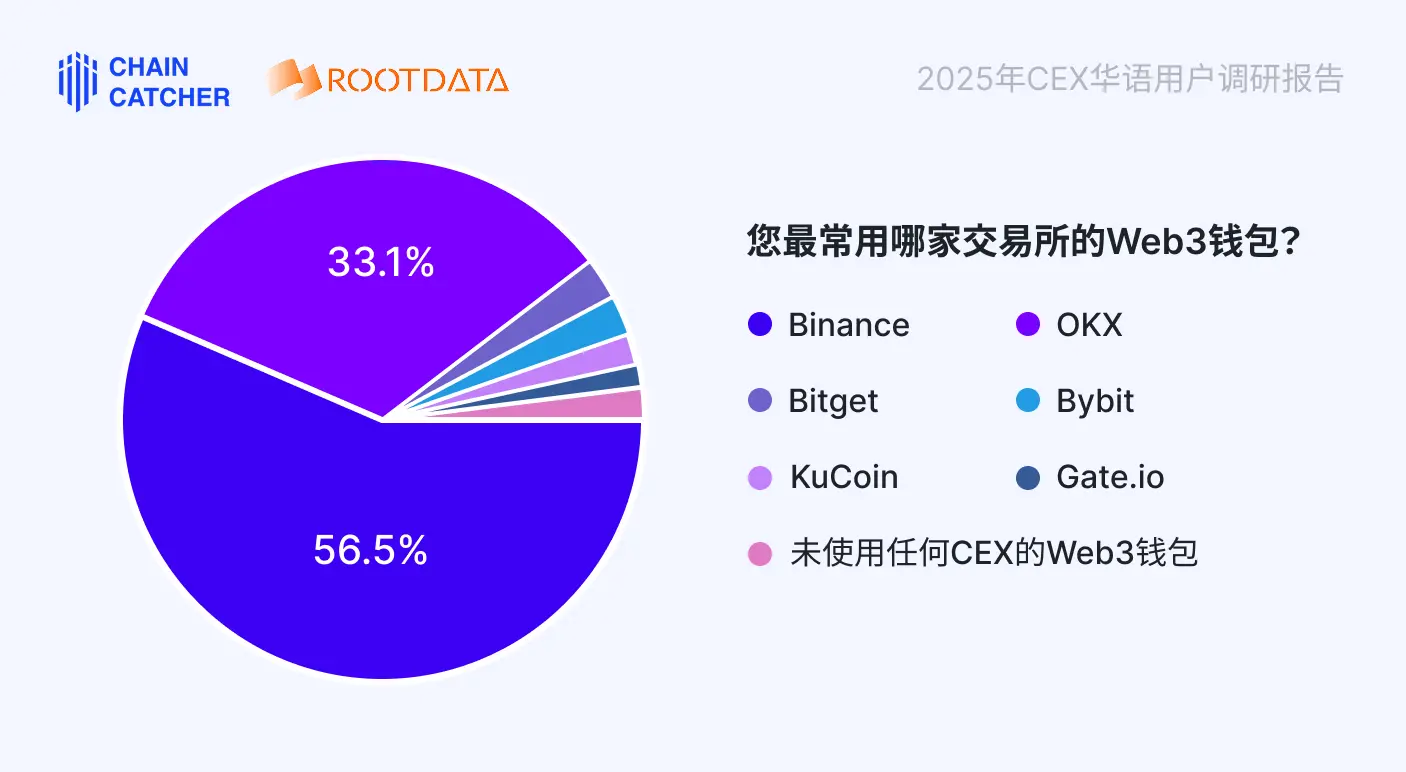
  • The CEX Web3 wallet market shows extremely high concentration, with nearly 90% of respondents locking Web3 wallet services to Binance and OKX. Binance leads with a usage rate of 56.5%, while OKX holds 33.1%.
  • The issues of deposit and withdrawal are most prominent for centralized exchanges, with the listing mechanism being questioned. 59.3% of respondents encountered deposit and withdrawal issues, and 63.9% abandoned exchanges due to listing problems (such as price drops and insider trading); 74% of respondents demand transparency in the listing process.
  • Most respondents have increased their frequency of using centralized exchanges and the amount of funds invested over the past year, with overall profitability significantly expanding. About 54.4% of respondents reported profits in CEX investments exceeding the previous cycle, while only 8.7% reported increased losses.
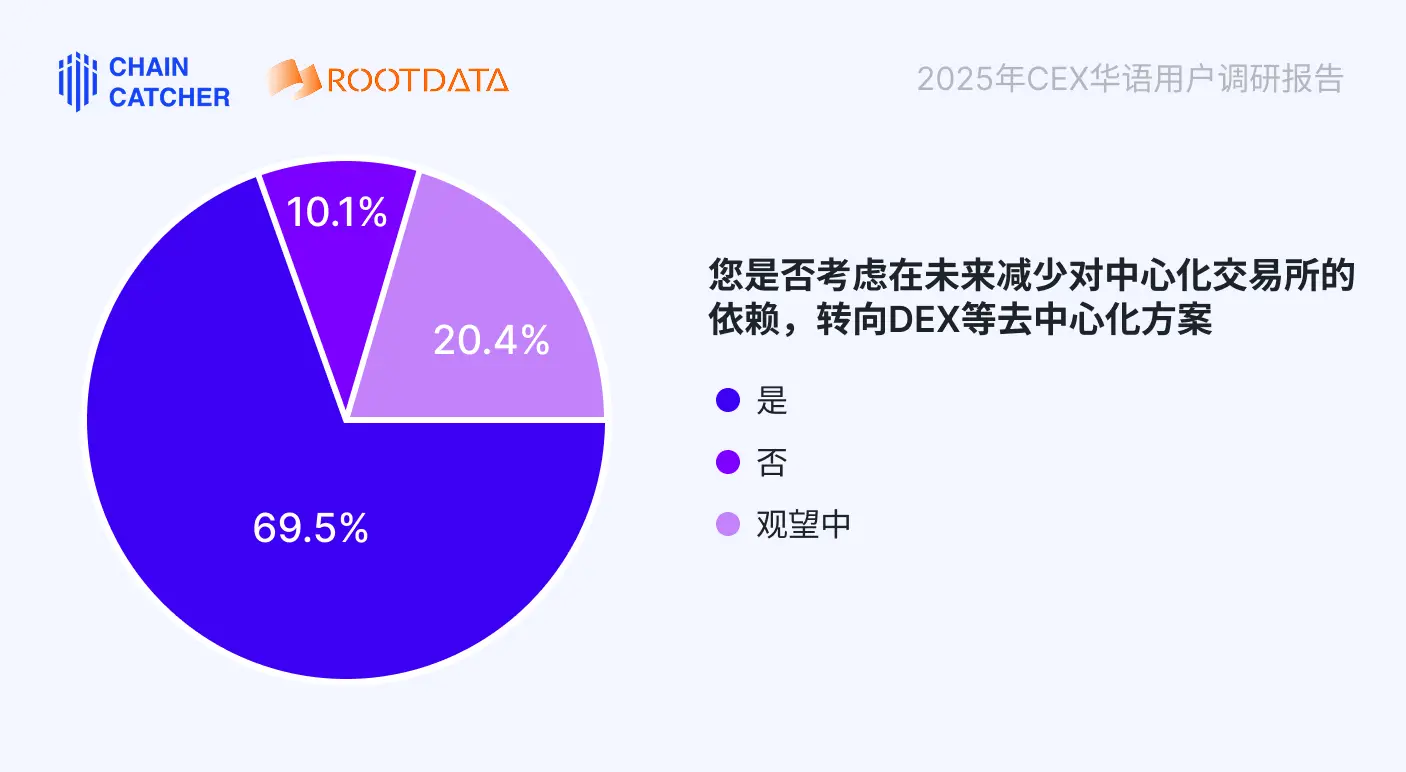
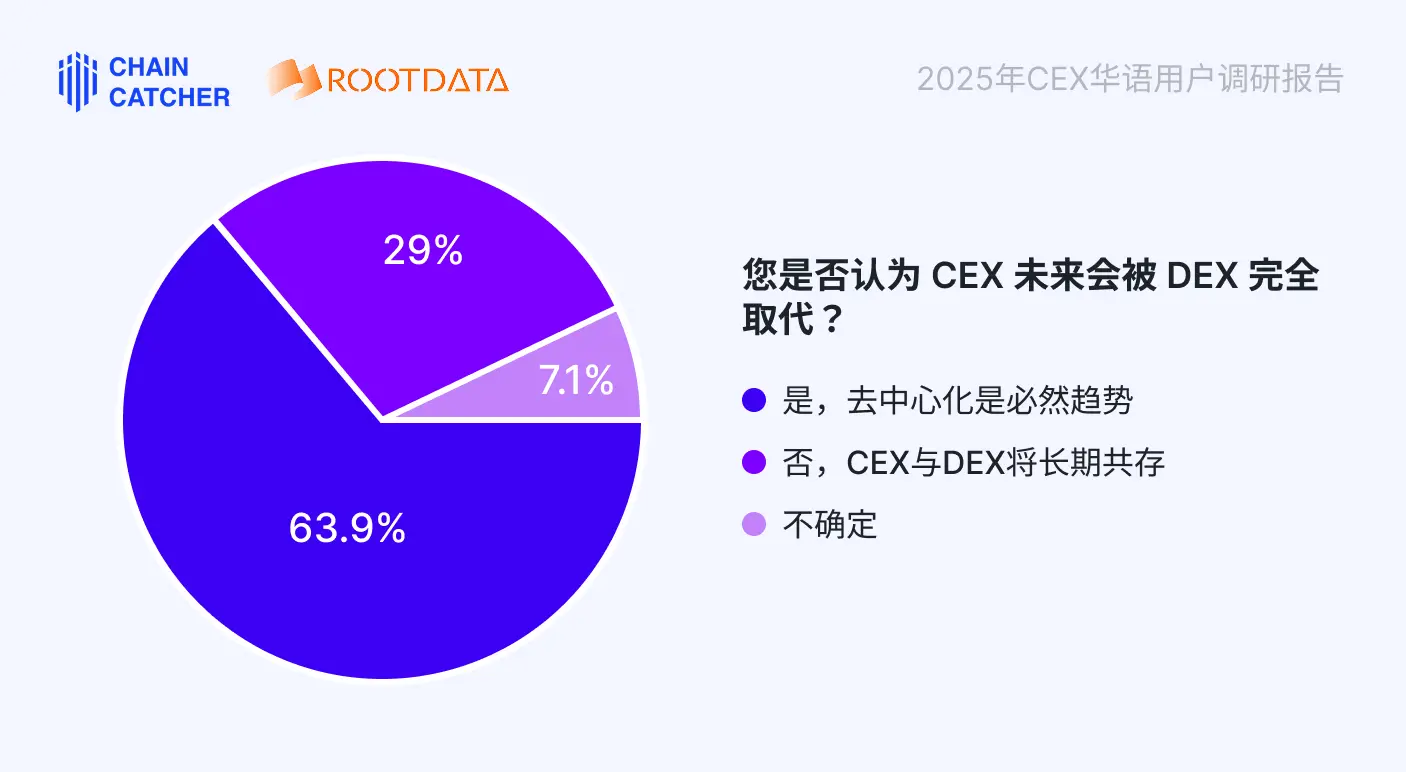
  • 69.5% of respondents are considering switching to decentralized solutions like DEX, and 63.9% believe DEX will completely replace CEX. However, 77.4% of users are still increasing their asset allocation in CEX, reflecting a short-term dependency that is hard to change.

1. Overview of Survey Respondents

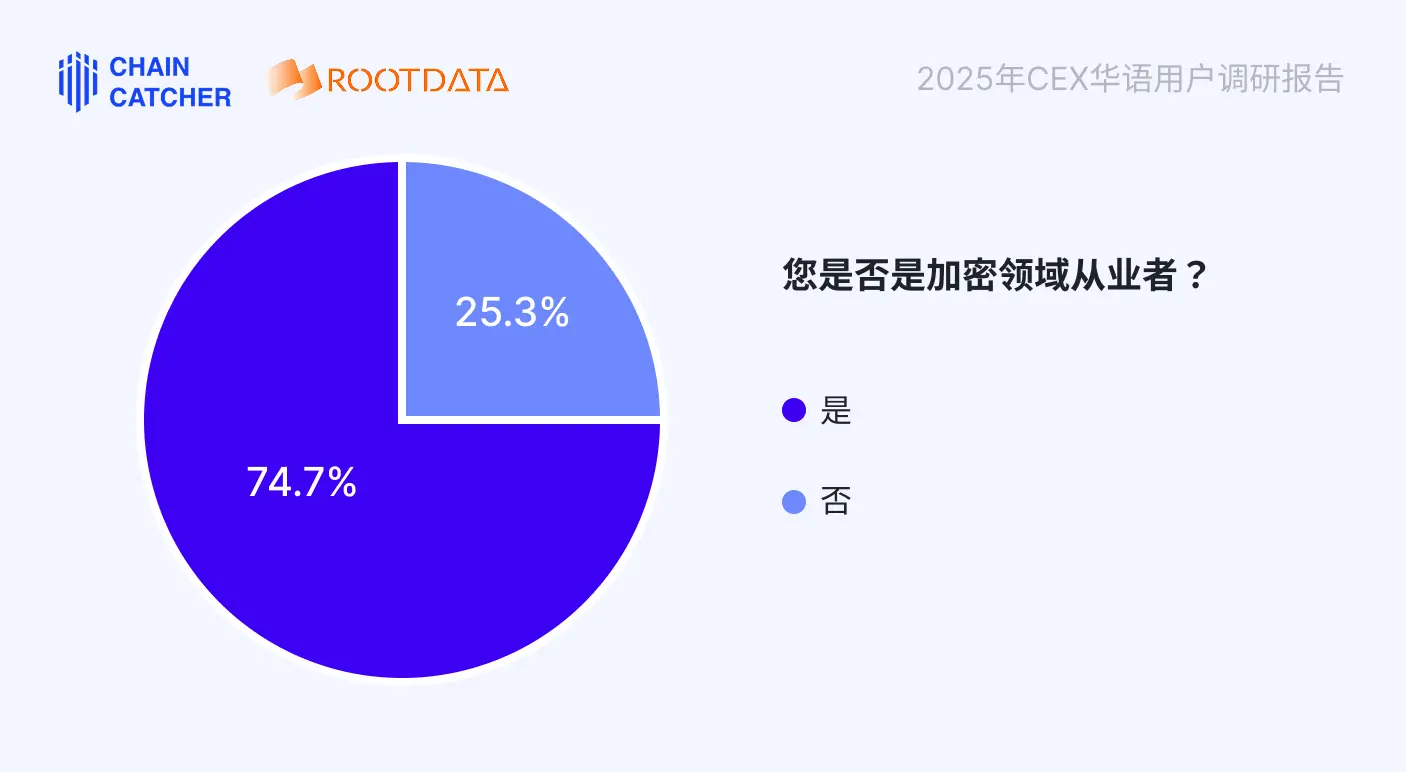
Most respondents are professionals in the crypto field: Nearly 3/4 of respondents are professionals in the crypto industry, while 1/4 are non-crypto professionals.

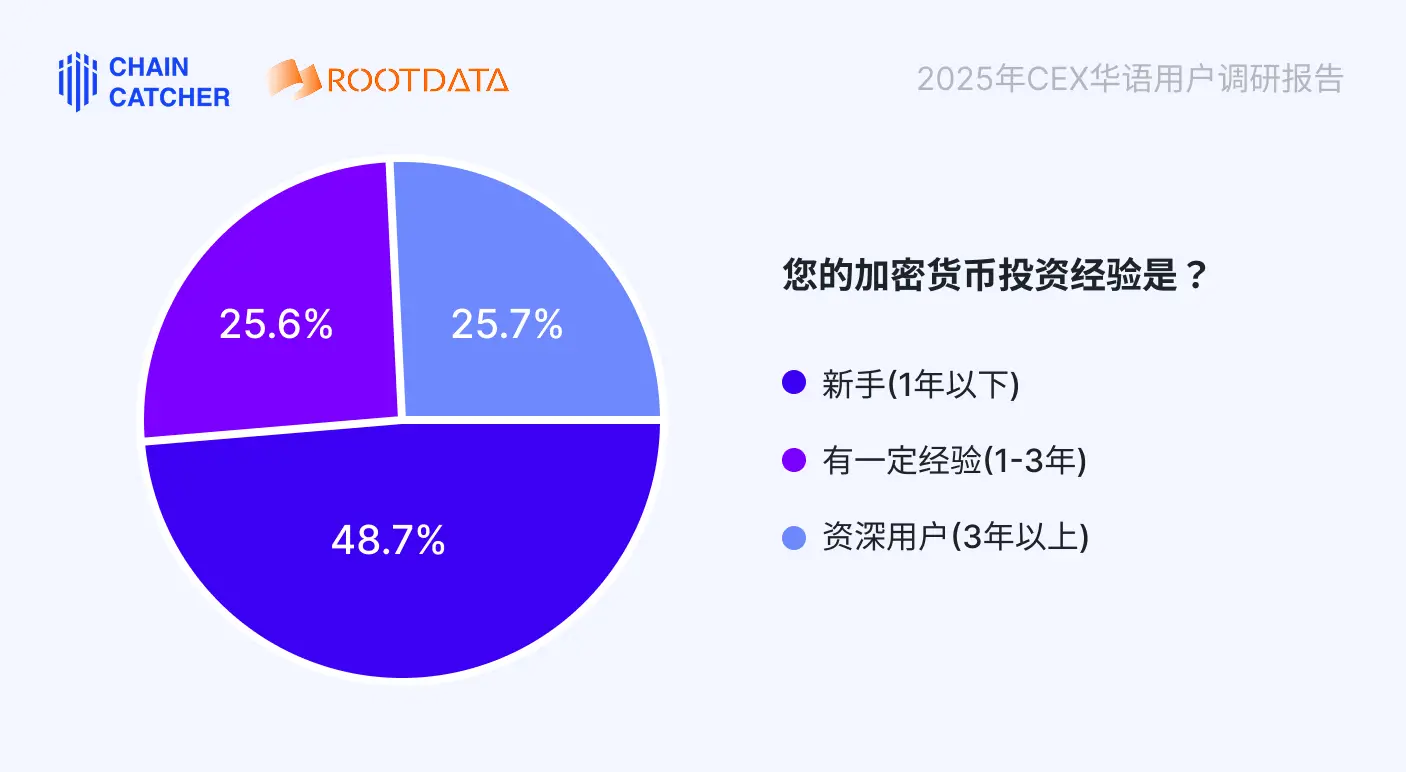
Respondents are mainly crypto investment novices and those with some experience: Novices with less than one year of investment experience account for 48.7%; those with 1-3 years and over 3 years of experience account for 25.6% and 25.7%, respectively.

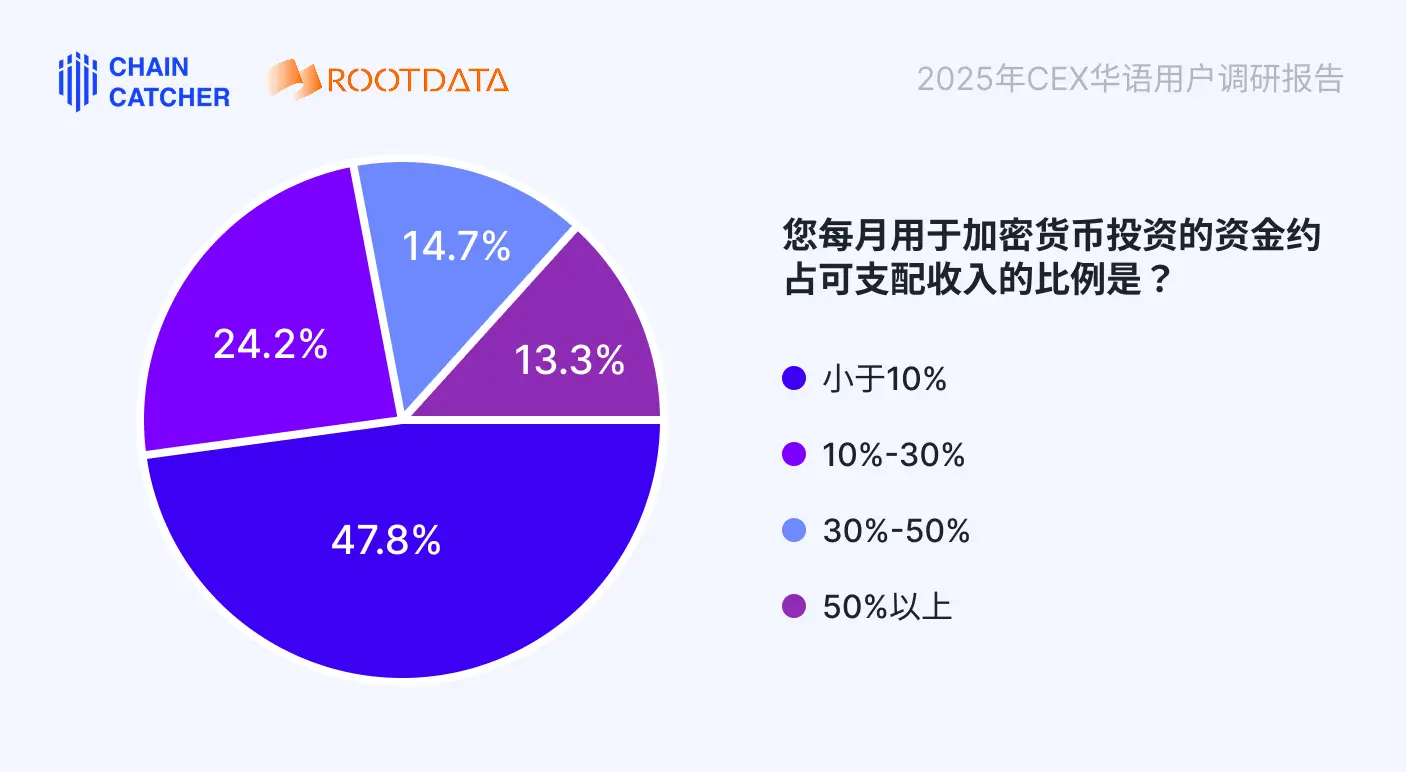
Respondents maintain a relatively cautious attitude towards crypto investment. Nearly half of the respondents invest less than 10% of their income in crypto each month; 24.2% invest 10%-30%; 14.7% invest 30%-50%; and 13.3% are more aggressive, using half or more of their monthly income for crypto investments.

CEX Chinese User Usage Preferences

1.* High-frequency CEX usage*

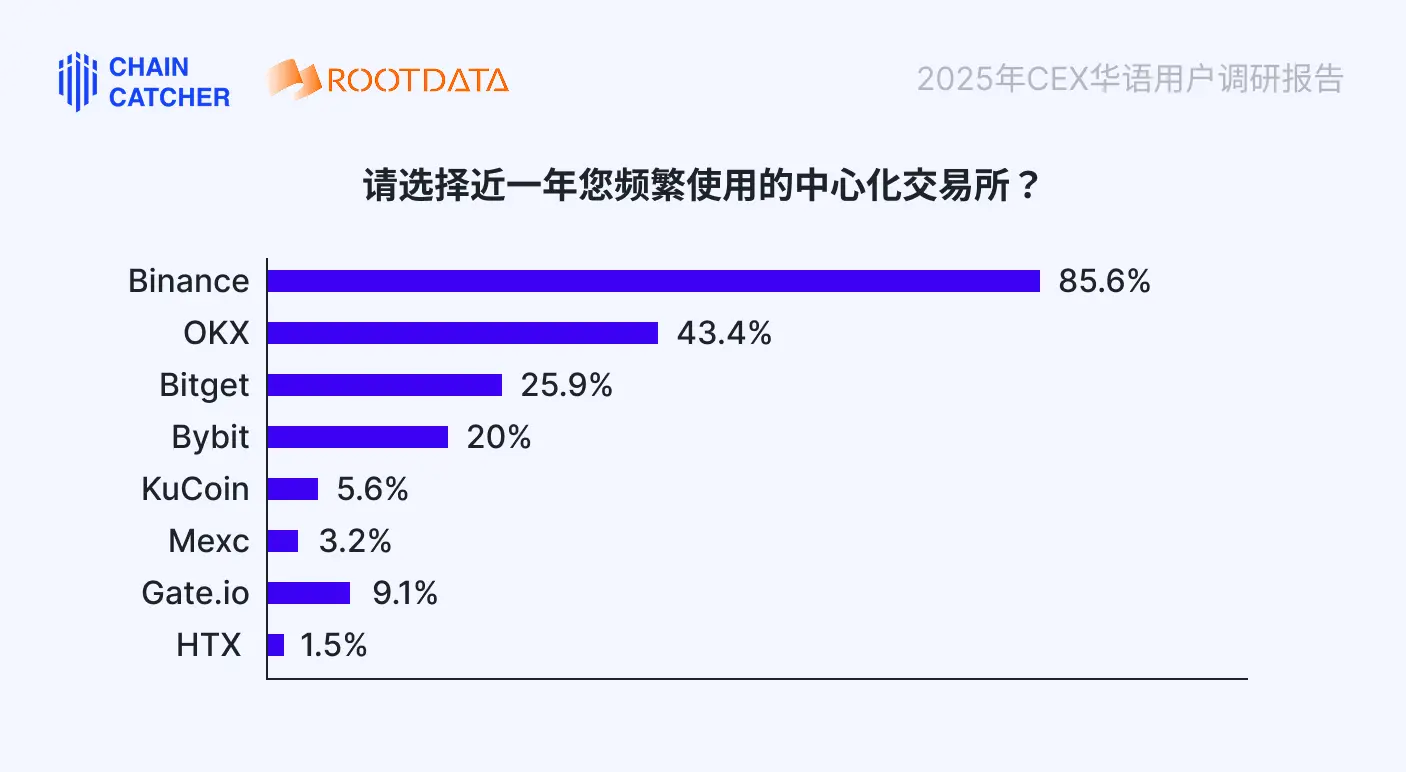
In this survey, respondents were allowed to select up to three centralized exchanges they frequently used in the past year.

The results show that Binance, OKX, and Bitget are the top three centralized exchanges used most frequently by respondents.

Binance was chosen by 85.6% of respondents, far exceeding other platforms, nearly double that of the second-ranked OKX (43.4%), reflecting a clear user preference for leading platforms and an intensifying Matthew effect.

Bitget (25.9%) and Bybit (20%) form the third tier, indicating a competitive second tier where the landscape remains uncertain.

2. CEX where the largest crypto asset positions are stored

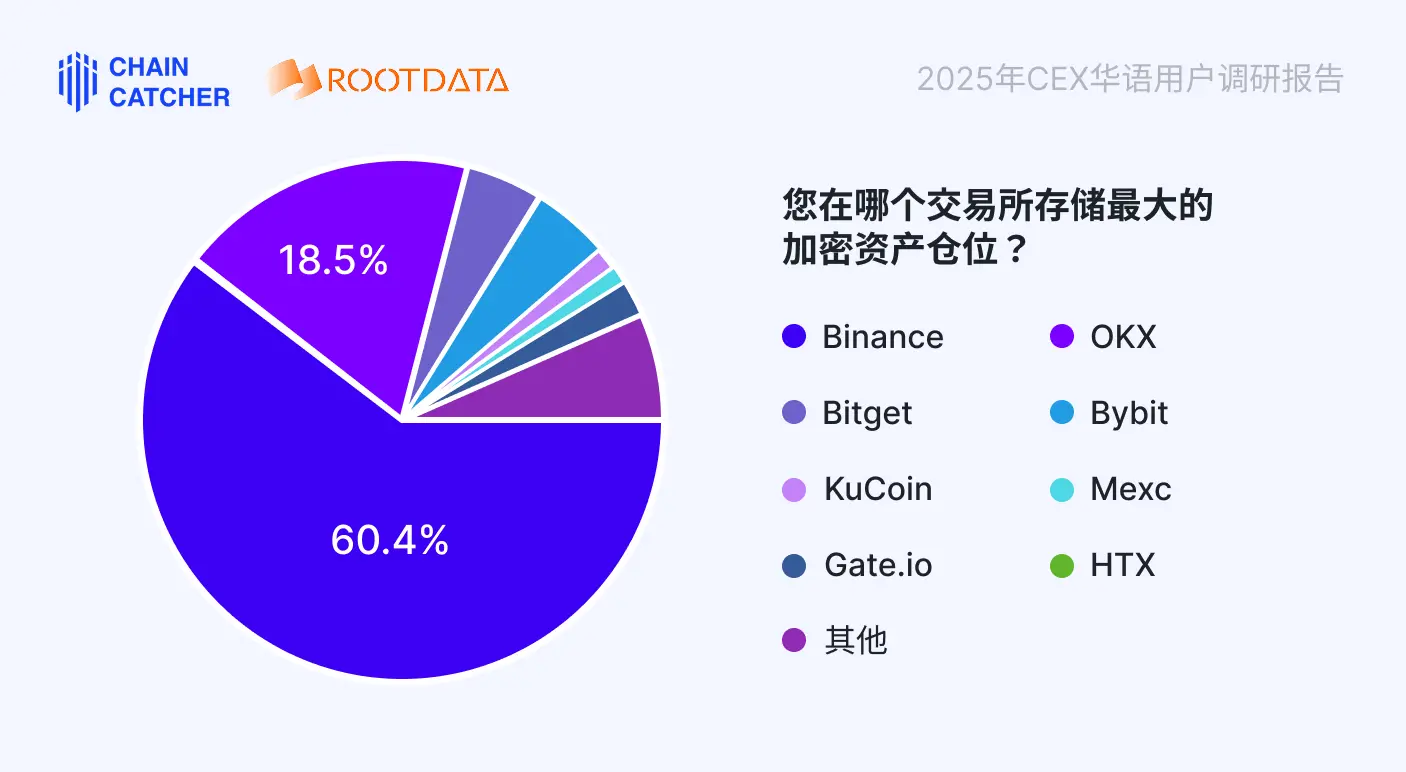
Aside from usage frequency, the location of respondents' largest crypto asset positions also indicates the level of trust users have in centralized exchanges.

According to the survey results, Binance remains the most chosen centralized exchange for storing the largest crypto asset positions, with over 60% of respondents selecting Binance.

18.5% of respondents store their largest crypto asset positions in OKX, significantly lower than the 43.4% usage frequency. This may indicate that users tend to view it as a "trading channel" rather than an "asset warehouse."

Apart from Binance and OKX, the market share of other exchanges is very fragmented and low. Bitget and Bybit, ranked third and fourth, respectively, are chosen by only 4.8% of respondents for storing their largest crypto asset positions.

This reflects that Binance and OKX have already captured the vast majority of the market share in the crypto asset storage market, posing significant challenges for other exchanges to break through and attract more users to store assets.

3. Preference for listing styles

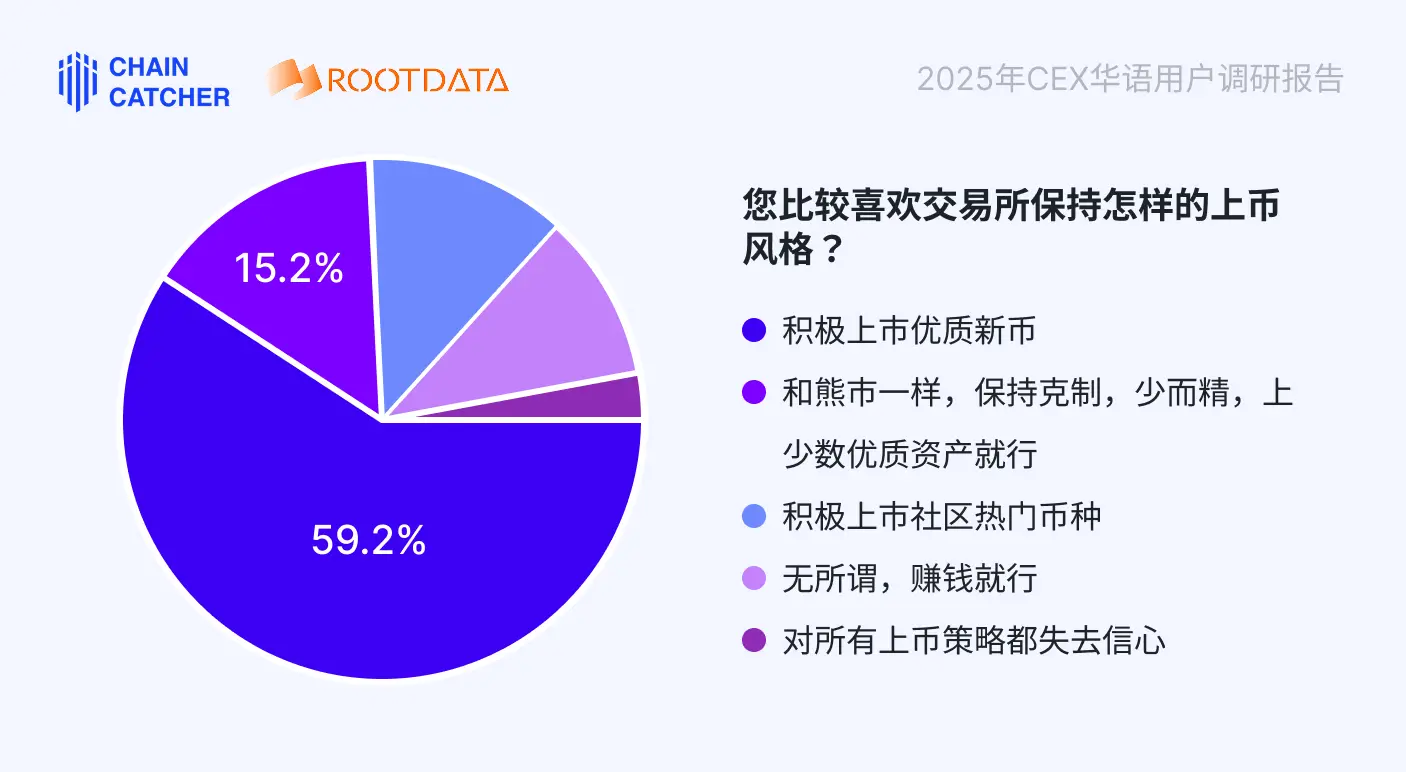
In this cycle, due to the weakening of the listing effect of centralized exchanges, the listing styles adopted by exchanges have become a common topic of discussion in the market.

From the survey results, 59.2% of respondents prefer a listing style that actively lists quality new coins. This reflects that the cryptocurrency market is still in an innovation-driven stage, and users have high expectations for emerging assets.

15.2% of respondents prefer a more restrained listing style: they hope to list a few quality assets with careful selection. This reflects that some users focus on long-term value investment.

12.4% of respondents prefer a listing style that actively lists popular community coins. The popularity of meme coins in this cycle has once again validated the power of community sentiment, and community enthusiasm is a direction that both users and exchanges must consider.

Additionally, 10.2% of respondents are not very concerned about listing styles, focusing more on the profit effect; 2.9% of respondents have lost confidence in the listing practices of exchanges. This reflects that past issues such as high price drop rates and insider trading scandals have indeed troubled some users.

Centralized exchanges may need to find their positioning in a dynamic balance—satisfying the majority of users' thirst for "new assets," while establishing trust through a selection mechanism and flexibly responding to changes in community culture.

4. Satisfaction with CEX listing strategies and processes

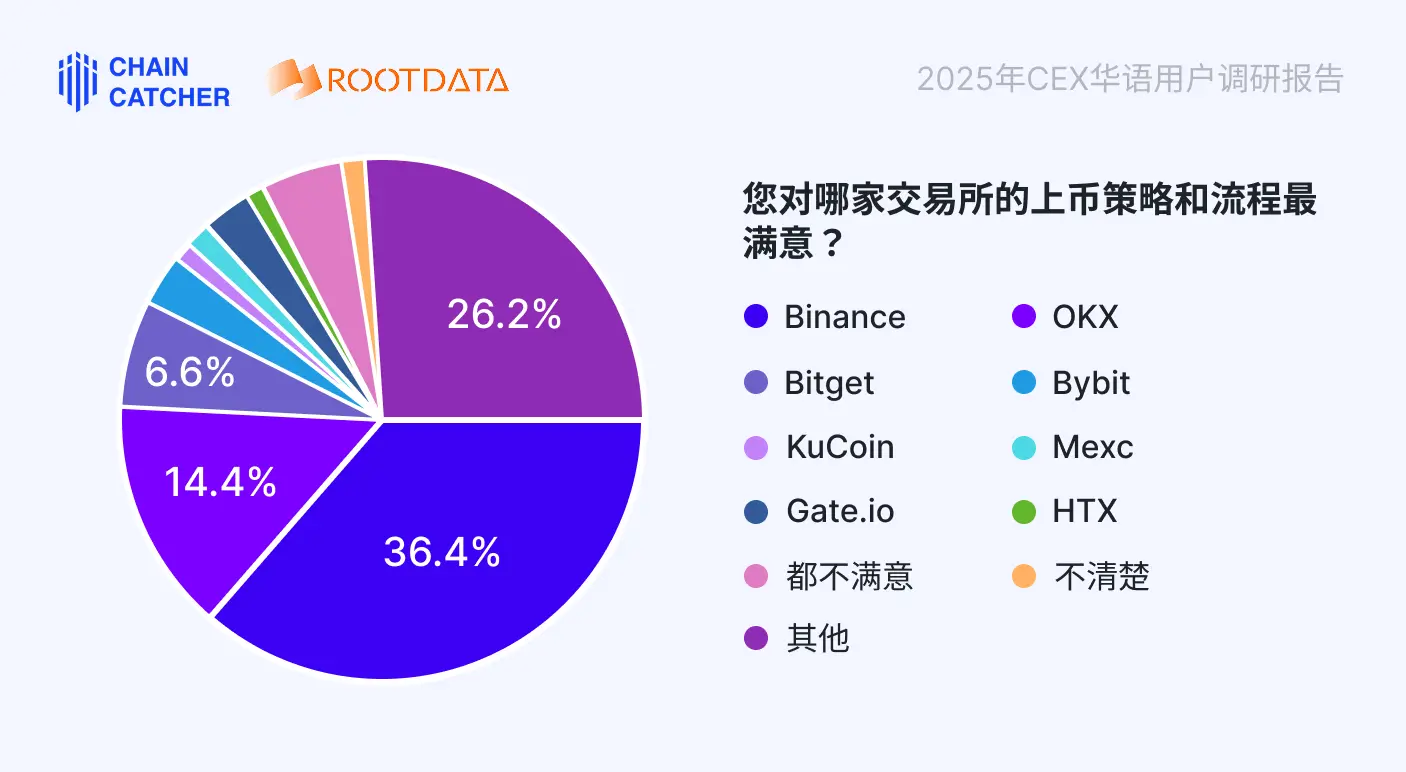
Binance, with a 36.4% share, still ranks first, but its lead has narrowed. Binance has faced multiple controversies in this cycle due to listing issues (such as allegations of insider trading and high price drop rates for some new coins), but its advantages in project selection capability, liquidity, and global resources make it the most satisfactory exchange for respondents.

However, compared to its dominant performance in high-frequency usage and asset custody, user satisfaction with its listing strategy still shows a significant gap, indicating that aspects such as review transparency and project quality control urgently need optimization.

KuCoin follows closely behind Binance with a 26.2% share, becoming the second-ranked platform in terms of satisfaction with listing strategies and processes. According to statistics from Klein Labs, KuCoin listed 297 coins throughout 2024, far exceeding Binance (60) and OKX (64), but significantly lower than the most aggressive Gate.io (629). This "moderately aggressive" listing strategy and community voting mechanism have attracted some investors who value participation. OKX ranks third with a 14.4% share.

Overall, centralized exchanges still face challenges in listing. More than 5% of users expressed dissatisfaction with the listing strategies and processes of all exchanges, with several users commenting on the phenomenon of price dumping after listings.

5. Popularity of CEX Web3 wallet services

According to survey data, among the Web3 wallet services provided by centralized exchanges, Binance leads with a usage rate of 56.5%, and its leading advantage may primarily benefit from the continuous traffic from the Binance Alpha program.

OKX, with a 33.1% share, ranks second, and the first-mover advantage of OKX in the Web3 wallet space may be impacted by service suspensions and Binance Alpha.

Overall, Binance and OKX together are chosen by 90% of respondents, forming a clear duopoly, while the usage rate of Web3 wallets from other exchanges is below 3%. Additionally, 2% of respondents indicated that they do not use any centralized exchange's Web3 wallet at all. (Note: After the survey concluded, Bybit announced the closure of most Web3 wallet services.)

6. Core Factors for Choosing a CEX

What factors do respondents prioritize when selecting a centralized exchange? This survey also conducted a detailed investigation.

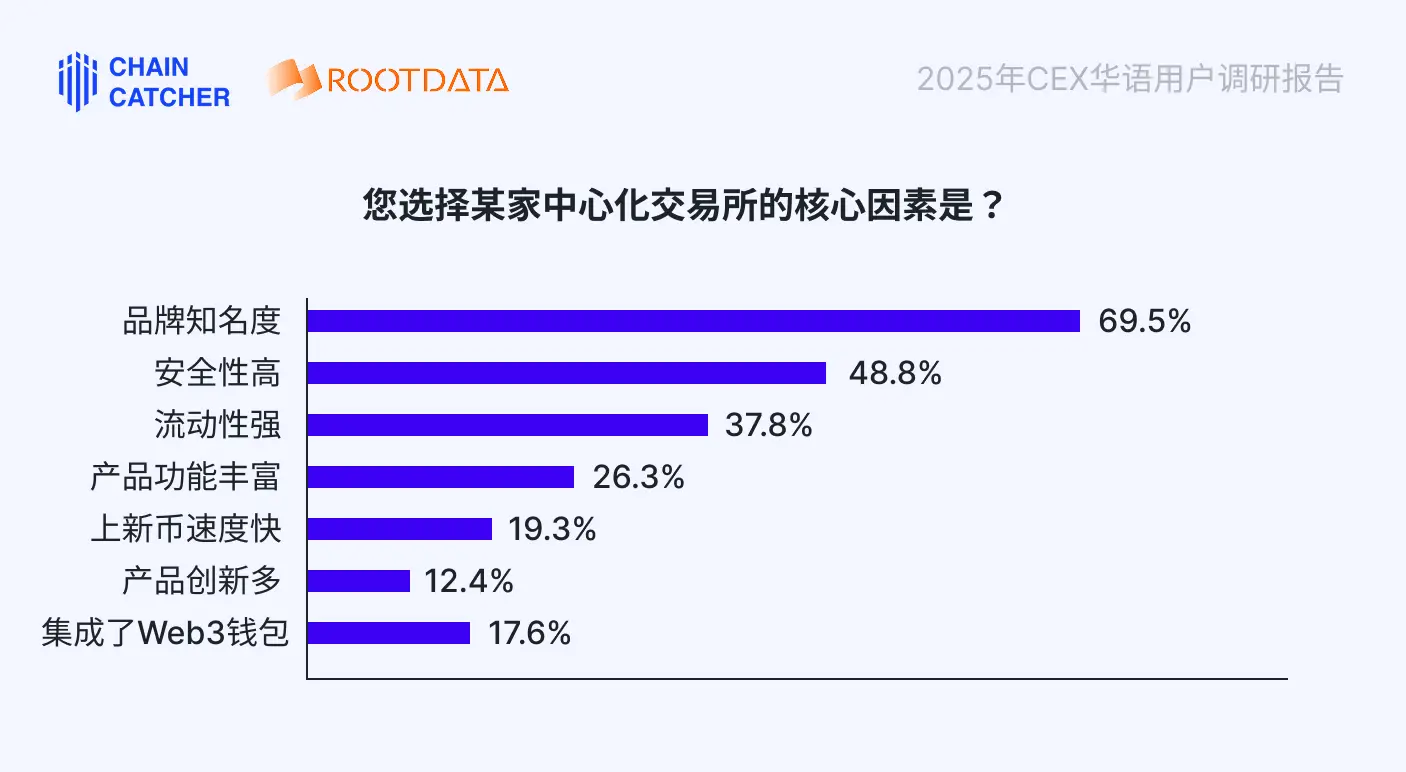
The survey results indicate that brand effect dominates. 69.5% of respondents listed "brand recognition" as the primary consideration, reflecting the intensifying Matthew effect in the industry, where leading exchanges create cognitive barriers through first-mover advantages and scale effects.

48.8% of users emphasized "security," and 37.8% focused on "liquidity," these two essential indicators together form the survival baseline for exchanges.

26.3% of users are concerned about the "richness of product features," reflecting the demand from mature investors for comprehensive services such as derivatives and wealth management.

19.3% prefer "speed of new coin listings," indicating demand for participation in the primary market. 17.6% of users consider "integrated Web3 wallets," a relatively emerging option that has surpassed some traditional indicators, signaling that the integration of CEX and DeFi is reshaping industry standards.

Additionally, comments from respondents reveal that the availability of airdrops and other benefits, the empowerment of platform tokens, and the user experience of U cards are also reference options for choosing centralized exchanges.

7. Analysis of CEX User Pain Points

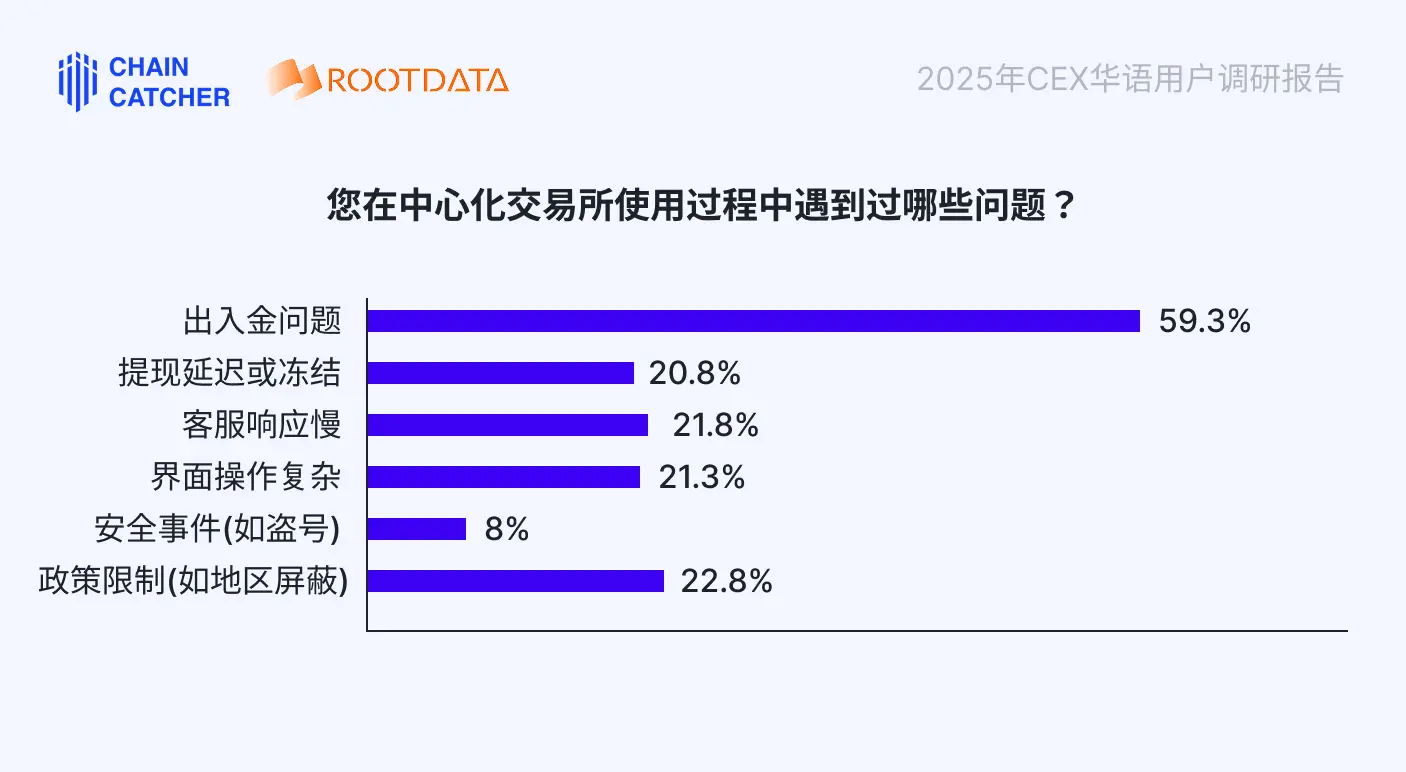
Deposit and withdrawal issues have become the biggest pain point. 59.3% of users have encountered deposit and withdrawal problems, far exceeding other types of issues, reflecting systemic barriers still exist in the connection between traditional finance and the crypto ecosystem.

Operational and service issues are also prominently displayed. Withdrawal delays/freezes (20.8%) and slow customer service responses (21.8%) affect over 40% of users, exposing deficiencies in some exchanges' fund processing efficiency and customer service systems.

22.8% of users are affected by policy restrictions (such as regional blocks, KYC upgrades, etc.), indicating that compliance challenges are becoming increasingly significant.

Additionally, 21.3% of respondents find the interface operation complex, reflecting that there is still considerable room for improvement in user experience design on current centralized trading platforms.

3. Changes in CEX Usage Trends Among Chinese Users Over the Past Year

1. Changes in Usage Frequency

The survey investigated changes in users' frequency of using CEX over the past year.

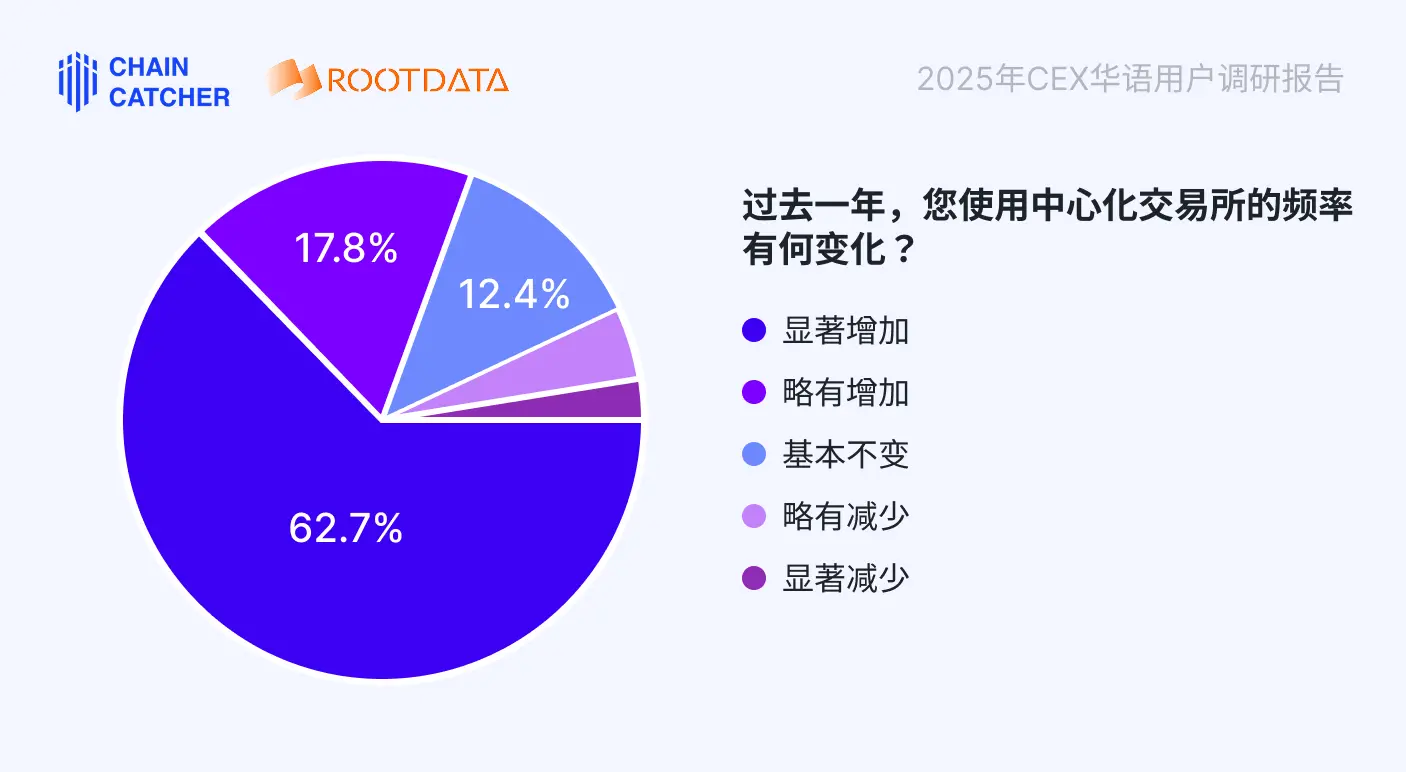
80.5% of users (62.7% significantly increased, 17.8% slightly increased) reported an increase in the frequency of using CEX in the past year, indicating that CEX remains sticky among Chinese-speaking users. This may be related to market fluctuations, the investment boom in crypto assets, and leading CEXs continuously launching new features (such as Web3 wallets, wealth management products, etc.).

12.4% of users reported that their usage frequency remained basically unchanged, reflecting that some users have formed stable trading habits. Only 7.1% of users (4.6% slightly decreased, 2.5% significantly decreased) reduced their frequency of using CEX, which may be related to security incidents or the increasing appeal of DEX.

2. Changes in Asset Investment

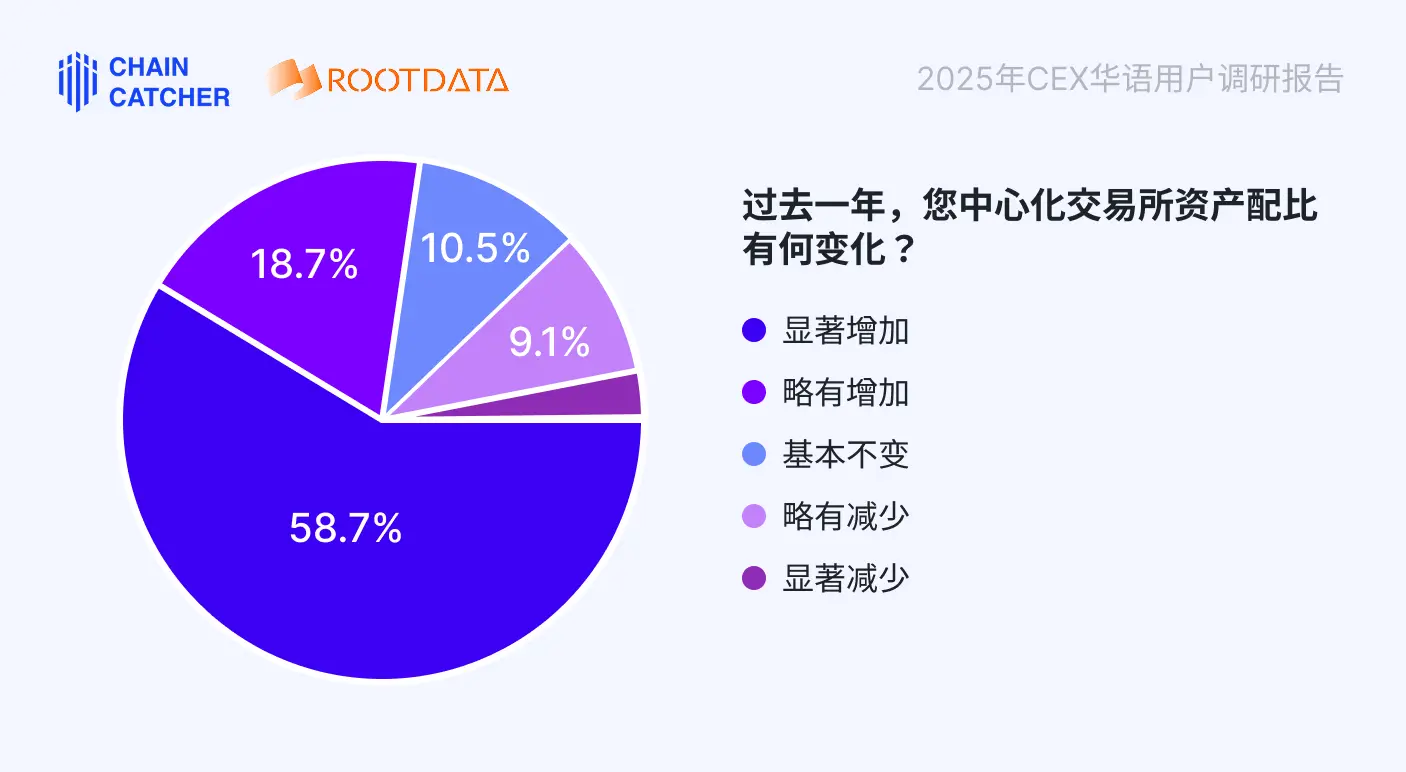
The results show that 77.4% of users (58.7% significantly increased, 18.7% slightly increased) have increased their crypto asset allocation in CEX, with more than half of respondents significantly increasing their asset allocation in the past year. Only 12% of respondents reduced their asset allocation (9.1% slightly decreased, 2.9% significantly decreased).

This overall reflects that as Bitcoin continues to reach new highs and the crypto market warms up, users' demand for investment in crypto assets is also increasing, with CEX remaining the most important entry point for users' cryptocurrency investment trading.

3. Asset Appreciation Trends

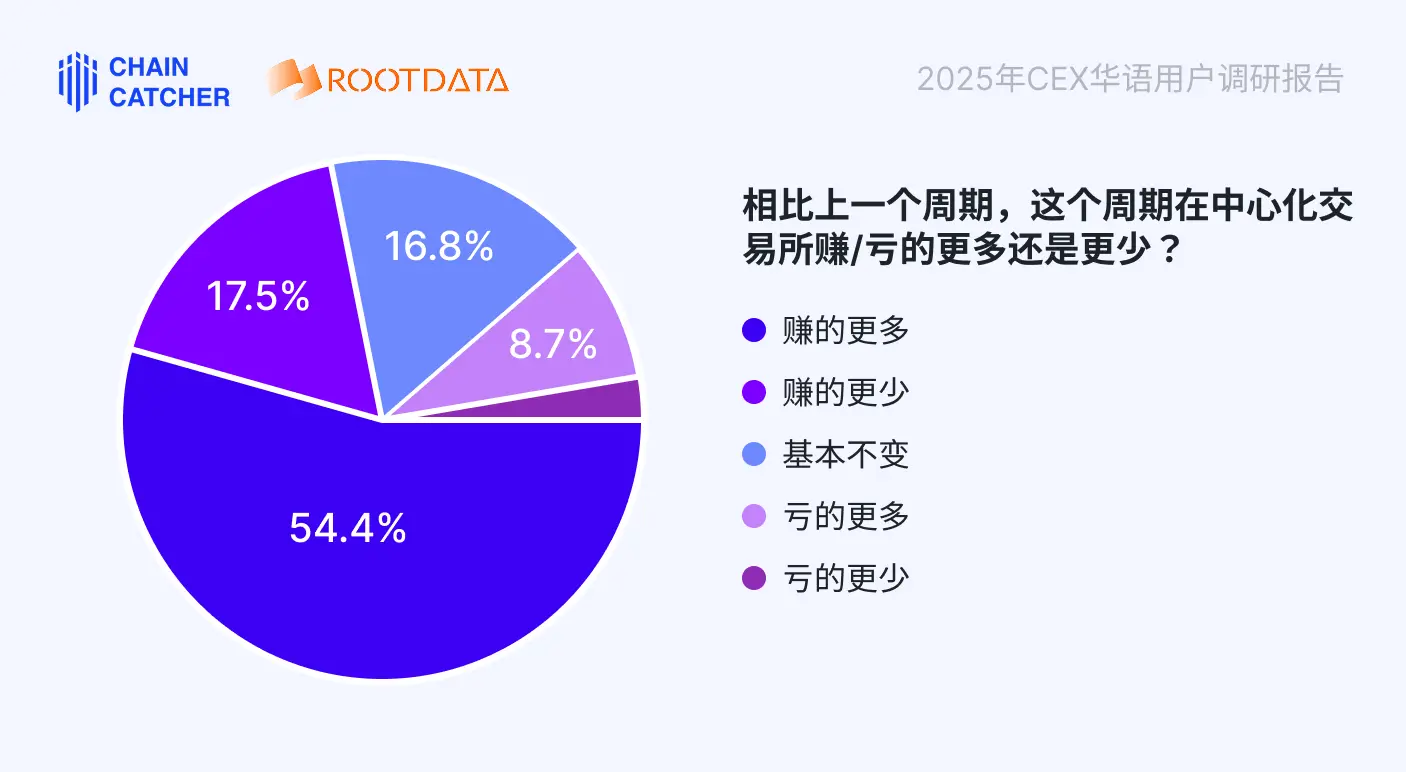
We asked respondents, "Compared to the previous cycle (early 2022 to the end of 2023), in this cycle (from early 2024 to now), have you earned more or less in centralized exchanges?"

The results show that overall profitability has significantly expanded, with about 54.4% of users reporting profits in CEX investment trading exceeding the previous cycle, while only 8.7% of users reported increased losses.

4. CEXs with Significant Decrease in Usage and Analysis of Reasons

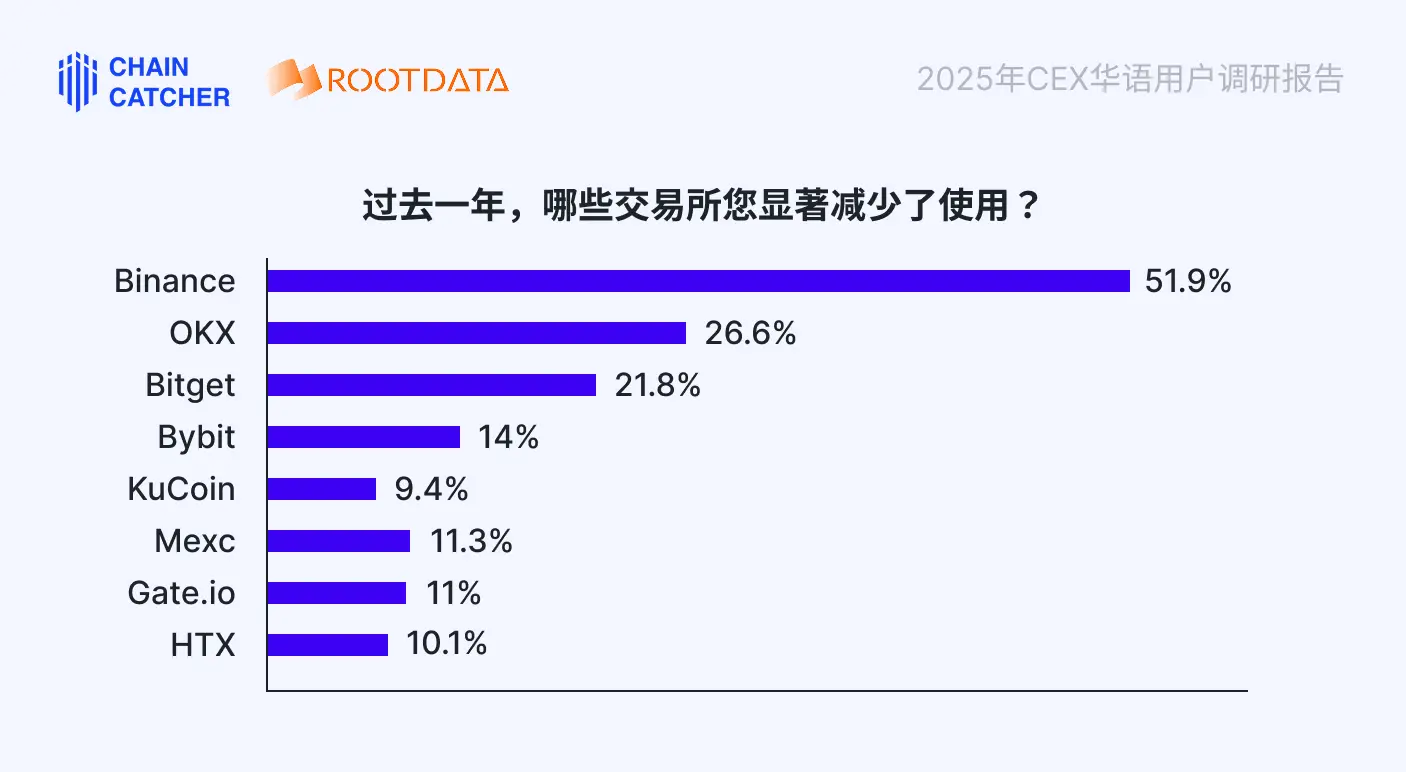
Binance, with a 51.9% share, has become the exchange that respondents have reduced usage of the most, possibly influenced by the weakening of the listing effect and regulatory compliance issues, while OKX follows closely with a 26.6% share.

As the exchanges with the highest frequency of use and the largest amount of managed assets among respondents, Binance and OKX may still face significant user attrition.

5. Analysis of Reasons for Abandoning a CEX

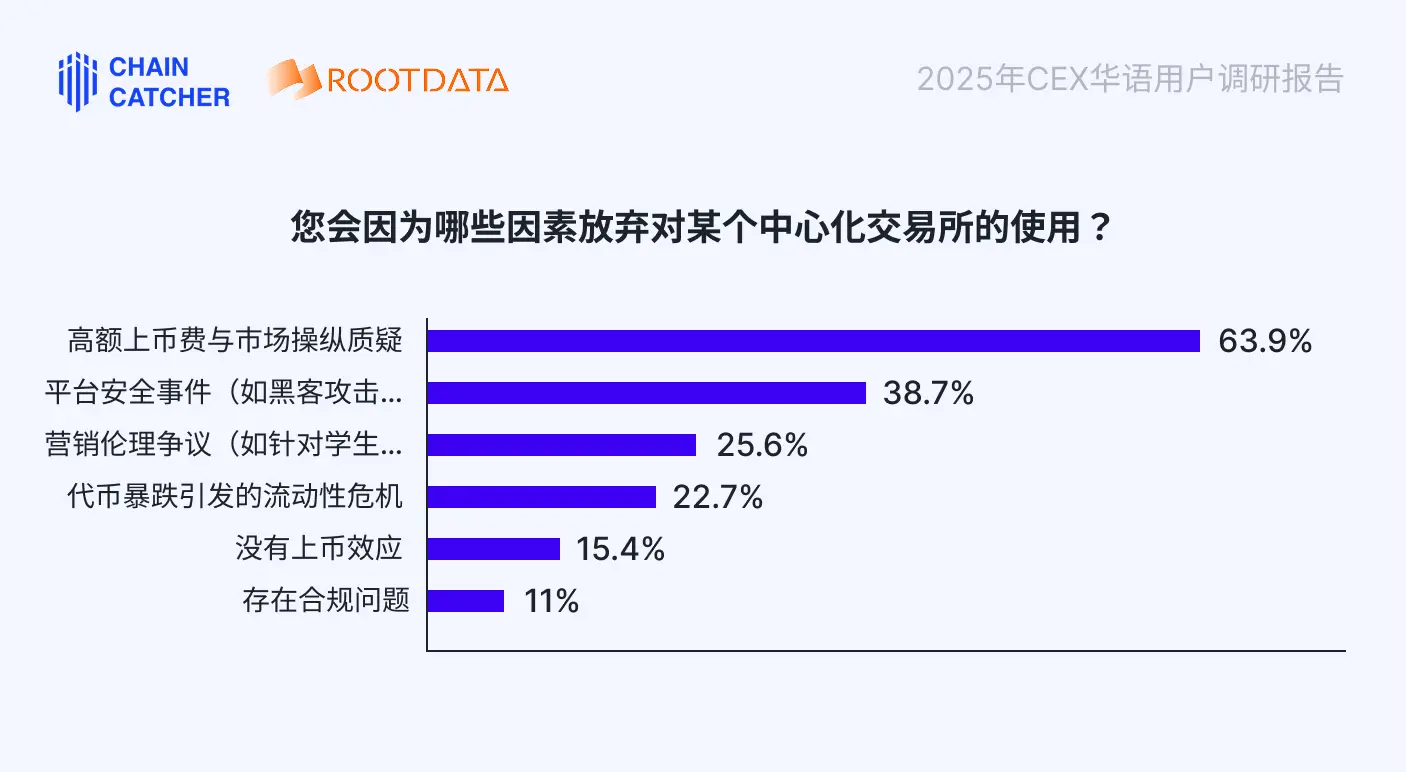
The reasons for respondents abandoning a centralized exchange show that the negative impact of the listing mechanism is the most significant.

63.9% of users abandoned CEX due to listing issues, the highest proportion, reflecting concentrated dissatisfaction among users regarding the listing mechanism. High listing fees may increase project costs, indirectly driving up token prices, while market manipulation allegations further undermine users' trust in the platform's fairness. Additionally, 15.4% of users would abandon CEX due to "lack of listing effect," indicating that CEX urgently needs to optimize its listing mechanism to rebuild user confidence.

38.7% of users abandoned CEX due to platform security incidents, showing that security issues remain one of the most concerning pain points for users. This year's $1.5 billion theft incident at Bybit has once again sounded the alarm for crypto CEX users and the industry.

Moreover, 25.6% of users abandoned CEX due to ethical controversies in marketing, indicating that such issues not only damage the platform's reputation but may also raise doubts about the overall operational integrity of the platform.

22.7% of users abandoned CEX due to liquidity crises caused by token price drops, reflecting that some platforms lack sufficient liquidity management capabilities during market fluctuations.

11% of users abandoned CEX due to compliance issues, indicating that some platforms have shortcomings in regulatory compliance. As global crypto regulations tighten, users are also concerned about the safety of their assets. CEX needs to actively adapt to regulatory requirements and improve compliance levels to reduce user concerns.

6. Analysis of Potential Factors for Reducing Overall Usage of CEX

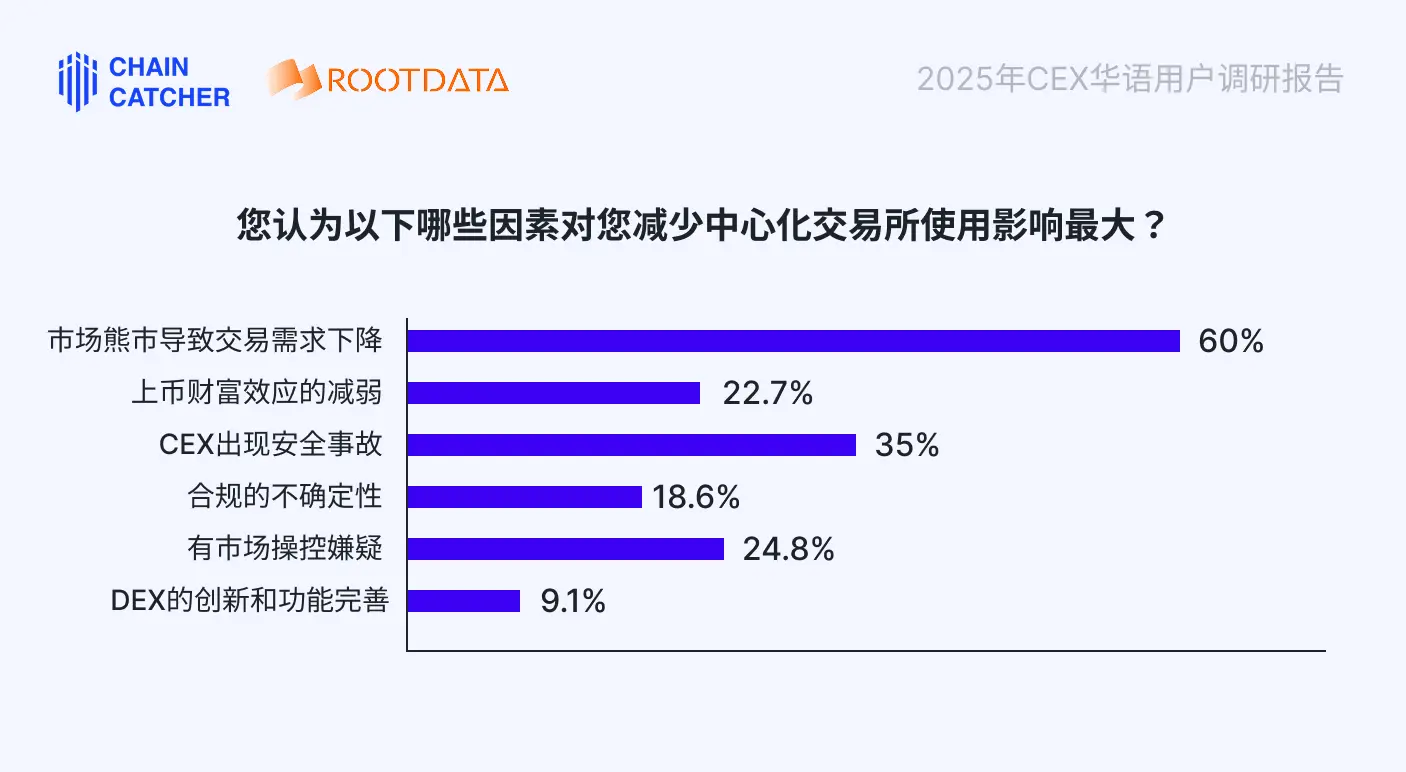
The survey asked respondents what factors would lead them to reduce their usage of centralized exchanges. The results show that 60% of users reduced their usage of CEX due to the bear market, the highest proportion, reflecting the direct impact of the macro market environment on user behavior.

35% of users reduced their usage of CEX due to security incidents, indicating that security remains a core pain point for CEX.

24.8% of users reduced usage due to allegations of market manipulation, reflecting users' doubts about the fairness of CEX trading.

22.7% of users reduced usage due to the weakening of the wealth effect from new listings, indicating that if CEX cannot attract users through quality projects, it may lead to user attrition. Additionally, compliance issues and innovations in DEX pose challenges to CEX in attracting user usage.

4. Expectations of Chinese Users for the Future Development of CEX

1. Consideration of Replacing CEX with Decentralized Solutions

69.5% of respondents indicated they would consider replacing CEX with more decentralized solutions like DEX, a significant proportion, reflecting the increasing trust crisis in CEX and the competitive pressure brought by the rise of DEX.

However, 10.1% of respondents still indicated they are observing, suggesting that some users may still have a strong reliance on the CEX brand and hold doubts about the maturity of decentralized solutions like DEX.

2. Judgments on the Future Landscape of CEX and DEX

Regarding the question, "Will CEX be completely replaced by DEX in the future?" 63.9% of respondents believe that DEX will completely replace CEX, reflecting the strong appeal of decentralized finance (DeFi) concepts within the cryptocurrency community, as well as the gradual narrowing of the user experience gap between DEX and CEX.

Nearly 30% of respondents believe that CEX and DEX will coexist in the long term, indicating that some people are optimistic about the continued existence of CEX. The advantages of CEX include fast transaction speeds, user-friendly experiences, high liquidity, and support for fiat trading, making it particularly attractive to novice users and institutional investors. A small number of respondents remain cautious, possibly due to uncertainties regarding blockchain technology, market regulation, the maturity of DEX technology (such as trading efficiency and gas fee issues), or the iterative capabilities of CEX. This reflects the complexity of the crypto market and the variability of future developments.

3. Analysis of the Improvements Respondents Most Expect to Enhance Trust in CEX

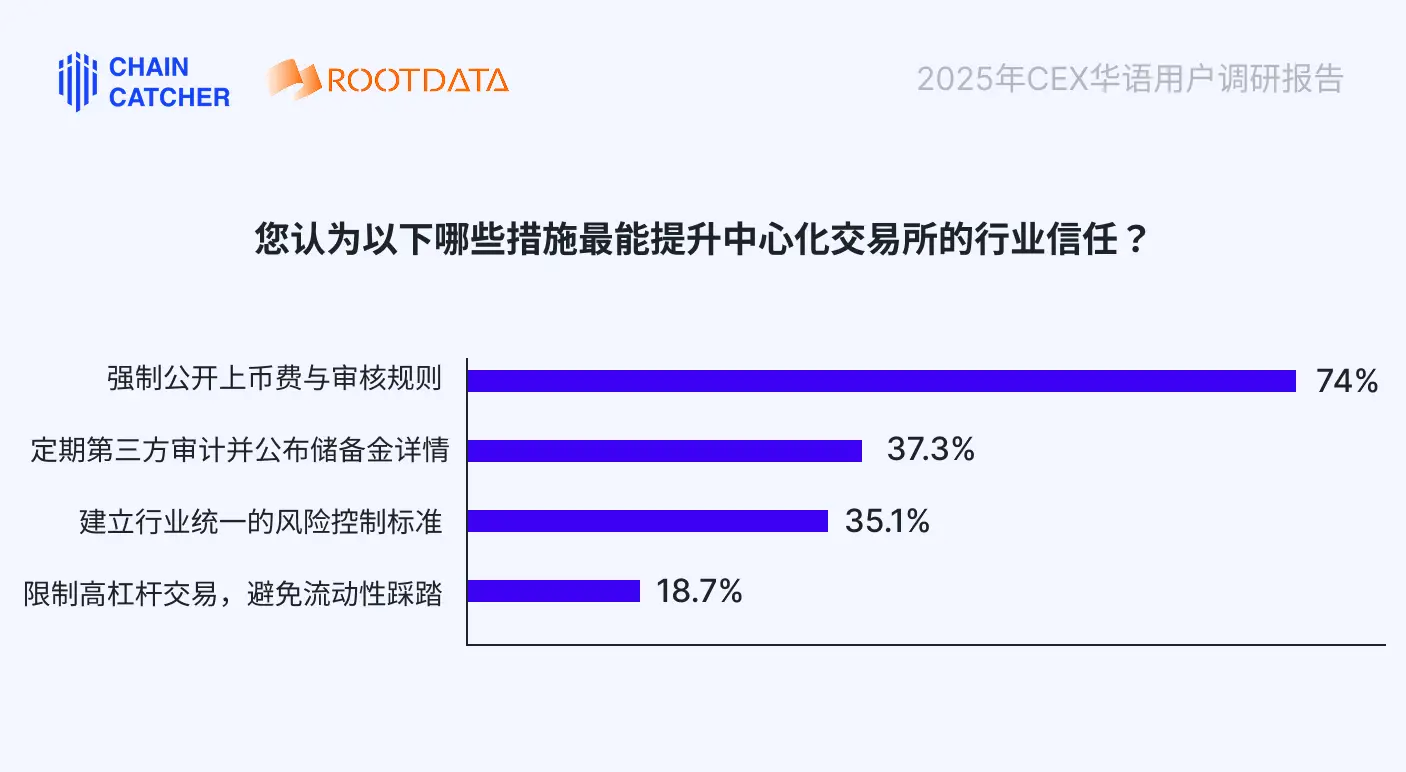
The transparency of the listing process remains the most concerning issue. Over 74% of respondents believe that the listing process needs to be further disclosed, reflecting a general perception that the listing process of CEX is not transparent enough, raising concerns about potential "behind-the-scenes operations" or conflicts of interest.

Additionally, over 37% of respondents are concerned about the transparency of CEX's asset reserves, indicating worries about the safety of platform funds. The shadows cast by bankruptcies like FTX may still linger for some users.

Furthermore, over 35% of respondents hope that CEX will establish unified industry risk control standards, or this may indicate that current CEX risk control measures are inconsistent, potentially leading to systemic risks; more than 18% of respondents wish to limit high-leverage trading.

免责声明:本文章仅代表作者个人观点,不代表本平台的立场和观点。本文章仅供信息分享,不构成对任何人的任何投资建议。用户与作者之间的任何争议,与本平台无关。如网页中刊载的文章或图片涉及侵权,请提供相关的权利证明和身份证明发送邮件到support@aicoin.com,本平台相关工作人员将会进行核查。

Share To
APP

X

Telegram

Facebook

Reddit

CopyLink