South Asia and Southeast Asia are the third most important market after the United States and Western Europe.
Author: Ignas | DeFi Research
Translation: Deep Tide TechFlow
As cryptocurrency becomes a global industry, the dominance of KOLs in the West and English-speaking countries may cause us to overlook opportunities outside the West.
For example, in my previous blog post on the current state of the market, I was surprised to find that the number of OpenSocial users exceeded that of Farcaster or Lens, despite much lower attention on X platform. What is the secret to their success? Indonesia, Vietnam, and India make up the majority of their user base.
Therefore, in this blog post, I collaborated with Mai, the brain behind the official X account of Pink Brains, to share insights about the South Asian crypto market.

We also interviewed several individuals from South Asian countries to understand their personal experiences.
South Asia - The Wilderness of Cryptocurrency
Token2049 Singapore is undoubtedly the largest cryptocurrency event of 2024, and one impressive point comes from Andy's sharing: "The Asian market is still undeveloped."
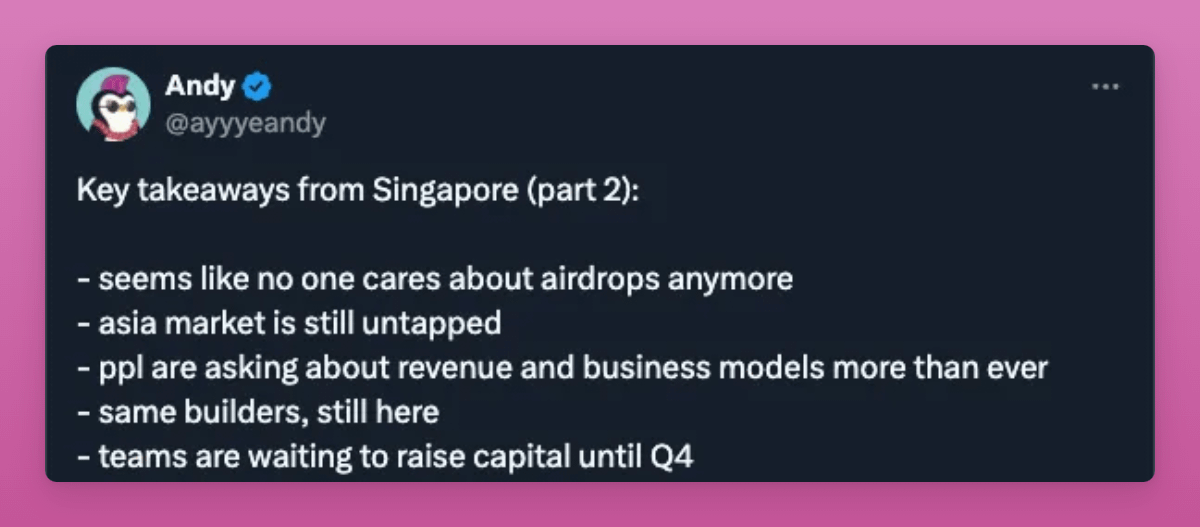
While East Asia—such as South Korea, Hong Kong, Taiwan, China, and Japan—has become a major cryptocurrency hub with clear regulatory policies, participation from large institutions and professional investors, Central and Southern Asia and Oceania (CSAO) have taken a different, often overlooked approach to cryptocurrency, which is not commonly seen on Western crypto Twitter.
Here is the 2024 Chainalysis Global Cryptocurrency Adoption Index map.
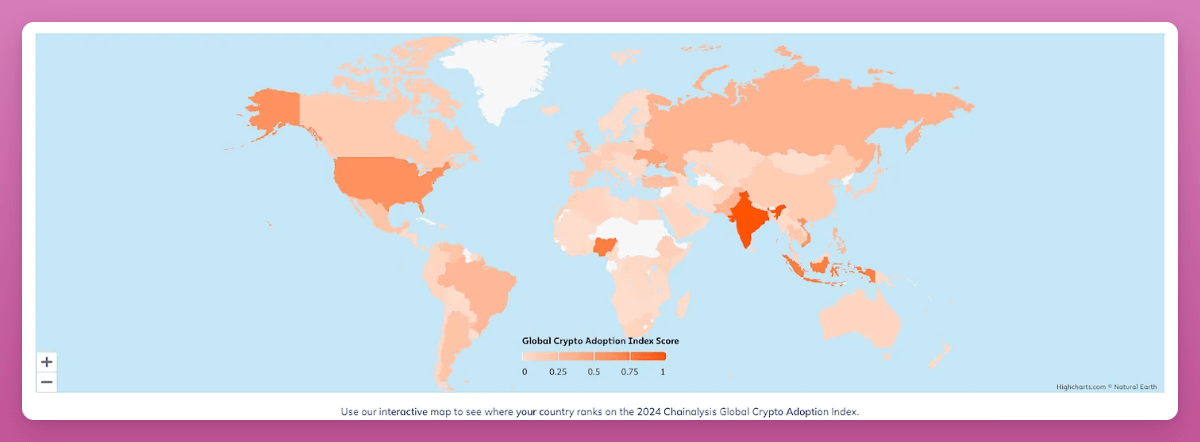
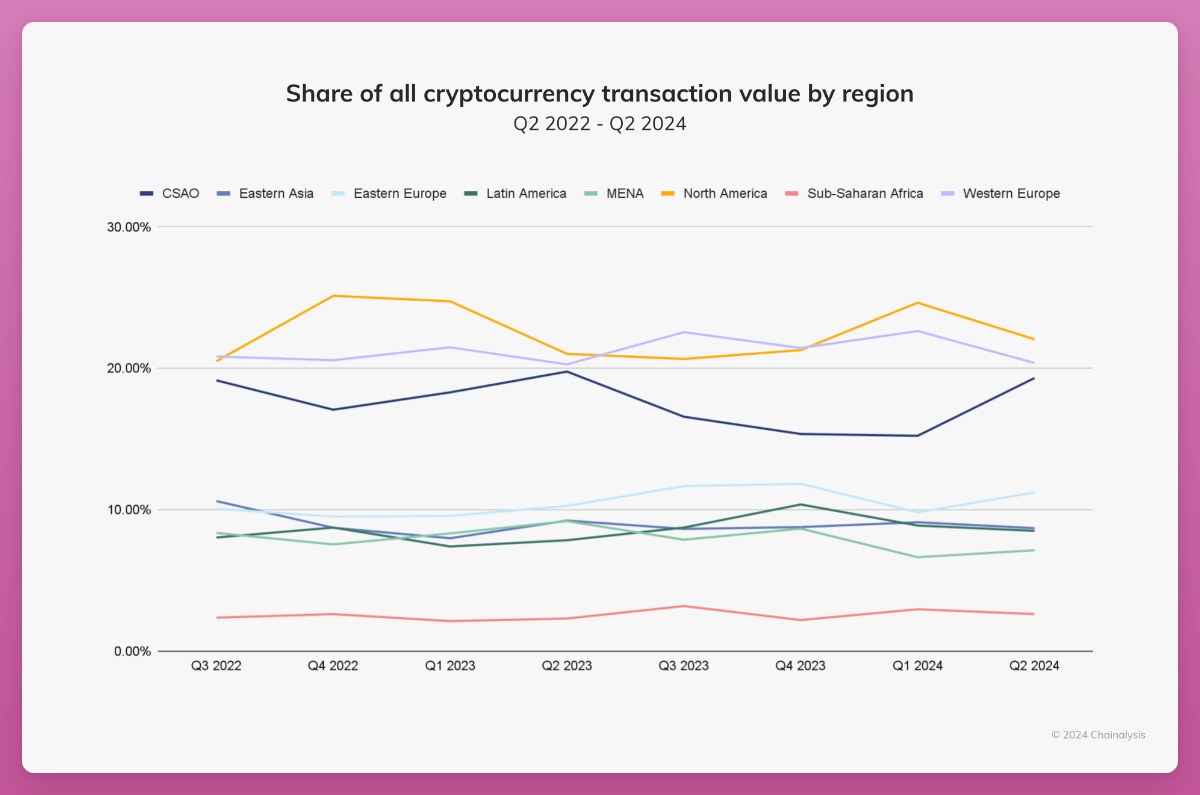
According to Chainalysis data, the Central and Southern Asia and Oceania (CSAO) region is the third largest cryptocurrency market, with over $750 billion in cryptocurrency inflows from July 2023 to June 2024, accounting for 16.6% of the global total. Let that number sink in. Only North America and Western Europe have higher figures.
In the 2024 Global Cryptocurrency Adoption Index, the Central and Southern Asia and Oceania (CSAO) region indeed performed outstandingly, with seven countries ranking in the top 20: India (1), Indonesia (3), Vietnam (5), the Philippines (8), Pakistan (9), Thailand (16), and Cambodia (17).
How do people in South Asia adopt cryptocurrency?
Vietnam
First, let's take a look at Vietnam, where most members of our DeFi creator studio Pink Brains team are from, providing their personal experiences to the market. According to Triple-A's data, Vietnam has the second highest cryptocurrency ownership rate. Approximately 21.2% of the population holds cryptocurrency, second only to the UAE's 34.4%.
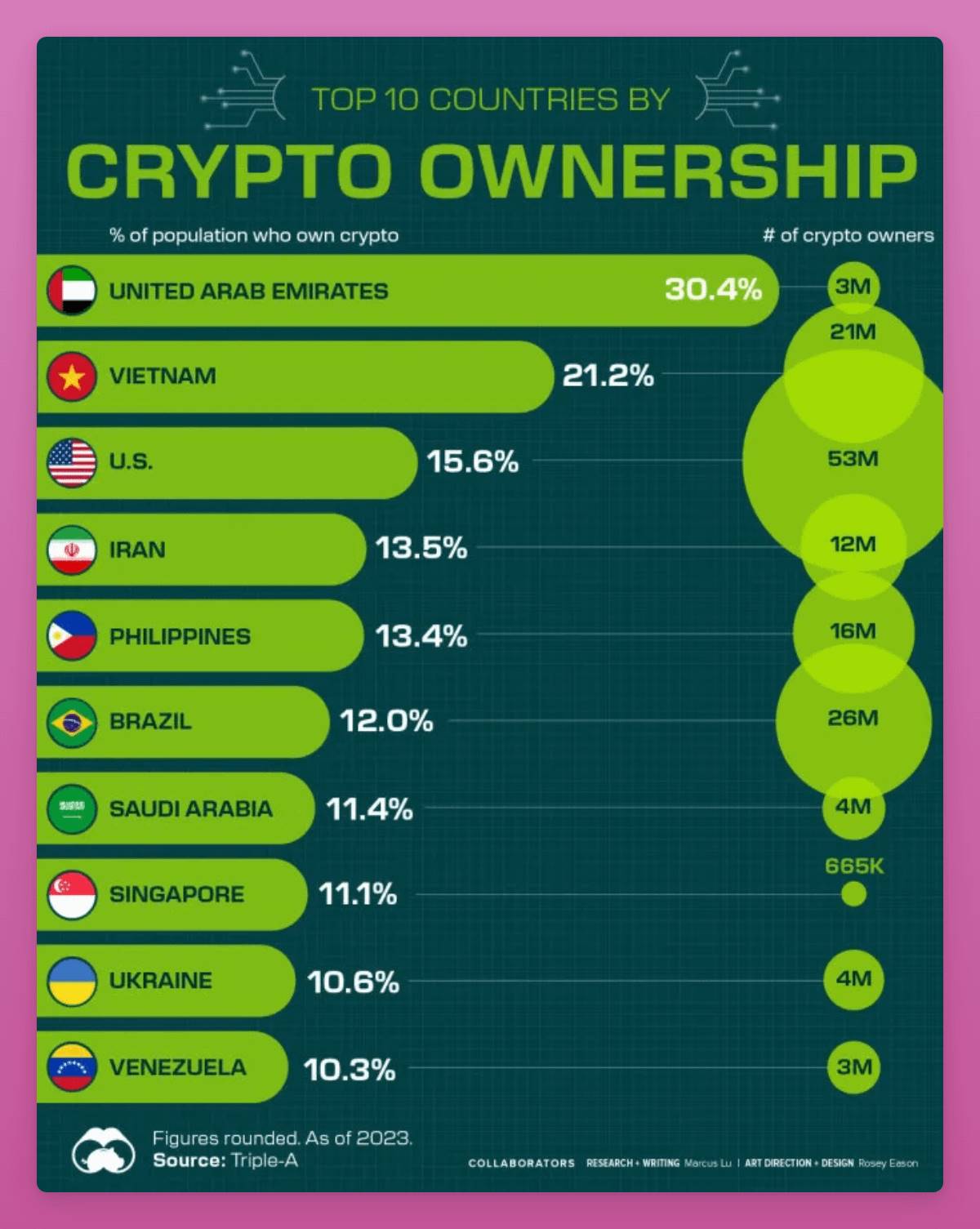
This country also pulled in big profits last year, coming in third globally with $1.18B in cashed out crypto gains, as per Chainalysis. That’s double the gains of Spain and the Philippines, and triple Thailand’s.
According to Chainalysis data, Vietnam also reaped substantial profits last year, ranking third globally, with $1.18 billion in cashed out crypto gains. This is double the gains of Spain and the Philippines, and triple those of Thailand.
One of the reasons for this situation is the Vietnamese government's ambiguous stance on cryptocurrency. While cryptocurrency is not prohibited, practical uses such as payments or collateral are not allowed. This makes holding cryptocurrency attractive, although the actual adoption rate still lags behind other Southeast Asian countries.
For most Vietnamese cryptocurrency investors, centralized exchanges (CEXs) are the preferred choice. Binance, Bybit, OKX, and BingX are the most popular exchanges, and due to language barriers and complex KYC processes, Coinbase has a small market share. Trading and holding cryptocurrency on CEXs remains the most common investment strategy.
Airdrop farming and crypto mining are very popular here. You will see a lot of Telegram and Facebook groups sharing tips, "hidden treasures" alerts, and token giveaways. In fact, purchasing cloned accounts, forging KYC, or setting up bots is very simple and cheap, with little to no hassle. This makes Sybil attacks from Vietnamese farmers a major challenge for protocols. Some large airdrops you may have heard of include Arbitrum, LayerZero, Aptos, and zkSync.
Most investors in Vietnam are not experienced traders. They primarily seek quick profits, viewing cryptocurrency as a side job or an opportunity to change their lives outside of their main occupation. Seasoned investors typically look for low market cap tokens on decentralized exchanges (DEXs) while holding a large amount of assets on centralized exchanges (CEXs). Meanwhile, new investors since 2022 often chase airdrops and referral rewards. Experienced traders often incur losses in major black swan events (such as FTX or Luna), while newcomers often suffer losses due to incorrect KOL signals, scams, or excessive leverage.
Vietnam is a top country in international math competitions and a center for blockchain development talent. You may have heard of prominent figures like Loi Luu (Kyber Network) and Vu Nguyen (Pendle), but there are also some notorious serial scammers here, such as the person behind Whale Markets!

Note: My team is very disgusted with this person. Please check the discussion above to understand how he has harmed investors' interests. Mai also told me that retail banking and non-cash payments are rapidly developing in Vietnam. Vietnam is following a path similar to China, with digital wallets, banking apps, and credit cards gradually replacing cash, especially in major cities. This change is good news for Web3, creating conditions for the widespread adoption of crypto payments, similar to the current situation in Singapore. More and more large companies are starting to integrate blockchain technology into their businesses.
We have seen some initial tests in the banking sector, such as the first real-time blockchain experiment for L/C payments conducted by HSBC Vietnam. These attempts indicate a strong interest in blockchain technology among Vietnamese businesses.
However, further openness in the legal framework for cryptocurrency is still awaited.
India
Despite the constantly changing regulations and taxation in India, the country remains a major player in the global crypto market. India imposes a high tax of up to 30% on crypto gains and a 1% tax on all transactions, leading some investors to seek less restrictive international exchanges. Despite these obstacles, cryptocurrency is still growing rapidly in India. The rise of innovative crypto startups in India indicates the need for more favorable tax policies and clearer regulations to sustain this momentum.
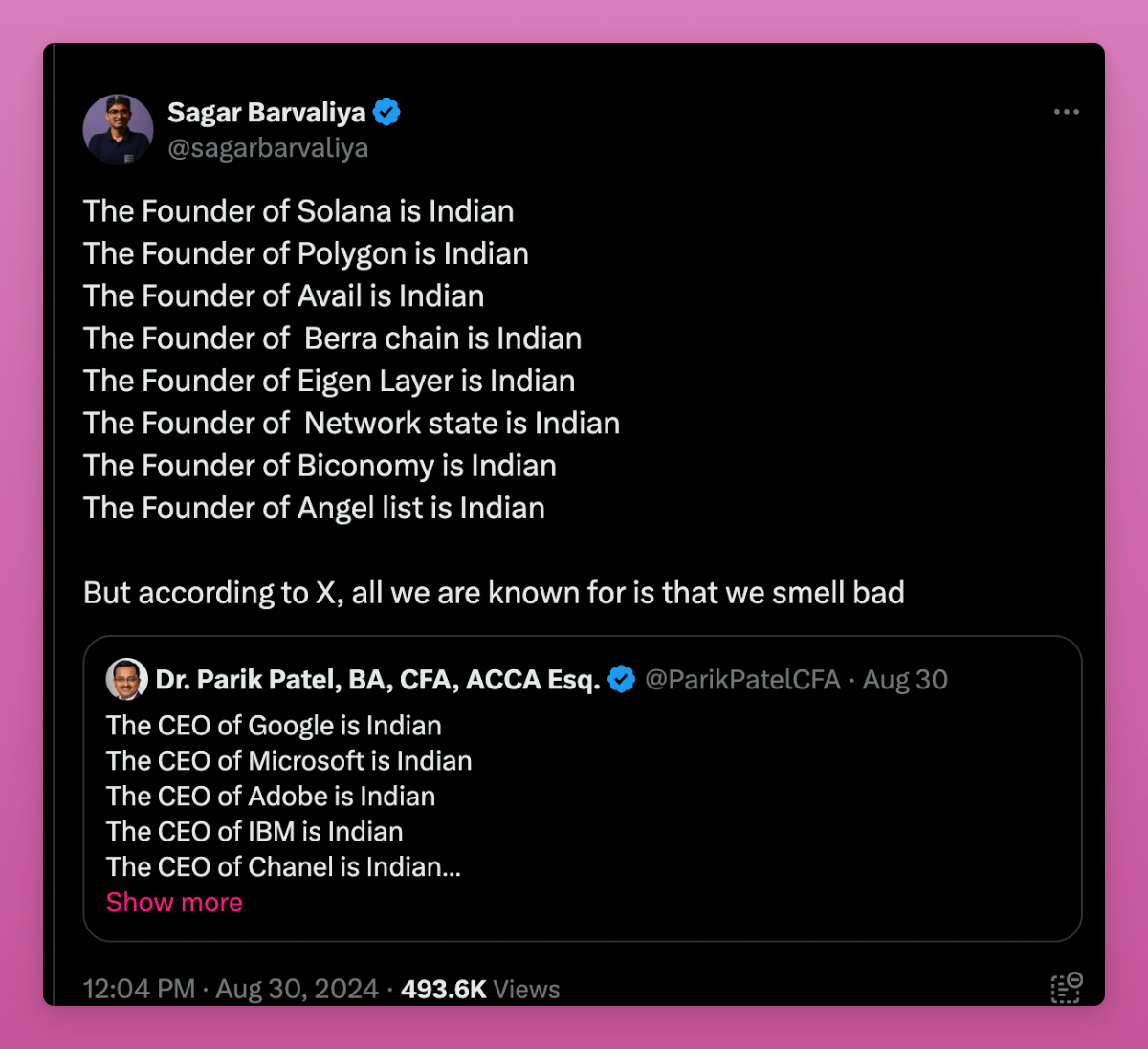
I asked Hitesh.eth on X what makes India unique. In addition to his unique insights into cryptocurrency, Hitesh is also developing a platform (DYOR) to help people understand crypto basics more easily. India has the largest population of unemployed youth, who are eager to work for incentives. If done right, the application can guide these incentives in the form of tokens and points, similar to what we have seen in Axie in the past. In terms of infrastructure, India has some of the best developer resources, at a much lower cost than the EU and the US.
He said, "Over 50% of community-related positions are held by Indians, and more are eager to join the field." However, this temporary nature of crypto jobs and high aspirations "has led to some issues, as seen in some past airdrops, creating a wrong impression of Indians. However, this view should not be generalized, as it is more of a case-by-case basis rather than representative of the general population."
Indonesia is one of the fastest-growing markets in terms of trading volume.
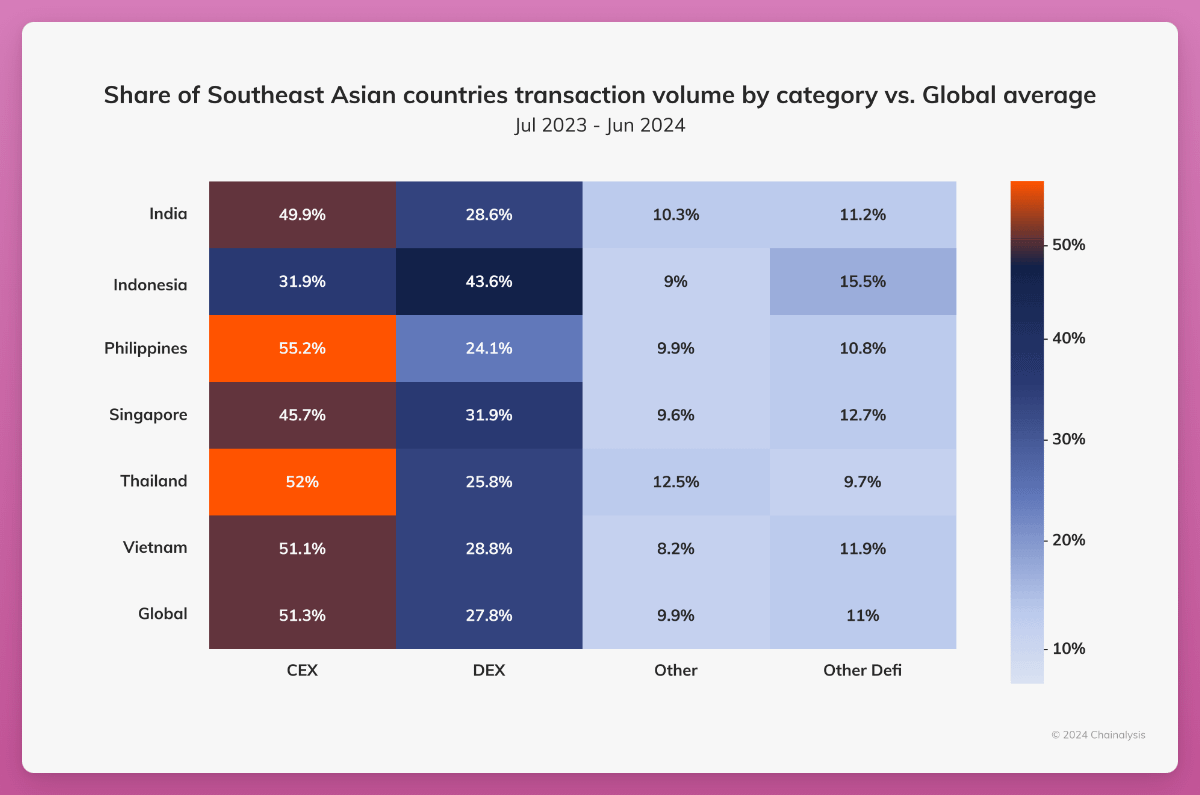
According to a product manager at the Indonesian cryptocurrency exchange Pintu, the growth in crypto activity is primarily driven by speculation. "Many still see crypto as a way to make quick profits," he said. "Now, many traders are turning to Telegram groups for signals, just like they used to do with stock trading, but with new tokens constantly emerging, the activity in the crypto space is even more intense." He also mentioned that stricter rules in the Indonesian stock exchange may be pushing people towards cryptocurrencies. "As new comprehensive auction measures make stock trading more stringent, some investors are looking for alternatives like cryptocurrencies."
Indonesia stands out in decentralized exchange (DEX) and decentralized finance (DeFi) activities compared to the regional and global averages.
This has been confirmed by Eli5DeFi on X, who stated, "Many Indonesians are involved in cryptocurrency trading, usually starting with meme coins or airdrops, as they are simpler and more attractive. Especially airdrops, which usually only require time and effort to participate."
He added, "We mainly use TON apps recently, and some people even build their own communities to mine and farm $DOGS, $NOT, and $HAMSTER."
As Indonesians become more knowledgeable about cryptocurrency, yield farming, staking, and decentralized finance (DeFi) projects are becoming increasingly popular. This growth has formed a new community of "crypto enthusiasts," with over half of the investors being millennials and Gen Z, seeking emerging technology and quick profits.
DeFi is also on the rise, with many DeFi builders from Indonesia - Eli5DeFi
Here are a few notable examples:
@0x_eunice - Co-founder of Monad
@Mariobern - Co-founder of Pyth
@bradydonut - Co-founder of HawkFi
@BrianLimiardi - Co-founder of Copra
@smsunarto - Founder of Argus Labs
@bizyugo - No. 1, Debank
@mathdroid - Pandora
@PatriaAbditiar - Sociocat
Singapore
While countries like Indonesia and Vietnam see the adoption of cryptocurrencies driven by "crypto degens" and the promise of quick profits, the situation in Singapore is different.
Ronald Chan from Saprolings (Web3 Incubator) told me that after China shut down crypto companies, the number of crypto companies in Singapore has surged. They chose Singapore for the following reasons:
Geographical proximity to China
Deep Chinese culture
Liberal political environment
Low tax rates
Large Chinese-speaking community
Free flow of capital (including Bitcoin)
Strong legal system (this is very important)
Educated personnel to run businesses
Strong financial center in the region
Few other choices in the region
"We protect ourselves by being the leader's bank in neighboring countries." - Ronald Chan
Next, regulatory progress and merchant services show greater potential for cryptocurrencies, not just in trading and investment. Ronald pointed out that in Singapore, "banking licenses are issued to both local and foreign banks for fair competition, which is different from many other countries."
Furthermore, Singapore "has a nationwide QR code scanning system, similar to WeChat Pay and Alipay in China (known as Paynow QR), which most people use. Mastercard and Visa are available everywhere, but users and merchants are not satisfied as both parties have to pay additional fees."
More importantly, the super app Grab, used for ride-hailing, food delivery, and other services, has started allowing users to top up their e-wallets with cryptocurrencies. Now, users can make payments using Bitcoin, Ethereum, XSGD (Singapore's local stablecoin), Circle USD, and Tether.
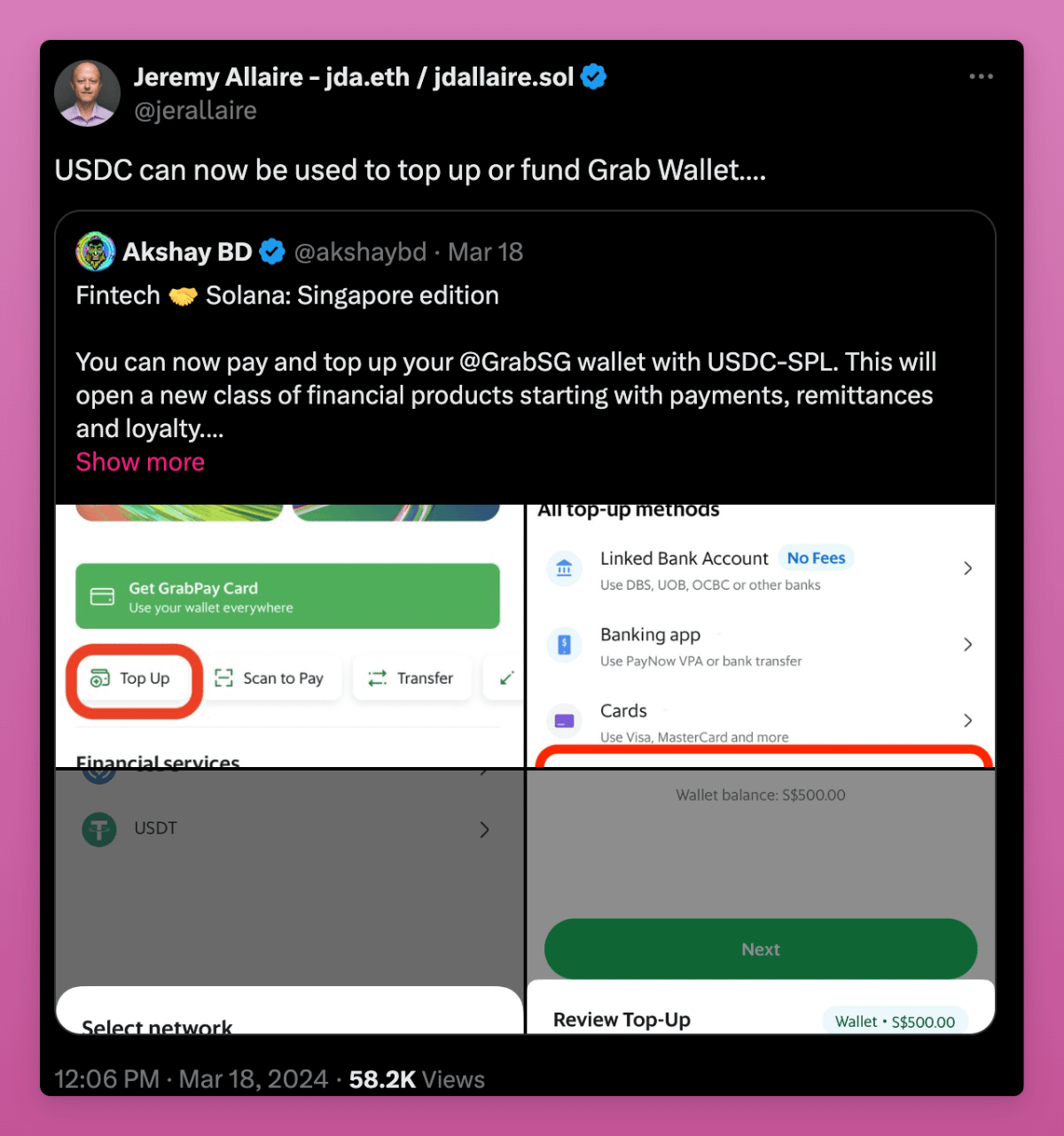
In the second quarter of 2024, cryptocurrency payments for merchant services in Singapore reached nearly $1 billion, the highest level in two years.
This is an interesting shift, especially in a market where traditional payment systems are already efficient, indicating that cryptocurrencies are gradually becoming a more common asset for more people.
At the same time, over 75% of XSGD transfer amounts are $1 million or less, with nearly 25% of transfers being below $10,000, clearly indicating the growing base of retail users in the local crypto market.
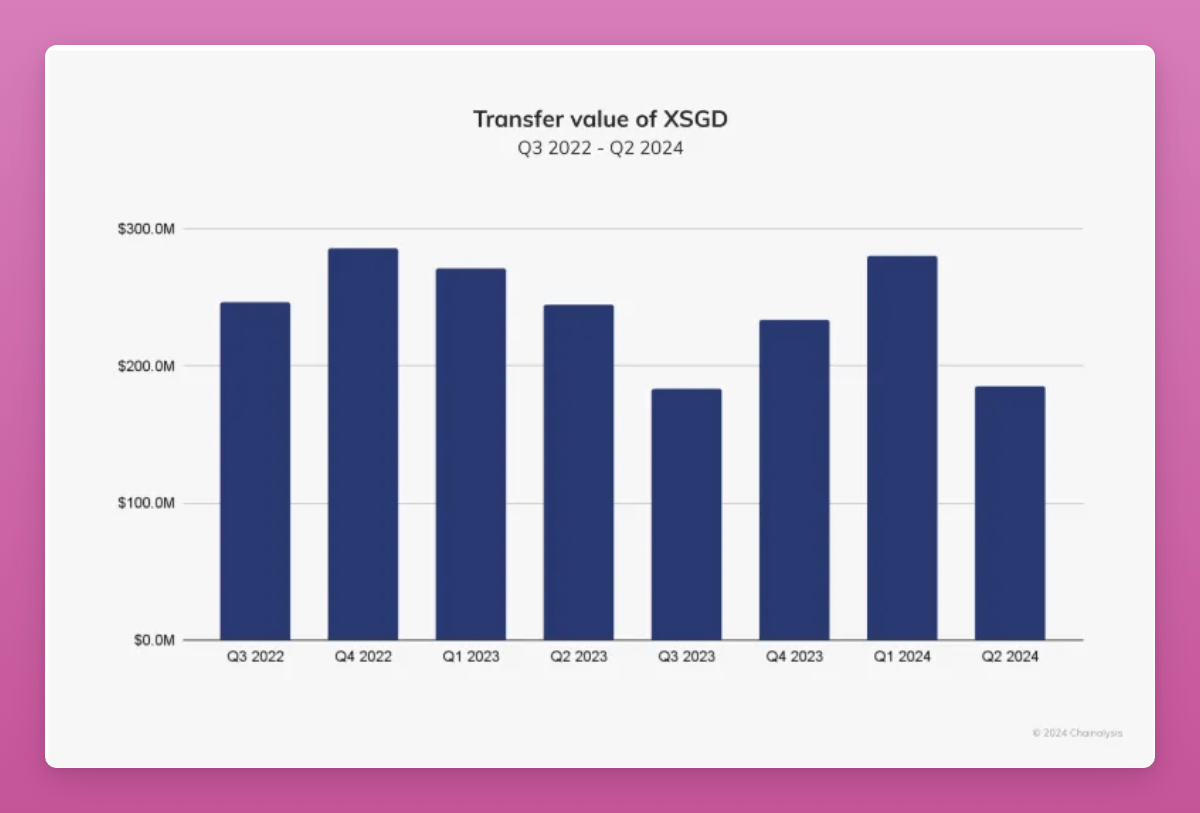
The success is attributed to clear regulations, which have enhanced trust in stablecoins.
In 2023, the Monetary Authority of Singapore (MAS) formulated guidelines for stablecoins, and in 2024, it introduced cryptocurrency custody and licensing rules.
This demonstrates the positive impact of clear regulations on the adoption of cryptocurrencies in the US.
Case Study: TON's Successful Entry into the South Asian Market
TON's click-to-earn game is very popular in South Asia, which is surprising. Personally, I have tried it, but the rewards were not worthwhile for me.
You might underestimate TON because of the over-distributed airdrops and "mindless" click-to-earn games, but it is actually aligned with their goal of bringing cryptocurrencies into everyone's pockets.
By receiving free tokens, a new wave of users can start learning how to trade on decentralized exchanges (DEX), provide liquidity, stake, and gradually explore other aspects of the ecosystem.
Do you know where these users mainly come from? The CIS countries and South Asia.
The website of Notcoin (notco.in) receives over 66% of its visits from the CIS countries. Next are Asian countries such as Indonesia, Vietnam, China, and India. Getgems.io and Hamster Kombat show similar trends, consistent with the user base of Telegram.
The Telegram Mini Bot project, which provides free tokens, is similar to the rise of Axie Infinity in the Philippines.
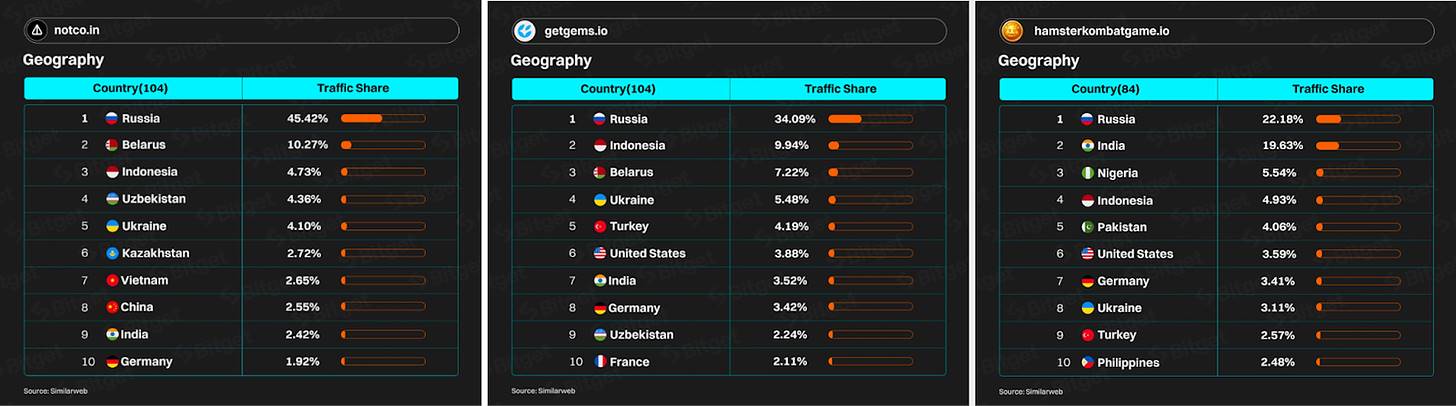
The success of the TON blockchain can be attributed to two highly adopted areas: free airdrops and click-to-earn games.
Free Airdrops
Everyone is tired of activities where points are exchanged for airdrops. This is where Telegram's free airdrop scene makes it unique. It leverages Telegram's 900 million users to distribute tokens like DOGS. DOGS initially gained attention as a meme due to its fair distribution and lack of presale. This attracted new users to the blockchain, making DOGS different from typical crypto tokens.
DOGS quickly listed on major centralized exchanges (CEX) like Binance. Airdrop amounts ranged from $10 to $60 per wallet. This may not sound like much to many Western investors, but users can earn rewards through multiple accounts. For many people in developing countries, these airdrops provide a new source of income in economic hardship.
Click-to-Earn Games
Click-to-earn games, such as Hamster Kombat, are rapidly growing in South Asian countries. In just three months, it reached 239 million registrations, making it one of the most popular click-to-earn games.
It also gained over 10 million YouTube subscribers in just one week. It's insane. This is unprecedented in many Western countries.
According to Bitget Premarket data, its token's total market value is $920 million, which means the value of the airdrop may be around $550 million.
Due to simple game mechanics, referral activities, and strong social influence, click-to-earn games like Hamster Kombat quickly attracted a lot of attention among cryptocurrency influencers in Southeast Asia.
These influencers are also very popular on TikTok and X, sharing referral links and spreading information about this type of game.
Summary
South Asia and Southeast Asia are one of the most populous regions in the world, with a young and tech-savvy population, making it a key market for cryptocurrency businesses. It is now the third most important market, after the US and Western Europe.
However, due to significant differences in income, government regulations, and economic conditions in each country in the region, it is difficult for businesses to devise appropriate strategies for each country.
Ton seems to be doing well in targeting the speculative market, and the acceptance of crypto payments is on the rise.
免责声明:本文章仅代表作者个人观点,不代表本平台的立场和观点。本文章仅供信息分享,不构成对任何人的任何投资建议。用户与作者之间的任何争议,与本平台无关。如网页中刊载的文章或图片涉及侵权,请提供相关的权利证明和身份证明发送邮件到support@aicoin.com,本平台相关工作人员将会进行核查。


