Destruction and Construction: Nasser and the Ottoman Empire
The modern history of the Middle East is the dismantling of the Ottoman Empire.
The Ottoman Empire, similar to the Qing Dynasty, both involved ruling over another main ethnic group by an external ethnic group. The Ottomans were Turks ruling over Arab people and other smaller ethnic groups, such as the Greeks and the Balkans.
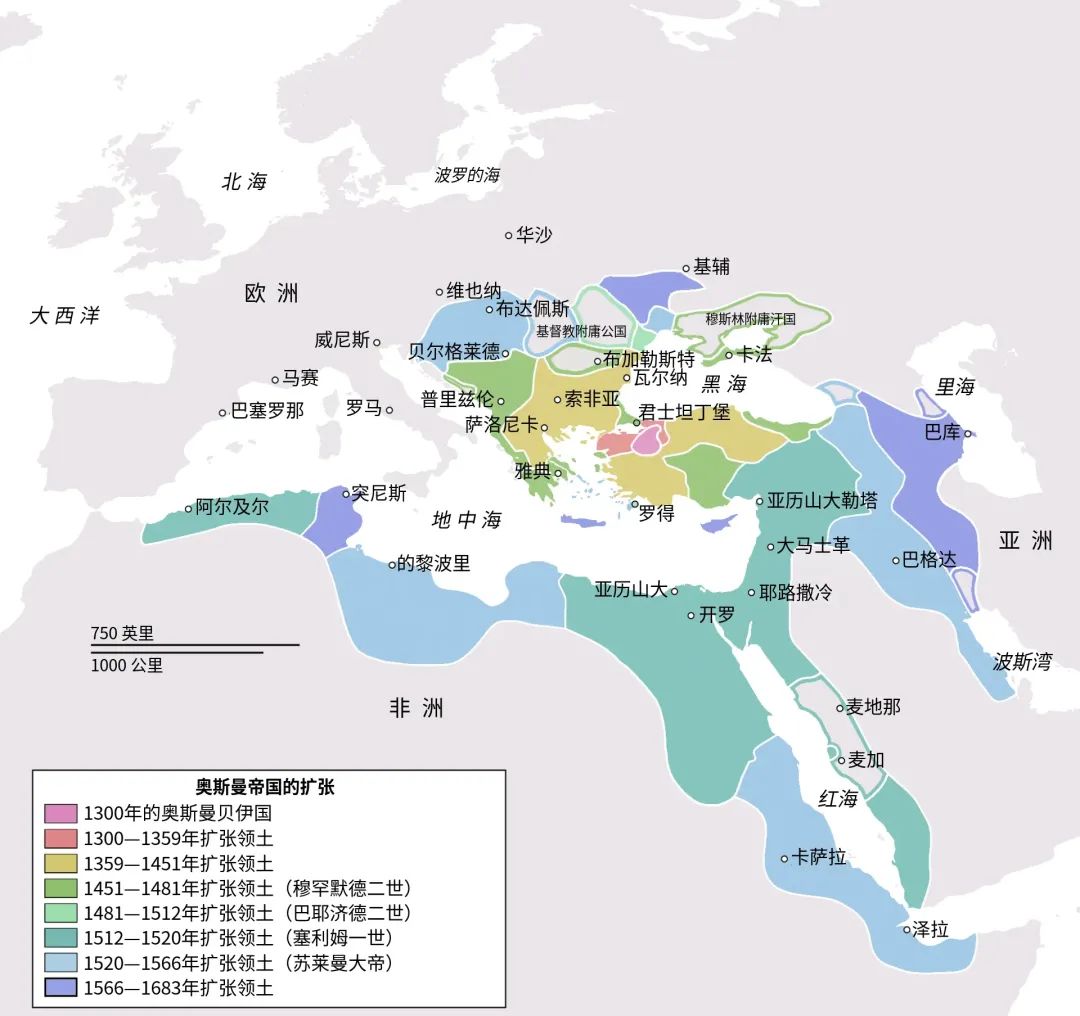 Ottoman Empire
After the first industrial revolution, the Ottomans gradually transitioned from being a player to being a chessboard, losing all their territories outside of present-day Turkey. The most important loss was the two holy cities of Mecca and Medina, the birthplace of Islam.
During this process, the British gradually gained the support of most Arabs. The oppressed people hoped to regain power with the help of the British Empire, including present-day Saudi Arabia and the United Arab Emirates, which gradually became allies with Britain and became de facto protectorates and colonies.
Additionally, the Jews received promises from the British and began to immigrate in large numbers to Jerusalem and the West Bank, which is the promised land of the Bible, the land flowing with milk and honey promised to the Jewish people by God.
However, the course of World War II changed everything. The era belonging to the strong European powers came to an end. Both the Jewish and Arab people turned their attention to the emerging superpowers, the new hegemon, the United States in the West, and the Soviet Union in the East.
Given the religious and class composition of the Arab people, most monarchies turned to the embrace of the United States, including Egypt and Libya at the time, as well as Jordan, Iraq, and Iran, which were all monarchies at that time and were still in the medieval stage of monarchical autocracy.
However, the establishment of Israel after the war changed everything.
With the lack of effort from the anti-Israel alliance, hundreds of millions of Arabs were unable to defeat Israel, leading some countries to believe that the United States was not so reliable. Their attention then turned to the kings, using this as a way to present themselves to the Soviet Union.
As a result, the Arab lion, Nasser of Egypt, emerged in history, bringing Arab nationalism.
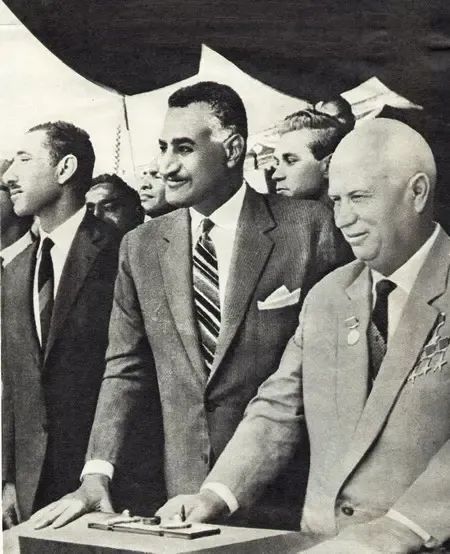 African lion Nasser
In the Third World at that time, national liberation and socialism were basically a dual discourse system. Nasser's achievements were many, but mainly in two aspects. First, he controlled religion rather than obeying it, but this led to the military rule that remains today. Second, he promoted the national liberation of various Arab countries. For example, Libya's Gaddafi regarded Nasser as a lifelong idol. However, the failure to resist Israel also led Arab nationalism to its end.
However, another legacy of Nasser was that military personnel in various countries followed suit, pointing their spears at their own kings, which led to strong resistance from monarchies such as Saudi Arabia. As a result, they became more bound to and closer to the United States, as the Soviet Union was truly life-threatening, while the Americans just wanted their oil.
However, there were indeed some who still showed nostalgia for Britain, such as Bahrain, the United Arab Emirates, and even the United Arab Emirates, which did not officially gain independence until 1971 and maintained very good political and military relations with Britain, making it the most decent exit strategy for Britain since Hong Kong.
The Dream of Dubai, the Misfit of the Middle East
Since the independence of the United Arab Emirates, there has been a situation where each emirate governs its own affairs. The hereditary president is in Abu Dhabi, while the hereditary vice president and prime minister are in Dubai. The vast majority of the oil, industry, and territory are in the hands of Abu Dhabi, while Dubai mainly focuses on the service industry such as finance and tourism.
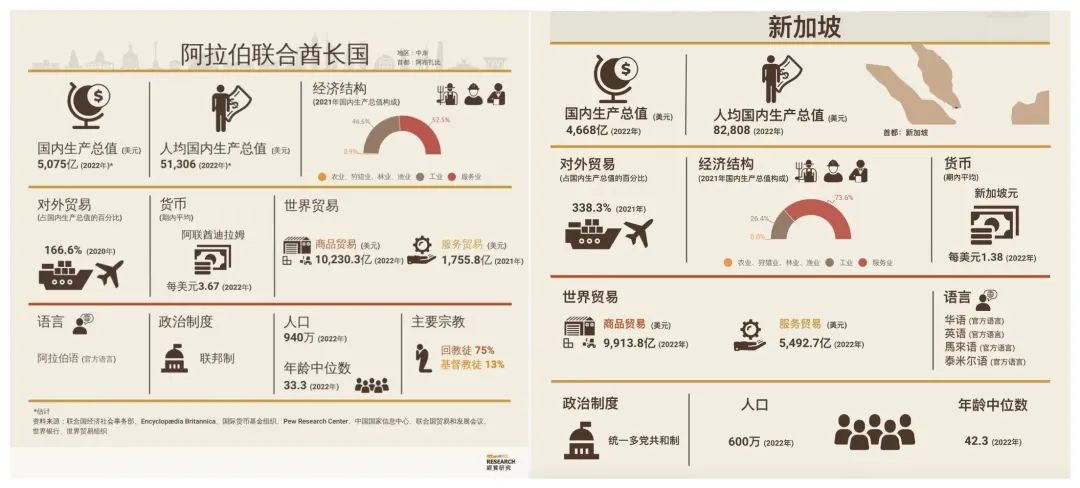 Dubai vs. Singapore
In other words, Dubai is like the successful Singapore that stayed in Malaysia. Therefore, in terms of overall proportion, the United Arab Emirates still accounts for nearly half of the industrial output, but if it's just Dubai alone, it is basically left with the financial industry.
By 2008, Dubai's luxurious image had already become deeply ingrained worldwide. It also attracted the wealthy from the Middle East, Eastern Europe, Russia, and the entire African continent, and even most of Iran's foreign trade, from watermelons to oil, was conducted through Dubai.
If one can deeply understand Dubai's survival status, then the strategies of Hong Kong, Singapore, Panama, and Switzerland are all the same, providing a safe haven for the wealthy in their respective regions, as well as providing a place for political opponents to communicate and establish covert battle lines.
On one hand, Dubai complied with Western sanctions against Russia by closing a Russian bank, but it fully accepted safe-haven funds since the Russia-Ukraine conflict, directly leading to the real estate boom in Dubai from the end of 2022 to the present.
On the other hand, Dubai has absorbed various funds from Southeast Asia, India, and South Asia, and has conducted bridge and mutual recognition trials with the People's Bank of China and the Hong Kong Monetary Authority for the central bank digital currency DCEP.
Furthermore, Dubai actively cooperates with the European and American space systems, sending its astronauts to the International Space Station, and does not shy away from conducting a series of cooperation with the China National Space Administration, and there are even rumors of purchasing Chinese weapons.
Having no stance is a stance, and this is also true for Dubai's Token2049. As long as there is money, it can find its place, while maintaining friendly relations with all foreign powers and local strong countries politically.
With the end of the conflict in Yemen and the background of Iran and Saudi Arabia reconciling, Dubai's strategic position has become more stable. Whether it is Iran or Israel, they regard Jordan as a battleground, but they will not harm Saudi Arabia and the United Arab Emirates.
A Land of Chaos, the Green Hopeful Land
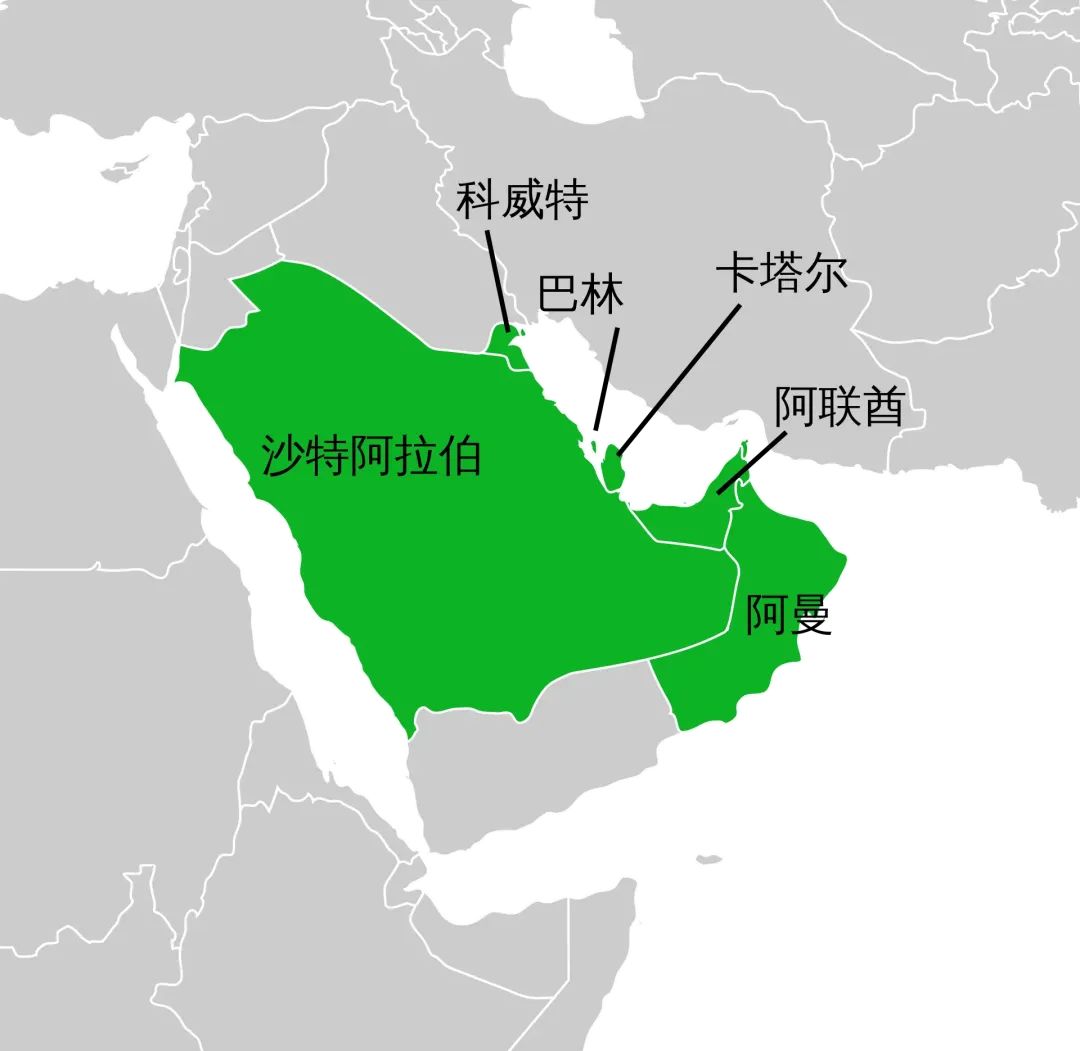 GCC Gulf Cooperation Council countries
In the current chaos in the Middle East, the Gulf Cooperation Council (GCC) led by the United Arab Emirates and Saudi Arabia is the last oasis. Apart from this, the rest are either in conflict or preparing for conflict. The chaotic situation in the Middle East that we are familiar with is bordered by Iraq and Syria to the north, the Persian Gulf to the right, Israel and Africa to the left, and the Houthi armed forces in Yemen to the south.
All GCC member states are monarchies, and their rulers mainly adhere to the Sunni branch of Islam. However, Iran, on the other side, is the stronghold of the Shia branch. The situation of mutual opposition and discord will continue. For them, Israel is infidel, and Iran is heretical, and heretics are often more detested than infidels.
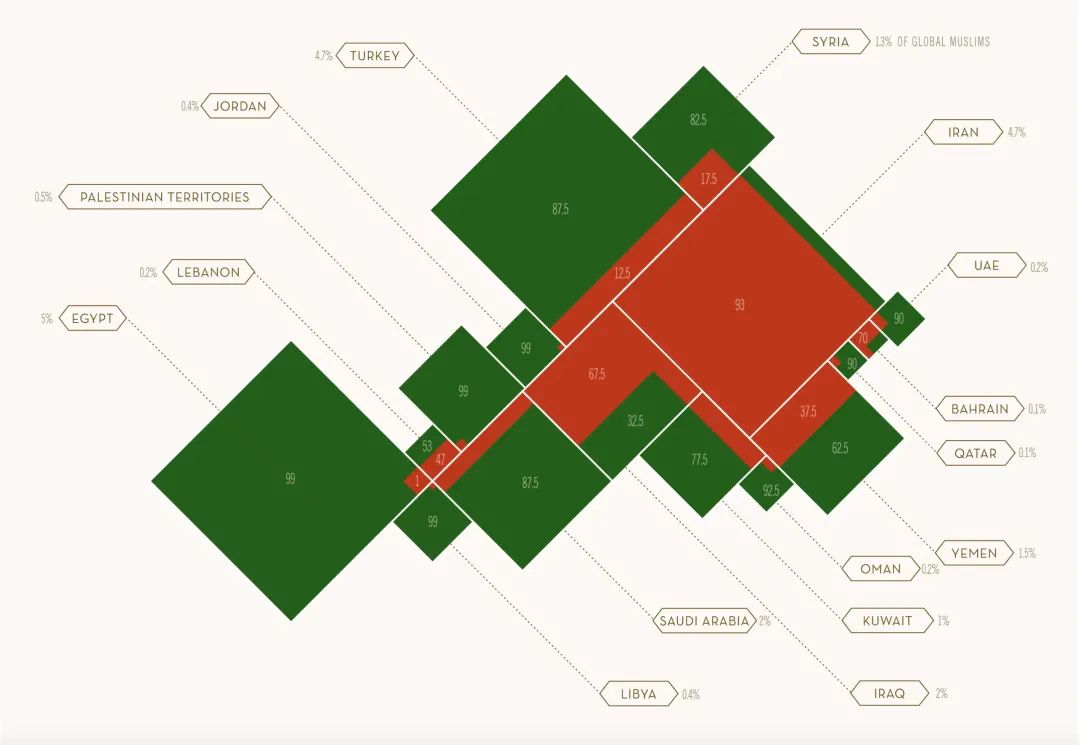 Distribution of religious sects in the Middle East
Moreover, the population structure of Dubai and the GCC countries is also very peculiar, with basically over 80% being Indian and Pakistani laborers. In addition to the local population, there are also non-Muslim populations from China, Japan, South Korea, Europe, and the United States. The situation is slightly better in Saudi Arabia, where the proportion of local people is much higher, but they still do not work much and only want to enjoy national welfare.
A prominent feature here is the naturalization and immigration policies. If you are not a Muslim, you are 99% unable to obtain citizenship, at most only various types of visas, such as buying a house to receive a ten-year golden visa. However, the vast majority of Indian and Pakistani laborers are unable to obtain various social welfare benefits.
In other words, Dubai only wants your money and labor, and will not be responsible for your future and entire life. This is a clearly stated contract.
Expanding the view to the GCC and the entire Middle East, they have been the channel for communication between the East and the West from ancient times to the present, from Assyria to Babylon, from Persia to Alexander, from Rome to the Mongols, from the Arab Empire to the Ottoman Empire, and even to the current popular transit point, where Europe, Asia, and Africa converge.
However, beyond the dawn of peace, there are countless wars, religion and oil, secularism and warlords, all intersecting, such as the transnational Muslim Brotherhood and the Renaissance Party, and the current rising arc of the Shia, also known as the resistance arc. People do not know how to stop fighting, but everyone must participate in the struggle.
- The impossible triangle, secularization, religiousization, and military dictatorship. Drawing on the impossible triangle of Ethereum, the Middle East also has its own impossible triangle, where no country can maintain secularization while avoiding military dictatorship. For example, since Nasser, Egypt has only had a government led by the Muslim Brotherhood. If organized voting is based on democratic principles, Lebanon and Iraq are clear examples, while Iran has achieved a theocratic republic, overlaying a religious system on top of the elected government, which is rare in the world.
- In the long period of preparation for war, people have focused on Iran, Israel, Jordan, Syria, and Iraq, the areas of conflict and preparation for war. In North Africa, Libya has not yet determined the outcome, while Morocco and Algeria are gearing up towards Western Sahara. Both are major energy-exporting countries and are among the top ten military buyers in the world. Their conventional military strength is comparable to that of European powers.
On the other hand, Dubai, or the monarchies of the GCC, has maintained a certain degree of tradition and stability. Bahrain, Qatar, and Dubai are all hubs for the financial and banking industries, serving as the lifeline of the Middle East and Islamic finance.
If there is to be a next financial market, it should not be the Middle East, as it is too vast to define. Instead, it should be the GCC countries, but the huge wealth gap and the scarcity of local people mean that the overall market is not likely to be very large.
The Third Market, the Sales Front of the Crypto Center
The United States and China are the two major cryptocurrency markets. Apart from them, Africa and Latin America are politically unstable, Europe has strict regulations, and Southeast Asia and South Asia are not very wealthy. Indeed, the Middle East is a land of dreams. For example, Turkey's high inflation rate has led to dollarization, making cryptocurrency a hot topic in Istanbul.
Since two years ago, Hong Kong, Singapore, and Dubai have been competing to become the world's cryptocurrency capital, or rather, the cryptocurrency capital of Asia. Regardless of how the decentralized world connects with the center, at least Dubai has been tolerant and accommodating to everyone, from districts to Deira, from estates to villas, finding their own place of residence at the designated price.
Some people have moved from here to Georgia and Ethiopia, and they can no longer turn back, freely roaming between heaven and earth, living freely and dying randomly.
Some have returned to Singapore, Hong Kong, New York, and Paris, entering the hall and becoming a force for the upward movement of cryptocurrency, with the West becoming the ultimate hall and destination.
And more people have become salespeople. In the past, they were flight attendants and saleswomen, and now they can be business development representatives, backed by the mainland and facing Europe and America. Anyway, it's all about selling goods, and there's not much difference. More people are still selling houses. Perhaps everyone who comes to Dubai will be assimilated into a real estate agent.
But being a middleman and collecting tolls is a traditional art in the Middle East. Without the Ottoman Empire cutting off trade routes, there would not have been the great adventure of global navigation. Without the global regulatory storm, Dubai would not have become the hotbed of Web3. Almost every exchange is flocking to Dubai, including the previous FTX, as well as compliance, identity, visa, and other supporting services.
This time, Dubai's rain has diminished many people's impression of Dubai, but Dubai indeed has no sewers. Everything is out in the open, just glaring at you. Everything has a price; it just depends on whether you can afford it.
The Middle East is very likely to be the third largest cryptocurrency market outside of the United States and China, and this time, Dubai still wants to be at the forefront.
免责声明:本文章仅代表作者个人观点,不代表本平台的立场和观点。本文章仅供信息分享,不构成对任何人的任何投资建议。用户与作者之间的任何争议,与本平台无关。如网页中刊载的文章或图片涉及侵权,请提供相关的权利证明和身份证明发送邮件到support@aicoin.com,本平台相关工作人员将会进行核查。


