Produced by the European Cloud Chain Research Institute
Author: Hedy Bi
NVIDIA held the GTC2024 global conference yesterday, and founder Huang Renxun spent a full 2 hours introducing the new product line and iterative updates of existing products by NVIDIA. Musk also open-sourced the Grok-1 model with 3.14 billion parameters on March 18, along with details of the model's network architecture. After the invention of the Transformer, the scale of large-scale AI language models will double every six months. At a time when AI is developing rapidly and news is frequent, Web3 seems to be immersed in a market FOMO sentiment dominated by MEME narratives, seemingly diverging from the solid development of AI.
At a time when waves are frequently stirred up in the AI field, we cannot help but ponder a question: What position does Web3 occupy in the rapidly iterating AI field? Or is it being replaced?
The unique currency of the digital new world: GPU
Summarizing the current development stages of Web3 and AI: whether Web3 uses AI to break through user circles, or the technical integration of AI and Web3 can upgrade production relations and productivity from the ground up, the development of both is still at the stage of solving real-world problems, such as AI becoming an efficiency tool to help Web3 acquire users, and Web3 helping to solve AI data privacy and security issues.
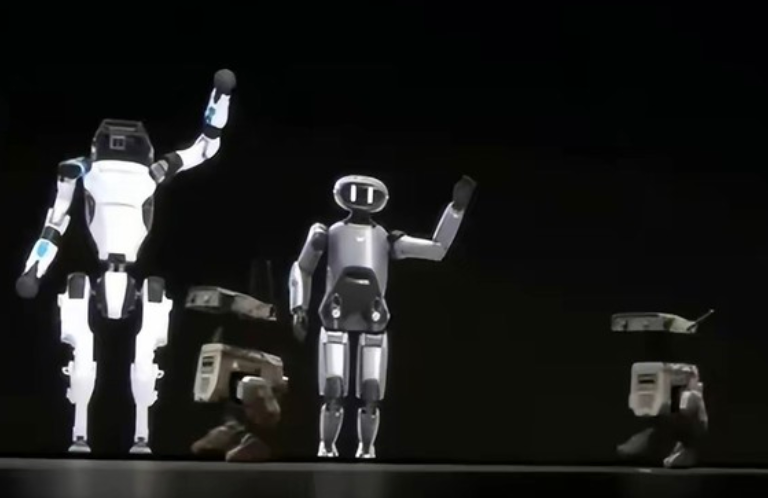
At the NVIDIA conference, in addition to the new developments in GPU, what most caught our attention was the Issac Robotic concrete intelligence showcased at the conference, which provides simulated training for robots, integrating real-world computing units and intelligent driving frameworks. In other words, AI enters the real world based on itself, interacts with people through video, audio, and other forms, and can even obtain information and data from the physical world to train itself. From this perspective, AI will evolve from a chat tool into an intelligent productivity tool. Li Kaifu's Innovation Works also proposed that we are about to enter the era of AI 2.0.
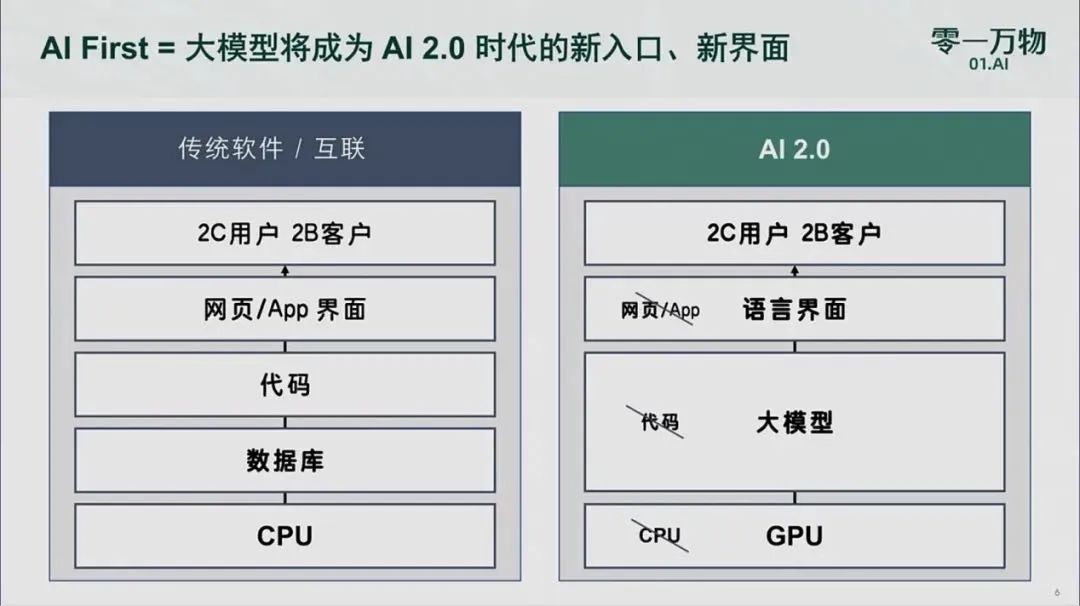 Source: Zero to One
When we bring this scene of embodied intelligence into the metaverse, it will become a key technology for establishing autonomous connections between the physical world and the virtual world. In this world, combined with Web3's decentralized economic model incentives, we may have truly opened up a digital new world, a broader world.
In this brand new digital world, we are faced with an important choice: whether to simply replicate the real world or to create an entirely new digital society? Regardless of which path we choose, computing power will become the most precious core resource. Currently, the production of GPUs is almost exclusively monopolized by NVIDIA, and the prices are extremely high. Especially after the introduction of the self-attention mechanism in the Transformer architecture, the demand for computing power has sharply increased. In a recent interview, Open AI CEO Sam Altman also mentioned that computing power will become the currency of the future world.
Faced with this reality, we must deeply consider: how can the monopolized GPU be more friendly and fairly promote social innovation? Or fundamentally, how can we achieve a more equal and fair distribution of computing power resources to promote innovation and development? This is an important issue that requires our collective consideration and efforts to solve.
Web3 technology will become the ultimate "firewall"
Web3 is the best answer to this issue, and also the ultimate "firewall" for AI.
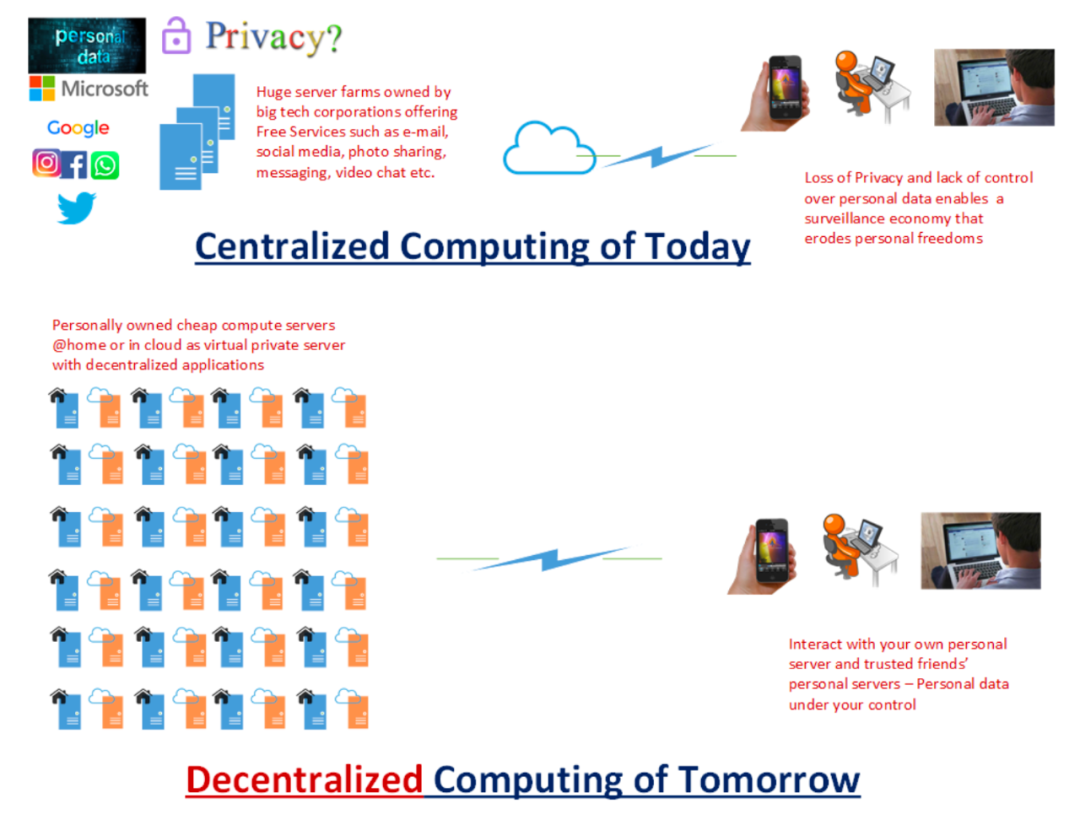
For Web practitioners, computing power has been an indispensable resource since the birth of Bitcoin. With the halving of Bitcoin, the opening of spot ETF channels, and the promotion of complex computing technologies such as zk, the demand for computing power in Web3 is increasing just like in artificial intelligence, which will inevitably trigger competition among major technology companies for computing power. According to the "2022-2023 Global Computing Power Index Assessment Report," the global AI computing market size will grow from $19.5 billion to $34.66 billion. Web3's decentralized technology will provide a good solution for addressing this issue.
 Source: Internet
Currently, there are some good Web3 projects in operation. At the NVIDIA conference, Web3 projects such as Render and Near were also invited to participate in keynote speeches and roundtable discussions at the conference. These projects have begun to play an important role in the decentralization of computing power allocation and utilization through the use of blockchain technology and smart contracts. For example, Akash, founded in 2015, and Render Network, launched in 2020, although they target different niche areas, their main architecture allows nodes to trade computing resources on the market platform by contributing computing power resources, providing developers with a way to obtain computing power resources. All of these activities are based on Web3's blockchain technology and smart contracts, avoiding the monopolization of resources by centralized organizations.
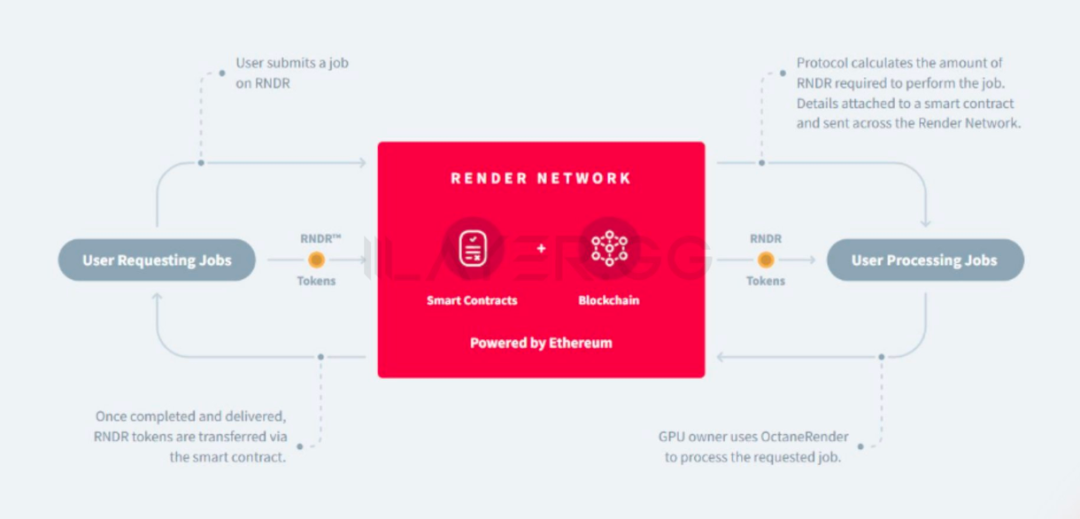 Source: @layerggofficial
Computing power is just one of the most prominent issues we currently see. In terms of AI governance, in recent interviews with Lex Fridman and Open AI CEO Sam Altman, Lex used AGI as an example to ask who will gain immense power if AGI is created first, and how should it be governed? Sam solemnly replied, "No one, including myself, should monopolize great power." When facing these major technological breakthroughs, it becomes particularly important to rethink institutions, emphasize ethical principles, and strengthen global cooperation to avoid the misuse of technology and the emergence of adverse consequences.
The fusion of AI and Web3: The ultimate pursuit of autonomy
In addition to Web3 becoming the last firewall in the continuous development of AI, the two also share the same technological values. When we look back at the technological development history of AI, Web3, and cryptography, we find that Web3 and AI both share the ultimate pursuit of autonomy. This technological value is not a new phenomenon. As early as 1948, "Cybernetics: Or Control and Communication in the Animal and the Machine" proposed cybernetics, which began to explore the control and communication processes between animals and machines, driving research and discussions in fields such as human-computer interaction and AI ethics.
The foundation of Web3 also stems from the struggle for "autonomy" - the cypherpunk geek movement. The core idea of the cypherpunk geek movement is to use cryptographic technology to promote individual privacy and freedom. Bitcoin was born from attempts such as Digicash and B-Money. Geeks hope to achieve a more fair and transparent network through decentralization, where protocols and organizations can autonomously operate through code representing consensus, thereby preventing monopolization of resources and abuse of power.
Web3 and AI, born from the same source, not only represent the pursuit of autonomy in the tech industry, but also symbolize the awakening of consciousness that is currently emerging. To protect human innovation and progress, only Web3's decentralized technology can govern technology through technical mechanisms and become the last firewall guarding humanity. The continuous development of AI not only creates demand for the AI industry itself, but also sets a difficult problem that only Web3 can solve.
 Source: NVIDIA
References:
"Attention Is All You Need," Ashish Vaswani, Noam Shazeer, Niki Parmar, Jakob Uszkoreit, Llion Jones, Aidan N. Gomez, Lukasz Kaiser, Illia Polosukhin
"Bitcoin And Crypto Currency - A Brief History Everyone Should Read," Bernard Marr
"Prospective View of the Decentralized Computing Power Market," YBB Capital Researcher Zeke
免责声明:本文章仅代表作者个人观点,不代表本平台的立场和观点。本文章仅供信息分享,不构成对任何人的任何投资建议。用户与作者之间的任何争议,与本平台无关。如网页中刊载的文章或图片涉及侵权,请提供相关的权利证明和身份证明发送邮件到support@aicoin.com,本平台相关工作人员将会进行核查。


