As the Web3 application scenarios continue to expand, the market's demand for diversified trading is also growing, no longer satisfied with simple exchange operations. As the entry point for Web3 transactions, wallet tools have always had many directions for iteration, such as security, user experience, and entry barriers, all of which are constantly being innovated and improved.
The following five wallet platforms have made significant improvements compared to MetaMask or other traditional wallet tools. For new users, it may be worth trying these products, as they may provide a completely different understanding of the entire Web3 experience.
Rabby Wallet: The Best Choice for the Ethereum Ecosystem
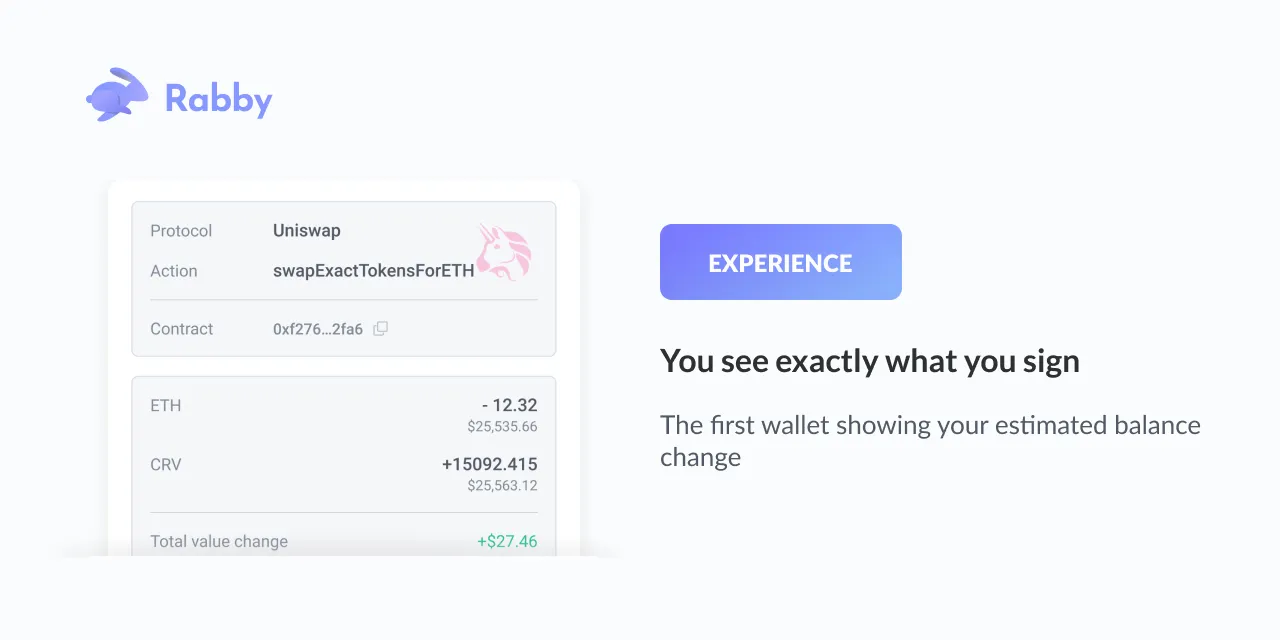
Rabby Wallet is a wallet launched by the DeBank team that can challenge Metamask. Compared to Metamask, Rabby Wallet is more user-friendly in its presentation. Rabby Wallet parses transaction content to interpret transaction details on the signature page and displays the expected balance change, thereby reducing the risk of users blindly signing transactions. Rabby Wallet sends each transaction to a security engine for screening, helping users identify potential risks and issuing alerts when potential vulnerabilities are detected, such as "previously attacked before interacting with the contract" and "receiving address does not exist on the chain."
In addition, for existing MetaMask accounts, users can easily import them into Rabby Wallet. After importing the address, all tokens on the EVM chain will be automatically displayed, without the need to manually add each token as in MetaMask.
Rabby recently opened a point system to incentivize user migration, which may be a preparation for future tokens.
Backpack: The Best Choice for the Solana Ecosystem
In the Solana ecosystem, the well-known Phantom wallet recently faced questioning regarding "tracking wallets internally and selling them." Despite Phantom co-founder Brandon Millman's statement that they will not sell user data and are only using technology to prevent front-running attacks, the market's response does not agree, viewing it as an implicit admission of sharing wallet data with the team.
Meanwhile, Backpack has chosen a completely different path, emphasizing its openness and ease of use. Backpack claims to be the only open-source wallet in the Solana ecosystem. Open sourcing encrypted wallets should be the most basic standard in this industry and should not be an "advantage," but Phantom not only failed to achieve this, but also attempted to monetize user data.
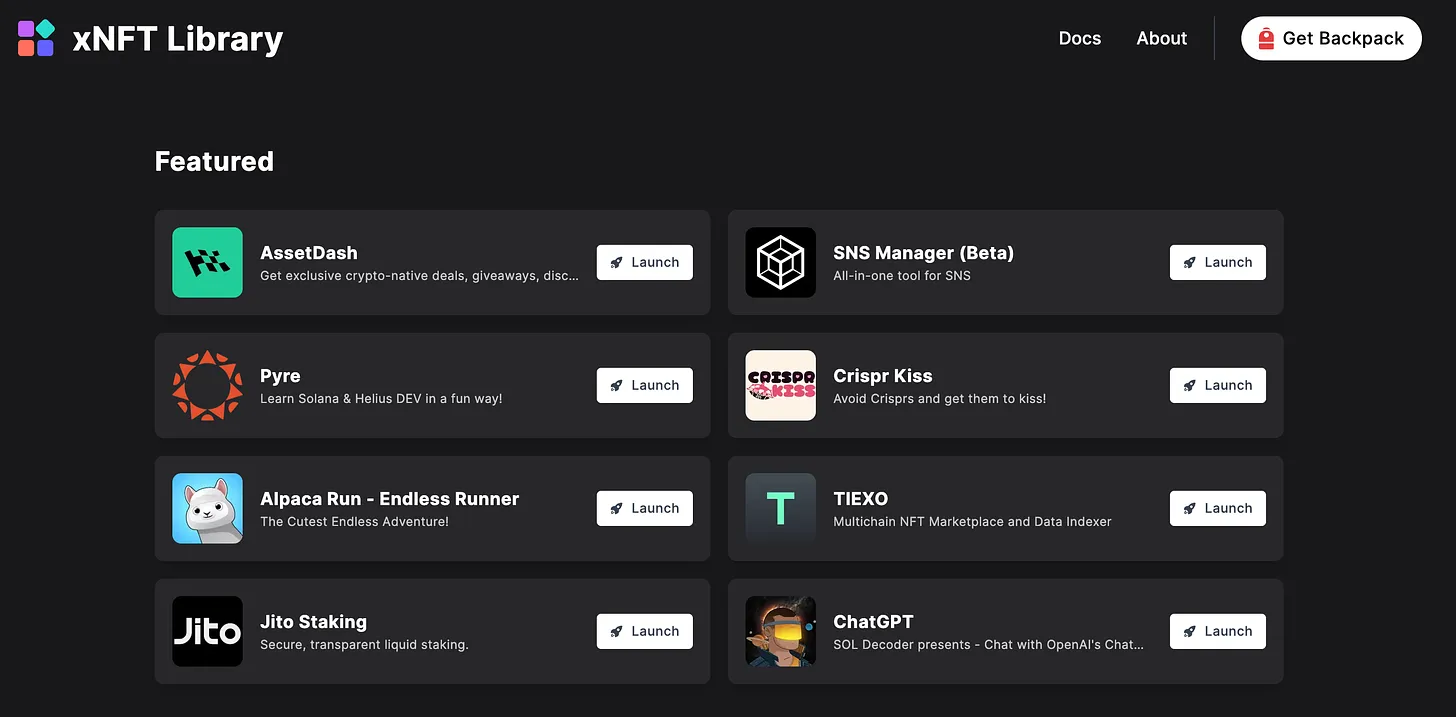
In addition, Backpack Wallet also offers many advanced features suitable for heavy users.
Privy: A New Generation "Wallet-as-a-Service" Platform
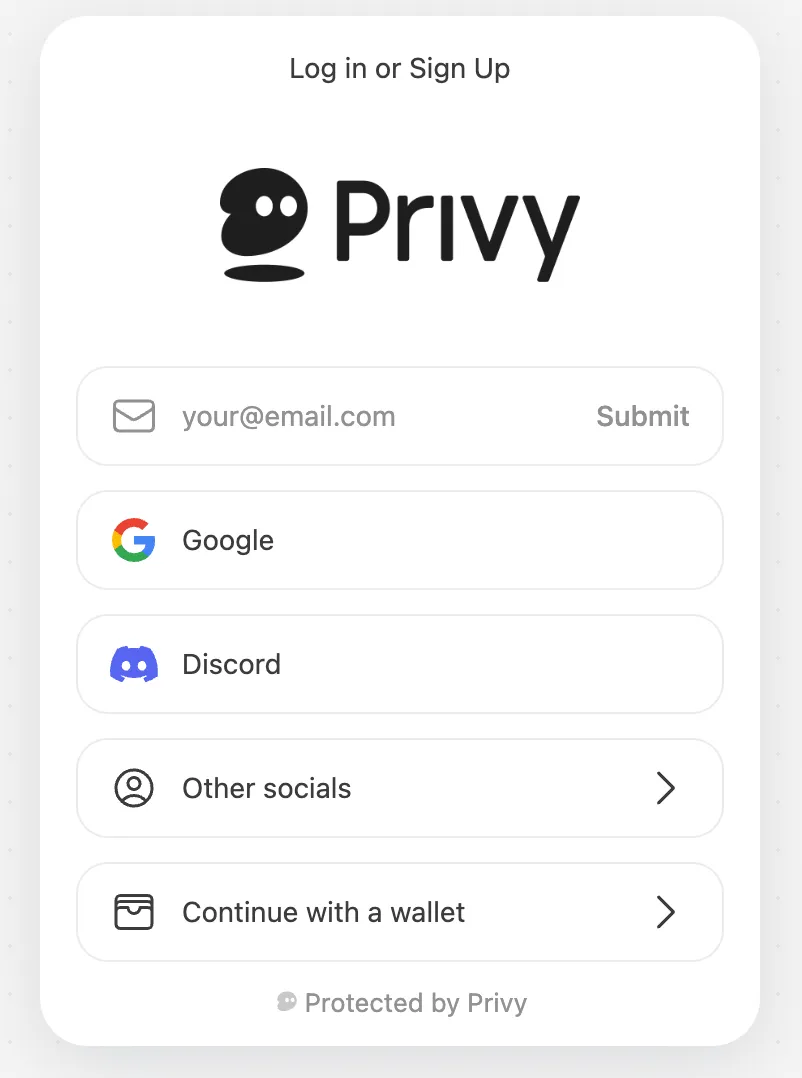
In 2023, Friend.tech gained popularity, bringing its embedded wallet using Privy into the public eye. Privy is a WaaS tool kit for implementing progressive identity verification in Web3. WaaS (Wallet-as-a-Service) provides a set of APIs to provide digital wallet functionality to users through cloud services, eliminating the need to download, install, or manage complex wallet software. This means that Friend.tech users can create accounts directly using their phone numbers, Apple, or Google IDs and use applications directly. One of the reasons for Friend.tech's rapid growth is its simple onboarding process.
Privy helps developers guide users through various identity verification methods and allows developers to control when to trigger identity verification processes and wallet connections to improve user experience and conversion rates. In terms of security, Privy provides multi-factor identity verification for embedded wallets, supporting two methods of verification: SMS verification and time-based one-time passwords (TOTP) verification. According to Privy's documentation, they use the SSS (Shamir's secret sharing) multi-signature scheme to split the private key into three parts, with one part in the user's device browser, one stored by Privy, and one encrypted by a strong password (or stored in Privy's independent server). Having two parts allows the assembly of the private key, which only appears in the device's memory and is not stored.
Particle: A More Mature, Faster-Iterating, Developer-Friendly "Wallet-as-a-Service" Platform
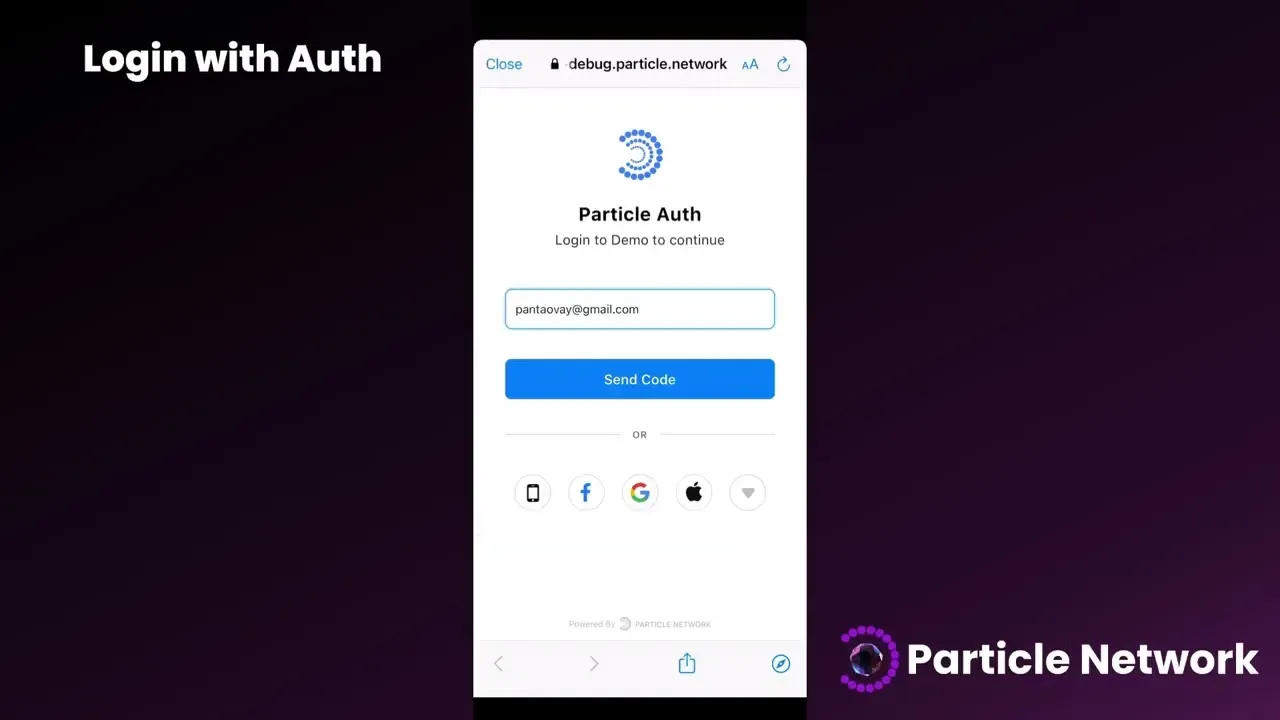
Focusing on chain abstraction infrastructure, Particle Network has further provided a series of features and tools on top of WaaS, launching the Smart Wallet-as-a-Service Modular Stack. This modular stack integrates account abstraction technology, allowing developers to build more complex, advanced logic applications for free. According to Particle Network's public data, they have already implemented 3 million ERC-4337 standard operations for users.
In addition, in the BTC ecosystem, Particle Network has introduced BTC Connect to address the problem of native Bitcoin wallets (such as Unisat) being unable to directly adapt to the EVM chain environment due to different signature algorithms, address generation logic, and transaction structures. BTC Connect provides account abstraction and adaptation functions, allowing interactions on the EVM chain to be completed with just a Bitcoin wallet signature, improving user experience.
JoyID: A New Generation Wallet Experience Based on Open Standards
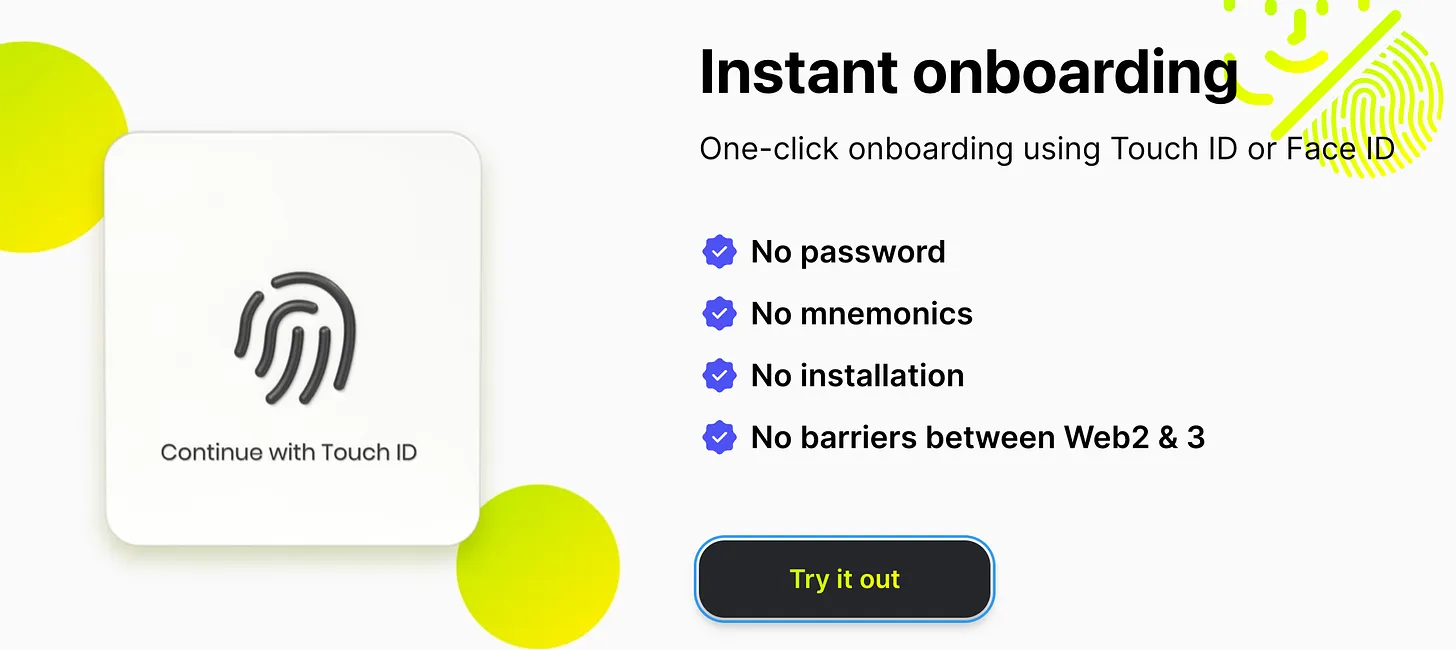
JoyID Wallet is based on the new open standard Passkey, which allows many modern mobile devices to enhance the security of the wallet through built-in secure chips, without sacrificing user experience, and even surpassing the traditional "username + password" login experience.
In addition, JoyID bypasses Apple/Google's App Store restrictions by using PWA (Progressive Web App), further reducing the possibility of being reviewed.
免责声明:本文章仅代表作者个人观点,不代表本平台的立场和观点。本文章仅供信息分享,不构成对任何人的任何投资建议。用户与作者之间的任何争议,与本平台无关。如网页中刊载的文章或图片涉及侵权,请提供相关的权利证明和身份证明发送邮件到support@aicoin.com,本平台相关工作人员将会进行核查。


