Author: blocmates
Translation: Plain Blockchain
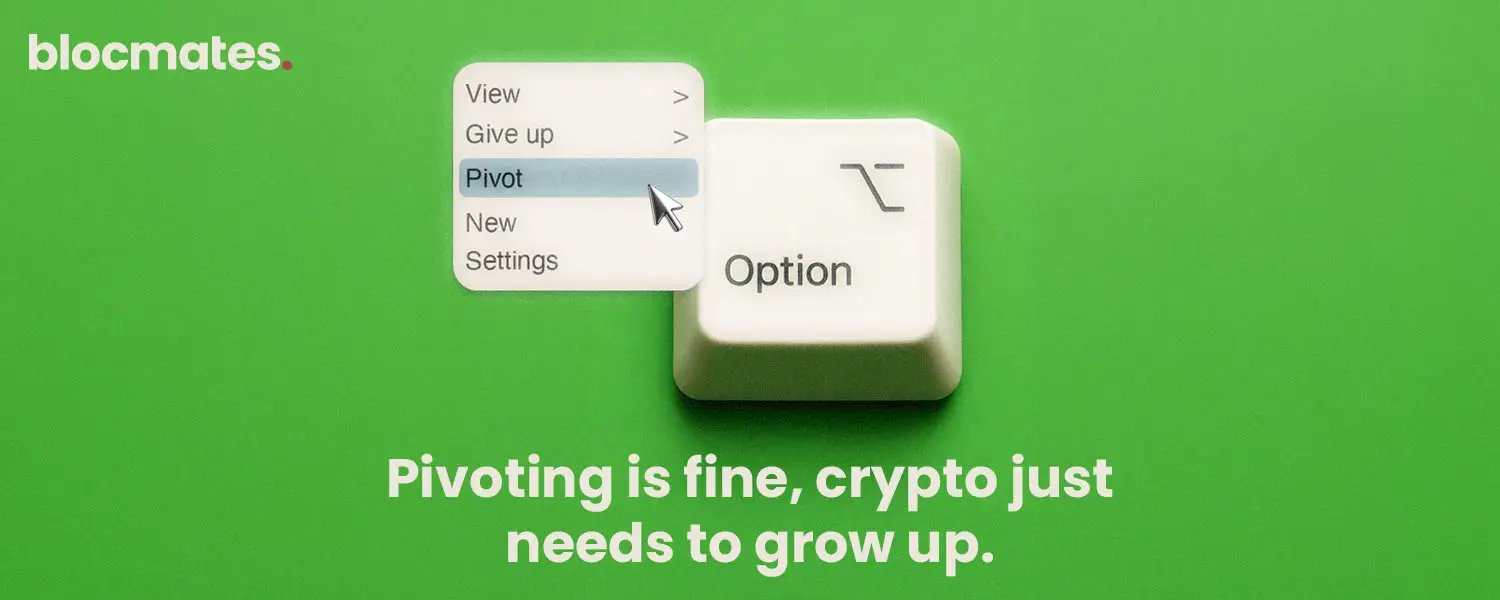
The cryptocurrency industry is rife with double standards. One of the most typical is the merciless “crucifixion” of any crypto company or project that announces a transformation.
In any normal business environment, it is entirely acceptable for teams to attempt a grand idea and explore new directions when they fail to achieve product-market fit (PMF).
But for some reason—perhaps traceable back to Bitcoin’s own “immaculate conception” and its resistance to change—raising one’s hand in the crypto space and daring to seek new directions has become a form of “heresy.”
I believe we should cheer for these transformations. So that’s what we’re going to do today.
Many of these teams could have chosen an easy path—squandering their seven to nine-figure treasury funds, awarding themselves generous salaries, and holding unnecessary team-building events on tropical islands.
Today we will count more than a dozen projects that have chosen a more difficult path: striving to create new things truly recognized by the market.
MegaETH
To some extent, I am not surprised that MegaETH chose to establish an internal product workshop.
Indeed, their L2 boasts impressive throughput data, but this has always served the new types of applications that their infrastructure can support.
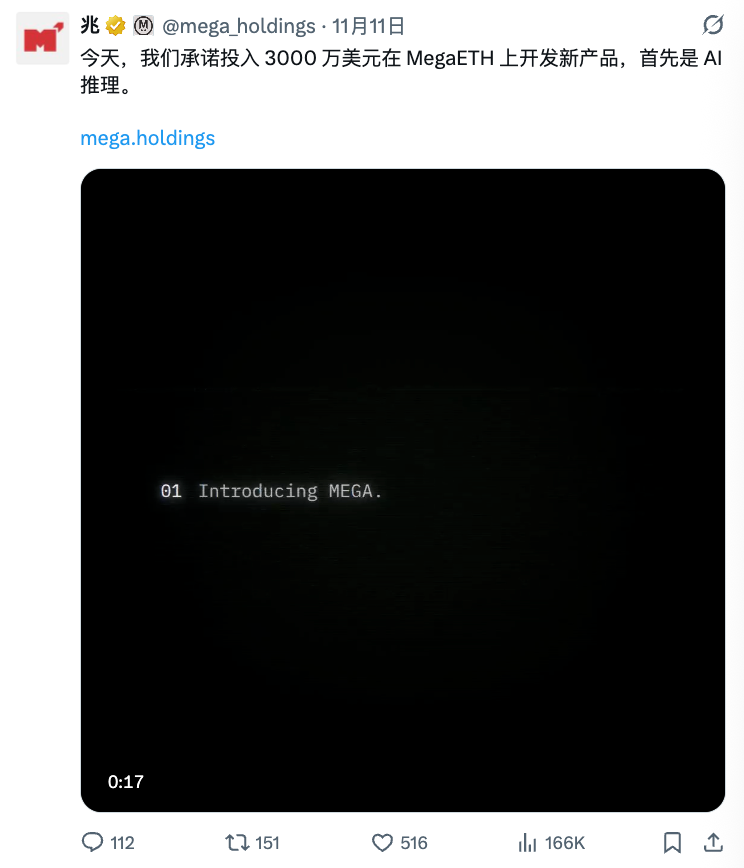
Therefore, when they announced a $30 million allocation to develop their own products and launched first the Purified Intelligence AI inference market, seeing the various reactions on Crypto Twitter (CT) was somewhat unexpected.
Purified Intelligence is their flagship first-party application, scheduled to launch in December.
Of course, many inference service providers like OpenRouter and Venice have already validated this market.
MEGA's entry point is that the homogenization and inconsistency of standards among these service providers are too serious today. Many third-party providers run open-source models at a lower cost than the original manufacturer laboratories, but trust and verification issues make these low-cost solutions not interchangeable—which is especially undesirable for end consumers.
Their goal is to standardize services and provide verification mechanisms, allowing users to be confident that they are getting real models at the best prices, along with data processing assurance.
ether.fi
Some newcomers who have just entered the circle may not even remember that ether.fi was initially a liquidity re-staking protocol (LRT) integrated with EigenLayer.
Yes, technically it still has LRT functions, but today's ether.fi is more known for its neobanking services.
Honestly, they now offer a full suite of services: Visa-supported debit cards, yield vaults, borrowing, trading, and even native stablecoins.
Among all the EigenLayer protocols we painstakingly studied in 2024, one commendable aspect of the LRT track is that they have indeed survived and launched new products using large treasury funds.
Each of these projects has a large TVL, providing them with a unique capital base to operate from.
Renzo
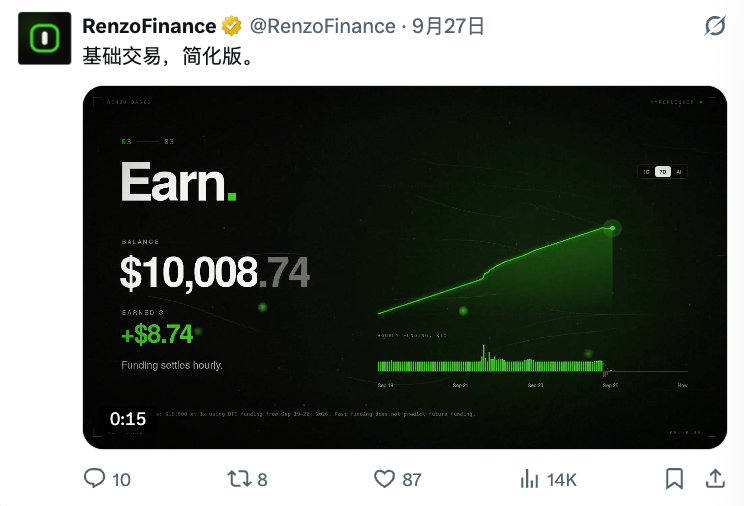
Renzo Protocol has now rebranded itself as Renzo Finance (wow, that's quite clever), repositioning itself as an asset management entity that packages trading strategies into vaults and earns management and performance fees.
On the same day as the rebranding, they launched Renzo Basis on Hyperliquid, a delta-neutral basis yield vault. They are also looking at other public chains and perpetual contract DEXs to build their vault product matrix.
Kelp
After experiencing a hacking attack, Kelp had to undergo a profound soul-searching.
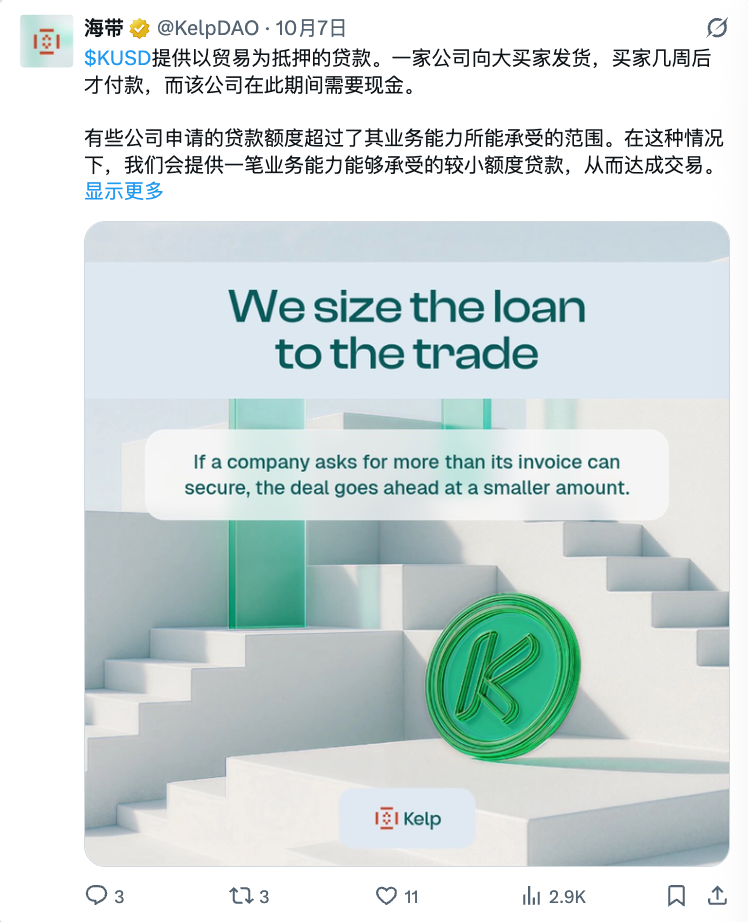
Well, they surely attended the same yoga retreat as Renzo's core team because they too shifted their focus to strategy vaults, but this time deployed on Gains.
In addition, they plan to launch their own stablecoin KUSD aimed at providing funding support for institutional payments and foreign exchange settlements.
Bedrock
Unlike other projects, Bedrock has shifted its focus from Ethereum to Bitcoin. This makes complete sense for their business since the vast majority of their TVL already comes from established BTC.
Similarly, this group is also focused on yield vaults, allocating BTC into DeFi, institutional, and delta-neutral trading areas.
Puffer
The Puffer team remains committed to its infrastructure roots and is currently focusing on preconfirmations and Based Rollups.

Their vision is that since confirmation speeds can reach around 50 milliseconds and still settle on Ethereum, they can become the settlement layer for AI agents.
Swell
Perhaps the most adept LRT project in transformation, Swell announced back in April that it would close its SwellChain and fully focus on Faro.
Faro is a non-custodial AI trading application built on Hyperliquid.

Abstract
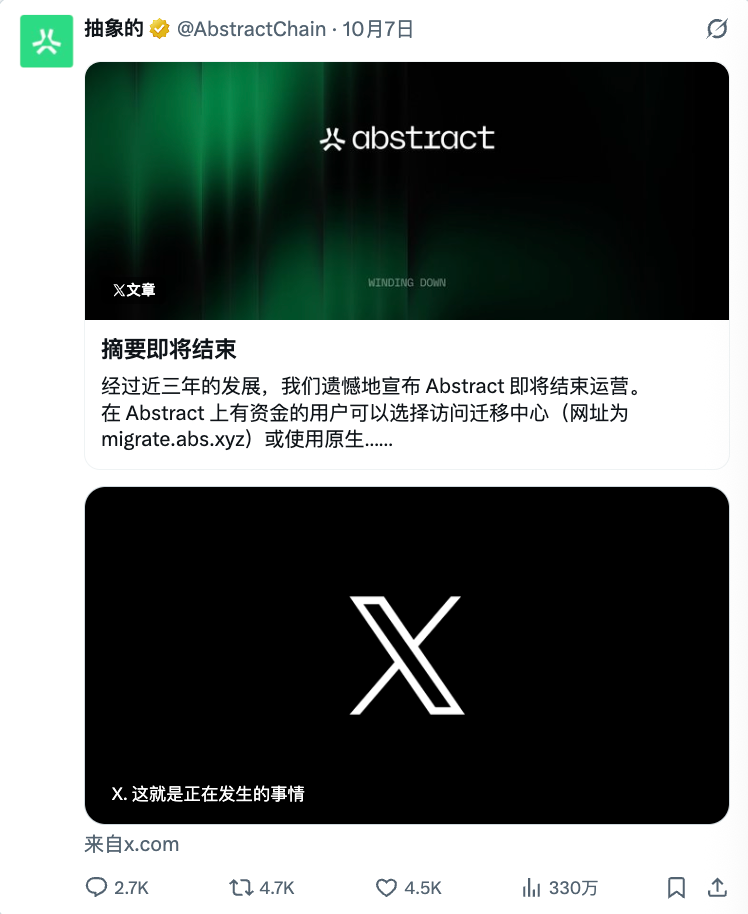
Rather than a transformation, I would prefer to call it a "retreat"—the parent company of Abstract and Pudgy Penguins, Igloo, has decided to shut down the Abstract chain and refocus on the Pudgy Penguins IP, NFTs, and PENGU Token.
The praise here has to be given: the team resisted repeated calls from outsiders to launch the ABSTRACT Token and successfully brought in major brands like Disney and Red Bull, yet ultimately could not make the “consumer public chain” avenue work.
Nillion
This team, originally aimed at creating a "Blind Computer" for cryptographic data privacy computing, is shifting its focus from general infrastructure to a single primitive: Hidden Intent.
They call it "Covenants", and you can read all the relevant details in our previous reports (more coverage will follow).
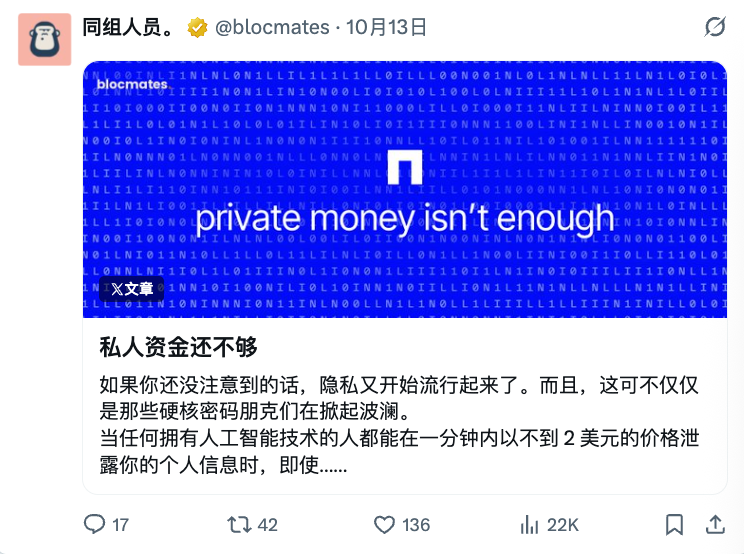
As we go through these cases, you'll find that the trend of shifting from "building infrastructure" to "creating actual products" is accelerating.
Moonbeam
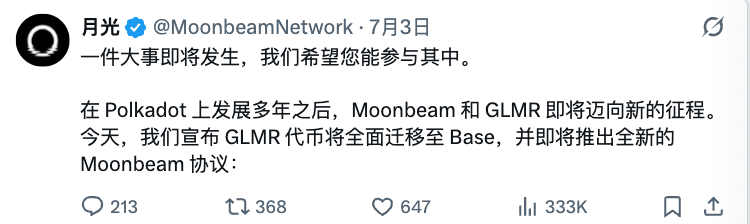
Once the flagship EVM parachain on Polkadot (oh, do you remember how enthusiastic everyone was about parachain slot auctions back in the day? Those were the days), Moonbeam announced in July that it was packing up and migrating its business (and the GLMR Token) entirely to Base.
Its new direction is positioned as a network that allows AI agents to discover each other, agree on terms, and settle on-chain, with each task locked by a custody mechanism and rated based on proof.
Harmony
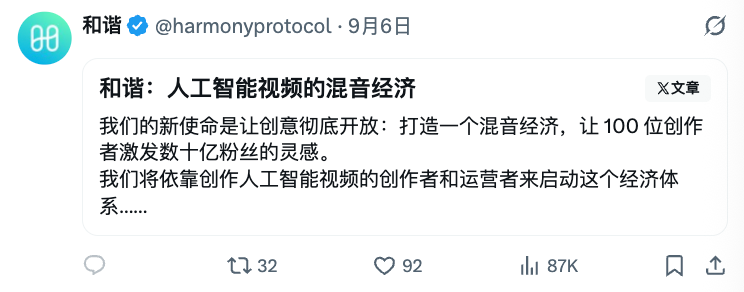
After experiencing a hacking incident in August, this 2019 sharding darling is transforming into an AI video company.
The hack resulted in approximately 30 trillion ONE being forged, forcing the project to conduct a chaotic rollback and igniting calls for either a complete shutdown or a reissuance of ONE on Ethereum. Ultimately, the latter was adopted.
In their new "Remix Economy," users can input prompts and remix video stories, with protocol token emissions used to subsidize GPU compute expenses.
Golem
Yes, it's that Golem from the 2016 ICO era. They are still alive and still hold hundreds of millions in treasury funds (the ICO days were truly a different era).
Their latest project is less of a "transformation" and more of an extension of their existing business.
The project is called Arkiv, aiming to become a queryable and tamper-proof Web3 database. The project will use GLM as gas fees and officially debuted earlier this month at Devcon.
Immutable
Once the "king of blockchain games," now it is attempting to sell marketing software to mainstream gaming studios. Sigh.
Immutable laid off almost its entire internal game team in June, pivoting to Audience—a platform for game publishers powered by AI.
At the same time, its IMX Token has dropped 99% from its historical high.
In August, they opened Audience to studios that have not yet launched on Steam, and it contains absolutely no blockchain components. Is blockchain gaming dead? Or was it a mistake to expect those AAA game giants to make it work from the start?
Where does the industry go from here
At a certain point, we must face reality. In the naïve early days of cryptocurrency, many ideas that raised millions of dollars were, at best, illusory bets.
Does this mean founding teams should bury their heads in the sand and completely ignore feedback from the market about their ideas?
In my view, we should welcome these directional changes. These teams are often the first to realize they have failed to achieve product-market fit (PMF).
We need to reverse the current judgment standards and condemn those teams that have raised significant capital yet stubbornly continue to force products that have been proven ineffective onto the market.
These teams hold a large number of extremely talented individuals—wasting their potential (and investors' real money) on a “premature idea” is what true squandering really looks like.
What can we learn from these transformations? To me, it's incredibly exciting to see these strong teams and real money being invested in actual products, rather than continuing to pile up infrastructure that no one will use.
The “winners” of this cycle—stablecoins, perpetual contracts (Perps), tokenized stocks—all share one thing in common: they are tangible products. They are products people truly want to use, even willing to put up with clunky and inconvenient interfaces to engage with them.
For cryptocurrency to win, it must bring these products (and brand new products that have yet to achieve PMF) into the hands of more and more people.
That is why it is tremendously uplifting to see the industry paying more attention to productization, with the dream of achieving PMF perhaps just a transformation away.
Article link: https://www.hellobtc.com/kp/du/11/6509.html
Source: https://x.com/blocmates/status/2124843975773176044
免责声明:本文章仅代表作者个人观点,不代表本平台的立场和观点。本文章仅供信息分享,不构成对任何人的任何投资建议。用户与作者之间的任何争议,与本平台无关。如网页中刊载的文章或图片涉及侵权,请提供相关的权利证明和身份证明发送邮件到[email protected],本平台相关工作人员将会进行核查。