Author: Gergely Orosz, The Pragmatic Engineer
Translated by: Shenchao TechFlow
Shenchao Introduction: As enterprise-level AI faces engineering gaps and difficulties in practical application, the role of Forward Deployed Engineer (FDE) is evolving from being Palantir's secret weapon to a standard position in leading AI and high-growth technology companies in Silicon Valley. They navigate complex business environments on the client side while also engaging in the architectural evolution of core enterprise products.
This article provides an in-depth analysis of the real engineering practices and operating mechanisms of three benchmarks: Palantir, OpenAI, and Ramp, dissecting the essential boundaries between FDE and traditional Solutions Engineers (SE) and Agents Engineers (AE). This role is not only a technical lever to unlock million-dollar enterprise orders, but is also seen as the best incubator for the next generation of startup founders and CTOs.
This article was previously published as a paid column article for a long time, until I decided to make it fully publicly available for free in November 2026, due to the fact that the number of job postings for "Forward Deployed Engineer (FDE)" increased by a staggering four times over the past 12 months. I hope this article can provide a comprehensive overview of this role and clearly articulate its essential differences from traditional software engineering positions.
If you wish to receive this kind of in-depth analysis for software engineers and technology practitioners in your inbox weekly, feel free to subscribe to this column. The column currently has over one million software engineers and tech experts as readers, ranking first in the software engineering category on Substack.
Since the original publication of this article in 2025, several significant and inspiring evolutions have taken place in this field in 2026:
• The core of FDE has fully shifted towards "AI-native forward deployed engineers." Most companies currently recruiting FDE are almost entirely selling AI-based software and hardware products, with very few exceptions. They urgently need FDEs to assist with the deep integration of these AI products into the existing systems of large enterprise clients, which often involves massive underlying pipeline engineering, reshaping of workflows, and empowering training for client engineering teams in AI-native engineering concepts.
• In industry practice, it seems that the vast majority of FDE do not actually feed back code to the core underlying platform. Although the early FDEs from the pioneer benchmark companies discussed below (such as OpenAI and Ramp) did deeply engage and contribute to platform architecture, in most of the hiring companies after 2026, FDEs rarely have the time or chance to participate in core platform R&D in their actual work.
• In many companies, the role of FDE increasingly resembles a hybrid of an "AI-enthused Solutions Architect + Product Engineer." When I researched and wrote this article in 2025, there were very distinct boundary lines in work form between FDE and traditional Solutions Engineers (SE); however, by 2026, the differences in many newly created job postings have significantly narrowed.
• FDE provides developers with an excellent pathway to obtain first-hand "AI native" practical experience. Although this role may not be the most glamorous choice for senior (Senior and above) engineers, for those in traditional tech environments who "lack AI practical opportunities," this position allows them to directly interact with cutting-edge tech stacks and new ground engineering flows with extremely high frequency.
• As we move into 2026 and beyond, the market demand for this role is exceptionally strong, and it is one of the few high-difficulty roles that emerging companies commonly report facing severe recruitment bottlenecks. If you are currently job hunting or observing, this is undoubtedly highly strategic industry intelligence.
Looking at this year's AI startup ecosystem, one of the most striking key trends is the rapid rise of the "Forward Deployed Engineer (FDE)" as a dedicated software engineering role.
This position has even been hailed by the well-known Silicon Valley venture capital firm Andreessen Horowitz (a16z) as “the hottest job in the tech sector right now.” FDE integrates multiple attributes of software engineering, business sales, and platform architecture. Since the beginning of this year, under the strong catalyst of accelerated integration of AI solutions across the industry, the recruitment demand for this role has experienced a phenomenal surge, and this hiring frenzy is far from limited to AI startups.
Today, we will conduct a panoramic breakdown of the Forward Deployed Engineer, focusing on the following core dimensions:
• What is a Forward Deployed Engineer (FDE)? A software engineer who travels between the client site and core product R&D, this is undoubtedly a highly challenging hard-core job.
• Origin of the role. Before 2016, the number of FDE (internal code name "Delta") at data pioneer Palantir even exceeded that of traditional software engineers. No other company has shaped this role better than this enigmatic tech giant.
• OpenAI's engineering deployment practices. The creator of ChatGPT, OpenAI, officially established this position this year, clearly separating it from Solutions Architects who lean towards professional consulting services.
• Ramp's agile mechanism. Since establishing this system 9 months ago, the fintech unicorn Ramp currently has about 15 FDEs who form agile operational units known as Pods, rigorously adhering to four core operational principles.
• Why is FDE so hot right now? The deep integration of large language models (LLM) and AI products into real business scenarios is this role's chosen battlefield; simultaneously, Palantir's immense commercial success has also provided a benchmark paradigm for the entire industry.
• The difference between FDE and Solutions Engineers (SE) and Agents Engineers (AE). Although there are overlaps among the three, FDEs are usually assigned the explicit mission of feeding back code and architectural contributions to the underlying core product.
• The career panorama of FDE. Analyzing the talent profile of this role, hiring filtering rules, salary structure, and future career transition paths.
Special thanks to Colin Jarvis (Head of OpenAI Forward Deployed Engineering), Leo Mehr (Head of Ramp Forward Deployed Engineering), and Anjor Kanekar (former Palantir FDE for 7 years) for providing exclusive insights for this article. Anjor is currently offering consulting advice regarding FDE team building and hiring to the market.
What exactly is a Forward Deployed Engineer?
Job postings for FDE roles from various tech companies generally outline several core characteristics of this position:
Solid software engineering fundamentals
Almost all hiring managers are looking for developers with strong software engineering backgrounds and actual delivery experience to ensure robust engineering logic at the base level. Ramp tends to prefer senior candidates with more than 5 years of engineering experience when hiring Senior FDEs, but will also make exceptions for a few top graduates; Palantir hires engineers with only one year of graduation experience; while healthcare tech startup Commure and industrial AI startup Matta place particular emphasis on candidates’ hands-on experience building and delivering actual projects end-to-end.
Collaborating with sales teams to close major deals
Many startups that hire FDEs directly view them as commercial tools for conquering markets. In short, when potential enterprise clients hesitate to integrate and effectively use a particular product, the sales team will proactively propose deploying an FDE to assist the client in overcoming technical barriers and completing integration. Ramp clearly states in its job postings: “Work closely with our sales and business development teams to secure exciting key orders, deeply engage clients, and continuously expand the business value Ramp brings over the long term.”
Fully embedded in the client's business trench
As stated in OpenAI's job postings: "As an FDE, you will be deeply embedded within the client's team, understanding their business domain and collaboratively developing solutions with clients in often vague, undefined, or dynamically evolving problem spaces, hitting at core pain points."
This job inevitably involves frequent travel to client sites to work side by side. Palantir requires FDEs to spend about 25% of their work time on-site with clients; while the healthcare AI company Commure expects this ratio to be as high as 50%.
For companies with particularly unique client groups, this can even mean entering extraordinary extreme operational environments. For example, industrial AI startup Matta requires FDEs to "直接深入工厂车间现场界定解决方案"; former Palantir FDE Anjor Kanekar recalls that he was stationed for a long time on the assembly line of aerospace giant Airbus, and many of his fellow FDEs even operated in physically isolated, sensitive inner networks, which is anything but traditional office coder life.
Feeding back into the core product, integrating into the underlying R&D array
Ramp sets clear expectations here: FDEs need to drive the core product engineering roadmap, make critical priority definitions, and determine when to build custom solutions for clients and when to accelerate the promotion of underlying generic projects. Ramp utilizes deep embedding mechanisms to integrate FDEs into the core R&D team, cultivating deep expert experience in cutting-edge sub-technical fields.
Client success as the ultimate goal
The absolute core of this role lies in enabling clients to achieve commercial and technical success based on its own product framework. As succinctly stated by robotic startup Gecko Robotics: "FDEs are dedicated to finding the most impactful problems. We spend considerable time with clients to explore the essence of the problem and propose innovative solutions, not stopping until we meet expectations."
Some companies view this role more as a technical consultant. For instance, the AI agent orchestration platform Lindy hopes FDEs will assist clients in building and maintaining no-code workflows, "while also serving as the client's technical consultant." It is evident that the boundaries between consulting and versatile engineers who balance client and core product responsibilities often become blurry.
Diverse corporate flavors
As FDEs belong to a relatively emerging hybrid role, each company has formulated unique expectations based on its own business focus. Some companies emphasize having FDEs assist in closing sales deals, others focus on client tech support, and some focus on contributing code to the underlying core architecture.
This is undoubtedly a role that carries extremely high comprehensive expectations. Taking the requirements for senior FDEs at enterprise software giant Salesforce as an example, the list covers: delivering tangible business outcomes through hands-on engineering deployment, building transformation-meaningful AI solutions, designing and creating customized intelligent agent AI solutions, fully managing the complete lifecycle of data configuration and integration, actively eliminating technical barriers, driving innovation in Agentforce products, becoming clients’ trusted strategic technology partners, engaging in challenging technical troubleshooting and root cause analysis, leading agile prototype validation and rapid iteration, and implementing best engineering practices in deployment.
This noteworthy long list aligns closely with the implicit high-level requirements for senior (Senior+) software engineers in traditional technical hierarchies. What I personally value most is Palantir's classic definition of this role: "The responsibilities of an FDE closely resemble those of a technical partner (CTO) in a startup: you will operate in a lean team, fully controlling the execution of high-risk, high-value key projects from end to end."
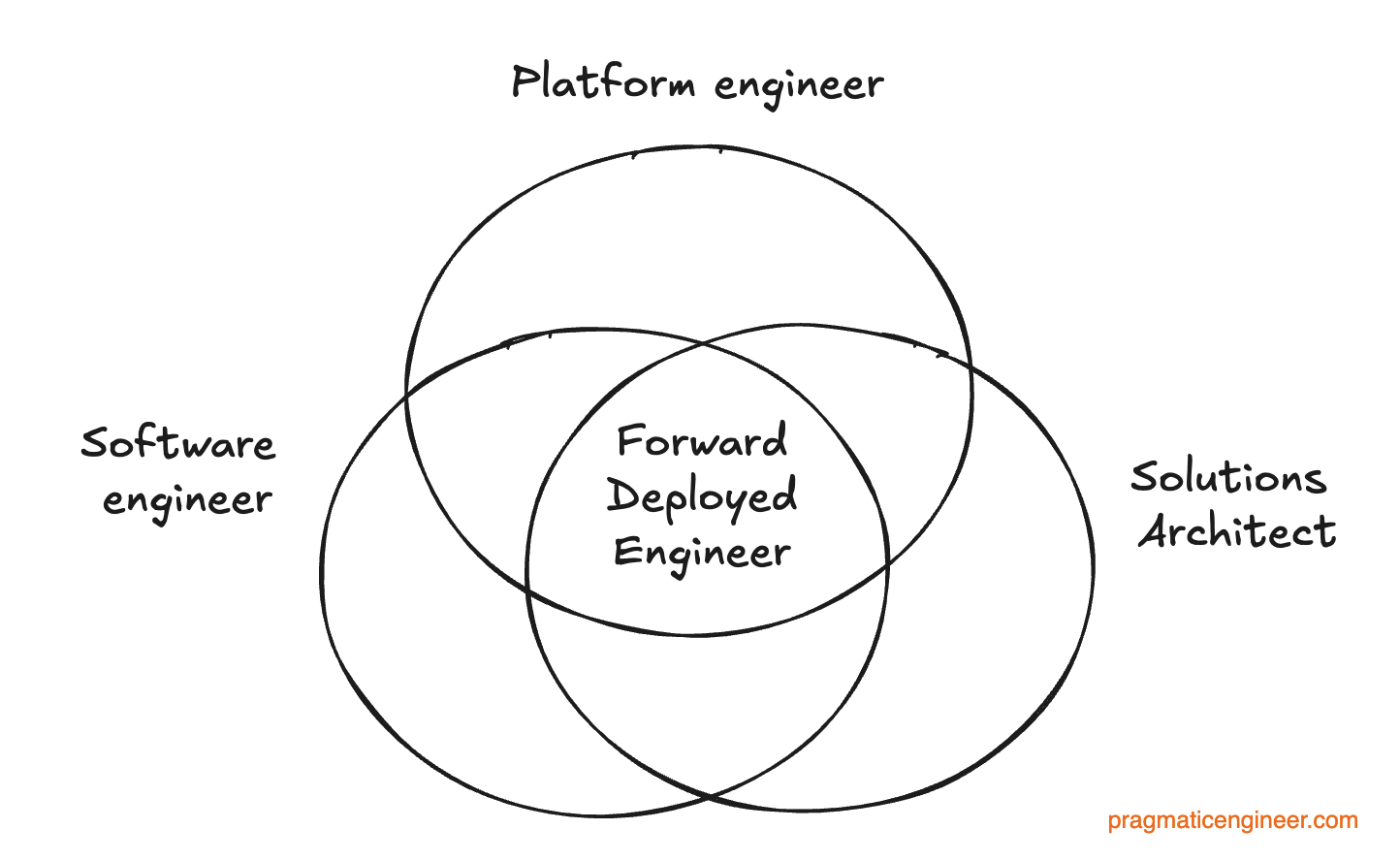
In the current market, roles that significantly overlap with FDE have various titles, such as "Agent Engineer," "Solutions Architect," "Sales Engineer," and "Technical Delivery Engineer." They are very close in job content, but the most essential distinguishing factor is that a true FDE not only serves clients in the front line trenches but must also continuously submit code back to the underlying core products sold to the company.
The following chart outlines the typical mental model of an FDE. It is worth noting that in companies where FDEs do not need to feed back into the underlying product, the weight of the "Platform Engineer" on the right side is often diminished:
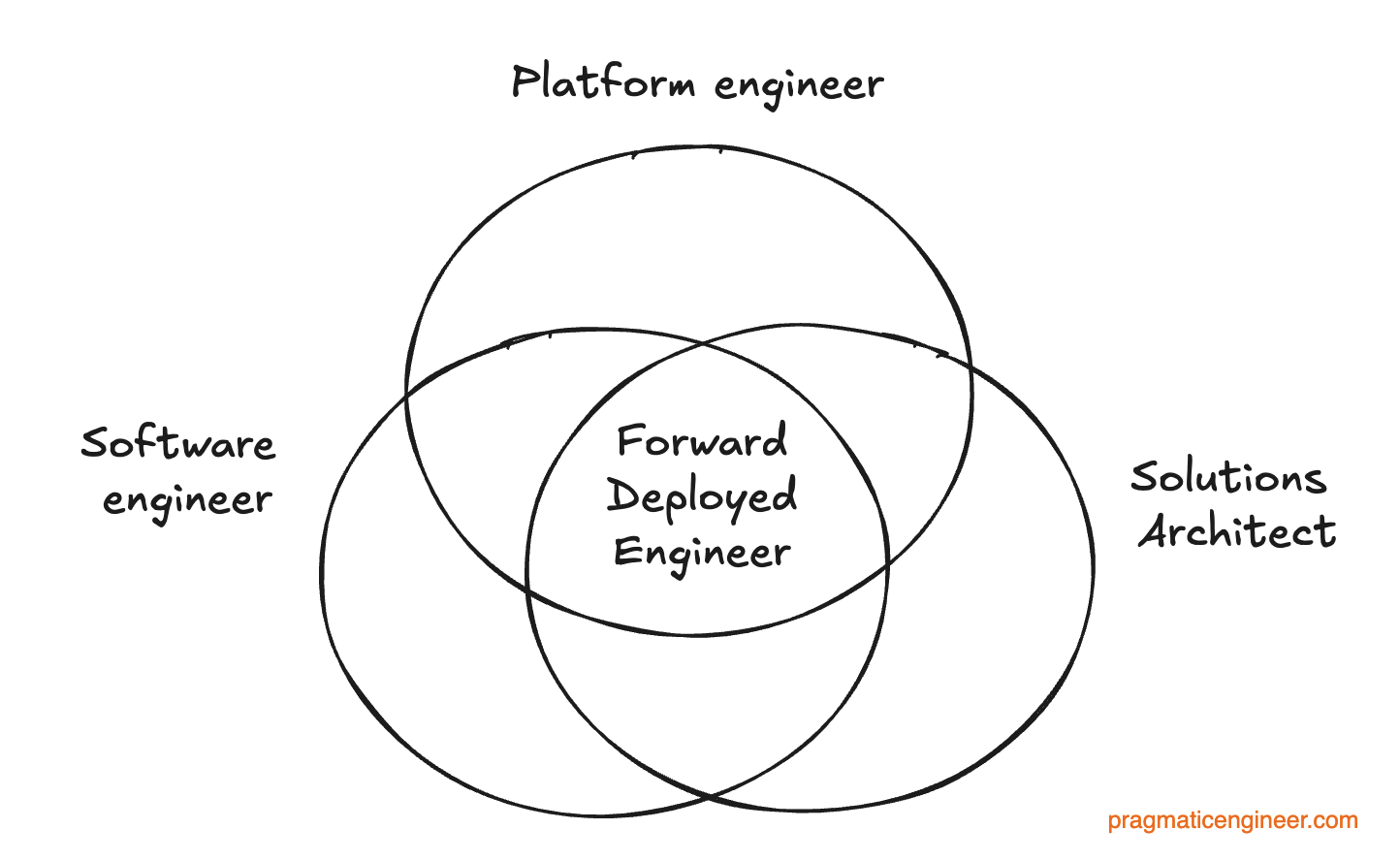
Diagram: The mental model of Forward Deployed Engineers (FDE): 50% client front-line deployment + 50% core product engineering
Origins: The “Delta” Secret Weapon of Palantir
The position of “Forward Deployed Software Engineer” was initially born in the early 2010s at data pioneer Palantir, at that time known internally as “Delta.” Founded in 2003, Palantir has long provided rigorous big data processing services for government agencies, the defense military-industrial complex, and large commercial organizations, often dealing with extremely sensitive and highly classified data.
Before around 2016, the number of FDEs within Palantir even exceeded that of traditional software development engineers (Devs). It wasn't until 2016 that Palantir officially launched the integrated data platform, Palantir Foundry, built specifically for commercial and civilian government sectors. From then on, more and more FDEs began bringing their valuable frontline combat experience back to the core development evolution of Foundry.
Even today, no other company in the world has more FDEs than Palantir, nor has any startup matched its influence and shaping of this role. Palantir provided a very profound official explanation for this role:
"Delta (Forward Deployed Software Engineer) is responsible for deploying our software platform to the client's front line. Delta belongs to business development architecture, with the sacred mission to achieve substantial technical results for clients. As a member of the pioneering team that directly supports specific clients, Delta focuses on technology-driven value creation, deploying and customizing the Palantir platform to overcome severe business bottlenecks. They measure success by the actual impact on the client's commercial goals. For example, we once collaborated with a manufacturing giant to reduce the defect rate on their assembly line. To tackle this metric, Delta integrated Palantir products, multiple programming languages, open-source tool stacks, industry-standard construction systems, and their own engineering creativity to design tailored solutions. You can understand it this way: traditional development engineers (Devs) focus on 'one capability, serving a multitude of clients'; while forward deployed engineers (Delta) focus on 'one client, providing diverse comprehensive capabilities.'"
FDEs are sometimes mistakenly seen as traditional management consulting engineers, but there are fundamental differences between the two: consultants typically provide a one-time paper advisory report and then withdraw, whereas FDEs work shoulder to shoulder with clients over the long term. More importantly, FDEs also feed back into the underlying architecture. When clients urgently require capabilities that are not yet available, FDEs directly take on R&D responsibilities, hand-adding feature sets and underlying improvements to Palantir's core product.
Daily Work Breakdown of Palantir FDEs
As early as 2019, two Palantir FDEs stationed at different global sites provided a realistic snapshot of their typical daily work:
Dyon at the Abu Dhabi site described: "Most of the time, I spend two or three days a week working on-site with clients, some time meeting with technical or business executives from the client, and the remaining time focused on monitoring, troubleshooting, deploying, or configuring our software platform for that client. When I return to the office, I spend time writing code changes or patches, reviewing technical PRs, and planning the next phase of projects. The remaining time is spent synchronizing with the technical support and core product teams at headquarters, and with junior engineers scattered across multiple remote sites through emails or video conferences."
G.M. at the São Paulo site stated: "My daily rhythm changes almost every month, which is part of what makes this job so fascinating. Some weeks, I spend most of my time intensely developing and reviewing team code, acting like a pure software engineer; while in others, the majority of my focus is on jointly defining the boundaries of future projects with clients or delving deep into user groups to ensure that the systems we deliver truly meet business needs."
Overall, the typical weekly energy allocation of a Palantir FDE consists of the following components:
• Client front-line project breakthroughs: the core pillar of work, occupying the majority of energy;
• Contributions to core product improvements: submitting new features and general optimizations to the product backbone to avoid getting bogged down in ongoing customization;
• Business development collaboration: assisting in creating technical demos, evaluating bid documents, and participating in key technical communications with large clients;
• Cross-departmental agile communication: closely integrating with various support functions within the company;
• Team management: senior FDEs typically guide 2 to 6 junior to mid-level engineers.
Faced with such a complex web of responsibilities, excellent FDEs must possess an extremely decisive ability to say “no.” A senior Palantir FDE summarized: "I usually strictly limit my meeting times, and before each meeting, I repeatedly ask myself: Is this topic absolutely necessary for a meeting? Do I have to be present? Most of the people in the company adhere to the same principles, making each meeting I attend yield a high time value."
Why does Palantir rely heavily on the FDE role?
Palantir's business is deeply entrenched in core government departments and the strictly regulated structure of large traditional giants. It can be asserted that without the frontline team of FDEs charging ahead, these rigid traditional organizations would be incapable of bridging Palantir's vast, complex systems with their own outdated technology stacks.
In stark contrast to agile startups filled with geek spirit that embrace rapid trial-and-error and don’t mind solving problems with cleverness, the hindrances to advancement within large enterprises often aren’t just pure technical bottlenecks, but rather the entangling bureaucratic procedures and the "that's not my responsibility" inertia.
Palantir deploys a fully authorized team of hardcore engineers whose sole goal is to seamlessly integrate software and create substantial value for clients. This dimensional strike achieves the "killing two birds with one stone": firstly, because embedded FDEs are entirely oblivious to clients’ internal bureaucratic entanglements and therefore unaffected by systemic conflicts; secondly, these developers maintain a geek spirit with the mindset of "how can I make this work," rather than "why can't this work." Compared to traditional companies promoting system integration themselves, Palantir's approach demonstrates an overwhelming and high execution efficiency.
OpenAI's Forward Deployed Engineer Structure
Colin Jarvis serves as the head of OpenAI's Forward Deployed Engineering (FDE) team. He joined OpenAI in 2022 as a Solutions Architect (SA) and was promoted to head of the Solutions Architecture team last year. Earlier this year, facing increasingly complex enterprise business deployment challenges, Colin submitted a detailed business project proposal proposing the formal establishment of an FDE team within OpenAI to provide more precise technical penetration. The team started with only 2 engineers but has rapidly expanded to over 10, with a footprint across global core hubs:
• United States: New York, San Francisco
• Europe: Dublin, London, Munich, Paris
• Asia: Tokyo, Singapore
OpenAI still retains the Solutions Architect (SA) series. Both SA and FDE assist clients in addressing the daunting challenges of deploying complex underlying large language models (LLM) into actual production systems.
However, FDEs are clearly more deeply entrenched in the trenches and face business ambiguities that far exceed traditional SAs. The function of SAs leans towards consulting: they rarely write code directly on clients' production infrastructures, typically using anonymized or offline sample data to build proofs of concept (PoC) or minimum viable products (MVP).
In contrast, FDEs must dig in on the frontlines: they directly write code in the client's infrastructure environment, using the client's own development toolchain to tackle delivery. More importantly, FDE teams are deeply aligned with OpenAI's cutting-edge research goals, specifically choosing benchmark clients that can contribute to and promote the evolution of underlying model research. Compared to traditional public cloud solution architects, FDEs must be adept at navigating extreme chaos and uncertain demands.
FDEs are also materially driving the evolution of the core product roadmap. In a typical project for voice automation of call centers, FDEs built special engineering evaluation benchmarks (evals) for the voice model. Initially, the model's performance in the specific voice scenarios of the client did not meet production readiness requirements. The FDE team quickly integrated real frontline data back into OpenAI's core research department to jointly tackle the targeted optimization of the model's inference performance in voice scenarios, eventually enabling this client to become the first in the world to bring this cutting-edge voice solution into large-scale production.
This achievement also significantly promoted the underlying upgrade of OpenAI's Realtime API. It was a perfect win-win: the client gained cutting-edge AI capabilities at an unexpectedly rapid pace thanks to FDE's trench breakthroughs, while OpenAI completed technical verification through frontline practical application, allowing all clients globally to share in the leaps of the underlying product.
OpenAI's Dual-Track Work Structure
Colin elaborated on how the OpenAI FDE team masters the dual tracks of “client-facing” and “core product-facing” technical evolution in their daily work:
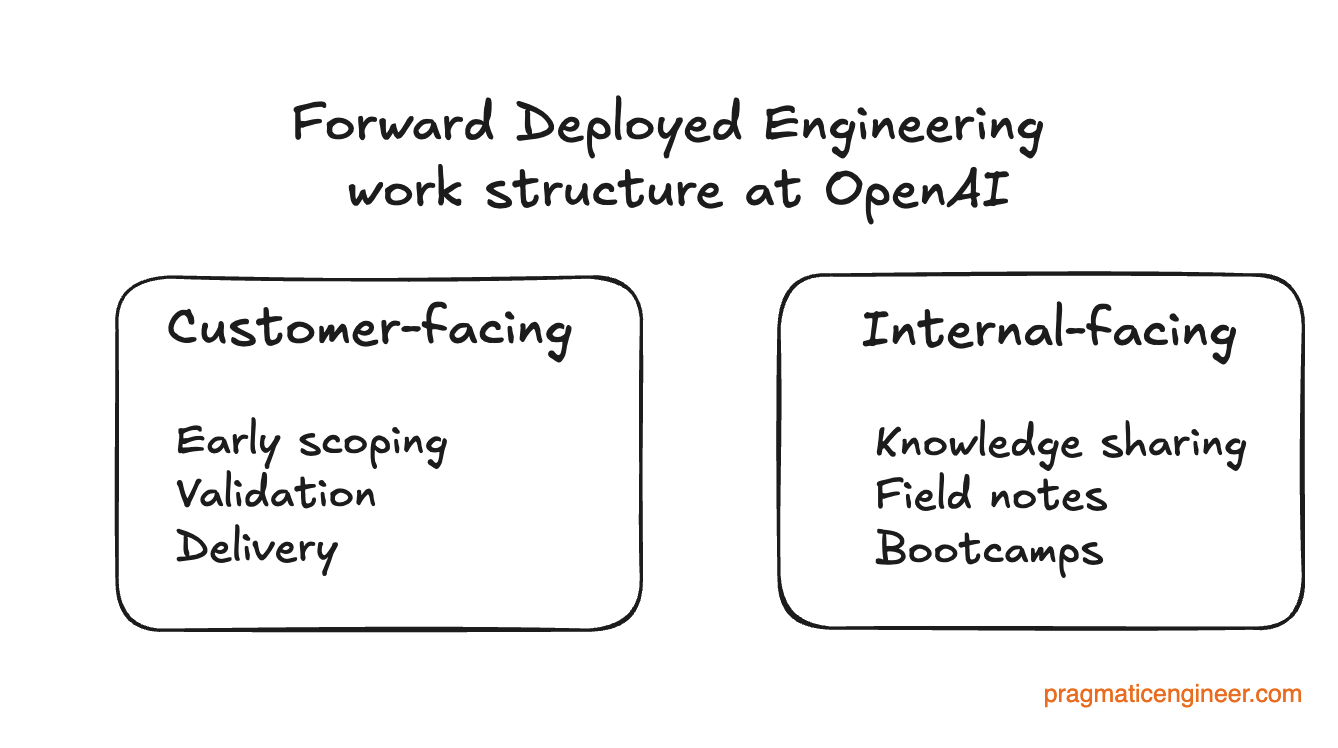
Diagram: OpenAI FDE Team's dual-track parallel work structure: client-facing and core product-facing
Full-process business deployment for clients
In client-facing project deployments, the standardized progression process is clearly divided into three stages:
Stage One: Early Scoping. FDEs are stationed on site with clients for several days, working side by side with frontline business personnel to outline the entire business process, accurately identifying the key links that create the most commercial value, quickly running through prototype validations based on synthetic data, and iterating ideas and prioritizing them on the whiteboard.
Stage Two: Strict Metric Validation. FDEs personally visit the client's frontline to answer a fundamental question: "Does the scope we previously defined indeed represent the highest commercial value we can create for the client?" Once consensus is reached, both parties will jointly establish strict validation metrics. This typically covers: constructing a quality assessment system (evals) based on real user input and labeled data, scaling up annotation workflows, developing feature engineering and gradient climbing tuning based on evaluation metrics, and finally delivering a detailed evaluation compliance report.
Conducting rigorous validation before formal delivery is uncommon in traditional software engineering, but Colin explains this is a hard-won rule: “FDEs always navigate through enormous uncertainty, and the requirements that clients outline verbally in the early stages often diverge greatly from the reality of the actual data and system underpinnings. We must maintain a preference for agile trial and error, rushing to hit walls, defuse landmines, and shatter illusions right away, adjusting the project scope to the most effective direction in the face of insurmountable hard objective constraints.”
Stage Three: Engineering System Delivery. FDEs work on-site several days a week, delving deep into technical details, retrieving real production data, completing core module coding internally at OpenAI, and continuously demonstrating iterations to the client while always focusing on building a production-level solution that runs end-to-end with a "minimum viable closed loop."
A highly representative industry deployment case is the project that the team jointly pushed forward with John Deere, a company with over 200 years of agricultural infrastructure history, in Iowa. The team is dedicated to overcoming the large-scale engineering bottleneck of "personalized farmer intervention guidance." Previously, John Deere relied on manual calls to guide farmers on efficient machinery use; now, the client wishes to provide personalized operational insights through intelligent solutions, combining their newly launched precision herbicide reduction technology to significantly reduce pesticide spraying costs.
To make the technology truly land, Colin and frontline FDEs personally visited the Iowa farmland to conduct on-site tests alongside farmers:
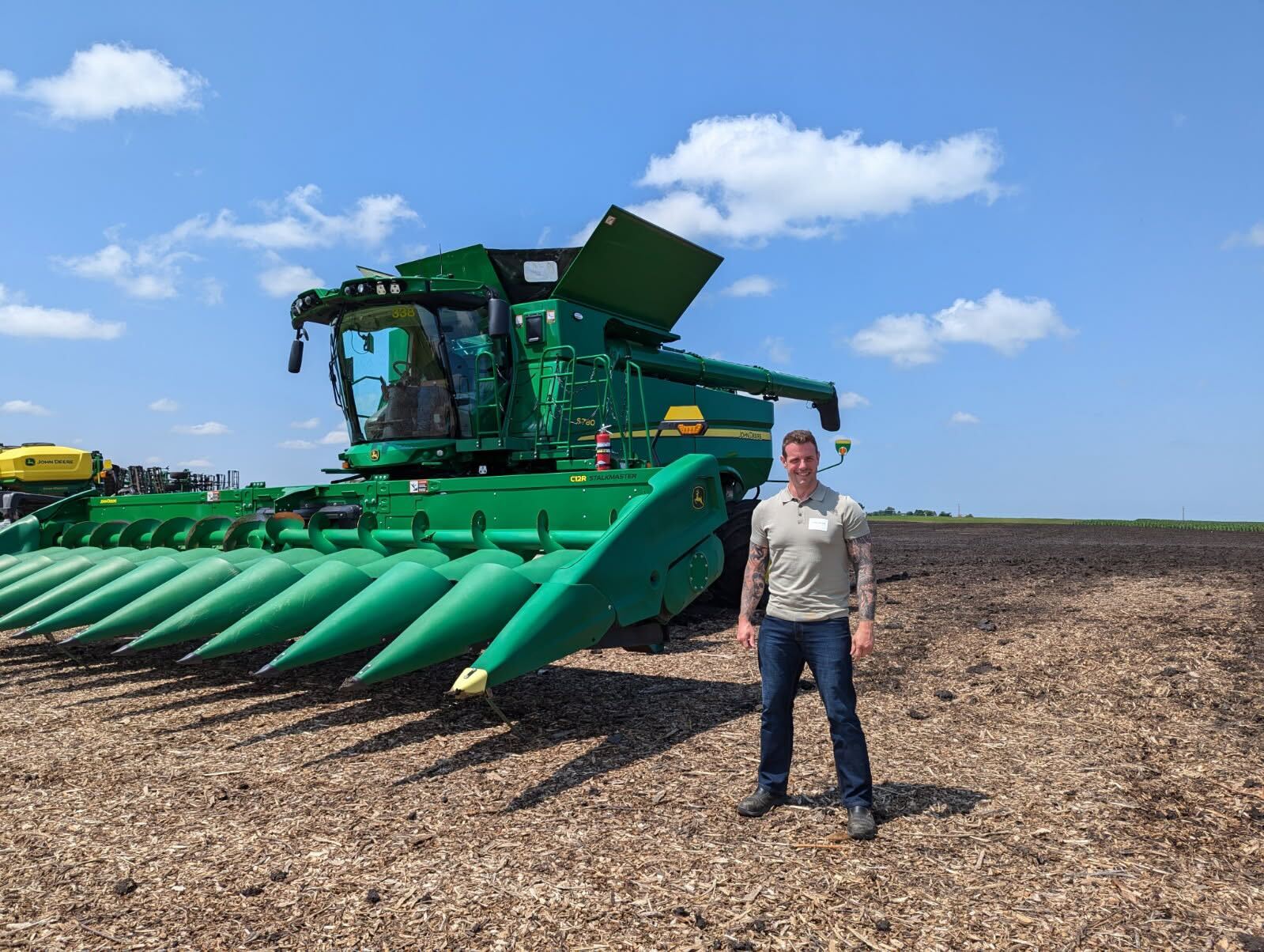
Diagram: OpenAI FDE Leader Colin Jarvis assisting John Deere in the field in Iowa
At the time, the delivery timeline was extremely tight: John Deere required that the new features must be completely ready before the next planting season, which is the crucial time window for spraying herbicides. The team managed to complete full-link deep integration within the short deadline under immense pressure, achieving great commercial success.
Internal R&D Feedback and Ecological Contributions
Although FDEs' main battleground is tackling external client projects, they continuously feed frontline insights back to OpenAI internally, resonating frequently with core teams:
• Establishing fixed knowledge-sharing mechanisms with core research teams (usually bi-weekly);
• Providing bi-weekly panorama reports on frontline deployments to OpenAI product heads and product management teams;
• Operating an internal open Slack channel called "FDE Field notes," where all FDEs publicly share frontline discoveries and pain point reflections in real-time;
• Organizing quarterly offline bootcamp training sessions to closely bond team members scattered across eight core cities on three continents.
In terms of open-source and underlying ecological construction, the FDE team is also a key contributor to OpenAI’s official Agents SDK. Initially, OpenAI's Solutions Architecture team spearheaded the construction of an open-source lightweight orchestration framework called Swarm to enable external clients to access the official API with lower barriers. Today, the Swarm framework has officially evolved into the Agents SDK launched by OpenAI, with the Solutions Architecture team and FDE team consistently being the primary sources of code contributions to this fundamental toolkit.
Ramp's Engineering Practice: Making FDE the Revenue and Innovation Center
Leo Mehr leads the frontline deployment engineering team at renowned fintech unicorn Ramp. He recalls the exciting beginnings when this team was first established:
“Ramp formed the FDE function entirely out of the practical need to support the large-scale expansion of enterprise-level clients. Ramp was founded in 2019. By 2023, founding engineer Calvin Lee found himself frequently needing to personally tailor engineering development for Ramp’s several large enterprise clients. When I joined Ramp in March 2024, the entire FDE team consisted of only two engineers. In the early days, we were constantly in survival mode, struggling to put out fires everywhere. Using the framework for high-performance engineering teams proposed by former Stripe CTO and renowned engineering management writer Will Larson, we were in the ‘Falling behind’ stage at that time,”

Diagram: Will Larson's framework for the development stages of high-performance engineering teams
“I helped the team re-anchor the strategic direction: we broadly recruited talent to expand our force, breaking free from the ‘Treading water’ quagmire, and everyone closely gathered around the sacred mission of securing large enterprise clients. A year later, we’ve successfully transitioned to the ‘Innovating’ stage, able to proactively develop foundational functional features that facilitate Ramp in rapidly achieving deep product-market fit (PMF) in large enterprise deals as well as emerging verticals like healthcare and government.”
Currently, Ramp’s FDEs span the entire lifecycle of enterprise clients:
• Pre-sales Stage: Participate as needed in core sales strategy meetings, providing strong technical support to the business development team;
• Post-sales Stage: After the client formally signs a purchase order, they are responsible for fully leading system integration and deep custom delivery.
A particular case of great success for this team is a large defense technology unicorn, as this client undertakes numerous sensitive and governmental contracts, facing extremely complex and stringent government reimbursement accounting audit standards. To overcome this industry challenge, Ramp's FDE team developed a comprehensive “per diem” government reimbursement underlying abstraction architecture specifically for them.
Even more exciting is that the per diem module tailored for this client has now been seamlessly integrated and reused across numerous other enterprise clients on the Ramp platform. This is precisely the “flywheel effect” that the FDE team strives for: deep custom solutions crafted for single client site breakthroughs ultimately transcend into core assets that enhance the platform's overall capabilities.
Team Structure and Mentor Pod Model
Currently, Ramp's FDE team has grown to approximately 15 members and plans to steadily expand to around 20. Since this team has performed excellently in assisting the company to tackle large enterprise clients, its strategic value is recognized as extremely significant, with performance output tightly bound to the company's core commercial revenues, leading this department to be viewed as a core "profit center" within the company.
The team is organized into efficient combat units known as “Pods”: each consists of a seasoned lead paired closely with entry-level engineers for mentoring and guidance. Pod leaders typically have 4 to 15 years of solid engineering experience, and this apprentice-style configuration allows Ramp to boldly recruit those outstanding candidates who have just entered the workforce, pairing top graduates with senior or even staff-level FDEs for deep collaboration.
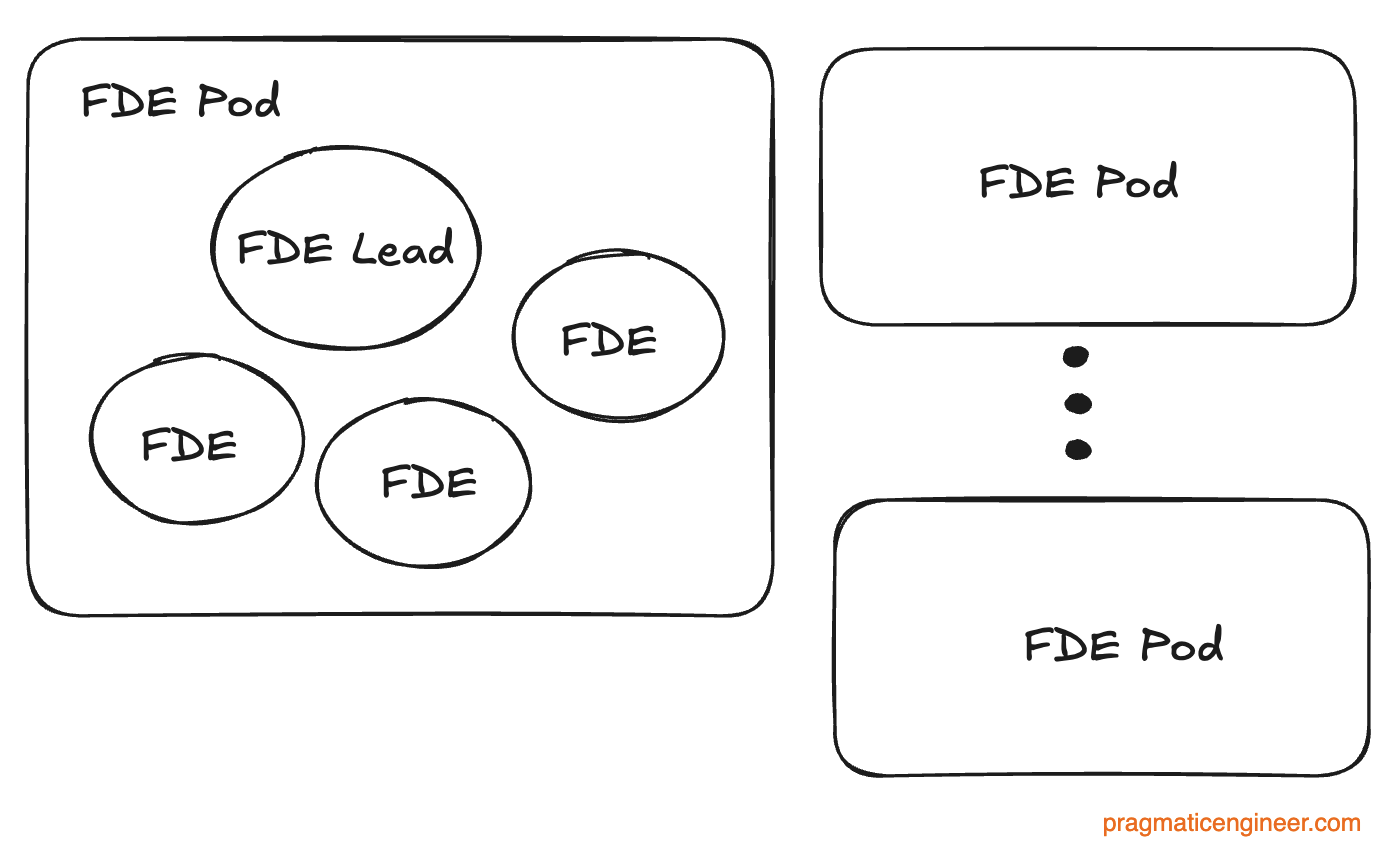
Diagram: The FDE Organizational Pod Structure at Ramp
Notably, Ramp's FDE team showcases an uncommon “high density of past founders”: among the approximately 15 FDEs, six were previously independent founders of startups, with three having founded companies that went through the prestigious Silicon Valley incubator Y Combinator. This exceptional talent density is rare in the industry, reminiscent of the unique engineering culture in the Bluesky team, where over half of the engineers had entrepreneurial backgrounds.
Four Core Operational Principles
Leo thoroughly summarized the four core operational rules refined by the team in the front line trenches:
Principle One: Always Be Scoping. In real commercial battlefields, clients often firmly request the development of某项复杂功能. However, when we actually delve into the frontline to uncover business details, we often find that simply optimizing some of the client’s existing workflows or tools can perfectly solve pain points without having to write extra lines of code. Numerous cases demonstrate that probing into two core questions often directly saves days of unnecessary intensive engineering effort. “Always Be Scoping” has become our supreme guiding principle.
Principle Two: Insist on Generalizing our Work. Absolutely avoid custom-fitting one-time codes for single clients, especially short-sighted actions that would significantly increase core product complexity. The powerful capabilities of an excellent product stem from creating a highly reusable, generalized platform. Our ultimate goal is to build a high-dimensional abstraction that propels the company to repeated victories in the marketplace, rather than creating a terrifying “octopus” with countless bloated appendages, each stuffed with spaghetti-like patches coded specifically for individual clients.
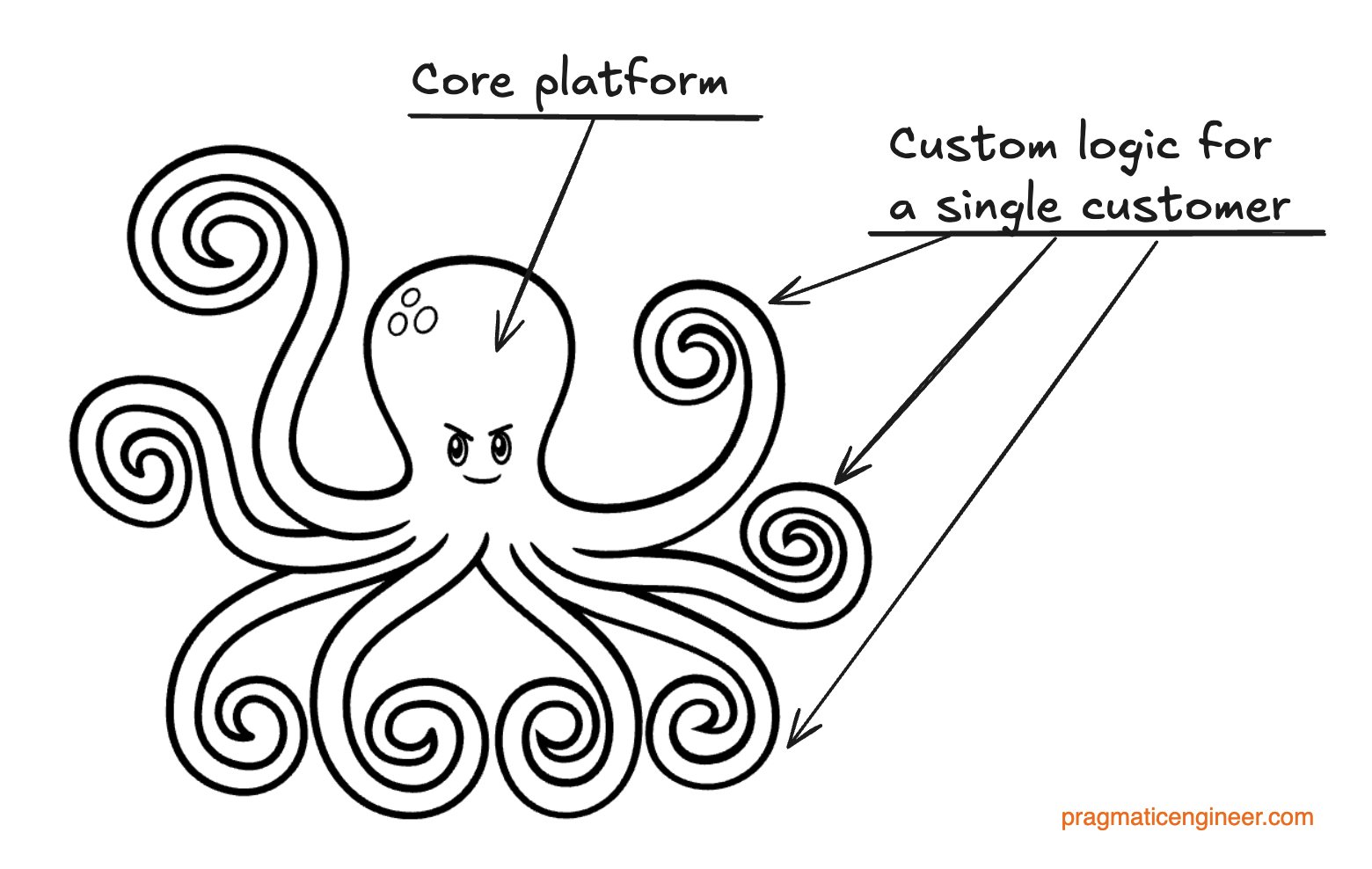
Diagram: Pursuing General Usability (GA) to avoid projects becoming a chaotic "octopus"
Principle Three: Do More. We firmly believe in maintaining the highest frequency of iterative progression and delivery momentum, especially in complex situations closely aligned with the client, where demands are often highly variable and filled with uncertainty, and frontline feedback is invaluable. In engineering advancement, excessive pursuit of perfection is the enemy of efficiency; incremental small deliveries can effectively eliminate internal friction and greatly bolster team morale.
Principle Four: We Win When Our Customers Win. The measure of the team’s success is not based on the amount of code features we assist the company in delivering, but rather on the substantial success we achieve for our clients on a grand scale. Sometimes, we help break through obstacles through solid engineering; while at other times, the most impressive victories involve using surprisingly little, even zero, code to assist in averting risks.
Why is FDE So Hot Right Now?
The deep integration of large language models (LLM) with cutting-edge AI technologies into enterprise-level real-world business operations is the core driving force behind the explosive emergence of the FDE role across the internet this year.
At first glance, integrating LLMs seems to require just a few lines of API code; however, the overwhelming majority of large traditional enterprises remain bewildered regarding effective ways to harness these new models. To enable AI to truly operate and generate productivity, a vast and rigorous engineering infrastructure is necessary: building quantitative assessment systems, cleaning and reconstructing data flows, establishing safety mechanisms, optimizing latencies and costs, clearing sensitive authentication...... For traditional non-tech-native enterprises, these engineering challenges appear as insurmountable obstacles.
In the face of such a brutal engineering gap, traditional enterprises urgently require software vendors to dispatch full-stack engineering experts to provide on-site support and work closely on-site. At this point, FDE teams, which can station at frontline troubleshooting and diagnosing problems, have become the decisive ace in dispelling enterprise doubts and facilitating large contract signings.
Meanwhile, Palantir’s astonishing business achievements and continued profitability displayed over the past twenty years on capital markets have awakened the tech circle in Silicon Valley. The industry has evidently realized that the deep barriers and commercial moats built by Palantir, relying on FDEs as a sharp blade in the defense and large government and enterprise sectors, are the core secret to its ongoing dominance. This powerful demonstration effect is driving a multitude of AI startups and new B2B tech companies to strive to emulate this organizational model.
The Essential Differences Between FDEs and Solutions Engineers and Agents Engineers
In the traditional context of enterprise-level software, the role of Solutions Engineer (SE) has long existed, but FDEs have demonstrated significant differences along several core dimensions compared to it:
First, traditional Solutions Architects mostly lean toward pre-sales support or technical consulting. As Colin Jarvis reflected based on his experience at a public cloud giant, traditional SAs rarely write code on the client's real production infrastructure, typically tuning with anonymized data or building demos in a sandbox; whereas FDEs must deeply engage on the frontline, directly writing operational business code on the client’s production environment and existing technical infrastructure.
Secondly, FDEs are by no means traditional “Professional Services.” In many companies, solution engineering is typically a paid consulting project charged to clients on a per man-day or hourly basis; however, technology giants like OpenAI resolutely refuse to let FDEs deteriorate into a mundane and common outsourced service. Colin disclosed that only three months after establishing the FDE function, the demand for on-site presence from clients exploded. The team faced a tough choice: either expand to recruit hundreds for outsourcing or maintain strategic restraint?
Ultimately, OpenAI chose to restrain their scale, keeping FDEs tightly aligned with the core underlying research and product evolution direction. This means the team must undergo stringent strategic selections for clients: only those business challenges posed by substantial clients that approach or even break the limits of the existing model capabilities will prompt the FDE team to re-engage in joint operations.
On the other hand, with the explosion of AI agents since 2024, the market has spawned another highly similar, new role: “Agent Engineer.” For example, Sierra, an AI unicorn founded by former Salesforce co-CEO Bret Taylor, focuses on creating white-label customer service AI agents for enterprises and was the first in the industry to introduce the Agent Engineer function, helping clients deeply integrate its Agent OS platform into the clients' tech stacks:
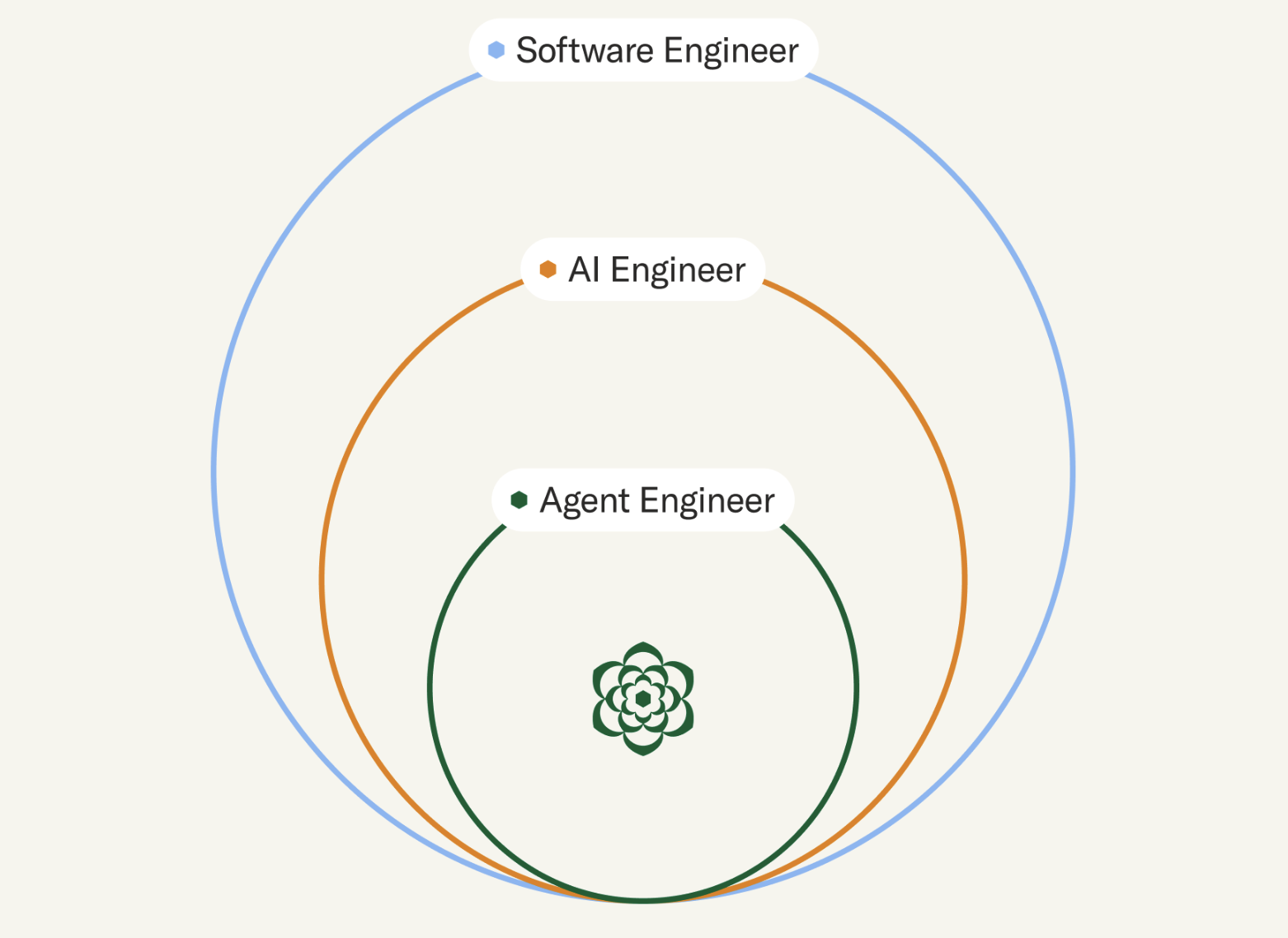
Diagram: The positioning of Agent Engineers (Agent Engineer) in the intersection of software engineering and AI engineering (Source: Sierra AI)
These engineers create agents tailored to specific scenarios for clients, needing to deeply master large model principles, vector databases, prompt engineering, and agent orchestration structures, among other AI engineering fundamentals. At the same time, they need to personally connect the agents with client systems to ensure stable production performance and abstract the tools refined from this back into the core platform as public building blocks. It can be said that in the AI domain "FDEs focused on AI" and "Agent Engineers" have achieved a high convergence in essence.
Career Development and Growth Path of FDEs
How to Recruit and Identify Top FDE Talent
Leo Mehr, the head of Ramp's Forward Deployed Engineering, thoroughly reviewed the three core traits they value most when screening FDE candidates:
• Ultimate initiative and work ethic (Drive and work ethic): This is the most crucial prior signal to predict whether a candidate can stand out in the FDE trenches. Using the words of Meta's current Chief AI Officer Alexander Wang (founder of Scale AI): “Always recruit those who genuinely care about winning and invest wholeheartedly.”
• Strong software engineering fundamentals: Candidates must not only be proficient in writing code but must also deeply understand how to architect and build robust, highly available software systems.
• Keen client empathy and clear communication skills: Ability to engage effectively with enterprise clients, capable of pinpointing critical issues and defining boundaries, curiosity about the client’s business, and sincere empathy for user pain points.
In practical operational interviews, Ramp summarized a set of valuable positive trait signals:
• Having experience as a teaching assistant (TA) or student organization leader: Such candidates usually possess excellent patience in communication and a willingness to guide others;
• A strong service orientation mindset: Sincerely enjoying the sense of achievement that comes from using technology to help others solve tough problems and create value;
• Entrepreneurial experience (Founder background): Previous founders make ideal candidates for this role because they naturally possess a comprehensive technical and commercial perspective akin to that of a startup CTO;
• Early startup practical experience: Engineers who have navigated through the dynamic uncertainty of startup environments are better adapted to the chaos and complexity of FDEs on-site.
Salary Levels and Industry Treatment
On the overall salary curve, FDEs’ compensation levels are generally on par with or slightly higher than their pure software development engineer (SWE) counterparts. Zuhayeer Musa, co-founder of the renowned salary insights platform Levels.fyi, revealed to me: "According to consultants in the defense technology sector, FDE salary tiers mirror those of core development engineers; although in sensitive defense sectors, this role typically requires additional security clearances."
Referring to the latest real salary data samples compiled by Levels.fyi:
• Scale.ai (acquired by Meta): L4 mid-level FDE in Washington D.C., annual total compensation around $286,000 (including a base salary of $185,000 + approximately $91,000 in stock options);
• Windsurf (acquired by Google): full-stack forward deployed engineers, annual total compensation around $255,000;
• Ramp: L3 level/junior FDE base salaries typically range between $150,000 and $200,000, with higher-level base salaries even higher and accompanied by substantial early equity incentives;
• Palantir: traditional base salary range usually falls between $135,000 and $220,000, supplemented by highly flexible long-term stock incentives as a core leverage for wealth.
It’s worth highlighting that while FDEs closely collaborate with sales teams, they do not take commission-based floating fees based on sales. This ensures that engineers' interests are closely tied to software quality and the robustness of the underlying long-term architecture, preventing over-promising to clients or recklessly patching together poor-quality code merely for short-term sales commissions.
Career Progression: The Golden Incubator for Future Entrepreneurs
Regarding the career advancement ceiling, former senior FDE Anjor Kanekar at Palantir provided vivid summaries based on his seven-year military service experience:
Under Palantir’s praised flat culture, FDEs exhibit high career elasticity and a broad evolution road: some have grown to become top product leaders steering the company’s lifeblood (for instance, the current head of Palantir's core flagship products Foundry and Gotham originated as an FDE); some have ascended to run vertical area operations for billion-dollar traditional industry clients in healthcare, pharmaceuticals, and finance; some have evolved into strategic caretakers responsible for critical core accounts; and others have successfully walked the pure technical expert (IC) route.
Moreover, the FDE role is now widely recognized in Silicon Valley as a "West Point" for cultivating future founders of startups. In Palantir's alumni network, numerous FDEs have independently founded their tech companies; and Ramp has similarly positively recruited multiple former founders into this team. As Leo Mehr, the head of Ramp's Forward Deployed Engineering, candidly stated: “We are doing everything we can to recruit the smartest top talents around the globe. I personally expect that they will probably be deeply ingrained in Ramp for 2 to 4 years, and then many of them will set up on their own to establish their great enterprises.”
Core Insights and Future Prospects
Looking at the current industrial landscape, even though the market unifies under the name “FDE,” it has clearly diversified into three distinct forms, each with its own mission:
Type One: Assassin-type FDEs Deeply Integrated into Traditional Camps (represented by Palantir). Primarily aimed at government agencies and slow-moving traditional giants. For those traditional clients unable to recruit top product engineers, the FDEs dispatched by software vendors fill critical engineering skill gaps, piercing through bureaucratic barriers to achieve system landings.
Type Two: Agent Engineers Based on Cutting-edge AI Vendors (represented by OpenAI and Sierra AI). Big model technology is new and obscure, with deployment filled with high ambiguity. These engineers are well-versed in large models, vector databases, and complex agent orchestration, while also personally engaging on-site to bridge real business scenarios and refining evaluation systems and orchestration frameworks from their frontline experiences into the official core toolkit.
Type Three: B2B Tech Expansion Pioneers Accelerating Enterprise Large Deals (represented by Ramp). Collaborating closely with business development, deeply embedding complex commercial platforms into large client operations, while precisely refining high-dimensional abstractions during breakthroughs, continually enriching the generic product foundation.
Forward Deployed Engineers (FDE) are undoubtedly a hardcore position with high overall quality requirements for developers. It perfectly amalgamates two hefty roles: on one hand, rooted in trenches, solving real business pain points for clients, and on the other, continuously providing engineering assets back to the company’s underlying core products.
The immense rewards contained within this challenge lie in its cultivation of multifunctional skills capable of fostering future technology business empires, paving a golden career pathway for ambitious developers that combines technological depth with commercial breadth in the rapidly evolving AI era.
免责声明:本文章仅代表作者个人观点,不代表本平台的立场和观点。本文章仅供信息分享,不构成对任何人的任何投资建议。用户与作者之间的任何争议,与本平台无关。如网页中刊载的文章或图片涉及侵权,请提供相关的权利证明和身份证明发送邮件到[email protected],本平台相关工作人员将会进行核查。