Author: Deep Tide TechFlow
Deep Tide Introduction: Market news and investigations by overseas media reveal that the world's largest stablecoin issuer, Tether, has proposed a reissue and asset recovery service fee of up to 20% of the frozen funds when assisting some victims of hacking attacks and fraud in recovering on-chain frozen USDT.
This fee standard far exceeds its officially disclosed regular asset recovery rate. In large security incidents involving millions to tens of millions of dollars, the high rates and lengthy multinational legal processes have directly triggered deep questioning within the crypto community regarding the centralized privileges of stablecoins.
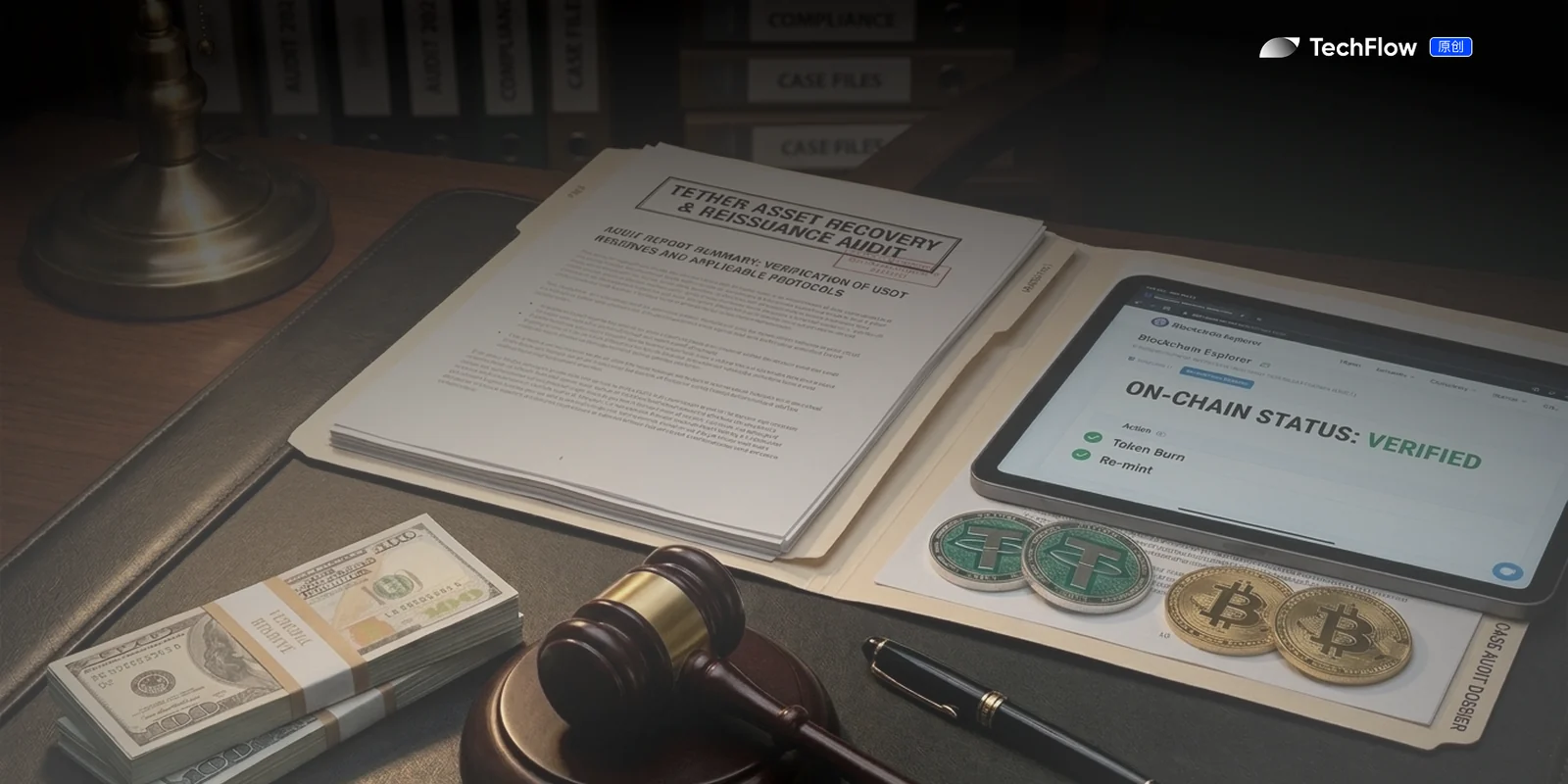
Fee Gradient Disruption: The Gap Between Regular Recovery at 10% and Involved Recovery at 20%
According to Tether's officially published asset recovery guidelines, for ordinary users who inadvertently transfer tokens to the wrong address or smart contract or other non-involved regular situations, as long as the single transaction amount exceeds $1,000, the official typically charges a maximum of 10% (minimum $1,000) as a handling fee and a non-refundable verification fee.
Investigations by overseas media show that when incidents escalate to large hacking attacks or telecom fraud cases involving millions to tens of millions of dollars, Tether's external legal team presents victims with a fee rate that climbs to 20% of the frozen funds.
In the case of $10 million in stolen frozen funds, the maximum handling fee under the regular guidelines would be $1 million, while the 20% involved recovery rate would push the cost directly up to $2 million, with a price difference of up to $1 million.
In addition to the doubling of rates, the return cycle for recovering involved assets is extremely lengthy and comes with strict review processes. Victims often have to undergo multiple rounds of identity verification and proof of funds’ source before entering the subsequent asset unfreezing and reissuing processes.
Technical and Legal Dual Barriers: Compliance High Wall of Destruction and Re-Casting
From the perspective of the underlying mechanism of smart contracts, Tether's blacklisting (Blacklist) of involved addresses on-chain is only the first step in freezing assets. Once the address is frozen, the USDT within cannot be transferred out nor directly moved back to the victim's account.
To truly complete the asset return, Tether must use the smart contract administrator's private key to execute the destruction (Burn) of the tokens originally in the blacklisted address and re-mint (Re-mint) an equivalent amount of USDT to the victim's designated address.
This technical operation is highly sensitive on a legal level. Tether must ensure that the asset ownership is undisputed; otherwise, if the original address holder initiates a lawsuit, the issuer will face severe civil liability risks.
The reissuing of involved assets heavily relies on multinational legal defense, official court confiscation orders (Forfeiture Order), and coordinated intervention from law enforcement agencies in multiple countries. Tether usually argues that the high charges of up to 20% are meant to cover the substantial costs of overseas compliance investigations, legal teams, and potential litigation costs.
Centralized Paradox: Technical Relief or Privilege Rent-Seeking
The exposure of high recovery fees quickly tore a rift in public opinion within the crypto community and the legal circles. Some legal representatives of victims openly questioned that after victims have suffered losses from hacking, the issuer, relying on absolute powers of freezing and re-casting, charges up to 20% fees, which lacks transparent pricing justification.
Critics point out that stablecoin issuers, in the absence of market competition alternatives, use centralized control to extract high fee rates from victims eager to recover their losses, approaching the logic of privilege rent-seeking in commercial terms.
Supporters and compliance experts, on the other hand, provide a different perspective. In decentralized blockchain environments, once private keys are leaked or contracts are breached, on-chain stolen assets often face a 100% risk of permanent loss.
It is precisely relying on the centralized intervention capability of the issuer that allows victims to have a realistic path to recover 80% of their assets in multinational restitution efforts. This fee rate dispute once again brings the underlying institutional contradictions of the stablecoin industry to the forefront: between the practical demand for asset recoverability and the principle of decentralized anti-censorship, the power boundaries and pricing fairness of centralized issuers remain in a regulatory vacuum.
免责声明:本文章仅代表作者个人观点,不代表本平台的立场和观点。本文章仅供信息分享,不构成对任何人的任何投资建议。用户与作者之间的任何争议,与本平台无关。如网页中刊载的文章或图片涉及侵权,请提供相关的权利证明和身份证明发送邮件到[email protected],本平台相关工作人员将会进行核查。