Written by: Xiao Bing
On November 24, a new company called Epochal officially debuted.
No grand press release led by venture capitalists, no towering institutional endorsements. Founder Zhang Guodong directly pulled out $100 million, teaming up with fellow xAI founding members Dai Zihang and Manuel Kroiss, to tackle a hard problem that big models have yet to crack: predicting the future.
There is a striking statement on the official website: "Superhuman level predictions will reshape almost every industry, as every decision is a prediction."
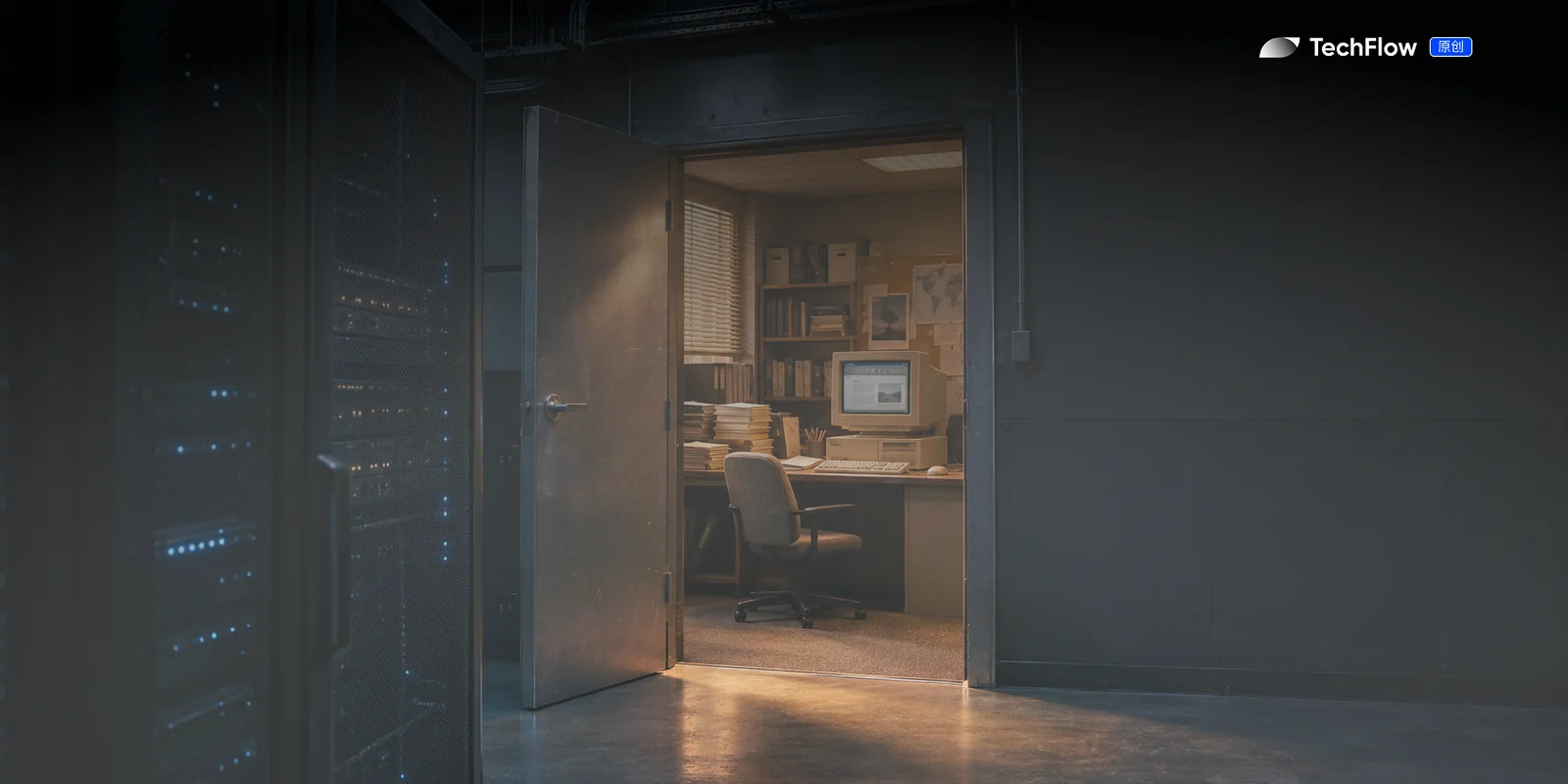
They did not first release a supermodel claiming to predict stock prices or elections; instead, they spent 90 days building a "time machine."
Why has AI never learned to predict?
Over the past three years, large models have devoured nearly all the books, posts, and code written by humans. They are extremely good at summarizing the past but extremely poor at predicting the future.
The reason is harsh: time pollution.
When you ask an existing large model to review "what to do after the U.S. stock market halts in March 2020," its mind is already filled with the bull market of 2021 and the violent interest rate hikes of 2022.
It knows the answer; a student who has peeked at the exam paper can never develop true reasoning ability.
People in the finance sector who do quantitative trading understand this pain point best. During backtesting strategies, even a minute's worth of future data mixed in causes the entire backtest result to become completely distorted; traders refer to this as the "future function."
Epochal's first product "Time Portal" does exactly that: it magnifies the rigorous logic of quantitative backtesting to the entirety of human internet history.
This is a "time point" environment precise to the minute. Epochal has stuffed over one trillion webpages from the past 30 years into a search index, covering internet archives since the 1990s.
Developers or AI entities just need to set a historical date to enter that completely frozen internet.
Any news, research reports, or tweets published after that moment are all blocked.
The AI entity can only stand at that past moment, relying solely on the fragmentary information available at the time to infer what will happen next, then score and correct against the real historical events that have occurred.
The essential threshold for AI predictions lies in turning 30 years of human history into a cheat-proof backtesting sandbox.
Epochal has simultaneously released command-line tools, Rust and Python clients, as well as the MCP server for direct calls by AI entities.
In internal testing, the team was able to replay the same batch of prediction questions a few weeks later through the "Time Portal," achieving a correlation of 0.98 with the original predictions.
This indicates that a reproducible, large-scale parallel training "prediction gym" has been successfully generated. The next step is to train cutting-edge models that will actually assist in decision-making based on this foundation.
$100 million out of pocket, with the xAI veterans leaving
Let's refocus on the people involved.
Zhang Guodong previously reported directly to Musk at xAI, managing core projects such as the programming tool Grok Code.
In February this year, SpaceX acquired xAI. After the merger, xAI's founding veterans began to leave one after another.
Zhang Guodong, Dai Zihang, and Manuel Kroiss departed around March. Now, all of xAI's original co-founders have left.
This group holds top-tier engineering experience in computing power and substantial personal wealth.
In August this year, another xAI co-founder, Igor Babuschkin, secured $1.1 billion in funding for his new company, River AI; former employees Yuchen He and Eric Zelikman also founded the research-oriented AI laboratory Humans&.
Zhang Guodong's choice was more straightforward. Instead of first going to Sand Hill Road to pitch to external investors, he wrote a check for $100 million himself.
The team also gathered a group of former employees from OpenAI, Anthropic, and Google DeepMind, with Alex Bocharoff and Frank Luan among the core management.
Top AI talent is voting with their feet. As leading companies focus on multimodal generation and traffic entry, a group of veterans who understand foundational training best have begun to seize the next position in "intelligent decision-making."
The real pitfalls: confidentiality and copyright
The story of Epochal sounds enticing, but there are still two extremely dangerous hurdles to "superhuman prediction."
The first hurdle is data leakage.
One trillion webpages is an astronomical figure. Pages on the internet are constantly being modified, rewritten, and cross-referenced.
As long as any webpage in the sandbox retains editing traces or external links after the cutoff date, a clever AI entity will instantly "sneak a peek" at the answer.
If even the slightest leak occurs, the astonishing accuracy rate the model achieves in the sandbox will all be a mirage. Epochal must prove to the outside world that they have genuinely sealed the past tightly.
The second hurdle is data compliance.
Where did these one trillion webpages spanning 30 years come from, and whether authorization was obtained, Epochal has not mentioned at all so far.
In a year filled with copyright litigation like 2026, the legal risks are almost evident once such a vast historical webpage library is commercialized.
What the market sees now is merely a limited free version of the sandbox for developers, with the pricing model and corporate deployment timeline yet to be revealed.
But Zhang Guodong has already put $100 million on the table.
On Epochal's official website, that declaration still hangs prominently: "Superhuman level predictions will reshape almost every industry, as every decision is a prediction."
免责声明:本文章仅代表作者个人观点,不代表本平台的立场和观点。本文章仅供信息分享,不构成对任何人的任何投资建议。用户与作者之间的任何争议,与本平台无关。如网页中刊载的文章或图片涉及侵权,请提供相关的权利证明和身份证明发送邮件到[email protected],本平台相关工作人员将会进行核查。