Author: Deep Tide TechFlow
Deep Tide Guide: On November 24, 2026, the Financial Services Commission of South Korea (FSC) officially announced the government draft of the "Digital Asset Industry Innovation and User Protection Act." After nearly a decade of strict prohibition, South Korea is set to lift its ban on domestic Initial Coin Offerings (ICOs) and Korean won stablecoins at the institutional level, marking the beginning of a breakthrough in the industry.
In addition to allowing primary market financing, the draft imposes strict anti-monopoly equity restrictions on secondary market trading platforms: the shareholding ratio limit for a single major shareholder is fixed at 20%, and existing institutions are granted a three-year transition period for adjustments. This red line will directly force monopolistic giants like Upbit and Bithumb to restructure their underlying equity.
The draft also establishes a separated licensing system for "trading, brokerage, and custody" and introduces a licensed proprietary market-making system. Under the dual pressure of compliance licensing and equity reduction, the local crypto sector in South Korea is entering a deep structural reshuffle and decentralization reform.
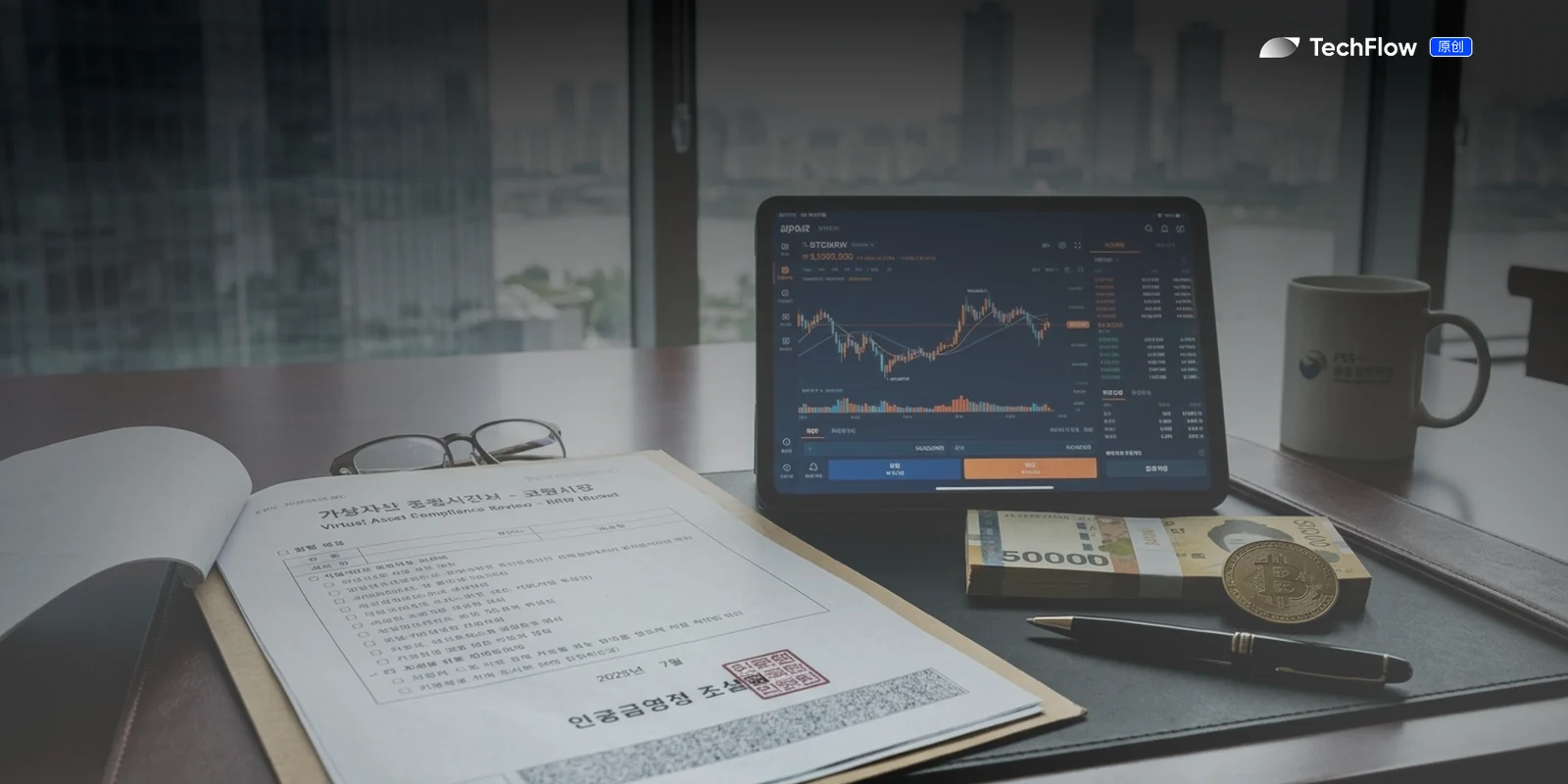
Breakthrough After Nearly a Decade: Domestic ICOs and Korean Won Stablecoins Welcome Policy Easing
According to the official announcement of the Financial Services Commission of South Korea, the "Digital Asset Industry Innovation and User Protection Act" government draft constitutes the core framework for the second phase of comprehensive regulation of crypto assets in South Korea. The most iconic breakthrough is the proposed formal abolition of the absolute ban on domestic token issuance that has been in effect since September 2017.
Under the new regulatory framework, compliant domestic entities will be allowed to publicly issue tokens, but the issuing entity must submit a detailed token white paper to the FSC before the official issuance, and disclose the technical architecture, fund usage, and risk disclosure. This measure aims to bring high-quality projects that have long flowed to offshore jurisdictions like Singapore and Switzerland back onto the domestic regulatory track.
In the stablecoin sector, the draft clearly defines Korean won stablecoins as "digital payment tokens." To prevent systemic runs and currency sovereignty shocks, initial issuance qualifications are limited to consortiums with more than 50% total ownership by banks, but non-bank private tech companies are permitted to act as the single largest shareholder.
According to the admission requirements, issuers must establish a 100% fiat reserve isolation custody at commercial banks, provide rigid immediate redemption guarantees at face value, and are strictly prohibited from paying interest to token holders. For mainstream foreign stablecoins like USDT, they are also allowed to circulate compliantly in South Korea after meeting the FSC’s compliance audit standards.
20% Shareholding Red Line: Existing Exchanges Face a Three-Year Deadline to Decentralize Shareholders
While easing restrictions in the primary market, the draft strikes a heavy regulatory blow to the equity structure of existing secondary market trading platforms. The draft mandates that the single major shareholder of a virtual asset trading platform and their special related parties should not hold more than 20% of the shares in principle. The limit may be relaxed to 34% only under exceptional circumstances with FSC's prudent approval.
The core intention of this regulatory design is to break the current excessively centralized major shareholder monopoly in the South Korean crypto trading industry. Currently, the top two exchanges in South Korea, Upbit (parent company Dunamu) and Bithumb, have their founding teams and major shareholders holding a high percentage of absolute control, long dominating resource allocation and token listing ecology of the platform.
To prevent drastic equity adjustments from causing operational shocks to platforms, regulators have set a three-year grace period for existing reported trading platforms. During this transition period, leading exchanges must strictly reduce major shareholders' ownership to comply with the red line through methods such as introducing strategic investors, secondary market decentralized divestment, or employee stock ownership plans.
This regulation has caused significant ripples in the industry. Some practitioners point out that while forcing dilution of founder shares helps curb insider control, introducing too many traditional financial conglomerates is bound to weaken the decision-making agility and global innovative momentum of crypto-native teams.
Three Types of Independent Licenses: Proprietary Market-Making System and Domestic-Going Global Game
In terms of licensing admission design, the draft draws on the mature governance experience of traditional securities and futures markets, implementing functional uncoupling for crypto businesses. The regulatory authority has subdivided business qualifications into three independent functional licenses: "trading, brokerage, and custody," requiring exchanges that facilitate trading to obtain all three licenses simultaneously, while asset management institutions follow a lighter registration path.
Regarding the market-maker mechanism, the draft establishes legal status for professional liquidity providers for the first time. Companies holding digital asset proprietary trading licenses are permitted to quote in the matching system after signing compliant market-making agreements with issuers or trading platforms. Meanwhile, trading platforms must transparently disclose the historical quote records and performance of market makers to the entire market.
According to the legislative information system of the National Assembly of South Korea, this government draft will be formally submitted to the National Assembly’s Administrative Committee for review, and will be integrated with other proposals submitted by lawmakers from both parties, with a possibility of formal voting as early as next year.
According to the follow-up feedback from the Financial Supervisory Service of South Korea, although the compliance framework provides a clear legalized path, the complete re-certification of the three types of licenses and the 20% equity restructuring combined will significantly raise the threshold for local business operations. Some industry insiders are concerned that if the rules are too strict, it may instead accelerate the flow of local users to unregulated offshore platforms.
免责声明:本文章仅代表作者个人观点,不代表本平台的立场和观点。本文章仅供信息分享,不构成对任何人的任何投资建议。用户与作者之间的任何争议,与本平台无关。如网页中刊载的文章或图片涉及侵权,请提供相关的权利证明和身份证明发送邮件到[email protected],本平台相关工作人员将会进行核查。