Author: Campbell Ramble (Macro and Technology Analysis Column)
Translation: Shenchao TechFlow
Shenchao Guide: The deep integration of model inference transitions and Lean formal proof assistants is knocking on the door of mathematical holy grails that have troubled humanity for decades, such as the Riemann Hypothesis and the Navier-Stokes equations. Macro technology researcher Campbell Ramble draws analogies from "computers solving chess" to construct a micro ledger that connects mathematical theory with physical reality.
Model estimates show that if the breakthrough in applied mathematics is achieved with industrial penetration within twenty years, it could save the global economy $3.62 trillion annually and preserve 280 million healthy life years. However, the author warns that Silicon Valley, engrossed in the euphoric rise of algorithms, often underestimates the prolonged physical engineering cycle required to "turn formulas into reinforced concrete."
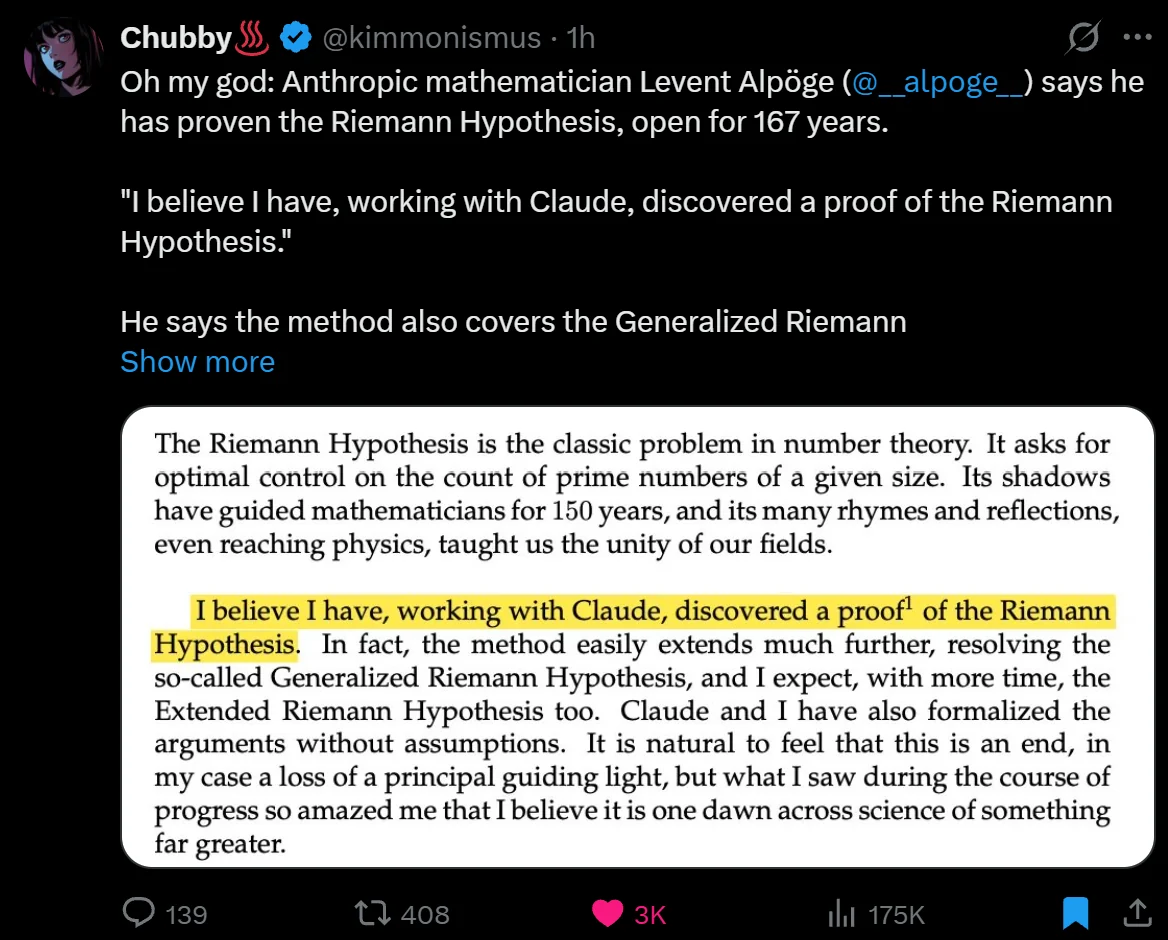
You may have heard, but the current situation indicates that humanity seems to be conquering mathematics.
The Mathematical Holy Grail Knocked One by One: When "Unassailable" Becomes a Historical List
Before the Riemann Hypothesis, there was the Exponential Time Hypothesis; further back were the Navier-Stokes equations in fluid dynamics, along with a long list compiled by the Clay Mathematics Institute. Not long ago, renowned Chinese mathematician Terence Tao publicly shared insights, pointing out that the combination of Lean formal proof assistants and large language model (LLM) reasoning capabilities is achieving leaps previously thought impossible within a decade.
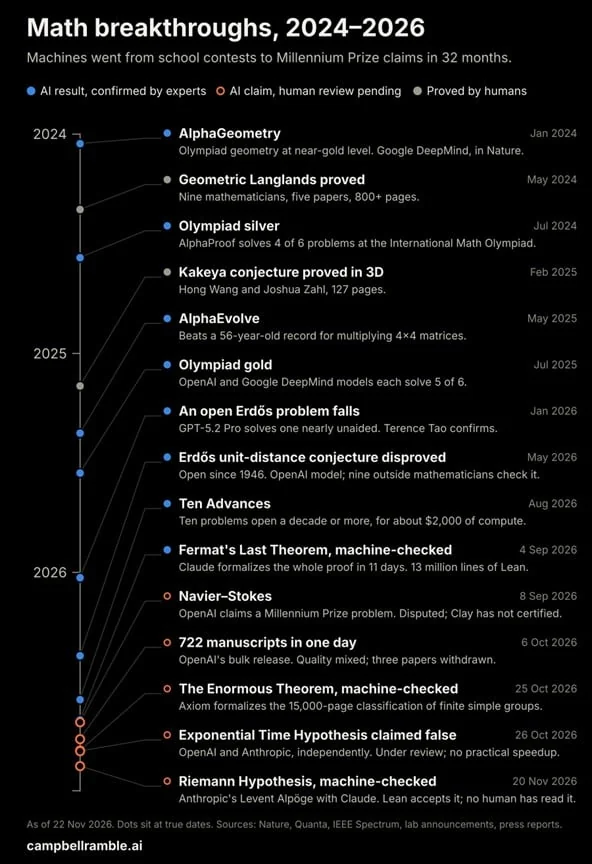
Image: The Seven Millennium Prize Problems and the Riemann Hypothesis by the Clay Mathematics Institute
Similar cases of technological breakthroughs are emerging with unprecedented density: from DeepMind's geometric solving engine reaching the standard of an International Mathematical Olympiad (IMO) gold medal, to the Polymath collaborative proof project led by Terence Tao; from the formal rigorous verification of the Kepler Conjecture to the problem of packing hyperspheres in 8-dimensional and 24-dimensional spaces... The once "machine unreachable" high-difficulty mathematical fortresses in academia are being sequentially breached by formal tools, semi-automated systems, and pure algorithms, and this battle report list is growing ever longer, even causing traditional mathematicians to feel uneasy.
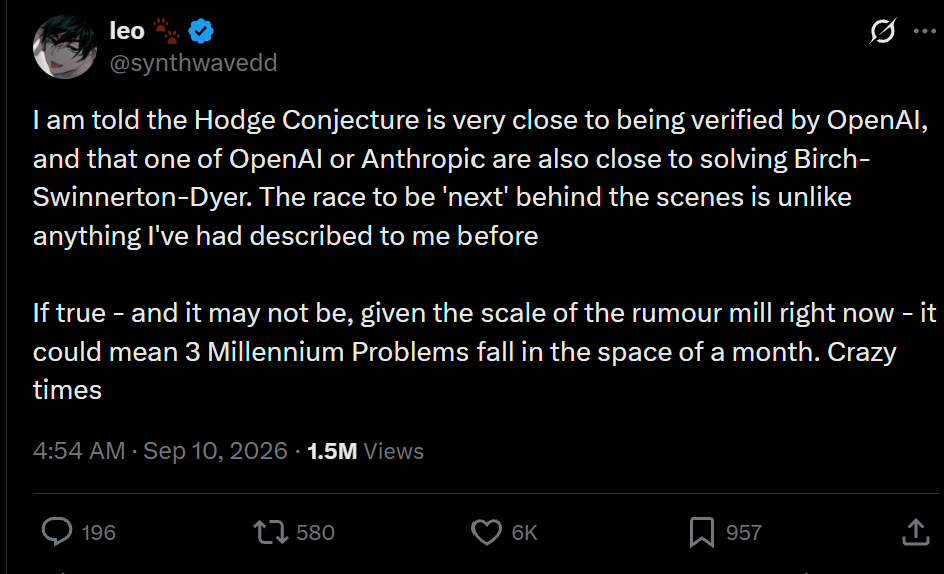
Image: Theorems defined by the Lean formal interactive proof assistant and code logic fragments
As Terence Tao commented in his blog and frontier papers: The co-evolution speed of large models and formal proof checkers (such as Lean) far exceeds the most optimistic expectations of all top scholars. In just a few years, AI will no longer be just a search tool but will become a co-author, directly credited on the world's top mathematical research papers.
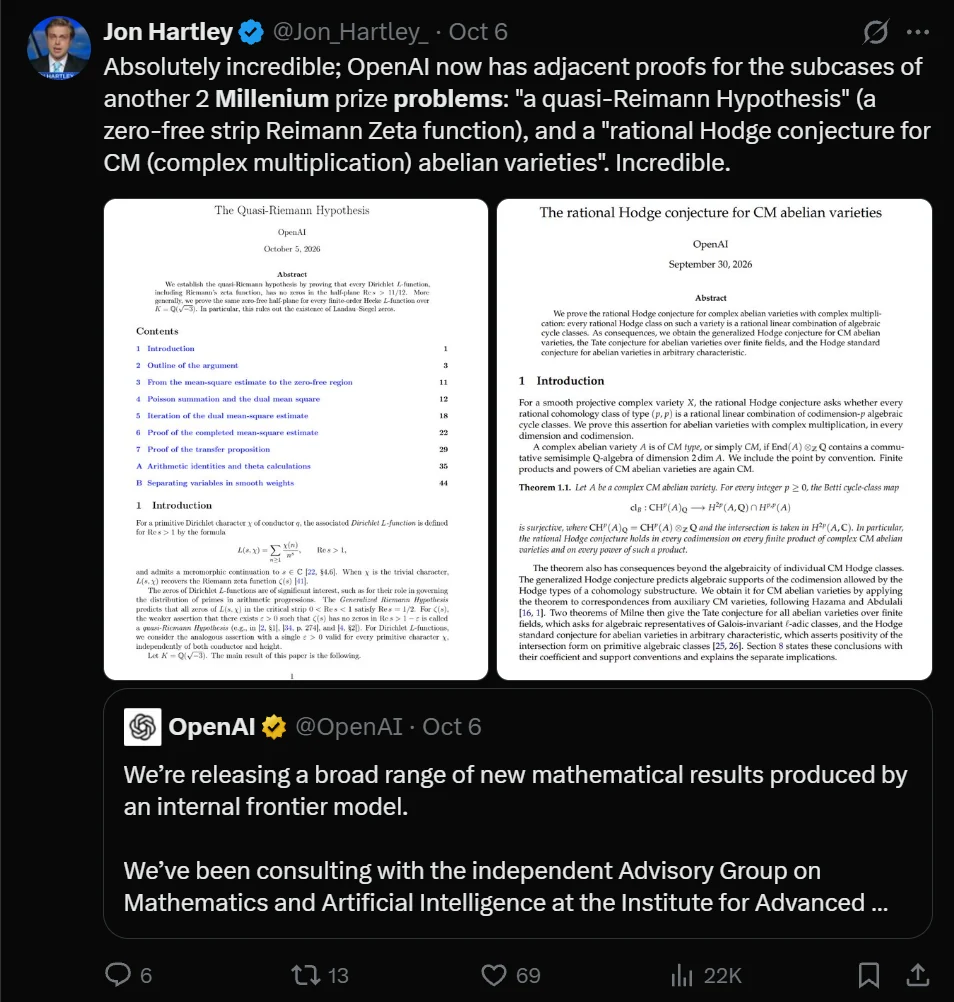
Image: Terence Tao's explanation on how AI deeply reshapes the paradigm of pure mathematical research
Deep Insight from Chess: Machines Conquering Problems Does Not Equate to a Fundamental Change in Physical Reality
Faced with this magnificent theoretical leap, many practical observers in the real industry and financial markets might inevitably pose a soul-searching question: So what? Who cares?
As one overseas netizen sharply critiqued: "Even if AI solves all of mathematics, will my supermarket bill be reduced by thirty cents?" This may seem like a joke, but in the context of increasingly narrowing global credit spreads and the macro capital's extreme desire to find paths to realize AI's productive power, it forms the core confusion in every investor's mind: How does the theoretical leap in the purely algorithmic world convert into tangible outputs in the physical atomic world?
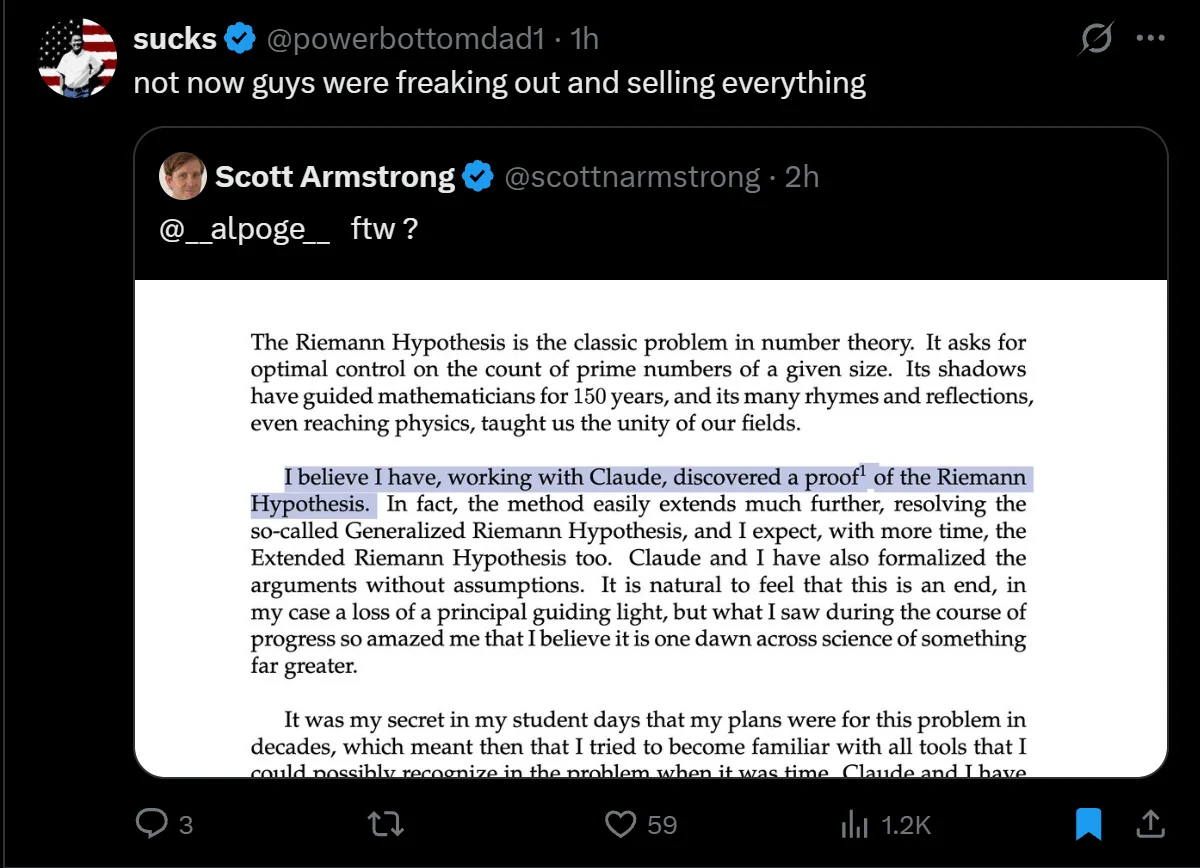
Image: The historical moment when the Deep Blue computer defeated world chess champion Garry Kasparov in 1997
To understand this disconnection, the history of chess provides an excellent cognitive mirror. In 1997, IBM's supercomputer "Deep Blue" defeated human chess champion Garry Kasparov. At that time, media proclaimed "chess is dead." Yet nearly thirty years later, chess has not only survived but has experienced unprecedented popularity worldwide: players now use engines like Stockfish for game analysis, and new opening theories continuously emerge.
But I ask: Did powerful chess engines cure cancer? Did they build stronger cross-sea bridges? The answer is clearly no. The absolute dominance of machines within a closed symbolic system has not directly translated into macro advancements in the real-world engineering.
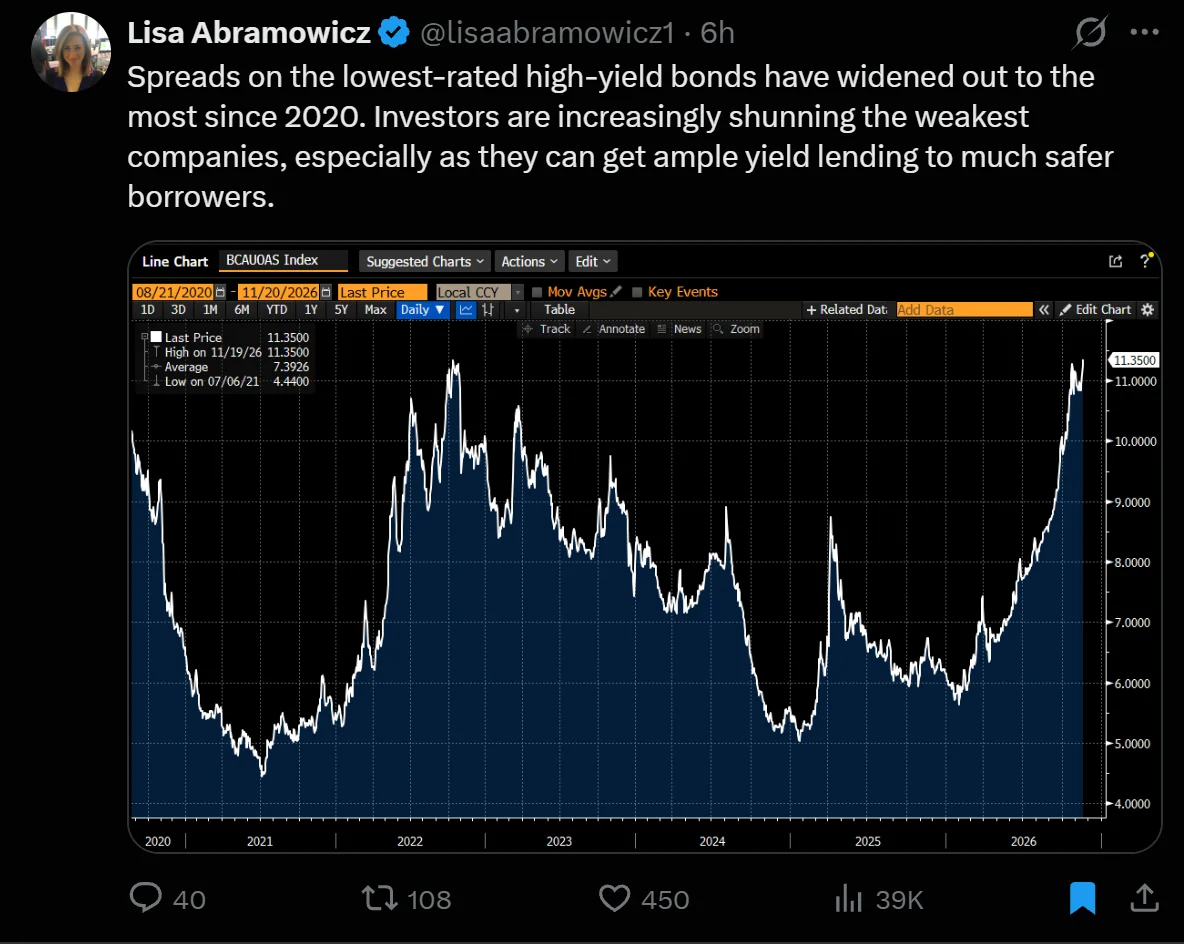
Image: The historical evolution curve of modern chess engines and human grandmaster Elo ratings
The Emergence of Machine Intuition: From Formal Reasoning to Economic Pragmatism
To comprehensively unravel this puzzle, I spent nearly a month constructing a quantitative tracking system: which I call the "Math-to-Atoms Ledger." Its core logic is to discard empty philosophical discourse and establish an accurate mapping matrix: the left column lists the cutting-edge applied mathematics branches being tackled by AI, the middle column represents their corresponding industrial and physical engineering bottlenecks, and the right column captures the tangible macro indicators: money saved, life years preserved, and the total reduction in carbon emissions.

Image: Real-time deep tactical quantitative assessment chart of chess engines
When I first articulated this analytic framework on social networks, I received over fifty comments mocking me as an idiot. These opposing views generally fell into two categories: the first being typical appeals to authority and personal attacks; the second being counterexamples that generalized claims, asserting that "machines can only perform rigid symbolic computations and can never replace the unique inspiration and intuition of human mathematicians."

Image: Machine-based deterministic quantitative assessment bars on game engine interfaces
However, history repeatedly proves that what is referred to as human intuition is fundamentally just compressed experiences after high-dimensional pattern recognition and reinforcement learning. Just as AlphaGo and AlphaZero completely overturned human cognition in the realm of Go, machines' heuristic search in the vast space of mathematical proof is crossing the critical point from "brute force enumeration" to "emergent intuition." Pure symbolic reasoning and mathematical proof are swiftly becoming a low-cost computational infrastructure.

Image: Test explosion curve of frontier AI models on advanced mathematical reasoning benchmarks (FrontierMath, GSM8K)
Of course, humans will still find joy and curiosity in pure intellectual games, but from the perspective of economic pragmatism, the industrialization era of mathematical symbolic reasoning has irreversibly arrived.
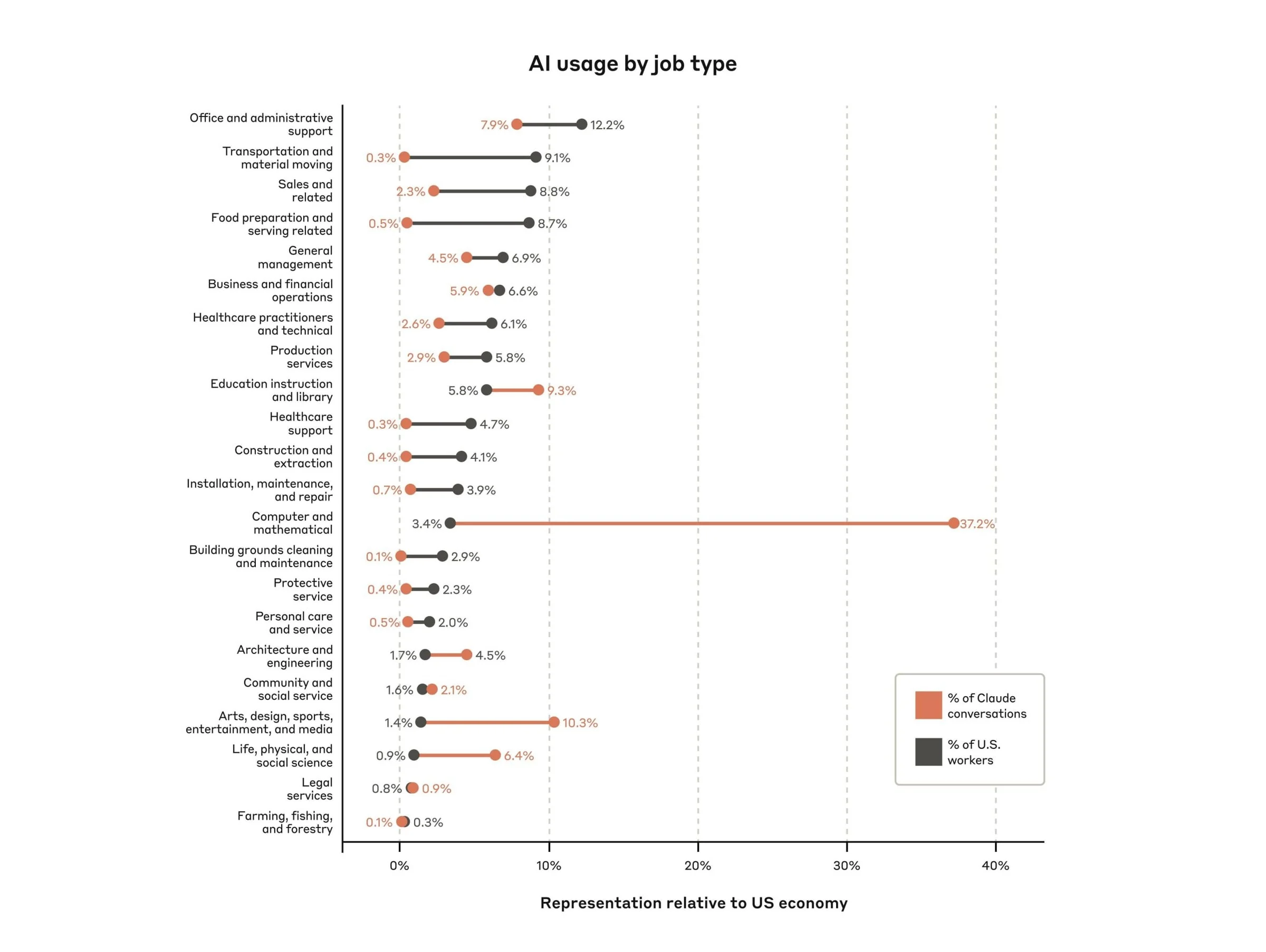
Image: Overview of AI task automation intervention levels across various industries and job positions in the United States
Micro Data Estimates: Where Does the $3.62 Trillion Economic Potential Come From Each Year?
When we focus on the micro ledger, the conquest of mathematics is no longer a badge in the ivory tower, but a massive and astonishing real asset and liability statement. According to the comprehensive model deductions of the "Math-to-Atoms Ledger" over the next twenty-year cycle, conquering key applied mathematics problems could bring the following total returns to the global economy annually:
First, savings of $3.62 trillion each year in resource waste reduction and production efficiency improvement, equivalent to about 3% of modern global nominal GDP; second, saving 280 million healthy life years (DALYs) each year; third, directly avoiding or reducing 3.84 billion tons of carbon dioxide equivalent greenhouse gas emissions each year.
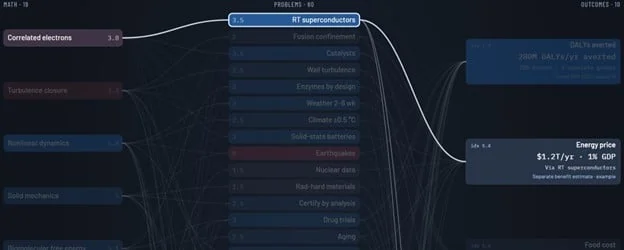
Image: Core list of calculations from the Math-to-Atoms Ledger overview
Is this enormous annual benefit of $3.62 trillion solely derived from new energy? Absolutely not. Model breakdowns show that the energy sector accounts for only $1.2 trillion (about one-third); the remaining $2.4 trillion is widely distributed across high-end manufacturing, material synthesis, biomedicine, and complex logistics, while disaster loss avoidance contributes approximately $22 billion.
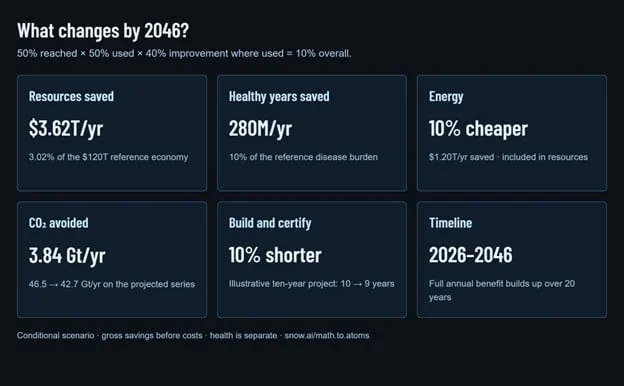
Image: Potential savings calculation for nonlinear flow computation in energy production, power dispatch, and smart grid
In the fields of materials science and chemical engineering, high-precision rapid numerical methods for partial differential equations significantly reduce the costs of molecular-scale dynamic simulations. The catalyst development cycle is compressed from years of trial and error to weeks of computation, saving hundreds of billions in ineffective experimental expenditures directly for industrial-scale production of specialty alloys, semiconductor precursors, and new battery electrolytes.
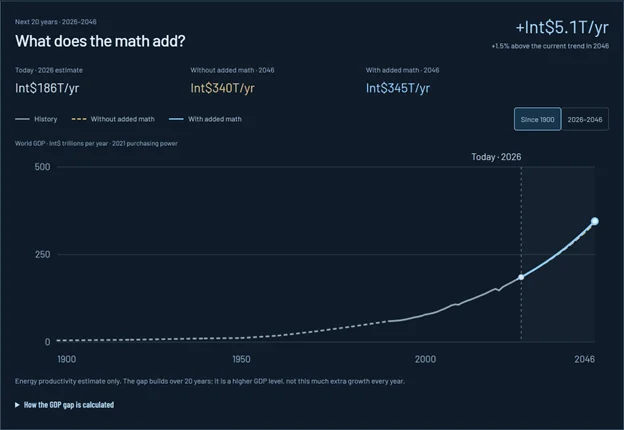
Image: Industrial value list of materials science and chemical molecular dynamics simulations
In the biomedicine and life sciences, once the mathematical bottleneck of protein dynamics conformational transitions and drug target binding free energy calculations is overcome, the high failure rate in preclinical development will greatly improve. This not only directly avoids sunk research costs of hundreds of billions of dollars for pharmaceutical companies each year but also advances the approval time for targeted drugs for rare diseases by several years, equating to billions of healthy life years.

Image: Life years saved calculations for medical health and protein drug molecular simulations
In agricultural irrigation, storage fluid dynamics, and global supply chain dispatching, nonlinear programming algorithms can minimize airflow losses in grain silos and maximize matching efficiency between deep-water transport routes and port berths. These seemingly tedious and granular optimizations accumulate to create hardcore wealth at the trillion-dollar level.
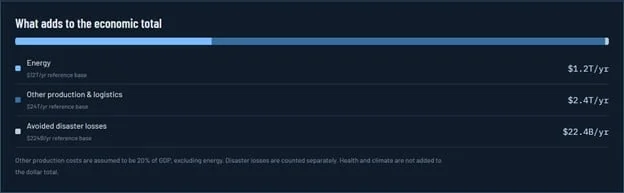
Image: Benefits of agricultural irrigation, storage fluid dynamics, and logistics routing optimization
Impact Matrix and Feasibility Paradox: Grand Narratives Retire, Drab Practicality Reigns
During the quantitative deduction process, I discovered a serious cognitive error I initially had. If we rank all mathematical problems purely based on their potential economic impact in theory, the ones at the top of the pyramid are without exception such revolutionary narratives as room temperature superconductors, controllable nuclear fusion plasma magnetohydrodynamic simulations, and whole genome folding.
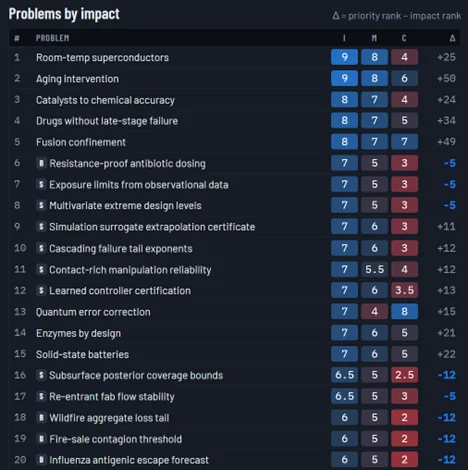
Image: Application mathematics breakthrough fields ranked by theoretical economic impact total
However, once we introduce “engineering feasibility” and “capital sunk cycles” as discount factors, incorporating the physical manufacturing difficulties, safety approval regulations, and fixed asset renewal cycles in reality into the model, the entire priority ranking instantly undergoes a 180-degree reversal!
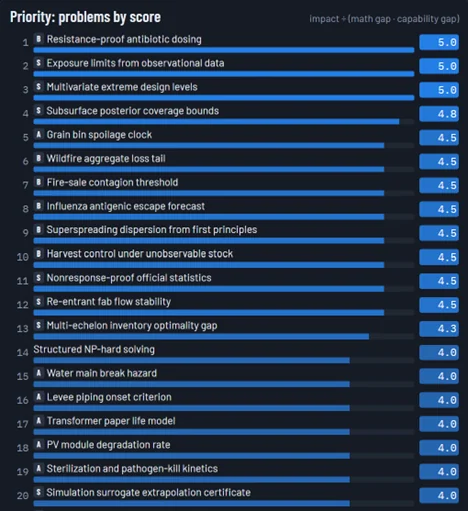
Image: Priorities ranking reversed after reweighting based on recent physical engineering feasibility
The analysis results are astonishing: the areas that can truly unleash amazing commercial value in the next three to five years are precisely what sound like the most drab businesses: insurance actuarial tail risk modeling, local reactive power compensation dispatch for power grids, and grain storage and transport optimization. In these fields, the physical mathematical formulas are already clear; they just were constrained in the past by human computational power not being able to solve them in real-time; as long as algorithm speeds increase by two orders of magnitude, they can transform into real money on corporate financial statements by tomorrow morning, with no need to build new billion-dollar factories.

Image: Two-dimensional quadrant distribution matrix of theoretical influence and physical feasibility
The Century Temptation of P vs NP: A Pragmatic Victory for Heuristic Algorithms
The Damocles sword that hangs over the computer science and mathematics community is the P vs NP problem. Recently, some teams have been using cutting-edge automated reasoning to attempt to tackle the boundaries of NP-complete problem solving.

Image: Diagram explaining the computer theory of the Millennium Prize Problem P vs NP
Undoubtedly, this is the only one among the seven Millennium Prize Problems that could reshape the global economic order overnight if proven. However, the prerequisite must be to prove that P = NP and provide a polynomial algorithm that converges quickly within realistic scales. If this were indeed the case, the modern asymmetric public-key cryptography system would be instantly rendered obsolete, and chip layout and global logistics scheduling would achieve ultimate global optimization. However, if the final conclusion is P ≠ NP, it will bring no new solvers in engineering terms.
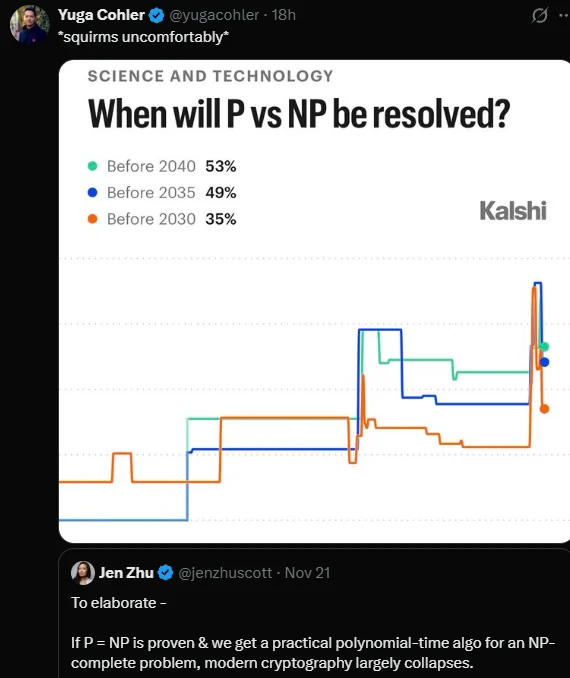
Image: Venn diagram of the complexity system of P, NP, NP-Complete, and NP-Hard
Compared to unattainable theoretical proclamations, the industrial world has long been walking a practical path: ranking 14th in our ledger is an efficient heuristic solver for Mixed Integer Nonlinear Programming (MINLP). Commercial airlines do not need to prove whether P equals NP; they merely need a scheduling engine that is 5% faster than existing algorithms to save hundreds of millions in fuel and downtime losses within a year for a single airline.
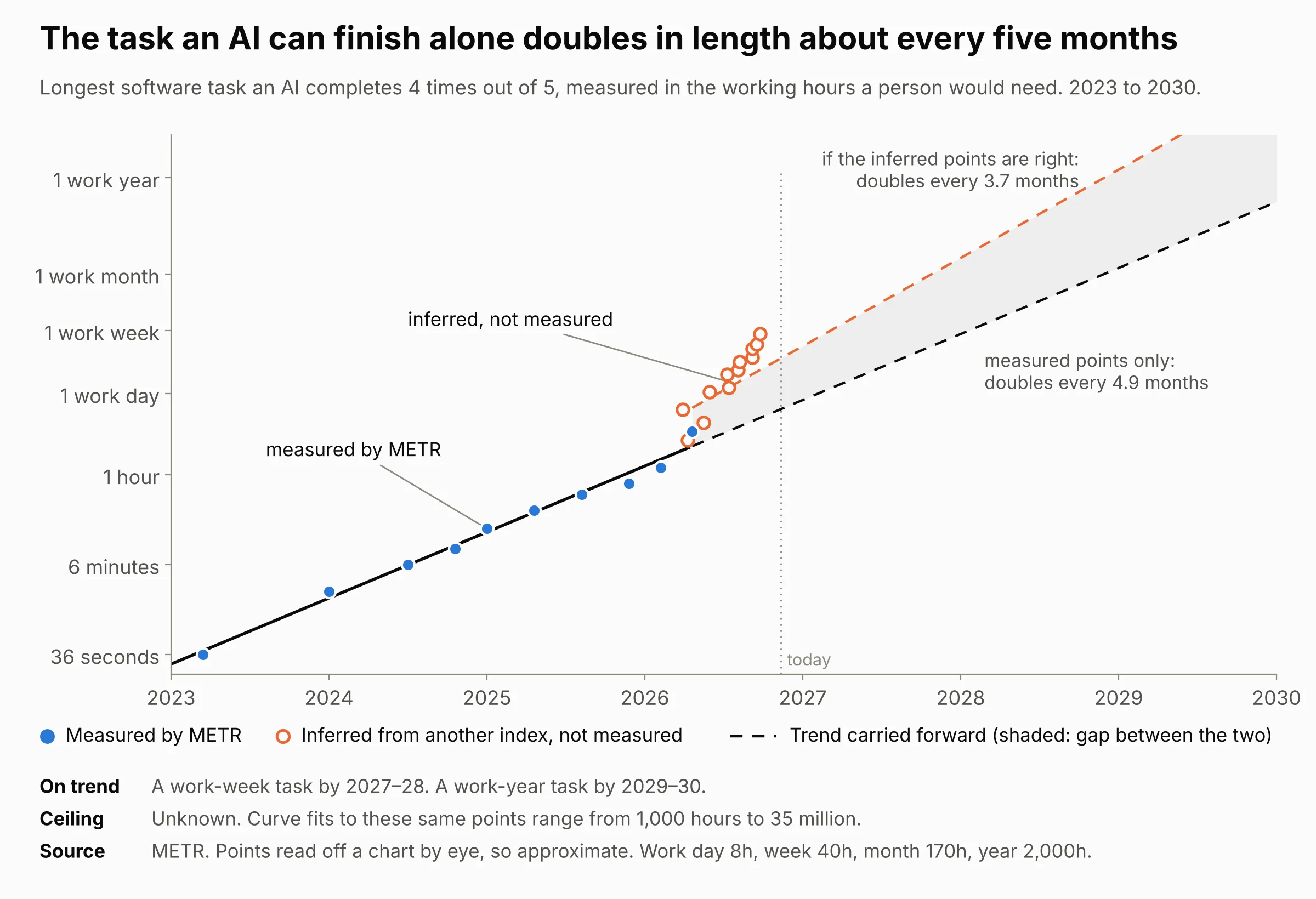
Image: The century-long evolution from pure mathematical theorem breakthroughs to physical atomic world engineering realization
The Uncrossable Wall of Physical Engineering: From Bits to Atoms
In the virtual world constructed by bits, computing power and intelligence are compounding at a dazzling exponential curve; yet in the physical world made of atoms, all things remain anchored in cumbersome approvals, lengthy construction, and complex machinery manufacturing cycles. Take controlled nuclear fusion as an example: AI may accurately solve the turbulent equations of extreme magnetohydrodynamics inside the tokamak in a matter of seconds and propose optimal magnetic confinement configurations.
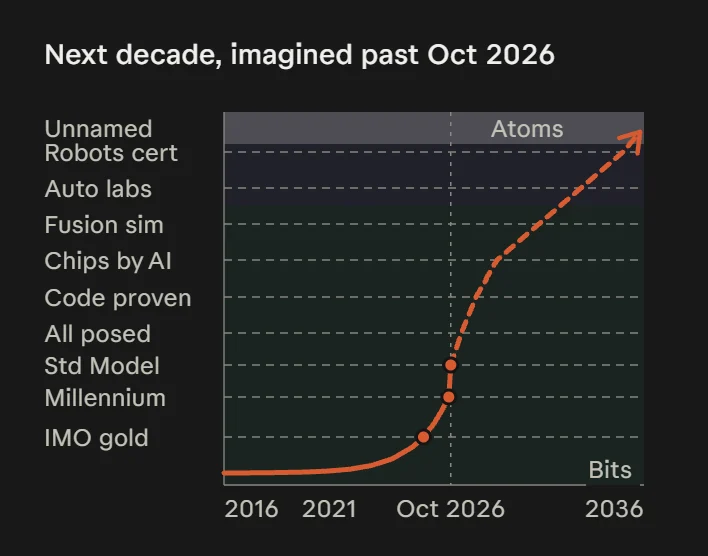
Image: Numerical simulation of turbulent magnetohydrodynamics in tokamak controlled nuclear fusion
However, this does not mean that fusion power plants will connect to the grid next week. You still need to spend years mining and purifying the scarce tritium isotope, overcome the high-pressure limits of superconducting magnet manufacturing, and require thousands of workers to pour tens of thousands of tons of high-grade physical concrete solidly into the foundations through mud and rain. The response of software is measured in milliseconds, while the curing of concrete and the depreciation of heavy industrial equipment must adhere to immutable physical laws.
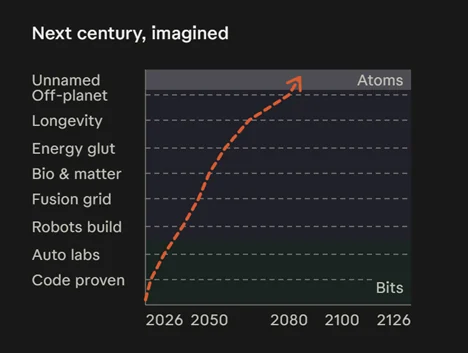
Image: Large-scale industrial infrastructure construction: ultimately requires humans to pour physical concrete in the mud
Economist Noah Smith keenly questioned: "Why has the AI craze so far not triggered a significant productivity boom in macroeconomic data?" History has already provided a clear indication: the diffusion of technological paradigms has always been an extremely lengthy relay race. James Clerk Maxwell published the classic equations unifying electromagnetism in 1865; it was not until 1887 that Hertz experimentally confirmed the existence of electromagnetic waves (taking 22 years); and Marconi completing the first commercial transatlantic wireless communication occurred in 1901 (after 36 years).
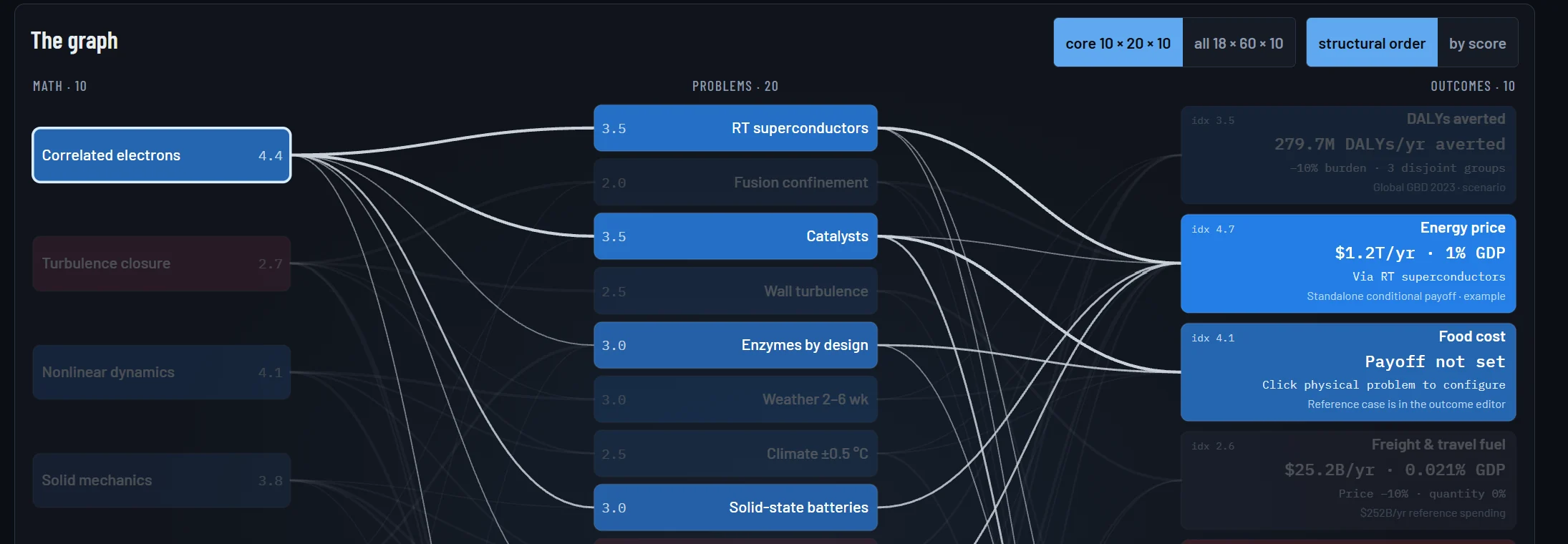
Image: The 36-year engineering evolution from Maxwell's equations (1865) to transatlantic commercial wireless (1901)
The diffusion of underlying technologies has never been a steep, vertical line but rather an S-shaped curve spanning decades. Breakthroughs in mathematical formulas are merely the origin point of the S-curve; what truly determines the speed of productivity eruptions are the depreciation replacement cycles of fixed assets already existing in society, the resistance of supply chain restructuring, and the adaptive evolution of organizational institutions.

Image: Standard S-shaped curve and capital depreciation cycle for significant underlying technology diffusion
Endgame Revelation: Farewell to Blind Euphoria, Salute to the Great Builders of Reality
The conquest of applied mathematics by AI is a real, profound, and irreversible historical trend. It will create tens of trillions of dollars in material wealth and immeasurable life welfare for human society over the coming decades. However, this historical process cannot possibly be achieved overnight within eighteen months. It will gradually unfold over the next twenty to thirty years, and its ultimate success depends not only on the rumbling GPUs in large model data centers but also on the engineers, technicians, and builders who step out from behind screens and gradually embed mathematical formulas into the physical world.
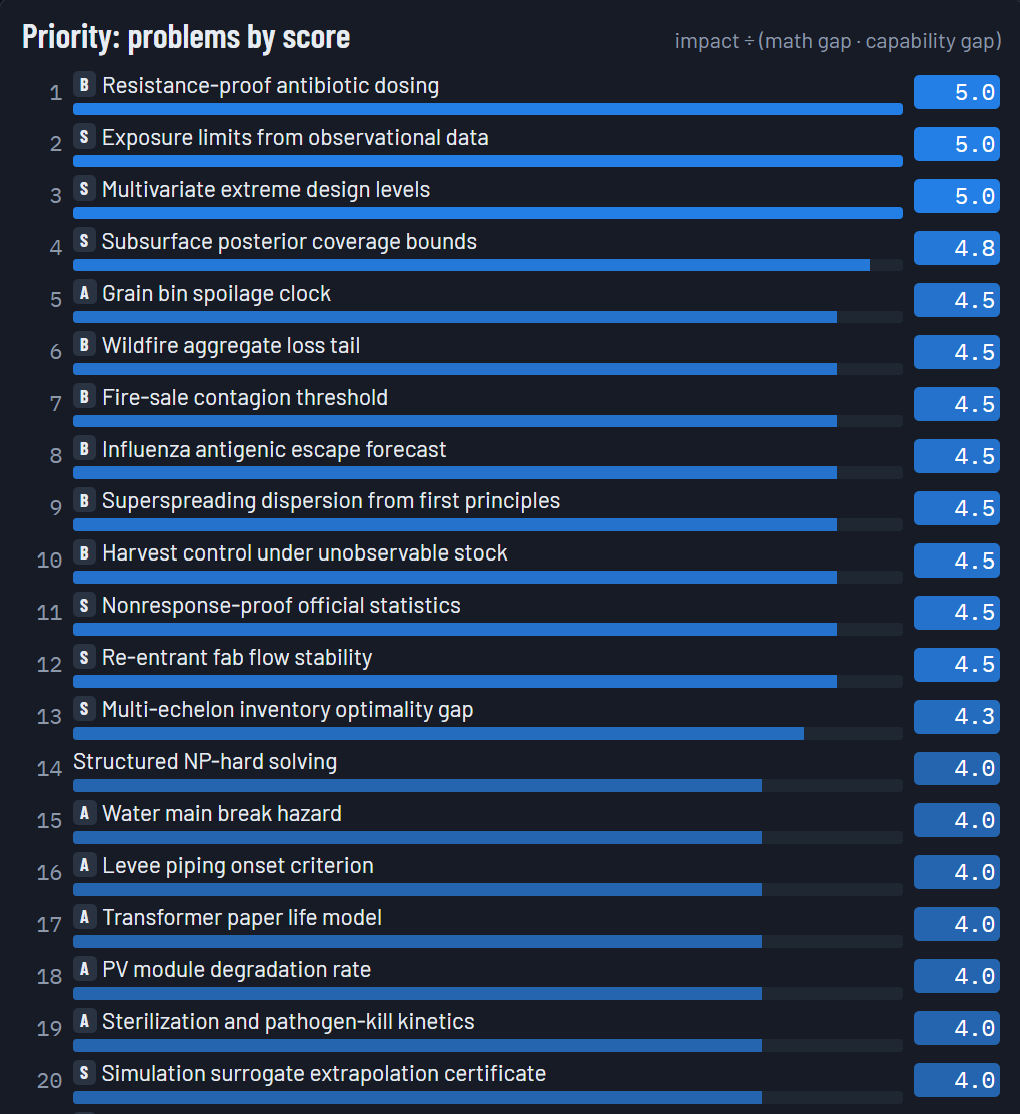
Image: The ultimate position of the algorithm frenzy in the bit world and the reality landing in the atomic world
免责声明:本文章仅代表作者个人观点,不代表本平台的立场和观点。本文章仅供信息分享,不构成对任何人的任何投资建议。用户与作者之间的任何争议,与本平台无关。如网页中刊载的文章或图片涉及侵权,请提供相关的权利证明和身份证明发送邮件到[email protected],本平台相关工作人员将会进行核查。