Key Takeaways
- Strategy’s 851,305 BTC are worth about $51.3 billion on Nov. 24, versus a $35.7 billion market cap.
- MSTR fell 30% from $121.07 on Nov. 10 to $84.40 on Nov. 23.
- Strategy sold 1.93 million MSTR shares last week, partly to fund $211.8 million in STRC buybacks.
The numbers back up the claim, and per Strategy’s latest Form 8-K filing, the company held 851,305 BTC as of Nov. 24, bought for $64.23 billion at an average price of $75,446 per coin.
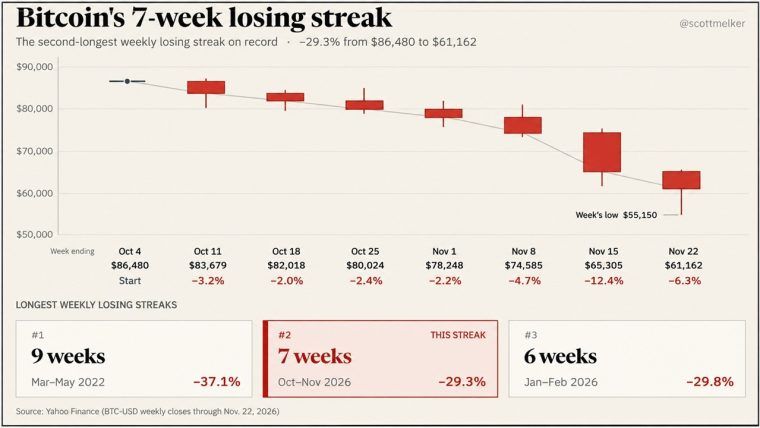
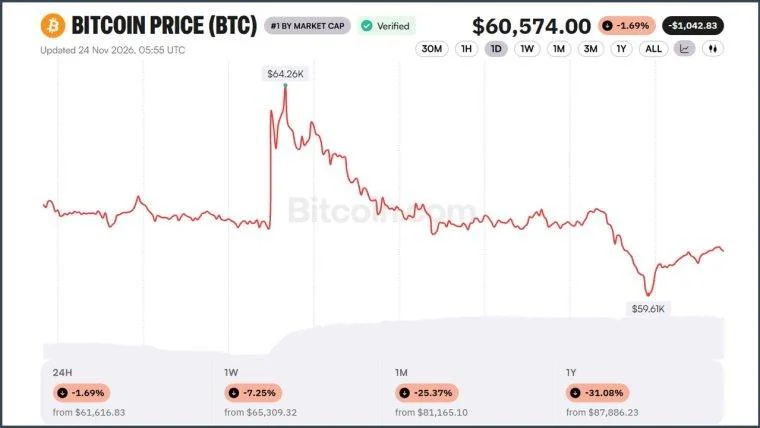
At bitcoin’s current price of roughly $60,000, that stack is worth about $51.4 billion, while Strategy’s equity carries a market value of about $35.7 billion. On a simple market cap basis, shareholders are paying around 70 cents for every dollar of bitcoin the company owns.
That said, this calculation scheme is not employed by Strategy; rather, the firm has its own multiple of net asset value (mNAV) methodology that is built on enterprise value. It adds debt and preferred stock to the equity value, so its headline figure sits higher than the plain market cap ratio.
Even so, the direction is unmistakable for a stock that traded at a hefty premium to its coins for most of the past five years.
The slide so far has been brutal, to say the least. MSTR closed at $121.07 on Nov. 10 and finished Monday at $84.40, a 30% drop in under two weeks. It came after index provider MSCI removed the company from a key index and as bitcoin itself fell to two-year lows.
At the coin level, Strategy is deep in the red as well because with an average cost of $75,446, every bitcoin on the balance sheet is worth roughly $15,000 less than the company paid for it, leaving an unrealized loss of about $12.9 billion. Bitcoin.com News reported Monday that Saylor was still heralding 34% annualized MSTR returns while the treasury sat about $12 billion underwater.
The discount creates a weird math problem for the company’s playbook, given that Strategy built its treasury by selling stock at a premium to its bitcoin and using the proceeds to buy more coins (which increased bitcoin per share). When the stock trades below the value of its coins, each new share sold dilutes holders rather than adding to their bitcoin exposure.
The company kept issuing anyway, and the Nov. 23 filing shows Strategy sold 1,925,676 MSTR shares between Nov. 16 and Nov. 22 for $176.7 million in net proceeds. Only $29.6 million went to bitcoin purchases, funding 457 BTC. Most of the rest, $147 million, was used to buy back its STRC preferred stock, which Strategy has been defending near its $100 par value.
The board also raised its preferred-stock repurchase authorization from $3 billion to $4 billion, leaving $1.12 billion available, while $1 billion remains under a separate program to repurchase MSTR shares. Buying back stock below the value of its bitcoin would raise bitcoin per share, the reverse of what issuance at a discount does.
Saylor has not addressed the discount directly, and on Monday evening he posted the following message:
“We don’t need a bailout.”
His comment was a direct jab at traders such as Arthur Hayes, who have continued to argue that crypto only recovers when the Federal Reserve rescues markets. Over the weekend, he again facilitated a purchase of 457 BTC, a modest acquisition by his firm’s standards.
Not everyone is as convinced as Saylor because just last week Aksel Kibar, founder of Tech Charts, opined that MSTR could fall as low as $23 if an ongoing bearish technical pattern plays out.
免责声明:本文章仅代表作者个人观点,不代表本平台的立场和观点。本文章仅供信息分享,不构成对任何人的任何投资建议。用户与作者之间的任何争议,与本平台无关。如网页中刊载的文章或图片涉及侵权,请提供相关的权利证明和身份证明发送邮件到[email protected],本平台相关工作人员将会进行核查。