Author: AiPlot Research Institute
Focus: RWA / Digital Assets / In-Depth Analysis of Financial Infrastructure
Website: https://aiplot.com/?utm_source=aicoin
1. First, look at two charts
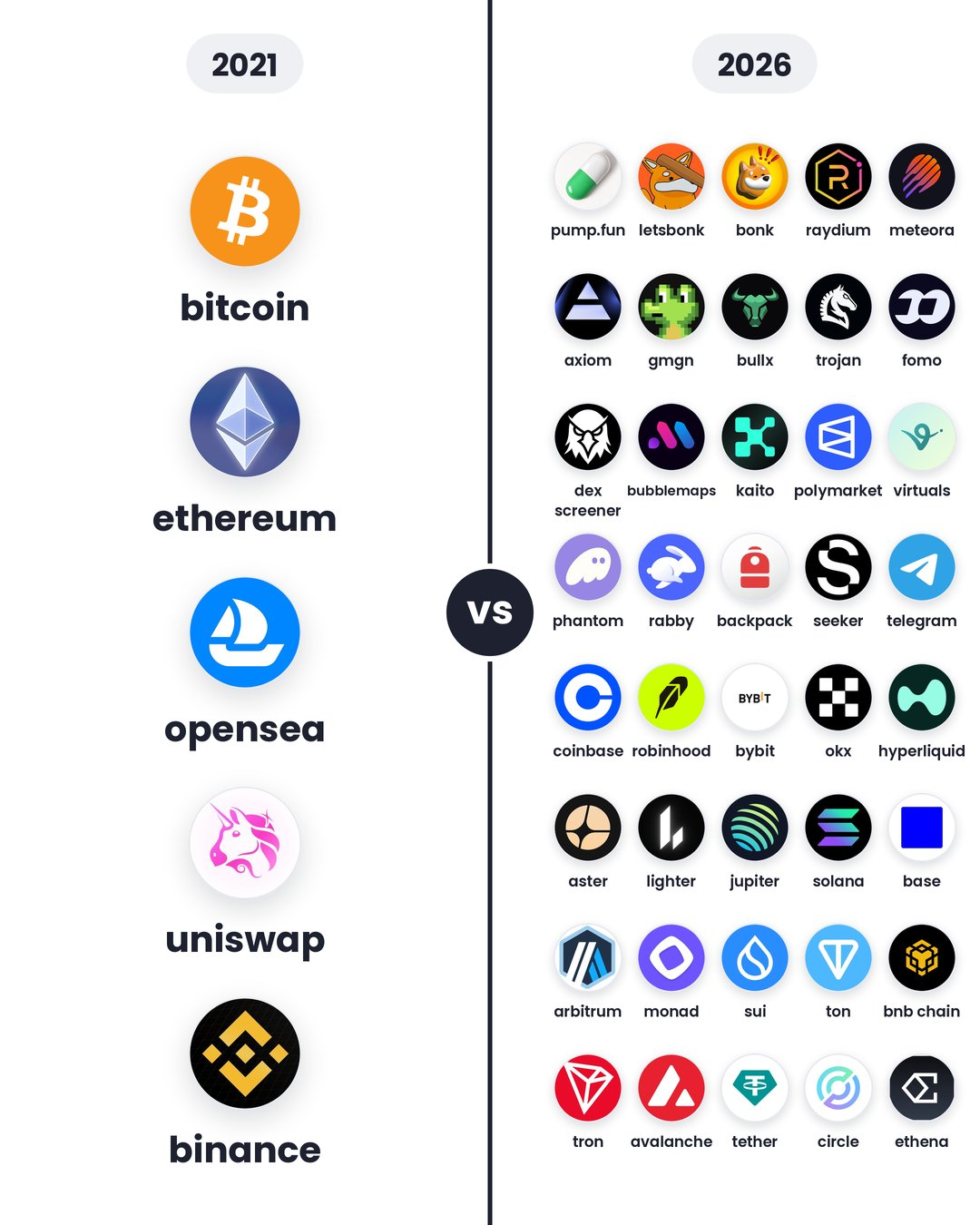
Image 1: Changes in the total amount of the crypto industry
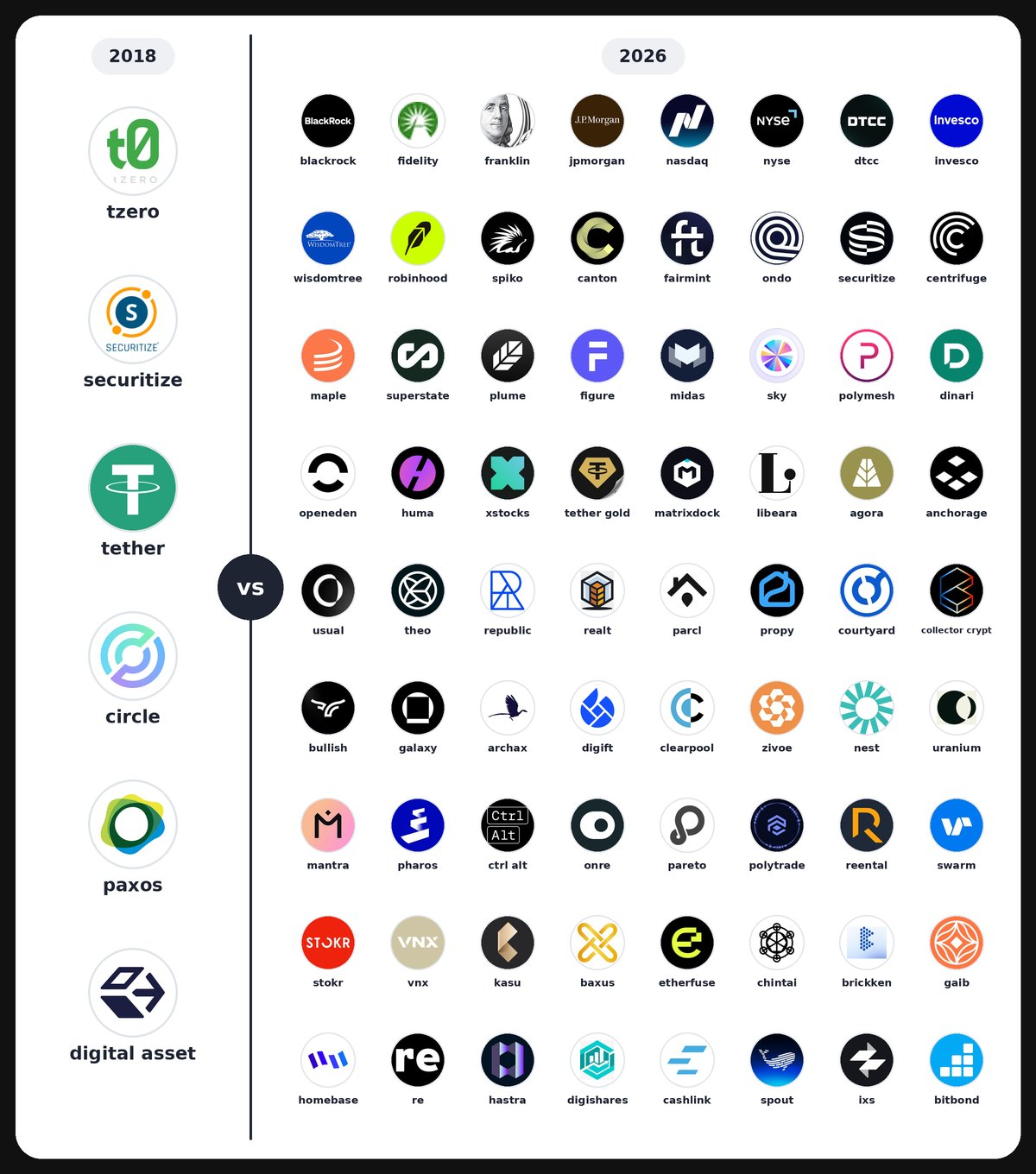
Image 2: Changes in the total amount of the RWA industry
The value of such images lies not in whether they constitute strict historical statistics, but in the fact that they compress the most significant shift in the crypto industry over the past few years: the market's focus is gradually shifting from "which tokens may rise" to "which real assets can be issued, traded, settled, and collateralized."
In 2018, RWA was more about concept validation. Industry discussions focused on whether real estate, art, gold, invoices, and debts could be split into on-chain certificates. The biggest challenge then was how to prove that on-chain tokens corresponded to off-chain assets and whether holders could legally enforce their related rights.
By 2021, the crypto market was closer to liquidity and narrative-driven. Asset prices, community attention, and new token issuance became the core of capital circulation. Investors primarily bought based on network growth expectations rather than a financial product with clear cash flows, custodial arrangements, and redemption processes.
By 2026, the discussion around RWA began to enter another layer: tokenized money market funds, government bonds, gold, stocks, private credit, and repurchase transactions were being integrated into processes understandable and usable by traditional financial institutions. The key questions shifted from "can it be put on-chain" to:
- Who issues and custodies the assets?
- Do investors receive ownership, beneficiary rights, or price exposure?
- Can tokens be subscribed, redeemed, and transferred?
- Is there a regulated secondary market?
- Can on-chain cash complete settlement?
- Can the assets be used as collateral, entering repos and liquidity management?
2. RWA is not a single track, but a re-slicing of the traditional financial lifecycle
IOSCO's 2025 report on "Tokenization of Financial Assets" indicated that there has been noticeable commercial adoption of tokenization in fixed income products and money market funds, but overall it remains in the early stages. Changes in issuance and recording modes are relatively quicker, while distribution, secondary trading, clearing, and settlement still heavily rely on traditional infrastructure and intermediaries.
This explains why the market displays two seemingly contradictory judgments: on one hand, the scale and institutional participation in tokenized assets are increasing; on the other hand, many projects are still just on-chain distribution versions of traditional financial products.
RWA includes at least four different levels:
- Asset Rights Level: Mapping rights corresponding to government bonds, funds, gold, loans, or stocks onto the blockchain;
- Issuance and Compliance Level: Handling investor qualifications, KYC, whitelist, freezing, custody, and redemption;
- Trading and Settlement Level: Providing secondary trading, payments, settlement, repos, and collateral management;
- Capital Formation Level: Allowing companies and asset issuers to directly finance through on-chain markets, rather than just redistributing traditional products.
Currently, most RWA projects have passed the first level, some projects are addressing the second and third levels, while cases truly entering the fourth level remain limited.
3. Why tokenized money market funds have become the earliest commercial RWA products
Tokenized money market funds are one of the best cases to observe the transition of RWA from concept to product.
Franklin Templeton's BENJI integrates the share records of traditional money market fund FOBXX with blockchain technology. Official information indicates that one FOBXX share corresponds to one BENJI token, with transfer agents maintaining official share ownership records; BENJI supports multiple public chains, peer-to-peer transfers, and daily yield accumulation.
BlackRock's BUIDL also represents a similar direction: placing assets like short-term U.S. Treasury bills, cash, and repos into an institution-level tokenized fund structure, with traditional asset management institutions responsible for product and compliance, and blockchain handling part of the records, transfers, and settlement.
These types of products materialized not because the fund industry is the easiest to "crypto," but because they meet three conditions simultaneously:
- The underlying asset risks are relatively easier to understand;
- The product itself has mature custodial, valuation, and regulatory structures;
- Tokenization can improve transfer, settlement, composability, and fund management.
Thus, the early commercialization path of RWA is not about "bringing the most complex assets on-chain" first, but choosing assets with clear legal relationships, stable valuation frequencies, and genuine institutional needs.
4. Hong Kong's value: not simply replicating crypto trading, but integrating RWA into financial infrastructure
The work being promoted in Hong Kong indicates that the competition for RWA has shifted from single product issuance to the construction of financial infrastructure.
In 2026, the Hong Kong Securities and Futures Commission launched a secondary trading framework for tokenized investment products, focusing on supporting tokenized open-ended funds recognized by the HK SFC to conduct secondary trading on licensed virtual asset trading platforms, and proposed requirements for fair pricing, orderly trading, liquidity provision, and information disclosure.
The significance of this step lies in that tokenized funds are no longer merely "fund shares registered on-chain," but are beginning to gain a clear trading system. Whether a product can be transferred after issuance often decides its financial market value more than "whether it is on-chain."
The Hong Kong Monetary Authority's Project Ensemble is also advancing toward the settlement end. In November 2026, EnsembleTX entered a new phase supporting 24/7 settlement of tokenized central bank currency, with relevant scenarios including corporate treasury management and tokenized money market fund trading, and the number of participating banks and industry pioneers has further increased.
This means Hong Kong is attempting to link three components together:
- The SFC responsible for the framework of tokenized investment products and market behaviors;
- The HKMA responsible for the banking system, tokenized deposits, and central bank currency settlement;
- Banks, fund companies, platforms, and infrastructure institutions responsible for integrating products into real business processes.
If these components can continue to connect, the advantages of Hong Kong RWA will not just be issuing a specific fund, but providing a complete path from issuance, distribution to trading and settlement.
5. The biggest limitation of RWA currently: asset on-chain does not equal capital market power on-chain
The common promotional approach for RWA is: after traditional assets are tokenized, investors can trade around the clock, and assets can flow across borders and access DeFi. But this is merely an improvement at the technical and distribution levels.
If traditional institutions still hold the following powers, the on-chain market remains an extension of traditional capital markets:
- Who can issue assets;
- Who can obtain primary market allocations;
- Who decides valuation and pricing;
- Who is responsible for custody and redemption;
- Who determines investor access;
- Who receives asset management and underwriting fees.
This is also why "everything on-chain" does not automatically equal "financial democratization." Tokens can enhance visibility and trading access but do not necessarily change the distribution structure of capital gains.
Currently, many tokenized products in the U.S. stock market still belong to the secondary distribution of traditional securities or economic exposure. On-chain platforms can bring products to new users, but the issuance, underwriting, pricing, and allocation of the underlying assets still occur within the traditional financial system.
This model has practical value but is limited. Truly higher-order RWA does not merely allow users to trade global stocks on-chain, but enables an unlisted, fundraising company to complete issuance, fundraising, investor management, and subsequent trading in a compliant on-chain capital market.
This step requires the crypto industry to possess not just users and liquidity, but also licenses, due diligence, underwriting, asset management, corporate financing, and long-term capital.
6. From short-term liquidity to patient capital, RWA needs to change the attributes of funds
The crypto industry does not lack funds, but are these funds suitable for supporting the long-term growth of quality real assets and tech companies?
Short-term funds prefer new coin issuance, trading, and quick exits. They can provide liquidity but do not necessarily offer sustained capital support, industry resources, computational synergies, and financing credibility to a company for several years.
In contrast, quality companies typically value the stability and strategic value of funds more. They need not only a sum of money but also investors who understand the business model, undertake long-term risks, and continue to provide resources throughout business development.
Therefore, the ultimate competition for RWA is not "how much crypto funding exists," but "can crypto funding turn into financial capital." Financial capital includes not just money, but also:
- Compliant issuance capabilities;
- Reliable custody and auditing;
- Due diligence capabilities for businesses and assets;
- Long-term lockup and continuous financing capabilities;
- Risk controls acceptable to institutional investors;
- Pricing and liquidity management before and after asset listing.
If these capabilities are not established, RWA is likely to remain at the stage of "traditional financial issuance products, with the crypto market responsible for sales."
Conclusion
RWA has yet to complete its most critical step. Asset on-chain is just the starting point; the real endpoint is to establish an on-chain financial system capable of supporting issuance, distribution, trading, collateralization, settlement, and corporate financing.
The secondary trading framework for tokenized funds in Hong Kong and EnsembleTX's 24/7 settlement indicate that regulation and financial infrastructure are gradually moving toward this direction. BENJI and BUIDL illustrate that the assets first adopted by real institutions are still those with clear legal structures, stable cash flows, and defined product demand.
In the future, evaluating the success of RWA should not just ask "how many assets are on-chain," but should inquire:
Who can finance through on-chain markets? Who can obtain primary market shares of quality assets? Who has pricing and underwriting capabilities? Who can truly connect tokenized assets to bank settlement, collateral financing, and asset management?
Only when these questions start to have real answers will RWA transition from the digital packaging of traditional finance to becoming new capital market infrastructure.
For more data and analysis, please follow Aiplot:
https://aiplot.com/?utm_source=aicoin
📖 Community communication:
Telegram:
https://t.me/+IIYMcJigBAo4Mjg1
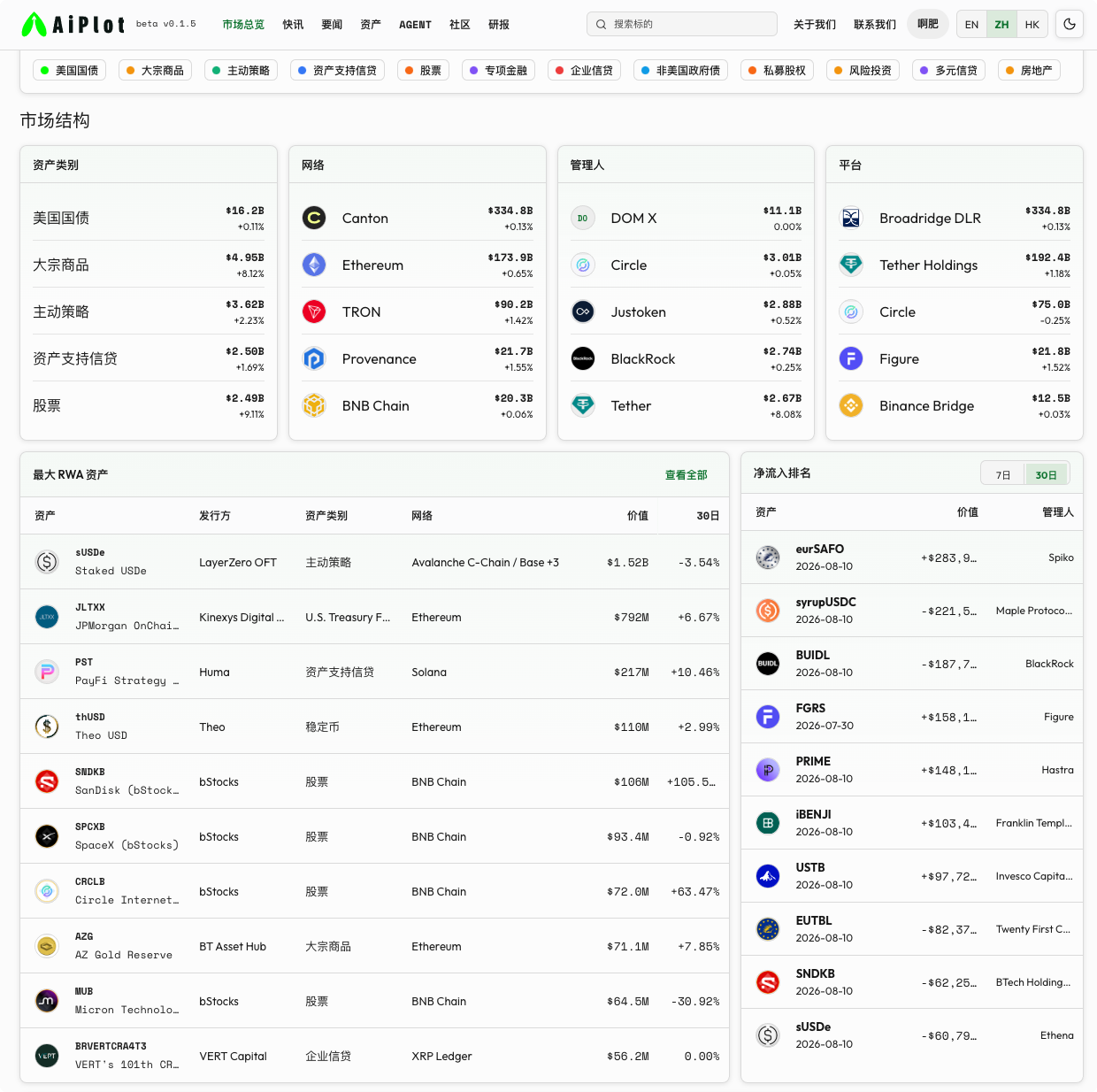
The content of this article represents the author's personal opinion and does not represent the platform's position. The views, conclusions, and suggestions in the article are for investors' reference only and do not constitute any investment advice related to this platform. The market has risks, and investments should be made cautiously.
免责声明:本文章仅代表作者个人观点,不代表本平台的立场和观点。本文章仅供信息分享,不构成对任何人的任何投资建议。用户与作者之间的任何争议,与本平台无关。如网页中刊载的文章或图片涉及侵权,请提供相关的权利证明和身份证明发送邮件到[email protected],本平台相关工作人员将会进行核查。