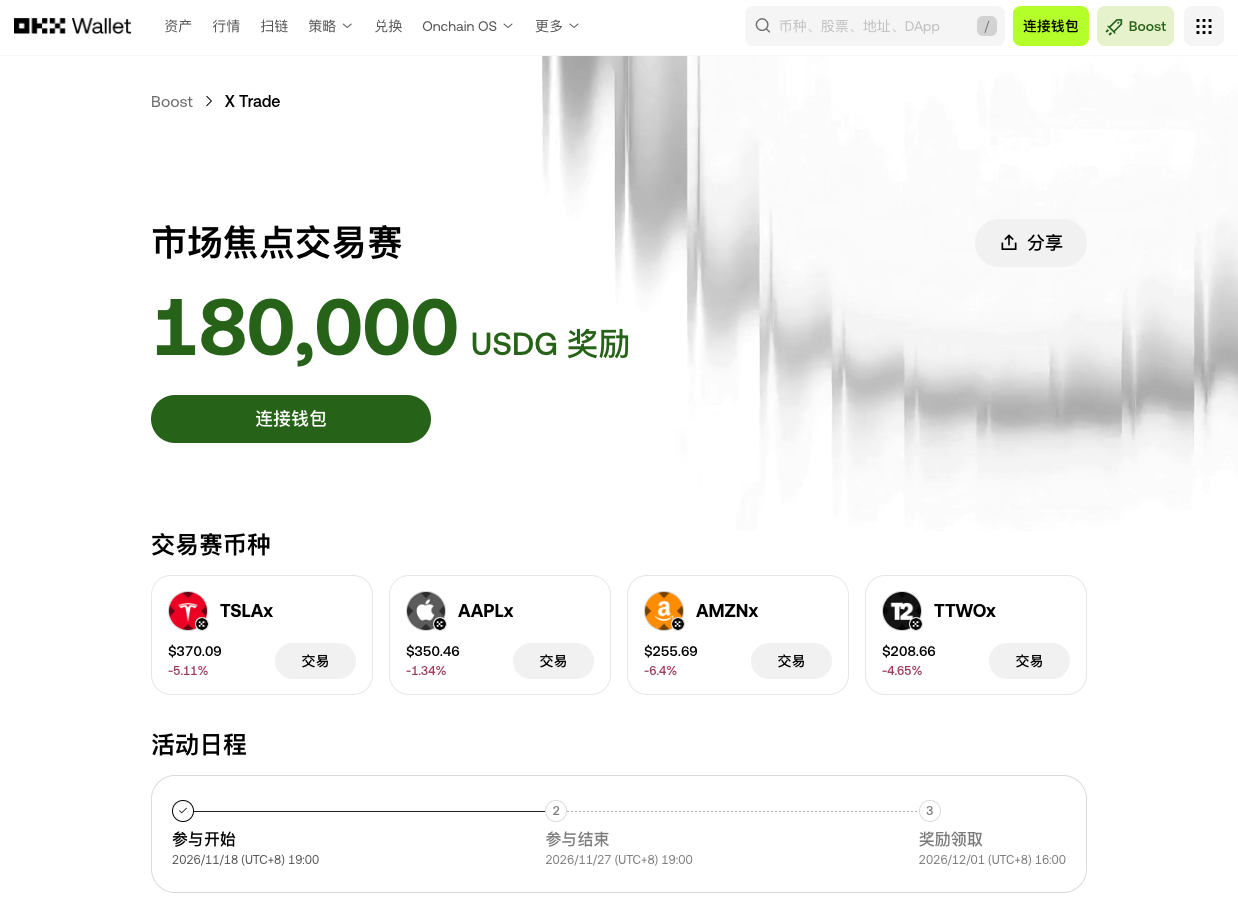
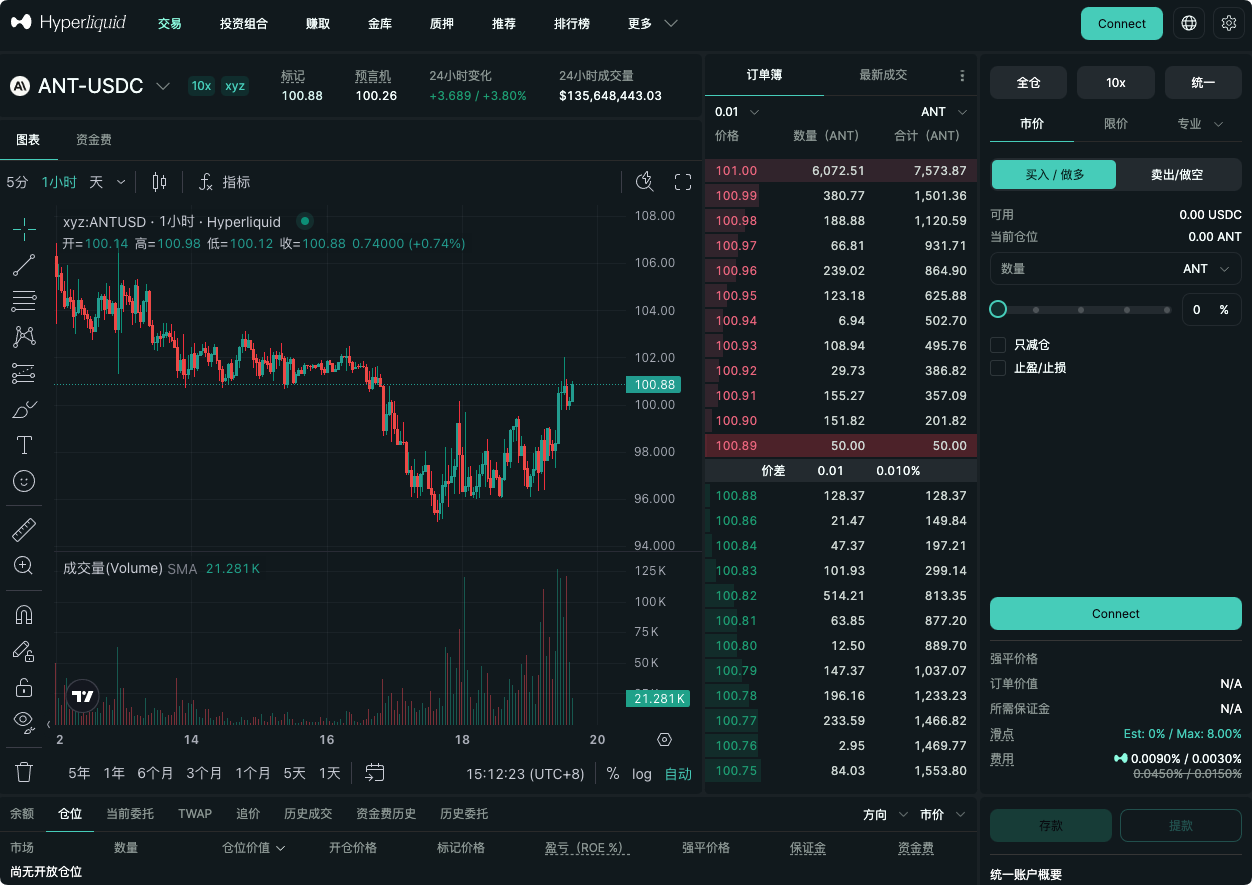
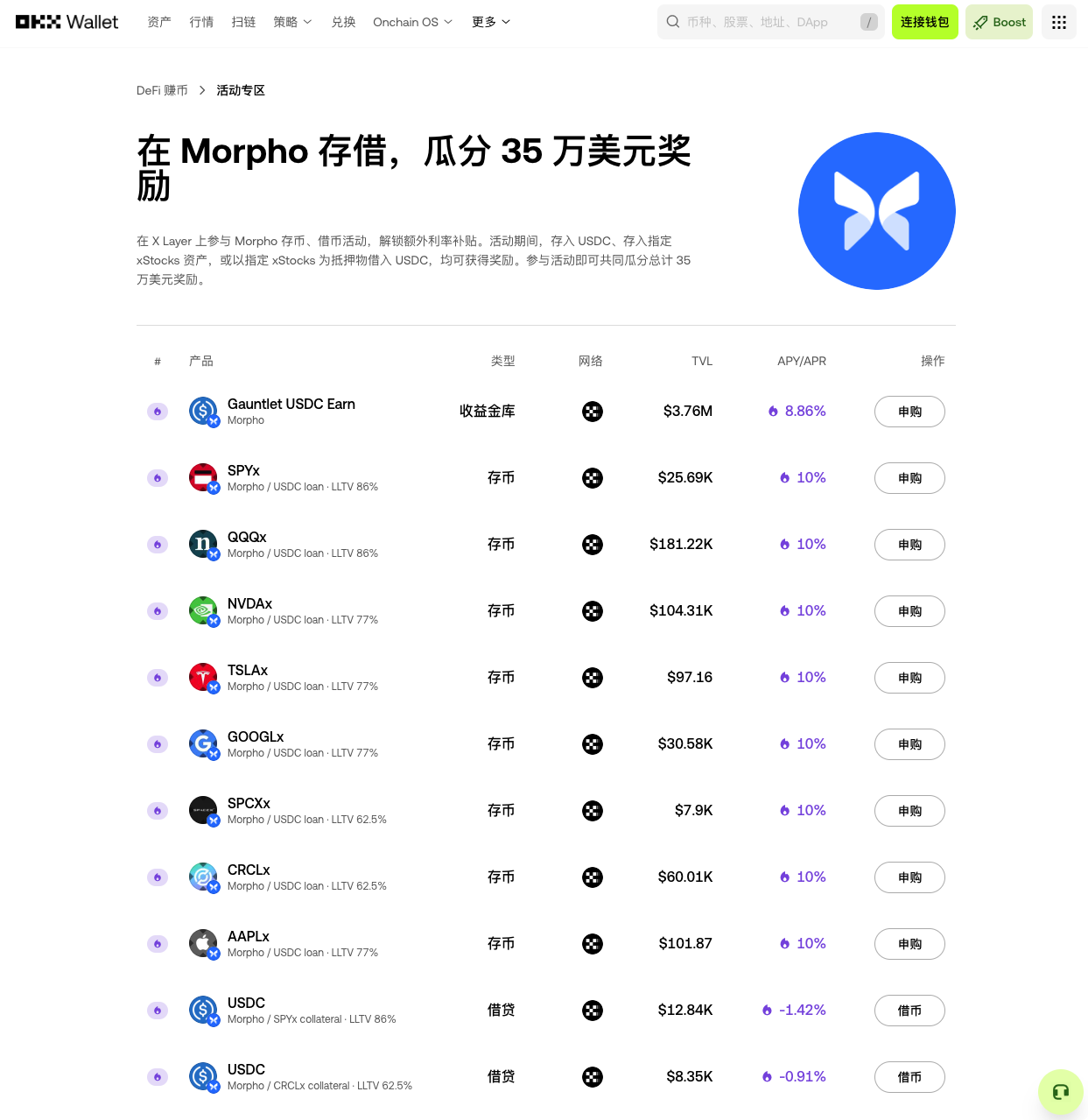
Hyperliquid's most deceptive point for the market is that its business growth and U.S. compliance narrative have accelerated almost simultaneously.
On one side, there is the rapid growth of stock perpetual futures. According to HRC's third quarter report data cited by AiCoin, Hyperliquid's third quarter stock perpetual trading volume was approximately $153.8 billion, a quarter-on-quarter increase of 161%, accounting for 58.8% of total HIP-3 trading; during the same period, the total trading volume across all platforms was about $730.6 billion, with stock perpetual futures accounting for approximately 21%.
On the other side, ICE, TradeXYZ, and Payward are trying to bring the Hyperliquid-based on-chain perpetual market into the U.S. regulatory framework.
If one only looks at the news headlines, it is easy to draw a smooth conclusion: the faster the growth of stock perpetuals, the easier it is for Hyperliquid to be accessed by traditional financial institutions; once U.S. institutions join, the platform's valuation and HYPE demand will continue to increase.
The larger the stock perpetuals, the less uncertainty in U.S. regulatory classification can be treated as a footnote.
The U.S. story is not without opportunities, but it cannot be priced merely as "announcing cooperation = about to go live."
$153.8 Billion in Transactions: Both Business Validation and Regulatory Exposure
Stock perpetuals have often been described as the future growth direction of HIP-3. Now, they are large enough not to be treated as a product experiment awaiting validation.
The three key figures from HRC's third quarter report are:
- Quarterly stock perpetual trading volume of approximately $153.8 billion;
- Quarter-on-quarter growth of 161%;
- Accounting for 58.8% of HIP-3 transactions, approximately 21% of total platform transactions.
This indicates that Hyperliquid has established a product line with real trading demand outside of crypto assets. Users are willing to trade in stock price exposure on-chain, market makers are willing to provide liquidity, and deployers have the motivation to continue expanding markets for stocks, indices, commodities, and foreign exchange.
However, the same set of data also sharpens the regulatory issues.
If stock perpetuals only accounted for a small portion of the platform, regulators might consider it a marginal product. Now that it contributes about one-fifth of the total platform trading volume, any judgments regarding product classification, customer protection, clearing, and market regulation may affect one of Hyperliquid's most important future growth engines.
Therefore, $153.8 billion is not simply a positive number.
On one hand, it proves there is real demand for HIP-3; on the other hand, it means this business line has entered the core vision of regulators, traditional exchanges, and existing market participants.
Two Lawsuits: What Exactly are Perpetual Contracts in the U.S.?
However, there are two legal disputes, each targeting the classification issue of crypto perpetuals and the regulatory basis for individual stock perpetuals.
The first is CME's challenge to CFTC's treatment of Bitcoin perpetual contracts. CME's legal claim is that these products without expiration dates are more akin to swaps rather than products that can be approved directly through the futures path. It should be noted that CME's viewpoint is the plaintiff's claim and does not equate to a final conclusion by the court.
The real issue at stake is not Bitcoin's price, but a more fundamental question:
Which regulatory framework should manage perpetual contracts without a fixed expiration date, which typically do not undergo traditional physical delivery, within the U.S. legal system?
If regulators classify it under the futures path, the products could enter the compliance system through registered exchanges, clearing houses, and brokers; if the court views some perpetuals as closer to swaps, or if a different set of regulatory requirements applies, the existing product structure may be forced to change.
The second lawsuit is the Capital Markets Alliance's challenge to individual stock perpetuals. AiCoin states that member organizations include Cboe, Citadel Securities, and Healthy Markets Association. Their core concern is that individual stock perpetuals may circumvent existing regulatory and investor protection arrangements in the securities market.
This debate is more sensitive than that surrounding crypto perpetuals because stock products are inherently connected to the securities market, information from listed companies, customer suitability, prevention of market manipulation, and investor protection.
On November 3, the judge denied an urgent application to immediately halt relevant approvals; however, AiCoin simultaneously pointed out that the court had expressed substantive concern regarding the plaintiff's claim of CFTC overreach; a preliminary injunction hearing for the stock perpetual case is scheduled for December 1.
The rejection of the emergency injunction does not mean the regulatory path has been confirmed by the court. It only indicates that at that procedural stage, the plaintiff had not sufficiently demonstrated the need to immediately suspend the product to prevent irreparable harm.
For the market, what is truly important are the subsequent hearings and final judgments, not interpreting "no immediate halt" as "the product is already safely established."
Both Sides Have Already Entered the Debate into Court Documents
This is not a dispute solely involving regulators and traditional exchanges.
According to AiCoin, Coinbase, Kalshi, Payward, DRW, Jump Trading, and Paradigm jointly submitted court documents supporting the CFTC, claiming that stock perpetuals fall under securities futures and opposing the suspension of relevant products.
The opposing side includes challenge camps involving firms like Cboe and Citadel Securities.
This group of participants reveals an important fact: perpetual contracts have transformed from product innovation within the crypto industry into a market structure issue contended by traditional exchanges, market makers, platforms, and clearing systems.
The CFTC-supporting side sees a new derivatives market in the U.S. If stock perpetuals can only be placed within the traditional securities trading framework, 24/7 trading, dual leverage, and cross-market products may be restricted.
The opposing side worries that the regulatory boundaries may be redefined. A product that looks like a futures contract but lacks an expiration date and traditional delivery arrangements, if it can enter the market through a lighter path, may alter the competitive conditions in existing securities and derivatives markets.
Thus, the outcome of the case will not only decide whether a certain stock perpetual can continue trading, but may also influence how the future U.S. market handles a whole category of on-chain and over-the-counter derivatives.
ICE and TradeXYZ: Having Infrastructure Does Not Mean Obtaining a U.S. Passport
ICE's partnership with TradeXYZ is one of the most significant institutional signals in Hyperliquid's U.S. story.
ICE's official announcement states that the two parties plan to bring TradeXYZ's on-chain perpetual market based on Hyperliquid to the U.S. and establish a new, specially regulated market and clearing structure. The product envisages including crypto assets, stocks, stock indices, commodities, foreign exchange, and other real assets.
However, the announcement repeatedly retains a key premise: subject to regulatory approvals.
This means the responsibilities of the parties involved are not simply additive:
- Hyperliquid provides the underlying on-chain infrastructure;
- TradeXYZ is responsible for the design and deployment of the real asset perpetual market;
- ICE handles the regulated market, clearing, and relevant operational capabilities;
- Compliant clients are expected to enter through FCMs, brokers, and other distribution channels;
- ICE's distribution arrangement with OKX also requires its own regulatory approval.
This structure is very important because it shows that ICE is not directly copying Hyperliquid's global open front end to the U.S., but rather aims to rebuild a transaction, clearing, and customer access layer suitable for U.S. clients on top of the on-chain infrastructure.
The core of the U.S. market is not "can transactions be matched on-chain," but rather: who is responsible for customer accounts, who bears clearing obligations, who manages KYC/AML, who prevents market manipulation, and who is responsible for customer protection in extreme market situations.
Payward's Plan Also Involves "Licensed Entities Access," Not Direct Approval via Agreements
Payward's publicly disclosed U.S. plan further illustrates this point.
According to Payward's official announcement, its Bitnomial will act as the market deployer for HIP-3, creating, owning, and managing the market, and responsible for contract clearing and settlement; NinjaTrader Clearing will handle client accounts. Clients need to complete account opening with the relevant entities and enter the trading license list.
In other words, Hyperliquid itself provides the on-chain order book and market infrastructure, but whether U.S. clients can trade depends on licensed entities assuming specific regulatory obligations.
This is also where "Hyperliquid enters the U.S." can be easily misread.
A more accurate statement should be:
Regulated exchanges, clearing institutions, and brokers attempt to incorporate Hyperliquid's on-chain matching and market deployment capabilities into products structures permitted by U.S. law.
The advantage of this path is that it retains part of the on-chain trading experience while having registered entities take on customer and compliance responsibilities.
Its limitations are also clear: U.S. clients may require KYC, specialized accounts, approval lists, and restricted product ranges; different markets may need distinct approvals; products available for global users do not necessarily mean they can also be traded by U.S. clients.
Therefore, the approval of Backpack or other blockchain projects for a certain type can only indicate the possibility of regulatory landing for the blockchain architecture and cannot directly prove that Hyperliquid's cooperation projects have completed the same approval processes.
If Stock Perpetuals Are Reclassified, the First Impacted Will Be New U.S. Demand
Assuming the court rejects the current approval path for individual stock perpetuals, the most immediate impact is not that Hyperliquid's global market will stop operating instantaneously.
The U.S. market's timetable and product structure are more likely to be affected first:
- ICE and TradeXYZ's U.S. stock products may be delayed;
- The products may be reconfigured into a different regulatory-approved derivative;
- The trading scope may expand from stocks to crypto, commodities, or foreign exchange, which are easier to handle;
- Clearing, customer access, and margin rules may be redesigned;
- Partners may need to wait for new regulatory interpretations or formal approvals.
The scope of cooperation announced by ICE includes more than just stocks. Crypto assets, commodities, foreign exchange, and other real assets are also part of the plan.
Therefore, one cannot directly infer that "stock perpetuals face legal resistance" leads to the complete cessation of the ICE and TradeXYZ collaboration. A more reasonable judgment is that different asset categories may follow different approval paths, with stock products potentially bearing higher legal uncertainties.
Similarly, one cannot understand a delay in U.S. plans as evidence of Hyperliquid's current business failure.
The main impact lies in when new U.S. clients will enter, when U.S. institutional liquidity will be accessed, and how much valuation premium the market is willing to assign to this portion of growth in advance.
Hyperliquid Already Has a Business Foundation, But That Does Not Mean U.S. Expectations Are Unimportant
Hyperliquid's third quarter contract revenue was approximately $190.9 million, a quarter-on-quarter increase of 21.7%; the Assistance Fund allocated for purchasing HYPE was about $148.7 million.
These revenues and repurchase activities occurred before the full implementation of U.S. cooperation projects.
This indicates that Hyperliquid is not a platform that must rely on U.S. approvals to prove its business value. Existing global users, crypto perpetuals, the HIP-3 market, and on-chain trading income have already formed an operational business foundation that can run independently.
However, "capable of independent operation" does not equate to "U.S. expansion is unimportant."
The U.S. market may still bring three types of increments:
First, more entry points for traditional finance clients and retail customers.
Second, capital and credit endorsements brought by regulated brokers and clearing institutions.
Third, deeper liquidity connections between stock, commodity, foreign exchange, and crypto products.
Thus, the progress of U.S. compliance is better understood as a growth option for Hyperliquid, rather than a condition for the current business's survival.
Options can lead to valuation increases, but before execution, they cannot be valued based on realized income.
What Truly Needs Repricing for HYPE Is the Gap Between Two Curves
The market currently easily mixes two things together:
- The already realized global trading volume, contract revenue, and HYPE repurchases;
- The U.S. market increments, institutional clients, and future revenues that have not yet been approved.
The former are business facts, while the latter are growth expectations.
If U.S. approvals go smoothly, new clients, trading volumes, and revenue sources may emerge; if approvals are delayed, Hyperliquid's existing business can still continue to grow, but the market needs to adjust the time value of U.S. expansion.
For HYPE traders, what is most worth observing is not whether a news piece uses keywords like "U.S. market," "institutional access," or "regulated," but the following specific developments:
- Whether the court upholds or overturns the current classification path for perpetual contracts;
- Whether ICE and TradeXYZ obtain substantial regulatory approval;
- When Payward's Bitnomial and NinjaTrader Clearing will open actual client trading;
- What the scope of products U.S. clients can trade is;
- Whether the U.S. compliance market can connect liquidity back to the Hyperliquid ecosystem;
- Whether crypto, commodities, and foreign exchange products will land first when stock perpetuals face obstacles.
These factors are closer to real commercial progress than simple cooperation announcements.
How Ordinary Users Can Observe This "Cooling Off"
On the AiCoin mobile app, users can first check the trading volume, open interest, funding rates, large orders, and clearing data related to HYPE and HIP-3 markets, and then compare them against the timeline of U.S. regulatory events.
If prices rise accompanied by an increase in open interest, new leveraged positions may be entering; if prices rise but open interest declines, it may primarily be driven by short covering; if prices increase following the release of cooperation news but trading volume and funding flow do not improve synchronously, the market might just be trading ahead of expectations.
For the HIP-3 stock, commodity, and foreign exchange markets, additional attention should be given to deployers, oracles, mark prices, and liquidity. Hyperliquid's official documentation states that oracle prices will participate in the calculation of funding rates and mark prices, while mark prices are used for margin and clearing.
This means that market observation cannot solely rely on the latest transaction prices.
What really determines whether a position can survive includes mark prices, maintenance margins, funding rates, and the distance to clearing.
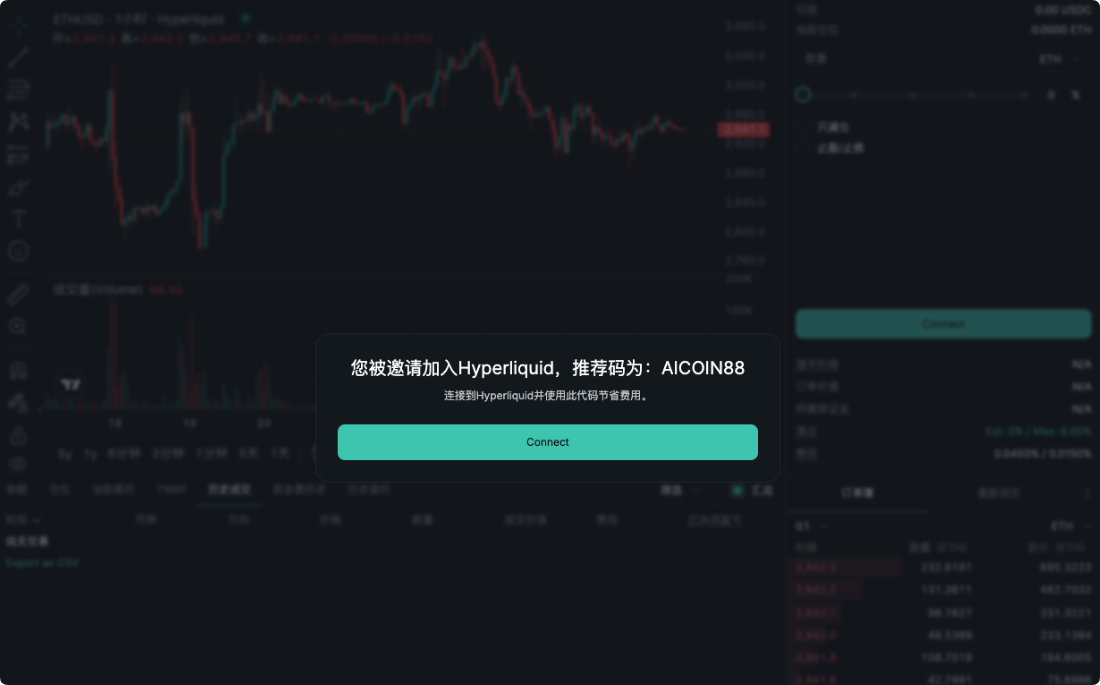
If you wish to observe smart money, on-chain large orders, open interest, funding rates, and Hyperliquid market changes all in one interface, you can connect to Hyperliquid via AiCoin mobile app: Exclusive connection link.
Use the invite code: AICOIN88. Trades in compliance with activity rules can receive a 4% fee rebate, with specific eligibility, calculation methods, and the timing of payments subject to the activity rules.
The rebate can only reduce some trading costs and cannot offset risks associated with leverage, funding rates, slippage, oracle deviations, forced liquidation, and regulatory changes.
Conclusion: The U.S. Is an Added Bonus, Not a Revenue Item in Current Financial Reports
Hyperliquid's stock perpetual trading volume was approximately $153.8 billion in the third quarter, accounting for about 21% of the total platform transactions. This proves that stock perpetuals are already a real business, no longer just a future narrative.
However, the larger the business scale, the less ambiguous the regulatory classifications can be.
CME challenging the CFTC's classification of perpetual contracts, Capital Markets Alliance questioning the approval path for individual stock perpetuals, and ICE working with TradeXYZ and Payward to try to connect the on-chain market to the U.S. framework demonstrate that market demand exists and that the legal structure is far from settled.
A more robust judgment would be:
Hyperliquid already has a global business and revenue foundation, while the U.S. market is a growth option still under approval, litigation, and structural design.
If the court and regulatory bodies ultimately recognize the relevant paths, the U.S. market may bring Hyperliquid's stock, commodity, and crypto liquidity to new customer groups; if the path needs to be adjusted, the impact will mainly be on expansion speed, product forms, and valuation premiums, rather than on the global business that the platform has already completed.
Before results are out, the most professional approach is neither blind optimism nor outright denial due to a single lawsuit, but rather to observe trading volume, contract revenue, repurchase intensity, open interest, and regulatory nodes all in the same diagram.
Exclusive Benefits for AiCoin Users
👉 Bind your Hyperliquid account with the invite code AICOIN88 to enjoy a 4% fee rebate.
🔗 Exclusive registration link:
https://app.hyperliquid.xyz/join/AICOIN88
📖 Beginner's Guides:
- "AiCoin PC Hyperliquid Authorized Trading Guide":
https://www.aicoin.com/zh-Hans/article/514197
- "AiCoin Mobile Hyperliquid Authorized Trading Guide":
https://www.aicoin.com/zh-Hans/article/541383
- "Beginner-friendly! Hyperliquid First Trade Ultra-detailed Illustrated Guide":
https://www.aicoin.com/zh-Hans/article/510225
📖 Community Discussions:
- Telegram:
https://t.me/AiCoinWhaleData
- Discord:
https://discord.gg/5XSXjXSpz
- AiCoin-Group Chat:
https://www.aicoin.com/link/chat?cid=N6OVMor5g
The content of this article only represents the author's personal views and does not represent the platform's stance. The viewpoints, conclusions, and suggestions in this text are for investors' reference only and do not constitute any investment advice related to the platform. Investing in U.S. stocks still requires investors to bear market risks, regulatory risks, and compliance risks under local laws and regulations (especially foreign exchange controls, overseas investment declarations, etc.).
免责声明:本文章仅代表作者个人观点,不代表本平台的立场和观点。本文章仅供信息分享,不构成对任何人的任何投资建议。用户与作者之间的任何争议,与本平台无关。如网页中刊载的文章或图片涉及侵权,请提供相关的权利证明和身份证明发送邮件到[email protected],本平台相关工作人员将会进行核查。