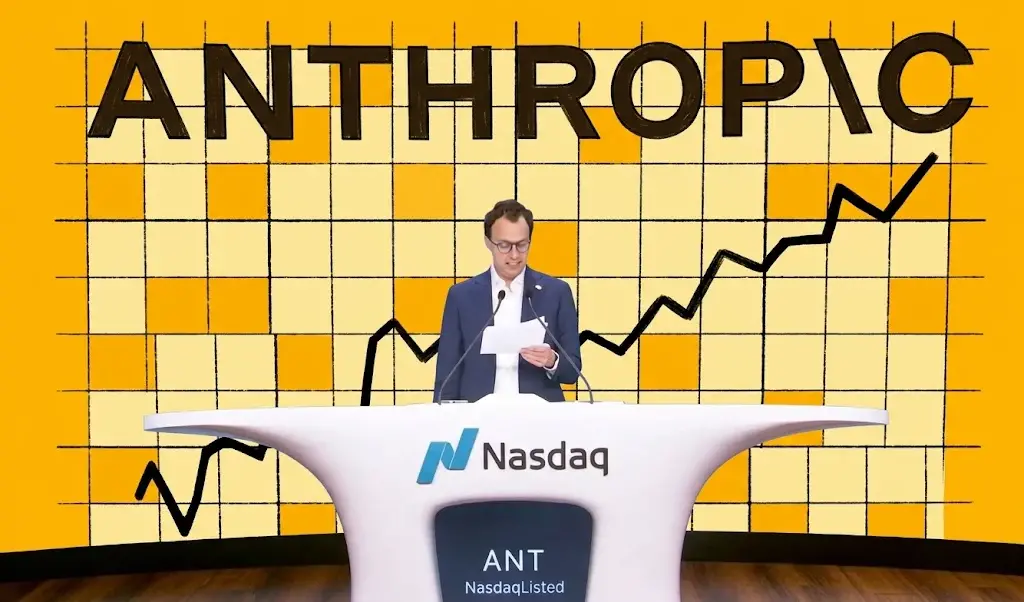
Anthropic CEO Dario Amodei. Image processed by AI
Written by|Bo Yang
Edited by|Xu Qingyang
On its first trading day on the Nasdaq, Anthropic ended with a significant rise, but the volatility experienced during the day also served as an early warning for this AI star company.
On November 19, local time in the United States, Anthropic's stock debuted on Nasdaq at an initial price of $83, with the stock code ANT. Due to concentrated buying, the first transaction only occurred at 11:48 AM Eastern Time at $111.50, a 34.3% increase from the issue price. The stock price then fell continuously, dipping to a low of $92.72.
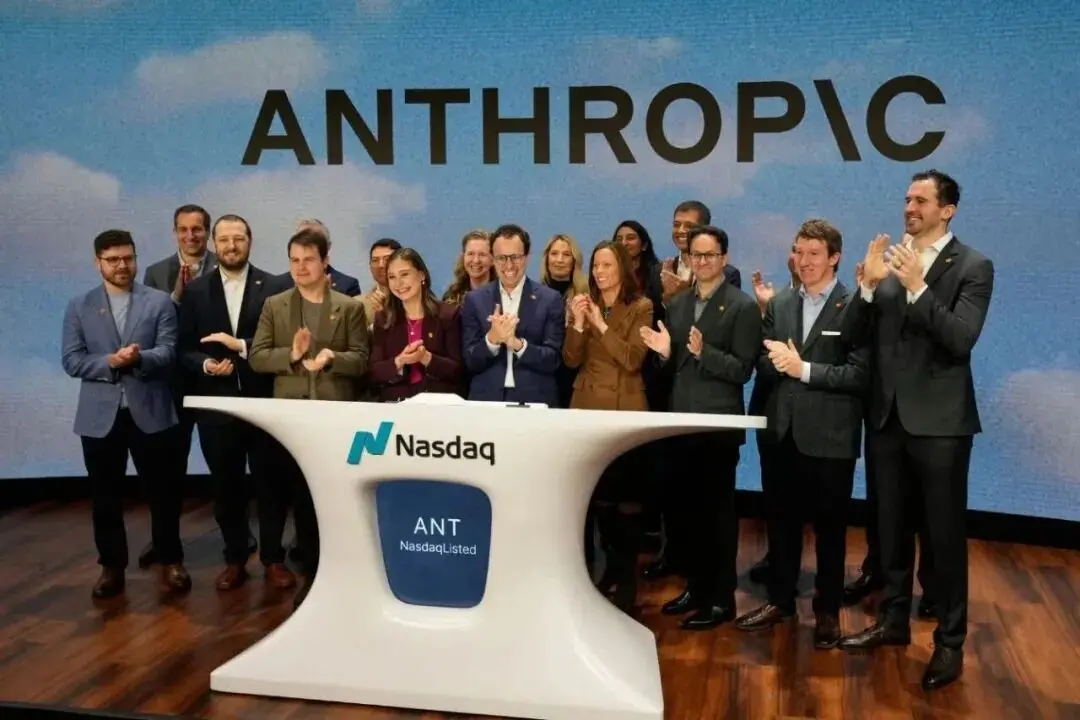
At closing, Anthropic was priced at $97.17, up $14.17 from the issue price, marking a rise of 17.07%. According to CNBC data, the trading volume that day reached 839.6 million shares, with a closing market value of approximately $1.272 trillion. In after-hours trading, the stock price fell further, down over 3%.
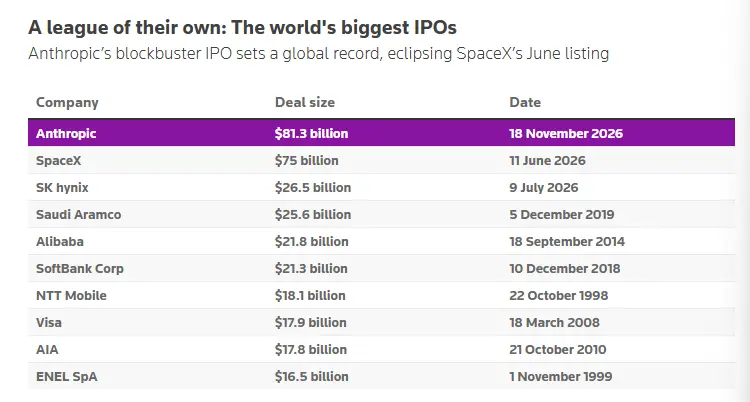
This is the largest IPO in the history of the US capital market.
Anthropic's public offering involved 980 million shares, which, at an issue price of $83, equates to a public offering scale of approximately $81.3 billion; combined with an additional $26 billion in private placement, the total financing scale exceeded $107 billion, surpassing the approximately $75 billion record set by SpaceX in June of this year.
01 1,200 institutions lined up to subscribe, more than half did not get shares
The demand for Anthropic's IPO far exceeded the issue scale.
The company initially set an issue price range of $70 to $78 but ultimately priced it at $83, above the upper limit of the range. The number of shares issued was also expanded by about 19% from the initial plan, totaling approximately $81.34 billion at the final price.
However, not all funds will ultimately enter Anthropic's account. According to the final prospectus, the company issued 956,351,354 shares, totaling about $79.38 billion. An additional 23,648,646 shares were sold by existing shareholders, amounting to approximately $1.96 billion.
In other words, the total IPO amount is about $81.34 billion, most of which comes from newly issued shares, while a small portion comes from existing shareholders' reductions.
Additionally, Anthropic arranged for a $26 billion private placement, involving investors from AMD, Broadcom, Google, Microsoft, Nvidia, Micron, and TSMC. When combined, the overall financing scale amounts to approximately $107.3 billion. Underwriters also have a 30-day over-allotment option to purchase up to an additional 14.7 million shares.
This transaction involved over 20 banks, with Morgan Stanley and Goldman Sachs as the lead underwriters. It exceeded the previous IPO financing record set by SpaceX and pushed the financing capability of AI model companies to a new level.
However, not all interested institutions were able to obtain shares.
Bloomberg reported, citing informed sources, that about 1,200 institutional investors participated in the subscription, with more than half ultimately failing to receive any allocation. The allocations were clearly biased towards US investors, and many overseas institutions missed out.
Additionally, the Wall Street Journal reported that retail investors received about 15% of the shares in this offering, amounting to about $12 billion, which is below the 20% cap previously disclosed by Anthropic.
Although Anthropic expanded the IPO offering size, a substantial number of institutions still could not buy shares, indicating that the demand is not limited to a few large funds concentrating on price increases, but rather that a wide range of funds want direct exposure to leading AI companies.
However, the allocation results also sparked another form of discontent. Investor Rakesh Agrawal questioned that in such a large-scale offering, the distribution of shares seemed to favor priority customers, whereas founders, employees, and early investors may not have received a share proportionate to their contributions.
Axios reporter Dan Primack lamented from another perspective that venture capital-backed companies have already seen trillion-dollar level public companies emerge, signaling the end of the startup era represented by the term "unicorn."
02 Seven founders with a combined net worth of nearly $140 billion, employees also became big winners
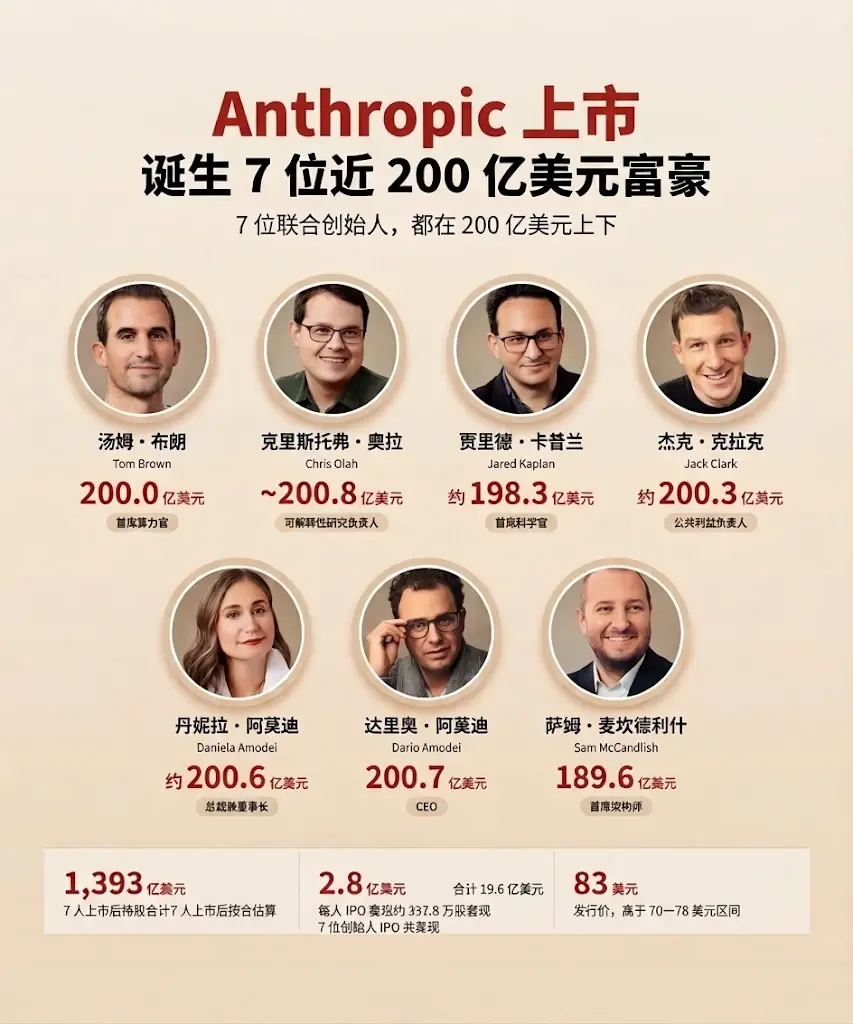
The IPO provided a more tangible valuation of the wealth of Anthropic's seven founders.
At the issue price, the total value of the shares held by the seven founders is approximately $139.3 billion. Among them, CEO Dario Amodei holds shares worth about $20.07 billion, co-founder Tom Brown approximately $20 billion, and Sam McCandlish about $19.92 billion.
The other four founders, Christopher Olah, Jack Clark, Jared Kaplan, and Daniela Amodei, have shares valued close to $20 billion each.
The seven founders each sold approximately 3.378 million shares in this IPO, realizing about $280 million each, totaling approximately $1.96 billion.
Their control over the company does not entirely depend on economic shares. The prospectus indicates that the founders' limited liability company holds a special Class F share, owning 50.1% of the total voting rights of the company but not enjoying economic rights. The seven founders are the initial sole members of this entity.
Employees also share in the wealth increase brought by the IPO.
According to the prospectus, as of September 30, 2026, the paper gain for employee options is approximately $119.1 billion, of which about $72.6 billion has already vested.
Independent research firm Sacra estimates that around 2,800 current and former employees hold at least $1 million in pre-tax vested equity. Estimates from private company stock trading platform Hill indicate that 598 non-founder employees hold shares valued at over $100 million.
Beyond Claude Code, Anthropic begins to cut prices to attract enterprise customers
Before the IPO, Claude Code was Anthropic's most high-profile growth engine. After the IPO, the company is expanding its product line from programmers to other departments within enterprises.
Anthropic has successively launched products such as Claude Cowork for non-technical employees, Claude Managed Agents to help developers build and run AI agents, and products like Claude Security, Claude Design, and Claude Science. The company hopes Claude will not only be a programming tool but will also penetrate more business areas such as sales, finance, human resources, marketing, and security.
A manager from a software company revealed that the company's AI budget previously allocated over 90% to the engineering department, but now about 60% goes to programming, with the remaining portion starting to be allocated to Cowork, Design, and Security. The human resources and finance teams use Cowork to create financial forecasts, while the sales team uses it to generate market research reports.
The customer usage scope is expanding, but Anthropic is also offering greater price discounts to compete for these budgets.
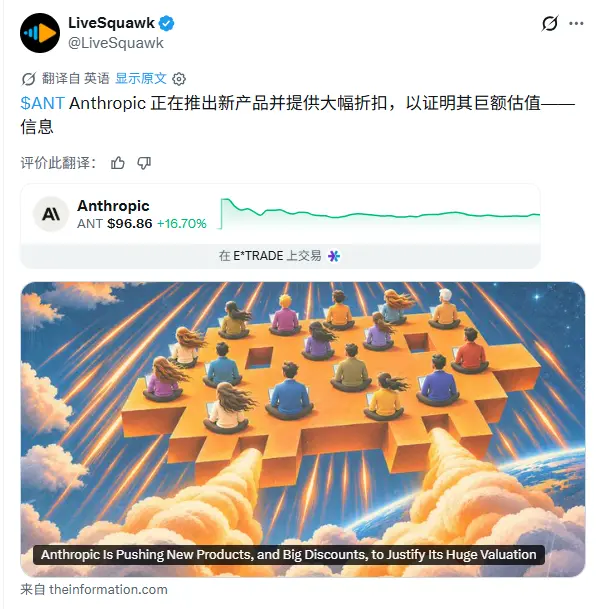
Software procurement consultants and clients revealed that Anthropic is offering some enterprises product credits of up to $100,000 in exchange for higher annual spending commitments or to encourage customers to sign contracts by a specified date. Partners say that when customers trial products like Cowork, Design, and Security, they can receive credits of up to $2,000 per user.
The discounts are also significant. Managers from two clients stated that the discounts given by Anthropic exceed 30%, with one contract's discount being more than double that of previous contracts.
One company provided a more specific example: when the annual spending commitment is $1 million, the discount offered by Anthropic in the first quarter is about 15%; when the commitment amount increases to $3 million, the discount approaches 30%; if the customer commits to spending over $5 million per year, the discounts can be further increased to over 30%.
Some contracts also include share-of-wallet clauses, which require customers to commit a certain percentage of their AI budget to Anthropic. In some cases, customers also need to submit invoices and other materials to prove that they have fulfilled their commitments.
NPI Financial analyst Madisyn Ellsworth noted that the company started noticing these types of clauses since early November. OpenAI has also adopted similar arrangements, but NPI has not seen OpenAI requiring customers to submit documentation to prove compliance.
These practices reflect a changing competitive landscape in the enterprise AI market. Anthropic no longer only needs to demonstrate that Claude Code is useful; it also has to convince customers to allocate more departments and budgets to Claude. For enterprises, discounts can lower the barriers for trials, but increasing AI usage may lead to uncontrollable expenses. Some customers have already begun monitoring high usage and even proactively cutting back spending.
Competitors are also accelerating their actions. OpenAI is entering the cybersecurity market, while Codex is competing for programming customers through price cuts; Microsoft 365 and Google Workspace have mature office software systems, and Anthropic's expansions into spreadsheets, collaboration, and office tools inevitably enter the domains of the two giants.
Meanwhile, companies like FedEx, Robinhood, Coinbase, and Shopify are developing their own AI tools, hoping to switch flexibly between Anthropic, OpenAI, and open-source models. For model companies, the frequency of client use of AI is undoubtedly important, but whether they can retain customers long-term and encourage them to increase their budgets is equally crucial.
免责声明:本文章仅代表作者个人观点,不代表本平台的立场和观点。本文章仅供信息分享,不构成对任何人的任何投资建议。用户与作者之间的任何争议,与本平台无关。如网页中刊载的文章或图片涉及侵权,请提供相关的权利证明和身份证明发送邮件到[email protected],本平台相关工作人员将会进行核查。


