Author: Christian Catalini, Founder of the MIT Cryptoeconomics Lab, Co-creator of Libra, Co-founder and former Chief Strategy Officer of Lightspark, former Chief Economist of Meta
Compiled by: Gu Yu, ChainCatcher
Time and again, general technologies perform the same three-act magic in the economic realm: the pledge, the turn, and the prestige. From steam and electricity to internal combustion engines and railways, their evolutionary patterns are strikingly similar.
It all begins with the display of early breakthrough capabilities. Enthusiasm runs high, followed by hype, and everyone is eager to infer a future dominated by the technology and its pioneers from the initial applications. Soon, greed drives massive capital to flood into infrastructure and capacity to conquer the market. Winners are prematurely declared and hailed as inevitable.
Riding the initial momentum, the steering entrepreneurs become arrogant, and investors cease to scrutinize assumptions and fundamentals: "This time is different."
But a turning point typically arrives, where collapses, massive reshuffles, or delayed productivity gains pull valuations and expectations back to reality. After the festivities, many traumatized investors withdraw entirely from the technology.
Once the tourists leave, the real "prestige" is ready: it is precisely that irrational expansion that pushes early winners towards bankruptcy, leaving behind abundant infrastructure necessary for the eventual realization of structural transformation. This technology fulfills every promise, yet the majority of value flows to organizations that quietly own or construct the scarce complementary assets needed for large-scale implementation.
The Inevitable Arrogance of Pioneers
Artificial intelligence is currently at a stage between "the pledge" and "the turn." Overconfidence has reached a historical peak. The rhetoric from the labs is generally as follows: our models may possess consciousness; only our lab can be entrusted to manage such powerful technology; please regulate us, or terrible things will happen; we may one day be powerful enough to become the last remaining private company. Gavin Baker attributed the last claim to Dario Amodei. Anthropic researcher Sholto Douglas vehemently denied this, but Amodei did not directly mention it in his response.
Whether or not Amodei truly believes Anthropic could eventually control most of the economy, his arrogance reflects the shadows of entrepreneurs before him who profoundly shaped general technologies—many of whom mistakenly conflated their control over early forms of new technology with the ability to shape its trajectory and capture the value it creates.
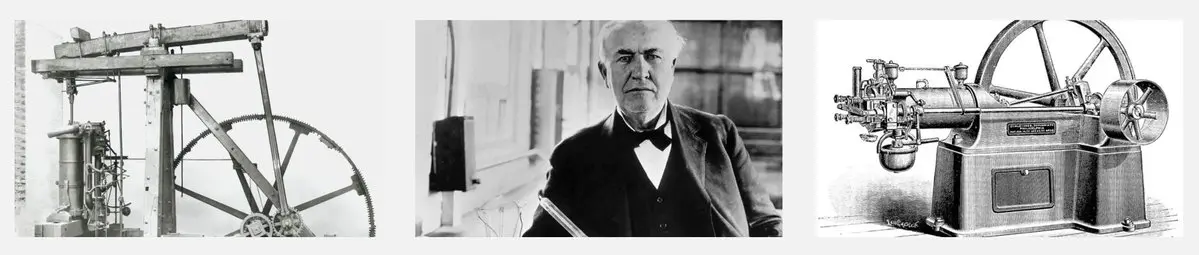
Take the steam engine as an example. Boulton & Watt tightly controlled their designs for decades through patent monopolies. But immense value flowed downstream. In cotton production, yarn prices plummeted, and by 1830, cotton products accounted for about half of Britain's domestic exports. Looking at electricity, it became so successful that it turned into a regulated public utility, with no differentiation and measured by kilowatt-hours. Factories captured the upstream space, with the share of electric motors in American factory power skyrocketing from less than 5% in 1899 to nearly 80% within 30 years. Over roughly the same period, the annual growth rate of manufacturing labor productivity surged from 1.5% to 5.1%.
What about the internal combustion engine? The situation is similar. More than 700 companies in the U.S. entered the automobile manufacturing race, but by 1941, the industry shrank to three giants and a few independent manufacturers. Value migrated to its complements: gasoline leapt from being a virtually worthless by-product to accounting for 44% of U.S. crude oil processed by refineries by 1931, while each additional highway running through cities was estimated to reduce those cities' populations by 18%, benefiting the suburbs.
Railways? The similarity is almost too perfect. In 1876, Tom Scott helmed one of the most powerful companies in America, the largest freight carrier in the world: the Pennsylvania Railroad. The media likened him to Napoleon, and his actions suggested that owning the railroad meant owning the whole market. However, Standard Oil dominated most of the oil volume shipped by the Pennsylvania Railroad.

The conflict began when the Pennsylvania Railroad's associated carrier, Empire Transportation, ventured into oil refining. Rockefeller demanded that Empire exit the new business, but Scott refused, forcing Rockefeller to shift his freight to the railroad of a competitor. The Pennsylvania Railroad subsequently responded with a devastating price war, desperately trying to attract other shippers to use its lines. As one of Scott's aides put it, "We paid them large rebates. ... In some cases, the rebates we paid even exceeded the total freight cost." Subsequently, the 1877 railroad strike exhausted the Pennsylvania Railroad's treasury, and Empire's assets were sold to Standard Oil. Within months, Standard Oil extracted 20 cents per barrel from the Pennsylvania Railroad, including crude oil shipped for Standard Oil's competitors.
But the story of the Pennsylvania Railroad is not unique. After years of overbuilding, financial leverage, and price wars, the Panic of 1893 led to the bankruptcy takeover of over 100 railroad companies. Yet the tracks survived, and the network thrived: it is estimated that the annual private return rate of railroads in 1890 was only 3.5%, whereas the social return rate was as high as 48%. Without the railroads, the value of American agricultural land would shrink by 60%.
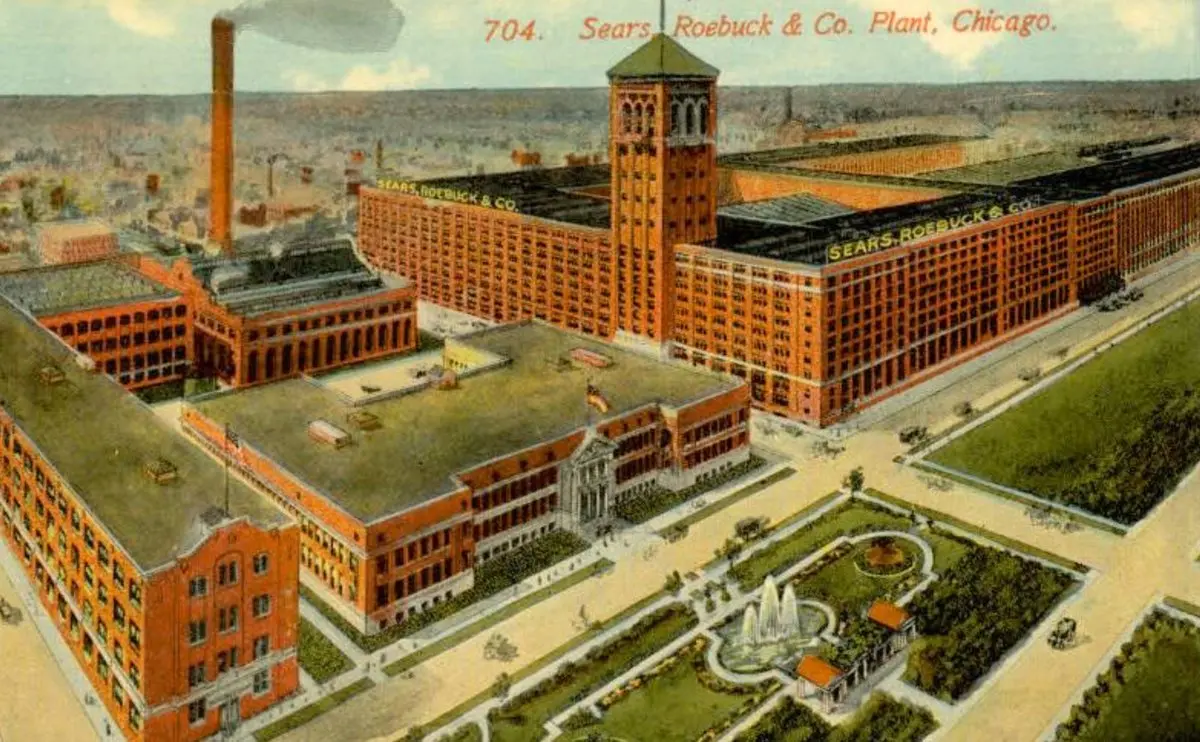
Investors financed the construction, but the value flowed to landowners, manufacturers, shippers, and of course consumers. Sears is an excellent example of the "application" layer of that era: Richard Sears began his career as a railroad station agent and built a vast retail empire relying on mail-order catalogs and the railroads. By 1906, his Chicago distribution center, covering 3 million square feet, was connected to every major trunk line out of the city. Sears's sales surged from $750,000 in 1895 to $50 million in 1907.
The Value of Complementary Assets
So if AI labs are akin to railroad companies, who plays the role of Standard Oil, and who plays Sears? Standard Oil represents any enterprise that controls high-value demand: those that benefit from proprietary data and can route to actual benchmarks (ground truth) for AI workloads. Sears represents the application layer: as intelligence goes mainstream, its customer relationships, distribution channels, and automated workforce become increasingly valuable participants. NVIDIA currently fits both categories as a scarce upstream supplier.
In a recent in-depth analysis of the economics of closed versus open-source AI models, I observed that due to the difficulty of protecting AI models and their ease of learning, the field displays weak appropriability mechanisms. While to date the primary concern has been that open-source weights will undermine future investments in AI, the reality is that they will only impact the direction of those investments: what to produce, by whom, and who captures the returns.
When appropriability is weak, value does not flow to the party that contributes most to the invention. Instead, it flows to the bottlenecks that constitute large-scale deployment. The obvious scarce complements for AI are computational infrastructure and chips; Amodei noted that if open-source weighted models dominate at the expense of labs, these two will become natural sources of centralization. However, control over these assets is not static: labs, hyperscale cloud providers, chip manufacturers, and even sovereign nations are moving upstream to secure alternative supply sources.
In the short term, as supply lags severely behind the surge in inference demand, scarcity may exacerbate centralization and reward those entities capable of providing necessary inputs on land or in space. However, in the long run, the same strong signals of demand will attract investment and innovation, disrupting today’s market leaders.
What Amodei cleverly avoids mentioning is that hardware and infrastructure do not follow the same extreme winner-takes-all dynamics as software. They can remain centralized, but their bottlenecks are physical, explicit, and investable: even if new capacity takes time to build, high prices will attract new global capacity.
At the inference end, as long as labs can maintain a sufficient lead, they will not encounter difficulty in monetizing state-of-the-art (SOTA) capabilities. But beyond that, they will either need to lock in clients through more traditional software bundling or quickly acquire their own complementary assets. This explains their interest in chips, as well as their ventures into cybersecurity—where a slight advantage can translate into significant differences in willingness to pay from customers. The same goes for the fields of biology and medicine, where patents can convert slight leads into legitimate exclusive rights.
However, the steepest segments of the intelligence demand curve also set limits on private power. In these areas, marginal buyers are nation-states, who can bypass regular markets through procurement, enforced access, or even nationalization. Ironically, leading labs wishing to maintain freedom must succeed, yet not be too successful.
The viability of open-source weights has not diminished profit motives; it has merely accelerated the process in multiple different directions. As yesterday's cutting-edge domains become commoditized, previously unfeasible AI applications suddenly become viable, providing chip manufacturers, enterprises, application companies, and governments with more reasons to fund and improve a more distributed intelligent “commons.”
But if you step back and seriously examine the laws of complementary assets, you will immediately realize that although labs can collect vast amounts of public data at low cost under fair use principles, future earnings in specialized and currently unverifiable fields will increasingly rely on proprietary footprints, tacit knowledge, recording systems, and unique real-life benchmarks and expert decision sources.
No matter how powerful labs' computing operations, memory, and communication tools become, businesses are increasingly wary of handing over this information. As companies possessing valuable industry knowledge shift towards owning and controlling their "production weights,” many market leaders in various industries will be able to achieve or exceed the performance of cutting-edge models on tasks critical to them at lower costs by combining open-source weights with their proprietary information generated in-house.
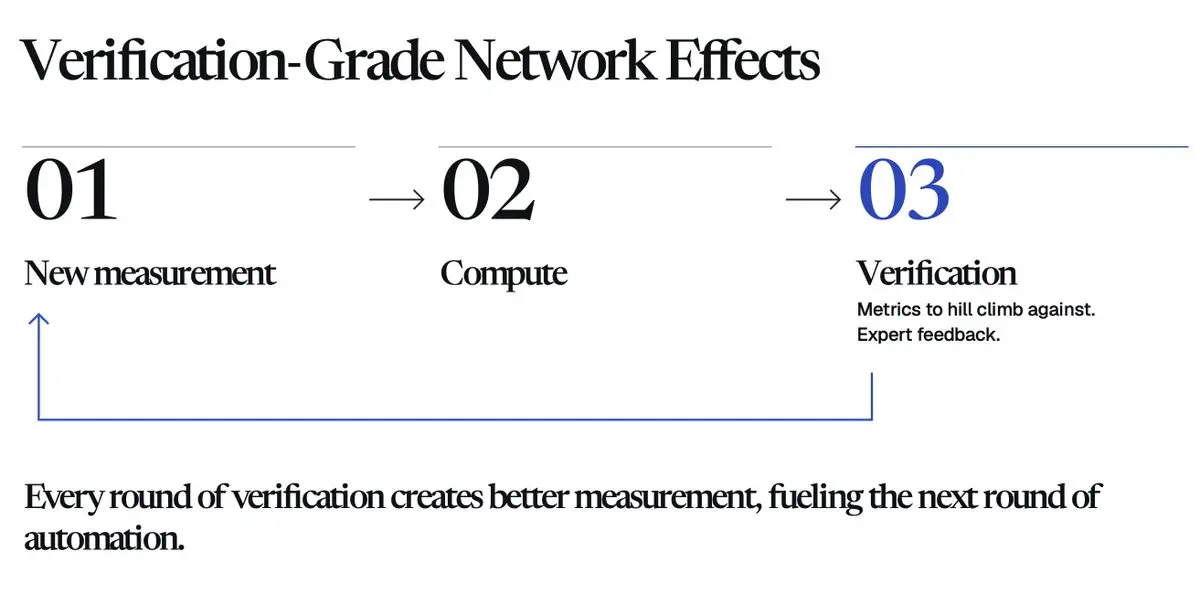
The key remaining moats are physical infrastructure, proprietary data and talent, distribution channels, and the ability to rapidly generate more accurate and relevant real-life benchmarks through ongoing interactions with the real world. As intelligence diffuses, the entities with defensive barriers will no longer be historical datasets that can be unlocked by purchase to access new capabilities, but the actual control over valuable real-world learning loops: the ability not only to deploy AI but also to collect the necessary telemetry data to verify that automated operations are being executed correctly and to refine the systems until they are trustworthy enough to support deeper automation.
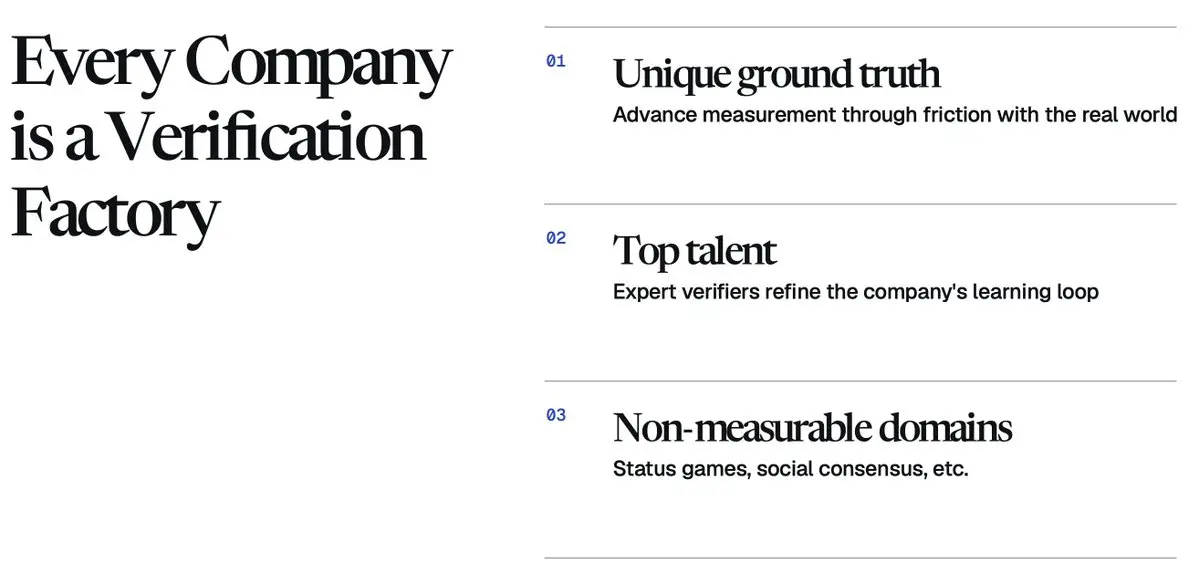
Companies that retain the information generated from these closed loops will not only send an increasingly smaller share of token requests upstream to leading labs but will also better shield their businesses from the disintermediation shocks posed by AI. Labs recognize this and are expanding downstream into workflows such as finance, healthcare, law, design, and accounting to secure more business. But of course, the deeper they expand, the greater the conflict with certain of their customers, giving rise to additional demand for treating open-source weights as a fallback option.
This may split demand for machine intelligence into commodity tokens and high-value tokens. The former will be cheap and measured like kilowatt-hours. The latter will ensure premiums with defensive barriers, increasingly driven by proprietary real-life benchmarks.
A World with Many Competing, Specialized Intelligences
For most sectors of the economy, once models are good enough, enhancements in capability are far less important than deeper integration of enterprise workflows, lower costs, or greater control. Thus, as open-source models continue to commoditize cutting-edge technologies, they will seize substantial demand, forcing labs to delve deeper into areas where premiums can still be charged.
Both the underlying economics of AI and the history of general technologies are driving society toward a more balanced outcome, rather than towards centralization. The only force that could wholly reverse or delay this trend is the kind of regulation that Amodei passionately advocates. If regulators set extremely high compliance thresholds, they will favor labs large enough to bear exorbitant legal, policy, and security expenditures. They may also harm the thriving open-source alternatives outside of closed-source models, for instance, by restricting the performance ceilings that open-source models are allowed to reach. This would render regulation a missing complementary asset that technology itself cannot provide. Of course, this does not mean that safety concerns are insincere or unimportant.
If the logic of complementary assets holds as it has in the past, the most likely outcome will still be the coexistence and competition of various competitive intelligences across markets and applications. This diversity will equip society with better preparedness for response, greater resilience, and, in many areas, more safety. Instead of nurturing a single variety that may experience correlated failures, building a diverse ecosystem of intelligent systems will provide us with a range of tools to tackle the inevitable unknown risks in the coming years. In the field of cybersecurity, the broader dissemination through open-source models is clearly beneficial for defense rather than offense. Other fields like biology may be vastly different, but we may be able to manage them more effectively by focusing on complementary assets that bridge ideas and implementations (such as synthesizers, biomaterials, and associated supply chains).
AI, by making intelligence cheap, may become the most universal technology created by humans. If so, it is highly likely to bring the largest victories to holders of complementary assets thus far. Labs have laid the tracks for machine intelligence to operate and scale, and they are likely to dominate the frontier intelligence market for quite some time. In any case, value will flow as it has in past cycles, into the hands of those who command the always scarce resources.
Anthropic is likely to become one of the most valuable companies in the world. But it will certainly not be the only one left.
Another version of this article was published in Forward Future.
免责声明:本文章仅代表作者个人观点,不代表本平台的立场和观点。本文章仅供信息分享,不构成对任何人的任何投资建议。用户与作者之间的任何争议,与本平台无关。如网页中刊载的文章或图片涉及侵权,请提供相关的权利证明和身份证明发送邮件到[email protected],本平台相关工作人员将会进行核查。


