Author: Zen, PANews
As Anthropic is about to be listed on Nasdaq, a new stage has begun in the wealth creation feast surrounding AI. Among them, the venture capital firm Sound Ventures, closely related to Hollywood, has re-entered the public eye by betting on this AI star company.
According to Bloomberg, Sound Ventures has invested approximately $435 million in Anthropic, holding about 0.5% of the latter's shares. Based on an estimated IPO valuation of approximately $1.5 trillion for Anthropic, the value of this stake is around $7.5 billion, with an investment return of about 16 times.
This potential return has attracted significant attention to Sound Ventures co-founder Ashton Kutcher. The former Hollywood actor has starred in popular television series such as "That '70s Show" and "Two and a Half Men," and was once one of the highest-paid television actors in Hollywood. However, outside of his film and television career, he has long entered the Silicon Valley investment scene and built his investment track record through early investments in companies like Airbnb, Uber, and Spotify.
However, the success of Sound Ventures is also inseparable from another key participant—Guy Oseary. Specifically, in the discovery and promotion of this investment in Anthropic, Oseary played an even more critical role.
Unlike Kutcher, Oseary does not have the fame that comes with the high exposure of being an actor or director. But before entering the venture capital field, he was already an influential figure in the music industry: he once discovered Canadian rock goddess Alanis Morissette, the band Muse, served as the long-term manager for pop queen Madonna, and participated in managing well-known bands like U2 and the Red Hot Chili Peppers.
A Hollywood actor and a music manager, the two started from the entertainment industry and ultimately became partners in the Silicon Valley venture capital sector. Kutcher brought his interest in technology products and internet business models to the investment field, while Oseary extended his experience in discovering musical talent, managing artists, and building brands to startups.
The Rise of Sound Ventures
The collaboration between Ashton Kutcher and Guy Oseary can be traced back to the early 2000s.
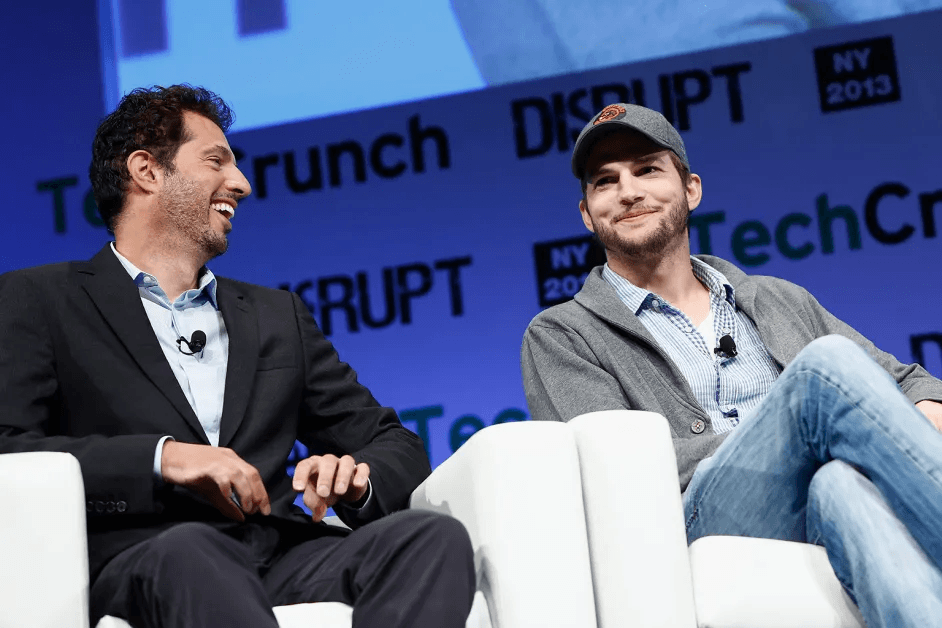
When the two first met, there was basically no business intersection. The familiarity started with a dog.
At that time, Oseary had just gotten a dog but was unsure how to take care of it, so he asked Kutcher for advice. Kutcher later stated that his first reaction was surprise: how could someone not even know how to take care of a dog?
It was this somewhat amusing contact that later developed into a long-term friendship. The two often played dominoes together and gradually discovered their strong mutual interest in tech startups.
At that time, Kutcher had already begun to focus on tech companies in Silicon Valley, and Oseary was also trying to expand his investment activities from the entertainment industry into the tech sector. They found that they often paid attention to the same batch of startups. Oseary later proactively proposed a partnership, hoping to jointly raise funds and establish an investment firm.
In 2010, they and American billionaire Ron Burkle co-founded A-Grade Investments.
A-Grade's early investment results were quite impressive. In 2016, Forbes revealed that the firm's initial investment of around $30 million had grown to approximately $250 million over six years, with a portfolio including companies like Uber, Airbnb, and Spotify. Notably, the approximately $2.5 million investment in Airbnb in 2011 skyrocketed in value to around $90 million; the $500,000 investment in Uber has grown to about 100 times the original amount.
In 2015, Kutcher and Oseary further established Sound Ventures, upgrading their previous model of personal funding to a more formal venture capital firm, starting to manage external investors' funds and expanding their investment range to tech companies at different stages.
Their collaborative approach showcases a certain complementarity. Kutcher focuses on consumer technology, product experience, and internet business models while maintaining a wide network of Silicon Valley entrepreneurs; Oseary brings a talent network, brand management experience, and business resources accumulated in the music industry.
However, among the two, Oseary's career experience is particularly worthy of study. Because investment is essentially about betting on founders. Before becoming a tech investor, Oseary had spent over twenty years learning how to discover and cultivate talent.
The first half of Oseary's career was mainly about searching for the "next great artist," later transitioning to look for the "next great entrepreneur."
Becoming a "Super Scout"
Guy Oseary was born in Jerusalem and moved to Los Angeles during his childhood.
He developed a strong interest in music at an early age. To find opportunities, he began actively reaching out to people in the entertainment industry and leveraged his school's relationships to secure meetings with industry professionals. At around 15, he began independently collecting music demos, taking photos, organizing materials, and founded a small company named Wise Guy Records.
When he was 16, he finally got the chance to meet famous Hollywood producer Bernie Brillstein.
After Brillstein reviewed the music materials Oseary brought, he asked how much money Oseary would need to release an album. Oseary at that time was unaware of the actual production costs and casually quoted the high price of $25,000. Surprisingly, Brillstein was willing to offer that amount and stated that if the project eventually made money, Oseary could just return the money to him.
However, an even more unexpected scene occurred: Oseary declined. He later explained that he had never even seen $2,500, let alone knew how to handle $25,000. What he truly wanted was not the funding, but the industry resources.
Thus, he made another request to Brillstein: he hoped that Brillstein could help him make three phone calls to introduce him to several people in the music industry. These three calls became an important starting point for his entry into the music industry.
In 1992, 19-year-old Oseary joined Maverick Records, becoming one of the heads of the artist and repertoire department. Maverick was a record company co-founded by Madonna and her manager Freddy DeMann, which later formed a partnership with Warner Music. Oseary joined the company as an early employee and gradually grew from a talent scout to a partner and chairman.
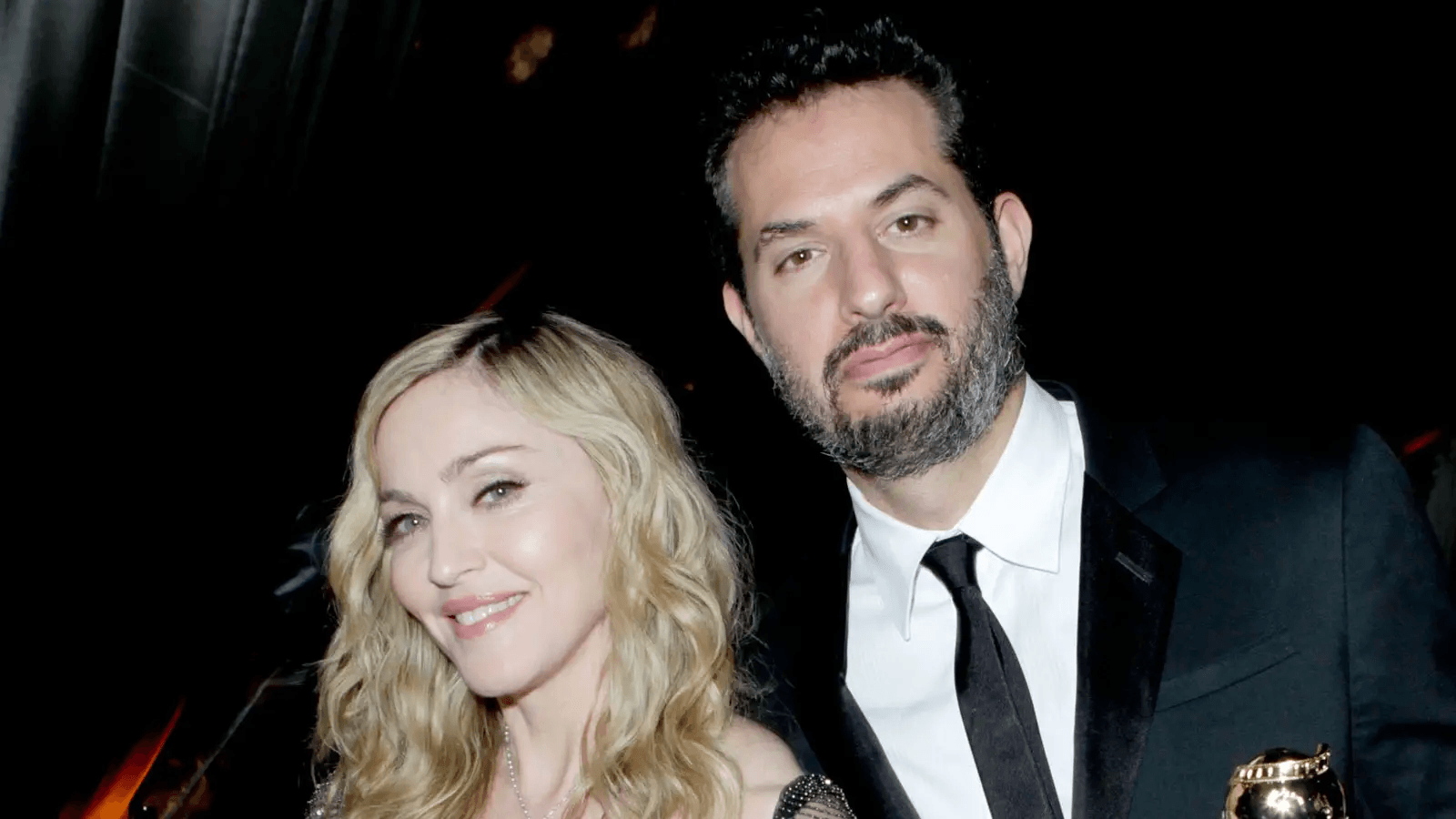
During his time at Maverick, one of his most significant achievements was discovering Canadian singer Alanis Morissette. At that time, Morissette had faced setbacks with multiple record companies. However, after hearing her songs, Oseary quickly decided to sign her. Later, Morissette's "Jagged Little Pill" became one of the most representative rock-pop albums of the 1990s, selling over 20 million copies worldwide and winning multiple Grammy Awards.
Oseary recalls that he didn't fully understand the emotions conveyed in Morissette's songs at that time, but the music itself resonated with him strongly. He believed he heard something he had never found before, which made him willing to bet immediately.
Similar experiences also happened with the British rock band Muse. At the time, Muse flew from London to Los Angeles to showcase for Maverick. After hearing the first song, Oseary stopped the performance and told the band they didn't need to play any other songs because he had already decided to sign them.
This seemingly bold and even somewhat reckless judgment later became a recurring feature of his career. This experience accumulated a special ability for him: he not only needed to assess whether an artist had potential, but also had to consider how to find the right production team for them, build their public image, expand their audience, and continuously create commercial value throughout their long careers.
And this way of working later appeared almost unchanged in his investment career.
Failing in the Internet Bubble
Oseary's interest in the tech industry actually predates the establishment of A-Grade Investments.
On a flight to Milan, he read an article about EarthLink's founder Sky Dayton, detailing how this entrepreneur amassed wealth through internet business. Oseary was fascinated by Dayton's story and actively sought opportunities to meet him after returning to Los Angeles.
Their meeting introduced him to another important figure: internet entrepreneur and Idealab founder Bill Gross. Idealab is a tech startup incubator that specializes in establishing and nurturing startups around different ideas.
Oseary quickly became very interested in this model because it bore similarities to the record company he was familiar with—different teams were pushing various projects simultaneously, with managers responsible for discovering worthy ideas to invest resources in and helping them grow.
He began to participate in some of Idealab's work and gradually attempted to make tech investments. However, his first investment experience ultimately ended in a disastrous failure. Before the internet bubble burst in 2000, Oseary had nearly put all of his wealth into Idealab-related investments. Subsequently, the internet market rapidly collapsed, and his investments suffered heavy losses.
In the following two years, Oseary repeatedly contemplated this investment failure almost every day. He realized he had made a critical mistake: he had not diversified his investments but had bet most of his funds in the same direction. This failure temporarily took him back to the familiar music industry.
However, Oseary did not completely give up on investing and began to search for opportunities in the consumer and tech sectors anew.
Making Investment Judgments in Five Minutes
Around 2008, he encountered Vita Coco, a beverage company that primarily sold coconut water. At that time, the U.S. coconut water market was still very small, and the entire industry's scale was limited. But Oseary noticed that during Madonna's tour, staff needed to find fresh coconuts in different cities to provide her with coconut water. He later discovered that more and more health-conscious individuals were also beginning to consume this beverage.
Therefore, when Oseary found that Vita Coco, introduced by a friend, coincidentally matched the consumer trends he had previously observed, he quickly decided to invest. This time, he also brought entertainment industry connections into the project. He invited renowned artists like Madonna to participate in promoting the brand, allowing those celebrities who already loved coconut water to help gain attention for the brand.
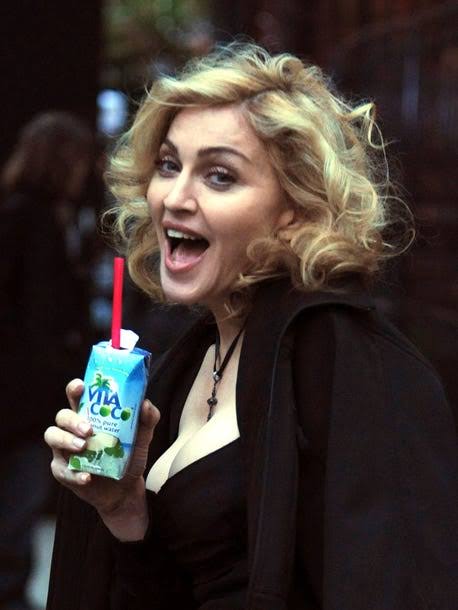
This investment later achieved excellent results, with Vita Coco eventually growing into a leading global coconut water brand, and it went public on Nasdaq in 2021.
This experience also allowed Oseary to develop his own investment approach: focusing on market data, observing the consumption habits of people around him, cultural trends, and unmet market demands. In 2010, he, together with Ashton Kutcher and Ron Burkle, established A-Grade Investments, formally institutionalizing this investment method.
First is intuition and a quick judgment of potential.
Oseary forms about 90% of his investment judgments within the first five minutes after meeting. This ability stems from his long experience in talent scouting—in the record industry, the smaller Maverick needed to compete with large record companies, and signing potential stars required decisiveness. Thus, he gradually developed a habit of making quick judgments.
However, intuition is not everything. Oseary also seriously considers whether he can truly help this company. If he can quickly envision what resources he can provide to the startup, how he can help build its brand and expand its user base, then the investment logic becomes easier to construct.
In his view, entrepreneurs have similarities with musicians. Each founder is like an artist ready to release a work to the world, and the investor's job is to help them find their audience, tell their story well, and let more people understand what they are creating.
Anthropic, you are the one
On November 30, 2022, OpenAI's ChatGPT was released, officially opening the curtain on the AI era.
Feeling the shock brought by ChatGPT, Oseary immediately contacted Ashton Kutcher. He told Kutcher that this was the direction they should invest in.
Subsequently, the two began preparing an AI fund focused on foundational models. Sound Ventures' judgment at that time was that foundational models could become the underlying connective layer for internet applications in the next 10 to 15 years, just as smartphones and the App Store once brought new business opportunities to the mobile internet.
They also believed that there was a very short investment window in the field of AI foundational models. As a result, the plan proposed to potential investors during fundraising was to deploy about 80% of the funds within three months.
In May 2023, Sound Ventures' AI fund completed fundraising, with a scale close to $240 million, focusing on foundational model layers, with the initial portfolio including OpenAI, Anthropic, and Stability AI.
Among these, the investment process in Anthropic is particularly worth noting.
Sound initially gained the opportunity to invest in OpenAI through Ashton Kutcher's connection with Sam Altman. At the same time, Oseary was actively researching other foundational model companies. During discussions with contacts at Salesforce Ventures, Oseary noted that the institution was paying attention to Anthropic and was very optimistic about the company.
In addition, Oseary learned through a friend in the headhunting industry that an increasing number of top talents were joining Anthropic rather than flowing to other AI companies. This made him realize that the company's appeal was underestimated by the market.
Thus, he proactively contacted Salesforce Ventures, hoping to meet Anthropic founder Dario Amodei. Subsequently, Dario Amodei visited Oseary's home in Beverly Hills, where he had a meeting with him and Kutcher. The group spent several hours discussing AI security, global AI competition, and the vision that Anthropic wished to achieve.
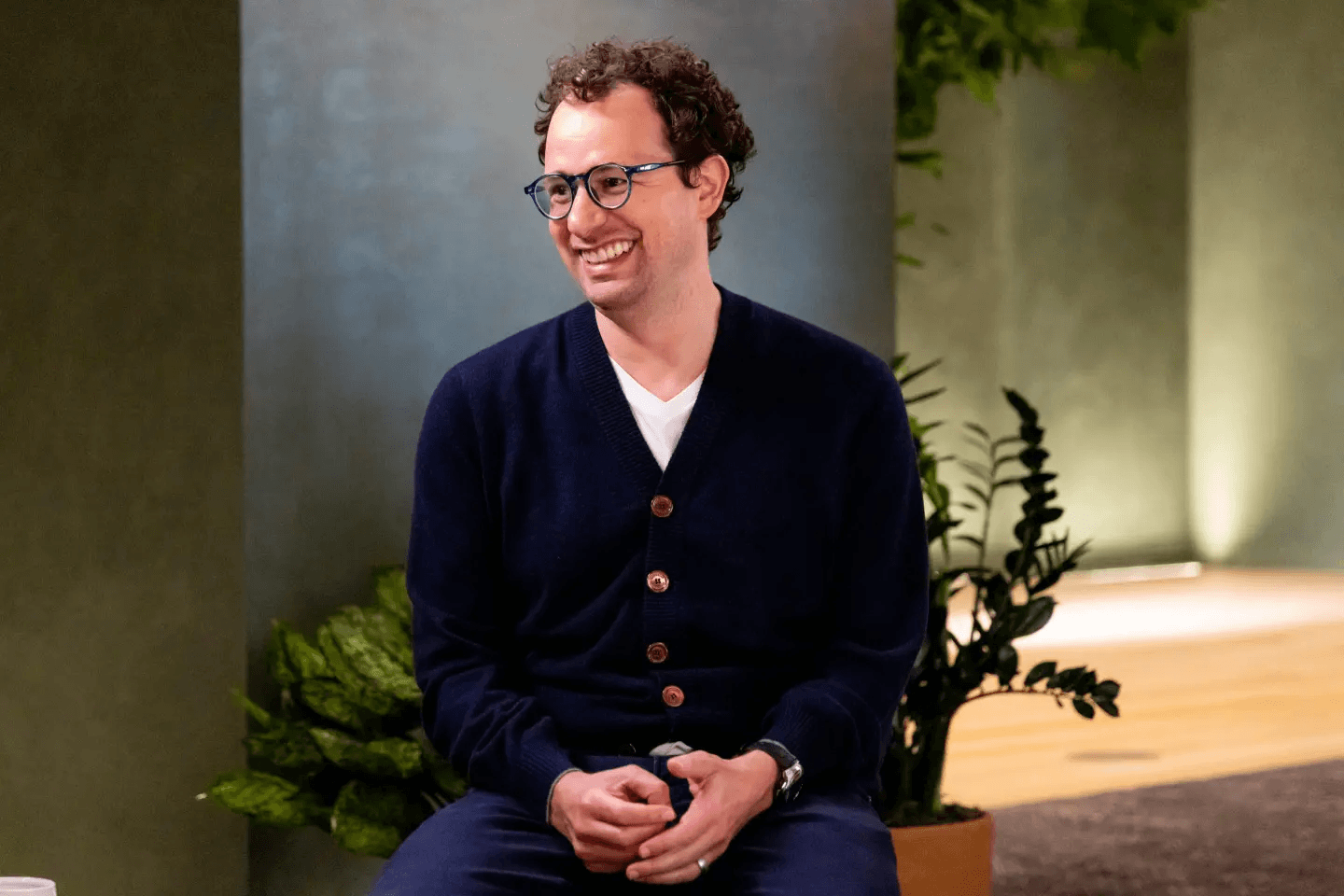
Ultimately, Sound Ventures decided to participate in Anthropic's early institutional financing. Sound invested $35 million at an estimated company valuation of about $5 billion. After that, Sound continued to participate in Anthropic's subsequent financing through special purpose vehicles (SPVs).
Recalling this investment, Oseary again used language familiar from the music industry.
He likened Dario Amodei to an artist with many ideas in his mind, ready to enter a recording studio to produce a great album, believing that this could be one of the greatest debut albums in history.
Partners "Split"
The success of the Anthropic investment actually coincided with a period when Sound Ventures' development direction was changing.
In May 2026, Sound Ventures announced adjustments to its partner structure. Ashton Kutcher will transition to a senior advisor and plans to establish a new investment firm with former Meta executive Morgan Beller, focusing on deep tech, infrastructure, and energy sectors.
Guy Oseary will continue to lead Sound Ventures along with general partner Effie Epstein, with a future focus on companies with commercial scaling potential and using the firm's experience in brand building and market communication to help entrepreneurs grow.
This means that the two founding partners, who have collaborated for over 20 years, are beginning to explore different investment directions.
Looking back at the development of Sound Ventures, from investing in Uber, Airbnb, and Spotify during the A-Grade period, to investing in well-known projects in the cryptocurrency industry such as ConsenSys, OpenSea, Chainalysis, Dapper Labs, and Yuga Labs, and later focusing bets on OpenAI and Anthropic. The two founders have always tried to find companies with the potential to change the industry.
Related Reading: "Beyond Investing in AI Star Projects, Analyzing Hollywood Star Ashton Kutcher's Strategies in the Crypto Circle with Sound Ventures"
For Guy Oseary, while the industry changes, the task of finding talent has remained constant.
From musicians to entrepreneurs, he continues to search for the next "star" capable of changing the industry.
免责声明:本文章仅代表作者个人观点,不代表本平台的立场和观点。本文章仅供信息分享,不构成对任何人的任何投资建议。用户与作者之间的任何争议,与本平台无关。如网页中刊载的文章或图片涉及侵权,请提供相关的权利证明和身份证明发送邮件到[email protected],本平台相关工作人员将会进行核查。


