The first day stock price of ANT needs to stand above $87.15 in order to cover the channel friction costs and reach the breakeven line.
Written by: Maher, Foresight News
On November 19, Anthropic officially set its IPO issuance price at $83 per share, higher than the previously disclosed range of $70-78 in the prospectus. The company also increased the planned issuance scale from about 825 million shares to 980 million shares, with the company itself selling about 956.35 million shares and existing shareholders selling about 23.65 million shares.

Based on this calculation, the public fundraising scale reached about $81.3 billion, surpassing the record set by SpaceX of about $75 billion in June this year, becoming the largest technology IPO in history. The fully diluted valuation is approximately $15 trillion.
This pricing result highly aligns with market demand during the roadshow.
Several media outlets quoted sources stating that the order book had reached about 6 to 7 times the intended issued shares before pricing. The company clarified in the prospectus that it aims to allocate up to about 20% of the shares to retail investors, a proportion significantly higher than the typical 5%-10% level for large tech IPOs. Meanwhile, seven major computing and chip suppliers (including Nvidia, Google, Microsoft, etc.) will participate in a private placement of about $26 billion at the same price, further expanding the overall financing scale.
The company’s fundamentals supported the high pricing. The prospectus showed that the revenue for the first nine months of 2026 exceeded $33 billion, with the third quarter alone accounting for about $17 billion, a year-on-year increase of about 12 times; the number of large customers (with annual consumption exceeding $100,000) rose from about 1,500 by the end of 2025 to over 11,900 by the end of September. Compared to the valuation of about $965 billion after the H round in May, this public market pricing has achieved a significant upward adjustment, but there is still a gap with some higher levels previously anchored in the cryptocurrency market.
The company’s shares will begin trading today on Nasdaq under the ticker ANT.
Binance and Bitget have completed subscriptions
The Anthropic IPO xStocks activity on Binance Wallet has a minimum subscription of 100 USDC, with a total limit of 500 million USDC, plus a service fee of 5%. On the evening of November 18, Binance Wallet announced that the subscription amount had reached the 500 million USDC limit and would no longer accept subscriptions; the refundable funds will be returned to the account after the process is completed.
Bitget is providing rANT tokens through IPO Prime in two rounds. The public round starts at $100, with a personal limit of $25,000 and a funding pool limit of $200 million, with a service fee of 5%; the VIP round has a personal limit of $3 million and a service fee of 12%. The public round subscription ended at 16:00 on November 18, with a total subscription amount exceeding $100 million and a total participant count of 11,000 people.
Both rounds are settled at the official issuance price, and fees are charged only based on the actual allocation amount. Both rounds are allocated based on investment proportion without a lottery. The funding pool limit for the VIP round is $1 billion, and Bitget stated that tokens will be distributed 3 to 5 business days after the IPO. rANT is backed 1:1 by actual stock, but holders do not have shareholder voting rights.
How do Hyperliquid and Polymarket price?
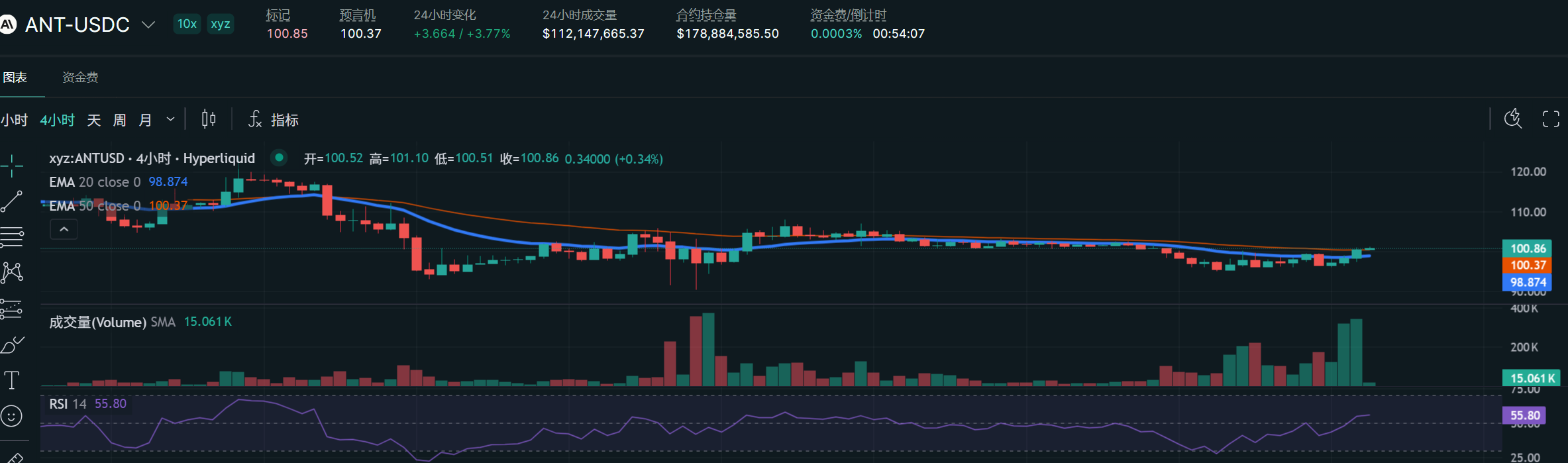
Before the pricing of ANT, the figures given in the derivatives market were significantly higher than Wall Street. The pre-market perpetual contracts on Hyperliquid quoted about $96.93, implying a valuation of approximately $17 trillion, about 24% higher than the upper limit of the issuance range.
After the issuance price of ANT was announced, this premium did not narrow. As of now, the mark price of the ANT-USDC contract on Hyperliquid is about $100.73, up about 3.6% in 24 hours, with a trading volume of about $111 million in the last 24 hours and open contracts of about $179 million. Calculating at $100.73, this is about 21% higher than the issuance price of $83, corresponding to a valuation of about $18.2 trillion.
The closing market cap contract of the prediction market Polymarket is more conservative.
It should be noted that this contract on Polymarket is settled according to the ordinary market value at the first day close, not the fully diluted valuation (FDV). At the same stock price, the ordinary market value is lower than the FDV which accounts for options, restricted stocks, and other potential shares.
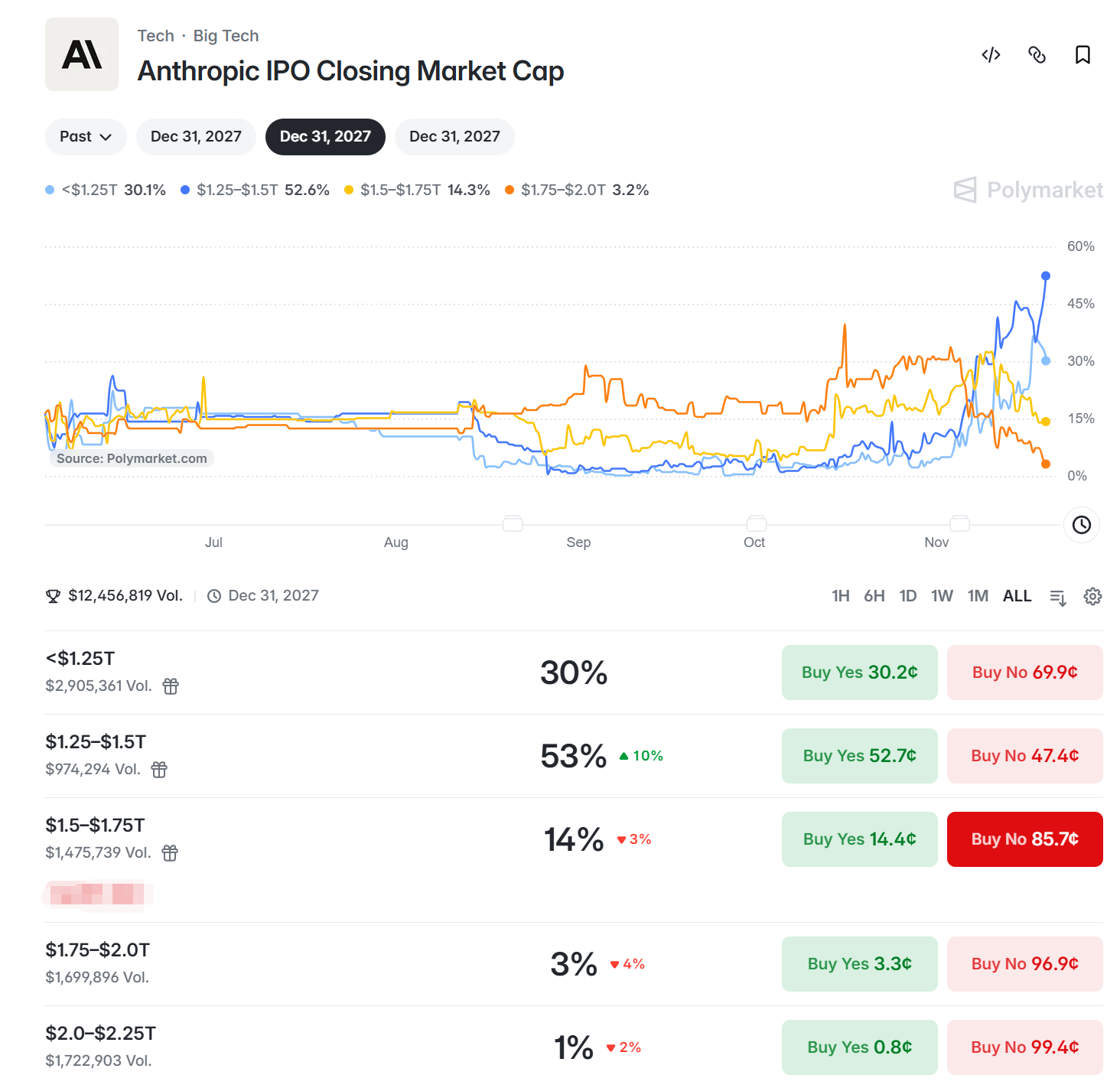
Latest data shows that the probability of market traders predicting the first day closing market value to fall between $12.5 trillion to $15 trillion is 53%, the probability of it falling between $15 trillion to $17.5 trillion is 14%, and the probability of it falling below $12.5 trillion is 30%.
From the perspective of historical pricing anchoring effectiveness, pre-market derivatives hold some forward-looking reference value.
Before SpaceX went public, Binance's pre-market contract was about $162.5, and the first-day closing price was $160.95; in the previous six pre-market contracts on Hyperliquid, the opening stock price averaged within 25% of the contract price the night before.
Potential Earnings Calculation
First, let's calculate the costs. Assuming an issuance price of $83, after adding a 5% fee from Binance Wallet and Bitget's public round, the per-share cost is about $87.15.
Based on this calculation, the first-day stock price needs to stand above $87.15 to cover the channel friction costs and reach the breakeven line.
The table below calculates “actual allocation of $10,000 (based on issuance price),” with service fees deducted, assuming the first-day price.
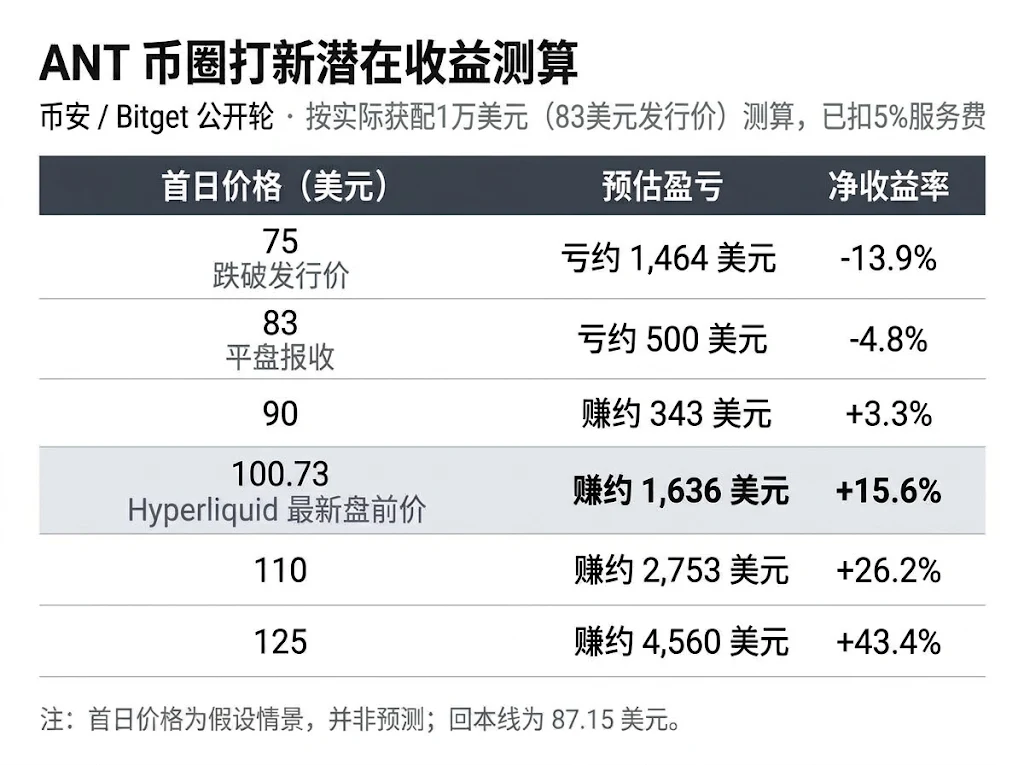
If using Hyperliquid's $100.73 as the baseline scenario, each allocation of $10,000 would earn about $1,636, with a net return rate of about 15.6%. If the first day simply rises to $90, the net earnings would only be around $343.
Another variable is the allocation ratio.
The quota for Binance has been fully subscribed, and the allocation ratio has yet to be announced. The funding pool for Bitget’s public round is only $200 million. Bitget claims that the historical allocation rate for cooperating channels is between 40% to 80% (VIP round); however, historical data cannot be directly applied, and it depends on the specific number of shares Bitget can obtain this time.
Assuming a user subscribes for $10,000 but only receives half, that is, $5,000, if it rises to $100.73 on the first day, the actual earnings would be about $818; if it falls to $90, about $172.
In summary, the top pricing of $83 has already overshot some of the secondary market premium space, and the 5% fee has raised the breakeven line.
Hyperliquid's latest pre-market price is about 21% higher than the issuance price; if the first day generally materializes, net earnings would be around 15%. If the market is closer to Polymarket's cautious expectations, the earnings after deducting fees will be very limited. The first hour after tonight’s opening will be the earliest test.
免责声明:本文章仅代表作者个人观点,不代表本平台的立场和观点。本文章仅供信息分享,不构成对任何人的任何投资建议。用户与作者之间的任何争议,与本平台无关。如网页中刊载的文章或图片涉及侵权,请提供相关的权利证明和身份证明发送邮件到[email protected],本平台相关工作人员将会进行核查。


