Recently, three seemingly independent news items are clarifying the same capital logic: On one side, it is reported that OpenAI's first AI edge hardware will start shipping by the end of this year, with China's Luxshare Precision exclusively responsible for the entire machine manufacturing. This means it will no longer be just a light-asset company selling models and APIs, but is moving towards a heavy investment path that integrates software and hardware, deeply binding the supply chain. On the other side, Morgan Stanley cut the target price for Tencent Holdings by nearly 13% to HK$480, yet still gave it an "overweight" rating, indicating that higher AI investments will suppress its short-term profits, and the capital market is starting to recalibrate valuations based on the premise that "AI must spend money". Almost simultaneously, the Trump administration announced the establishment of a Cyber Crime Threat Center that involves over 30 federal agencies and more than 440 state and local partners, one of whose responsibilities is to trace scam funding paths, identify involved crypto wallets, and extend the search for more potential victims on-chain, drawing crypto fraud and on-chain addresses directly into the regulatory crosshairs. The heavy asset AI, technology stocks constrained by profit pressures, and the tightening regulation surrounding crypto fraud and on-chain wallets are forming the same battlefield: the technological narrative persists, but what truly determines the direction of the chips will be who can withstand hardware investments, short-term profit adjustments, and more granular scrutiny of on-chain behaviors.
OpenAI Edge Hardware Launching Shipment
In the heavy asset battlefield of tech capital, OpenAI has chosen to step in personally. Market news states that its first AI edge hardware is planned to start shipping before the end of this year, which is not just "one more device," but a structural shift from "cloud model + software service" to "integrated software and hardware." Making hardware means moving from a light-asset path of APIs and subscriptions to a heavy asset path requiring long-term capital expenditure, inventory, and iterative processes, but what it gains is more direct control over user entry points, interaction forms, and data feedback channels. Once it packages computing power and interaction into its own terminals, OpenAI will no longer just "run models" on others' devices and operating systems, but will attempt to turn models into an embedded capability, allowing users to use its intelligent services seamlessly in daily scenarios.
According to reports, the entire machine manufacturing of this edge hardware is exclusively undertaken by China's Luxshare Precision, and this single partnership exposes the highly intertwined AI supply chain between China and the US to more direct geopolitical risks: any policy friction, export restrictions, or fluctuations in public opinion at any link could quickly transmit to shipment rhythms and cost structures. More critically, edge hardware means more computing power and intelligent interaction moving from data centers to user-side devices, even if core models remain in the cloud, inference, local preprocessing, and scenario adaptation will gradually be done on the edge. This change in computational distribution weakens the absolute dominance of pure cloud-based infrastructure and increases the importance of "whoever masters terminal forms, protocol stacks, and development interfaces has the opportunity to rewrite the dominant power of the AI ecosystem."
Tencent Increasing AI Investment Faces Target Price Downgrade
As computing power and terminal discourse rights are redistributed, domestic giants are also forced to stake more chips. Morgan Stanley, while cutting Tencent Holdings' target price by nearly 13% to HK$480, still maintained an "overweight" rating, essentially rewriting the company's risk-reward curve: higher AI investments will continue to erode the beauty of the profit sheet in the coming years, but analysts believe this choice to compress profit margins is to secure a more certain growth narrative and ecological position in the new round of technology cycles, thus merely adjusting return expectations rather than denying the asset itself.
The tension lies in that Tencent aims to ramp up AI investments within the integrated cloud-edge framework while needing to clarify the "sustainable" technical path under geopolitical constraints. On one hand, management downplays the limitations on cloud business revenue, emphasizing that efficient inference can run on domestic chips, sending signals to the market that "core capabilities can be completed within the local computing stack"; on the other hand, it uses products like WorkBuddy to demonstrate how to obtain model support from model partners, buffering acquisition constraints through external model supply. What the capital market sees is a company actively accepting short-term profit pressures, preparing as many hands as possible on technology paths and supply chains, and its valuation adjustments reflect not the end of the story, but a recalculation of time and risk cost by tech capital in the new battleground.
US Establishes Cyber Crime Center to Target Crypto Fraud
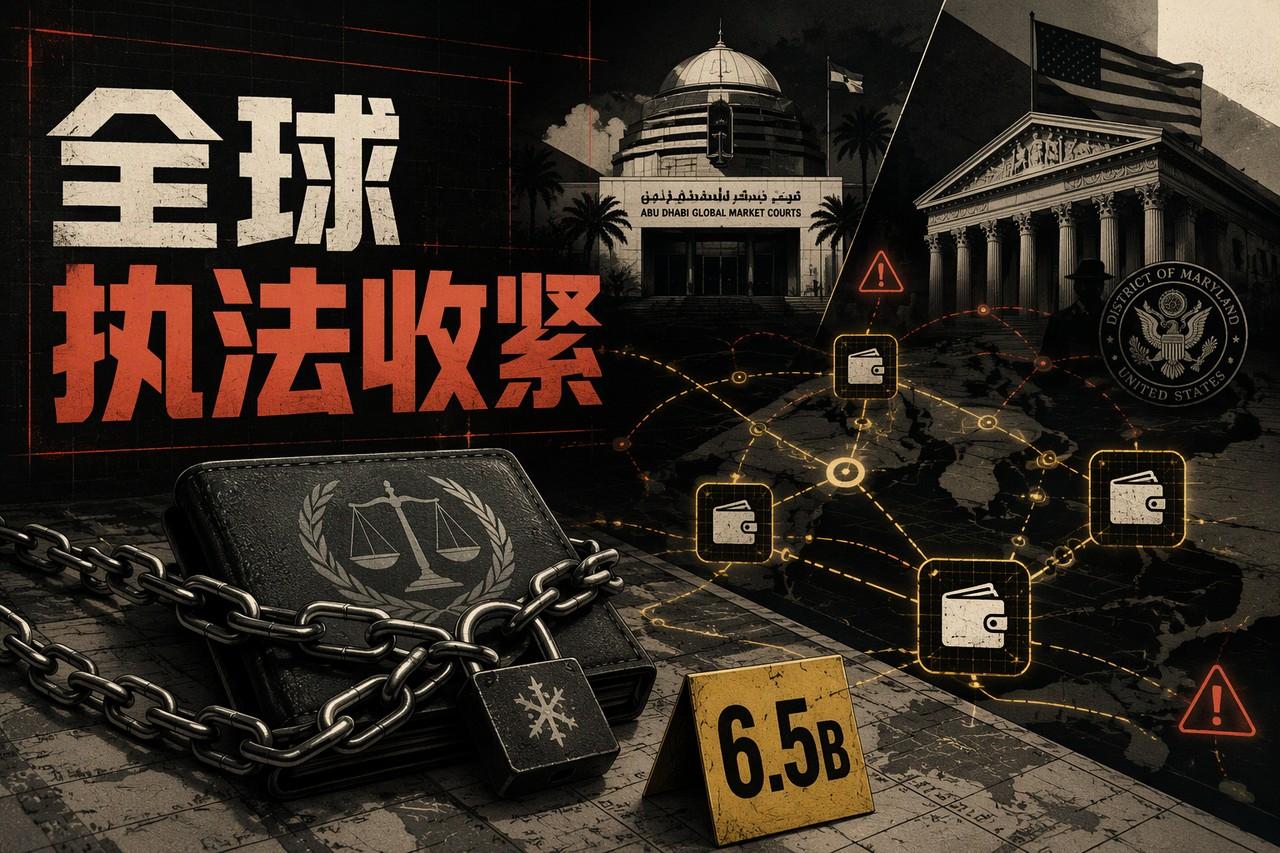
As tech companies invest heavily in computing power and hardware, and the capital market recalibrates profit timelines, the US government chooses to enter from another front — directly tightening regulatory screws around the crypto world. The Trump administration announced the establishment of a new Cyber Crime Threat Center involving over 30 federal agencies and more than 440 state and local partners. This is not a traditional "case office," but a cross-departmental, cross-hierarchical coordination hub dedicated to pulling together scattered clues of cybercrime across various lines to the same table for processing, with crypto fraud explicitly listed as a key target.
Unlike past focuses on post-fact qualitative measures, the center's responsibilities are designed to be closer to the on-chain reality: one end receives reports from victims, while the other tracks along scam funding paths, connecting seemingly chaotic transaction records into narrative lines usable for law enforcement. Official sources indicate that the center will identify the crypto wallets used by criminals and seek other potential victims based on this, signaling that the previously discussed "address profile" and "funding path restoration" will now be systematically included in the regulatory toolbox. While tech capital bets on models and hardware at the front end, regulatory capital is also rewriting rule boundaries using addresses and funding paths, further highlighting the tension between the crypto world and the traditional judicial system.
The Heavy Asset AI Era and the Strain on Tech Stock Profits
At the forefront is OpenAI pushing its first edge hardware into mass production, with Luxshare Precision exclusively manufacturing the entire machine, which amounts to staking supply chain, inventory, and channel chips on a heavier asset path with a longer return cycle; at the back end, Tencent faces a nearly 13% target price downgrade from Morgan Stanley but still retains the "overweight" rating. One is raising capital expenditures to compete for future computing entry, while the other is being signaled by the capital market that higher AI investments will erode profits in the short term. When positioned together, the cost curve of AI moving from "cloud stories" to "hardware and infrastructure realities" is clearly laid out before investors.
Morgan Stanley's attitude reflects the current pricing divergence: the research side recognizes Tencent's long-term layout in AI, but remains cautious about quarterly profits in the face of rising investments in models, chips, and cloud infrastructure. Tencent's management emphasizes that related restrictions have limited impacts on cloud business revenue while responding to geopolitical constraints by relying on domestic chips for efficient inference and using model partners to support WorkBuddy. This defensive stance reveals the tug-of-war between capital wanting to "continue increasing AI" and "protecting profit margins." Meanwhile, on another track, the newly formed Cyber Crime Threat Center in the US begins systematically tracking scam funding paths and identifying involved crypto wallets, with regulation itself consuming tech capital and forcing companies to account for both computational expansion and compliance tools. The result of the simultaneous advancement of AI investment and crypto regulation is that tech capital is being refitted between models and hardware to address profiles and funding path tracking, and this dual-track competition surrounding AI and crypto will ultimately reshape the global tech landscape in the redistribution of capital.
From Supply Chain to Regulatory Capital Facing New Tests
From the supply chain to the capital market and the law enforcement system, three lines intertwine within the same time window: OpenAI's edge hardware is still at the expectation of "shipping by the end of this year," with specifications and sales not publicly disclosed, yet has already locked the manufacturing segment and investments into a heavier asset path; Tencent encounters a target price downgrade under higher AI expenditures, needing to emphasize the limited impact of related restrictions on cloud business revenue while relying on domestic chips for efficient inference and cooperating with model partners via WorkBuddy to restore profit expectations; meanwhile, the newly established Cyber Crime Threat Center in the US targets handling victim reports, tracking scam funding paths, and identifying involved crypto wallets, tightening the regulatory narrative around the on-chain world. What will truly determine the direction of tech capital going forward is whether OpenAI hardware can land as planned with verifiable shipment performances, whether Tencent's AI business in cloud and office products can find a clear path for profit restoration, and whether the center can effectively improve the recognition efficiency of scam funding and involved wallets in actual case handling. Until these variables become clearer, regular participants need to face risks and compliance requirements related to crypto fraud more cautiously in an environment of strengthened chain regulations, viewing the understanding of addresses and funding paths as a necessary prerequisite for long-term involvement in this battle.
Join our community, let’s discuss and become stronger together!
AiCoin exclusive Hyperliquid benefits: https://app.hyperliquid.xyz/join/AICOIN88
AiCoin exclusive Aster benefits: https://www.asterdex.com/zh-CN/referral/9C50e2
On-chain Telegram community: https://t.me/AiCoinWhaleData
On-chain community: https://www.aicoin.com/link/chat?cid=N6OVMor5g
AiCoin on-chain Twitter: https://x.com/aicoinwhaledata
免责声明:本文章仅代表作者个人观点,不代表本平台的立场和观点。本文章仅供信息分享,不构成对任何人的任何投资建议。用户与作者之间的任何争议,与本平台无关。如网页中刊载的文章或图片涉及侵权,请提供相关的权利证明和身份证明发送邮件到[email protected],本平台相关工作人员将会进行核查。