The United States Tightens AI Chip Export Controls to Southeast Asia
Data Center Financing Faces Risks and Scrutiny
Financing Terms for Chinese Projects Tighten
The U.S. government announced on Monday (16th) that it would tighten export controls on advanced artificial intelligence (AI) chips and overseas computing power, requiring that any controlled U.S. advanced chips supplied to certain data centers in Singapore, Malaysia, Indonesia, and Thailand must first obtain permission from the U.S. government, in order to block the pathways for Chinese companies to access restricted computing power through third-country data centers.
The new measures do not fully ban the export of advanced chips to Southeast Asia, and permit applications will be reviewed on a case-by-case basis. Some operators of data centers controlled by U.S. companies may be exempted if they meet reporting conditions. However, the new rules also restrict overseas data centers from providing large amounts of AI computing power to Chinese companies and other restricted areas, and existing arrangements must obtain permits within a specified 90-day period.
Bloomberg points out that the new rules pose risks for banks and private credit funds that have provided billions of dollars in loans to Southeast Asian data centers and AI chip procurement projects, including customer loss, cash flow interruptions, and collateral devaluations.
Banks Suspend Financing for Some China-Related Projects
Recently, the AI stocks have been sold off, prompting some lenders to express concerns about further increasing their exposure to the industry's risks. Following the implementation of the new restrictions, financial institutions have begun reassessing financing deals that are still in preparation.
Insiders revealed that several bankers reviewing transactions involving Chinese buyers or end customers have decided to either refrain from participating or to postpone the advancement of certain projects. If relevant projects are unable to obtain export permits or if Chinese companies are banned from using the relevant computing power, data center operators may lose their primary source of income, affecting their ability to repay loans.
Olaf Groth, a practice professor at UC Berkeley's Haas School of Business, stated that the situation is ostensibly about chips, but ultimately, it may be the lenders who bear the financial consequences. He believes that if a project involves Chinese customers, financing transactions will be even harder to complete, and it may also affect other customers sharing the same data center with Chinese companies.
APAC Data Centers Raise $49 Billion in Three Years
According to data compiled by Bloomberg, data center companies in the Asia-Pacific region have raised approximately $49 billion in loans since 2023. This does not mean that all loans are directly affected by the new regulations, but it reflects that banks and private credit funds have significant exposure to the risks associated with data centers and AI infrastructure.
Many of these financing arrangements use revenue generated from data center customer contracts as repayment guarantees, and some transactions even directly use graphics processing units (GPUs) as collateral. Should Chinese customers be unable to continue utilizing overseas computing power due to U.S. export restrictions, lenders may not only lose their original cash flow guarantees but also face risks related to the rapid iteration of GPU technology, equipment depreciation, and decreases in secondary market value.
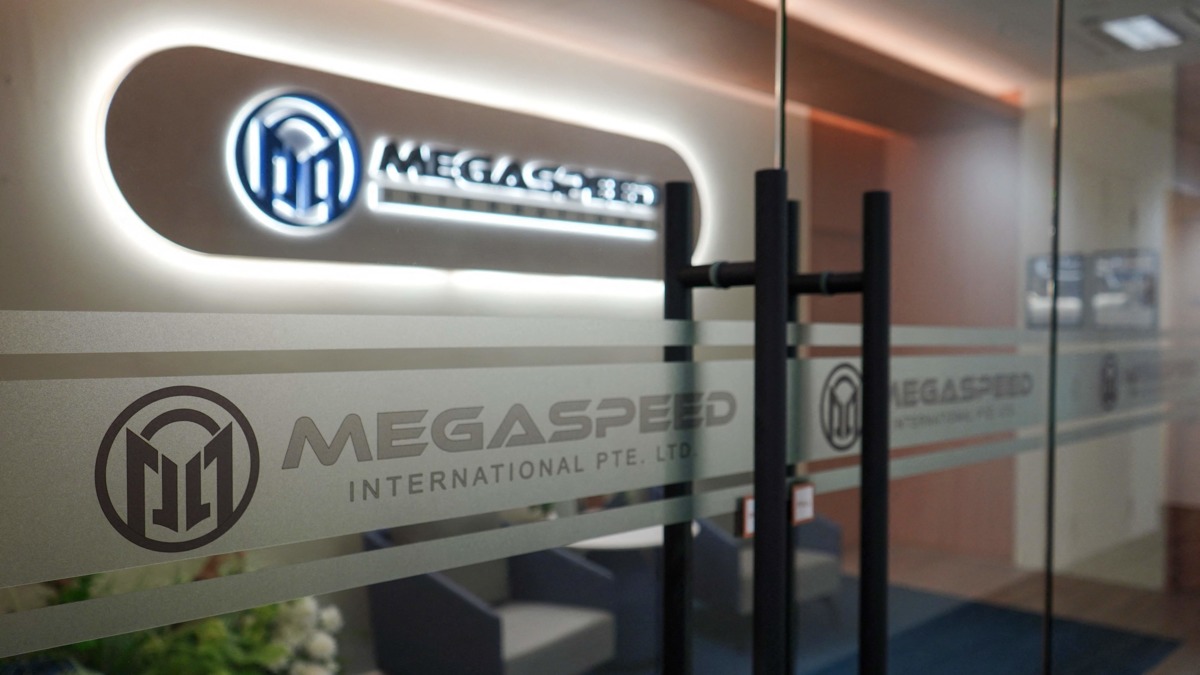
Chinese tech companies have recently become important customers for Southeast Asian data centers. For example, ByteDance rents computing power from DayOne Data Centers and Bridge Data Centres; Alibaba has also rented computing power in Malaysia from Megaspeed International, which is headquartered in Singapore.
Megaspeed International has been accused by U.S. authorities of attempting to transfer restricted chips to China; however, the allegations must still be distinguished from facts that have already been adjudicated in court.
Multiple Large AI Financings Under Market Scrutiny
Currently, several data center and GPU financings in the Asia-Pacific region involve Chinese tech companies, NVIDIA credit support, or arrangements where chips are used as collateral:
One of these, a special-purpose company established by Brookfield Asset Management, plans to borrow approximately $8 billion to purchase GPUs and other AI computing infrastructure, and will provide computing power to Naver Cloud through long-term contracts. KB Kookmin Bank has been appointed to lead the syndicate loan arrangement, and the project is described as South Korea's first large GPU financing.
Firmus Technologies is also seeking to raise about $10 billion, including approximately $7.5 billion in debt and $2.5 billion in equity, for the acquisition of NVIDIA chips and the development of an AI data center on Batam Island in Indonesia. Reports indicate that NVIDIA will provide revenue sharing and credit support to reduce lenders' concerns about repayment capabilities.
Zankore is also in discussions with banks for a new loan of about $6 billion, with UOB leading the transaction. The company had previously obtained $3.1 billion in financing for its AI plant in Indonesia and plans to gradually expand data center capacity from 100 megawatts to as much as 1 gigawatt.
GMI Loan Includes Tencent's Sanctioned Early Repayment Clause
Some chip procurement financings involving Chinese customers have included additional safeguard clauses prior to the issuance of the latest regulations, including increasing the proportion of down payments, charging high termination fees, and requiring early repayment when changes in the regulatory environment occur.
NVIDIA partner GMI Cloud is seeking a loan of about $300 million to procure chips for a project located within the ST Telemedia Global Data Centres facility in Thailand, with the related computing power to be used by Tencent. Reports indicate the loan offers a return rate of around 10%, reflecting lenders' demand for higher returns to offset risks associated with regulations, customer concentration, and declines in GPU value.
According to a list of loan terms cited by Bloomberg, if Tencent is placed on the U.S. restricted list, GMI Cloud will be required to repay the loan in full ahead of schedule. This means lenders are unwilling to bear the risks of Chinese customers suddenly losing their eligibility to use computing power and are passing the related regulatory risks onto the borrowing companies.
GMI Cloud also previously secured a $436 million five-year syndicated loan for a Taiwan Taoyuan AI project. This loan is only part of the overall financing plan, which also includes approximately $199 million in bridge loans and a revolving credit facility, with the funds primarily used to procure GPUs and build AI computing facilities.
Korean and Japanese Projects Also Indirectly Affected
The U.S. new regulations directly target Southeast Asian markets, including Singapore, Malaysia, Indonesia, and Thailand; however, other Asian projects that have Chinese companies as the final users of computing power may still face compliance and financing risks.
U.S. cloud enterprise PaleBlueDot AI is currently seeking approximately $600 million in private credit to purchase GPUs based in South Korea, with the related computing power expected to be used by Xiaohongshu. Brookfield Asset Management is one potential lender, but the transaction terms have not yet been finalized.
PaleBlueDot AI also completed a $255 million private loan backed by GPUs in July 2026, provided by Brookfield Asset Management and Tor Investment Management, with JPMorgan acting as the placement agent.
Although the data center is located in Japan and not within the four Southeast Asian countries covered by the new export permit requirements, lenders still need to assess whether Chinese end customers will trigger other export controls and whether legal changes will constitute events for mandatory early repayment.
Data Center Financing May Hit the Brakes
Gary Ng, a senior economist at France's Export Bank, stated that the pace of data center financing may slow down due to the new restrictions, and the growth rate of AI investments may also be affected. Lenders will reassess risks related to export controls, data sovereignty, energy bottlenecks, customer concentration, and project cash flow.
This article is reprinted from the Hong Kong Economic Daily, with copyright belonging to the original author and original media.
免责声明:本文章仅代表作者个人观点,不代表本平台的立场和观点。本文章仅供信息分享,不构成对任何人的任何投资建议。用户与作者之间的任何争议,与本平台无关。如网页中刊载的文章或图片涉及侵权,请提供相关的权利证明和身份证明发送邮件到[email protected],本平台相关工作人员将会进行核查。


