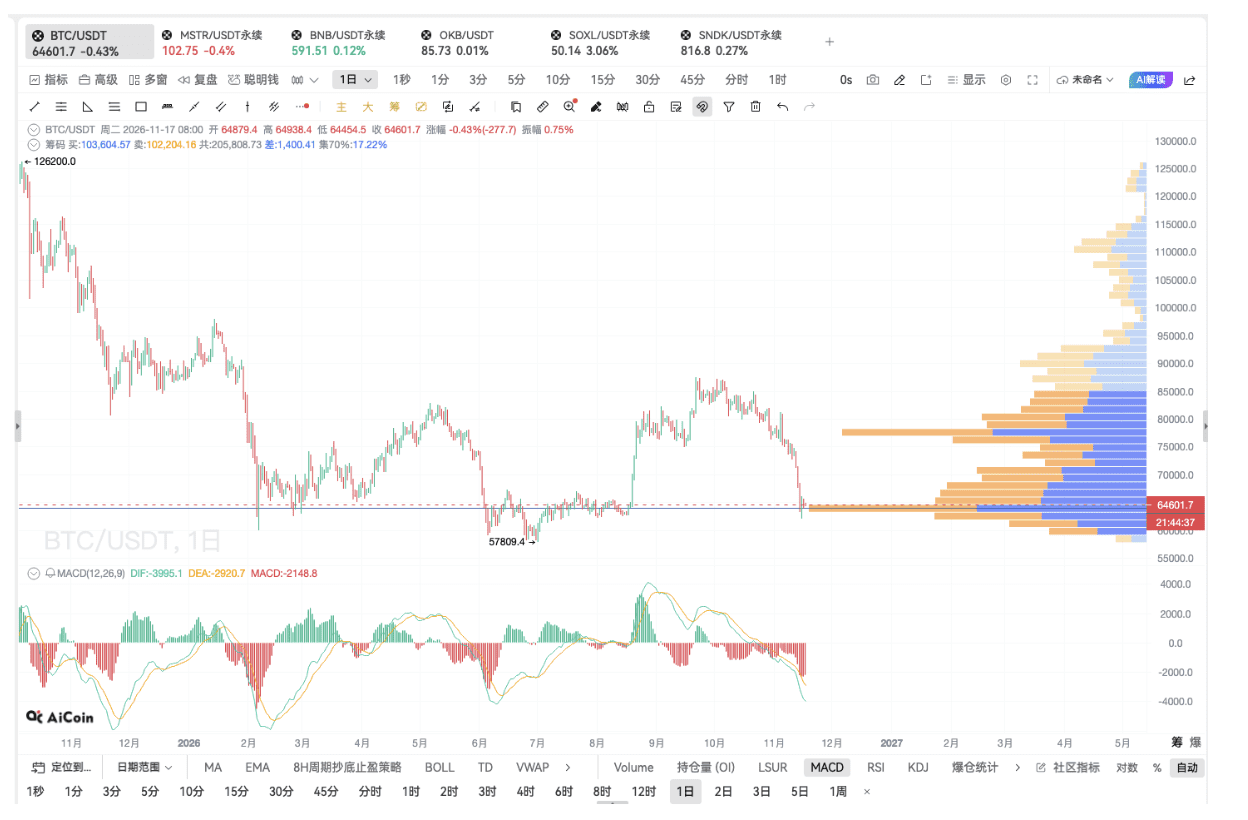
On November 18, 2026, Vitalik Buterin, as a co-founder of Ethereum, wrote a post on the social platform X (formerly Twitter) that wasn't long but pierced through the current anxiety: he didn't teach people "how to trade cryptocurrencies", but instead focused on a more hidden battlefield—the asset allocation choices made by the younger generation between housing, stocks, and digital assets, and the reshaped social incentive structures behind them. On the same day, several Chinese cryptocurrency media outlets, including Rhythm BlockBeats, Jinse Finance, PANews, Shenchao TechFlow, and Foresight News, almost repeated this statement with similar abstracts, placing it within the macro context of "high housing prices making it difficult for young people to buy homes", but also admitted that there was currently no verified interactive data or rigorous statistics to prove the trend that "young people are collectively moving away from real estate towards stocks and digital assets", and could only regard Vitalik's judgment as a qualitative observation. Vitalik pointed out a set of tensions in his article: housing investment, which was culturally and policy-wise encouraged in the past, was seen as a "safe, not crazy, and hard-to-liquidate" default option; it is both a necessity for life and the most important asset for a family. The difficulty of liquidating it has instead shaped people's desire to keep housing prices expensive as a distorted incentive; in contrast, modern digital assets and their trading platforms provide extremely high liquidity, with the convenience of buying and selling at any time and dramatic price fluctuations pushing stronger speculative impulses. Vitalik is not simply "taking sides" for a certain type of asset for young people, but instead throwing out a more challenging question: if certain attributes of housing—safety, responsibility, and suitability for long-term holding—have previously played a positive economic role, is it possible for the cryptocurrency industry to find similar "good attributes" for digital assets, allowing them to become a more robust long-term value storage tool without replicating the distortions of the housing market.
Housing Becomes a Speculative Chip Under High Prices
In Vitalik's view, the oddity of the contemporary housing market lies not in the price fluctuations themselves, but in the fact that it simultaneously plays two conflicting roles: on one side, it is an indispensable necessity for life, while on the other, it is regarded by most families as the core of their asset allocation. Housing is treated as a "safe, not crazy, and hard-to-liquidate default investment", which has been tacitly accepted and even encouraged by culture and policy both in the past and present, causing a market that should operate around living needs to slowly transform into a system revolving around asset preservation and appreciation. The issue is that rising housing prices usually have a negative impact on those who need to live and on overall social welfare, but for asset owners who already own housing, it is seen as an increase in wealth. This misalignment of incentives is a typical case that Vitalik specifically pointed out.
This set of logic, placed against the backdrop of globally inflated housing prices and the difficulties young people face in buying homes, makes the "distorted incentives" more apparent: when most families view housing as an asset, society's tolerance for falling housing prices significantly decreases, leading owners to naturally form a collective tendency to "hope housing prices remain expensive." The higher the prices, the harder it becomes for the younger generation to enter the market, but the vested interests are even less willing to see adjustments, thus transforming housing from a safe haven into a chip for betting on future price increases. In his post on November 18, Vitalik proposed a seemingly calm yet profoundly disruptive judgment: if the younger generation reduces its dependence on real estate in asset allocation, theoretically, one benefit is that it could weaken the distorted incentive of hoping housing prices remain perpetually high, redirecting housing back to a position closer to "serving living needs rather than serving asset prices."
From Houses to On-Chain Assets: Young People Changed Their Bets
Following this line of reasoning, Vitalik's statement on X that "the younger generation is investing more in stocks (stonks) and other digital matters rather than housing" is placed within a larger context. It is not a statistical report but a sensitive capture of the atmosphere: as buying a home increasingly resembles an inaccessible game, more young people are directing their limited savings into stocks and digital assets with lower entry barriers and the ability to enter and exit positions at any time. The popular saying in the community, "first rent a home, then throw the money into the stock market or crypto," mostly comes from narrative descriptions by individual accounts; research briefs have warned that such narratives can currently only serve as qualitative backgrounds, rather than quantifiable conclusions.
At the motivational level, it is not singular. Some actively escape—they view real estate as an old game where the rules have long been set: the entry cost is high, the exit cost is high, yet it is tightly controlled by a generation’s mindset of "housing prices can only rise, not fall", so they simply remove themselves from this chessboard; others adapt passively—in calculating between salaries, down payments, and loans, they find that buying a home is simply not an option, and can only look for "affordable assets" in stock accounts and crypto wallets. Regardless of motivation, the betting table has shifted from low-liquidity bricks and mortar to on-chain assets and online securities that can be executed in seconds.
This shift subtly alters the relationship between individuals and risk. In the past, "buying a house," encouraged by culture and policy, was packaged as a default configuration that is not crazy and hard to liquidate, forcing ordinary families to endure long holding periods to absorb price fluctuations; whereas in modern digital assets and their trading platforms, the default state is high liquidity, easy liquidation, and frequent repositioning, where every price movement can instantly translate to impulsive actions. Young people trained in this environment develop more frequent decision-making habits, shorter holding perspectives, and a more direct emotional capacity for asset price volatility. This migration from houses to on-chain assets is rewriting how they understand the boundaries of "risk" and "safety."
Vitalik's Reverse Thinking: Adding a Safety Net for Digital Assets
Behind this high-frequency, easily liquidated on-chain world, Vitalik picked up a reference that seems quite "old-fashioned"—housing. In his post on November 18, he acknowledged that housing was previously (or currently) viewed as a "safe, not crazy, and hard-to-liquidate default investment", and that this image has been long encouraged by culture and policy. Here, "not crazy" refers to how it is typically not packaged as a get-rich-quick speculative game; while "hard to liquidate" means that making buying or selling decisions often requires more time and greater costs, which, to a certain extent, naturally limits short-term and impulsive decisions, maintaining a slow-variable pace in family asset allocation.
In contrast to many critiques focused solely on the distorted incentives of housing prices, Vitalik attempts to distill the desirable "good properties" worth preserving from this situation, and throws the question back to the design of digital assets: if the danger of housing investment lies in its mingling with the role of necessities for life, then its merits are in providing ordinary people with a relatively robust and default long-term holding value storage method. He believes modern digital assets should not just indulge in high liquidity and stronger speculative nature but should actively seek a safety net similar to housing investment, allowing people to also have reliable long-term value storage tools on-chain. Importantly, this is not a covert endorsement of any specific token or product, but a reflection on asset attributes and social incentive structures: if the younger generation allocates more wealth in the digital world, then this world should ideally also offer options that are "not crazy, default long-term, and cannot be easily liquidated with one click."
How High-Liquidity Platforms Amplify Irresponsible Trading
In Vitalik's narrative, the modern digital asset ecosystem is almost designed around "can enter and exit at any time": deep orders, fast matching, leverage, and perpetual contracts are within reach, and buying and selling can be completed with a swipe on the phone. This platform architecture treats high liquidity and real-time feedback as product advantages but inadvertently pushes people toward a state completely opposite to housing investment—not slow weighing and careful planning, but chasing market fluctuations and actively participating in short-term games. Human nature is inherently prone to addiction towards things where "results can be seen immediately", and when price curves are condensed into minute-by-minute charts and flashing red and green interfaces, impulsive trading shifts from sporadic impulses to systematic encouragement of daily behavior.
In comparison, the "buffering property" of housing investment is almost written into the process: large amounts, numerous procedures, and strong policy constraints mean that any buying or selling must endure a lengthy process of house viewing, price negotiation, loan approval, and transfer periods, which naturally forces decision-makers to stop and think about family structure, career paths, and long-term living needs. Vitalik points out that modern digital asset platforms, conversely, reward another kind of rhythm—completing position opening and closing in minutes, asset rotation in days, all without any mandatory cooling-off period or long-term constraints. When the younger generation puts more wealth into such "ultra-speed" environments, the design choices of the platforms are no longer neutral; they statistically raise the occurrence frequency of irresponsible decision-making, allowing emotions and speculation to dominate asset allocation more easily than planning and patience.
From Housing Prices to Crypto Assets: The Next Generation's Wealth Map
Following this logic, what Vitalik aims to leverage is not a new round of asset choice questions of "what to buy for more profit", but a fine-tuning of the entire social incentive structure: bringing housing back to a core role centered on living needs, and enabling digital assets to assume healthier functions for wealth storage. He identifies the housing market as a hybrid of "necessity for life and primary investment" and points out that this mix gives rise to a distorted collective desire—so long as one has already boarded the train, they wish for housing prices to remain perpetually high, even if this harms the welfare of later entrants; if the next generation’s family assets no longer rely heavily on real estate, this path dependence on high housing prices can be weakened, allowing policy and public discussion to create genuine spaces around "housing rights" and social equity. Correspondingly, this presents a long-term challenge for the crypto industry: in a high liquidity and emotion-driven trading environment, can a class of on-chain assets be designed that possesses "housing-like safety", encouraging long-term holding, rational allocation, and limited liquidation impulses, rather than endless short-term speculation? Research briefs have categorized this statement as a reflective viewpoint from industry leaders on social economic structures and asset attributes, with several Chinese media outlets reporting simultaneously, but also pointing out that as of November 18, 2026, there have been no direct policy or institutional actions resulting from this, making it feel more like a question tossed toward the future rather than an immediate call to action: if the younger generation is indeed reducing its reliance on real estate while embracing more robustly designed digital asset forms, will the next generation's wealth map shift from betting on housing prices to betting on the evolution of systems and tools? This is an open question that the crypto industry needs time to answer.
Join our community, let's discuss, and become stronger together!
Exclusive Hyperliquid benefits for AiCoin: https://app.hyperliquid.xyz/join/AICOIN88
Exclusive Aster benefits for AiCoin: https://www.asterdex.com/zh-CN/referral/9C50e2
On-chain Telegram community: https://t.me/AiCoinWhaleData
On-chain community: https://www.aicoin.com/link/chat?cid=N6OVMor5g
AiCoin on-chain Twitter: https://x.com/aicoinwhaledata
免责声明:本文章仅代表作者个人观点,不代表本平台的立场和观点。本文章仅供信息分享,不构成对任何人的任何投资建议。用户与作者之间的任何争议,与本平台无关。如网页中刊载的文章或图片涉及侵权,请提供相关的权利证明和身份证明发送邮件到[email protected],本平台相关工作人员将会进行核查。