Pump.fun integrates Polymarket into its mobile App and attracts users to try prediction trading through callout rewards, further guiding traders gathered around memes to more markets.
Written by: angelilu, Foresight News
On November 17, Pump.fun announced the integration of Polymarket into its mobile App, opening prediction markets for users in permissible jurisdictions, including sports, world events, and crypto assets. Pump.fun co-founder Alon stated that this is one of the "largest application integrations" the team has released, and that prediction trading supports "callout rewards" on its launch day, with the additional benefit of the Diamond reward mechanism.
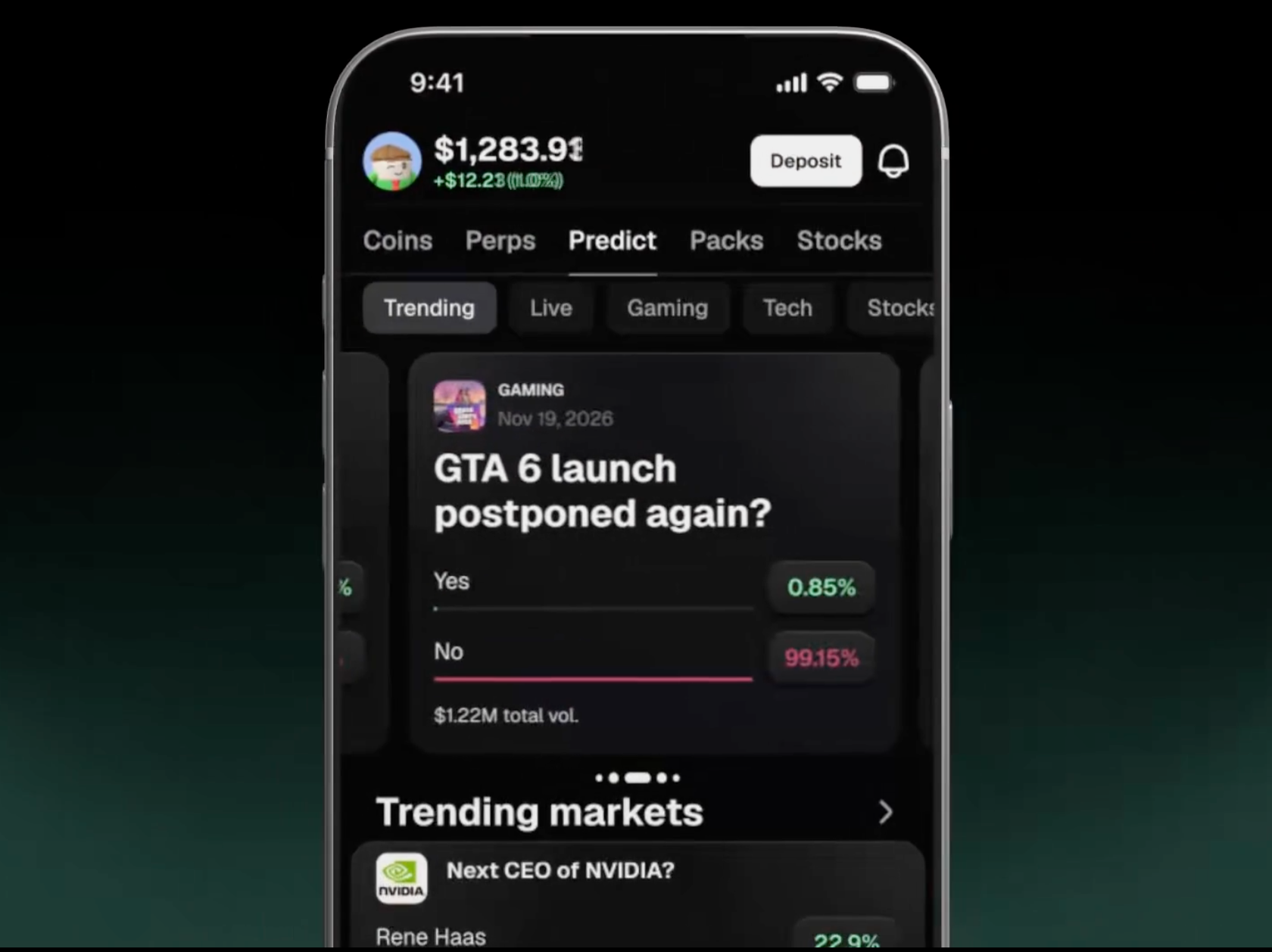
This update clarifies the expansion direction of Pump.fun. The token issuance business has gathered traders, and the mobile App gradually presents perpetual contracts, stock tokens, collectibles, and event predictions to them. Pump.fun aims to extend its relationship with this group of users: when they leave the meme market to focus on sports, stocks, or Bitcoin prices, they can still trade in the same application.
From Issuing Tokens to Aggregating More Markets
Reviewing Pump.fun's product line, two expansion paths can be observed.
The token issuance platform and PumpSwap revolve around tokens from issuance to subsequent circulation, providing entry points for traders through the website, Terminal, and mobile App. This path continues Pump.fun's familiar business: new tokens attract attention, trades generate fees, and the platform continuously improves tools for placing orders and discovering assets.
The other path expands trading categories through third-party products. Perpetual contracts are integrated with Hyperliquid; the stock token business allows users to buy and sell tokenized stocks on the Robinhood Chain within the App; Packs are provided by third-party vendors, where users receive tokens representing physical collectibles after opening packs, which can then be sold or exchanged for physical items according to the rules. The newly added Polymarket further turns topics like sports and world events into tradable objects.
These products involve different markets, assets, and suppliers, and Pump.fun is responsible for bringing them to its existing users. This expansion reduces the effort of building new markets from scratch and allows the App's competition to focus more on user experience and the connection between traders: why do users choose to enter these markets through Pump.fun, and why are they willing to return?
Alon's answers include social interaction. He stated in the announcement that new users can connect with traders from different asset areas, and existing users can discover opportunities in other markets, emphasizing the team’s focus on facilitating user flow between different markets.
Using Callouts to Bring Ideas into New Markets
Prediction markets have a direct connection to Pump.fun's existing social functions. Users make judgments about a game or event, buy the corresponding contracts, and then publish their opinions through Callouts, allowing others to find the market through this content.
Pump.fun incorporates prediction trading into callout rewards, providing users with an extra incentive to share their views. Eligible prediction-related Callouts can receive a boost from the Diamond reward mechanism. The official has not disclosed the complete calculation formula for prediction rewards, nor have they promised fixed bonuses based on prediction accuracy.
This arrangement helps new categories gain content and attention at launch. Existing traders can direct their followers to the prediction market, while sports or event traders have the opportunity to enter Pump.fun's user network through content. Consequently, the platform attempts to have "view opinions — find markets — place orders" happen in the same place. Rewards can promote initial trials, but whether users remain depends on the quality of content and the actual trading experience.
Prediction markets also have their usage conditions. This function is only open to users in permissible jurisdictions, with restrictions in regions such as the United States, the United Kingdom, and France. According to the terms, event contracts and trading collateral are located in the Polymarket wallet on Polygon, and market rules and results determination are the responsibility of Polymarket and related mechanisms. When users transfer funds from networks like Solana, cross-chain exchanges are also involved. Pump.fun therefore needs to handle these steps, which differ from traditional token trading, smoothly enough.
As Product Expands, Is Revenue Keeping Up?
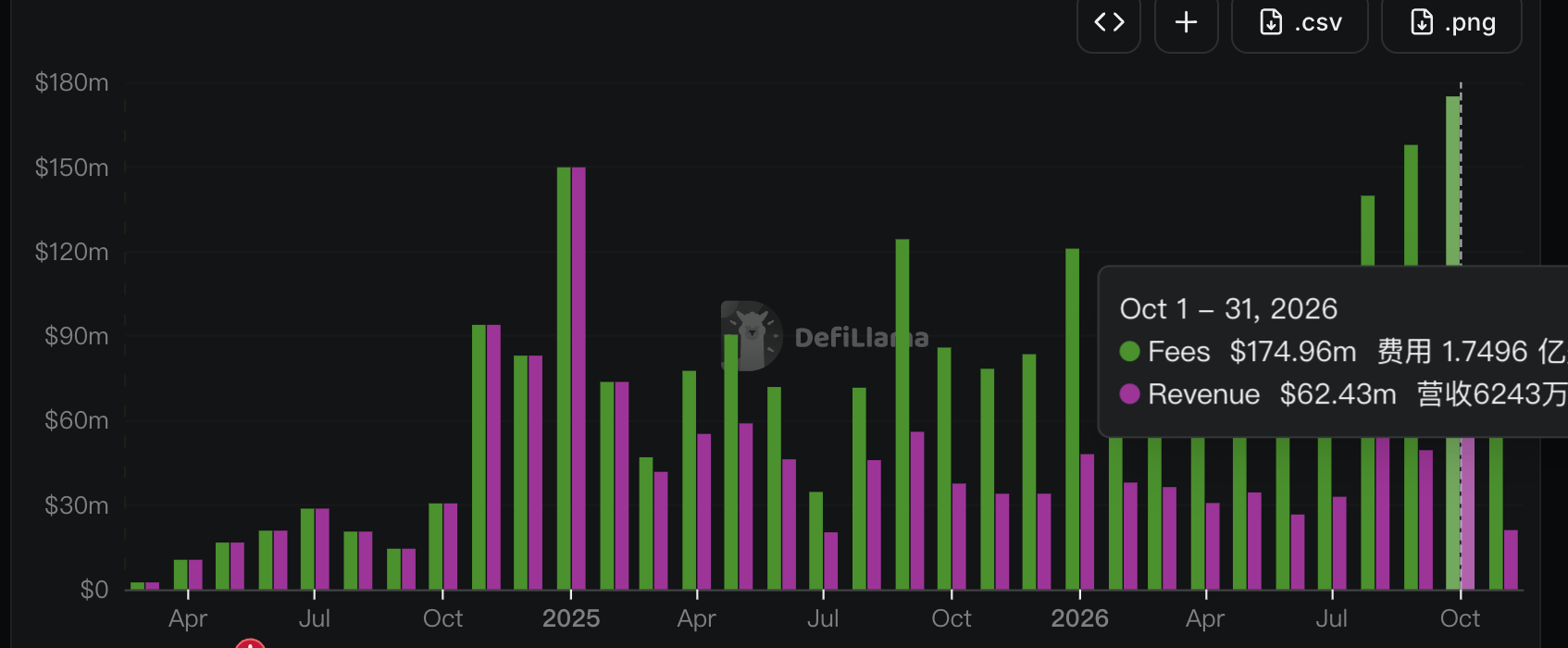
Revenue structures show that the existing business still accounts for a substantial portion. According to DefiLlama's statistics, Pump's various businesses had a combined protocol revenue of about $62.43 million in October, with approximately $44.46 million from the token issuance platform sub-business; from November 1 to 16, they were about $21.02 million and $14.96 million, respectively, with both daily average revenues decreasing by about 35% from October. The revenue proportion of the token issuance platform sub-business in both periods was approximately 71%, and its statistical scope also includes income from official website trading and other sources.
The total fees paid by users were significantly higher than the platform's retained revenue. In October, Pump's various businesses collected about $175 million in fees, of which approximately 36% was counted as protocol revenue. As PumpSwap's trading volume increases and mechanisms like creator sharing are introduced, more fees are distributed to liquidity providers, token creators, and other participants, widening the gap between fees and protocol revenue. Only PumpSwap contributed about 83% of the overall difference that month.
Different new categories have charging methods that vary. When users trade Hyperliquid perpetual contracts through Pump.fun, the platform charges a fee of 0.05% of the transaction amount per contract, reduced to 0.045% with a referral code, and fees are charged upon opening and closing positions. The fees for Packs occur when purchasing card packs and when users voluntarily sell collectibles, with the platform charging 0.45% of the card pack price or the selling proceeds, reduced to 0.40% with a referral code. Currently, Pump.fun does not charge an internal trading fee for buying and selling Polymarket event contracts through the new entry, but users must still bear applicable Polymarket fees, network fees, and cross-chain fees.
The more immediate role of prediction markets at this stage is to expand the usage scenarios of the App. Pump.fun has already proven that it can gather traders around memes, and the next step is to verify how far the user relationships can extend: will those who focus on memes continue to trade other categories, will users coming from events remain in the App, and can these demands gradually form a stable business.
免责声明:本文章仅代表作者个人观点,不代表本平台的立场和观点。本文章仅供信息分享,不构成对任何人的任何投资建议。用户与作者之间的任何争议,与本平台无关。如网页中刊载的文章或图片涉及侵权,请提供相关的权利证明和身份证明发送邮件到[email protected],本平台相关工作人员将会进行核查。


