The pain in the cryptocurrency industry lies in its balance sheets.
Author: Felipe Montealegre
Translation: AididiaoJP, Foresight News
The cryptocurrency industry is evidently taking root, yet no one seems happy about it.
A few years ago, stablecoins and tokenized funds were still distant concepts. Prediction markets, lending protocols, automated market makers (AMM), were merely ideas found in white papers at that time. Now, U.S. Treasury Secretary Janet Yellen says stablecoins will surge to $2 trillion in the short term; BlackRock CEO Larry Fink states that all assets will be tokenized; and Hyperliquid is collaborating with ICE, the parent company of the New York Stock Exchange, to bring on-chain perpetual contracts into the U.S. capital markets.
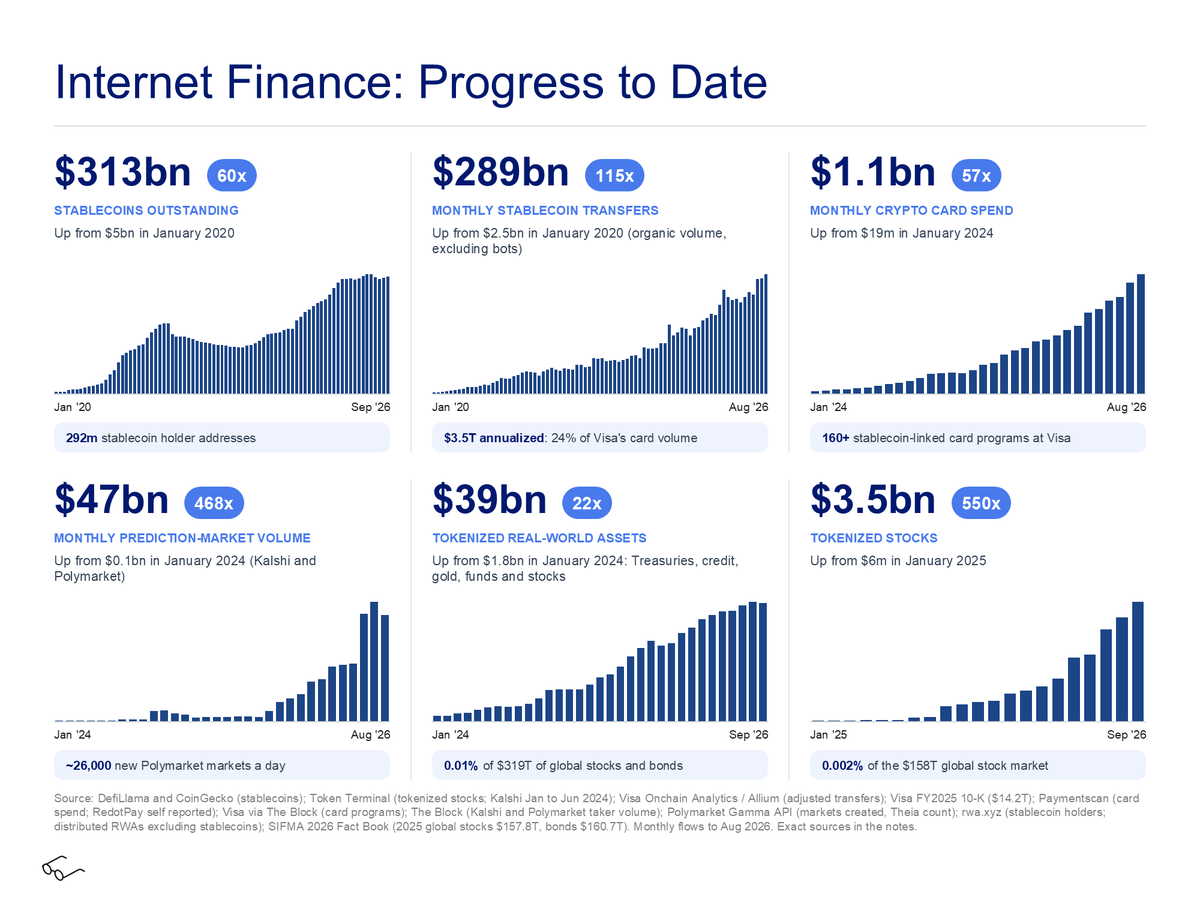
If you believed back then that cryptocurrency would change the global financial market, you were right. But why is it still so painful?
1. Cryptocurrency is indeed taking root
When I first entered the industry, I heard a piece of advice: Do not join a company that cannot even access performance profits (carry) from its latest fund. It’s not that the salary is insufficient; rather, the company culture can be unpleasant. People can only be happy when they work hard and also earn money.
This principle also applies to the industry. To understand the state of the cryptocurrency industry, it can be simplified into three financial statements: income statement, cash flow statement, and balance sheet.
2. Income Statement: Revenue is not large enough
Let’s first look at revenue. Most of the costs in this industry eventually flow to practitioners: engineers, business development, validators, auditors, and so on.
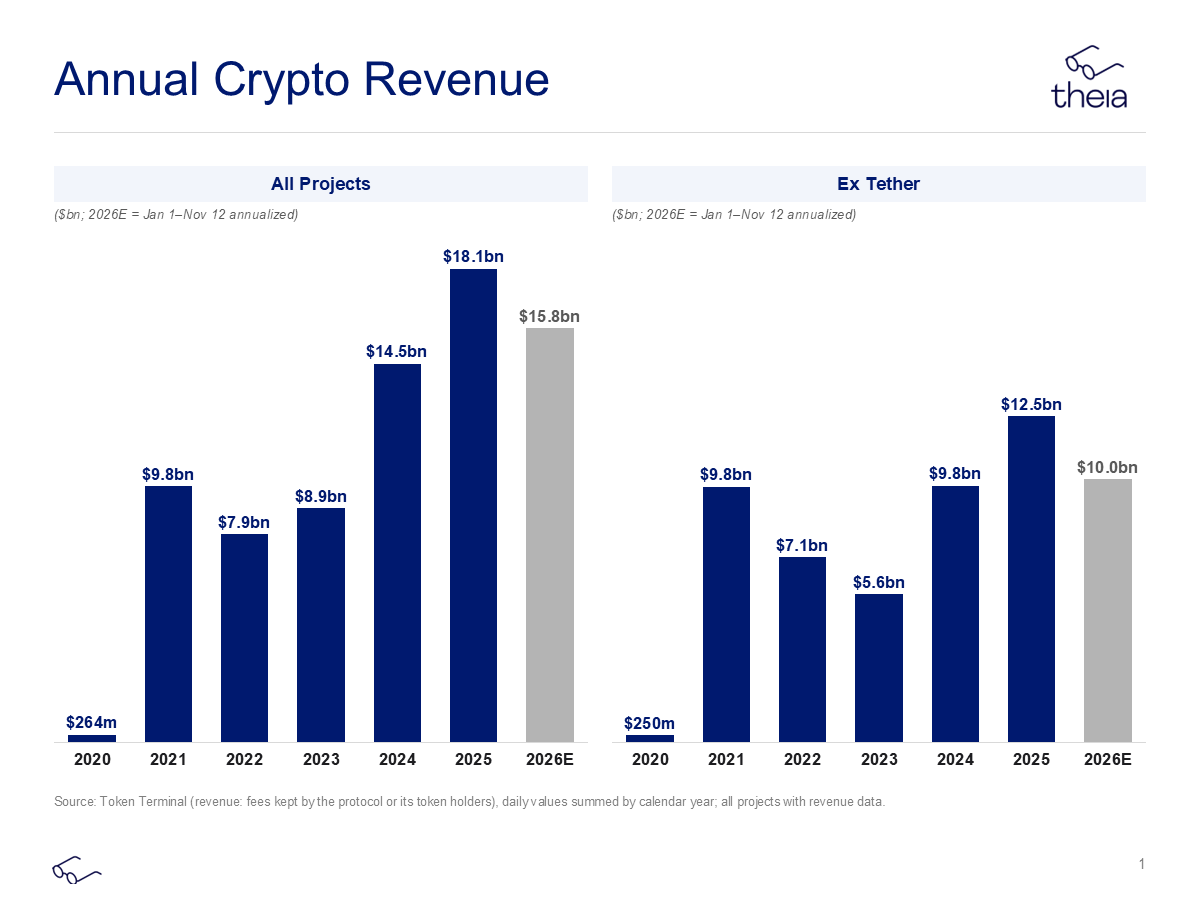
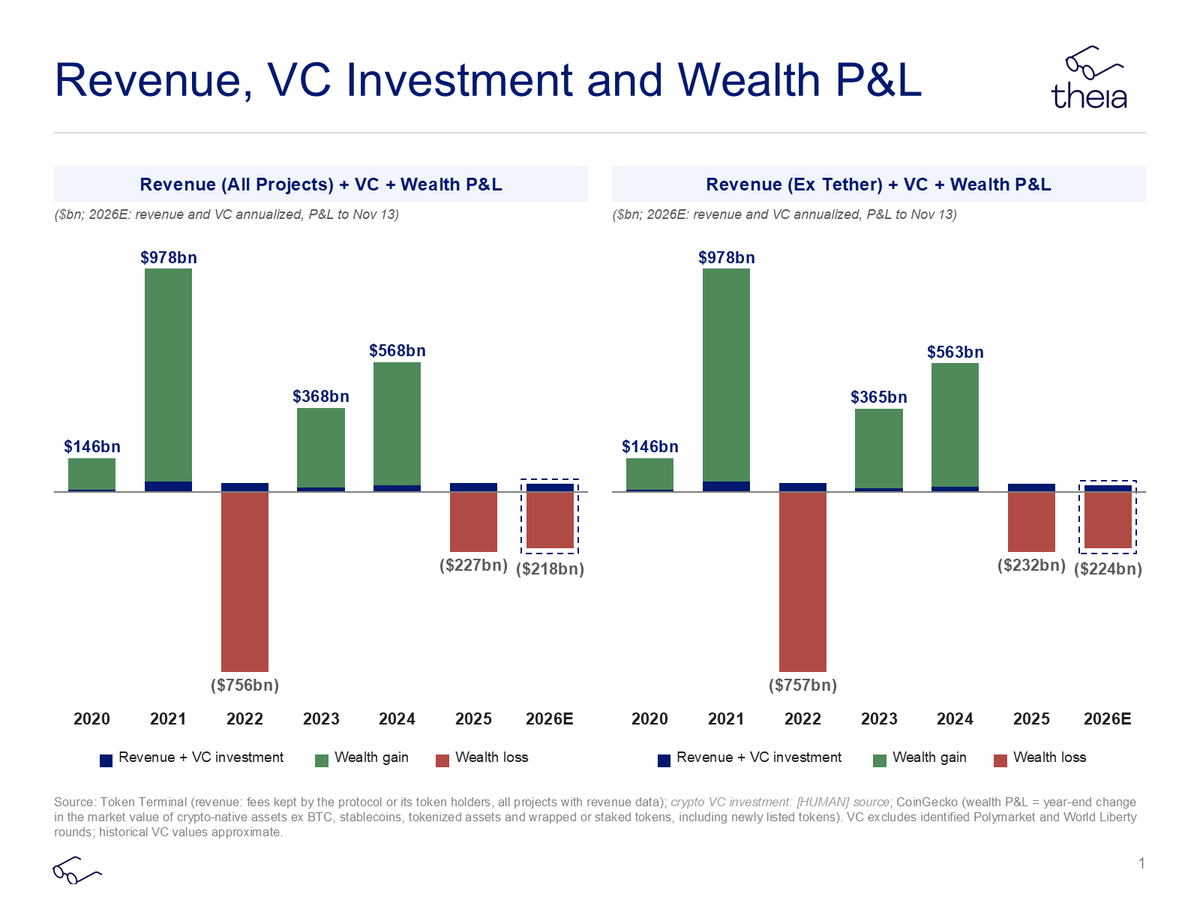
The revenue is still acceptable: it has increased by about $8 billion since 2021; however, when excluding Tether, it actually decreased by about $3 billion.
3. Cash Flow Statement: VC money is receding
The cash flow statement has three parts: operating cash flow, investing cash flow, and financing cash flow.
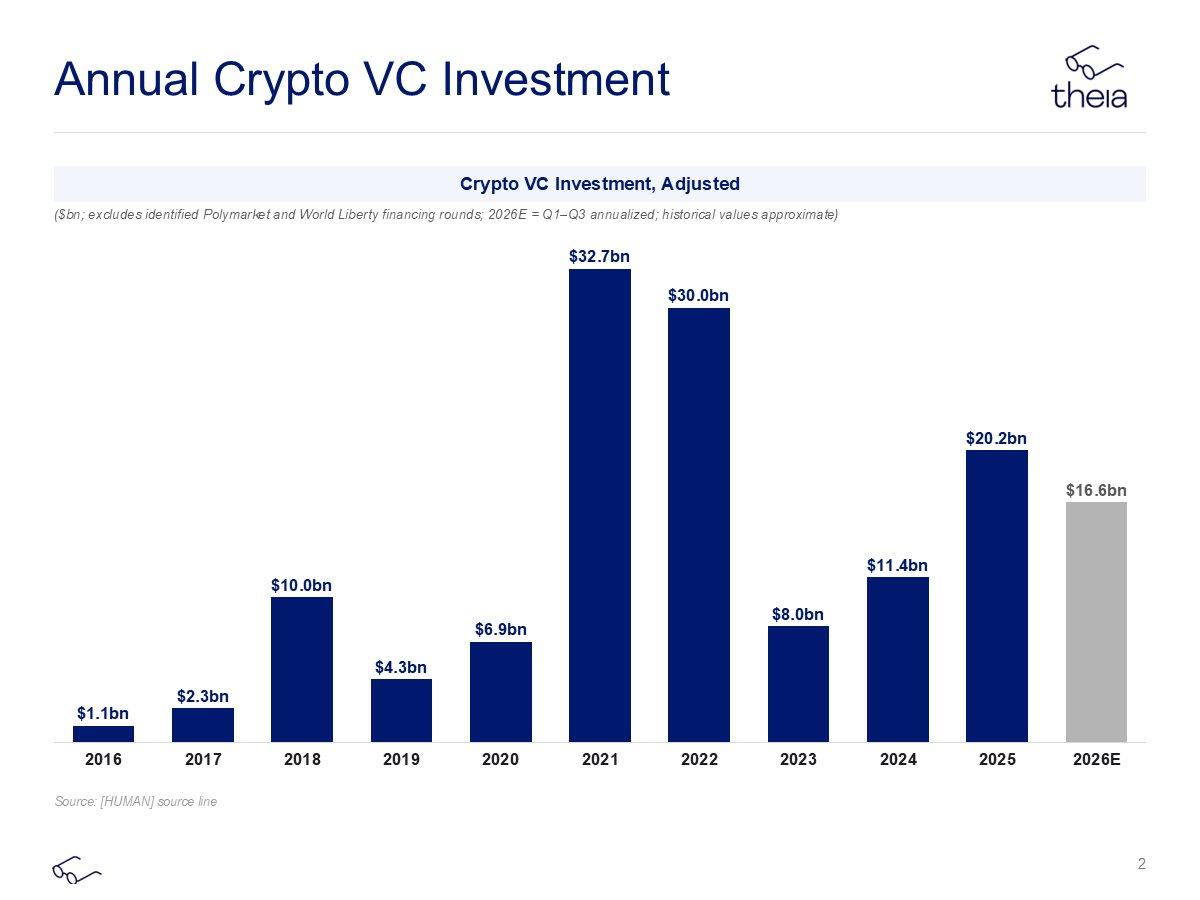
Operating cash flow can roughly be represented by the revenue above. The cryptocurrency industry has very little capital expenditure, so investing cash flow has little impact. What really matters is financing cash flow: in the past, most of the salaries and office rents in this industry were funded by VC investments.
Combining revenue and VC investments provides the money flowing into the industry, used to pay salaries, office rents, audit fees, consulting fees, recruiting fees, and validator fees. What remains is the investors' profit; and investors must share profits with LPs to continue fundraising.
The problem is that compared to 2021 and 2022, the cash flowing into this industry has decreased by about $15 billion. Excluding Tether is due to its highly concentrated cash flow. While this money can cover many salaries, it is still not enough to explain the current degree of collapse in the cryptocurrency market.
4. The Balance Sheet is the Root Cause
The root lies in the balance sheet.
This year, about $26.6 billion has flowed into this industry; however, since October of last year, the combined market capitalization of Ethereum and Solana has evaporated by about $350 billion. Note that this is a reduction in paper wealth, not cash flowing out.
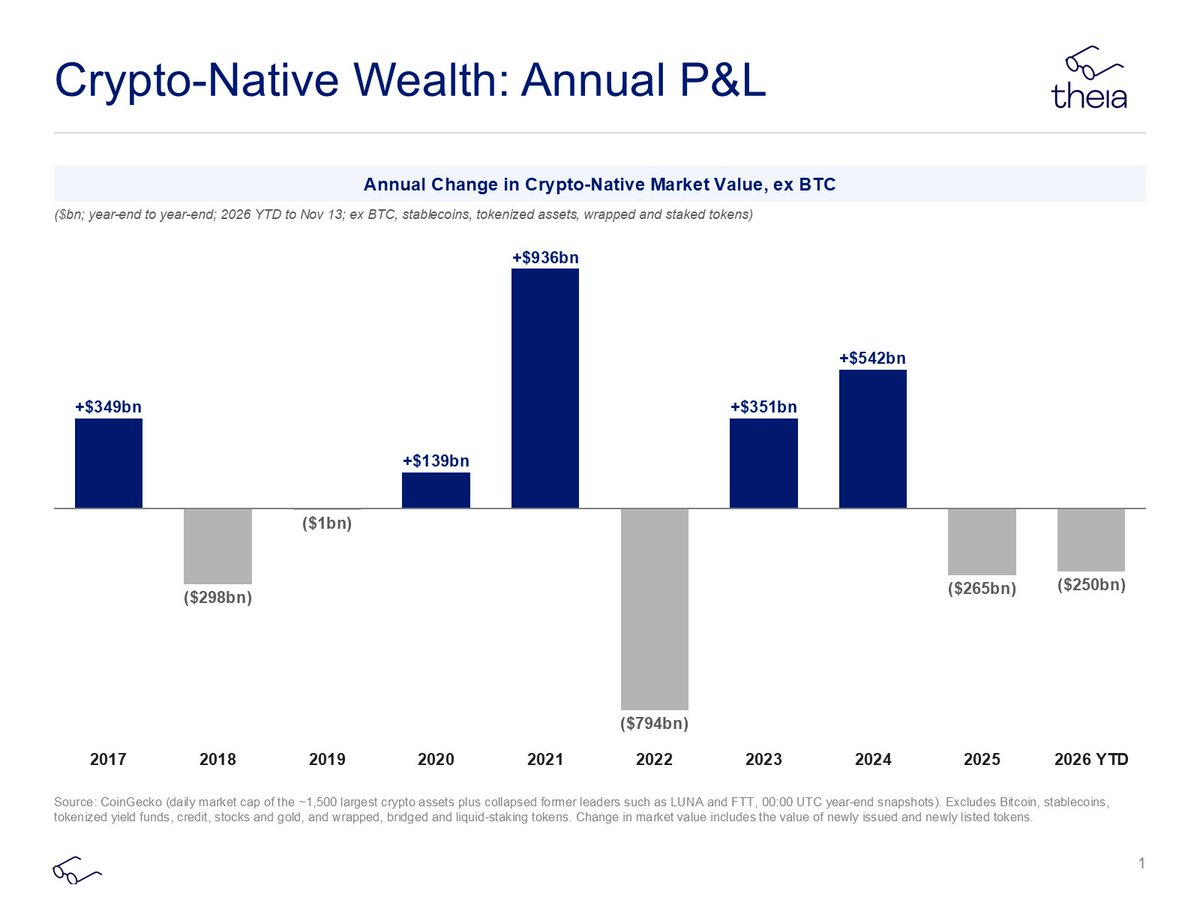
The cryptocurrency industry is very unique: asset values are absurdly high relative to cash flow. No matter how much tokenized stocks grow or how stablecoins expand, it cannot fill the $350 billion gap in the balance sheet. To cover the losses from ETH and SOL, the industry’s revenue would need to grow 35 times, equivalent to revenue from 350 Hyperliquid-level entities.
Putting the numbers together, the industry’s balance sheet is indeed the only truly important driving factor.
I believe that understanding how an industry’s three financial statements change over time, especially seeing how money flows—who invests in the industry, who is pulling money out, and where the money is spent—can help one understand the state of the industry. Silicon Valley, U.S. private equity, and AI can all be viewed this way. This article has simplified the financial statements of the cryptocurrency industry, but it is sufficient to explain the current market: everyone is upset because prices have fallen.
5. Two Paths for 2027 and 2028
There are several reasons for optimism.
First, the worst times may have already passed. The valuations of on-chain enterprises have returned to reasonable levels, with the market capitalization of coins like Cardano dropping from $80 billion to $5 billion.
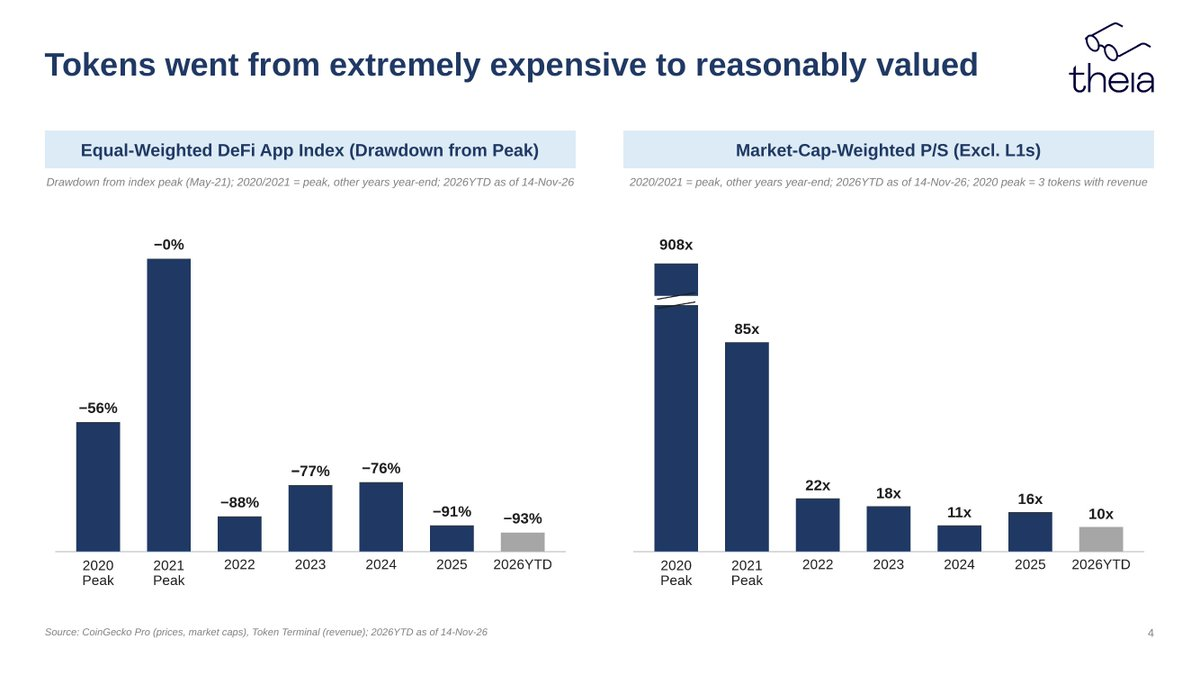
One path is income-generating tokens. Indeed, to cover the $350 billion losses of ETH and SOL with income, 350 Hyperliquids need to be created; however, to bring the industry’s balance sheet back to its best point in 2024, only a few HYPE-level tokens are needed.
The other path is that the total market capitalization of assets like BTC, ETH, SOL, and ZEC increases by $350 billion. Roughly speaking, a 30% increase in BTC would be enough; however, after excluding ETF holders and Bitcoin holders who will not reinvest their earnings into the industry, the actual increase needed may exceed 60%. Alternatively, ETH and SOL could return to their historical peaks. This is not a new perspective, but math is math.
免责声明:本文章仅代表作者个人观点,不代表本平台的立场和观点。本文章仅供信息分享,不构成对任何人的任何投资建议。用户与作者之间的任何争议,与本平台无关。如网页中刊载的文章或图片涉及侵权,请提供相关的权利证明和身份证明发送邮件到[email protected],本平台相关工作人员将会进行核查。


