Author: AiPlot Research Institute
Focus: RWA / Digital Assets / In-depth Analysis of Financial Infrastructure
Website: https://aiplot.com/?utm_source=aicoin
The recent management changes at Nvidia that are really worth paying attention to are not about “whether Jensen Huang is leaving” itself, but how the market will reassess a question:
Is Nvidia's past growth driven by a highly influential founder, or by the hardware, software, and customer ecosystem that is already capable of operating independently?
This is also a question that the stock market and on-chain stock-type RWAs need to jointly answer.
On November 12, Nvidia officially announced that Jensen Huang has resigned as President, CEO, and Board Member, effective immediately. The company has appointed CFO Colette Kress as interim CEO, while Harvey C. Jones becomes the first chairman of the board in Nvidia's history, and a formal search for internal and external CEO candidates has begun.
Therefore, this is not a typical CEO transition, but rather a simultaneous transition in the company's governance structure, technology direction, and capital market expectations.
1. Separate Confirmed Facts from Market Speculation
Jensen Huang's departure is related to personal scandal, corporate governance, and external security pressures, leaning closer to "being forced to step down," rather than simply a voluntary retirement.
However, from verifiable public materials, Nvidia's official announcement and SEC 8-K only confirm the resignation, interim CEO appointment, board chair appointment, and the search for a permanent CEO, and do not disclose the reasons for the resignation.
Therefore, it is necessary to separate the two types of information in analysis:
- Confirmed Facts: Jensen Huang has resigned; Kress serves as interim CEO; Jones is chairman of the board; the board has begun searching for a permanent successor; Nvidia will report its third-quarter earnings as originally scheduled on November 17.
- Speculation: Whether the resignation was primarily triggered by personal behavior, external political pressure, or board pressure; whether there is a serious internal governance crisis at the company; whether there are already technological disagreements at Nvidia.
This distinction is not mere formalism. For high-valuation tech companies, unverified governance rumors can amplify volatility, but do not necessarily alter the company's cash flow, orders, and product roadmap. What truly needs to be observed is whether governance events start translating into operational metrics.
2. What Problems Can Colette Kress Solve, and What Can She Not Solve
Kress has served as CFO since joining Nvidia in 2013. Previously, she held long-term financial management positions at Cisco, Microsoft, and Texas Instruments.
Her strengths are very clear: familiar with capital allocation, financial disclosure, investor communication, and Nvidia's internal operating data. For a company facing the sudden departure of a CEO, having a senior executive who is most familiar with the financial and operational system stabilize expectations is a reasonable transitional arrangement.
Nvidia's official statement also emphasized that Kress will continue to serve as CFO, and the board believes that the company's operations, customer commitments, and product roadmap will not be interrupted.
However, Kress's interim appointment does not mean that the board has already found a long-term technical successor. She faces two different tasks:
First, to stabilize the capital market in the short term and ensure that major customers and the supply chain believe the company can still deliver as planned.
Second, to prove that Nvidia's product roadmap does not rely on the personal judgment of a single founder, especially during a phase where AI chips, networks, systems, and software platforms are constantly iterating.
This explains why the market is concurrently focused on both financial CEOs and technical successors. Financial managers can reduce uncertainty during the transition period, but the long-term continuity of the technology roadmap still needs to be proven by product and R&D teams.
3. What the Market is Really Worried About is Not “Without Jensen Huang,” but Whether Decision-Making Speed Will Decrease
Nvidia's business model is no longer just about selling GPUs.
As of the second quarter of fiscal 2026, Nvidia's quarterly revenue was $96.2 billion, a 106% year-on-year increase; data center revenue was $89 billion, up 117%, accounting for the vast majority of quarterly revenue.
The company anticipated a third-quarter revenue of about $108 billion and expected a gross margin of approximately 74% for the third quarter.
This set of numbers indicates that Nvidia has become the core supplier of large-scale AI infrastructure construction. Its products cover GPUs, CPUs, networking systems, AI factory design, development tools, models, and software libraries. The impact of management changes will ultimately be reflected in order flow, capital expenditure, customer adoption, and the rhythm of product releases.
The market may worry about three things:
1. Will Product Roadmap Decisions Slow Down?
The competitive cycle for AI infrastructure is very short. Customers do not purchase fixed chips once every few years; rather, they continuously adjust between training, inference, networking, memory, and energy efficiency. If the CEO transition leads to significant delays in product roadmap decisions, competitors may gain a window of opportunity.
2. Will Major Customers Reassess Supplier Concentration?
Major customers like Microsoft, Google, Amazon, Meta, and OpenAI need to plan their computing power and software stack in the long term. They are more concerned with whether Nvidia can continue to provide a stable roadmap, supply, and developer support rather than short-term public opinion fluctuations.
3. Will Washington and Global Regulatory Relationships Change?
Jensen Huang was not only the head of products but also an important node in Nvidia's external communication and policy relationships. With AI chip exports, national-level computing power infrastructure, and sovereign AI becoming policy topics, the new CEO needs to prove their capability to take over this external coordination function.
4. Can Nvidia’s Moat Transition from a Personal Brand to Organizational Capability?
Nvidia's most important moat consists of at least four layers.
The First Layer is Hardware Iteration Capability
The collaborative design between GPUs, CPUs, network switches, and complete systems constitutes the overall solution for AI factories. Competitors do not only need to manufacture a faster chip; they must also reach deployable levels in software, networking, cooling, storage, and supply chain simultaneously.
The Second Layer is the CUDA Software Layer
CUDA is Nvidia’s software platform for GPU-accelerated computing, allowing developers to leverage GPU computing power in their applications.
The value of CUDA lies in developer tools, libraries, programming models, and application migration costs. Once users accumulate a substantial amount of code, talent, and production processes within the CUDA ecosystem, they will not switch suppliers based solely on a single hardware quote.
This constitutes Nvidia's significant advantage over single-chip competitors. However, it is important to note that software ecosystem lock-in is not irreversible. As long as customers possess a strong enough motivation to migrate, or competitors offer significantly better performance-to-price ratios, developers may gradually shift. Thus, Nvidia must continuously update CUDA-X, development tools, and AI frameworks and cannot rely on historical advantages as an eternal guarantee.
The Third Layer is Customer Co-Development Relationships
Nvidia has formed long-term product collaborations with cloud providers, AI labs, and large enterprises. Customer feedback impacts the design of chips, networks, and systems, while Nvidia’s platform, in turn, influences customers' model training and deployment methods.
The Fourth Layer is Capital and Supply Chain Organizational Capability
AI infrastructure requires huge capital expenditures. In the second quarter of fiscal 2026, Nvidia disclosed that the company was exploring computing power infrastructure financing platforms with institutions such as Apollo, BlackRock, Blackstone, Brookfield, Goldman Sachs, and KKR, planning to mobilize over $500 billion in third-party capital in the long term, subject to final agreements.
This means Nvidia has entered a comprehensive competitive phase of "chips—data centers—financing—software." The CEO's task is not just to sell chips but to coordinate a large industrial and financial network.
5. Why the November 17 Earnings Report is the First Key Window
Nvidia has officially confirmed that third-quarter results will be announced on November 17, followed by a conference call.
This earnings report itself cannot answer “who is the permanent CEO,” but can help the market judge whether the management transition has already impacted operations.
The focus should not only be on whether revenue exceeds expectations but also observe the following signals:
- Whether data center revenue and guidance for the next quarter remain strong;
- Whether large cloud customers continue to expand capital expenditures;
- Whether the production and delivery rhythm of platforms like Blackwell and Vera Rubin is normal;
- Whether gross margin is affected by product transitions, supply chain, or system-level delivery pressures;
- Whether management can clearly explain the product roadmap and customer demand;
- Whether the company provides a timeline or range of candidates for the search for a permanent CEO.
If the earnings report is strong, customer commitments are stable, and the product roadmap remains unchanged, the market may characterize this event as a governance shock rather than an operational shock.
If the earnings report shows order delays, customer capital expenditure slowing, or unclear product roadmap explanations, then the departure of the CEO may escalate from a governance event to a valuation repricing event.
6. AiPlot Data Shows that NVDA Has Entered the On-Chain Observation Range of Stock-Type RWA
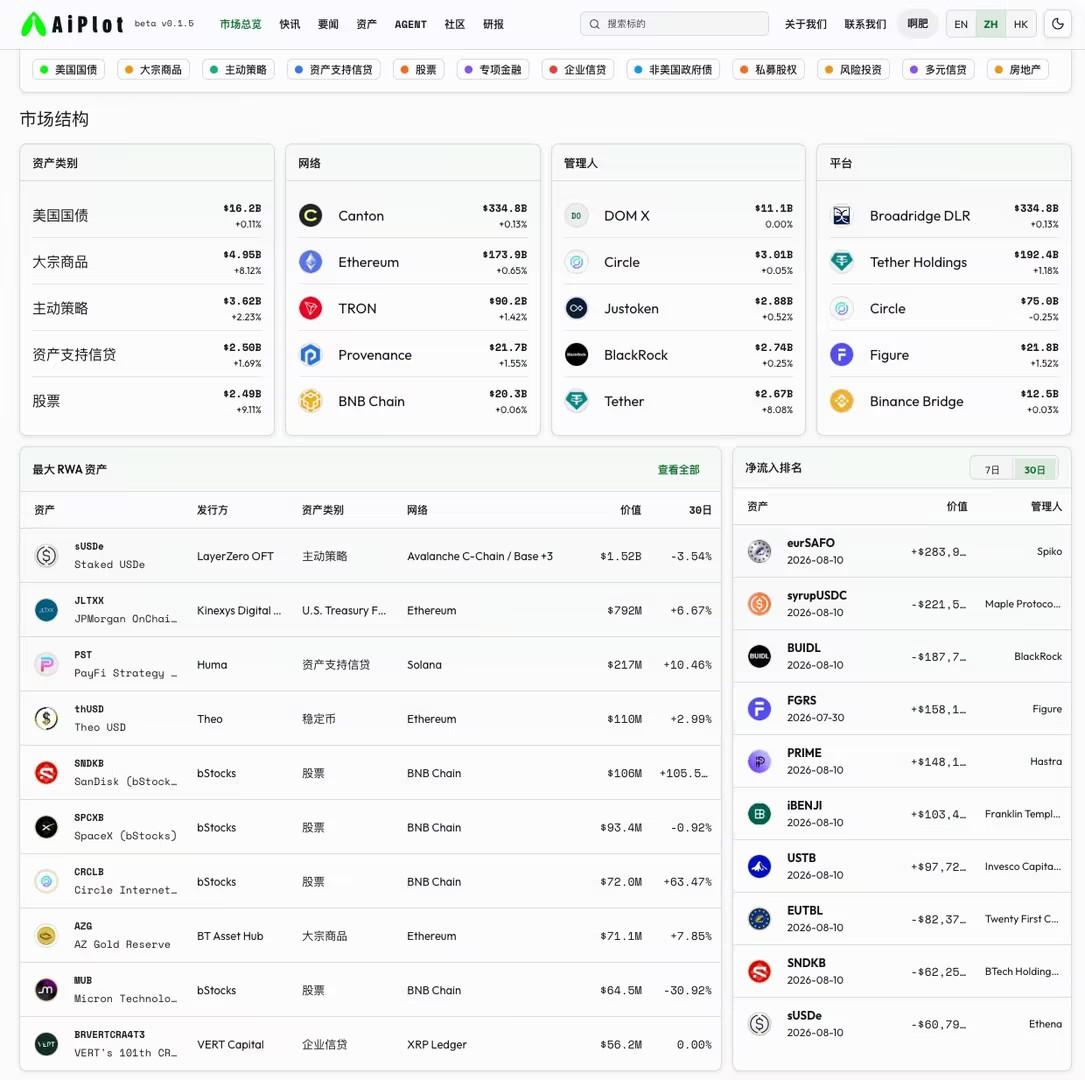
AiPlot's current RWA data indicates that the scale of stock-type real assets is approximately $3.73 billion, with a 7-day change of about 1.09% growth.
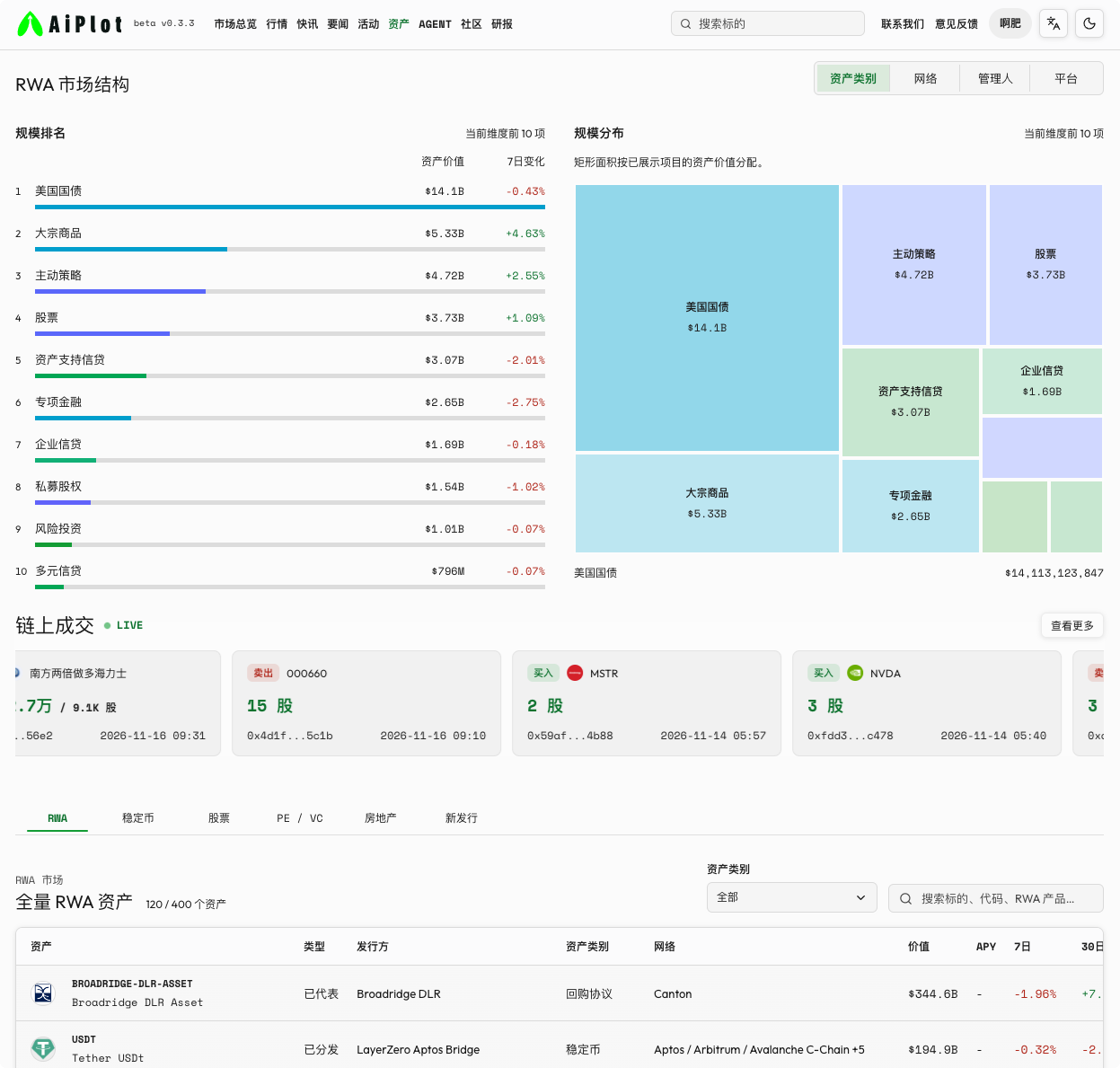
In specific assets, NVDAx, which is NVIDIA xStock, shows a scale of around $166 million on the AiPlot page, with a 7-day change of about a 7.63% decrease and a 30-day change of about a 16.87% decrease. This asset is categorized as stock-type and distributed products, deployed on multiple networks such as Arbitrum, BNB Chain, and Ethereum.
This set of data at least indicates two things.
First, Nvidia's market pricing has begun to reflect on-chain mapping. In the traditional market, NVDA is the core stock of AI infrastructure; on-chain, related NVDA stock tokens are now available for direct trading by cryptocurrency market users.
Second, the prices of stock-type RWA will rapidly transmit traditional stock market events to the on-chain environment. CEO changes, earnings reports, product roadmaps, and AI capital expenditures may create faster emotional feedback between stock exchanges and on-chain token markets.
7. The True Value of NVDA Stock-Type RWA is More Than Just “Trading Nvidia Earlier”
If stock tokens merely transfer traditional stock prices onto the blockchain, their incremental value is quite limited. What is more noteworthy is whether they enter the composite structure of on-chain finance.
1. All-Weather Price Discovery
Traditional U.S. stocks have fixed trading hours, while on-chain stock-type products can be traded over extended periods. When significant events occur during off-hours for U.S. stocks, the on-chain market may first establish price changes, subsequently affecting pricing for the next traditional market opening.
But this also amplifies liquidity risks. On-chain prices may experience larger slippage when there are insufficient counter-parties and cannot be simply equated to official exchange prices.
2. Direct Connection to Stablecoin Funds
Stock tokens can form direct trading pairs with stablecoins. Users do not have to first complete a dollar deposit through the banking system before entering a securities account; instead, they can use on-chain dollar liquidity to gain exposure to stocks.
This does not mean it has replaced securities accounts but signifies that on-chain dollars and tokenized stocks are forming new composite trading scenarios.
3. Entering Lending and Collateral Systems
If the compliant structure allows, stock tokens could be integrated into collateralized lending, margin trading, or structured products in the future. However, stock prices are quite volatile, and there are risks related to market closures, halts, corporate actions, and custody, resulting in their collateral parameters typically being stricter than those for treasury-type RWAs.
4. Connecting AI-Themed Asset Portfolios
Assets like NVDAx, AMD xStock, Micron xStock, Microsoft xStock, and Amazon xStock appear in the AiPlot stock-type RWA data.
If these assets possess sufficient liquidity, on-chain users may form themed portfolios around AI infrastructure, rather than holding a single stock. This will increase the demand for composite trading, rebalancing, and risk management.
8. How Jensen Huang's Departure Will Affect the On-Chain Pricing of NVDAx
For NVDAx, the impact of the CEO change can be broken down into three phases.
Short-term: Sentiment and Liquidity Shock
Significant governance news typically first affects risk appetite. The liquidity depth of on-chain products may be lower than that of traditional stocks, thus price volatility and slippage may be greater.
Medium-term: Repricing with Earnings Reports and Customer Behavior
The market will regard the November 17 earnings report as a test of operational continuity. As long as revenue, data center demand, and product deliveries do not change significantly, governance discounts may gradually narrow.
If customers continue to escalate investments in AI infrastructure, the underlying asset logic of NVDAx remains valid; if customers delay capital expenditures, on-chain tokens may magnify negative pricing from the traditional market.
Long-term: Shifting from Personal Narrative to Platform Narrative
If Nvidia ultimately finds a successor who can understand the technology roadmap, customer relationships, and capital allocation simultaneously, the market may reassess to accept the judgment that “Nvidia is a platform company, not just Jensen Huang's personal company.”
If the succession process remains unclear for an extended period, or if there is a division in R&D and customer relationships, the founder premium reflected in valuations may continue to decline.
Conclusion: Nvidia's Leadership Change Tests the “Organizational Moat”
The biggest test of Jensen Huang's departure for Nvidia is not whether the market continues to miss the founder, but whether the company can prove that CUDA ecosystem, AI chip roadmap, customer relationships, and capital organization capabilities have been established as organizational capabilities.
In the short term, Kress, in her role as both CFO and interim CEO, will primarily stabilize financial and operational expectations. In the long term, a formal successor capable of managing the technology roadmap, customer communication, and policy relationships is needed.
For stock-type RWAs such as NVDAx, this event provides a more representative observational sample: real-world corporate governance events will rapidly transmit to the on-chain environment through price-tracking tokens. However, on-chain trading does not mean that the underlying securities rights have been completely replicated; price mapping, legal rights, and liquidity quality must be analyzed separately.
What is truly worth paying attention to is not whether “Nvidia will collapse immediately without Jensen Huang,” nor whether “NVDAx will rebound immediately,” but whether the following three lines hold true in the coming quarters:
- Nvidia's AI infrastructure orders and cash flow continue to grow;
- CUDA and the system-level ecosystem still maintain customer stickiness;
- NDAx and other stock-type RWAs gradually form real on-chain liquidity and financial composite demands.
If all three points hold, Nvidia's moat will further transition from a founder brand to platform and organizational capability; if more than two of them have issues, the market will reassess the growth premium previously granted to Nvidia.
For more data and analysis, please follow Aiplot:
https://aiplot.com/?utm_source=aicoin
📖 Community Communication:
Telegram:
https://t.me/+IIYMcJigBAo4Mjg1
This article only represents the author's personal views and does not represent the platform's position. The views, conclusions, and recommendations in the article are for investors' reference only and do not constitute any investment advice related to the platform. The market carries risks, and investments should be made with caution.
免责声明:本文章仅代表作者个人观点,不代表本平台的立场和观点。本文章仅供信息分享,不构成对任何人的任何投资建议。用户与作者之间的任何争议,与本平台无关。如网页中刊载的文章或图片涉及侵权,请提供相关的权利证明和身份证明发送邮件到[email protected],本平台相关工作人员将会进行核查。