Author: Alea Research
Translation: Deep Tide TechFlow
Deep Tide Overview: Jensen Huang's sudden resignation as CEO of NVIDIA has shocked the global tech community, but the Philadelphia Semiconductor Index only dipped slightly by 0.54% the next day, as market funds rapidly shifted in panic to competitors like Broadcom and AMD.
Meanwhile, U.S. inflation data for October remains high, and traders have pushed the odds of a Federal Reserve rate hike in December to a peak, with Bitcoin breaking below institutional holding cost lines during the deleveraging process.
Alea Research has thoroughly analyzed the chain from excess capital expenditure by cloud service providers, semiconductor supply chain rebalancing, to the contraction of crypto asset liquidity, revealing the real financial game behind the macro tremors.
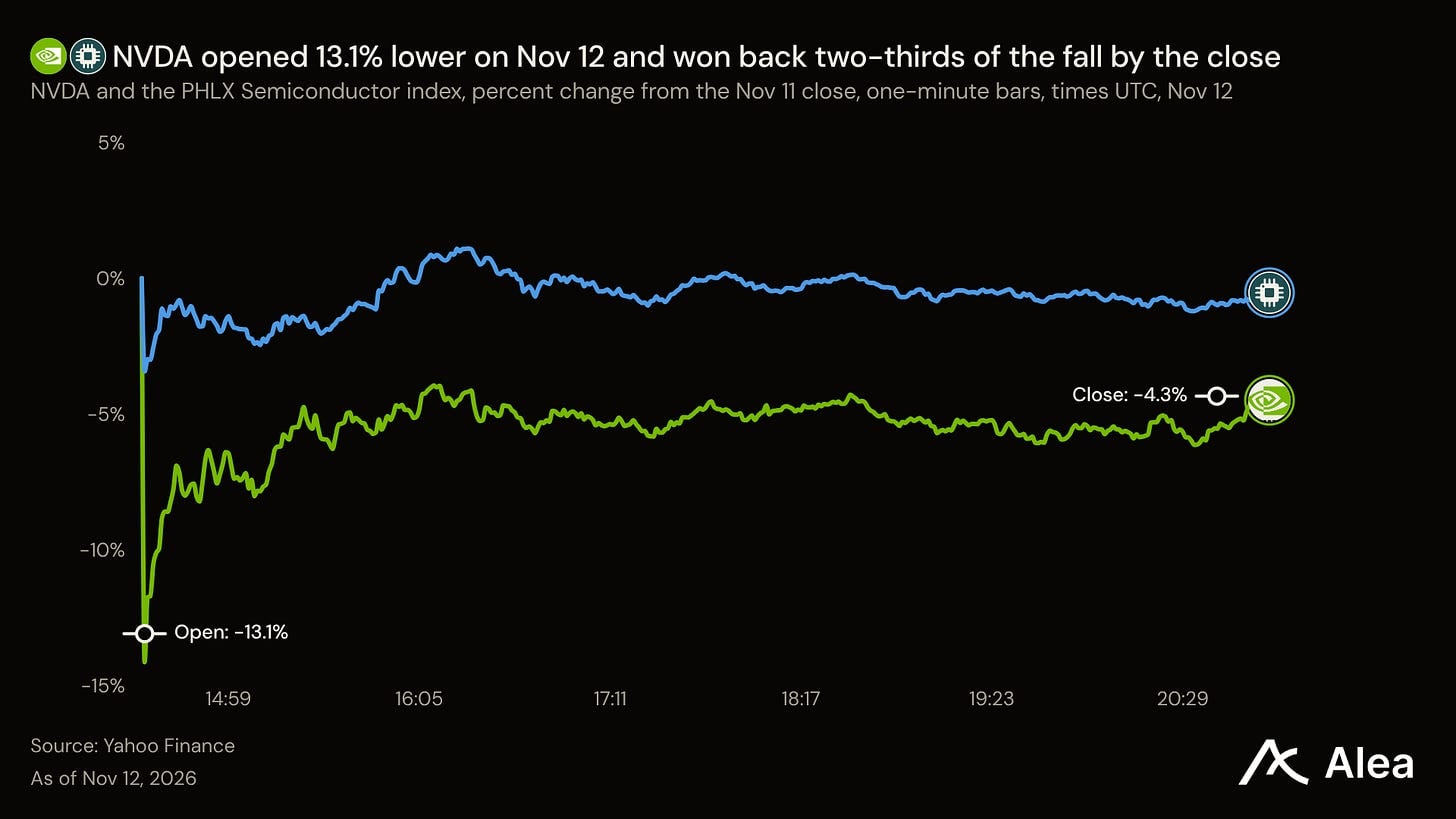
Key Points Summary
After NVIDIA lost its leader, the chip index only held firm for one day before experiencing turbulence. On November 12, competitor AMD and Broadcom saw stock prices rise, while Micron and Arm's declines were less than 2%. However, on November 13, AMD's pullback erased all gains from the previous day.
In the crypto market, Bitcoin's decline on November 12 was about twice that of Ethereum. On Friday, leveraged funds accelerated their withdrawal from Bitcoin futures, with Bitcoin's closing price 9.47% below the average holding price of Strategy.
After the Producer Price Index was released in October, the consensus among traders was almost unanimous regarding a rate hike in December. Traders on Polymarket believed the probability of maintaining interest rates in December was only 2.35% by the close on Friday. Despite a slight easing in inflation data, Bitcoin's rebound was entirely exhausted within just one hour.
As real yields and the dollar rise, gold hit a new low for the year, while oil prices rebounded. Brent crude oil for January cumulatively rose 3.94% on November 12 and 13, driven by market concerns over the geopolitical situation.
Before Anthropic's official listing, the crypto derivatives market provided a valuation far above its IPO pricing range, with contract trading prices 37.6% higher than the median of the IPO pricing range.
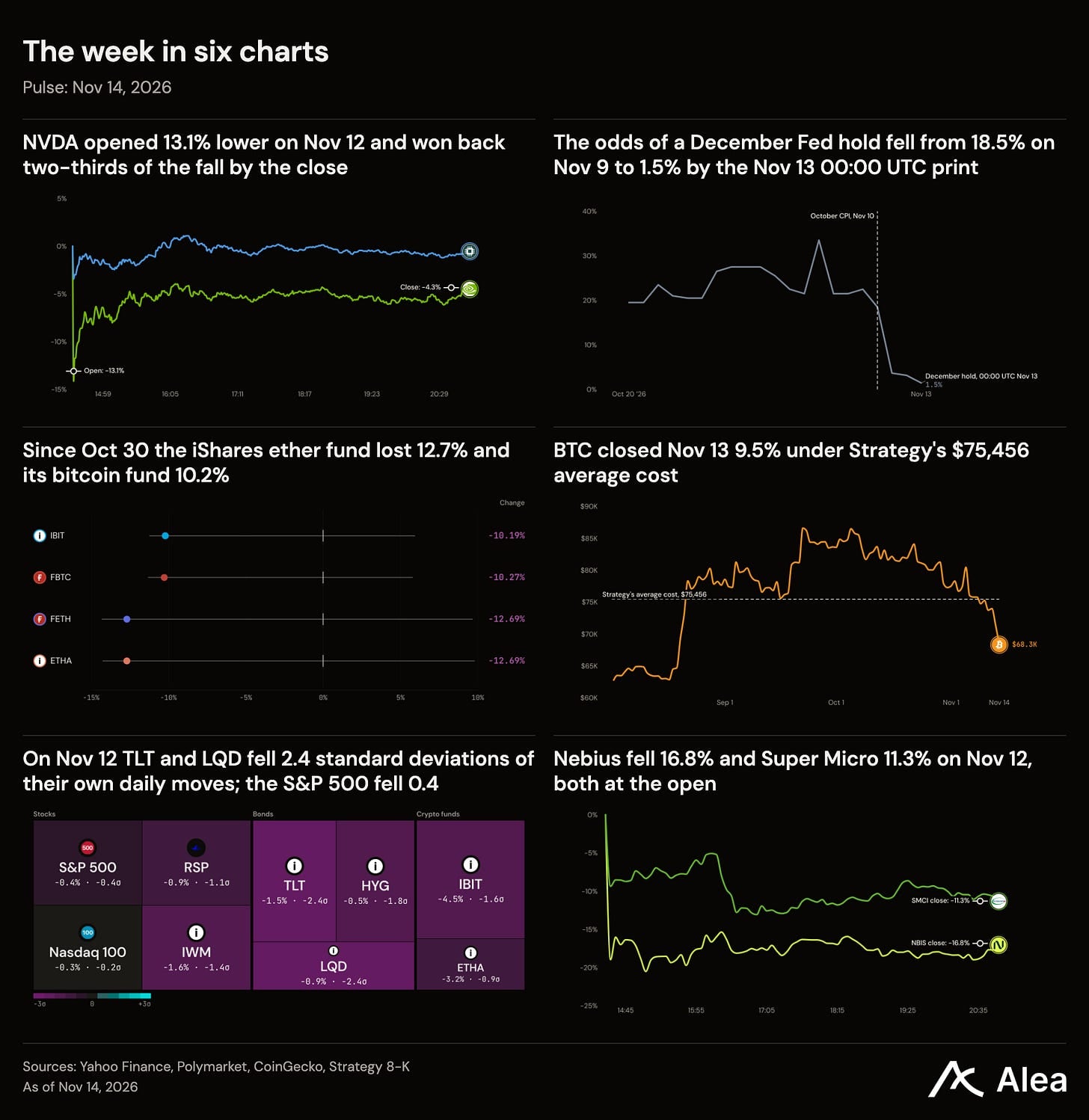
Figure: Cross-Market Multi-Asset Volatility Comparison
NVIDIA Loses Its Leader in Three Days
From initiating a board investigation to appointing an interim CEO, NVIDIA took only three days. On the evening of November 8, the board stated that independent directors would work with external legal counsel to review reports concerning Huang being targeted by foreign intelligence activities. The board found no signs of national security breaches or NVIDIA's confidential information being leaked. Subsequently, Huang confessed to the company that he had violated his loyalty to his wife.
On November 9, a shareholder sued NVIDIA and Huang, leading to a 4.27% drop in NVIDIA's stock price that day.
On November 11, the board accepted Huang's resignation and appointed CFO Colette Kress as interim CEO and board member Harvey C. Jones as chairman.
For customers purchasing NVIDIA chips, the board promised that everything would remain unchanged: Jones stated that the company's daily operations, customer commitments, and product roadmap would continue without interruption.
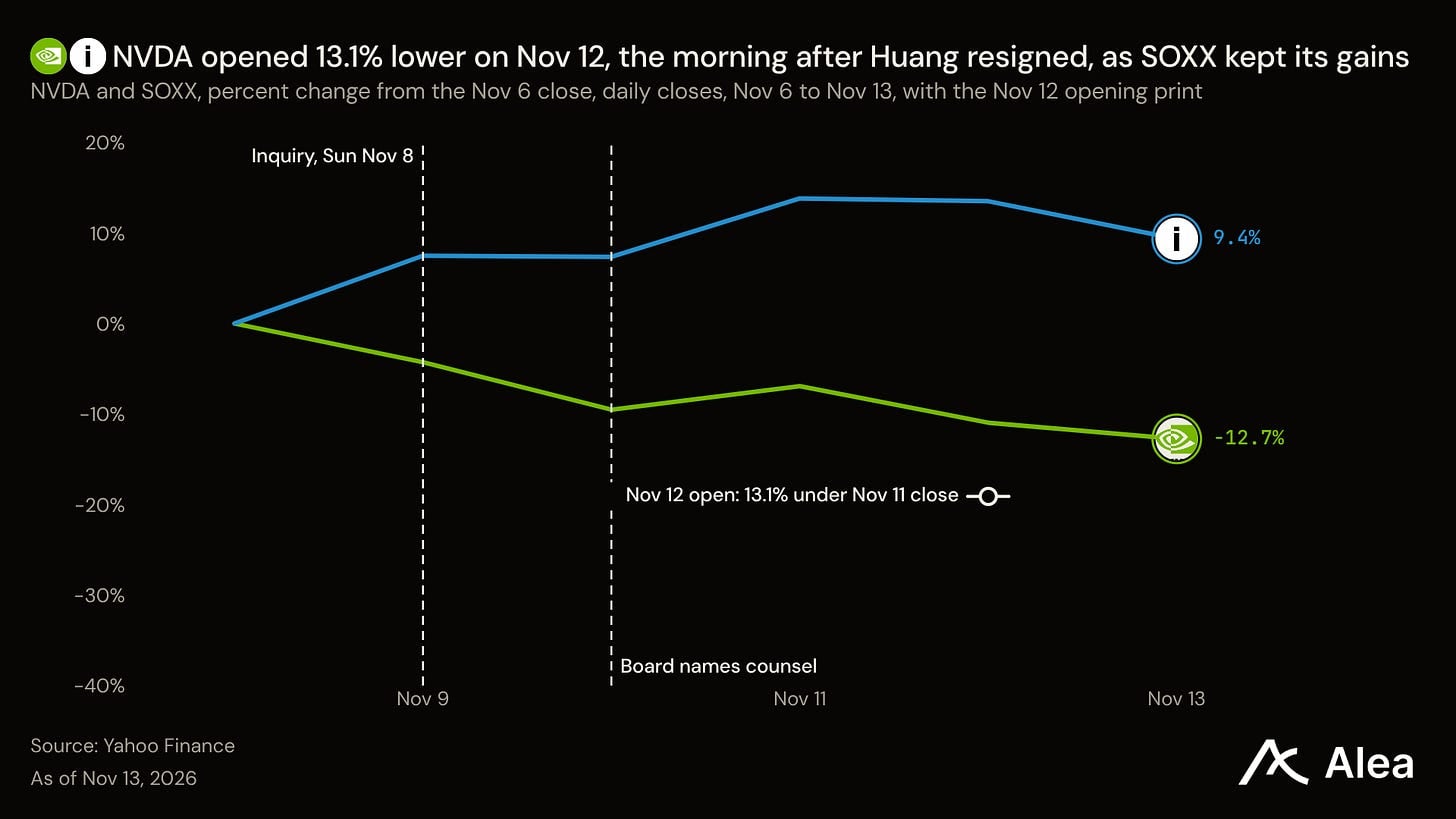
Figure: NVIDIA and Semiconductor Index Trend Comparison
On November 12, the chip index was relatively stable, with peers' gains offsetting NVIDIA's decline. Since the chip index rose 5.66% on November 11, it only dipped 0.54% on the 12th, while the S&P 500 Index fell 0.35% during the same period.
Although Micron produces memory for NVIDIA's accelerated computing cards, it and Arm both saw declines of less than 2% that day. Competitor AMD rose 5.86%, while networking chip giants Broadcom and Arista both increased by over 5%.
However, Supermicro and mining leasing companies faced a double blow at the open. Server manufacturer Supermicro plunged 11.30% on November 12. Before the open, mining leasing company Nebius downgraded its 2026 revenue guidance to the lower end of the range, mainly due to the delay of computing power deployment until 2027.
Nebius closed down 16.84%, with peer CoreWeave down 6.86%.
By November 13, chip manufacturers had erased most of the previous day's rebounds. The chip index fell 3.43% overall, with AMD plummeting 8.75%, and NVIDIA dropping 2.01%, clearly under pressure within the semiconductor sector.
Macro Perspective: CPI Drives Traders to Digest December Rate Hike Expectations
After the release of the October CPI, traders viewed a December rate hike as almost inevitable. On November 10, core CPI rose 0.3% month-on-month, reaching the threshold set by Federal Reserve Governor Waller earlier that day for considering a 50 basis point hike. Dallas Fed President Logan indicated that the committee would need to raise rates at least two more times by 25 basis points each.
Polymarket's December contracts showed that the probability of maintaining interest rates before the CPI was announced was 18.5%, but this probability plummeted to below 2% two days later.
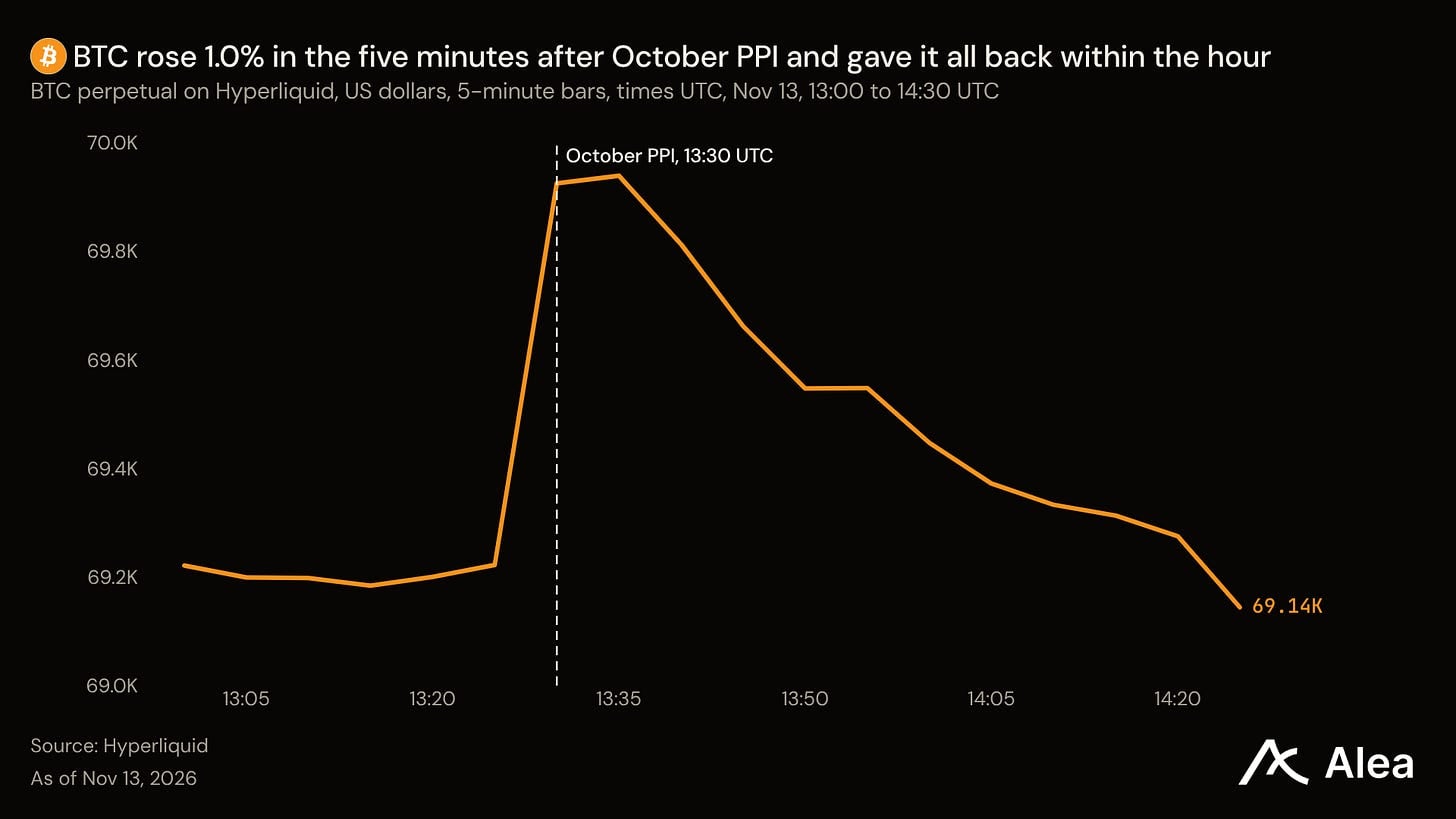
Figure: Market Microstructure After Inflation Data Release
Producer price data brought barely an hour's respite. The 10 October PPI rose 0.3% month-on-month, below economists' expectations of 0.4%, but its year-on-year growth rate still reached 6.5%, hitting a new high since November 2022.
Bitcoin rose 1.0% within five minutes of the data release, but it all evaporated within an hour. During the day, expectations of significant interest rate hikes heightened, with the probability of a 50 basis point or greater hike ultimately concluding at 10.3%.
From November 9 to the close on the 12th, the U.S. 2-year Treasury yield rose 30 basis points to 4.86%, with most of this increase occurring on November 10.
Crypto Observation: Bitcoin Further Breaks Below Strategy Cost Line
Since November 8, Bitcoin's closing price has been below Strategy's average holding cost every trading day. The average cost for the 850,364 Bitcoins held by Strategy is $75,456. On Friday's close, Bitcoin was 9.47% lower than this average, resulting in an unrealized loss of approximately $6.07 billion for its holding.
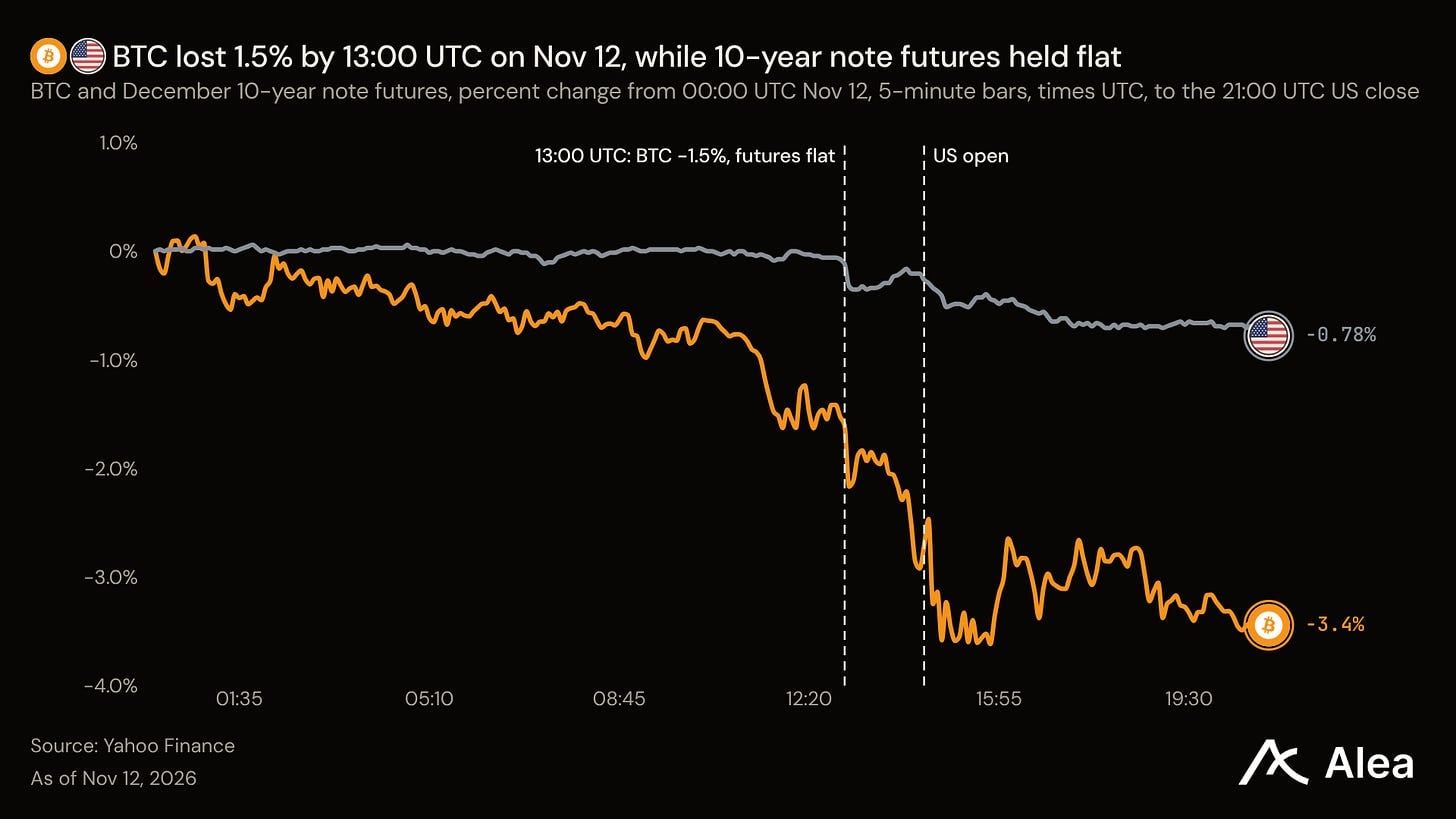
Figure: Bitcoin and Treasury Futures Intraday Trends
In the week ending November 8, Strategy's expenditure on repurchasing its preferred shares exceeded that spent on buying Bitcoins. The company spent $188.3 million to repurchase its STRC preferred shares, while funds used for Bitcoin purchases were only $81.9 million.
Funds tracking the MSCI index will sell Strategy before the close on November 30, as MSCI is about to remove the company from the index.
Bitcoin's decline occurred hours ahead of movements in Treasury futures. Before 13:00 UTC on November 12, Bitcoin had already dropped 1.49%, while Treasuries and Nasdaq futures were basically flat. Open interest on Binance Bitcoin perpetual contracts increased 4.3% during these hours, as traders continued to add positions in the downturn.
As Bitcoin fell below $68,000 on Friday, leveraged funds were forced to exit. Between 00:00 and 06:00 UTC, open interest on Binance, Bybit, OKX, and Hyperliquid decreased by about 4,060 Bitcoins.
Open interest on perpetual contracts on Hyperliquid briefly touched $67,474, with the funding rate for longs plunging to 0.0013%.
U.S. Stock Market Insight: Three of the Four Cloud Giants Have Capital Expenditures Exceeding Operating Cash Flow
Last quarter, Google's parent company Alphabet, Meta, and Amazon all had capital expenditures exceeding their operating cash flow, with only Microsoft's operating cash flow covering 1.47 times its cash capital expenditures.
Alphabet's capital expenditures doubled year-on-year to $51.4 billion, and the company suspended stock buybacks. Meta's expenditures also surpassed its operating cash flow, with its stock buyback amount falling to zero. Amazon's operating cash flow covered only 55% of its expenditures. These massive capital expenditures are the lifeblood of orders for chip manufacturers.
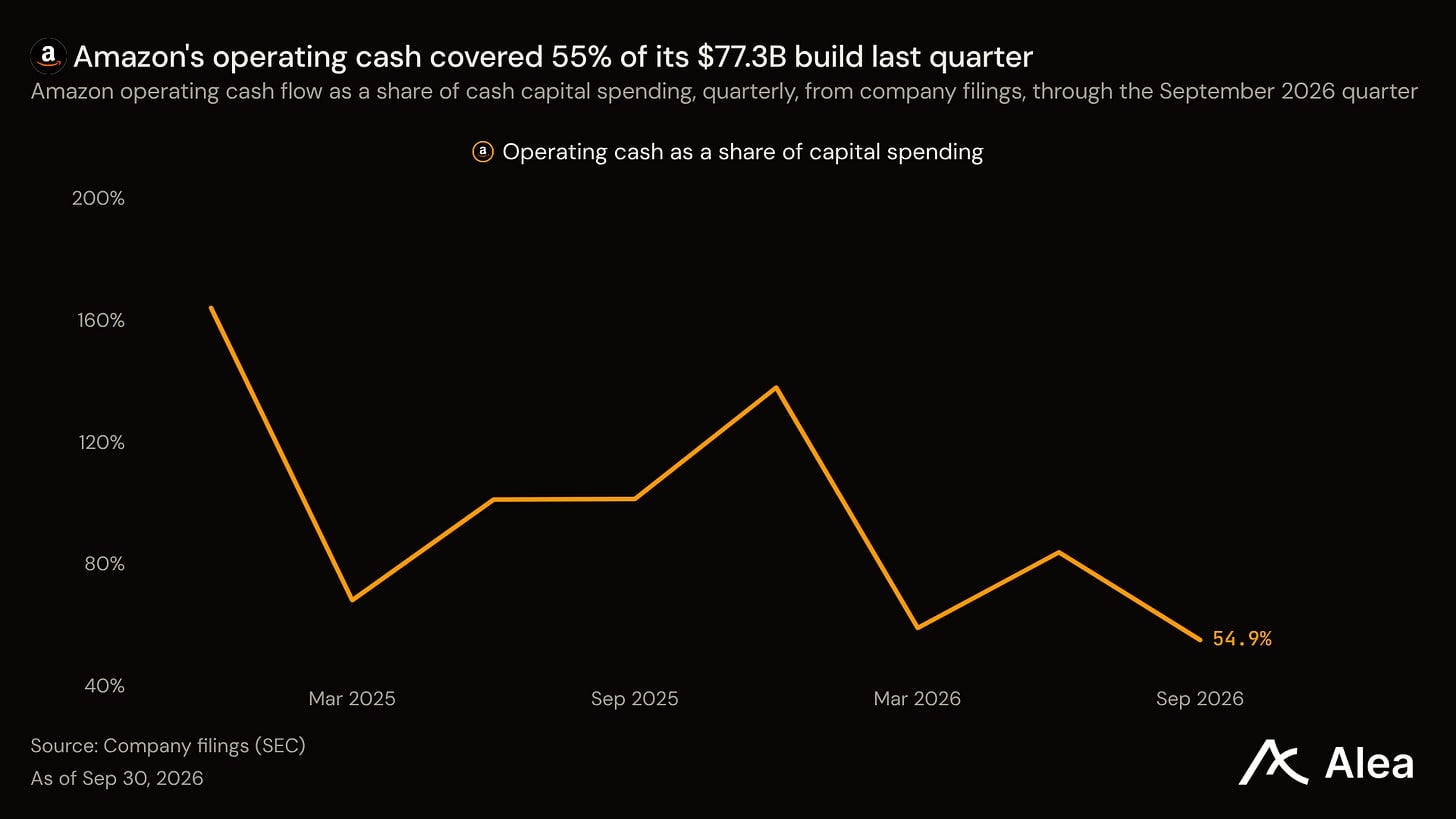
Figure: Amazon's Operating Cash Flow and Capital Expenditure Ratio
The Crypto Derivatives Market Gives Anthropic a Valuation Far Exceeding IPO Range
Traders have given Anthropic a high premium in crypto contracts. As of November 14, 00:00 UTC, related contracts on Hyperliquid valued Anthropic at $1.782 trillion.
Based on equity corresponding to the contracts, its IPO median of $74 corresponds to a valuation of $1.295 trillion, with the current contract price showing a premium of 37.6%.
Even with an IPO upper limit of $78 pricing, plus the average first-day increase of 17.9% for large IPOs since 2001, the valuation would only be $1.609 trillion, still 10.8% below the contract market. So far, seven companies have committed to subscribing to $26 billion worth of shares at the IPO price, with NVIDIA and Google each subscribing about $10 billion.
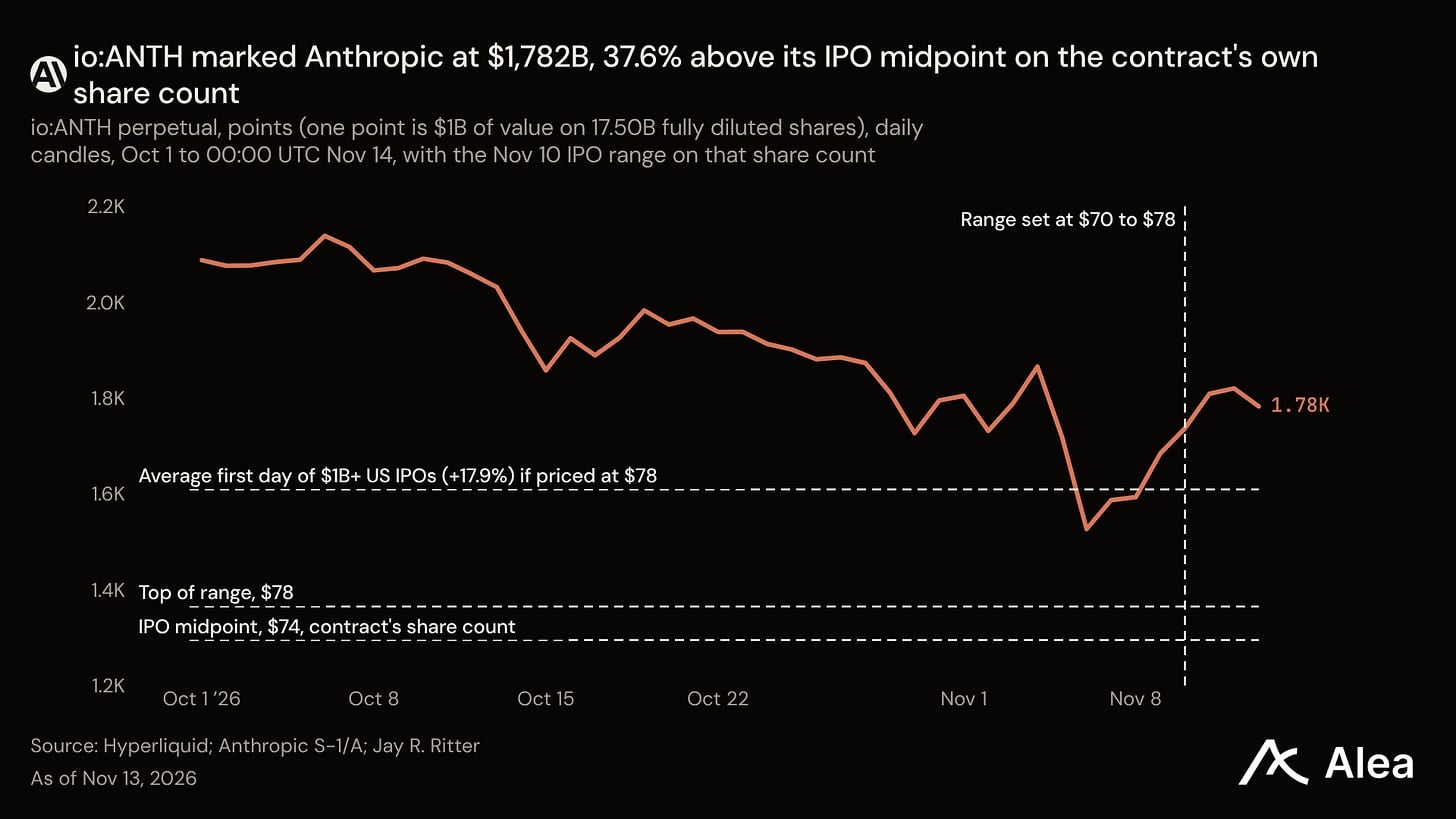
Figure: Anthropic OTC Contract Price Trends
AMD also has its vested interests. Anthropic procured AMD power racks equipped with MI450 computing chips, with AMD reaching an agreement in July to subscribe to up to $5 billion in Anthropic shares upon delivery of the racks.
Commodities: Gold Hits New Year Low, Oil Boosted by Geopolitical Risk
December gold futures closed at a year-low on November 12. The real yield on the U.S. 10-year Treasury climbed 25 basis points to 2.91% by Friday's close since November 9. The dollar index reached a new high for the past year at closing, with speculative funds continuously reducing their net long positions in gold futures.
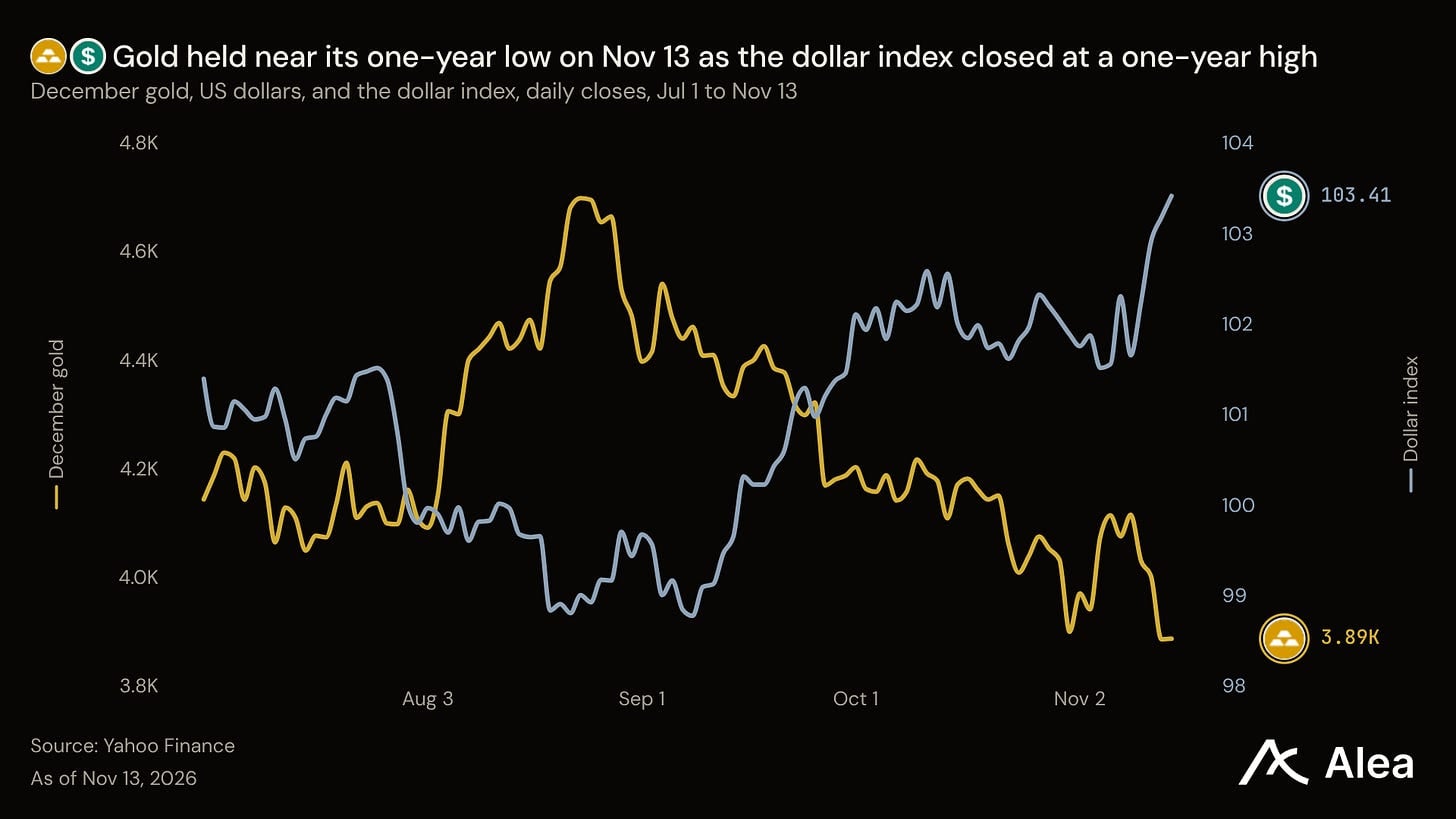
Figure: Comparison of Gold and Dollar Index Trends
Meanwhile, due to diminishing expectations of a ceasefire agreement, January Brent crude oil rose a cumulative 3.94% over two trading days. The natural gas market rebounded sharply amid extremely crowded short positions, with December natural gas rising 13.10% since the November 2 close, with significant increases in speculative short-covering demand.
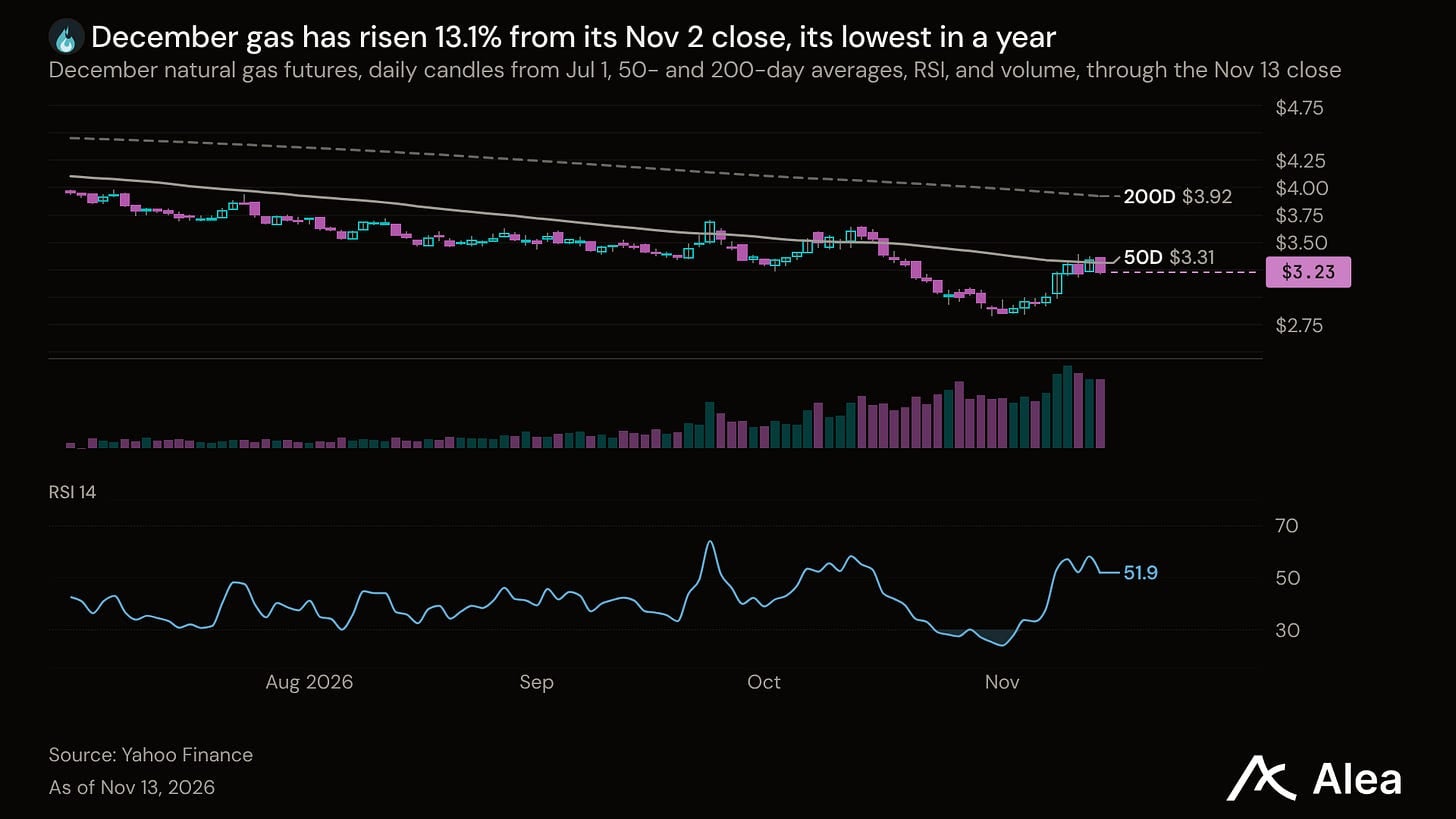
Figure: Natural Gas Futures Price Trends
The Ripple Effect of NVIDIA's Turbulence on the Semiconductor Supply Chain
On November 12, although NVIDIA's stock price was hit, the overall semiconductor index remained robust, with AMD and Broadcom rising, while suppliers Micron and Arm saw smaller declines. Supermicro and mining leasing companies experienced pullbacks, but this was compounded by their own performance guidance downgrades.
On November 13, the chip sector corrected, and the market may be slowly digesting the shock or stabilizing premiums from earlier high bids for competitors. The dynamics of the bulls and bears have yet to fully solidify within the current price structure.
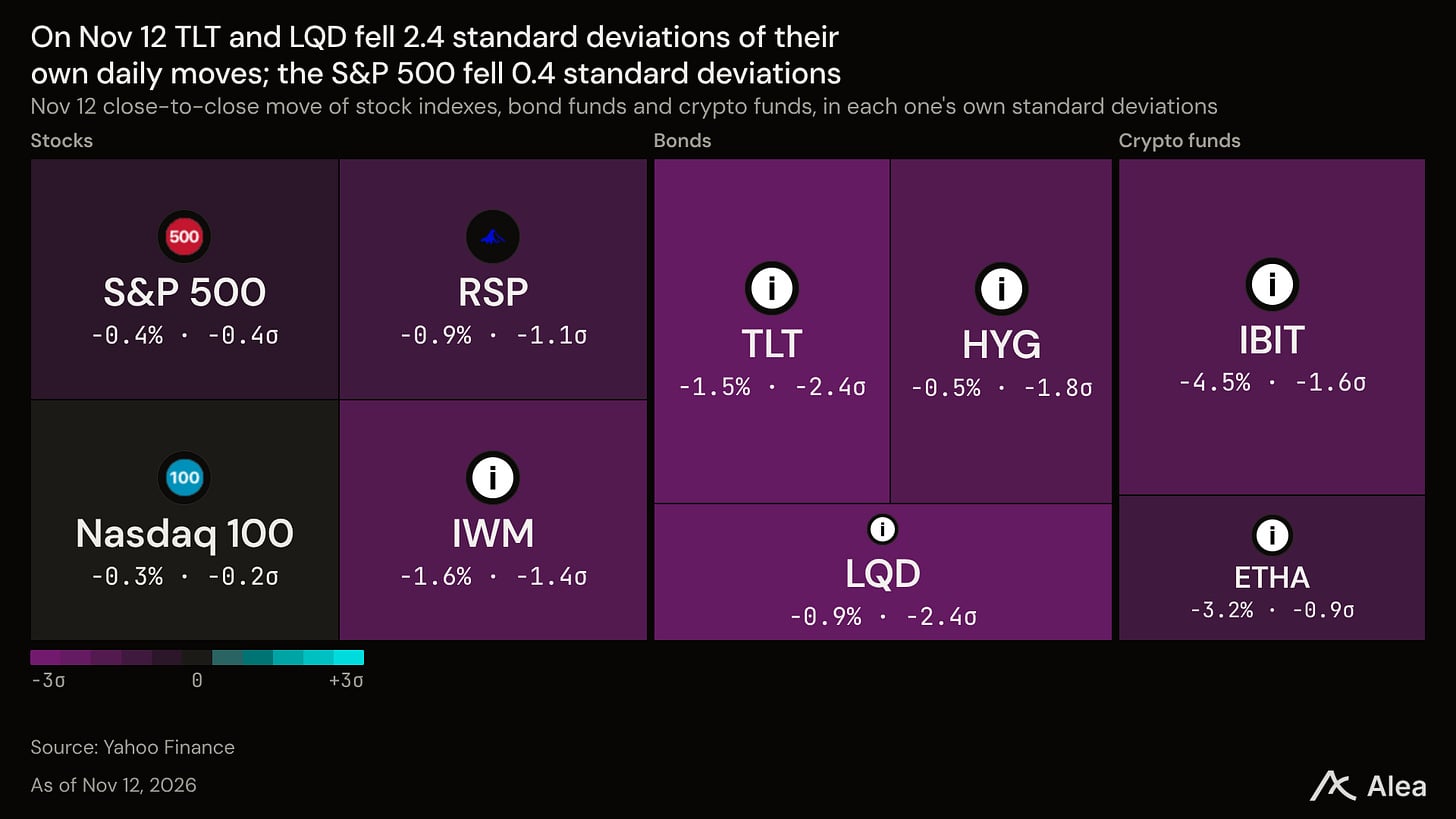
Figure: Performance of Multi-Asset Volatility After Adjustment
Key Timeline Summary
On November 16, the latest futures position holdings report will be released, providing a basis for assessing speculative fund movements.
On November 17, NVIDIA will release its first financial results after losing Jensen Huang, with the current market cap corresponding to its annual revenue guidance valuation multiple dropping to 9.1 times.
On November 18, the Federal Reserve will release the meeting minutes, and Anthropic's IPO is expected to be priced around this date.
On November 30, MSCI will officially remove Strategy by the close.
On December 9, the Federal Reserve will officially announce its latest rate decision.
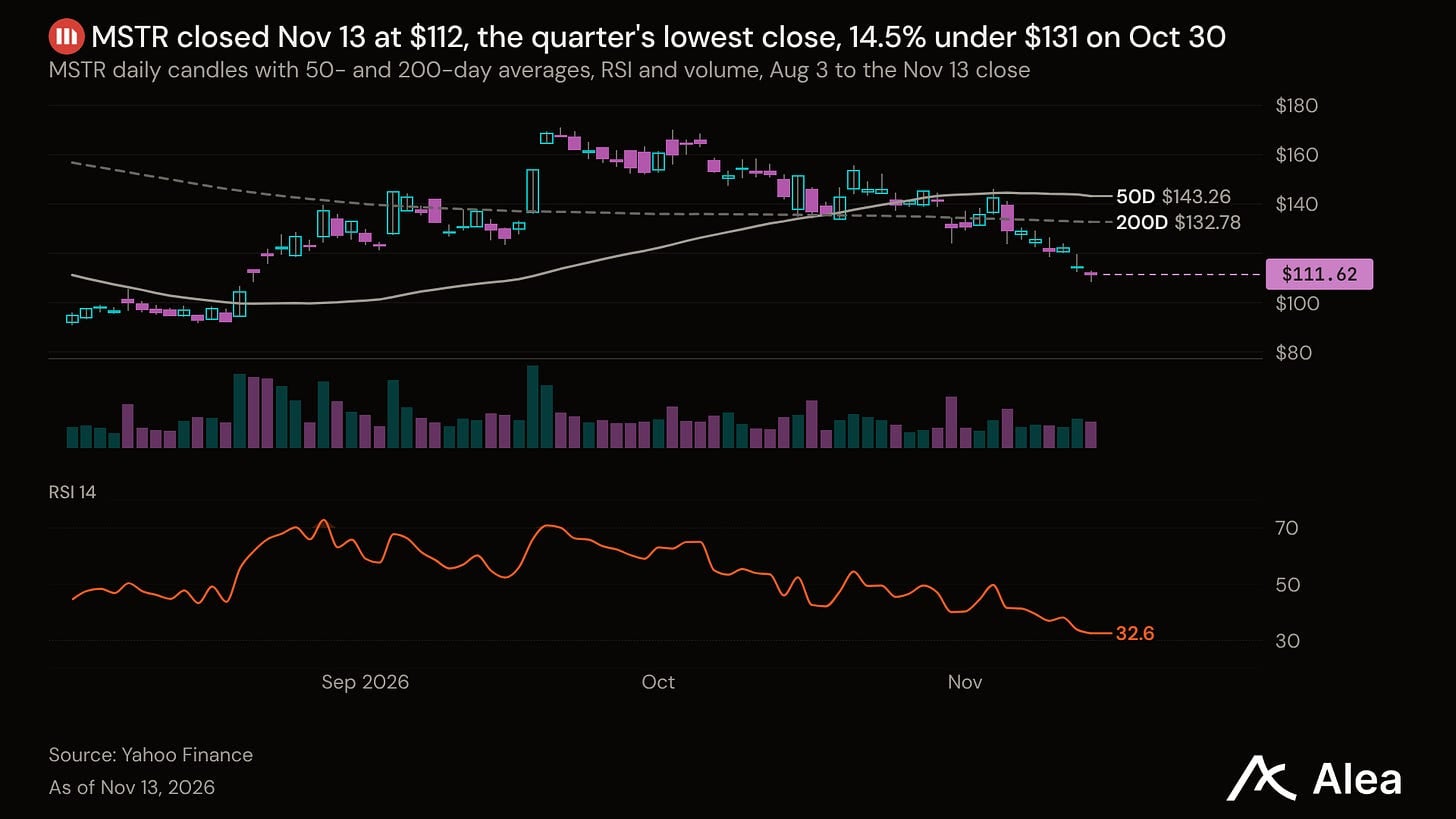
Figure: Strategy Share Price and Moving Average Trend
免责声明:本文章仅代表作者个人观点,不代表本平台的立场和观点。本文章仅供信息分享,不构成对任何人的任何投资建议。用户与作者之间的任何争议,与本平台无关。如网页中刊载的文章或图片涉及侵权,请提供相关的权利证明和身份证明发送邮件到[email protected],本平台相关工作人员将会进行核查。


