Author: WallStreetBets
Translation: Deep Tides TechFlow
Deep Tides Introduction: Although the overall crypto market faces pressure in 2026, on-chain protocols have generated $11.68 billion in real revenue from the beginning of the year to now. As institutional funds place greater importance on traditional business fundamentals, purely narrative-driven speculative models are losing their appeal, and protocols capable of translating business success into token value are beginning to stand out.
This article reviews the market performance of mainstream token buyback projects from 2025 to 2026, breaks down the three key variables affecting buyback success or failure, and analyzes potential opportunities in the next phase of the crypto revenue race, integrating the latest cases from stablecoins, AI platforms, and Bittensor subnets.

Crypto companies are earning substantial profits, with some projects investing tens of millions of dollars to ensure that token holders can also share in this dividend.
2026 has become the year for crypto projects with self-sustaining capabilities.
From the beginning of the year to now, major protocols have cumulatively created $11.68 billion in on-chain revenue. If November and December maintain levels similar to October, the total annual revenue is expected to reach about $13.9 billion, which is less than $1 billion from the significantly better market environment of the whole year of 2025.
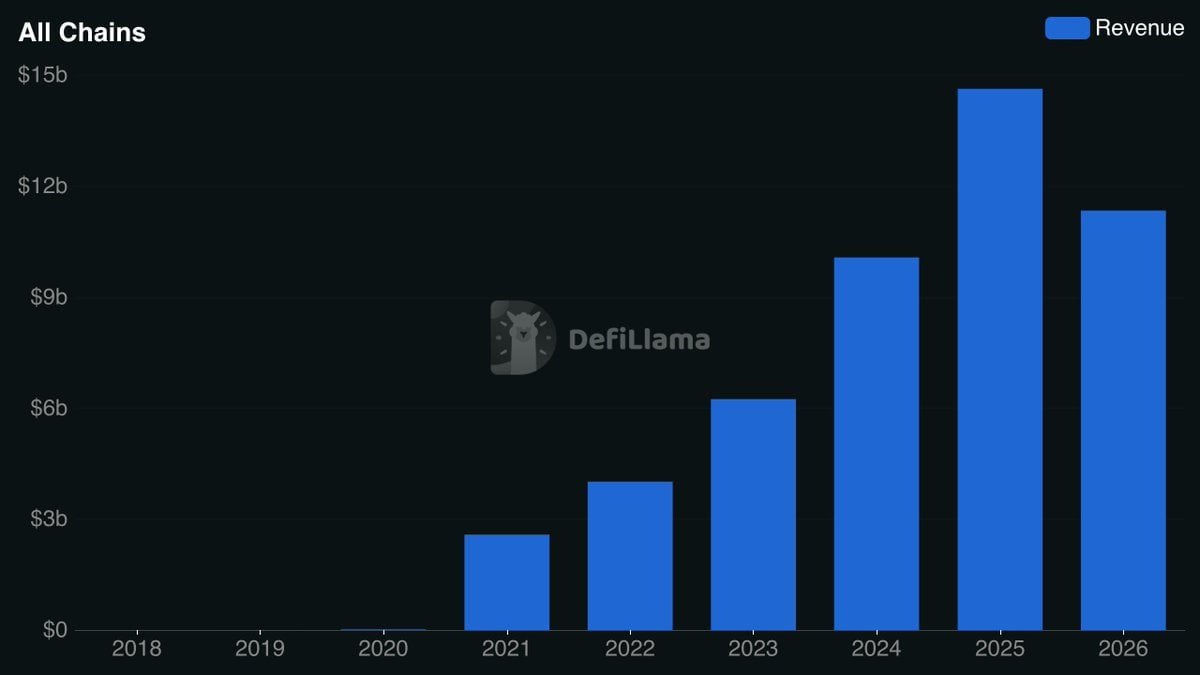
Figure: Annual statistics of crypto protocol revenue
We are witnessing a fundamentally driven trend that remains strong even amid a weakening overall market. Whenever I see this kind of divergence, I want to clarify the underlying driving force and identify where the investment opportunities actually lie.
To this end, I conducted in-depth research. This article will break down my core findings, including:
- Why I believe the crypto revenue narrative is still in its early stages
- How to assess revenue-generating businesses and filter for attractive token opportunities
- Why top teams from @HyperliquidX to @worldlibertyfi are embracing buybacks
- Where I am looking for the next batch of outperformers
Background: The Core Logic of Revenue Narrative
The crypto industry has never lacked investment narratives; the problem is that most narratives cannot hold up over time.
We have seen investors chase after NFTs, the metaverse, SocialFi, and one blockchain ecosystem after another. Funds flooding into these areas pushed valuations higher, but the music always has to stop eventually. After the party ends, investors are often left with significant losses.
The commonality of these cycles is that market performance is driven more by narrative and speculative sentiment rather than by traditional business fundamentals.
However, the industry has been undergoing profound changes over the past few years, fundamentally reshaping how investors allocate their funds.
Firstly, we have a clearer understanding of the fields in which blockchain technology can create real economic value and product advantages. After years of exploration, categories such as trading, stablecoins, and DeFi have established clear product-market fit (PMF), while tracks like market prediction and asset tokenization have also successfully broken through.
At the same time, institutional funds are entering through DeFi treasuries, which are more aligned with traditional finance paths (TradFi), with more and more people in suits attending industry conferences. Although regulatory advancements in Washington are slow, they are making substantive progress.
Overall, the crypto industry has matured significantly. Large capital allocators dominating the market are gradually moving away from high-risk pure speculative bets and are instead supporting teams that align more closely with traditional business logic. This shift will profoundly impact future market trends.
This is not just my opinion; the perspective of venture capital firm @hack_vc corroborates this:
“Pure token speculation is gradually losing appeal, and mature retail investors are becoming increasingly adept at recognizing predatory tokens lacking economic support. We see growing interest in two types of projects: one that uses tokens to attract funding, liquidity, and activity to enhance product distribution; the other that exhibits strong revenue growth and clear value return paths.”
“As more high-volume fintech and AI companies adopt crypto infrastructure, revenue opportunities are expanding, and investors are paying more attention to revenue quality, profitability, and long-term value capture mechanisms.”
When the dominant institutional investors start prioritizing sustainable business models, the investment narratives they promote will also reflect the same preference, extending the lifecycle of the narratives.
Once an investment trend is underpinned by fundamentals, even if the token price pressures in the short term, as long as the underlying business continues to grow, it is better positioned to traverse market cycles and maintain investor interest.
As a new round of crypto bull market approaches, this is the direction I adjust my positions: to invest in evergreen tracks supported by enduring demand and with long-term compounding potential. This has led me to focus on privacy tracks, and now it's guiding me toward the revenue narrative.
The core of the revenue narrative revolves around a group of crypto businesses with stable customer bases, sustainable revenue, and the ability to translate business success into value for token holders. As the industry matures, these companies are expected to emerge as the standout winners in the next bull market.
The uniqueness of this opportunity lies in its breadth. Unlike past narratives centered around a single technology or application, the ability to generate revenue spans across every subfield of the crypto industry.
On the surface, the assessment methods seem straightforward, merely employing the fundamental analysis frameworks developed over decades in traditional markets. But in an industry still leaning toward these standards, investors willing to look beyond conventional financial metrics can gain additional cognitive advantages.
This advantage lies in the fact that a successful crypto company does not automatically create a successful investment token.
The reason is that, unlike traditional stocks, the vast majority of crypto tokens do not grant holders legal ownership of the underlying company or profits. Therefore, a protocol may create hundreds of millions in revenue without any economic value flowing to the tokens held by investors.
So, identifying the most profitable business is just the first step. The real opportunity lies in finding teams that can maintain business success while having effective mechanisms to translate growth into value for token holders. This is where token buybacks come into play.
- In traditional stock markets, listed companies use excess cash to buy back shares, reducing the number of outstanding shares, thereby increasing the shareholding proportion of remaining shareholders.
- But in the crypto realm, economic and regulatory considerations are drastically different. Token holders typically lack legal ownership, and linking returns directly to the management team's operating efforts may also raise securities law compliance issues.
- Therefore, buybacks have become a popular mechanism for establishing a more direct connection between a business's commercial success and the token's value.
The underlying logic of buybacks is similar to traditional stock buybacks. Protocols can use a portion of their revenue to buy back tokens in the open market, which can then be destroyed, locked, or added to the treasury.
Despite being highly similar to traditional finance, buybacks have been one of the most controversial topics in the crypto space over the past two years. Many projects have spent hundreds of millions on buybacks only to see disappointing market performance, leading many investors to question whether this strategy is truly effective.
I have a different perspective on this. At this stage of development, we have accumulated enough data to move beyond the debate of “whether buybacks work” and clarify when, why, and under what conditions buybacks can genuinely be effective.
The Great Crypto Buyback Debate
Token buyback strategies exploded in popularity in 2025.
That year, 28 mainstream crypto projects collectively spent over $1.4 billion on token buybacks. However, among the top ten buyback projects of that year, only three outperformed Bitcoin (AAVE, HYPE, SKY), while many projects saw their token valuations plummet.
2025 made many teams realize that simply dropping millions on token buybacks does not necessarily yield better secondary market performance.
Many investors, upon seeing the disparity between the buyback amounts in 2025 and the price performance, jumped to the conclusion that “buyback strategies are ineffective.” But I believe this judgment overlooks the critical context.
Rather than judging buybacks solely based on price fluctuations, I focus more on the specific environment during which the buyback is executed and the core factors that differentiate effective from ineffective buybacks. Based on this, we can first establish four clear criteria for determining a "quality buyback plan":
- Revenue Support: The buyback funds come from real business revenue rather than depleting existing treasury reserves or other unsustainable sources of funds.
- Mature Product-Market Fit (PMF): The underlying business has proven sufficient demand and recurring revenue that can support buybacks over the long term.
- Transparent Execution: Token holders can independently verify the operation of the buyback mechanism, including the source of funds, execution process, and the destination of the repurchased tokens.
- Sustainable Capital Allocation: Engaging in buybacks should not jeopardize the company's ability to reinvest for growth, maintain financial health, or seize higher return opportunities.
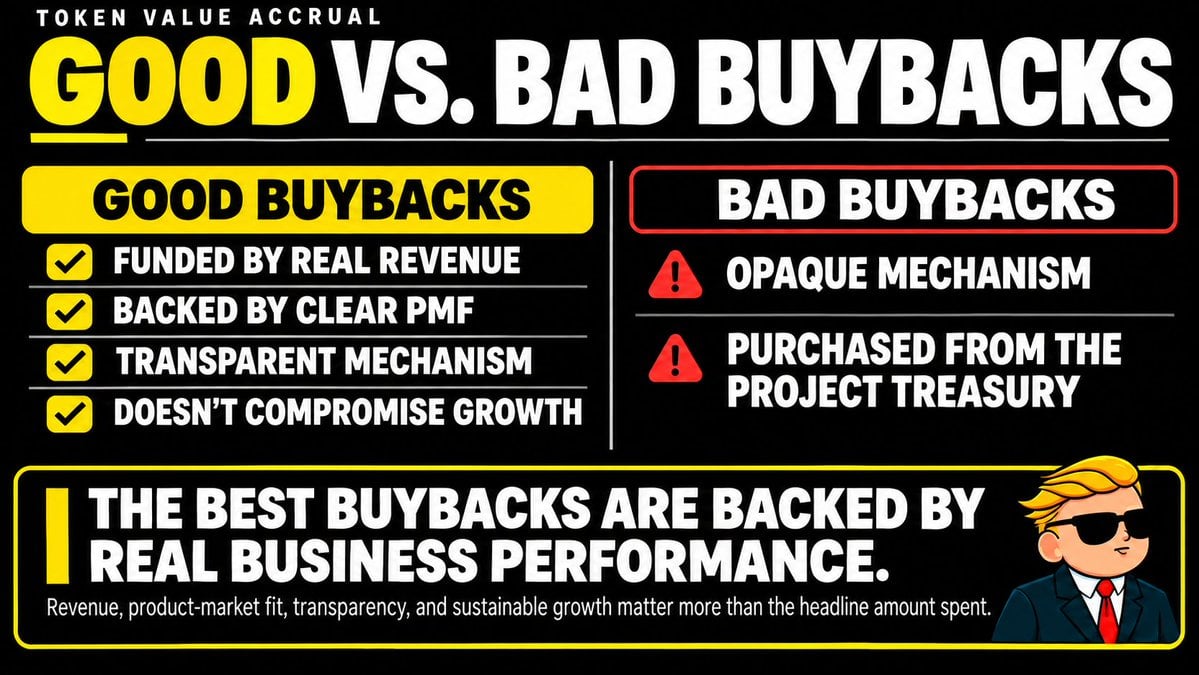
In addition to the aforementioned basic criteria, there are several additional factors that will directly affect the actual effectiveness of the buyback plans, and these should not be overlooked when assessing projects.
Market Environment
Jupiter may be the most commonly cited example to illustrate "buybacks failing to meet market expectations."
In February 2025, the platform began using 50% of its on-chain protocol revenue for JUP buybacks. By January 2026, the team had cumulatively spent over $70 million buying back tokens, yet the JUP price continued to plummet.
The disappointing price performance prompted Jupiter's co-founder Siong Ong to publicly question whether they should pause buybacks and redirect funds towards business growth; however, the buyback plan ultimately continued.
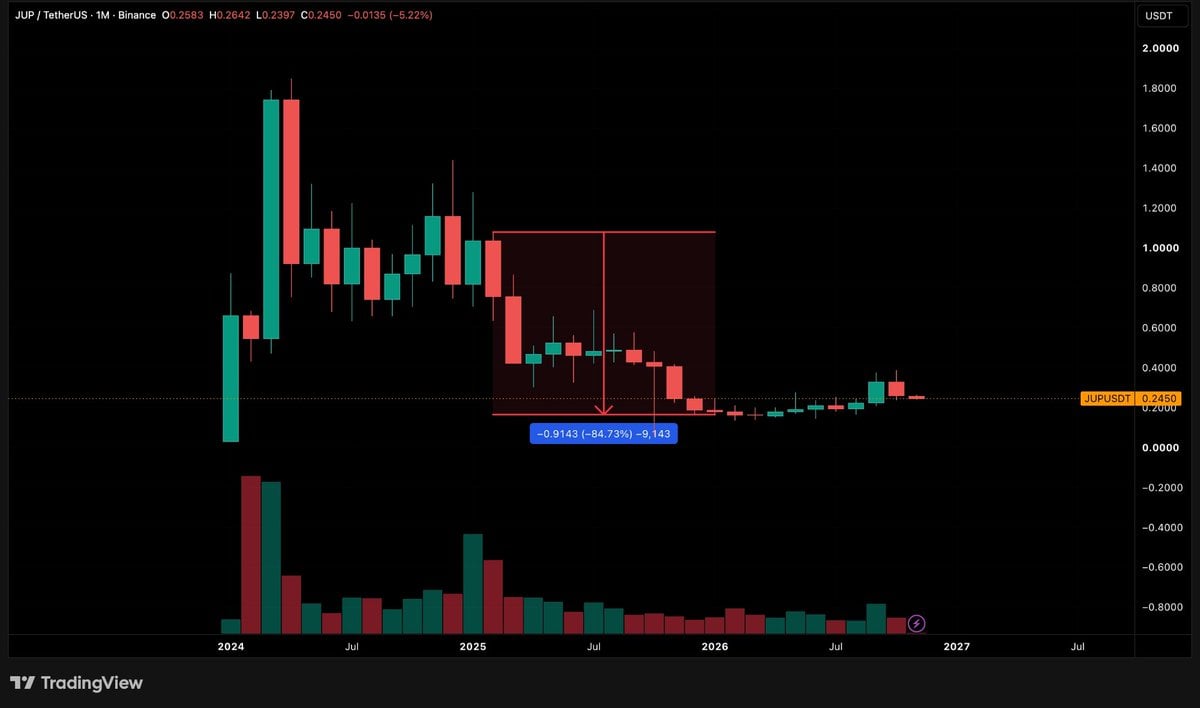
Criticism surrounding Jupiter's buyback largely focused on its failure to support the JUP price, questioning whether the team should invest in business expansion instead. But I believe it is more important to understand the broader market environment at the time of the buyback.
January 2025 was, coincidentally, a peak phase of the previous Solana ecosystem market rally. After that, SOL fell from a high of $294 to $96, with mainstream protocol tokens like Sanctum, Kamino, and Jito all experiencing declines of over 80%, and popular meme coins like Fartcoin and WIF retracting over 90%.
In other words, Jupiter invested over $70 million in buybacks during a time when the entire Solana ecosystem was under extreme selling pressure. This illustrates a key point: even if buybacks can create significant buying demand, considerable buybacks alone are hard to reverse a downward trend during a prolonged systemic decline. Much of the time, it's tough to move forward at full speed against the current.
Token Supply
Another key consideration is how much new token supply is entering the market relative to the scale of the buybacks.
A protocol can spend tens of millions on buybacks, but if the new selling pressure from token unlocks, inflation releases, and other distribution mechanisms exceeds the absorption capacity of the buyback, the positive effects of the buyback will be completely overshadowed.
Research on mainstream crypto buyback projects shows a negative correlation between token supply growth rates and relative market performance. Ultimately, what matters is not how much the team spends on buybacks but whether these buybacks genuinely improve the supply-demand structure of the tokens.
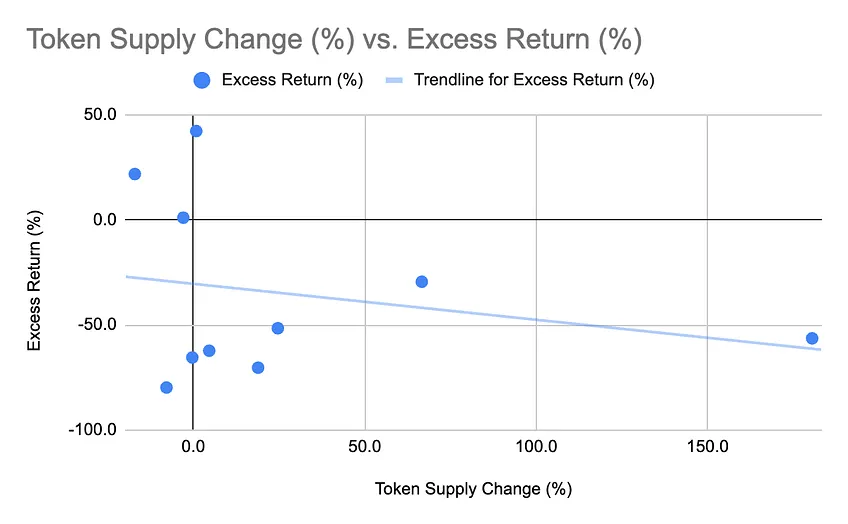
Figure: The changes in token supply of the top 10 major crypto buyback projects in 2025 compared to their excess returns relative to Bitcoin, source: Bill Hsu
Buyback Mechanism Itself
Many crypto protocols, regardless of their token valuations, will allocate a fixed percentage of revenue to automatic buybacks. While this approach can provide predictable buying demand and demonstrate commitment to holders, from a capital allocation perspective, it may not be the most efficient; traditional stock markets do not operate this way either.
For instance, Berkshire Hathaway, led by Warren Buffett, has historically executed buybacks based on the premise that the stock price is below intrinsic value while maintaining sufficient liquidity. The core logic is to buy undervalued assets and retain cash when valuations are too high or other superior investment opportunities exist.
I understand the appeal of programmatic buybacks in the crypto market, especially during prolonged bear markets when many fundamentally strong revenue-generating tokens remain undervalued for long periods.
However, with the market warming and valuations expanding, I expect more teams to shift towards flexible discretionary buyback models, comprehensively weighing token prices, growth opportunities, and overall capital allocation priorities.
In the end, the objective should be to maximize the long-term value of token holders, not merely to pile up the buyback amount. As an investor, your task is to identify which teams are the most efficient in this regard.
Fortunately, more market data is now available for evaluation. The performance in 2026 provides strong evidence for taking revenue-supported buybacks seriously.
Review of Buyback Performance in 2026
In 2026, crypto token buybacks once again delivered impressive results.
Major projects collectively invested over $900 million in token buybacks and associated destruction mechanisms, with Hyperliquid (over $505 million) and Pump.fun (over $269 million) accounting for the vast majority.
Additionally, Uniswap (over $56 million), Jupiter (over $28 million), and Sky ($34.08 million) also operated noteworthy buyback plans.
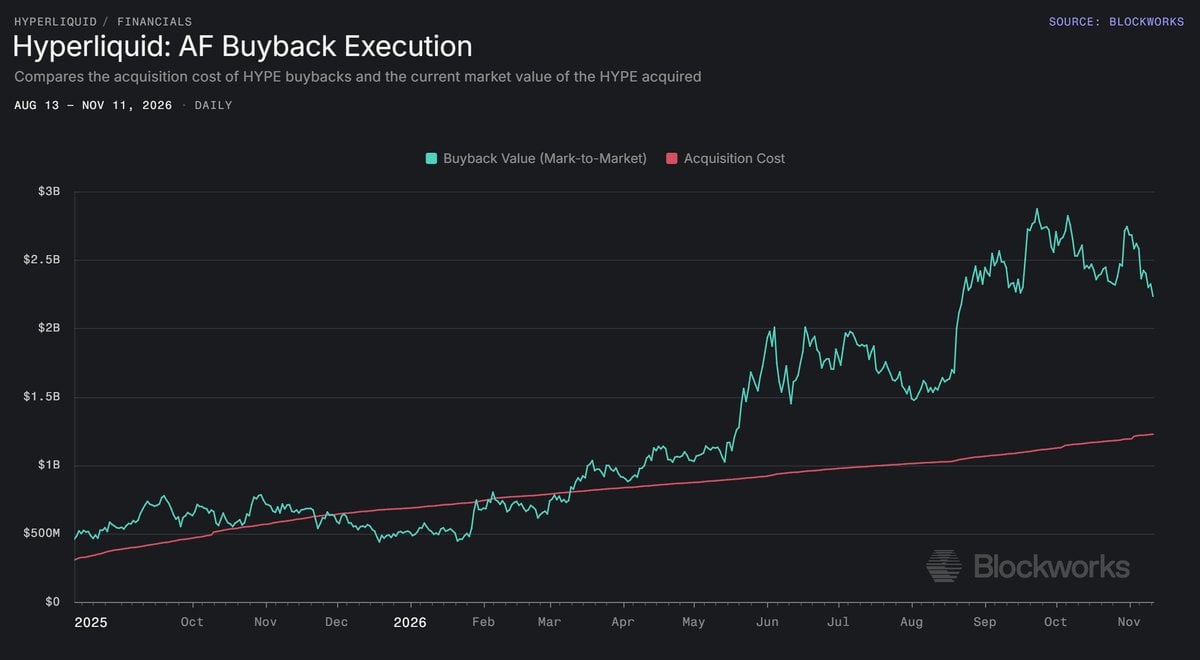
Figure: Hyperliquid buybacks are in significant profit status
More importantly, many tokens tied to these buyback plans recorded impressive gains this year.
For example, among the top 30 protocols by revenue in the last 30 days, nearly half (46.7%, or 14 out of 30) have not yet issued publicly tradable native tokens. Among the remaining 16 projects with investable tokens, 12 are actively implementing buyback plans:
- 9 projects have recorded positive returns year-to-date
- 3 projects have recorded negative returns year-to-date
- The average return year-to-date is +62.2%, with a median of +32.6%
In contrast, the performance of the other 4 projects without active buyback plans is as follows:
- Only 1 project has recorded positive returns year-to-date
- 3 projects have recorded negative returns year-to-date
- The average return year-to-date is -31.6%, with a median of -31.5%
The average return discrepancy between the two sets of projects year-to-date is as high as 93.8 percentage points.
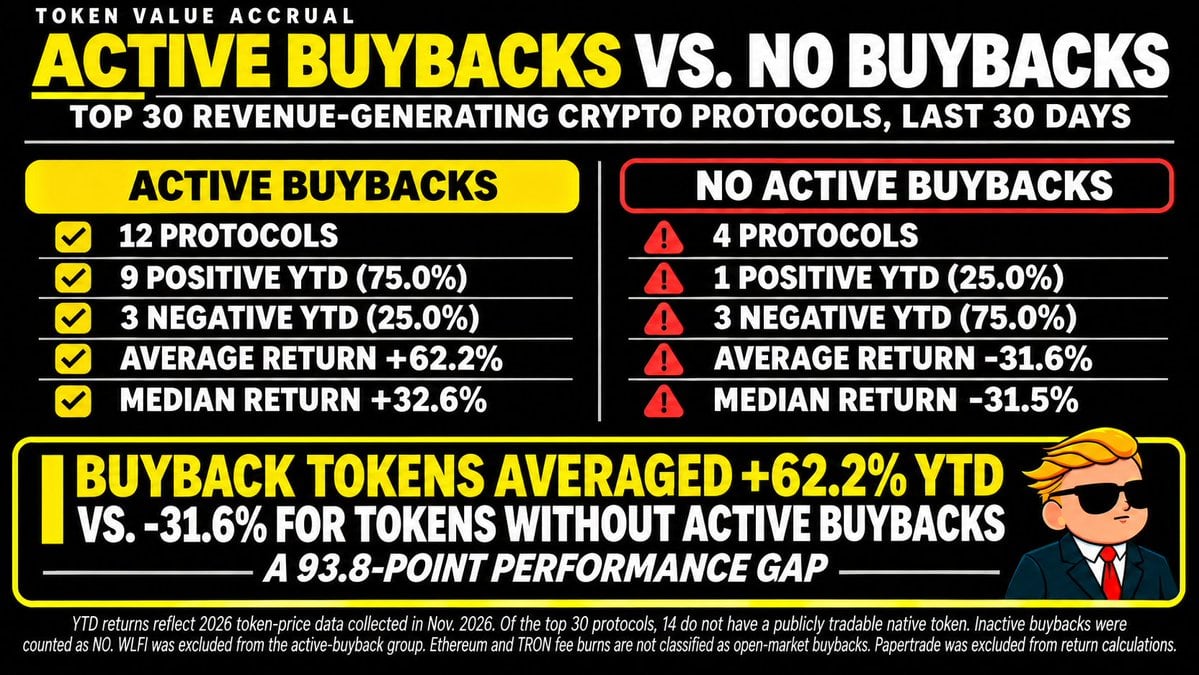
Note: Year-to-date returns are based on token price data collected in November 2026. Projects that have discontinued buybacks are categorized as a non-buyback group; World Liberty Financial is not included due to its recent launch; automatic fee destruction of Ethereum and Tron is not considered a public market buyback; and Papertrade is excluded for having issued tokens only in October 2026 and lacking regular spot trading.
What is even more impressive is that these positive returns were achieved in a context where the total crypto market cap has dropped about 19% year-to-date.
Seeing such report cards, it's no wonder that high-revenue teams are turning towards buyback strategies. For instance, World Liberty Financial just launched its WLFI buyback plan last week, and I expect more teams to follow suit in the first quarter of next year.
We also need to compare this year's buyback performance with other value distribution mechanisms, especially models that directly distribute revenue to token holders.
In September of this year, DefiLlama released an analysis comparing the performance of buyback tokens with direct dividend tokens. The results showed that the median return for buyback tokens year-to-date is 19.7%, while direct dividend tokens yield 11.1%.
When researchers weighted these returns by market capitalization, the gap widened even further: buyback tokens had a return rate of as high as 190%, while direct dividend tokens were only at 29%.
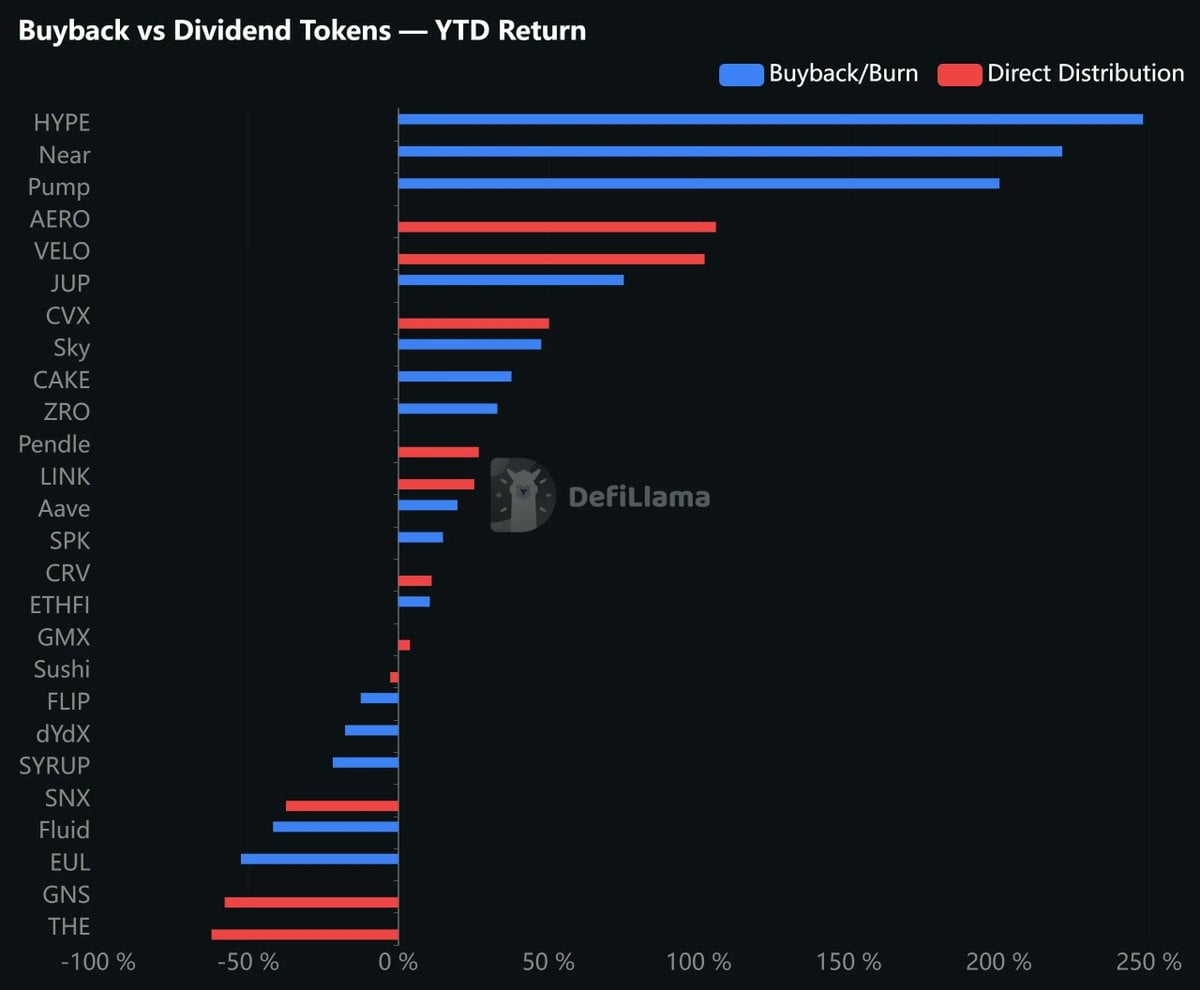
Figure: Buyback tokens outperform significantly, with a median increase of +19.7%, while direct dividend tokens are at +11.1%
At the same time, the proportion of protocol revenue flowing to token holders is actively increasing. The same research indicates that as of September 2026, crypto protocols have consecutively exceeded $1 billion in total monthly revenue for 23 months. Two years ago, only about 5% of this revenue flowed to token holders; by September of this year, this proportion has tripled to 15%.
Summarizing the data from 2026, we can clearly see three major signals: teams implementing buybacks generally excel in the secondary market, buybacks outperform other revenue distribution models, and an increasing amount of crypto business revenue is flowing back to the tokens themselves.
Key Directions Worth Noting
For me, future investment opportunities lie in identifying crypto businesses that are "doing buybacks in the right way," especially those operating in sectors with long-term high growth potential. Below are a few areas worthy of deeper research.
Where Funds Are Flowing
Among the top 30 revenue-generating crypto protocols we have tracked, there are 9 projects that meet both the conditions of "actively buying back" and "having positive token returns year-to-date."
If these businesses can deliver strong performance in an unfavorable market environment, then their explosive potential when a full bull market returns will be highly anticipated.
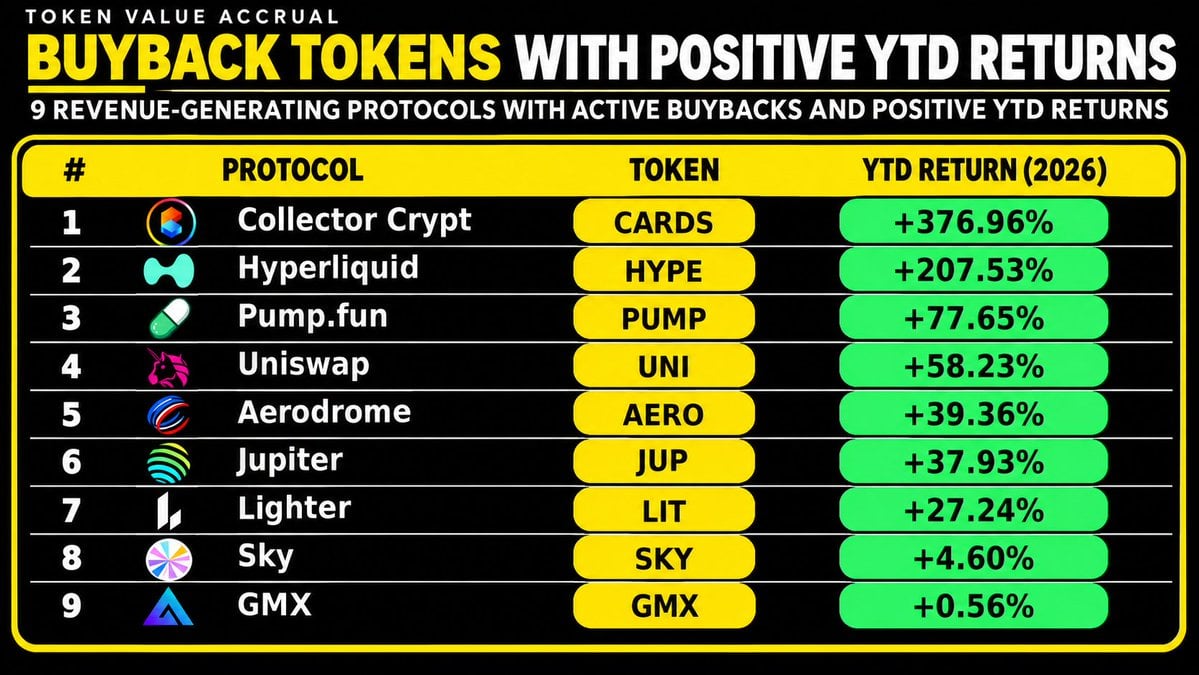
In addition to individual protocols, we also need to examine the overall revenue landscape of the crypto industry. Only in sectors with abundant revenue can buyback plans be fertile ground for success.
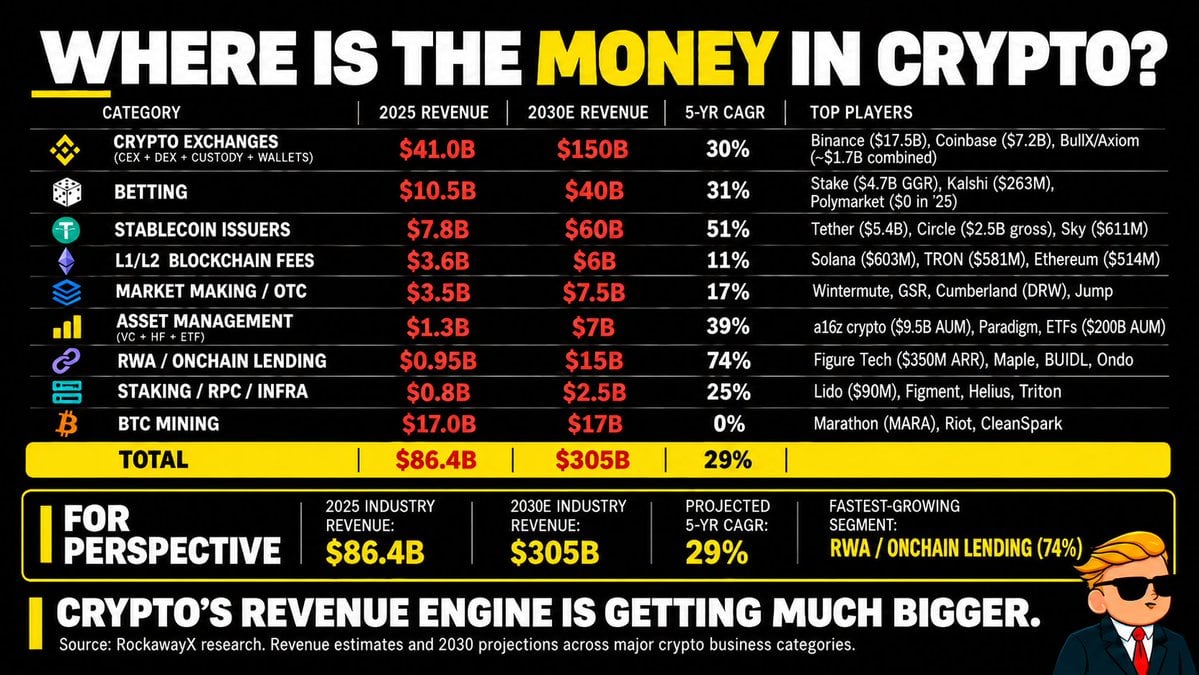
In 2025, the overall revenue of the crypto industry was estimated to reach $86.4 billion, and institutions predict this number will rise to $305 billion by 2030.
Looking ahead, the fastest-growing areas are expected to be centered around stablecoins and RWA lending tracks. Research forecasts that by 2030, the annual revenue from these two sectors will reach $60 billion and $15 billion, respectively, which are also key areas I will be tracking closely.
World Liberty Financial
Prior to this, investors had few channels to directly capture the economic dividends of the stablecoin wave. I have long believed that stablecoins are one of the strongest PMF cases in the crypto space, with the potential to reshape global financial landscapes.
Companies and protocols like Tether, Circle, World Liberty Financial, and Ethena have demonstrated that stablecoins are not only applications of blockchain but also the cornerstones for building multi-billion dollar business empires. Yet, despite explosive growth in the industry, ordinary investors have very limited opportunities to participate and share in the value.
Consider the existing landscape: Tether remains a privately held company; Circle provides equity exposure but must share substantial revenue with distribution partners; Coinbase can collect part of the USDC earnings, but its stock price reflects a more extensive integrated business; holding XRP or PayPal stock does not directly correspond to the earnings of RLUSD or PYUSD.
This is why the newly launched buyback plan by World Liberty Financial is particularly noteworthy.
By allocating a portion of revenue related to USD1 reserves (annualized over $150 million) to the WLFI buyback plan, World Liberty Financial has established a more direct link between the commercial success of its stablecoin business and the demand for WLFI tokens, giving holders the opportunity to benefit from the proliferation of USD1.
As the USD1 circulation increases, reserve revenues will grow accordingly, providing more ample funding for the buyback. In my view, this is the most direct attempt so far to tie the economic benefits of stablecoin issuers to publicly traded tokens.
Venice
The privacy AI platform @AskVenice recently surpassed 4 million users with annualized revenues exceeding $100 million. On November 9, the company executed the largest discretionary monthly VVV burn to date, removing approximately $458,000 worth of tokens from circulation.
Meanwhile, automated burns driven by new subscriptions and API purchases grew by 40% month-over-month in October. Overall, Venice burned approximately $1.07 million worth of VVV throughout October, while in November, it is expected to exceed $1.14 million to set a new monthly record.
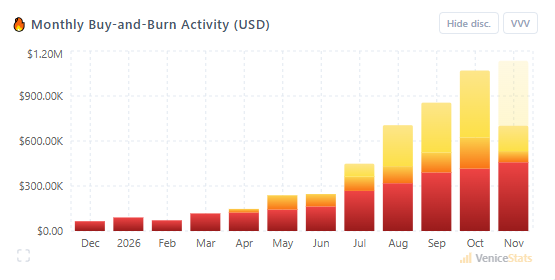
What attracts me most about Venice is that very few businesses linked to crypto have achieved such considerable commercial success outside the crypto sphere. Other investors have noticed this as well; the market buying activity, combined with the buyback and burn mechanism, has propelled VVV's year-to-date increase by over 1200%.
Bittensor
The previous cases showed how buybacks empower individual projects, while Bittensor presents a picture of an entire ecosystem fully embracing buybacks. I have never seen an ecosystem elsewhere in the crypto world so committed to buybacks, and there are substantive institutional reasons behind this.
Bittensor operates through numerous subnets, each of which can be viewed as an independent tech startup competing for TAO emission incentives. The demand for alpha tokens from various subnets directly determines the allocation share of incentives, so the performance of the tokens is linked to the teams’ ability to sustain operations.
Thus, buybacks, burns, and emission management have become central to subnet strategies. The entire ecosystem has turned into a continually operating token economics laboratory, and its experiences are valuable lessons for all teams considering buybacks, regardless of their direct participation in Bittensor.
According to SubConnect's Bittensor revenue index, as of August 2026, among 24 subnets generating external revenue, 14 have utilized these revenues for alpha token buybacks. The total annual revenue for these 24 subnets is estimated to be between $28 million and $35 million.
Recently, a typical case comes from the current third-largest subnet by market capitalization, @TargonCompute. On October 27, Targon announced the destruction of approximately $2.1 million worth of alpha tokens, including about $445,000 of newly repurchased tokens, with all funds coming from its AI computing revenue.
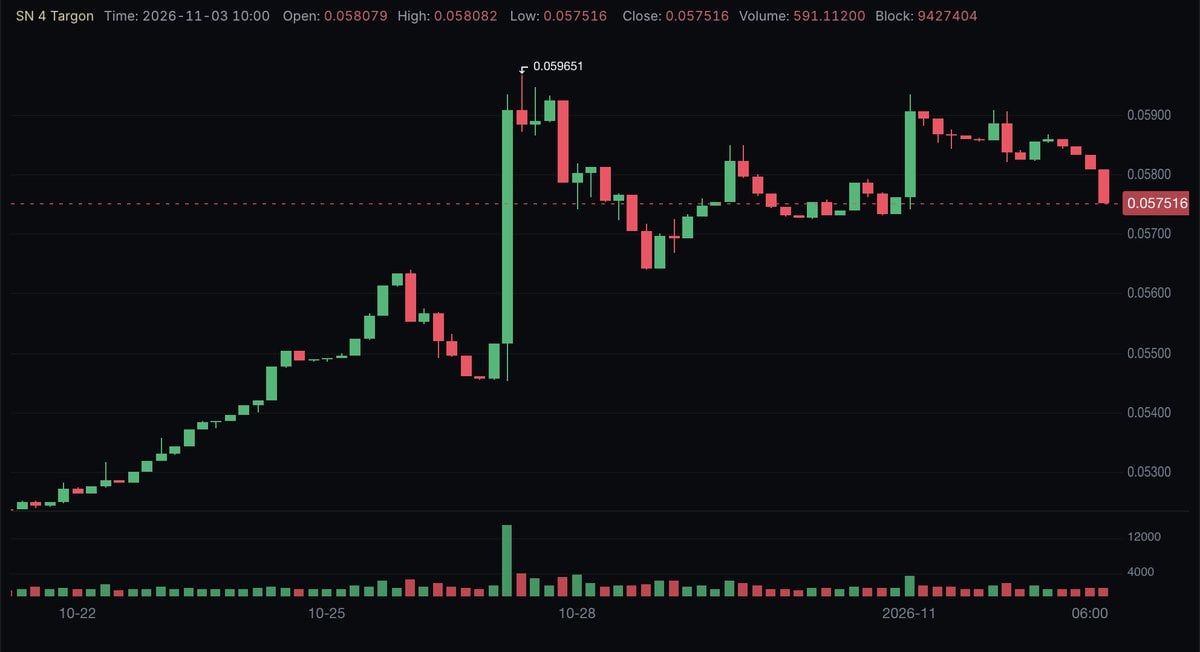
Figure: Targon SN4 price trend
Within 7 hours of the announcement, the SN4 weekly increase exceeded 13%. Even against the backdrop of a general crypto market pullback, the token price was still about 3% higher than before the announcement when this article was being written.
What impresses me most about this case is the real-time responsiveness of the Bittensor subnet market to buyback dynamics. Investors are highly attentive to how teams manage emissions, generate revenues, and sustain token demand. This may foreshadow how the broader crypto market might evolve with the normalization of buybacks in the future.
Robinhood Chain
Robinhood Chain is another innovative ecosystem worth关注回购, especially in the context of tokenizing real-world assets (RWA).
@longdotxyz is leading some cutting-edge experiments. In September of this year, the platform launched the LONG 500 mechanism, aiming to connect community tokens with tokenized stocks through a shared economy model. Here's how it works:
- 5% of the stock token fees generated from new trading pairs flow into the $AI community treasury to continuously accumulate tokenized stock assets in the shared reserves
- Another 5% is used for buybacks and destroying community tokens paired with each stock, and execution permissions are open to everyone to trigger
The brilliance of this design lies in its ability to marry token buybacks with the accumulation of real-world financial assets. As more stock communities come online and generate trades, the system can simultaneously reduce the supply of the participating community tokens, support liquidity, and amplify the asset reserves of the entire ecosystem.
Compared to simply using protocol revenue to buy back native tokens, this is a more ingenious value capture model, allowing the growth of one market to feed back into the entire ecosystem. I expect to see more similar innovative mechanisms on Robinhood Chain in the future.
What Will Happen When the True Bull Market Arrives?
For years, we have watched the crypto market continuously reward grand narratives, speculative sentiment, and future promises. Now the revenue narrative has fully unfolded, and the industry finally has the business activities and financial performance to support a fundamental investment landscape.
Despite the overall market environment not being friendly, several leading revenue-generating crypto companies continue to present impressive token returns, expand their user base, and maintain strong revenue growth.
Now, imagine what will happen when the overall environment reverses.
For these businesses, the increase in user adoption and market activity will directly translate into higher revenues. When a significant portion of that capital is allocated to token buybacks, buying demand will expand along with the business itself. Coupled with a recovery of market sentiment and the influx of new capital, the potential for outperforming the market will become vast.
At that point, buybacks will no longer be just a means of stabilizing teams against headwinds; they will be more like pouring gasoline on a roaring fire. If the prediction that the crypto industry’s annual revenue may reach hundreds of billions by 2030 even points in the right direction, a massive economic value awaits to be unleashed in the future.
This is why I believe that the crypto revenue narrative is just beginning.
免责声明:本文章仅代表作者个人观点,不代表本平台的立场和观点。本文章仅供信息分享,不构成对任何人的任何投资建议。用户与作者之间的任何争议,与本平台无关。如网页中刊载的文章或图片涉及侵权,请提供相关的权利证明和身份证明发送邮件到[email protected],本平台相关工作人员将会进行核查。


