Author|Sun Rui
WeChat|lombredeau
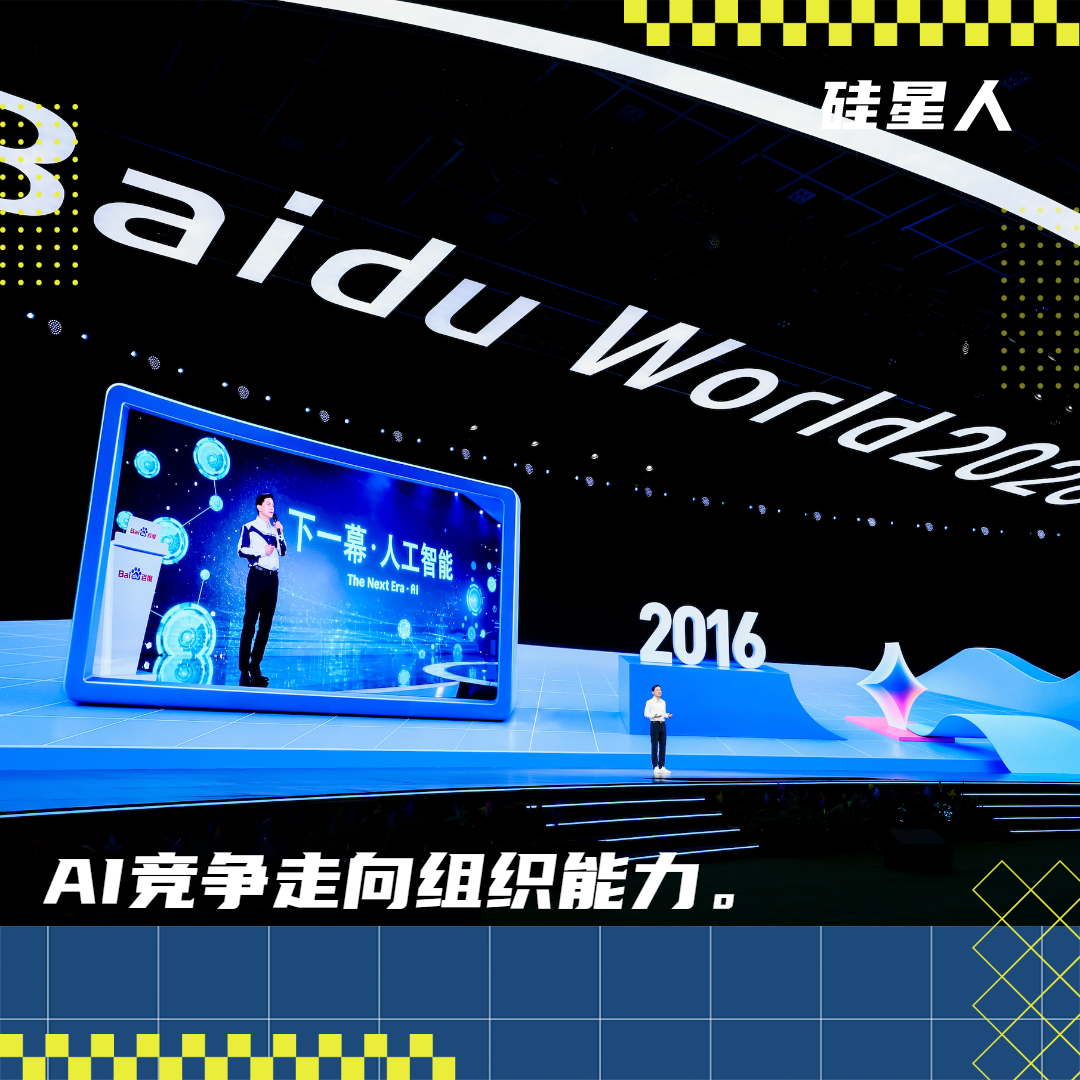
At the Baidu World Conference in 2016, Li Yanhong proposed, “The next chapter of the Internet is artificial intelligence.”
At that time, the rapid growth of mobile internet began to slow down, and the internet industry was looking for new growth drivers. Li Yanhong turned his attention to artificial intelligence, believing it would become the key technology driving the next round of industrial transformation.
Ten years later, artificial intelligence has gradually entered industrial production and daily life.
With ChatGPT leading the popularity of generative AI, AI has begun to move from backend algorithm capabilities to products that users can directly use, and further infiltrating business segments such as research and development, marketing, customer service, and office work within companies.
The enhancement of technological capabilities does not mean that production methods have changed in sync. More and more companies are starting to use AI tools, but they may not achieve efficiency gains that match technological advances. The question has gradually shifted from “What can AI do?” to “How should companies reorganize production around AI?”
At the Baidu World Conference held on November 12, Li Yanhong offered a new judgment—The next chapter of AI is intelligent organization.
The industrialization process of AI may be entering a new stage. In the past ten years, the industry mainly focused on how to make machines smarter. Next, companies need to think about how to genuinely integrate this intelligence into their organizations, becoming new productive forces.
1
01 A Decade to Build the Foundation: Baidu Waits for No Trend
Looking back at Baidu's AI layout over the past decade, a gradually clear path can be seen. First, build underlying infrastructure, then promote breakthroughs in model capabilities, and subsequently embed AI into products and business processes. As AI moves from providing technical capabilities to undertaking specific tasks, the questions companies need to address are changing.
Baidu realized early on that AI would not just be a new feature of internet products, but a technological revolution requiring support from underlying infrastructure.
When proposing that “the next chapter of the Internet is artificial intelligence” in 2016, Li Yanhong already viewed AI as the core driving force for the development of various industries. At that time, deep learning was driving progress in technologies such as speech recognition, image recognition, and natural language processing, but to scale up the application of these capabilities, problems at the foundational level such as computing power, algorithms, and platforms still needed to be solved.
In 2018, Baidu released the self-developed “Kunlun” chip, which is regarded as China's first full-function cloud-based AI chip, covering two types of computational needs: training and inference. Baidu simultaneously advanced the construction of deep learning frameworks, cloud platforms, and AI open ecosystems, attempting to connect the technological chain from chips, frameworks, to applications.
The more widely AI applications spread, the more computational resources are required for model training and inference. The capability of infrastructure will determine the scale and cost at which AI technology can enter the industry. At this stage, the focus of industry competition was mainly to create AI with stronger computing power and information processing capabilities, laying the foundation for subsequent application implementations.
As computing power and model capabilities continued to improve, the value of AI began to extend from recognizing, understanding, and processing information to generating new content.
At the 2022 Baidu World Conference, Baidu showcased the process of the Wenshin big model completing the “Dwelling in the Fuchun Mountains” painting. Utilizing a visual generation big model, AI could not only recognize the mountains, trees, and brush strokes in the artwork but also generate the missing parts based on the existing images. Li Yanhong stated at that conference that AIGC would become a new content production method following PGC and UGC, predicting that AIGC would profoundly change the content production model in the next decade.
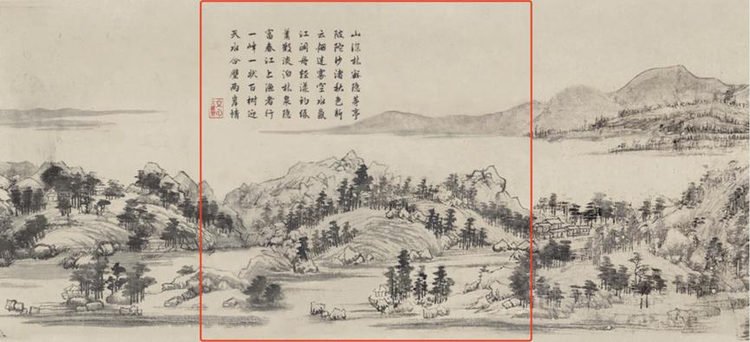
It demonstrated a leap in model capabilities, as AI moved towards generating and creating based on existing information. Consequently, content production no longer relied entirely on human creation; AI could participate in the generation of text, images, audio, video, and other content, changing the original production costs and efficiency.
Four months later, OpenAI released ChatGPT, and generative AI began to enter the public eye through more intuitive interactions. Users no longer needed to understand complex model interfaces but could simply ask questions in natural language, enabling AI to complete tasks such as writing, summarizing, translating, and code assistance. Thus, generative AI transitioned from specialized technical fields to a broader audience of individual and corporate users.
When AI gained the capabilities to generate content, understand instructions, and process complex information, companies began to integrate it into real business scenarios.
In 2023, Li Yanhong proposed to restructure Baidu's products, services, and workflow using AI-native thinking, stating that Baidu aims to be the first company to completely redo all its products, “not integration, not incorporation, but redo, reconstruct.”
AI was no longer merely an additional feature added to existing products but had the potential to become the underlying capability for product design and business operations.
Similar changes also occurred in overseas companies. In March 2023, Microsoft launched Microsoft 365 Copilot, which connected big models with users' emails, calendars, documents, meetings, and other work data, allowing AI to assist in completing specific tasks within Word, Excel, PowerPoint, and other office applications.
AI thus entered the work interface and business processes of companies. However, this was still only the first step. Early AI applications were more focused on tasks such as Q&A, generation, and assistance, and the relationship between people and AI remained one where humans proposed needs, and AI provided results.
As Agent capabilities develop, AI can perform work more deeply. The challenges facing companies are changing: when AI can participate in task execution, are the existing job setups, collaboration processes, and management methods still applicable?
From underlying infrastructure such as chips, cloud, and frameworks to the generative capabilities brought by big models, to the AI transformation of product and business processes. AI gradually transformed from a technical capability into a tool that could participate in production; the next issue companies must address is no longer just how to reform products, but how to redesign internal production and collaboration methods.
1
02 The entrance of intelligent agents: old organizational structures are no longer sufficient
The big model allows AI to evolve from understanding information to generating content, while Agents represent AI's move from generating content to executing tasks.
Previously, companies relied on human expertise and team collaboration to complete tasks. A project often required participation from different roles such as product, R&D, design, and operations; each person was responsible for a part, which was then connected through meetings, reports, and processes.
The emergence of Agents began to change this collaborative approach. They can decompose tasks based on goals, invoke tools, and external systems to complete tasks such as research, data analysis, coding, and document processing. Users can deploy multiple Agents, each taking on different tasks, and then integrate and evaluate the results.
At the Create conference in May 2026, Li Yanhong proposed that the minimum productivity unit of companies is changing. In the past, it was a team; today, it may become a “super individual,” which means one person plus a team of intelligent agents. As Agent capabilities strengthen, the resources individuals can mobilize and the scope of work they can accomplish are expanding.
This does not mean one person can immediately replace a complete team. Different tasks still require professional judgments, collaboration, and clear responsibilities. However, the parts of work that previously needed multiple people to collaborate are beginning to present new organizational methods.
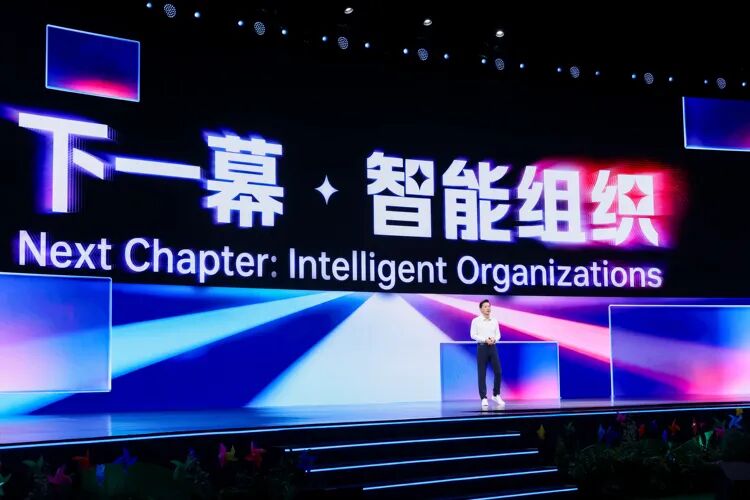
As the productivity unit changes, the organizational structure must also adjust accordingly.
Traditional companies typically establish organizational structures around positions and departments. Positions correspond to clear responsibilities, departments handle specialized divisions of labor, and hierarchical management is responsible for task distribution, progress coordination, and results supervision.
However, the working method of Agents does not entirely follow this set of boundaries. Agents can undertake tasks that were originally scattered across multiple positions and call different tools and systems based on objectives. If tasks are still divided according to traditional job classifications, AI may be confined to a single segment, or even require multiple layers of approval and manual handoff to continue executing, limiting its capabilities for cross-task collaboration.
Therefore, Li Yanhong suggested that future organizations need to shift from a position-centered to a task-centered approach. Organizations should no longer be composed merely of fixed positions and departments, but should dynamically assemble people and Agents around specific tasks, forming a flexible task network.
This distinction also highlights the difference between “internalizing AI” and merely using AI tools. Individuals using AI can enhance their personal work efficiency; however, if AI only exists within each employee's toolbox and the company’s knowledge remains dispersed among individuals without changing workflows, then such efficiency gains are hard to crystallize into organizational capability.
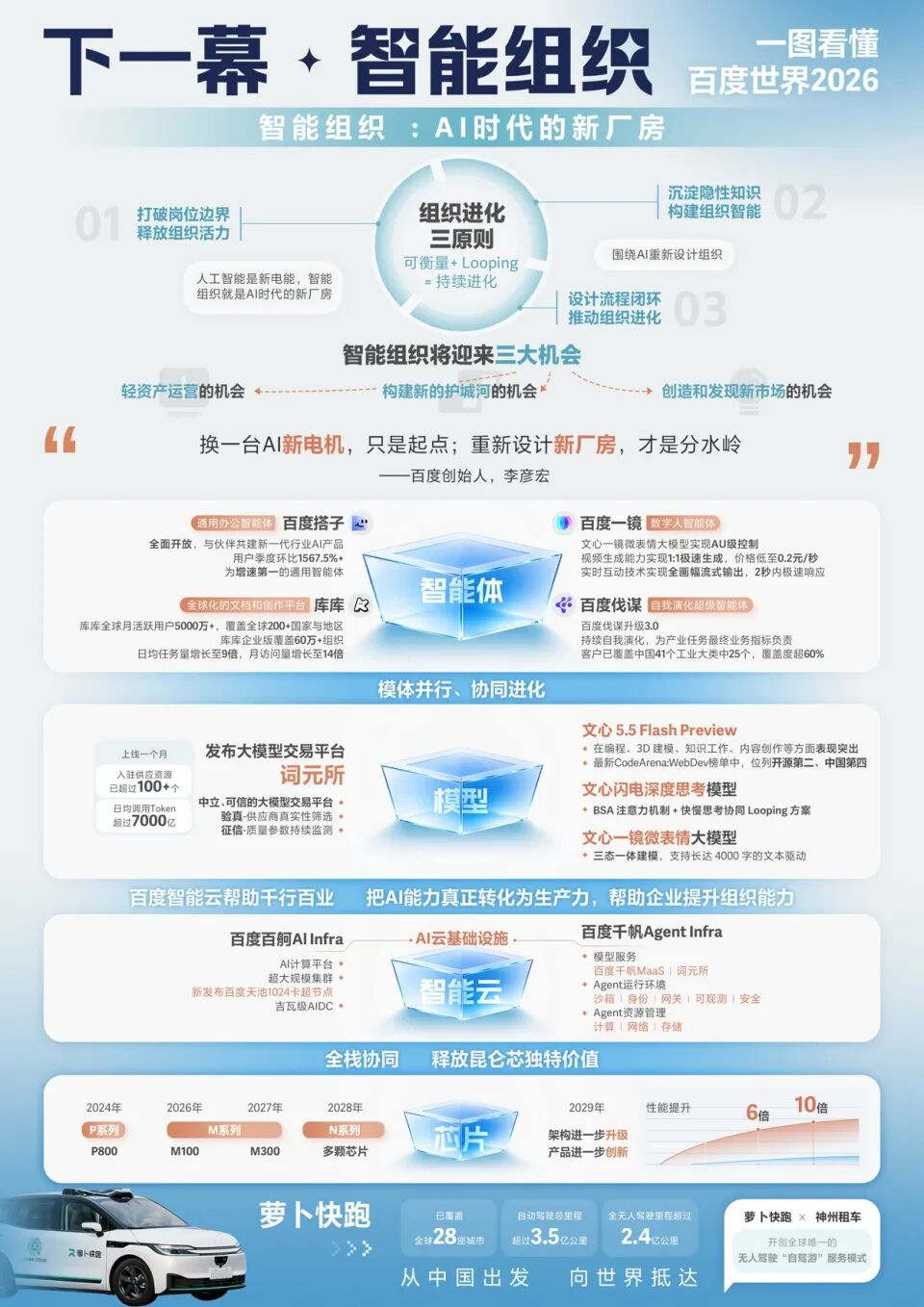
At the Baidu World Conference, Li Yanhong proposed three principles for the evolution of intelligent organizations: breaking down job boundaries, accumulating tacit knowledge, and designing closed feedback loops.
Breaking down job boundaries shifts organizations from a position center to a task center. Companies need to reassess existing job divisions, break work down into more specific tasks, then determine which can be completed by humans, which can be assigned to Agents, and which require collaboration between humans and Agents. The core of the organization is no longer to maintain fixed role boundaries, but to flexibly allocate resources around objectives.
Accumulating tacit knowledge transforms personal experience into organizational assets. Much knowledge in companies is not formally documented but exists within employees' experiences, judgments, and work habits. For instance, salespeople's understanding of client needs, engineers’ experiences handling unexpected issues, managers’ judgments on business priorities. This knowledge often dissipates with personnel changes and is hard for other employees and AI to access directly.
Intelligent organizations need to convert these dispersed experiences into recordable, accumulative, and retrievable knowledge, then integrate it with business data, processes, and contexts. This way, when Agents execute tasks, they can draw upon the company's own knowledge rather than starting from general model capabilities each time. The long-accumulated organizational knowledge can also become a unique advantage that is difficult to replicate among different companies.
Designing closed feedback loops allows organizations to maintain continuous feedback and optimization capabilities. Li Yanhong summarized this principle as “Measurable + Looping = Continuous Evolution.” Completing tasks with AI is just the beginning; companies need to understand whether the task results meet objectives, where problems arise in the execution process, and how to improve next time.
With changes in organizational forms, new opportunities for business operation may also arise.
Firstly, light asset operations allow Agents to take on more repetitive tasks, enabling a few employees to coordinate intelligent agents to accomplish tasks that previously required larger teams, thereby reducing human and collaboration costs for business expansion; secondly, building new moats, the customer data, industry knowledge, and business processes accumulated by enterprises can serve as the foundation for AI to understand business and create differentiated advantages; thirdly, creating and discovering new markets, Agents lower the barriers for research, analysis, and plan verification, empowering frontline employees to participate in innovation and turning more business demands into new products and opportunities.
Intelligent organizations can reconnect knowledge, tasks, and feedback mechanisms within companies. By allowing AI to enter the company’s knowledge systems, business processes, and collaborative mechanisms, it can continuously participate in task execution and accumulate experience, truly transforming into organizational productivity.
1
03 After Changing the Motor, More Important is Changing the Factory
As foundational models gradually become universally accessible capabilities for different companies, the distance between the models themselves and specific businesses begins to emerge as a new competitive focus.
The model supply side is also undergoing changes. Li Yanhong mentioned at the Baidu World 2026 that in the first nine months of this year, there were almost daily new model releases, causing a significant explosion in model usage demand; however, a number of token transit stations are not responsible for the effectiveness of models, service stability, or response speeds, and even the authenticity of models cannot be verified.
In response, Baidu officially launched the big model trading platform, Token Exchange, positioned as “a marketplace for big models,” emphasizing “verification” and “creditworthiness”: verifying resources through model fingerprint comparison, capability tests, performance, and usability tests, establishing credit ratings for model providers through periodic audits and real-time monitoring of the entire chain, allowing companies and even individuals to easily find, purchase, and use reliable model Tokens. After a month of trial operation, Token Exchange has onboarded over 100 supply resources, with an average daily usage exceeding 50 million, and daily token usage surpassing 700 billion.
However, similar model capabilities may yield completely different results when implemented in different companies. Some companies merely provide their employees with a writing and Q&A tool, while others integrate AI into R&D, sales, customer service, and operations, enabling it to partake in specific tasks and optimize continuously through business feedback.
The gap between companies may no longer solely depend on whether they use AI, but also on whether they can truly transform AI into organizational capability. While the model provides capability and products offer access, knowledge, processes, permissions, and feedback mechanisms ultimately determine whether AI can consistently exert influence in real business scenarios.
Li Yanhong's proposal for intelligent organizations is a shift from discussing AI technologies and products to the production relationships within companies. For businesses, the next hurdle in AI competition may not just be acquiring another tool but redesigning a system that allows humans and Agents to collaborate effectively.
Baidu's introduction of intelligent organizations represents Li Yanhong's long-term investment and practice in the AI industry.
In 2016, Li Yanhong regarded artificial intelligence as the next chapter in the development of the internet. At that time, AI was mainly a foundational technology requiring long-term investment, with Baidu building technical capabilities around speech, image, and natural language processing, gradually extending to chips, clouds, and development platforms.
With the advent of the big model era, Li Yanhong shifted his focus from technical capabilities to how AI could integrate into products and services. In 2023, he proposed to redo products and workflows using big models; at the 2025 Baidu World Conference, he emphasized further that once AI capabilities are internalized, intelligence will no longer be a cost but a productive force, requiring companies to organically integrate AI with concrete tasks.
At this Baidu World Conference, he further elaborated on the definition, evolution principles, and business opportunities of intelligent organizations.
From infrastructure to models, from product applications to Agents, and then to organizational forms, there’s a consistent and progressively deeper judgment about the industry behind it. The value of AI will not remain on the technology itself but must enter real productive activities, ultimately changing how businesses create value.
In the next decade, whether AI can further alter the organizational methods of businesses and whether intelligent organizations can become a new consensus in the industry will require more enterprise practices to validate.
However, one thing is for certain: as AI begins to participate in production, companies need to rethink not just how to use technology but also how to organize people, knowledge, and tasks. The next chapter of AI may very well be about transforming organizations, not just tools.


免责声明:本文章仅代表作者个人观点,不代表本平台的立场和观点。本文章仅供信息分享,不构成对任何人的任何投资建议。用户与作者之间的任何争议,与本平台无关。如网页中刊载的文章或图片涉及侵权,请提供相关的权利证明和身份证明发送邮件到[email protected],本平台相关工作人员将会进行核查。


