Text | Joanne
Editor | Su Yang
On November 12 local time, according to Bloomberg, Elon Musk's SpaceX and Tesla are advancing merger talks, with the earliest announcement of a deal possibly in December of this year. Considering the complexities of corporate structures and regulatory issues involved in the transaction, the merger announcement may be delayed until early 2027.
The potential scale of this deal is quite astonishing. As of the close of the most recent trading day, SpaceX's market value is approximately $1.90 trillion, while Tesla's is about $1.57 trillion, bringing the combined total to $3.47 trillion.
If the merger is completed, businesses such as rocket launches, satellite internet, electric vehicles, energy storage, artificial intelligence, and robotics will be integrated into one company. This will not only reshape the organizational structure of Musk's enterprises but may also become one of the largest corporate integrations in global business history.
However, $3.47 trillion is merely a straightforward addition of the current market values of both companies. There are currently no clear answers on how the transaction will be structured, how shareholder equity will be allocated, and whether regulatory bodies will approve the deal.
01 Negotiation Acceleration
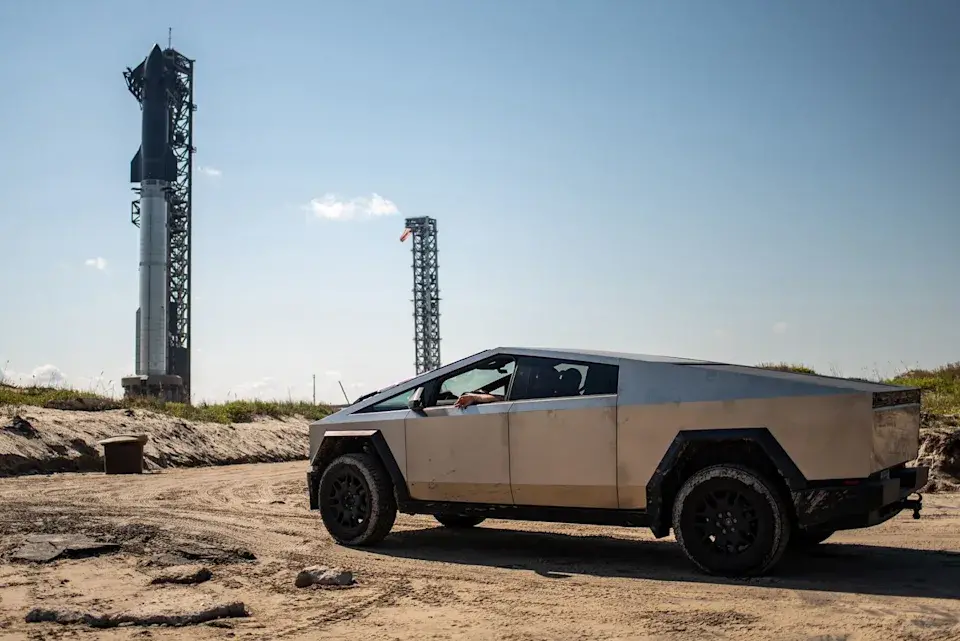
In October this year, during SpaceX's third-quarter earnings call, Musk clearly stated for the first time that merging with Tesla “is a good idea” and confirmed that both parties have established a special committee composed of independent directors to discuss the merger.
This indicates that both companies have initiated formal corporate governance procedures and are no longer just discussing the possibility of business cooperation.
Negotiations are making progress, and the deal may be publicly announced as soon as this December, although a delay until early 2027 cannot be ruled out. Meanwhile, the merger still faces multiple hurdles, including SpaceX's contractual relationship with the U.S. Department of Defense and Tesla's reliance on the Chinese market, which could become key factors affecting the transaction process.
From a timing perspective, both parties clearly wish to expedite negotiations, but this does not imply that the deal has entered its final stages. The merger agreement, equity arrangements, and regulatory approvals still need to be resolved one by one.
Currently, neither company has immediately responded to the related reports.
02 AI Landscape
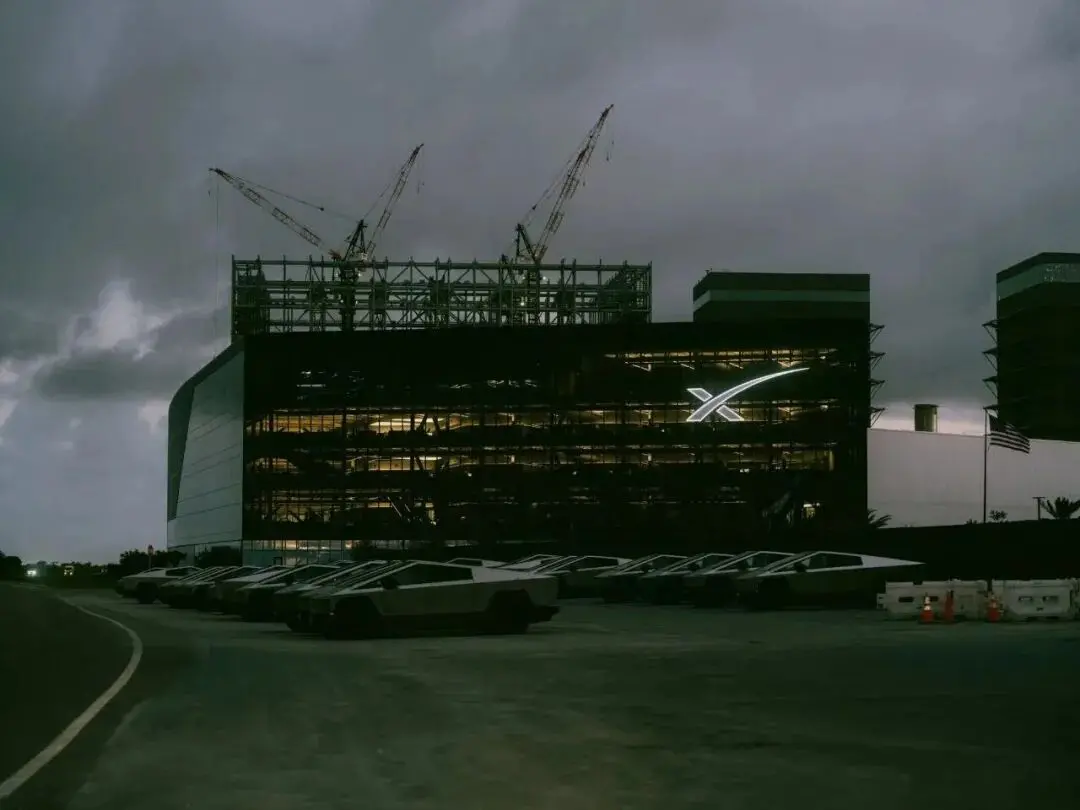
Looking solely at their main businesses, SpaceX and Tesla seem to have little overlap.
One is responsible for rocket launches and satellite internet, while the other produces electric vehicles and energy storage equipment. However, Musk’s strategic adjustments in recent years are allowing both companies to gradually enter the same track of technological development.
Tesla's growth story is no longer limited to electric vehicle sales. Autonomous driving, Robotaxi, and the Optimus humanoid robot are becoming key future directions for the company. These businesses require massive AI training, chip computing power, and energy supply.
SpaceX's business landscape is also undergoing changes. In addition to reusable rockets and Starlink satellite internet, Musk is also advancing artificial intelligence-related initiatives. With xAI incorporated into its business landscape, SpaceX's business tentacles are further extending into AI infrastructure.
The real intersection of the two companies lies in the three basic resources behind artificial intelligence: chips, computing power, and energy.
Among these, Terafab is a specific example where both parties have already begun cooperation.
This year, SpaceX and Tesla jointly advanced the Terafab chip manufacturing joint venture project. Musk stated during the October earnings call that the project is expected to produce its first batch of test chips between May and June 2027, with plans for large-scale production in the third quarter of 2028.
For Tesla, developing in-house chip manufacturing capability will help meet the computing power needs for autonomous driving and humanoid robots; for SpaceX, chips are critical foundations for future satellite networks and space data centers.
If the two companies further merge, chip research and development, computing power investment, and energy infrastructure development could potentially be incorporated into a unified resource allocation system.
However, this also raises another question: since both parties have already pushed forward these projects through joint ventures and business cooperation, is there a need for further integration at the equity level?
This may be one of the most important questions for investors when evaluating this transaction. The extent of additional value that business synergy can bring needs to be supported by specific financial returns.
03 Control Dispute
For the shareholders of both companies, the most direct impact of the merger is not the expansion of the business scope but the potential change in the shareholding structure.
Based on the current market valuation, SpaceX is approximately $1.90 trillion, while Tesla is about $1.57 trillion. Assuming both parties use an all-stock transaction, existing shareholders of SpaceX and Tesla will receive shares in the merged company according to an agreed ratio.
But this is not a transaction that can simply be completed by adding the market values of the two companies together. Specifics such as who acquires whom, how the exchange ratio is determined, and whether a premium is set for the acquisition have not been formally confirmed.
More noteworthy is Musk's control in the new company.
According to publicly disclosed equity data, Musk holds an economic interest of about 40% to 45% in SpaceX and nearly 20% in Tesla. However, the voting rights structures of the two companies are significantly different: SpaceX employs a dual-class share structure, in which Musk holds over 80% of the voting rights; Tesla implements a common stock system where voting rights are generally consistent with shareholding ratios.
This has also been one of the reasons for Musk's expressed dissatisfaction in the past. He has publicly stated that he hopes to hold enough voting rights in Tesla to ensure he can promote the company's long-term strategy in artificial intelligence and robotics.
Thus, the merger involves not only asset and business integration but also changes in the equity and governance relationships of the two companies.
If the new company adopts SpaceX's existing multiple voting rights structure, Musk could potentially further consolidate control over the merged group. However, whether this arrangement can gain approval from Tesla's shareholders remains highly uncertain.
For Tesla investors, the trade-off is whether accepting a new shareholding structure can lead to greater business synergy and long-term returns. If the merger valuation, exchange ratio, or voting rights arrangements are not reasonable, shareholders could well oppose the transaction.
04 Regulatory Hurdles
Compared to business synergy and share distribution, regulatory issues may be the most challenging barriers to this transaction.
SpaceX and Tesla's businesses occupy different positions within the U.S. national security system and the global automotive industry chain, respectively. After merging, the originally independent business systems will create more complex cross-border connections.
First is SpaceX's U.S. defense business. SpaceX has long been involved in the U.S. government’s space launches, satellite communications, and other projects, maintaining close cooperation with the U.S. Department of Defense, intelligence agencies, and NASA. Some of these businesses involve sensitive technologies, national security information, and government procurement contracts.
Once merged with Tesla, regulators will need to assess whether the new corporate structure would affect the execution of relevant contracts, technology confidentiality, and safety management.
Second is Tesla's business in China. China is one of Tesla's most important overseas markets, and the Shanghai Gigafactory is also a critical part of its global production system. Tesla has a manufacturing, supply chain, and sales network in China involving a significant amount of cross-border data and business activities.
Merging an aerospace company deeply involved in U.S. defense projects with an automotive company that holds significant industrial layout in China will inevitably raise more complex national security and cross-border regulatory issues.
U.S. bodies such as the Committee on Foreign Investment in the United States (CFIUS) may focus on the transaction's impact on U.S. national security, and relevant Chinese regulatory authorities will need to assess its implications for market competition, investment, and related businesses based on the specific transaction structure.
For both negotiating parties, finding a balance between unified corporate structures and the regulatory requirements of different countries will directly influence whether the transaction can be executed.
05 Integration Ambitions
The potential merger of SpaceX and Tesla reflects Musk's attempt to reorganize his business landscape.
In the past, Tesla was responsible for cars, energy, and robotics, while SpaceX handled aerospace and satellite internet, and xAI was in charge of developing artificial intelligence models. Different enterprises established connections through investments, cooperation, and technology sharing.
The merger means that these businesses may further evolve from project cooperation to a unified capital and organizational level.
In the long term, Musk aims for the industry chain he wants to connect to not only include cars and robots on Earth but also satellite networks, space transport, and future space computing infrastructure. Chips, energy, and artificial intelligence will be the common technological foundations throughout.
However, the larger the business landscape, the more complex the management and regulation. Different business models for profitability, capital requirements, and risk attributes are not the same; how to avoid resource allocation imbalances will test the management capabilities of the new group.
$3.47 trillion is just the starting point for this transaction.
免责声明:本文章仅代表作者个人观点,不代表本平台的立场和观点。本文章仅供信息分享,不构成对任何人的任何投资建议。用户与作者之间的任何争议,与本平台无关。如网页中刊载的文章或图片涉及侵权,请提供相关的权利证明和身份证明发送邮件到[email protected],本平台相关工作人员将会进行核查。