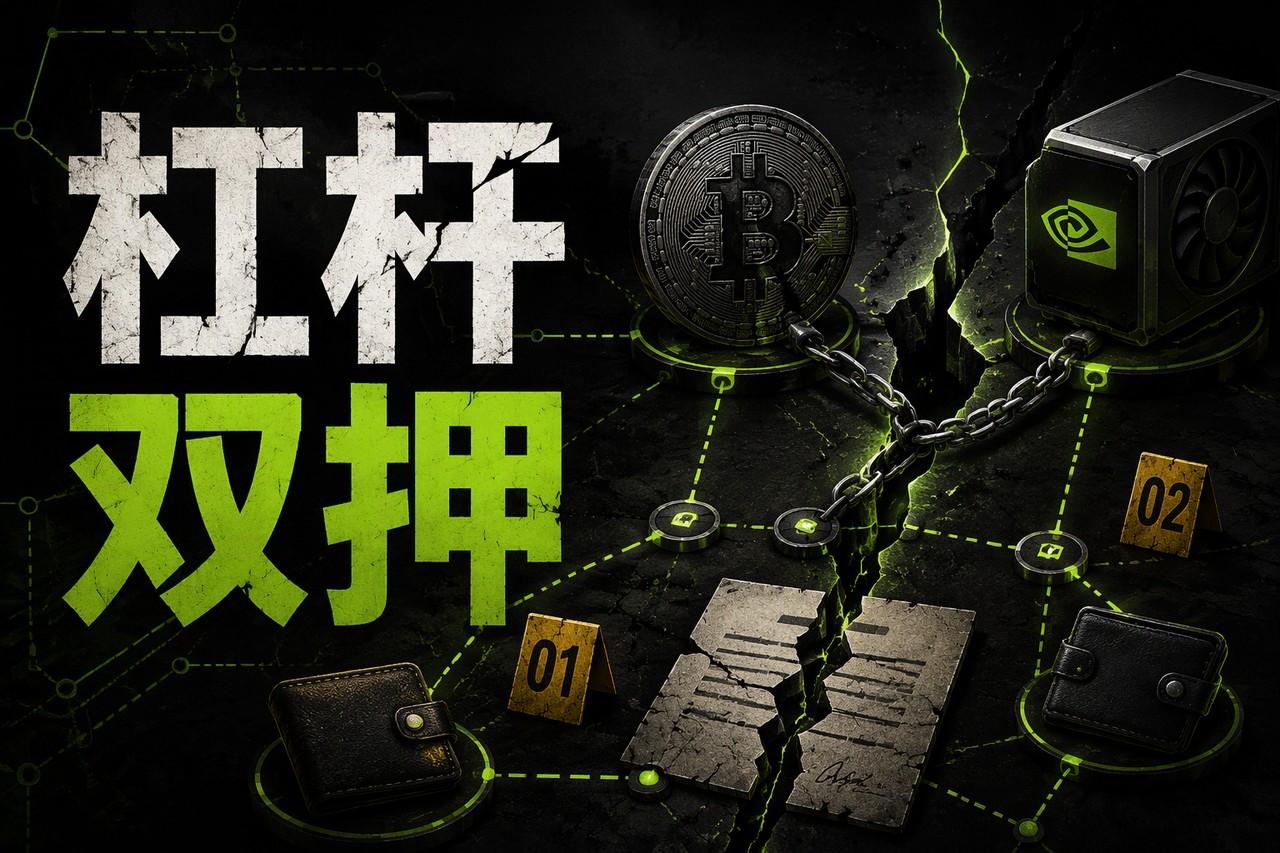
While many were still immersed in the narrative of the "computing power bull market," NVIDIA's personnel announcement disrupted the rhythm. Jensen Huang resigned from the positions of President, Chief Executive Officer, and board member, with Colette Kress temporarily taking over as CEO and Harvey C. Jones becoming the first chairman of the board. The sudden change in leadership quickly transmitted to the market: according to a single source, NVIDIA's pre-market stock price dropped over 10%, and stocks related to computing power and new cloud services, such as Coreweave and Nebius, also fell. The NBIS token saw a significant drop within 24 hours, and the risk appetite for AI and cloud computing on the chain was forced to cool down. During a phase where traditional technology and crypto assets frequently "lift each other up," this shock served as a concentrated reminder: the expected inflection point of a single leader can instantly rewrite the valuation and narrative rhythm of an entire sector.
Almost simultaneously, compliance signals emerged from Asia and globally: Thailand's regulators are reportedly seeking to impose a daily deposit and withdrawal limit of about $148,000 on assets linked to related tokens. The Singapore government confirmed it was investigating Alice Huang and Megaspeed regarding the transit of servers via Malaysia and false declarations, banning their entry. The regional compliance uncertainty has risen significantly; on the flip side, Tether announced that PwC USA has completed an audit of Tether Gold's issuer TG Commodities and issued an unqualified opinion. The related gold reserves are valued at approximately $2.246 billion according to a single source, and the narrative of reserve transparency has been strengthened. The simultaneous emergence of leadership changes, tightening regulations, and audit endorsements is directly reflected in a reordering of two sectors on the airdrop radar: on one side, pure AI and pure computing power narrative projects saw their heat retreat amidst short-term fluctuations; on the other, projects emphasizing compliance, transparency, and infrastructure attributes gained attention. Users need to rethink on the same screen which opportunities warrant continued patience and which ones should have their expectations and participation priorities adjusted.
Jensen Huang's Departure: Short-term Cooling and Revaluation of AI Narrative
When users scroll through the "AI" and "computing power" columns on the airdrop radar, one of the biggest narrative engines behind it has always been NVIDIA. Recently, Jensen Huang resigned from the positions of President, Chief Executive Officer, and board member, with Colette Kress taking over as interim CEO and Harvey C. Jones appointed as the first chairman of the board. Such a significant leadership change is akin to pulling out a "fixed anchor" in market sentiment. According to multiple media reports and a single source, NVIDIA's pre-market stock price subsequently dropped over 10%, Coreweave fell by about 10.1%, and Nebius dropped by about 13.4%. This string of names paints a picture of a synchronized pressure across the entire chain from AI hardware to cloud computing power. For projects reliant on the same story on the airdrop radar, this turbulence is not an abstract background but is quickly reflected in the changes in project card popularity and financing interpretations.
Price samples are also conveying the same signal. According to a single source, the NBIS token related to the cloud computing narrative dropped about 14.2% within 24 hours, echoing the pre-market declines of NVIDIA and new cloud companies, forming an intuitive case of "the overall repricing of computing-related assets." The AI and computing power sectors currently tracked by the airdrop radar are inherently the most sensitive to such emotions: the heat is cooling quickly, and the interpretation of financing endorsements has shifted from being a "bonus" to a safety net that needs to be repeatedly checked. For users, the watchlist is no longer just about who tells the best AI stories, but also about distinguishing, under the same market pressure, which projects merely carry the concepts of models, GPUs, and cloud computing, and which genuinely possess computational resources, technological accumulation, and clear product pathways to support them.
This means that, during the current short-term cooling phase, the AI opportunities on the airdrop radar need to be actively "scored and rearranged." When sentiments cool, the heat of purely narrative-driven projects tends to fall off more quickly, and participation priorities should be correspondingly lowered; conversely, those targets that can provide more hard evidence in terms of financing information, technology stack, and ecological positioning are worth tracking for their task status and subsequent airdrop certainty. Jensen Huang's departure and NVIDIA's sharp stock reaction are merely the starting point of this round of revaluation. What truly determines the user's return and risk ratio will be whether they can promptly complete the transition from "nice stories" to "solid foundations" within the same AI and computing power section on the airdrop radar.
Tightening Asian Regulations: Restructuring of Funding Channels and Infrastructure Airdrops
From the perspective of capital flow, the wind in Asia is subtly changing the script. Thailand's regulators are reportedly looking to set a single-day withdrawal limit of about $148,000 on assets linked to related tokens, which seems to add another digital red line but essentially adds friction to cross-border capital entering the local crypto ecosystem. For users on the airdrop radar, such restrictions will directly affect the narrative of funding channel sectors: large amounts of capital are segmented into smaller flows, putting pressure on high-frequency cross-border movement models, while those cross-border payment and compliance bridging projects that have considered compliance and limits as design boundaries from the start gain more reasons for long-term observation. When you are browsing project cards on the same section page of the airdrop radar, funding channel targets need to actively respond to such regional limits, distinguishing the fundamental differences between those that "can run fast" and those that "can run long."
Corresponding to the funding limits, the computing infrastructure chain has been brought under the regulatory spotlight. The Singapore government confirmed it is investigating Alice Huang and Megaspeed regarding the transit of NVIDIA servers and false declarations, banning their re-entry. This pulls the discussion of "how servers are transported" back from technical communities to the narrative scene of export controls and border compliance. The incident points not only to the risks of individuals and companies but also serves as a reminder to the market: any computing infrastructure relying on hardware links like NVIDIA contains significant black swan risks in both geopolitical and regulatory dimensions. Back to the interface of the airdrop radar, this means that project cards in the infrastructure sector—whether for computing power scheduling or compliance bridging—must consider regional policies and hardware links as core variables. Users also need to adjust their observational focus accordingly, giving priority to those targets that can maintain operational continuity amidst tightening Asian regulations when screening funding channel and infrastructure airdrop opportunities.
Audit Signals: Airdrop Opportunities Under Enhanced Reserve Transparency
On the same timeline where Asian regulations are tightening and uncertainties in computing links are being revealed, another thread highly related to risk appetite comes from "whether anyone can see the reserves." Tether announced that PwC USA has completed the audit of Tether Gold's issuer TG Commodities and issued an unqualified opinion, meaning that this product backed by gold has progressed from internal self-reporting to external professional verification. Combined with the display of approximately $2.246 billion in gold reserves according to a single source, this narrative is no longer simply about "declaring assets" but has gained a quantifiable and verifiable underlying story.
For those projects on the airdrop radar that center around asset backing, collateral management, or compliance bridging, the emotional spillover effect of such audit results should not be overlooked. As capital and users become more sensitive amidst the fluctuations of NVIDIA's decline and related token price drops, they will more keenly inquire: "Do the tokens I participate in have similar transparency and third-party perspectives behind them?" When reserve transparency and audit reports are integrated into project narratives, the resilience of asset-backed tokens and their related ecosystems no longer relies solely on white papers and social media but gains a tangible evidence chain that can communicate with the traditional financial world.
Revisiting the airdrop radar interface, projects with audit and compliance endorsements have already been incorporated into selection dimensions of financing and popularity. In the current tightening macro and regulatory environment, the long-term attention on such project cards has the opportunity to be quietly elevated. For users, this means that in arranging their watchlists and participation priorities, they should consider "whether there is external auditing" and "whether reserve transparency has been reinforced" as important weights. A key observation moving forward will be whether audit and compliance tags will continue to rise in preference selection on the airdrop radar, becoming one of the core axes for users reordering AI opportunity landscapes.
Institutional Cooling and On-chain Reallocation: How Risk Appetite Declines
On a macro level, the turning point in sentiment has already emerged. The latest initial unemployment claims in the U.S. are approximately 200,000, significantly higher than the expected 195,000 and previous value of 189,000, showing that the labor market is transitioning from "overheated" to "marginal cooling." Almost simultaneously, B. Riley lowered Coinbase's target price from $203 to $150, this cut reflects downward pressure on the profitability and valuation expectations of the crypto trading platform, while also compressing the imagined space for all risk assets. For users of the airdrop radar, this is not a simple number change but a signal: the dual constraints from macroeconomics and broker research are forcing capital to reassess the risk-return ratios of tech stocks and on-chain tokens.
Under this set of constraints, traditional institutions have shown noticeably more caution towards leading crypto targets. The lowering of Coinbase's target price symbolizes the downward push of the "leading valuation anchor," which in turn affects the valuation narratives of similar projects on the airdrop radar—high expectations and high multiples are no longer easily accepted. Combined with the stock price fluctuations following NVIDIA's leadership adjustments, both the AI and trading platform dual sectors are encountering revaluation of expectations, causing the heat of high-narrative, high-volatility projects to retreat on the airdrop radar, while cards associated with clearer financing records and task pathways become easier to maintain focus on in this environment, as they provide relatively verifiable "fundamental touchpoints" for institutions and users.
The movements of on-chain capital provide a more intuitive annotation. Recently, Hashed transferred approximately 18.9 million ENA to Binance, valued at about $2.7 million. Such large transfers are difficult to interpret as simple daily operations; rather, they resemble reallocations as short-term funds withdraw from certain narrative-driven assets. Combined with the prior declines of tokens like NBIS, it can be seen that capital is migrating from "narrative sectors" to directions with stronger certainty. For participants on the airdrop radar, the real restructuring needed is not just on the AI-themed list but the entire framework of risk appetite: in the current retreat of risk appetite, the core question for the next stage of selection will be who can retain the patience of institutions and users on the airdrop radar itself.
How to Select Between AI and Compliance Sectors on the Airdrop Radar
NVIDIA's sudden leadership change and stock price pressure were merely the spark for this round of reordering. Thailand's establishment of a daily withdrawal limit of approximately $148,000 on assets linked to related tokens, Singapore's investigation into server transits and false declarations alongside Tether Gold obtaining unqualified audit opinions from PwC USA, collectively pulled the narrative focus back from "telling AI stories" to "who has both technological and compliance support." On the airdrop radar page, this is directly reflected in the retreat of the heat for purely computational and conceptual AI projects, while targets with clear compliance pathways or infrastructure attributes can relatively hold on to attention and patience.
At the macro level, the initial unemployment claims higher than expected in the U.S., brokers' lowering of Coinbase's target price, and on-chain large-scale ENA reallocations along with the declines of tokens like NBIS reflect a tightening overall risk appetite. For users of the airdrop radar, it is essential to prioritize selections across technology stacks that are clear in compliance signals and articulated infrastructural value. It is important to adjust the priority towards those AI-related projects based on clear compliance signals and noticeable infrastructural value, relegating those solely dependent on emotion-driven stories to secondary positions. Moving forward, whether NVIDIA's leadership can stabilize quickly, how the Asian regulatory details will be implemented, and whether audit practices like those of Tether Gold can continue on more assets will continue to determine the ranking of AI, compliance, and infrastructure sectors on the airdrop radar, ultimately impacting where participants focus their time and energy in the next phase.
Join our community for discussions and to become stronger together!
Exclusive AiCoin Hyperliquid benefit: https://app.hyperliquid.xyz/join/AICOIN88
Exclusive AiCoin Aster benefit: https://www.asterdex.com/zh-CN/referral/9C50e2
On-chain Telegram community: https://t.me/AiCoinWhaleData
On-chain community: https://www.aicoin.com/link/chat?cid=N6OVMor5g
AiCoin on-chain Twitter: https://x.com/aicoinwhaledata
免责声明:本文章仅代表作者个人观点,不代表本平台的立场和观点。本文章仅供信息分享,不构成对任何人的任何投资建议。用户与作者之间的任何争议,与本平台无关。如网页中刊载的文章或图片涉及侵权,请提供相关的权利证明和身份证明发送邮件到[email protected],本平台相关工作人员将会进行核查。