Authors: Kim Lim, Jasper Jin, Binance Research
Translation: Shenchao TechFlow
Shenchao Introduction: The scale of Bitcoin and Ethereum spot ETFs in the United States has reached $111 billion, with institutional funds entering the market in large numbers. However, compared to the explosion of passive tools, the average size of active crypto hedge funds is only $132 million, with 91% below $1 billion, creating a stark contrast between the two.
Binance Research combined data from Capital Connect as of the end of October and frontline interviews, pointing out that the core obstacle to the expansion of active strategies is not investment research capabilities, but a lack of institutional-level distribution layers and credible data verification. Even under the test of a 7.2% decline in BTC in October, asset safety and risk control remain key to driving allocation.
Core Summary
- On the Capital Connect platform, the number of neutral strategy funds accounts for less than half, yet they attract 92.1% of the platform's funds; directional strategy funds account for 44.3% of the total number but only represent 6.7% of the assets under management (AUM).
- The average single investment amount in neutral strategies on Capital Connect is about 11 times that of directional strategies, reflecting a higher certainty of funding allocation when making additional investments.
- In October, Bitcoin fell by 7.2%, yet directional funds still achieved an average return of +1.9% for the month, with the number of investors recovering to the level of 52 people from May.
- All interviewed funding allocators stated that verified internal data from exchanges could significantly strengthen due diligence; 80% of respondents rated asset safety as their top priority.
Institutional funds have entered the crypto market, but active management strategies have yet to scale. The entire industry has built a very complete channel for passive exposure, but the infrastructure for discovering, verifying, and benchmarking active fund managers is almost nonexistent.
The reason institutional funds remain in Beta exposure for a long time is not due to active choice, but because the market lacks an effective distribution layer. The regulated crypto fund discovery and allocation platform under Binance, Capital Connect, was established to fill this gap.
This update extends the analytical perspective to a data snapshot of the platform as of October 31, 2026, and for the first time includes direct interviews with funding allocators and fund managers on the platform. The core conclusion remains valid even in the market where Bitcoin fell 7% in a single month: hedge strategies continue to dominate, with coin-based mandates still contributing the largest single investment amounts, while directional funds await clear recovery signals.
Allocators and managers agree that what truly drives funding allocation is not the yield itself, but verifiability.
The Crypto Market Has Achieved Beta Scaling but Is Stuck in Active Management
Institutional willingness to allocate to digital assets is now very solid. According to a joint survey by EY-Parthenon and Coinbase in 2026, 73% of institutions plan to increase their allocation to digital assets this year. Reports from AIMA and PwC indicate that 55% of traditional hedge funds currently hold crypto assets, up from 47% in 2024.
However, much of this demand flows into passive investment vehicles. Among the surveyed institutions, 81% prefer to obtain spot exposure through registered compliant products. As of the end of October 2026, the total asset size of Bitcoin and Ethereum spot ETFs in the United States is approximately $111 billion; in contrast, the average asset management size of crypto hedge funds is only $132 million, and 91% of funds are below $1 billion.
We believe this polarization reflects the gap in market infrastructure rather than a lack of manager capability. The reason ETFs can quickly scale is that they provide a complete set of institutional-level packaging solutions: including custody, auditing, daily net asset valuation, and a reporting system familiar to institutions. In contrast, active crypto strategies have yet to provide an equivalent level of institutional integration capabilities.
This cautious attitude is also reflected in position sizes. Among traditional hedge funds holding crypto assets, more than half have allocation ratios below 2% of total assets; however, 60% of institutions plan to increase their exposure to above 2% within a year. This indicates that the constraint on allocation is not a lack of interest but the limitations of the existing investment infrastructure.
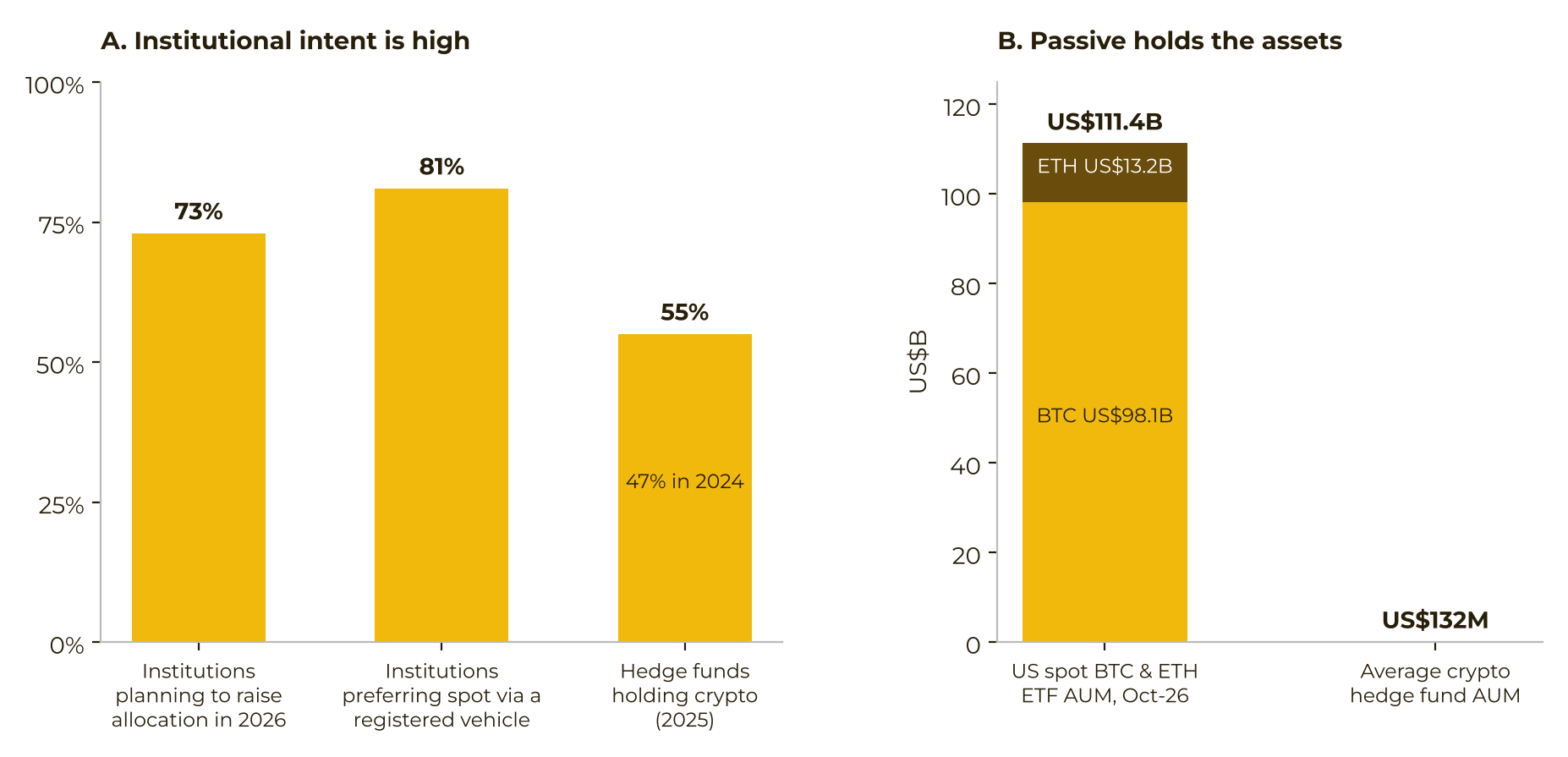
Figure: High institutional allocation willingness, but passive tools have absorbed the vast majority of capital inflows (Data source: EY-Parthenon and Coinbase 2026 March Institutional Investor Digital Asset Survey, AIMA and PwC 2025 Global Crypto Hedge Fund Report, State Street Bank 2025 October Digital Asset Survey, SoSoValue, Binance Research, as of October 31, 2026)
The Missing Middle Layer: Great Managers Are Not Lacking but Hard to Discover
If the industry's bottleneck is a shortage of talent, market mechanisms will naturally resolve it. But the reality is different; the real bottlenecks lie in "discovery" and "verification."
Traditional financial markets are institutionalizing the path for funds to find managers. AIMA and Marex's research shows that funding allocators' dependence on personal networks has decreased from 65% in 2024 to 40% in 2026, while the proportion of referrals through prime brokers has increased from 22% to 30% over the same period.
The crypto industry still seems to lack equivalent standardized channels. Funding allocation remains highly reliant on Telegram groups, offline summits, and referrals from acquaintances. Due to the lack of a unified performance disclosure and benchmark comparison framework, investors cannot horizontally compare different managers on the same dimensions; institutions also find it challenging to verify the audited financial statements, custody arrangements, and service provider qualifications they currently need.
These frictions constrain both supply and demand sides. Among crypto hedge funds, 47% report that investor demand is rising, while only 29% of traditional hedge funds involved in crypto assets report the same.
Nonetheless, family offices and high-net-worth individuals remain the main funding sources for crypto funds. Only one-fifth of crypto hedge funds list pensions, foundations, or sovereign wealth funds as their main investor types, though this proportion has increased from one-ninth a year ago.
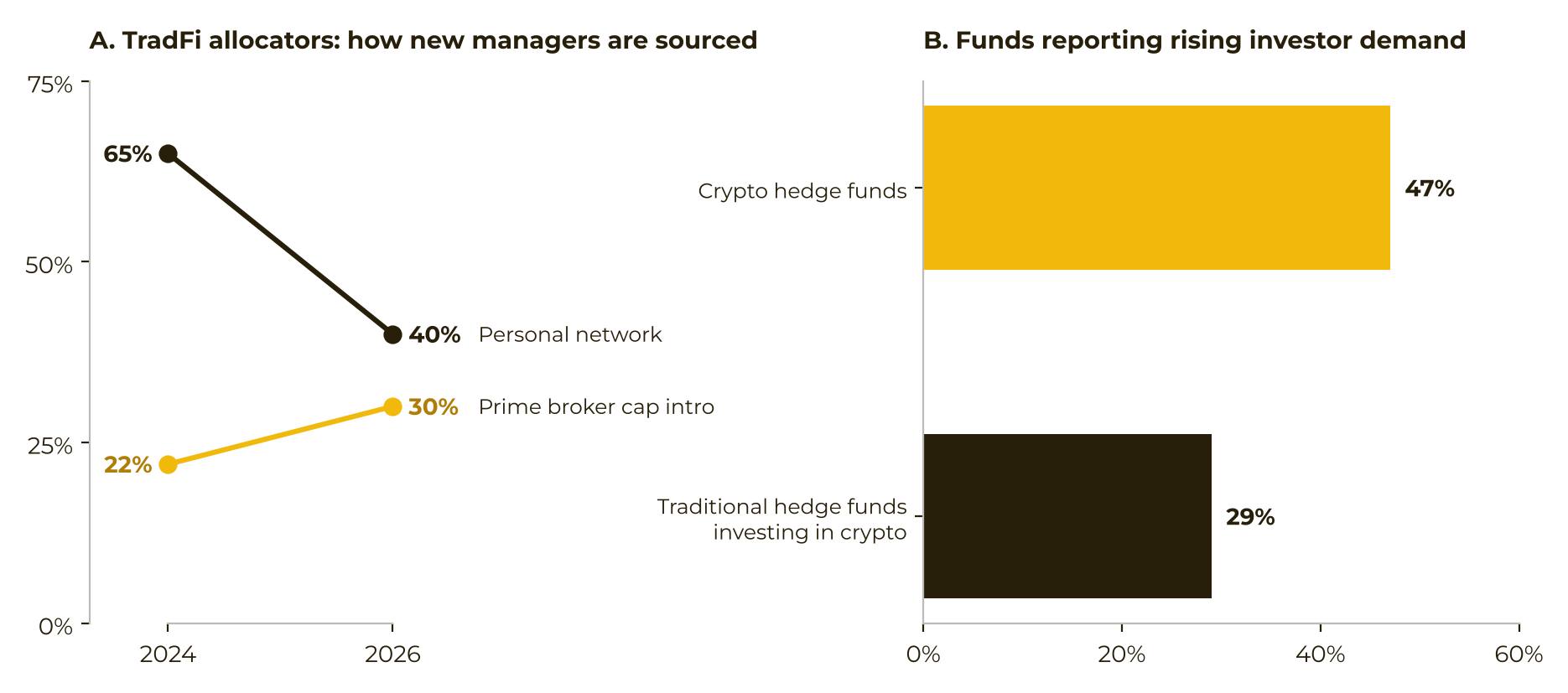
Figure: Funding allocators are gradually formalizing channels for discovering managers, while the demand for crypto funds is growing faster than for traditional hedge funds (Data source: AIMA and Marex 2026 Emerging Managers Survey, AIMA and PwC 2025 Global Crypto Hedge Fund Report, Binance Research, as of October 31, 2026)
Numerically, Directional Strategies Dominate, But Neutral Strategies Lead in Funding Volume
Once a transparent discovery layer appears in the market, true preferences of funding allocators become easier to reveal. Capital Connect serves as an observational window where strategies on the platform must disclose public information, and performance is measured based on unified standards. The data from October continues the previous allocation pattern.
In terms of the number of funds, directional strategies still represent the largest group, accounting for 44.3%, but only attract 6.7% of the platform's funds. Market neutral, statistical arbitrage, and traditional finance style multi-strategy funds collectively manage 92.1% of the AUM, with multi-strategy funds alone accounting for 14.3%.
Additionally, the average single investment amount in neutral strategies is about 11 times that of directional strategies. This indicates that the flow of platform funds reflects the true preferences of allocators rather than merely being influenced by the number of funds.
Recent trends also corroborate this judgment. Investor participation in market-neutral strategies has risen consecutively for two months, with a cumulative increase of 30% since May; the number of participants in statistical arbitrage strategies has more than doubled and remained stable throughout October.
The supply of products from managers and the actual needs of funding parties are pointing in opposite directions: many long-tail managers prefer to launch directional products, while institutional funds are highly concentrated in hedge strategies. The discovery layer itself does not create this preference; rather, it makes it explicit.
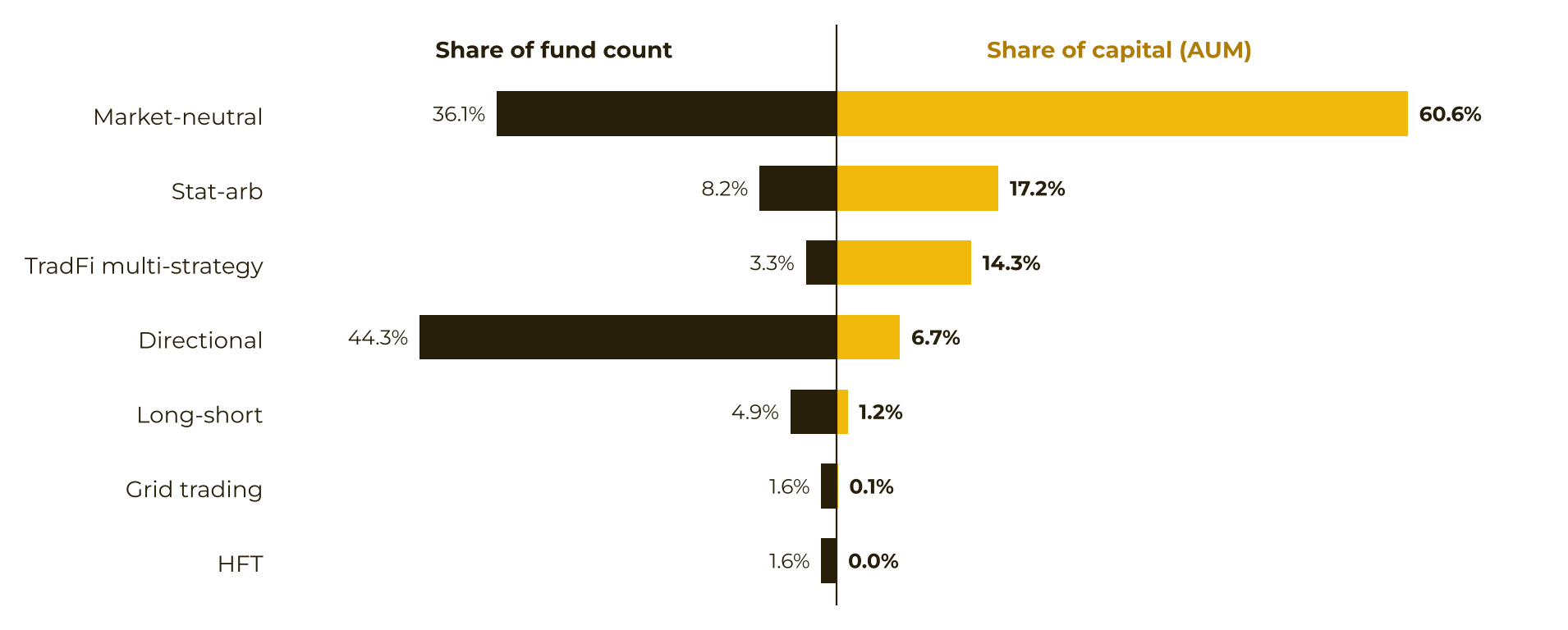
Figure: Directional strategies lead in the number of funds, while neutral strategies dominate in funding volume (AUM) (Data source: Capital Connect, Binance Research, as of October 31, 2026)
Two Core Commission Models, Both Tested by the Market
Two mainstream allocation commission models are growing in sync, and the market fluctuations in October happened to test their differing performances under pressure.
The first is the crypto-native model. Nearly half of the funds on the platform (48.7%) are concentrated in funds priced in BTC, ETH, or BNB. These funds attract about one-fifth of investors, but their average single investment amount is about 3.5 times that of stablecoin funds.
Allocators retain exposure to underlying assets while outsourcing hedging operations to professional teams. During October, the coin-based physical holdings remained stable, with the down-adjustment in AUM denominated in dollars primarily following BTC price fluctuations.
The second is the convergent model. Traditional finance style multi-strategy funds are still the third largest strategy by capital size, accounting for 14.3%. However, in October, the number of investor participants in this strategy dropped by 14% compared to the previous month, from 21 to 18.
Overall, this phenomenon reflects a maturing market rather than a trend reversal. Once the industry offers product structures that comply with traditional finance habits, institutions will naturally accept them; however, allocators still maintain a cautious selection, and even if the strategy itself shows stable returns, some investors still choose to temporarily withdraw.
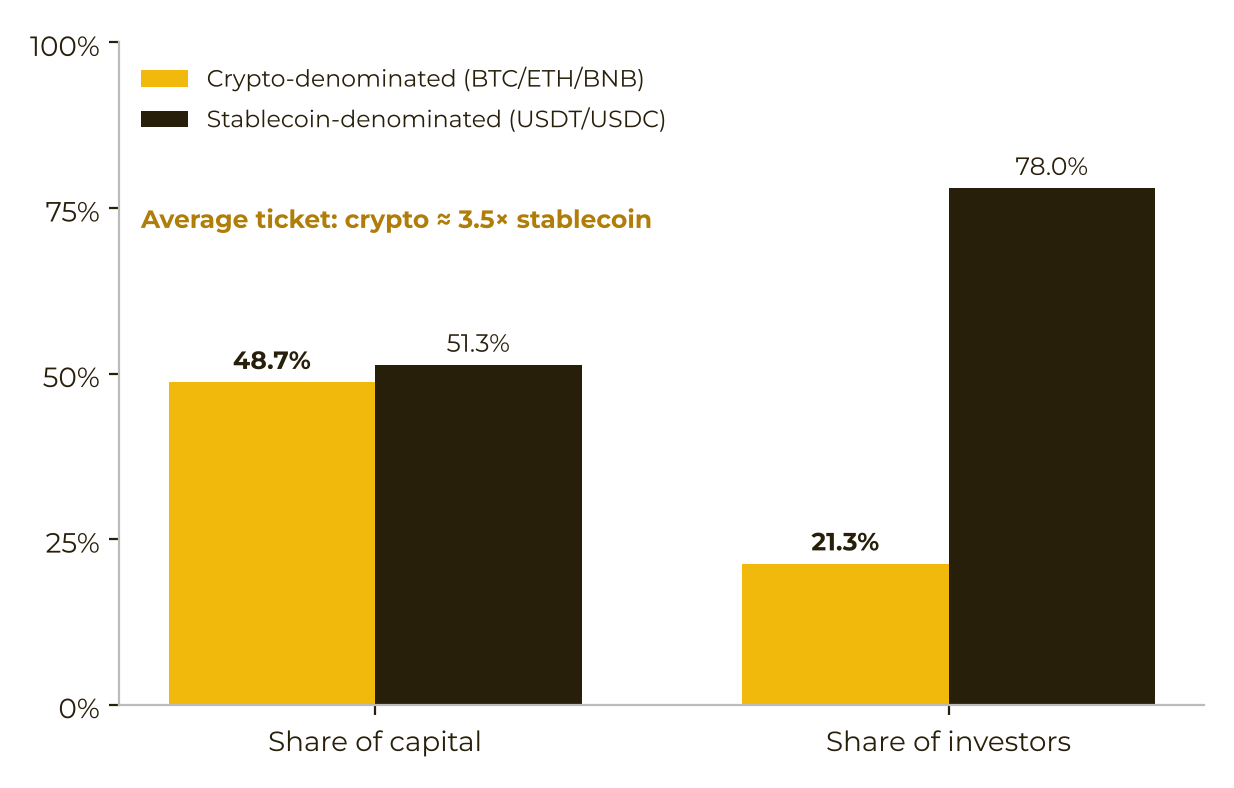
Figure: Coin-based currency funds have the largest average single subscription size (about 3.5 times that of stablecoin funds; data source: Capital Connect, Binance Research, as of October 31, 2026)
Risk Preference Has Warmed and Withstood Tests in October's Corrections
Participation in directional strategies is gradually recovering. As yields bottomed out in June, the number of investors in the sample pool significantly dropped, hitting a low of 36 in July; it then gradually increased, reaching 52 by October, returning to the level from May. The average yield of directional funds since inception has also improved from -11% in June to +3.7% in October.
The market in October served as the first practical test for this round of recovery. The month saw BTC decline by 7.2%, yet directional funds still achieved an average monthly gain of +1.9%, while market-neutral funds averaged a gain of +1.0%. Our interview results also reflect consistent behavioral patterns: allocators typically reduce directional exposures during market pullbacks and reallocate once volatility and liquidity stabilize.
However, directional investing remains challenging. The return disparity between the best and worst performing funds is about eight times that of neutral strategies; the median return is approximately around +4%, with only 55% of funds achieving positive returns. In contrast, nine out of ten neutral strategy funds recorded positive returns.
Despite this, the top quarter of directional funds has achieved an average return of +69% since inception. Funding allocators clearly state that as long as such levels of Alpha can be delivered under controllable drawdown conditions, they are still willing to pay for it.
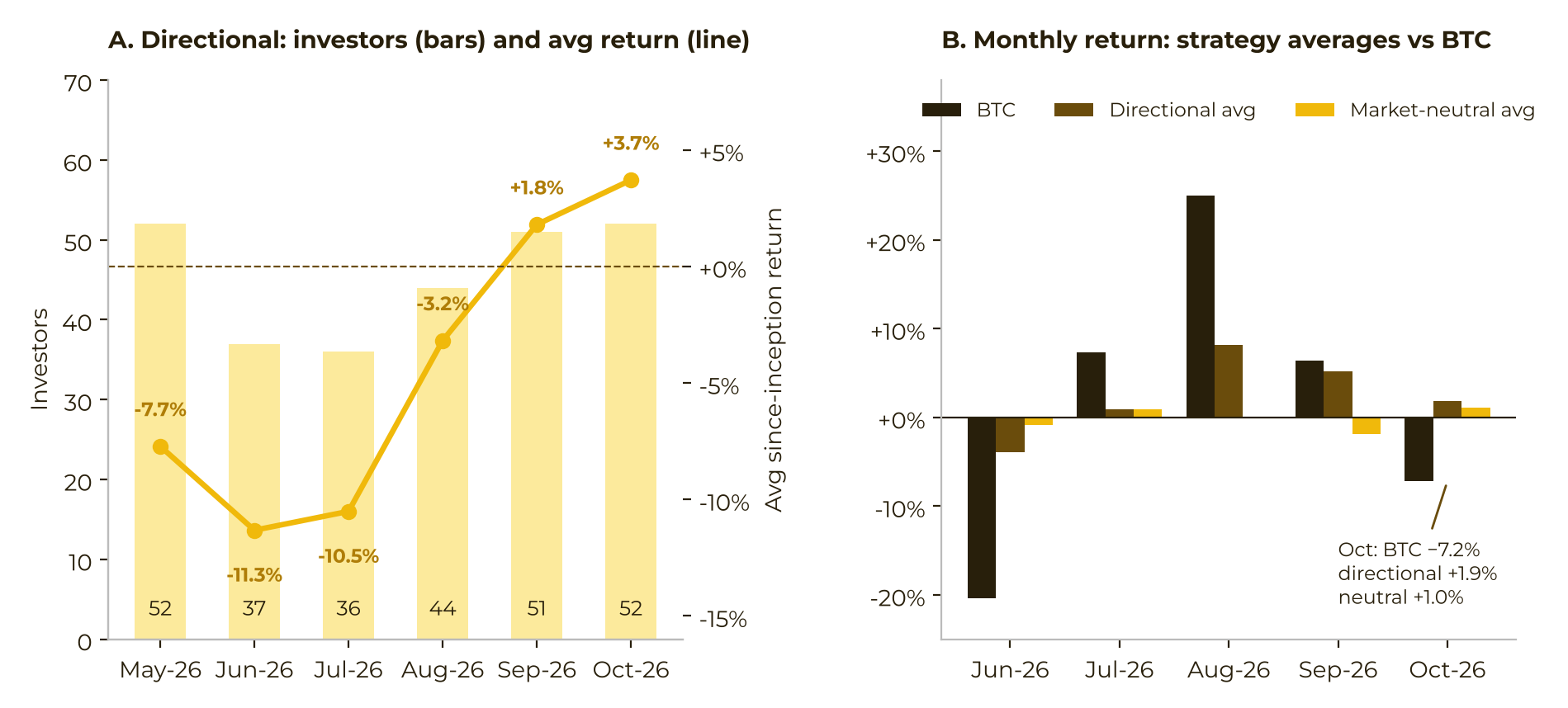
Figure: With performance recovery, the number of investors in directional strategies gradually rises and remains stable in October's market (Data source: Capital Connect (strategy returns are simple average values of fund net asset value), Binance (BTC/USDT), Binance Research, as of October 31, 2026)
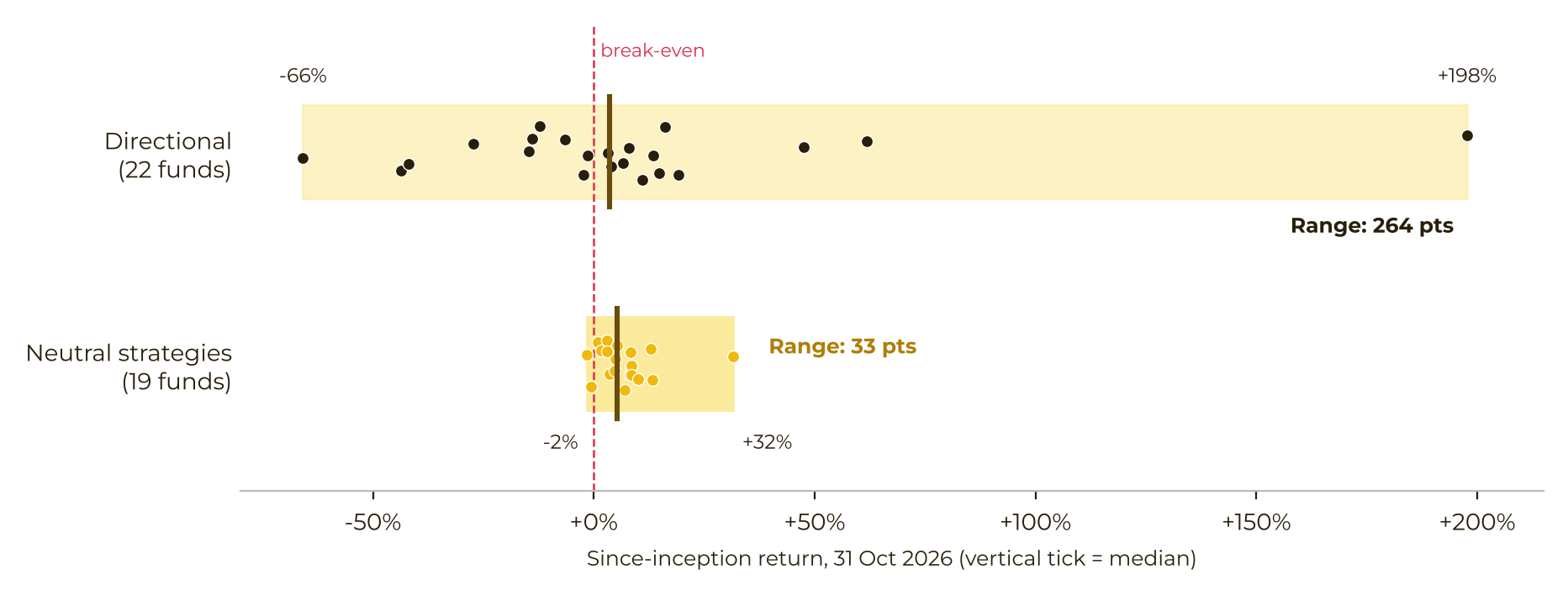
Figure: The return distribution of directional strategies spans far wider than that of neutral strategies (Data source: Capital Connect (excluding dormant funds and funds with AUM below $1000; neutral strategies encompass market neutral, statistical arbitrage, and traditional multi-strategy), Binance Research, as of October 31, 2026)
Frontline Feedback from Funding Allocators and Fund Managers
To validate the deeper logic reflected behind the data, we directly interviewed funding allocators on the Capital Connect platform and the trading teams responsible for operating the funds. Their responses clearly explain the reasons for the aforementioned market dynamics.
For funding allocators, asset safety ranks absolutely first, with 80% of respondents placing it above historical performance and institutional reputation. Respondents also pointed out that verified, genuine internal data from exchanges significantly enhances the credibility of due diligence, and when evaluating managers, they place more emphasis on drawdown control rather than merely high superficial yields.
For fund managers, the real fundraising barrier is not the lack of eye-catching yields but the cost of trust. Previous performance is hard to cross-verify, and combined with issues like KYC, anti-money laundering (AML), and counterparty compliance checks, it severely slows down the fundraising tempo, leading the majority of funds to rely solely on referrals from acquaintances.
However, after platform listing, some managers have been able to reach a wider investor base, compliant institutions, and pools formed by aggregated small funds.
The signals conveyed by both supply and demand sides are highly consistent: verifiability opens the door to trust, while a well-developed operational infrastructure can further widen this channel.
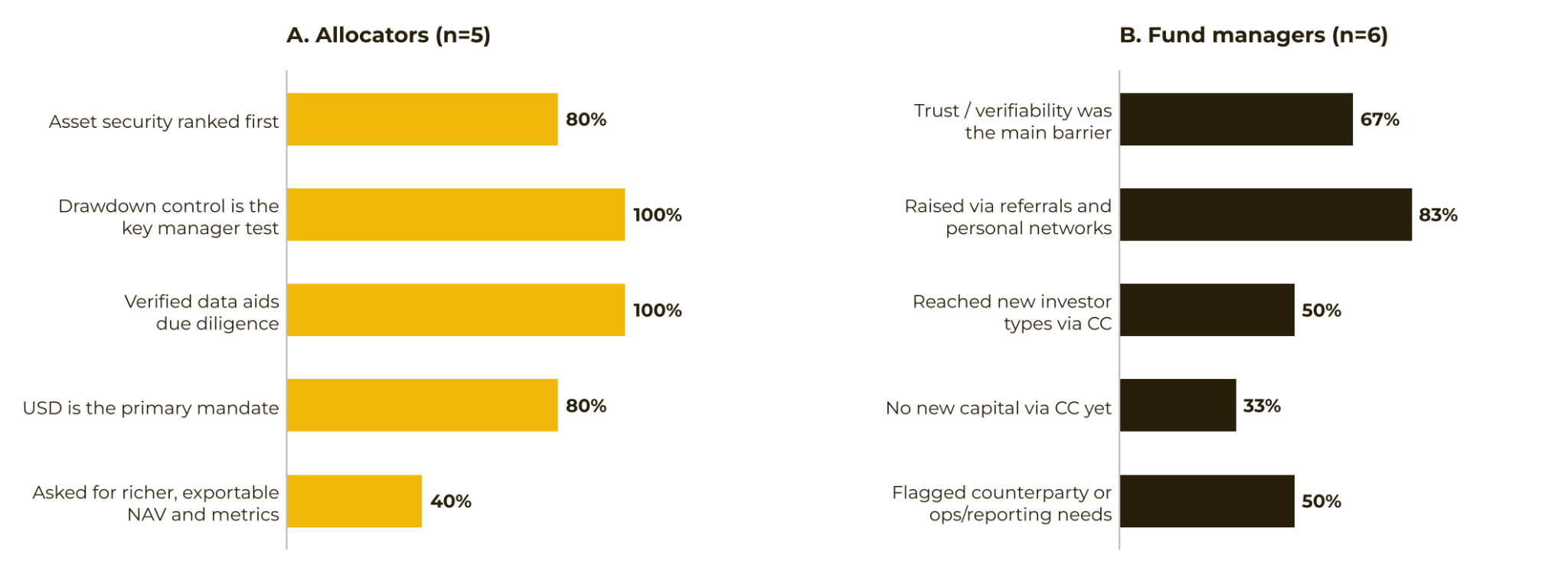
Figure: Funding allocators prioritize asset safety and data verifiability over historical performance (Data source: Capital Connect interview with allocators and fund managers (October 29 to November 1, 2026), Binance Research, as of November 1, 2026)
Disclaimer: This report is compiled by Binance Research and does not constitute any predictions or investment advice, nor does it constitute a recommendation, offer, or solicitation to buy or sell any trading products, cryptocurrencies, or adopt any investment strategy. The terms used in this article and expressions of opinion aim to promote understanding and responsible development of the industry and should not be regarded as explicit legal opinions or representing Binance's stance; the opinions expressed are only valid as of the above publication date and may be adjusted with subsequent developments.
The information and opinions contained in this report originate from proprietary and non-proprietary channels that Binance Research deems reliable, but may not cover all information and are not guaranteed to be entirely accurate. Binance does not guarantee the accuracy or reliability thereof, nor assumes any responsibility for errors or omissions caused by negligence or any other reason. The article may contain forward-looking information, forecasts, and outlooks of a non-purely historical nature, and there are no guarantees that the related predictions will materialize; readers shall assume their own risks in relying on them.
This content is for reference only and does not constitute investment advice and may not be used in any jurisdiction for the offer or sale of securities, cryptocurrencies, or investment strategies where it may be illegal. Investment involves risks, and please refer to Binance's Terms of Use and Risk Warning for details.
免责声明:本文章仅代表作者个人观点,不代表本平台的立场和观点。本文章仅供信息分享,不构成对任何人的任何投资建议。用户与作者之间的任何争议,与本平台无关。如网页中刊载的文章或图片涉及侵权,请提供相关的权利证明和身份证明发送邮件到[email protected],本平台相关工作人员将会进行核查。


