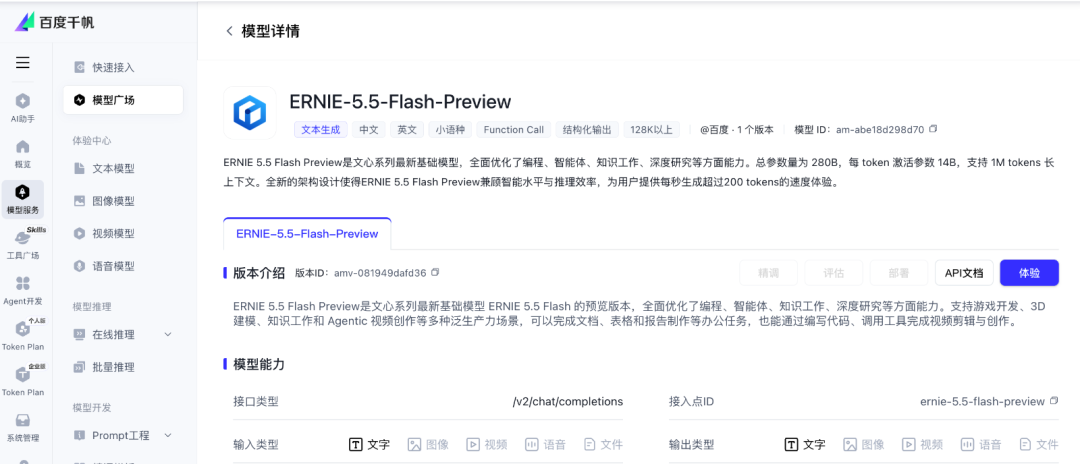
Just now, Baidu released the Wenxin 5.5 Flash Preview (ERNIE 5.5 Flash Preview), which is also the first post-training version of the Base model that was open-sourced last week, the first formal model under the new architecture
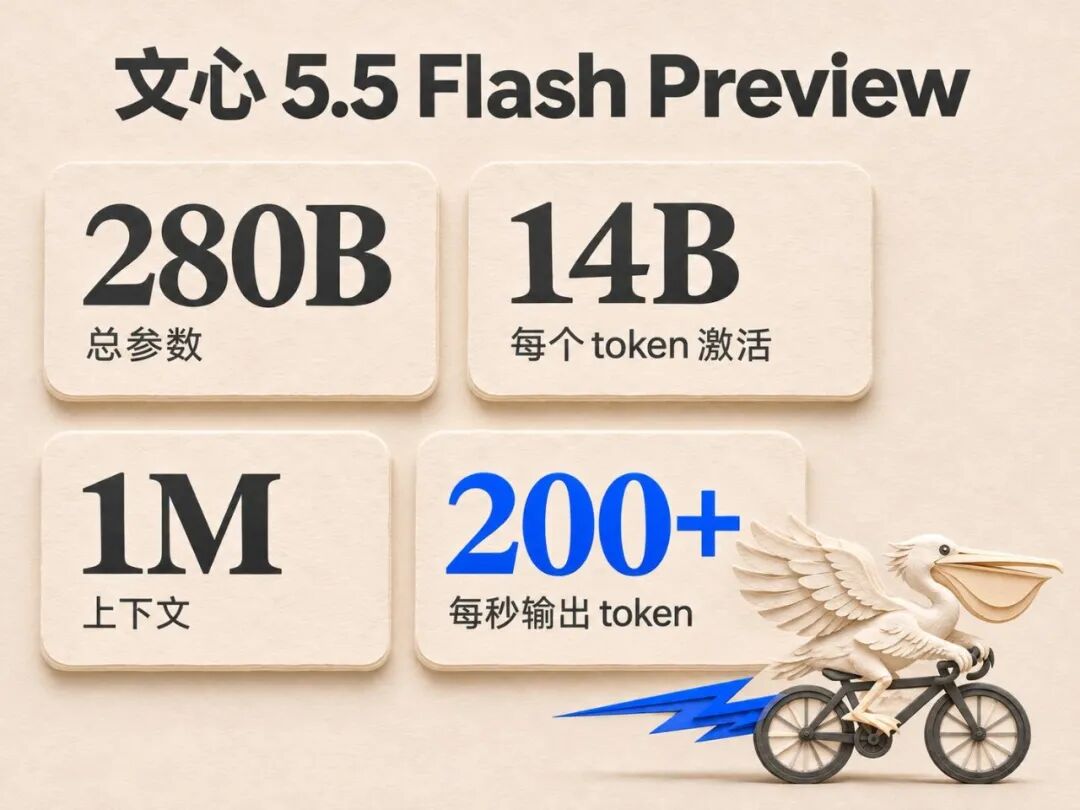
Total parameters 280B, active 14B, context 1M, output over 200 tokens per second
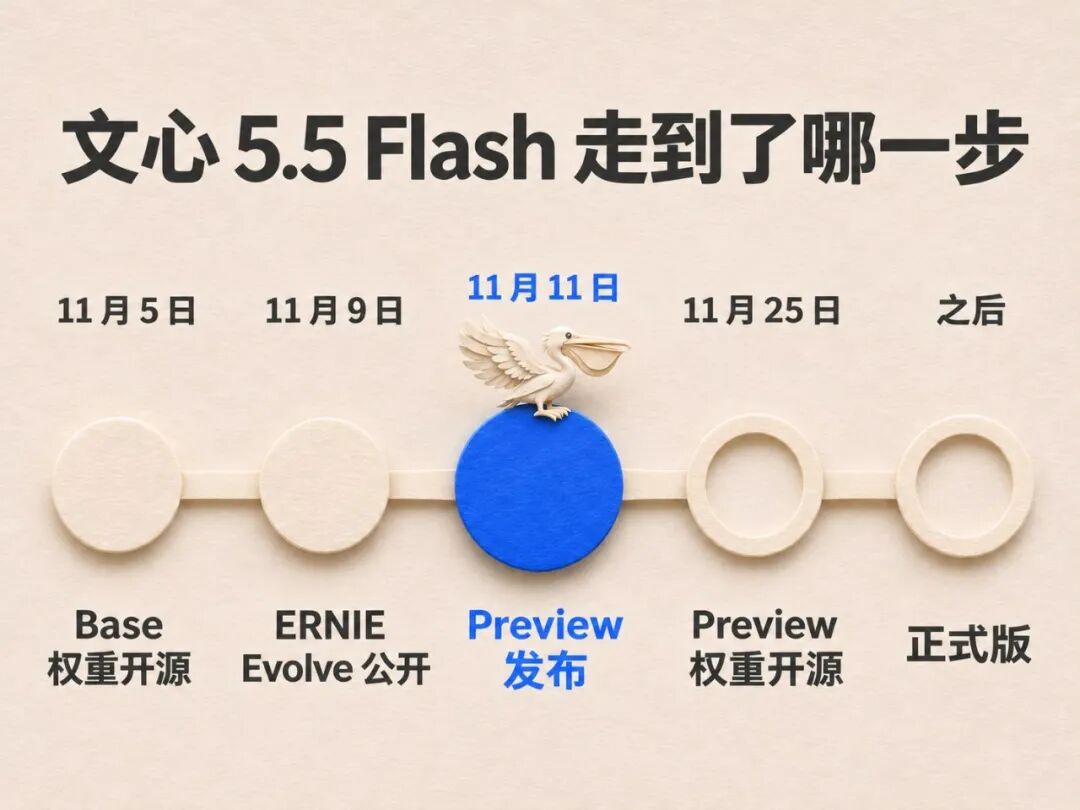
The model's API is currently online on Qianfan, the model weights will be open-sourced on November 25
Including this release, Baidu has launched three models in a week:
On November 5, open-sourced Base weights
On November 9, public automatic research system ERNIE Evolve
On November 11, which is today, reached Preview
The key points of this release are as follows:
Model: This is a pure text model, MoE architecture, 280B total parameters, 14B active
Score: Reached usable level, but still has a significant gap compared to the current cutting-edge models (Claude Opus 5.5, GPT-6.1 Sol, DeepSeek V4.1 Flash…)
Speed: Deep optimization of inference methods, reaching up to 200 tokens/s
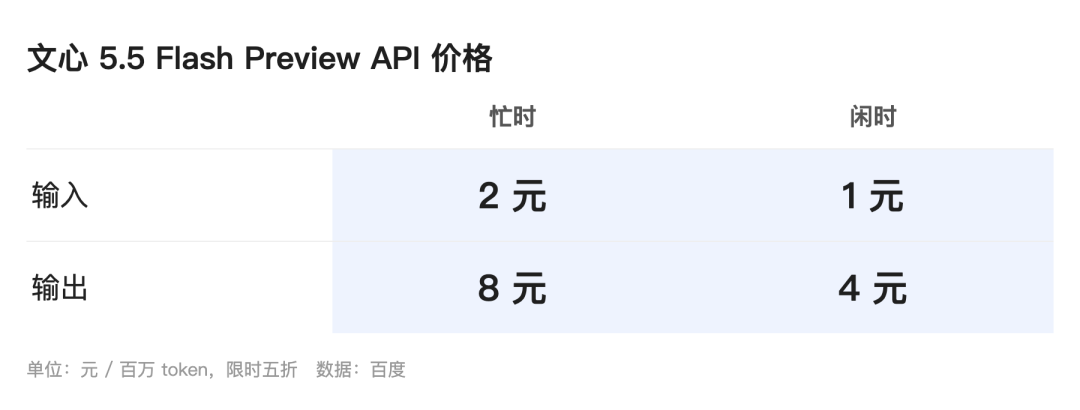
API Pricing: 2 yuan during busy time, 1 yuan during idle time for input per million tokens, 8 yuan during busy time, 4 yuan during idle time for output, limited time half price
Where to use:
The model ID on Qianfan is
ernie-5.5-flash-preview;The model is open-sourced and can be self-deployed
BenchMark
These are condensed benchmarks, data from the official release:
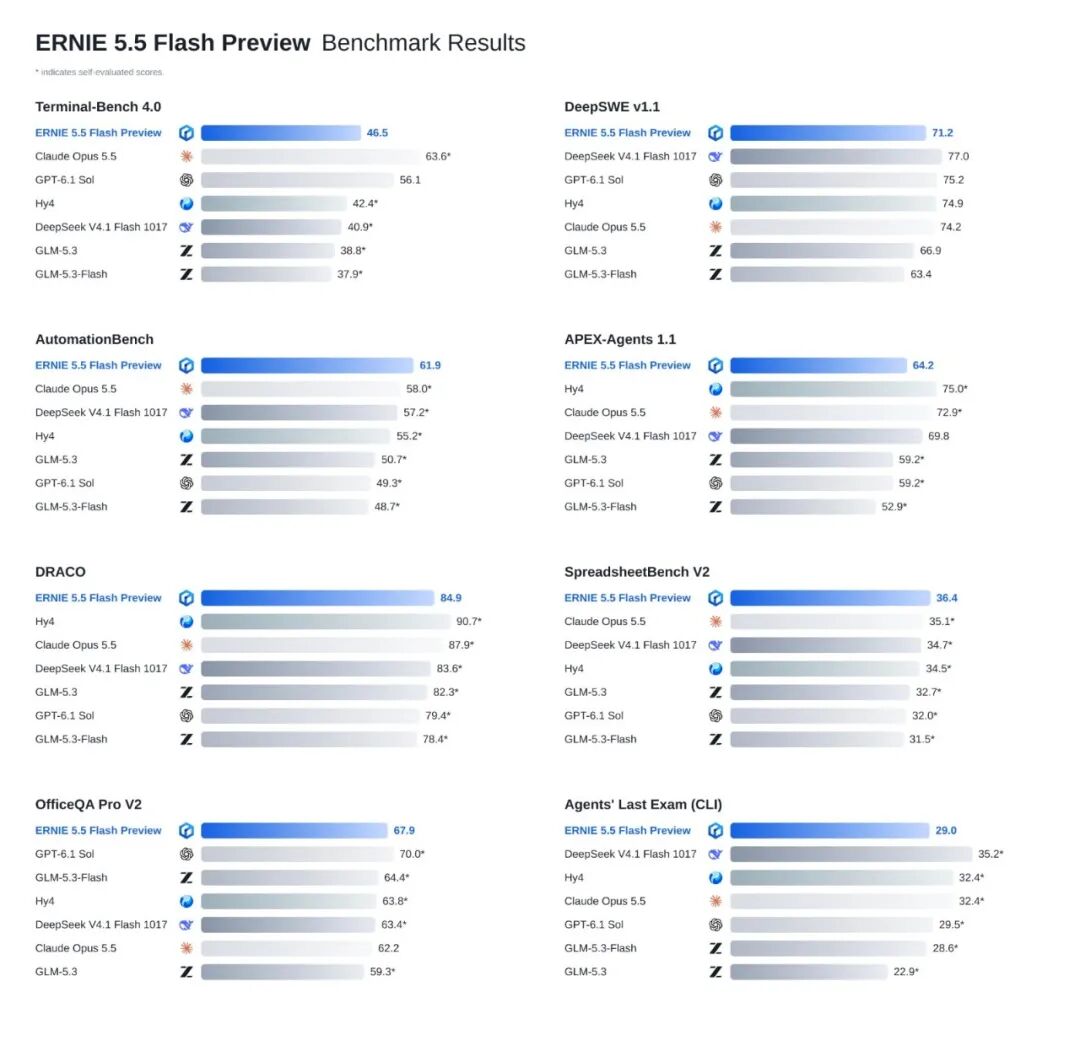
These are the complete 20-item tests:
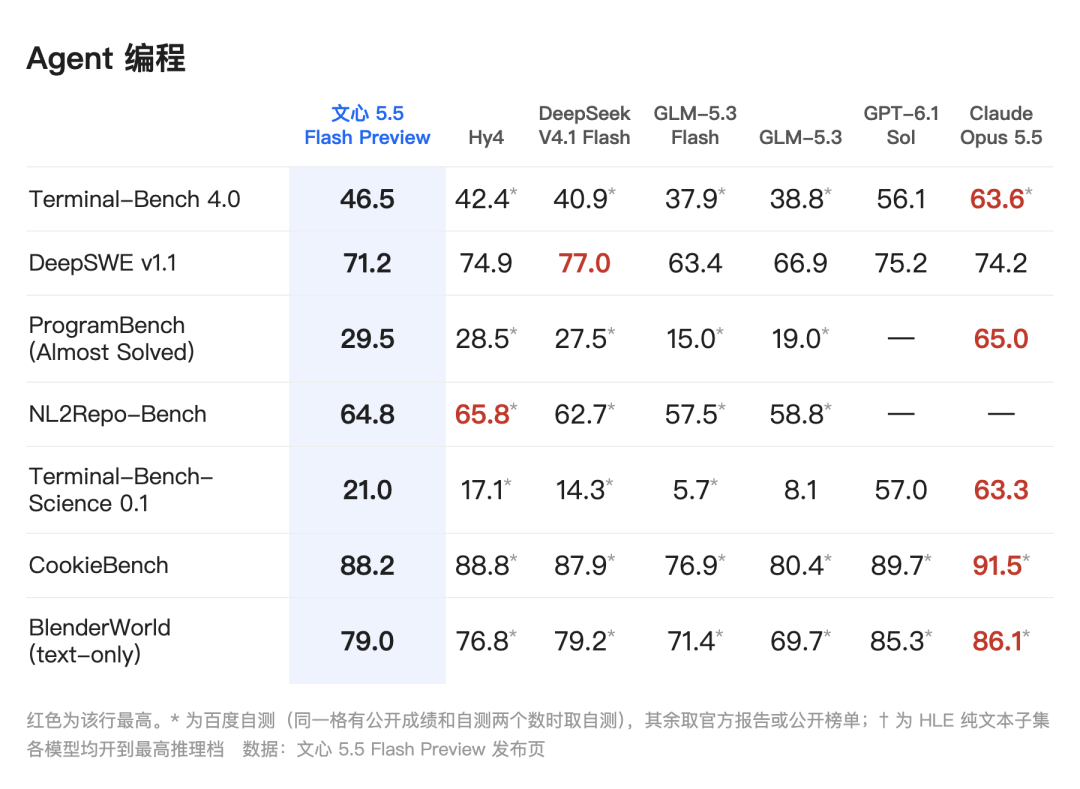
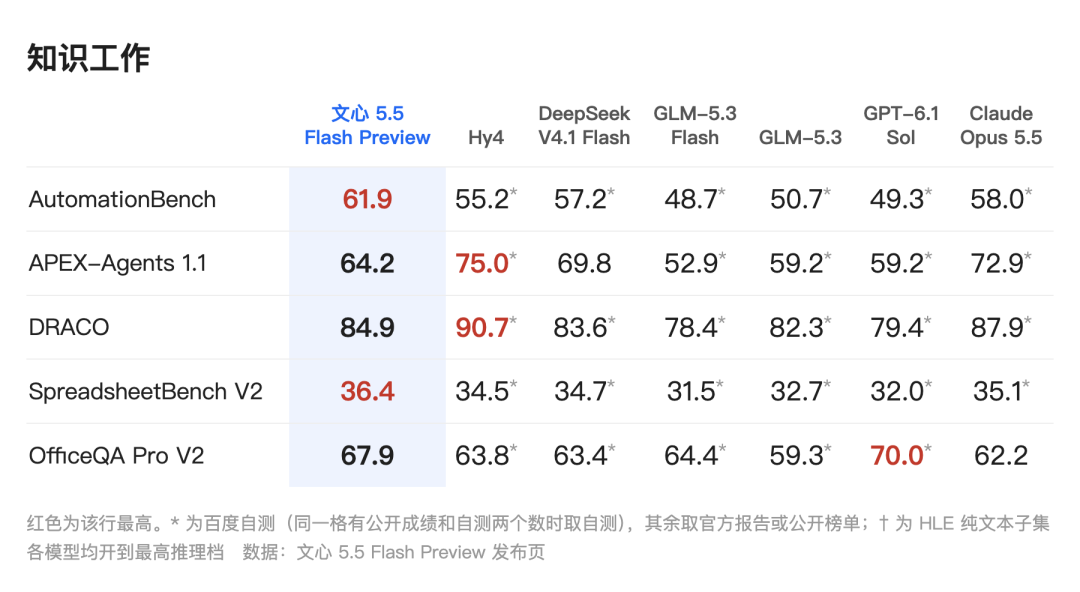
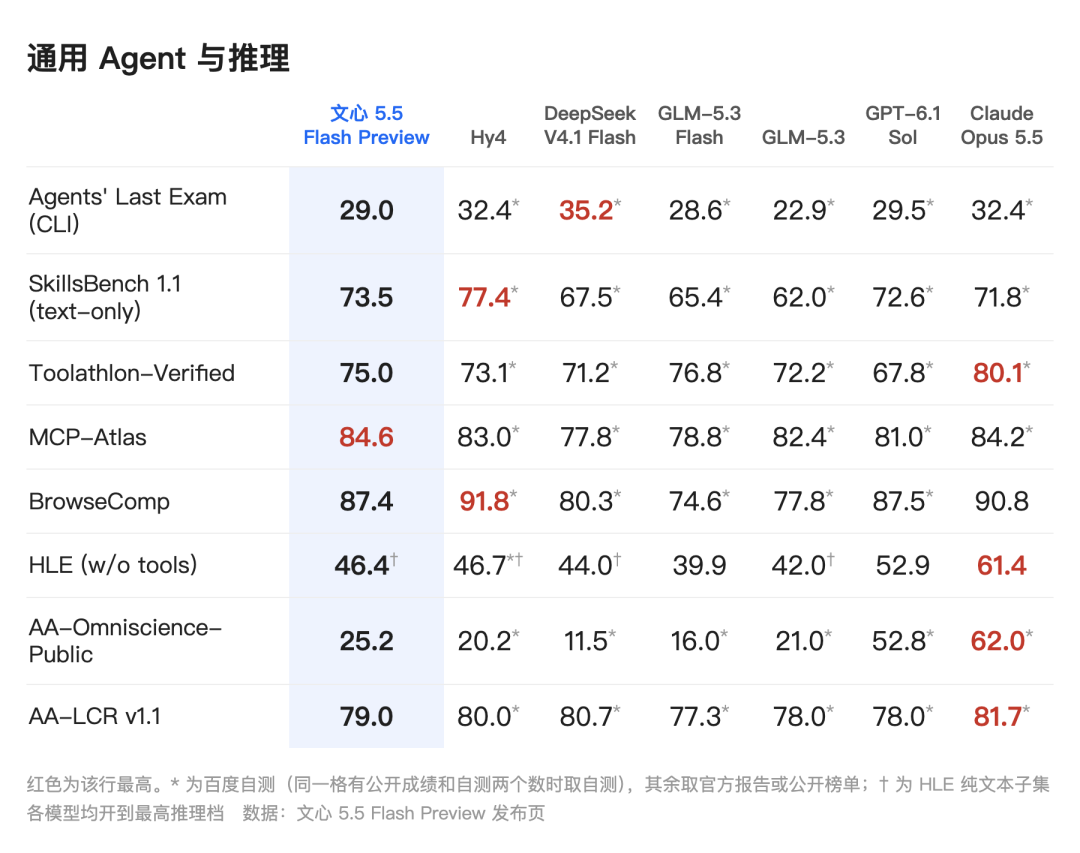
First, for programming, Terminal-Bench 4.0 achieved 46.5, ranking ahead of domestic models like Hy4, DeepSeek V4.1 Flash, GLM-5.3
It should also be mentioned that Wenxin 5.5 Flash Preview only processes text, so BlenderWorld and SkillsBench have used only pure text subsets
How to create games with a pure text model
First, take a look at this game made with Wenxin 5.5 Flash Preview
This game is called "Cloud-Style Adventure," a third-person Eastern martial arts game, set in the misty Zhangjiajie stone peaks and ancient temples on cliffs
Here is the note: Wenxin 5.5 Flash Preview is a pure text model, cannot see images
So when creating the game, it rewrote all the issues found during the trial into measurable code tests, and then iteratively improved based on the test results
As an example with the aforementioned game, the model first integrated assets across several generations of Unreal Engine into the same UE 5.8 project, then completed the entire game using C++, taking a total of 11 hours (mountain scenes and the female hero character came from ready-made asset packs)
As for mobile mini-games, the current model capabilities are sufficient, Wenxin 5.5 Flash Preview can directly produce various genres such as bullet hell shooting, roguelikes, tower defense, card RPGs…
Building 3D scenes with code
Baidu has added specialized training for tools like Blender and CAD, the model takes a segment of text description, infers the shapes, proportions, and spatial relationships of objects, then creates them through procedural modeling
1. Two Agents collaborate to build an airport and an airplane
Two Agents powered by Wenxin 5.5 Flash Preview work in Blender, one creates the airport, and the other creates the airplane, finally unifying the scale, location, and cameras of the two projects, choreographing animations, rendering, and composing videos
2. Gathering materials to build a Faling Temple
In scene modeling, the model retrieves information about the layout and architectural structure of Faling Temple, gradually building the entire temple complex, detailing each layer's structure, beam and column supports, and stacked roof tiles
Here, the Buddha statue scanning and plant assets are also sourced from publicly authorized resources, with lotus ponds, arched bridges, and gardens designed by it
3. Creating white model previews for AI films
Before filming a movie, the crew uses simple white models to run through the shots; this step is called a rehearsal
Wenxin 5.5 Flash Preview built four white model scenes in Blender using code (approximately 2100 objects, 1.82 million triangles), arranged the layout, camera movements, and animations for five shots, and then handed over the white model video to Seedance 2.5 to generate the final scenes
4. Three editable CAD models
These three were made with Python scripts in FreeCAD, and the parts can be modified later
First, a W16 engine complete with cylinder block, crankshaft, piston, and connecting rods; when the crankshaft rotates, the connecting rod drives the pistons in the 4-cylinder rows reciprocally
Next, a lunar concept vehicle, inspired by the Yutu-2, with a main and auxiliary double wishbone suspension and movable solar wings on both sides
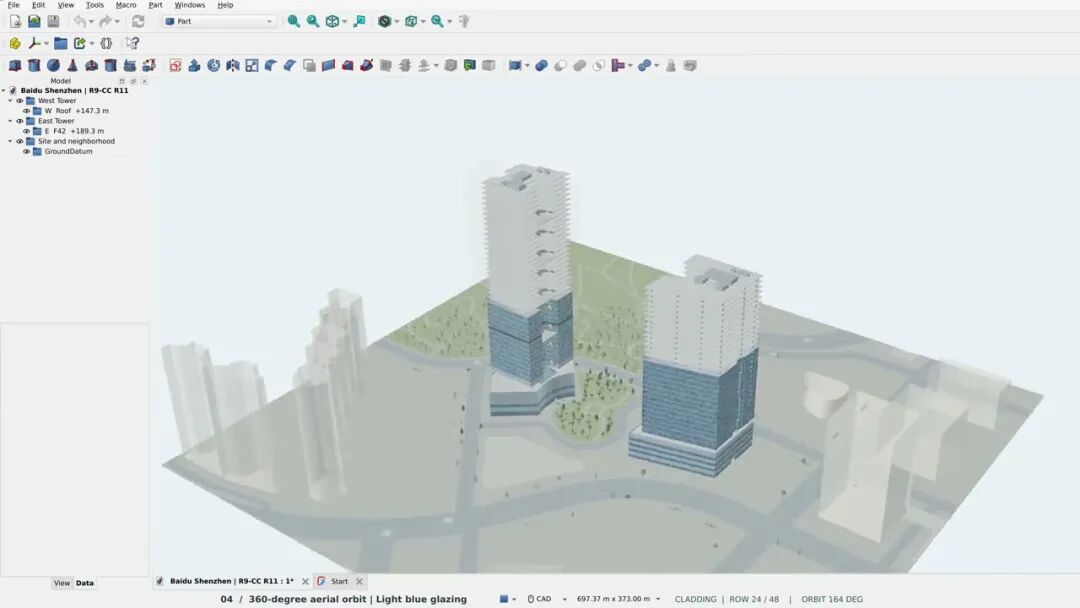
Also, the East and West towers of the Baidu International Building (Shenzhen), with some floors designed with interior layouts, furniture, and electrical and mechanical pipelines
Deliverable files ready for use
For office-related tasks, Baidu has built 300,000 workspaces and 10 million reference documents in fields like finance and law, covering over 40 document types, with training environments ranging from 10 to 100 personal workspaces to thousands of file enterprise knowledge bases
Take the following four documents, all independently created by it:

 Knowledge Work (Symphonic Version)
Swipe left and right to view · Total 4 images
PPT: "The AI Power Bill," a 20-page research report discussing who should bear the electricity costs brought by AI data centers in the U.S., technology companies or ordinary households
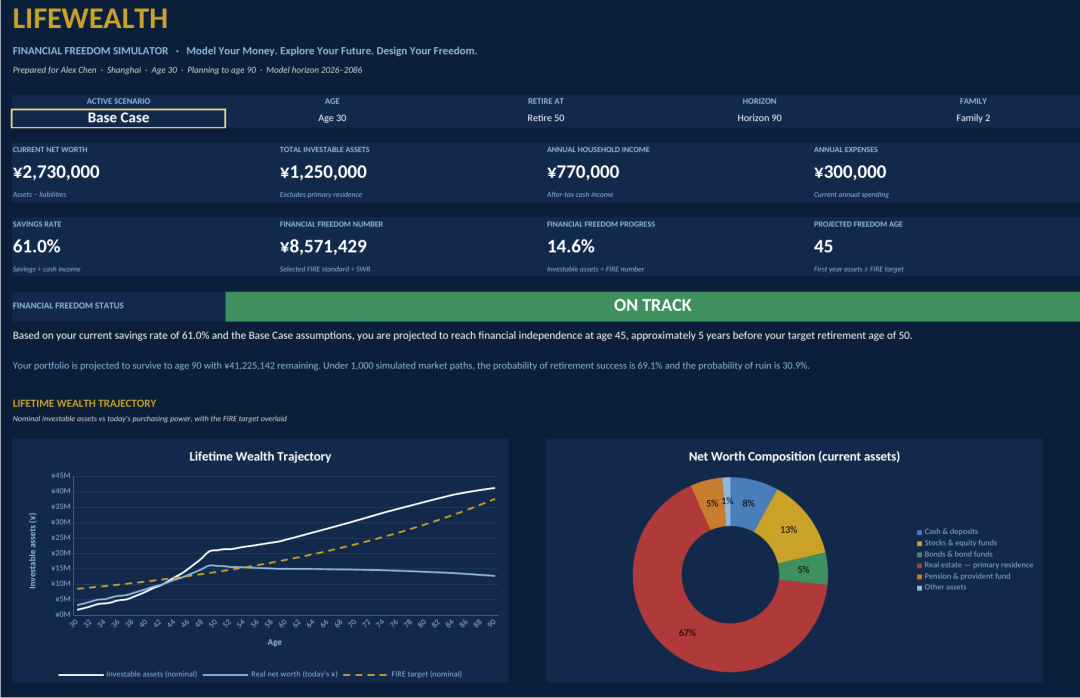
Excel: "LIFEWEALTH," a workbook for personal wealth planning, with editable parameters such as income growth rate, savings rate, and retirement age, also includes a Monte Carlo simulation with 1000 random market paths
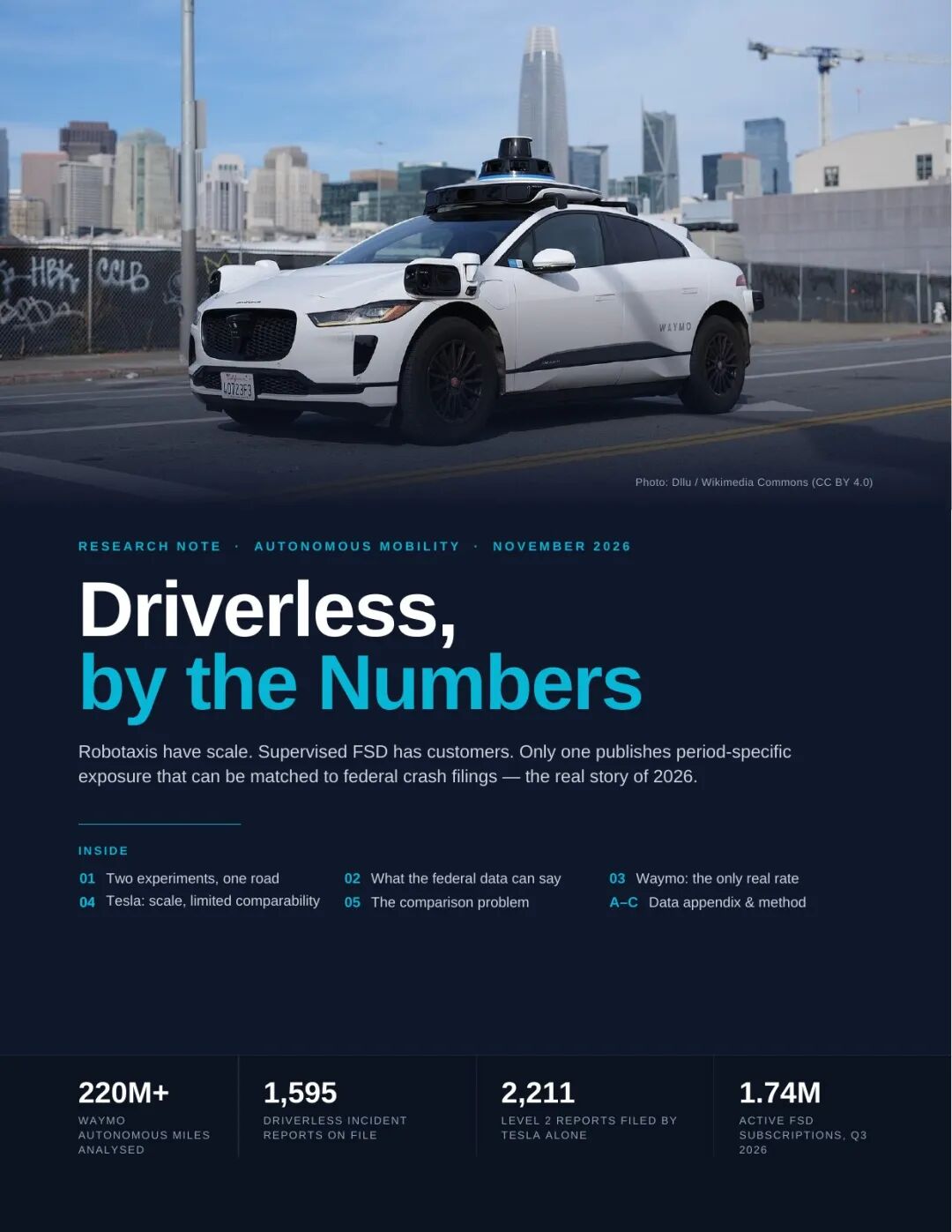
PDF: "Driverless, by the Numbers," a 24-page report comparing Waymo's Robotaxi and Tesla's supervised FSD using 4169 federal accident reports
MP3: "Beyond the Event Horizon," a 6 minute 34 second original symphony
One command produces a complete film
Baidu has created over 150,000 creative environments for scenarios such as popular science, comic dramas, and creative editing, fitting thousands of creative skills, accumulating about 5300 minutes of finished films
1. Pelican Test
There has been an old challenge in the community to test the model by asking it to draw a pelican riding a bicycle, this time, Wenxin 5.5 Flash Preview wrote a 116-second 2D animated short from scratch using Python
The entire film consists of tens of thousands of lines of code, with each frame vector drawn. The soundtrack used 22 segments of recordings, with the edited script written by the model aligned with the switching points of the visuals
2. Creating a popular science film from one question
This film started from a question: "If Earth also had a ring, what would we see when we look up?" Thus, the following video was created
The model first searched for materials, clarified the scientific information such as Roche Limit, then wrote the script and designed the storyboard, breaking down the creativity into individual shots. The materials include code-generated assets, video-generated model outputs, and images re-rendered
3. Explaining the flying Roadster in 75 seconds
Wenxin 5.5 Flash Preview can deliver usable science videos, such as this 75-second popular science video explaining the engineering principles behind the "flying" Tesla Roadster
In it, the script, voiceover, subtitles, shots, force diagrams, and editing were all completed by it, with the entire video divided into five chapters based on takeoff, leaving the ground, changing posture, hovering, and landing (some shots were assisted by Seedance 2.5)
Flash's speed
Flash models are always known for their speed, and Wenxin 5.5 Flash has considered efficiency as a goal since the beginning of design
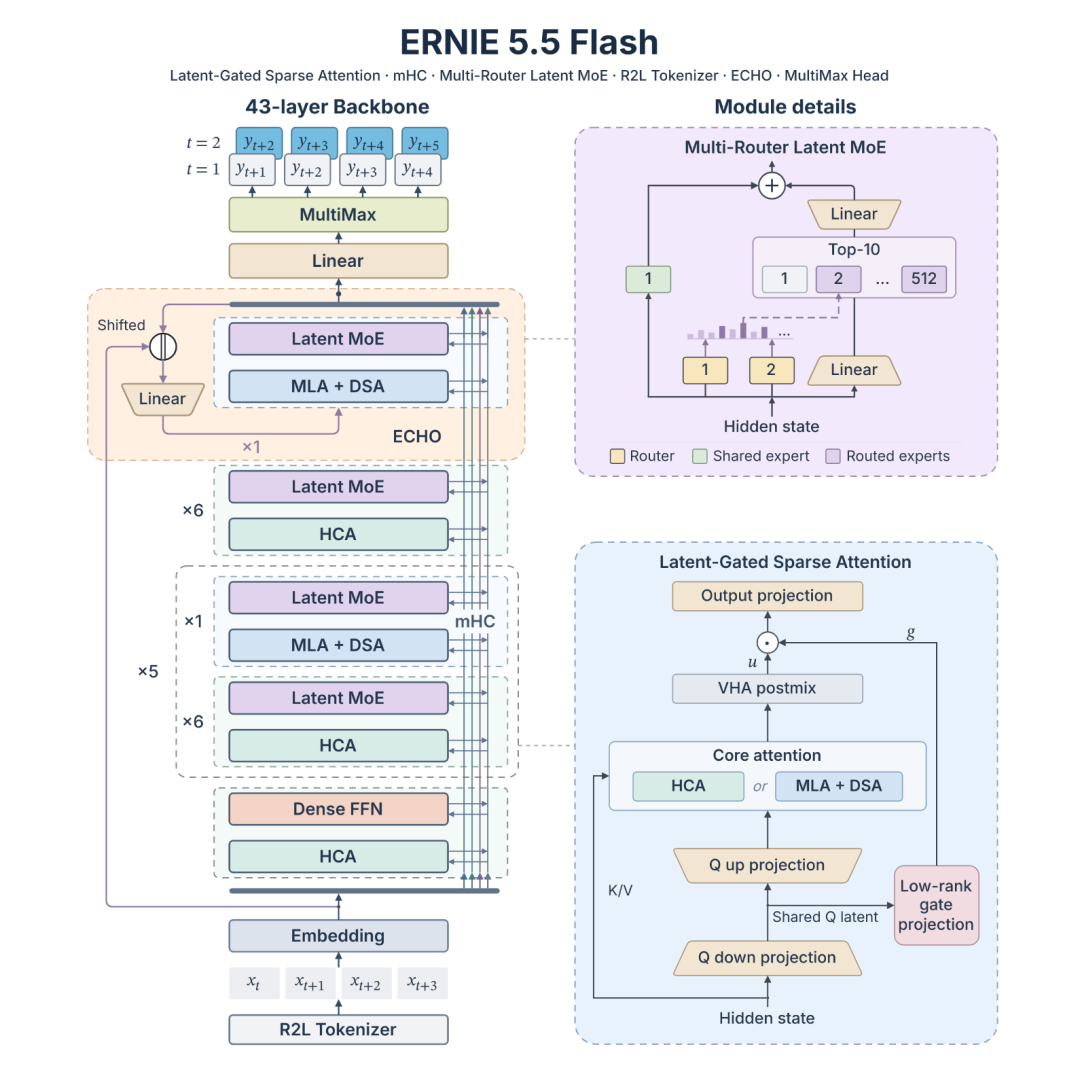
First, regarding MoE, each layer selects 10 out of 512 experts. The traditional method relies on a router for scoring, here it has switched to multiple independent routers scoring together (Multi-Router), resulting in higher correlation between selected experts and actual performance
For long context, the model has a total of 43 layers, with only 1 layer kept for each 7 layers to view the entire context token by token, while the other 37 layers compress every 128 tokens into a cache, the 37 layers' KV cache is only a small portion of the entire context layer
For the decoding step, Wenxin 5.5 Flash replaced the traditional multi-token prediction module with a design called ECHO, directly allowing the last layer of the backbone to predict further tokens. During inference, this layer is directly used as a draft model for speculative decoding
Moreover, part of the model's inference optimization is done by AI itself
On November 9, Baidu launched the automatic research system ERNIE Evolve, which can autonomously propose research directions, run experiments, verify results, and accumulate experience around objectives and constraints. This also marks the first time Wenxin has applied its self-developed RSI technology in the model
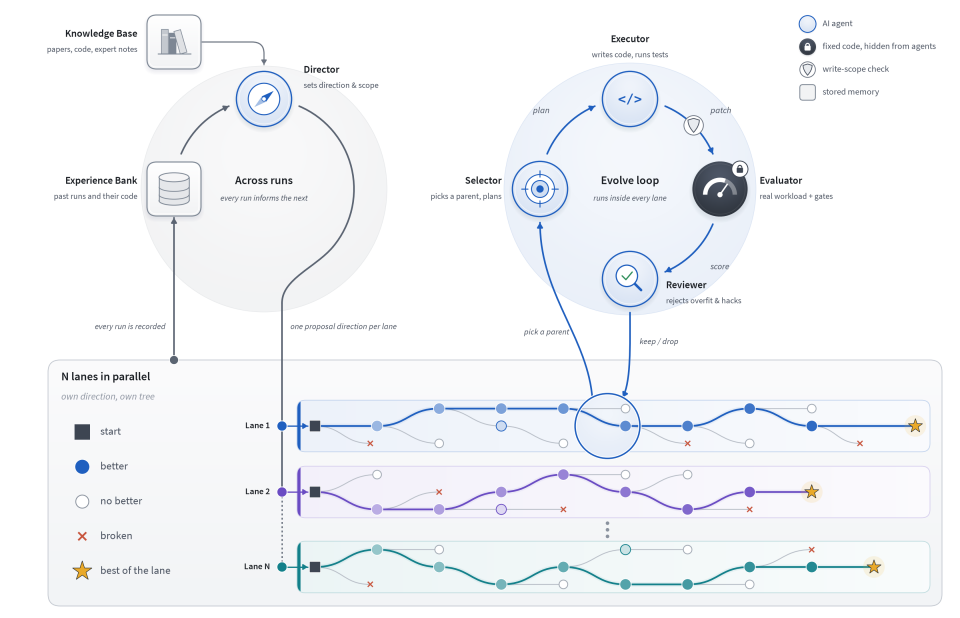
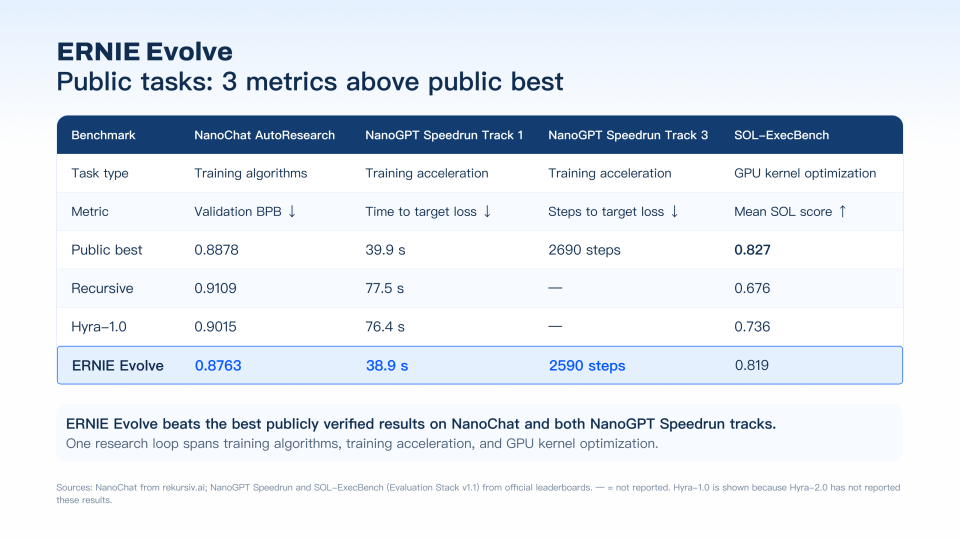
ERNIE Evolve has already been used in the inference optimization of Wenxin 5.5 Flash, including the performance in low-latency scenarios with Kunlun chip P800, throughput for deterministic reasoning, and decoding speed
In the two public tasks of NanoChat AutoResearch and NanoGPT Speedrun, all three of its metrics have surpassed the currently publicly validated best scores
In conclusion
Wenxin 5.5 Flash Preview is an intermediate version in the post-training process, which is still ongoing, and the official version of Wenxin 5.5 Flash will be released later
In terms of pricing, API costs 2 yuan per million tokens input during busy times, 1 yuan during idle times, output costs 8 yuan during busy times, 4 yuan during idle times, and is currently offered at a limited time half price
免责声明:本文章仅代表作者个人观点,不代表本平台的立场和观点。本文章仅供信息分享,不构成对任何人的任何投资建议。用户与作者之间的任何争议,与本平台无关。如网页中刊载的文章或图片涉及侵权,请提供相关的权利证明和身份证明发送邮件到[email protected],本平台相关工作人员将会进行核查。


