Original | Odaily Planet Daily (@OdailyChina)
Author | Asher (@Asher_0210)
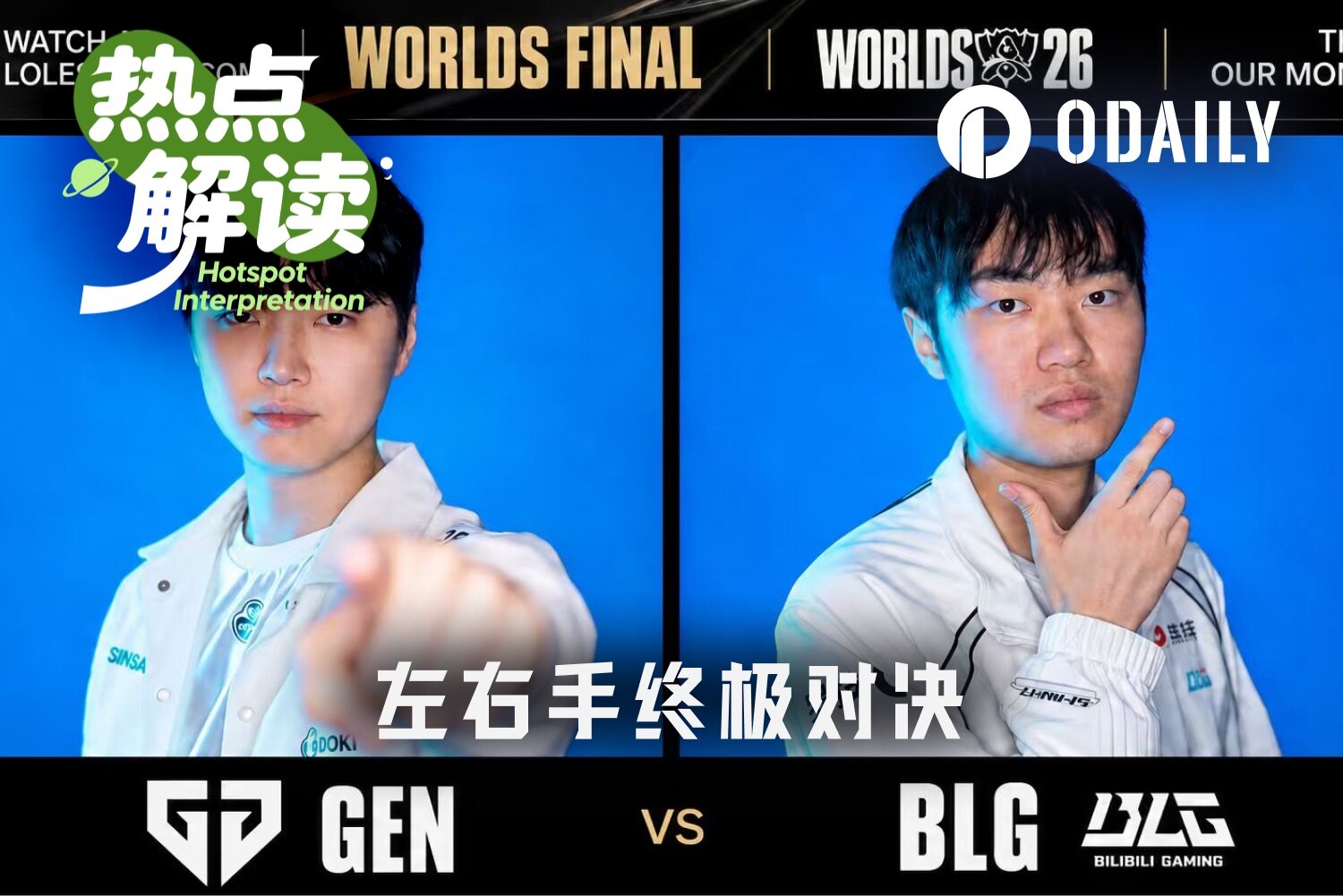
On November 9, BLG defeated T1 3:1, and LPL finally welcomed that long-awaited victory after many years. Previously, T1 maintained an undefeated record against LPL teams in BO5 at the World Championships; this time, BLG ended that streak and halted T1's quest for a four-time championship.
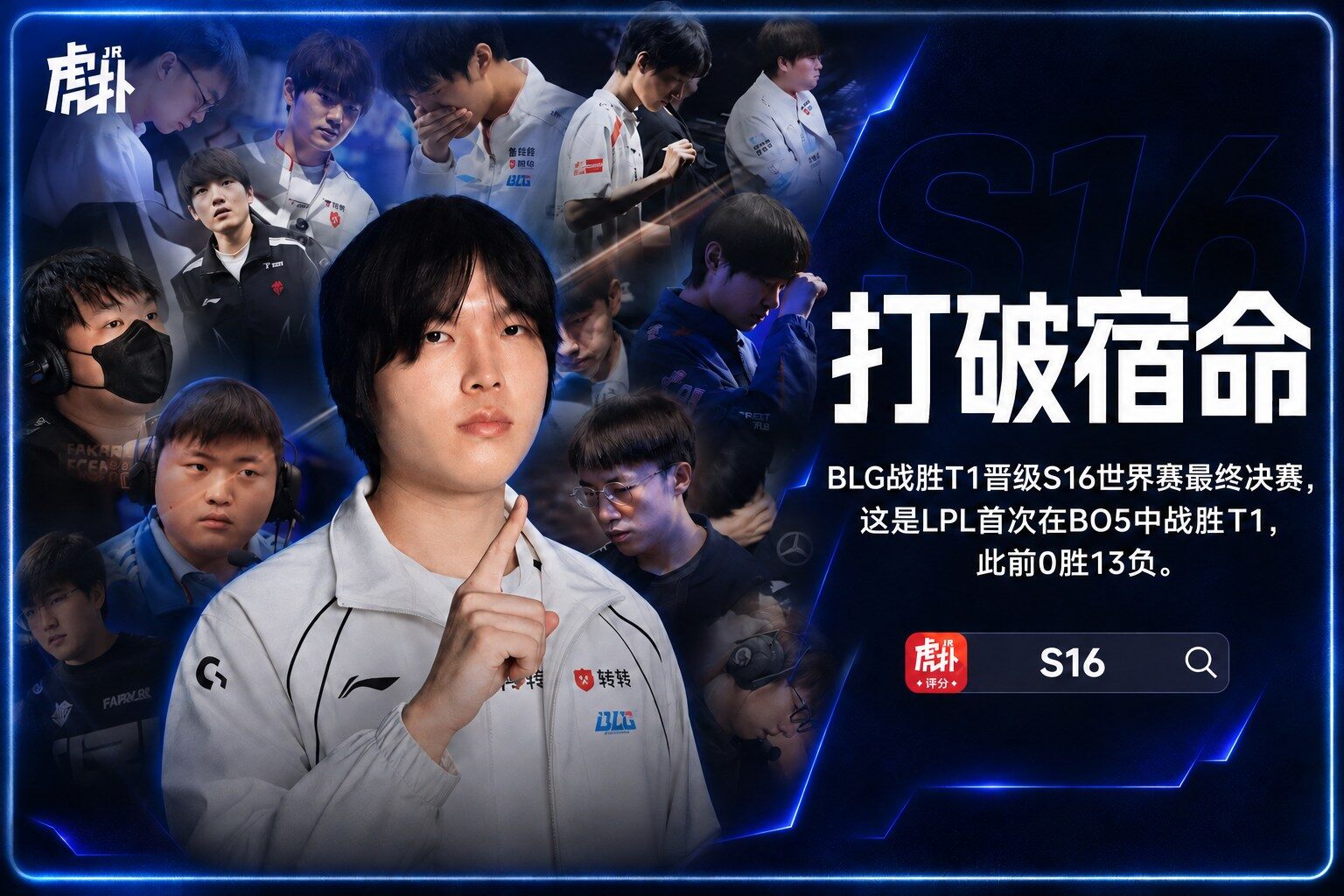
At 3 AM on November 15, BLG will face GEN at the Barclays Center in New York, competing for the League of Legends S16 Global Championship title. Knight and Chovy will finally stand in the same world championship final, and a new S series champion will emerge between the "left hand" and the "right hand."
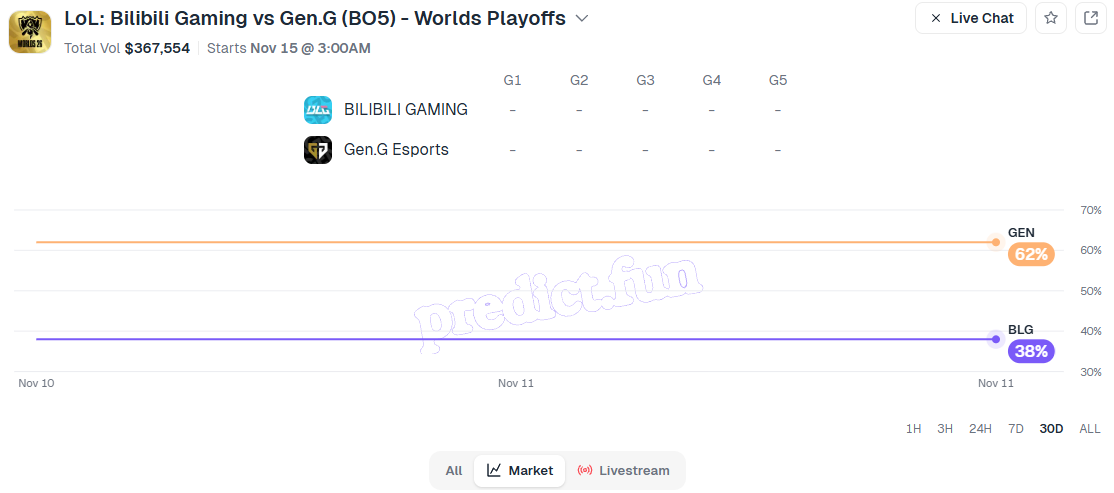
Before the final, the prediction market is more favorable towards GEN. According to predict.fun data, GEN's championship probability is currently reported at 62%, while BLG is at 38%.
On one side is BLG, which has consecutively overcome three LCK teams and just defeated T1, while on the other is GEN, which has clean-sheeted their opponents in consecutive rounds of the playoffs. Can BLG's continuous attacks in the upper half successfully penetrate GEN's jungle operations and resource control? Below, Odaily Planet Daily will analyze the key factors that can lead to victory or defeat in this final by combining the performance and tactical characteristics of both teams.
BLG's Strong Opposition, GEN's Clean Sheets Also Count
GEN has clean-sheeted their opponents in consecutive rounds of the playoffs, and multiple pre-match statistics in various positions also favor them over BLG, especially in the top lane with Bin vs Kiin. Looking at these metrics alone, GEN appears more stable, but the opponents faced by both teams and the challenges experienced differ, and these differences will also affect the final data.
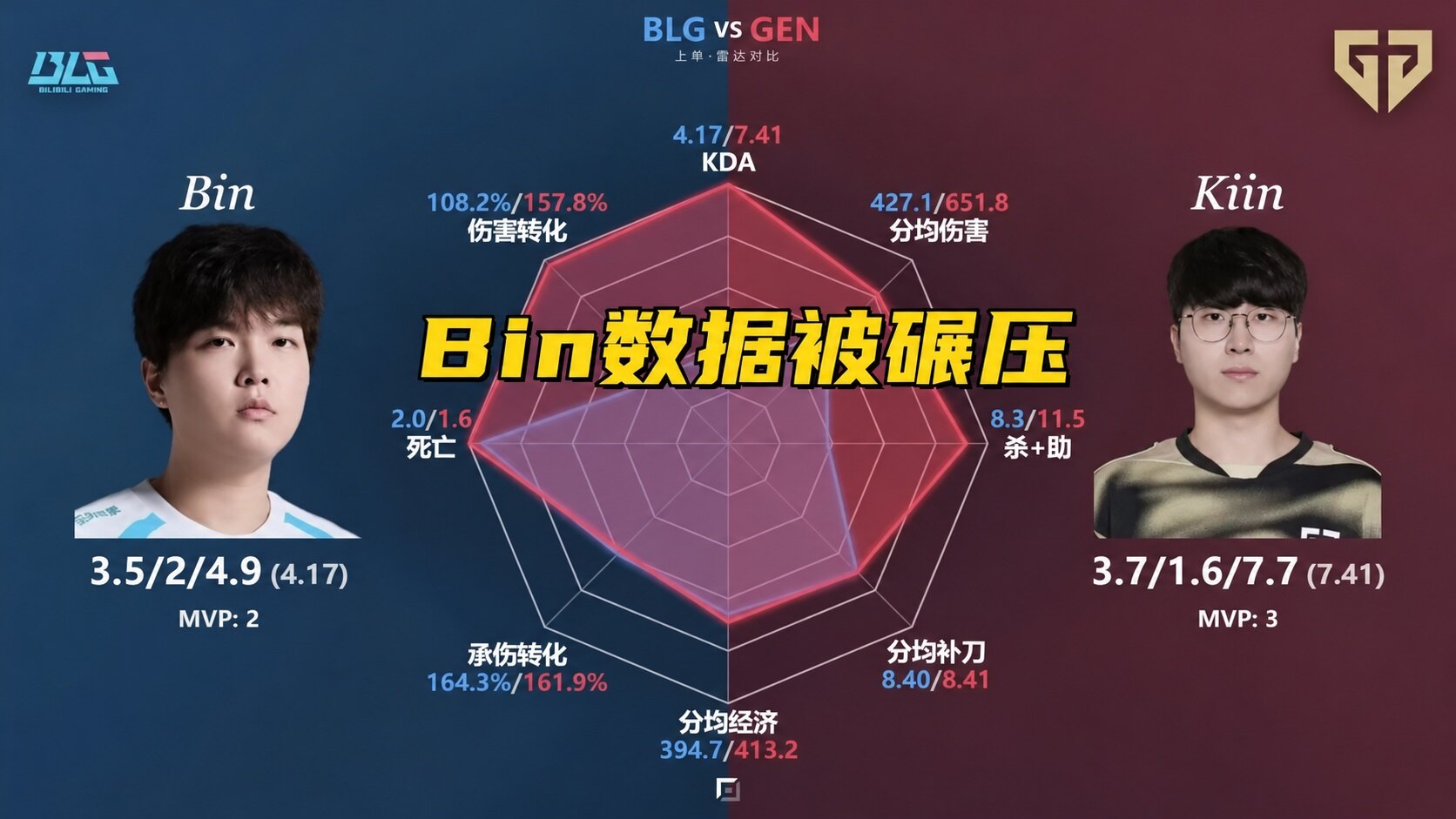
In the quarterfinals, GEN faced LYON, while BLG took on DK and T1 in succession. Besides that, KDA, average damage, and damage conversion rates are also influenced by hero selections, match duration, and resource allocation. Players responsible for initiating attacks and tanking often bear a higher risk of death; thus, we cannot conclude that BLG is at a comprehensive disadvantage just based on a few metrics. Similarly, although Knight is ahead of Chovy in some output metrics, it does not suffice to indicate that the mid-lane is already under control.
However, attributing GEN's advancement solely to favorable draws underestimates their performance. In the semifinals against IG, GEN overturned the situation in game three despite being behind, relying on key resource contention and team fights, which indicates that this team has the capability to stabilize the situation and wait for counterattack opportunities even after early setbacks.
When BLG faced T1, they also regained control after a tumultuous situation. Facing different styles of opponents in succession showcased their ability to adjust, but these victories do not necessarily mean that the strategy that defeated T1 can be replicated in the final.
More important than the heights of pre-match data is who can first adjust after their original strategies are hindered in the final. Whether BLG can continue to create pressure in the side lanes and whether GEN can stabilize the situation through resource exchanges will directly impact the course of this BO5.
Whether Bin Can Break Through Depends on How Much Xun Invests in the Top Lane
Combining BLG's approach against T1, the top lane is an important entry point to understand this team. BLG can turn the top lane into an area of multi-person involvement through mid-jungle support, quick grouping, and constant tower-diving. Bin's personal ability is responsible for capitalizing on opportunities, while his teammates help him expand the range he can exert pressure on.
In game three against T1, the combination of Gnar, Taliyah, and Pantheon reflected this approach—mid-jungle has rapid support capability, while the bottom lane maintains development through more flexible heroes, with the team organizing attacks around the upper half. Once a top lane advantage is established, BLG can continue pushing towers and deepen vision, forcing the opponent to invest manpower in defense. This style also allows Bin's advantage to extend beyond the laning phase. After entering the transition period, as long as the mid-jungle can still provide timely support, the opposing side lane needs to continuously guard against multiple collapses, which will also restrict GEN's personnel allocation.
However, in the final against Kiin, BLG will find it difficult to directly apply their expected returns from their strategy against T1. GEN can reduce the losses incurred by the top lane miding attacks through jungle positioning, minion wave management, and map exchanges. The most critical variable here is Canyon. Every time Xun ganks top, he needs to invest time. A successful gank can help Bin establish proactive control; if the attack yields no results, Canyon may complete jungle clears, counter-jungling, or dragon control on the other side. Even if BLG secures kills, if they then fail to push towers or control the map, they may not gain sufficient profit.
Therefore, in the final, we cannot only look at whether Bin can secure kills on Kiin; we also need to see what each side takes away after this attack. BLG needs to ensure that their top lane advantage continues to grow and avoid scenarios where they achieve "kills but lose jungle and dragon consecutively." For Xun, knowing when to push further and when to pull back might be more important than a successful operation.
In the Championship Battle, First Seize the Initiative Outside the Mid Lane
The duel between Knight and Chovy is the most story-filled aspect of this final. The competition between the two goes beyond just the mid-lane matchup; whoever can control wave management and provide support first will directly influence the contest for jungle resources and side lane attacks. If BLG hopes to attack the top lane, Knight needs to minimize the costs of being offline. If the mid-lane can't push, providing support means losing minion wave control; if the mid-lane continues to bear pressure, Xun's mobile space will also shrink. Chovy can limit Knight's roaming through wave control, alleviating pressure on side lanes and creating conditions for Canyon's jungle movements.
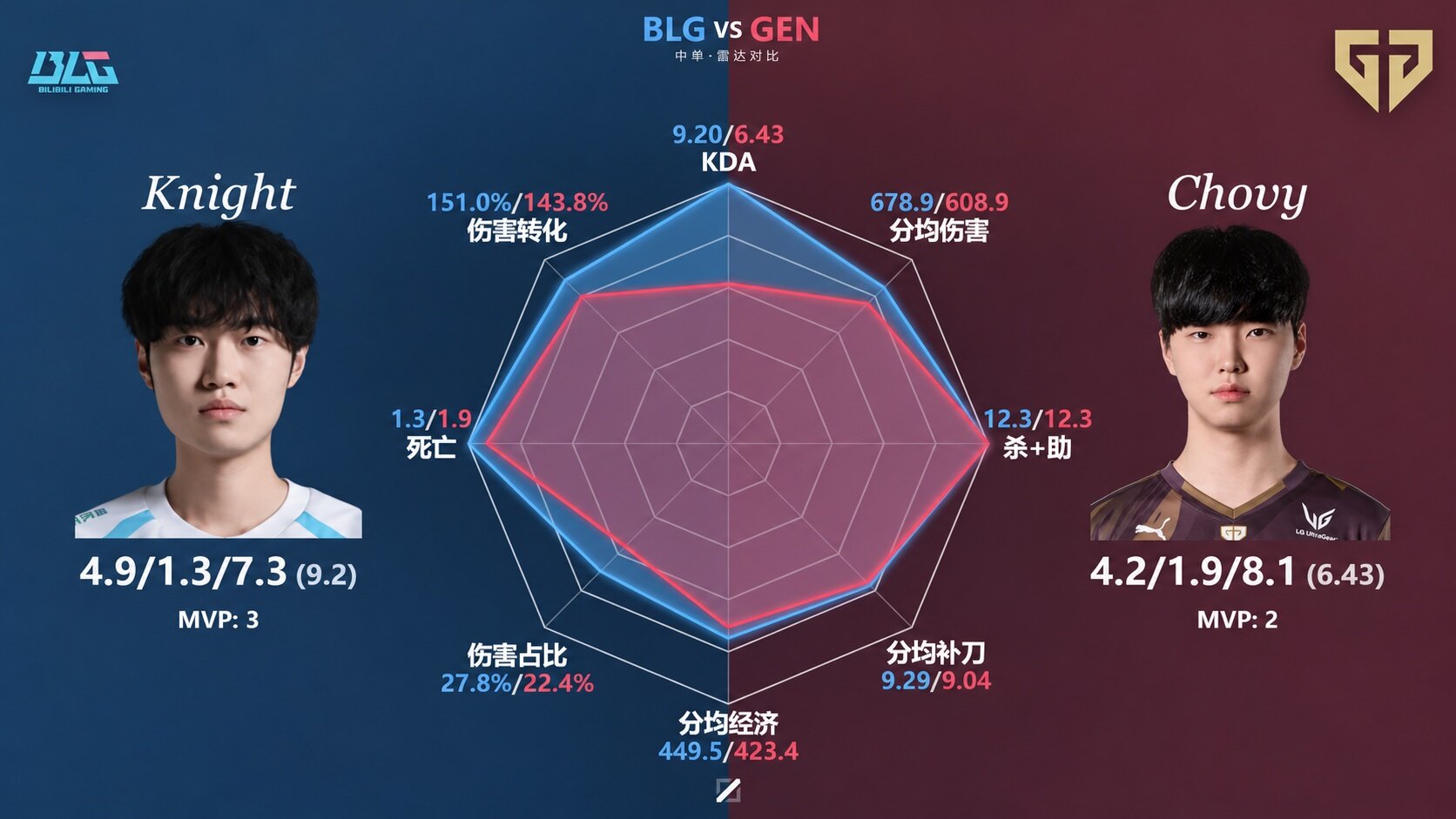
This also puts BLG in a position of choice regarding their draft. If they prioritize Bin's attacking champions and the bottom lane matchup, the mid-lane may have to bear more selection pressure; if more resources are invested in Knight, the other positions will have to endure corresponding costs. Knight's ability to stabilize lane control without utilizing too much resource, while maintaining battle participation, will directly affect BLG's offensive efficiency. Chovy's ability to convert lane advantages into control of the jungle and resources will carry more weight than simply having a CS lead.
The speed of support for both sides is equally crucial. If Knight participates in side lane fights early, BLG will have the opportunity to expand the advantage before GEN completes resource exchanges; if Chovy follows up in time, the anticipated numerical advantage for BLG may be neutralized. ON's roaming could further disrupt the balance: if support enters the upper half at the right time, it can change the personnel distribution, making it more difficult for GEN to judge their next moves, but this also means Viper needs to shoulder more pressure on the bottom lane alone. Whether BLG can connect mid and support to manage effective support windows while controlling losses on the bottom lane will determine how much actual benefit these roamings can yield.
When the Top Lane Can't Break Through, How Many Retreats Does BLG Have Left?
The extent to which BLG's attacks can yield benefits determines the upper limit of the match; how they handle setbacks will determine the margin for error in this BO5. In scenarios where resources are skewed upwards, Viper needs to maintain development and provide consistent output in mid-game teamfights. If the top lane fails to open the situation for a long time, and the bottom lane显然 falls behind due to a lack of protection, BLG will lose pressure in the side lanes and guarantees for teamfights simultaneously. GEN can rely on Ruler's development to more calmly choose resource exchanges without having to immediately respond to every one of BLG's top lane actions.
As the match drags into the late game, BLG still has opportunities. BLG also possesses excellent teamfight capabilities, and the composition’s range, initiation methods, and positioning can all change the outcomes of crucial resource teamfights. What BLG truly needs to avoid are forced engagements with multiple disadvantages in equipment, minion waves, and vision. This compresses ON's space to find opportunities to engage, and forces both C's to bear greater risks for output. Therefore, when no opportunities arise in the top lane, can they return to development and resource exchanges in time; when advantages cannot be extended, can they await the next round of skill and equipment intervals will determine whether BLG can stabilize the situation.
In a BO5, both sides also need to see who can adapt more quickly. The effective attack route in the first game may be targeted in the next; exposed weaknesses in the composition also need to be addressed in future picks. BLG needs to ensure continued returns on investments in the upper half while holding down the bottom lane's development; GEN needs to limit losses in the top lane and accumulate resources through timing gaps in Xun's actions. Whoever can rapidly respond to the opponent's changes while sticking to their gameplay has a better chance of securing victory.
Can this year's Bin carry the momentum from the semifinals to the end? What kind of performance will Chovy, making his first appearance in an S series final, deliver? The championship battle between Knight and Chovy, the jungle contest between Xun and Canyon, as well as the teamfight performance of Viper and Ruler, could all change the course of this BO5.
A new owner will be crowned with the Summoner's Cup; this time, will it be the "left hand" or the "right hand"?
免责声明:本文章仅代表作者个人观点,不代表本平台的立场和观点。本文章仅供信息分享,不构成对任何人的任何投资建议。用户与作者之间的任何争议,与本平台无关。如网页中刊载的文章或图片涉及侵权,请提供相关的权利证明和身份证明发送邮件到[email protected],本平台相关工作人员将会进行核查。


