Author: Sam Padilla
Translation: Yuliya, PANews
Editor's Note: This article is a translation of an observation piece on the current state of the robotic data industry. The author has held 180 meetings over the past 46 days and communicated with investors, researchers, founders, and 47 data producers, attempting to outline the robotic data market as of November 2026 and forecast its trajectory for 2027. Here is the translated text:
Over the past 46 days, I have intensely participated in 180 meetings. Since the release of @Eidon_AI's project review, I have had in-depth discussions with dozens of investors, scholars, and founders in the robotics field.
Meanwhile, since launching the intention registration form for @ByCrux, we have rigorously reviewed 47 data producers and collected their detailed data specification standards. All this firsthand information, combined with the considerable time that @_varunnair and I invested in systematically sorting through the entire industry, has given me a very clear and thorough understanding of the current market situation.
The market demand shows no signs of slowing down, but the desired forms of data are undergoing dramatic changes, and the rate of iteration is extremely fast. Many larger, more established players in the industry are also accelerating their entry. This industry is maturing, and competition is becoming increasingly fierce.
This is a panoramic sketch of the robotic data industry in November 2026, also indicating the direction of the entire industry for the coming year.
How much is data per hour worth?
In the following text, I will repeatedly mention the unit price of data per hour. These figures are the best estimates derived from extensive industry communication and deep research. It is well known that this market is extremely opaque in terms of pricing, so I advise a cautious approach to the valuations discussed below.
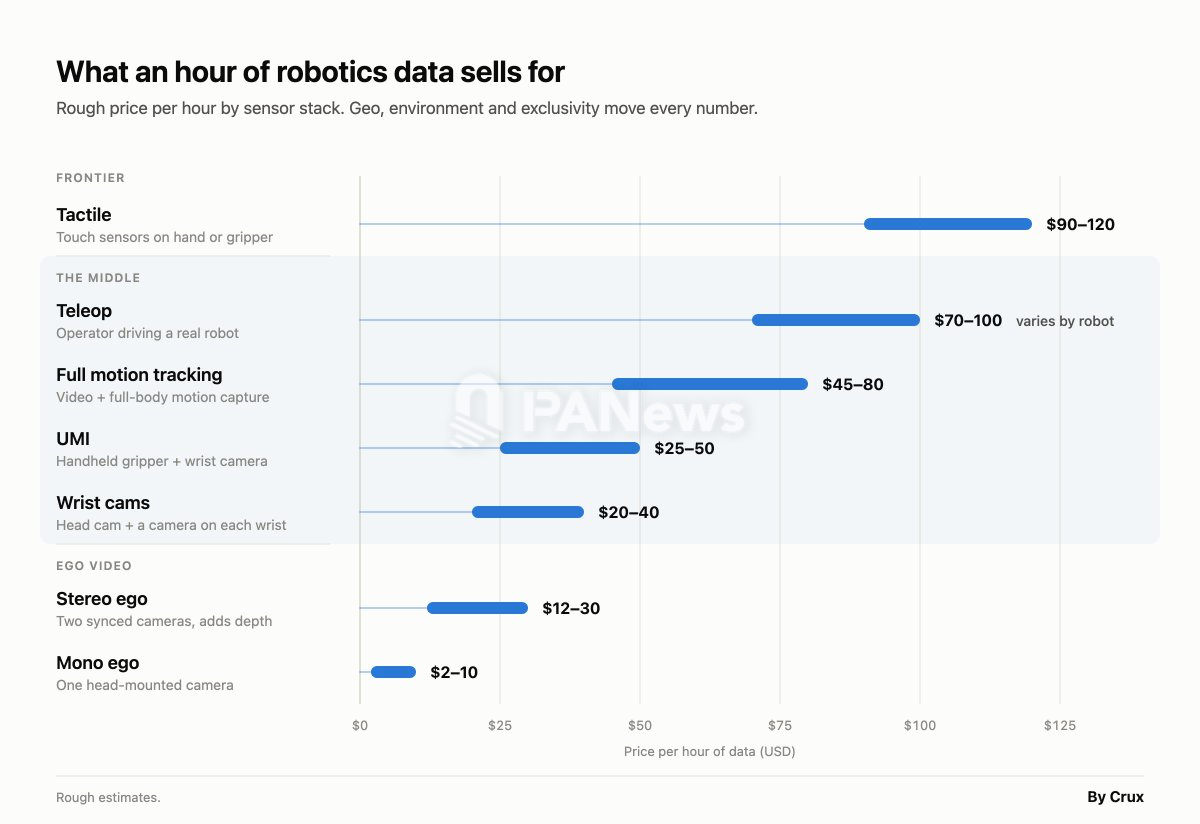
The true value of one hour of robotic data mainly depends on five core dimensions: modality, geographic region, collection scenarios, exclusivity, and annotation level.
Modality and Sensor Configuration
The fundamental purpose of robotic data collection is to record the movements of the physical world. However, no two laboratories have completely identical motion requirements, and no two collection teams have completely similar capturing methods.
The differences in modality and technical paths are the most crucial factors determining the price of one hour of training data, creating a significant price range that can soar from about $5 to around $120.
If we roughly rank different modalities by complexity:
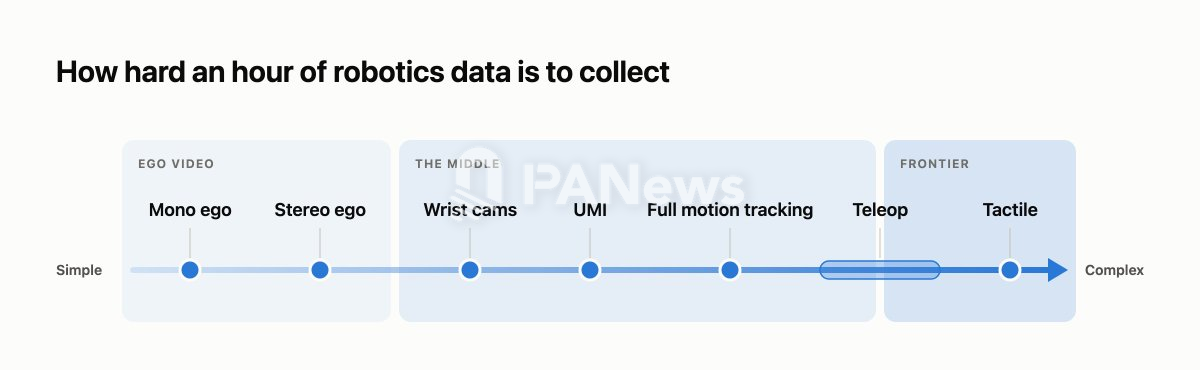
At the simplest end is the "first-person perspective video" (i.e., video recorded from a human eye perspective). It comes in two varieties:
- One is the most basic "monocular," which is ordinary video taken by a single lens, usually what you get when you strap a phone to your forehead and record;
- The other is "binocular stereo," which requires a special dual-lens camera; the two cameras shoot simultaneously at a distance apart. Just like humans have two eyes, the images from a dual-lens camera can directly calculate how far objects in the image are from you (depth information).
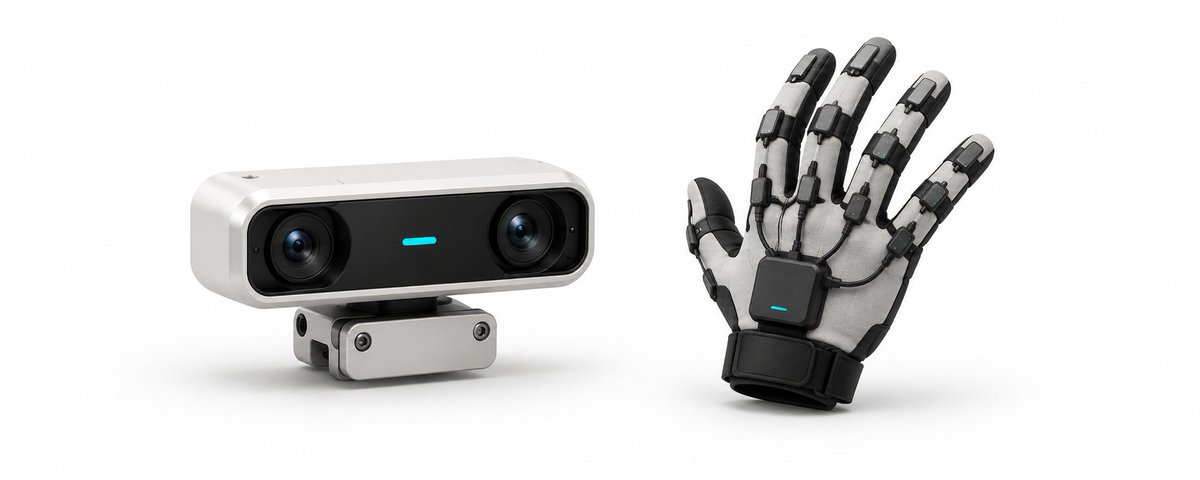
At the complex end is "haptic data," which refers to the feel of touching something. Various sensors that record haptics have emerged in the market, but there's uncertainty: How durable is this thing? Does it work well? Can the data collected from this sensor be useful for another robot? Currently, no one has produced a product that is absolutely dominant.
However, the entire industry privately acknowledges: Haptic data is undoubtedly the next ultimate frontier for robotic learning.
Between these two extremes is a chaotic mix of various schemes. People feel that merely shooting a first-person perspective video isn’t enough, so they add various gadgets – such as wearing a camera on their wrist, using specialized handheld gripping devices (UMI), or wearing a full body motion capture suit (like what we used to do at Eidon), even remotely controlling the robot to capture data.
Region, Environment, Exclusivity, and Data Annotation
If modality determines the basic price range, then the following four factors determine whether the price fluctuates upward or downward within this range:
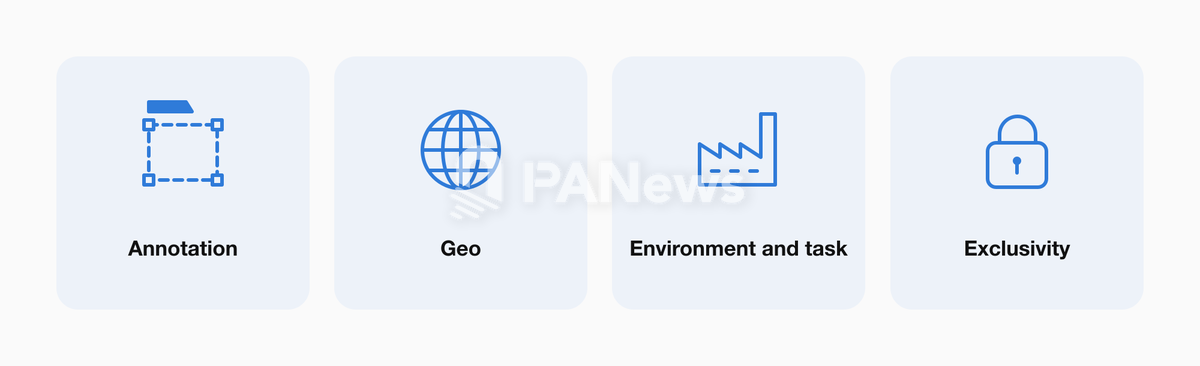
- Geographic Source: Data collected in the U.S. always consistently sits at the top of each price range. It is the most sought-after geographic area since the vast majority of U.S. robotic companies target their initial deployment scenarios here. At the lower end of the price spectrum are first-person perspective videos from India and Southeast Asia, where supply has now severely outstripped demand. Buyers have a stock far exceeding their actual needs, so the prices for this type of data are the lowest, and several core buyers have completely stopped procuring them.
- Environment and Task: The value of commercial scenarios is far higher than that of residential settings. Most part-time workers record videos from their homes, which has become tedious. However, obtaining permission to film inside actual factories and workshops is extremely difficult. Therefore, operational footage of professional electricians wiring or HVAC technicians repairing air conditioners is exceedingly rare and can naturally command a high price.
- Exclusivity: Exclusive data inherently carries a premium. Buyers are willing to pay more primarily to eliminate the likelihood of competitors obtaining the same data. To be honest, many of the data collection projects currently running on the market have all signed exclusive agreements behind the scenes.
- Data Annotation: Cleaned and annotated data is certainly priced higher than unprocessed raw data. However, I find that many companies and founders have overemphasized this aspect. From my practical experience, the boost in unit price from data annotation is not nearly as significant as most people imagine.
As long as you understand how these core variables interact and evolve over time, you can derive the general trajectory of the entire industry for next year, anticipate how demand will shift, discern which bets are not worth blindly following, and determine where to invest money next.
Monocular is Dead, Binoculars Are Running Out
Thinking back to when we first started @Eidon_AI in 2024, giving money to passersby and having them strap cameras to their heads to record themselves working seemed… quite bizarre and unbelievable to many.
At that time, there was a huge supply vacuum for first-person perspective videos in the robotics industry, with little concern about where the data came from or what equipment was used to collect it.
So you see, just two years later, the tide has completely turned: several major labs have completely stopped buying monocular first-person perspective videos, especially those from India, China, and Southeast Asia. The low-end market has already been saturated, and researchers' views have long surpassed the meager information provided by single-lens footage.
In all the supplier applications we received, "monocular first-person perspective video" is still the most abundant stock, and all the shipments are neatly clustered in India, the Philippines, Pakistan, and Southeast Asia.
Now, except for a very few projects that conduct large-scale exclusive collection in the U.S., virtually all data teams we talked to have either fully switched to binocular cameras or are desperately shifting towards binocular methods.
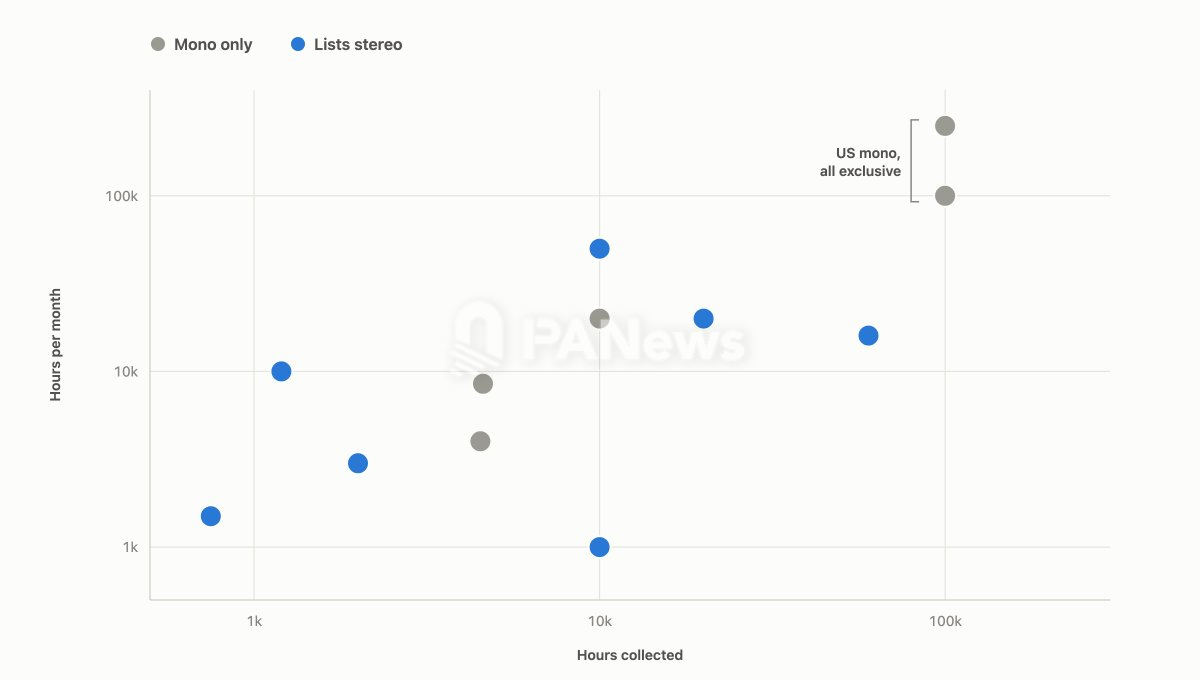
This has effectively set a new baseline for the entire industry, and this threshold has kept many people locked out. If you want to buy a binocular stereo camera, even picking the cheapest option costs at least $200, while good-quality commercial models can start from $1,000 and go up from there.
This means that if you want to find 100 people to help you shoot videos, just equipping each of them with a camera incurs a hardware procurement cost of $50,000. This is no longer the “just throw an app in the app store and let everyone download it to start working” light asset, zero-cost approach it once was. It’s precisely because of this hardware barrier that almost all binocular data capacity I currently see has already been booked out in advance. Many collection teams are forced to go raise funds by signing revenue-sharing or exclusive agreements with buyers just to afford these binocular cameras.
Among the data producers we have reviewed, only about a quarter can offer binocular data. And only a pitiful two have actual stock ready to sell to you, with a total inventory of about 1,750 hours. Most other teams are either closed doors meeting exclusive orders or only starting work after receiving a deposit.
However, from a different perspective, this is an enormous new business opportunity. The industry is extremely eager for camera manufacturers who understand both hardware manufacturing and how to account for data collection to enter the market, with everyone eagerly waiting for suitable binocular cameras.
In summary: binocular stereo has become the new baseline, with almost zero inventory available in the market, and buyers with cash are finding it hard to locate reliable specialized camera suppliers.
Haptic Sensors: The Next Battleground
Haptics is the big prize in the eyes of all the research leaders, and the main battleground for data collection in the coming years will undoubtedly be here. Earlier this year, when our team was contemplating mass-producing our own Eidon haptic gloves, outside offers for acquisition reached as high as $120 per hour.
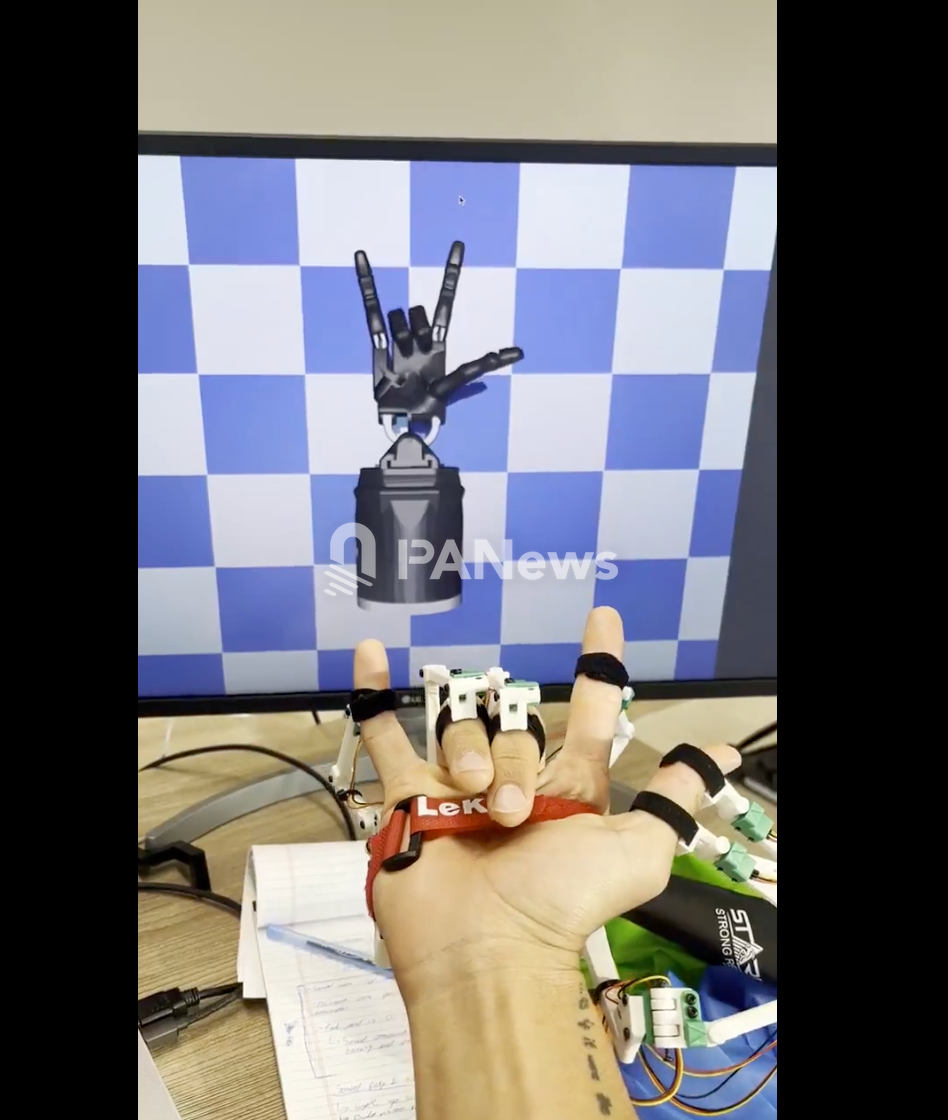
Market demand is exceptionally strong, yet the supply side currently cannot meet it at all.
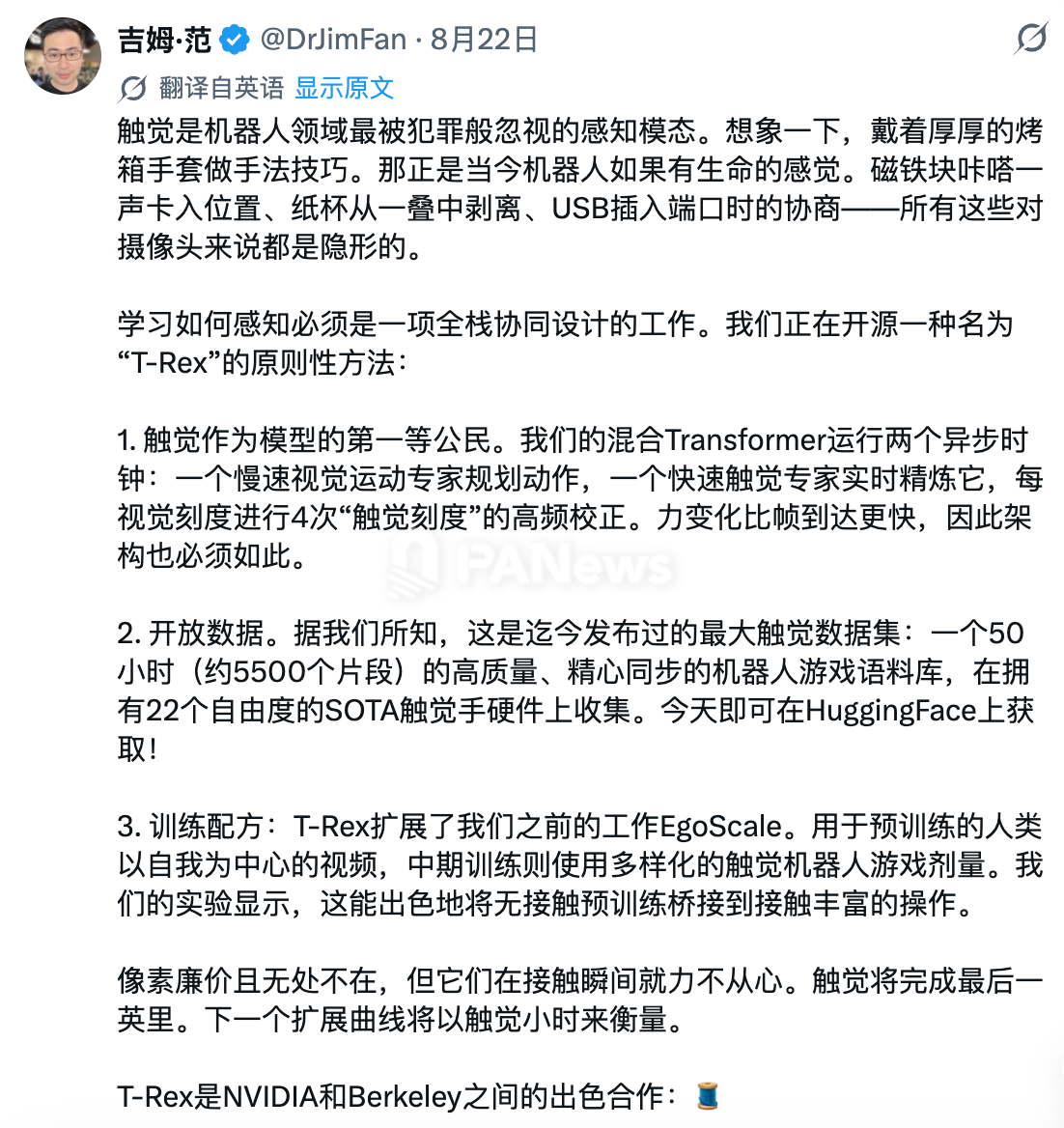
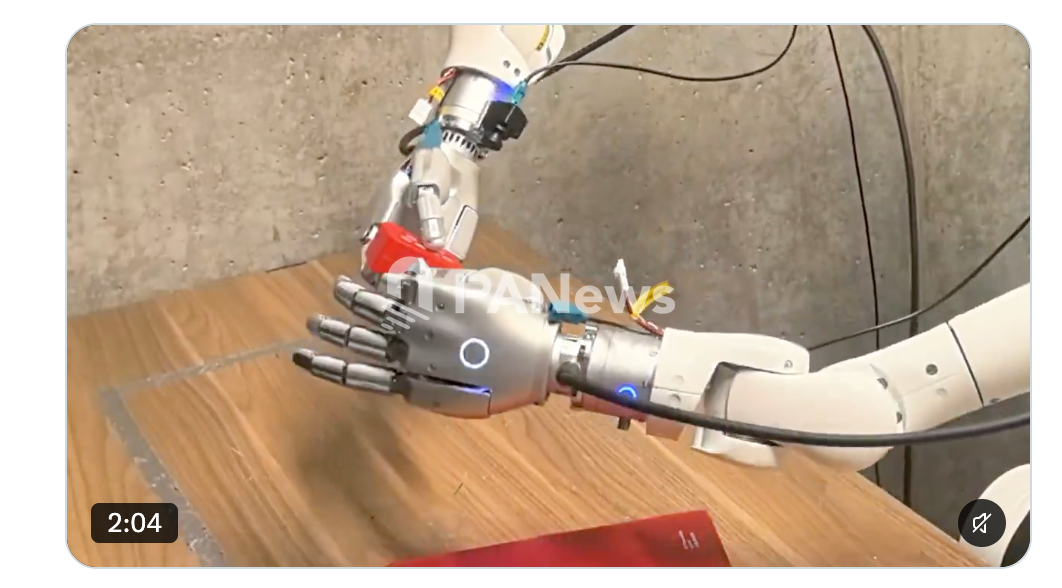
The haptic datasets available now are not only pitifully small but are also toys created by various university laboratories, entirely different sensors scattered about. Using this data to slightly adjust an existing model (such as referencing that T-Rex dexterous hand grasping paper, arXiv:2606.17055) or training some specific small movements is bearable; however, to use them as a foundation for pre-training a large model, this data wouldn't even suffice to wedged between your teeth.
But think back: wasn’t first-person perspective video also in this sad situation two years ago? At that time, anyone who dared to say "we're going to accumulate several thousand hours of human-eye video for pre-training" would have been considered delusional.
Fast-forward to today, we now have a scale exceeding 100,000 hours of open-source datasets.
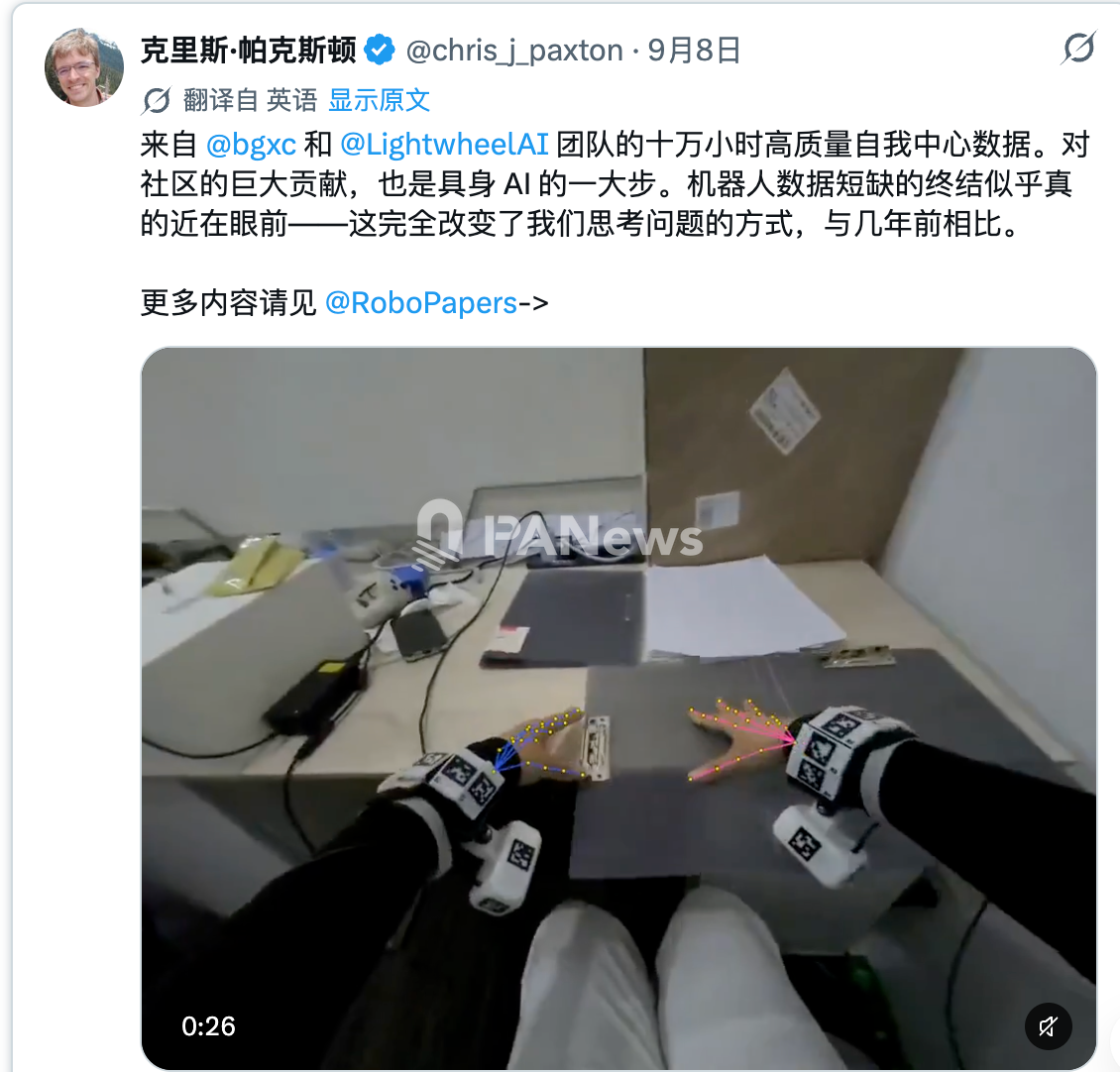
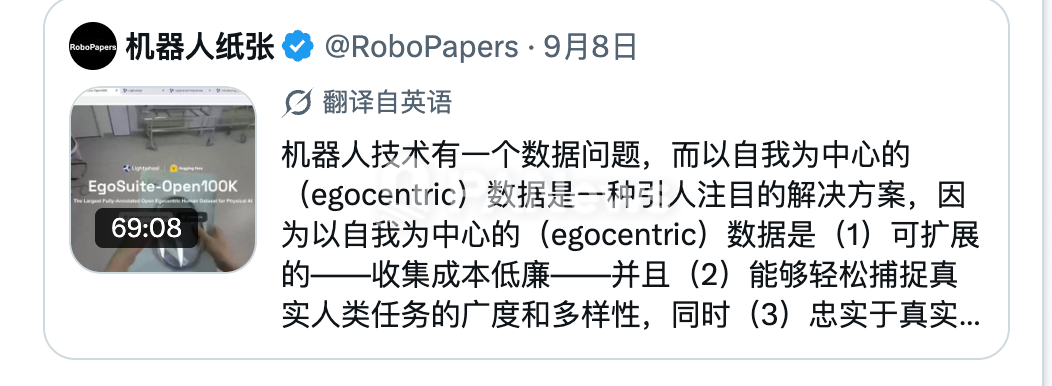
However, the difficulties in collecting haptic data are hundreds or thousands of times more challenging than just carrying a camera, but the horn has sounded; everyone is rushing to see who can first amass a large haptic database worthy of the volume of video and suitable for pre-training.
Yet this field is incredibly new and desolate. The industry hasn't even established what a standard sensor should look like, and the tactile signals the machines perceive are tightly bound to the specific hardware that collected them. The sensation captured with glove A, transferred to glove B or robotic arm C, will the algorithms even recognize it or work interchangeably? This remains an unsolved mystery in the scientific community.
Apart from the challenges of technology development and engineering implementation, real-world barriers to entry are equally severe.
Wearing bulky sensor gloves makes workers' palms and fingers clumsy, and tasks that were once nimble now become inefficient; the durability of most commercially available gloves has not been tested for toughness and often break down; each pair of gloves can range from $4,500 to $8,000, so if you want to outfit 100 workers, the glove purchase alone would cost between $450,000 and $800,000—ten times the expense of buying binocular cameras. Even if you can sell for a premium of $100 per hour, you'll need to sell 45 to 80 hours of effective data continuously just to break even on the glove purchase—this doesn’t even factor in workers' wages, costs for wasted footage, post-processing expenses, and depreciation for repairs of broken equipment.
Currently, every data collection team wants to claim they are working on "haptic data," but to execute this well, let alone achieving mass production, the complexity involved is extraordinarily challenging.
Interestingly, we are seeing a new niche track taking shape dedicated to manufacturing hardware specialized for data collection. In my view, standing at the 2027 time node, this is undoubtedly one of the most closely watched directions in the entire field.
Once production increases, hardware costs will certainly decrease, but at this current stage, as long as downstream buyers are willing to pay a premium, the economic equation for creating collection hardware is incredibly tempting.
There are actually many more details worth delving into in this area, and I plan to write a separate long article to thoroughly explore the haptic field.
The Market is Accelerating Towards Maturity
In January of this year, long-established AI data company Defined.ai announced its entry into the physical AI data sector at CES. They had just made their official announcement when we reached an agreement to package our body motion posture dataset and sell it to them.
By March, the food delivery giant DoorDash launched an internal software called "Tasks," paying its delivery personnel to film themselves folding laundry and other household chores during downtime, to train robots for leading firms.
Moreover, looking upstream and downstream along the tech stack, several companies that were originally not in the robotics space have also turned their eyes toward this field, beginning to pivot aggressively into this track.
The scale of mid-to-late financing rounds has been staggering: XXDOF raised $70 million in June, reportedly in talks for the next round at a $1.2 billion valuation; Mecka secured $60 million in Series B funding in October; even the big player Micro1, which made its fortune on large language model data, openly stated that their robotics business has already surpassed $100 million in annual revenue.
In our industry map, "data services" has become the third largest domain in the entire industry chain, trailing only behind manufacturers of robots and integration companies implementing deployment scenarios, and nearly every week new faces are entering.
Those established data vendors already supplying top AI labs are all pivoting. For instance, Polyshares, which previously specialized in selling industrial operations data and 3D models to big AI companies, recently announced a partnership with Amelia Robotics, instantly channeling their extensive intermediary sales network into the robotics track.
This major trend repeatedly validates the most painful conclusion I've drawn from these 180 conversations: in the robot data business, what ultimately remains as real barriers are just two things—hardcore specialized hardware and vast customer relationships.
As for the sundry tasks that fall between these two barriers—such as data cleaning, quality inspection, field operations, manual labeling, data visualization, or even developing simulation tools—though each is useful, at best, they are just qualifications that everyone needs to have. Looking to the new year ahead, I genuinely don’t believe that merely doing this intermediary work can build a long-term defense line.
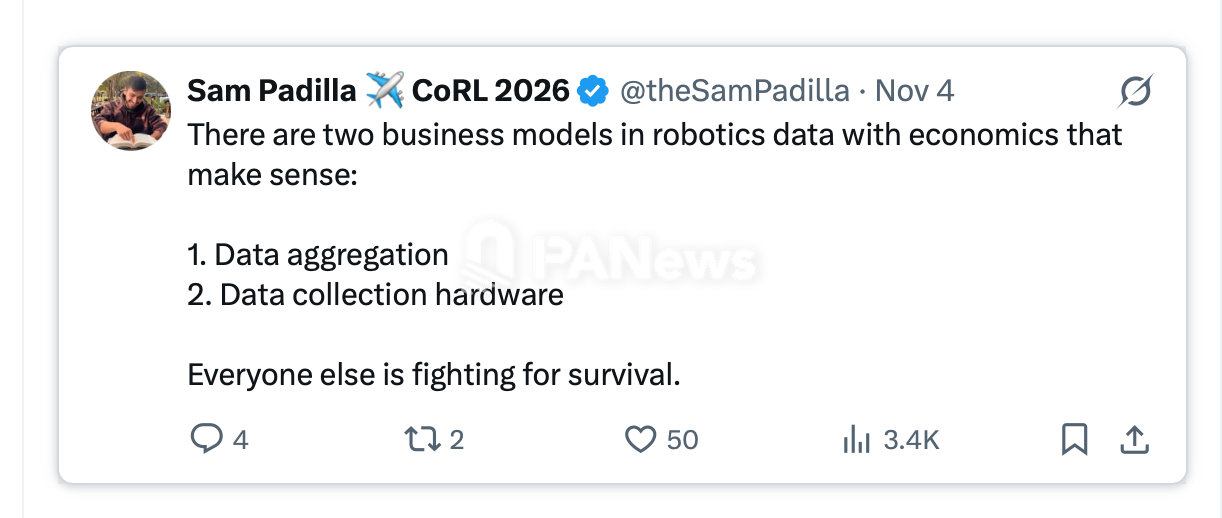
This is why everyone who knows a few executives in leading labs is desperately trying to monetize these relationships; it's also why the intermediary aggregation track focused on taking cuts is rapidly filling up with people at an alarming rate.
Conclusion and Thoughts
Currently, there is a vocal sentiment in the industry that the "data bottleneck problem in robotics" will soon be completely resolved. This statement is not without merit: after all, in just the last two years, the entire industry has come together to create several million hours of first-person perspective video.
As it stands, monocular video has degraded into a worthless bulk commodity, binocular stereo video has become the basic benchmark, and the dire scarcity of haptic data is even more severe than that of first-person perspective video in early 2024. If every data modality is destined to undergo a similar S-shaped evolution curve, I can guarantee that the demand for binocular and haptic data will undoubtedly not cool down in the short term.
However, in the business of robotic data, where to allocate time, energy, and money is not a decision to be made haphazardly. Let's do a very straightforward calculation: to net a profit of $1 million, how many hours would need to be worked via different paths?
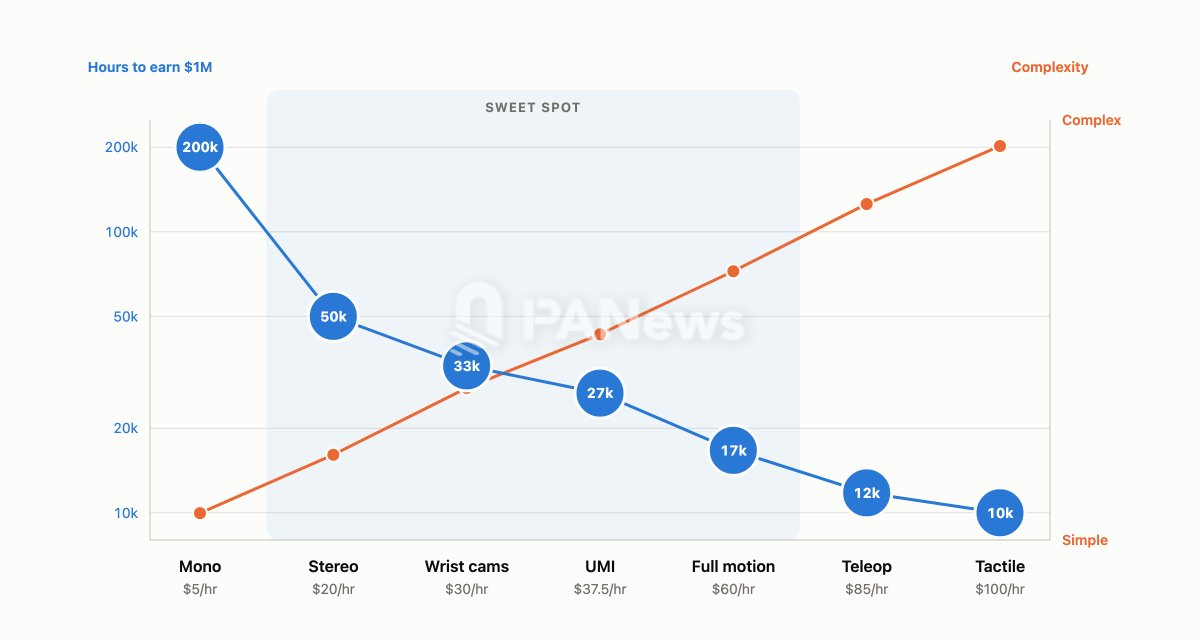
- If calculated at the current rock-bottom price of $5 per hour for monocular videos, to earn $1 million, you'd need to work day and night to collect a whopping 200,000 hours. This is completely a laborious job relying on sheer volume in an increasingly thin and shrinking profit margin;
- If calculated at the exorbitant price of $100 per hour for haptic data, you would only need to gather 10,000 hours to reach your target. However, the reality is, suitable hardware has not yet been developed, equipment is prohibitively expensive, and even scientists themselves have not figured out how to fit it into algorithms.
When you do the math, it turns out that the intermediary solutions in the middle become the most cost-effective and commercially rational sweet spot in the present situation.
To make the same $1 million using binocular stereo, wrist cameras, handheld UMI grippers, and full-body motion capture, the required collection time is 4 to 12 times less than selling monocular videos; and most importantly, all the necessary hardware for collecting this type of data is currently available and relatively controllable regarding cost.
The total demand in the market will absolutely not shrink, but the baseline is being ruthlessly raised, the direction is dramatically shifting, and the track is becoming unprecedentedly crowded.
If one wants to establish a foothold in this industry and develop a data company with a genuine protective moat, the window of opportunity is still open; however, in my view, the time left for everyone to hop on board is truly running short.
免责声明:本文章仅代表作者个人观点,不代表本平台的立场和观点。本文章仅供信息分享,不构成对任何人的任何投资建议。用户与作者之间的任何争议,与本平台无关。如网页中刊载的文章或图片涉及侵权,请提供相关的权利证明和身份证明发送邮件到[email protected],本平台相关工作人员将会进行核查。


