Author: Hayden Field, The Verge
Translation: Deep Tide TechFlow
Deep Tide Introduction: In the current AI competition, NVIDIA chips have become the absolute cornerstone for building cutting-edge technology globally. As a key figure controlling the pulse of global computing power, Jensen Huang not only presides over a business empire valued at trillions of dollars but also has significant influence over U.S. White House export control policies.
With the exposure of his extramarital relationship with a woman suspected of being a Chinese intelligence officer, this scandal has quickly escalated from a personal scandal to a major incident concerning geopolitical maneuvers and trillion-dollar commercial interests. This article deeply reviews the interests of the involved parties and analyzes the profound impact of this event on the AI landscape between China and the U.S. against the backdrop of chip blockades and lobbying undercurrents.
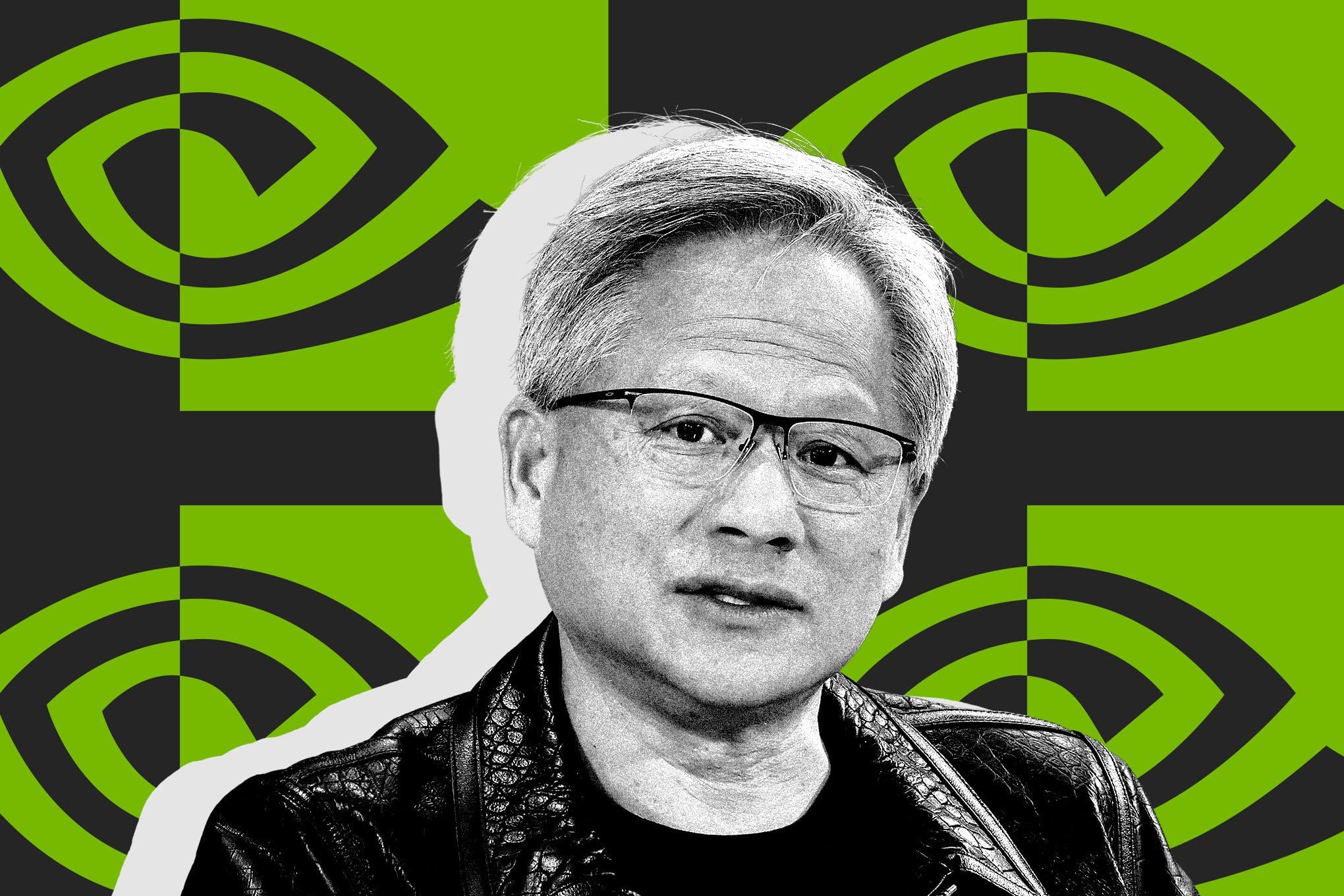
A Vulnerable Target Under the Crown of Computing Power
In today's AI landscape, NVIDIA's immense dominance is almost immeasurable. The chips it produces have become a solid foundation for the U.S. to build cutting-edge AI technology, with market demand consistently far exceeding supply over the years.
Meanwhile, NVIDIA has played a critical investor role among many emerging AI companies in recent years. Its equity investments in cutting-edge AI laboratories, new cloud service providers (Neocloud), and underlying infrastructure have reached approximately $99 billion. Even more noteworthy is that the relationship between NVIDIA's CEO and U.S. President Trump is also becoming increasingly close.
This has made Huang, who holds both co-founder and long-term leadership roles at NVIDIA, a highly valuable target for foreign forces coveting the U.S. AI industry.
The Hidden Network Behind Multinational Cloud Service Providers
Recently, following the revelation of Huang's extramarital affair with a woman suspected of being a Chinese intelligence officer, this tech leader has found himself embroiled in a severe public relations storm. The woman, named Alice Huang (unrelated to Jensen Huang), is an executive at Singaporean cloud service provider Megaspeed, which is one of NVIDIA's core major clients.
Questions from the public have arisen regarding this relationship: To what extent did this clandestine association influence Huang's lobbying efforts to push for the sale of advanced chips to China, or even directly sway President Trump’s significant decisions regarding AI chip export controls?
According to the New York Times, U.S. intelligence officials believe this Megaspeed executive is a foreign intelligence personnel who has directly relayed critical information to the Chinese government.
Officials have pointed out that Megaspeed is entangled with a complex network of Chinese enterprises, which work together with the aim of acquiring chips through bulk purchasing, and may even be suspected of illegally importing some chips into China. Alibaba is reported to be one of Megaspeed's top clients.
"As the most important (if not the only most important) leader of the AI chip industry, it is not surprising that he has become a target for some form of intelligence gathering from countries like China," said Hanna Dohmen, a senior research analyst at Georgetown University's Center for Security and Emerging Technologies (CSET), in an interview with The Verge.
Dohmen further pointed out that the espionage was primarily focused on several key areas: on one hand, assessing the true intentions and policy underpinnings of the U.S. government regarding export controls; on the other hand, obtaining firsthand information regarding Huang's communications with the Trump administration to attempt to influence policy decisions; in addition, gathering core business secrets, such as "who is purchasing NVIDIA chips, who has priority in supply, and the development roadmap for the next generation of AI chips."
The New York Times cited records from trade data platform ImportGenius, reporting that between June 2024 and February 2026, Megaspeed's affiliated enterprise in Malaysia spent up to $4.8 billion or more on procuring NVIDIA chips and related technologies.
For a company that is not particularly prominent, such a massive procurement scale clearly far exceeds the reasonable range of typical business operations during a time of acute global chip shortages.
From Business Interactions to Lobbying at the White House
In response to public skepticism, a NVIDIA spokesperson previously stated that Huang's relationship with the Megaspeed executive was entirely normal business dealings.
NVIDIA characterized their interactions in a public statement as "completely reasonable and expected," with a unified stance that "meeting with clients is part of a CEO's job."
However, their relationship eventually crossed the boundary of purely business. In June 2024, just before Megaspeed officially became a client of NVIDIA, on-site photos showed the two appearing together with other AI industry executives at a bar after the Taipei Computer Show; the following year they dined together with others in Taipei.
According to the New York Times, U.S. officials revealed that their private interactions had raised significant alarm within the U.S. government months earlier. Intelligence agencies had initiated long-term monitoring of the executive, leading them to uncover her close ties with Huang.
The reason this insider information triggered such a whirlwind of controversy is fundamentally due to Huang's active lobbying role in the formulation of U.S. export control policies towards China. He has been vigorously lobbying the Trump administration and Congress to ease restrictions on the export of advanced semiconductors to China, ostensibly to help NVIDIA sell more chips.
Earlier this year, the short-selling firm Culper Research pointed out that Huang's dinner with Alice Huang in May 2025 coincided with a peak in NVIDIA's lobbying efforts. Shortly before that dinner, NVIDIA had just reported new restrictions imposed by the Trump administration on its H20 chip specifically tailored for the Chinese market in April 2025.
Two months after the Taiwan dinner, it was reported that Huang specifically visited the Oval Office to meet with Trump in July 2025, arguing for the necessity of easing export controls on advanced semiconductors. A few days after the meeting, NVIDIA publicly announced that the Trump administration had officially approved the sale of the H20 chip to China.
The New York Times noted that the core logic Huang presented to the White House at that time was: promoting U.S. chips in China helps to establish American technology as the global standard, thereby suppressing the growth potential of China's domestic chip ecosystem. After repeated setbacks in Trump's export policies towards China in the early part of his second term, Huang began frequent communications with the White House's AI affairs director David Sacks from 2025 onward, who subsequently became a key proponent within the White House for the viewpoint that "selling American chips to China is more beneficial than harmful."
According to the New York Times, by October 2025, just prior to Trump's meeting with Chinese leaders, Huang once again lobbied Trump to allow NVIDIA to sell higher-performing advanced chips to China. However, after weighing the options, Trump ultimately decided not to move forward with the proposal. (According to WIRED magazine, precisely during the same month, Huang discreetly hired an external PR agency renowned for dealing with crises like extramarital affairs.)
Months later, in December 2025, the Trump administration adjusted its policy, allowing NVIDIA to sell H20 chips to a "designated client" within China that had undergone whitelist approval, but with the condition that the U.S. government would take a 25% cut of sales. Trump later stated on Truth Social that this cut and approval rules would apply to all other U.S. chip manufacturers as well.
Driven by Commercial Interests or Geopolitical Understreams
CSET analyst Dohmen pointed out that over the past two years, under Trump’s administration, there has indeed been some relaxation of the U.S. AI export control policies, which to some extent has been driven by Huang's lobbying efforts.
However, she emphasized: "Even if there were absolutely no intelligence operations coming from China, lobbying for the relaxation of export controls is, in itself, completely in line with NVIDIA's and Huang's own commercial interests." Fundamentally speaking, any restrictions would stifle NVIDIA's business expansion and sever potential revenue streams, and these revenues are the pillars supporting its astonishing market value, which currently stands around $4.25 trillion, second only to Apple.
The unusual personal connection between Huang and Trump is also a crucial footnote in this storm. Trump praised Huang in a speech last year, admitting that until recently he had never even heard of NVIDIA and had initially considered breaking it up; but after meeting Huang, he realized that it was nearly impossible to recreate a top-tier company like NVIDIA.
Recently, when Huang spoke at the All-In Summit, Trump even personally called in, and Huang answered on speakerphone, publicly showcasing his exclusive influence reaching the Oval Office.
Confidential Memos and Political Repercussions
According to the New York Times, in the spring, just before Trump's visit to China in May, a confidential memo overseen and drafted by Secretary of State Marco Rubio circulated secretly among senior officials within the White House.
The memo issued a clear warning, accusing the Megaspeed executive of potentially representing the Chinese Ministry of State Security in intelligence activities. Its core demand was to spy on the insider information of U.S. advanced AI chip technology and to promote a large-scale supply of these computing power chips to China.
At a press conference on Monday, when asked by a reporter if he was aware of the confidential memo reviewed by Rubio, Trump responded: "I will check with the intelligence agencies. This may have been mentioned before, but clearly, it hasn’t had much impact on me." Earlier in the conference, Trump stated that he was not aware of the espionage connections prior to his visit to China.
Notably, Huang initially did not appear on the list of executives accompanying Trump on his visit to China, but was later personally requested by Trump to be added to the list.
The New York Times pointed out that as early as about a year ago, Trump had already received intelligence briefings, learning that U.S. intelligence agencies identified this Megaspeed executive as an intelligence personnel, who had maintained close relations with an American citizen (who was later confirmed to be NVIDIA's CEO). Reports indicated that Trump chose not to take any action at that time.
Crisis Response and the Future of a Trillion-Dollar Landscape
So far, these accusations have not shaken Huang's leadership position at NVIDIA, and he will continue to steer the company during the investigation.
After the scandal broke, Trump has consistently stood firmly by Huang. Trump stated to the media just this past weekend: "I think he is a decent and upright man. I believe he may have his own explanation, and everyone should listen to what he has to say."
On Sunday, Huang sent an internal letter to all NVIDIA employees (some of whom are his family members). In the letter, he wrote: "I owe my family and all of you a sincere apology. I have been unfaithful to my wife, and my actions have deeply hurt her and our children. There is no excuse for what I have done, and I feel deeply pained and remorseful."
Subsequently, he expressed to the NVIDIA board, partners, and broad shareholders that he is "fully committed" to continuing to lead the company and "will do everything possible to regain everyone’s trust."
Alongside this internal letter, NVIDIA's board officially initiated an independent investigation into national security allegations over the weekend. Huang will have no authority to interfere with or control the participants of the investigation. NVIDIA's official statement emphasized: "The company has no reason to believe that national security secrets or NVIDIA's core technology secrets have been leaked."
Morningstar senior stock analyst Brian Colello wrote in a report on Monday that, given that Huang has been NVIDIA's "only CEO since its founding," Morningstar "cannot rule out the possibility that the investigation will gradually fade from view, allowing NVIDIA to return to normal operations."
However, it cannot be ignored that NVIDIA, under Huang's leadership, just finalized financing agreements exceeding $500 billion with six major financial institutions this August, aimed at advancing AI data centers and other foundational infrastructure construction. In the current heightened AI competition between China and the U.S., these agreements are major strategic and high-risk gambles.
"At present, we do not know what these strategic partnerships and financing structures would look like if another person were CEO of NVIDIA," Colello wrote, "If this most influential business leader in the AI field no longer personally oversees coordination, the capital costs for future investments may significantly increase."
Morningstar currently maintains a "high uncertainty" rating for NVIDIA. Colello warned that the U.S. government is very likely to revoke the license to sell H20 chips to China, and NVIDIA itself also faces potential compliance risks associated with sanctions.
On Sunday, Trump reiterated to reporters that Huang should continue as CEO of NVIDIA and clearly stated that he would still "unhesitatingly bring him" on the next visit to China.
"I have not heard of him engaging in any illegal activities," Trump told reporters directly, "He's just dealt with someone, but isn't that what everyone does in the business world?"
免责声明:本文章仅代表作者个人观点,不代表本平台的立场和观点。本文章仅供信息分享,不构成对任何人的任何投资建议。用户与作者之间的任何争议,与本平台无关。如网页中刊载的文章或图片涉及侵权,请提供相关的权利证明和身份证明发送邮件到[email protected],本平台相关工作人员将会进行核查。


