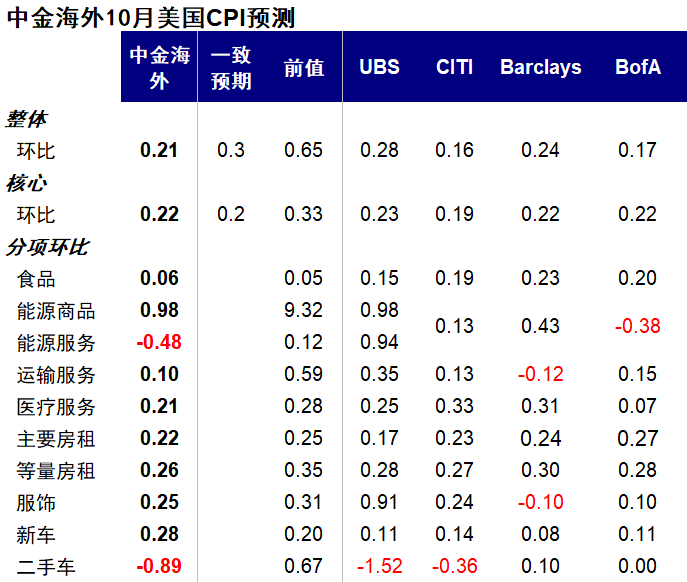
The US October CPI will be released this Tuesday at 9:30 PM. According to our models at CICC Overseas, both overall and core CPI month-on-month are cooling, and our calculation of the overall month-on-month is lower than the market consensus expectation. However, due to the government shutdown leading to the absence of inflation data for October 2025, we will not disclose year-on-year data this time. Figure 1
1️⃣ Overall CPI: We forecast a month-on-month change of 0.21%, lower than the market expectation of 0.3%, and the previous value of 0.65%.
2️⃣ Core CPI: We forecast a month-on-month change of 0.22%, consistent with the market expectation of 0.2%, and the previous value of 0.33%.
🏵️ Gasoline prices and core components together promote the cooling of October inflation:
1️⃣ Gasoline prices remain stable and are declining month-on-month. Although the geopolitical risk premium on oil prices has risen again, with the average price of Brent crude rising from 100 dollars to 108 dollars in October, it has not immediately translated into US gasoline prices. After seasonal adjustment, we expect energy commodities to fall month-on-month to around 0-1%.
2️⃣ The core CPI shows month-on-month cooling. Last month, the equal-weighted rent unexpectedly rose to 0.35%, possibly related to the unexpected strength of some samples in the Midwest (last month month-on-month 0.7% vs. around 0.3% central), we expect this month's decrease to be below 0.3%. In addition, used car prices also turned negative from last month's 0.67%, pushing down the core goods.
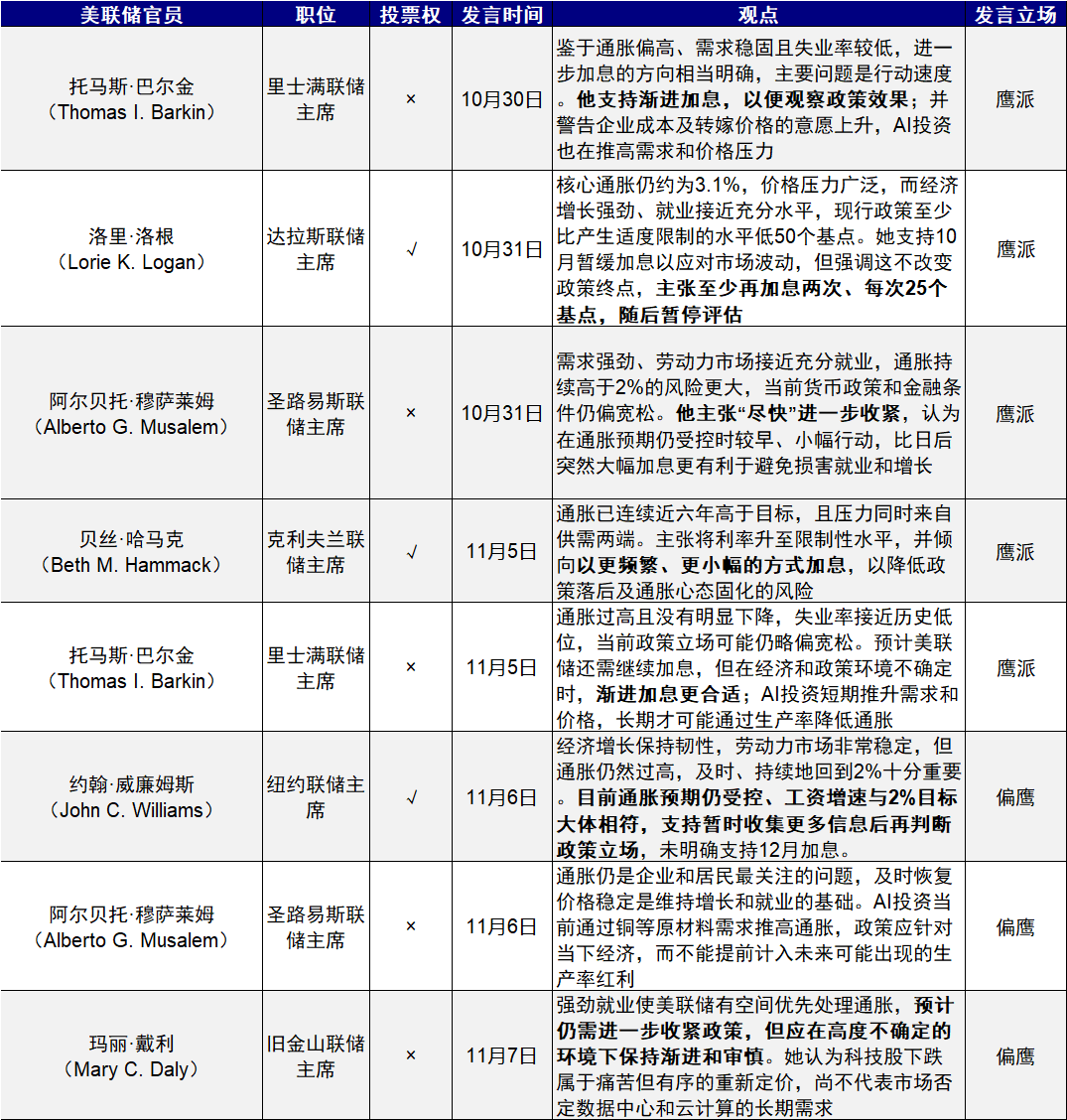
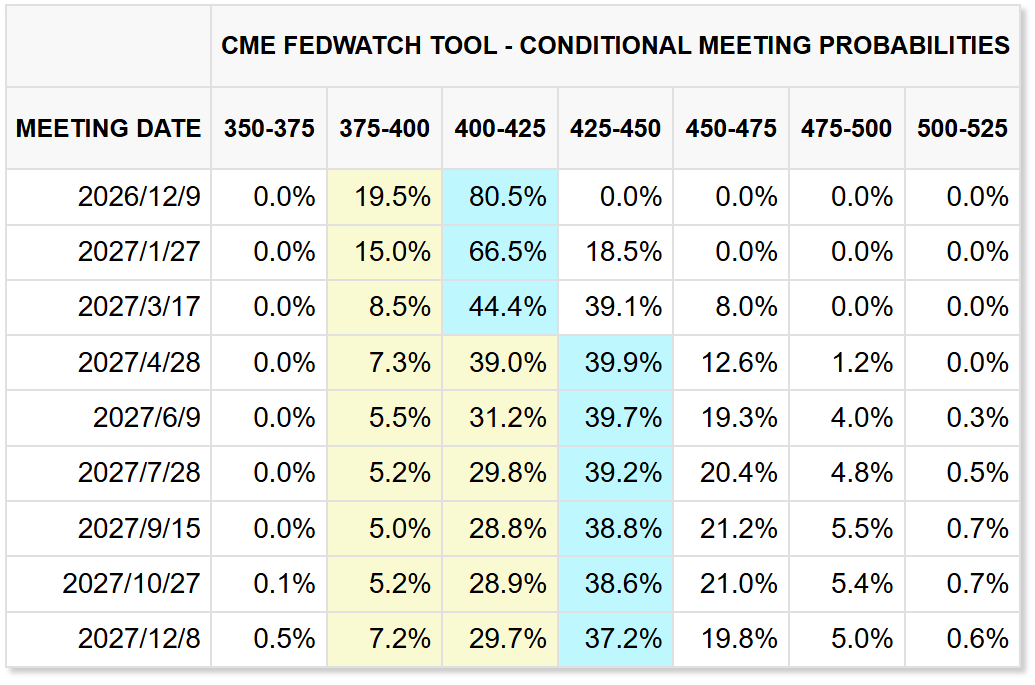
🏵️ Considering last week's non-farm payrolls greatly exceeded expectations October Non-Farm: The Good is a Bit Much, if this CPI is below expectations, it will help ease expectations and lower US bond rates, but it will not directly eliminate the probability of a rate hike in December, which is currently at 81%. Many Federal Reserve officials generally favor gradual rate hikes. Figure 3.
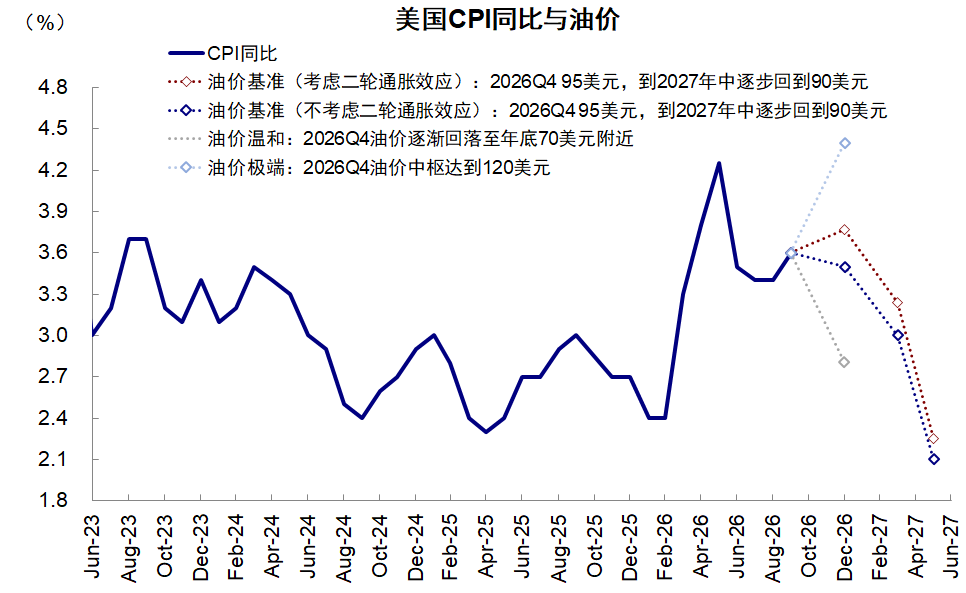
Looking ahead, the downward trend of inflation in the first half of 2027 is clear. Due to the effect of high base, even without assuming a significant drop in oil prices (around 90-95 dollars), we calculate that CPI year-on-year will drop to around 2% by May 2027. Even considering second-round inflation effects, we estimate that CPI year-on-year will also fall to 2.3% by May 2027. Figure 2.
🏵️ After last week's dramatic turmoil, the US stock market needs two catalysts: either AI makes significant progress, or the Federal Reserve's tightening expectations end or even shift to easing, and these two catalysts are mutually causal.
At present, this key moment looks to be early next year: 1) the quarterly report disclosed in January is expected to continue to be under pressure on ROIC, which will require AI to provide a new narrative and new catalysts; 2) the Federal Reserve's policy turning point is more likely to appear early next year, first because inflation will decrease, and second if there is no progress in AI, growth expectations will be further revised down; 3) the new Congress will be in office in January, making the sequence and priorities of policy advancement clearer.
Therefore, before these two catalysts are clarified, we recommend remaining cautiously observant, managing positions and structure, and paying attention to whether there is a negative feedback loop in liquidity in the short term.
The current win rate and odds are not clear, the winning rate is the two catalysts mentioned above. Regarding odds, for example, in an extreme scenario, if AI's profit contribution drops to zero, the current high growth of 40% in the US will drop to around 10%, corresponding to an estimated market facing a 10% downside. If such a situation arises, the odds will be higher and will also provide better entry opportunities. #Have US stocks dropped adequately?
免责声明:本文章仅代表作者个人观点,不代表本平台的立场和观点。本文章仅供信息分享,不构成对任何人的任何投资建议。用户与作者之间的任何争议,与本平台无关。如网页中刊载的文章或图片涉及侵权,请提供相关的权利证明和身份证明发送邮件到[email protected],本平台相关工作人员将会进行核查。