Author: Deep Tide TechFlow
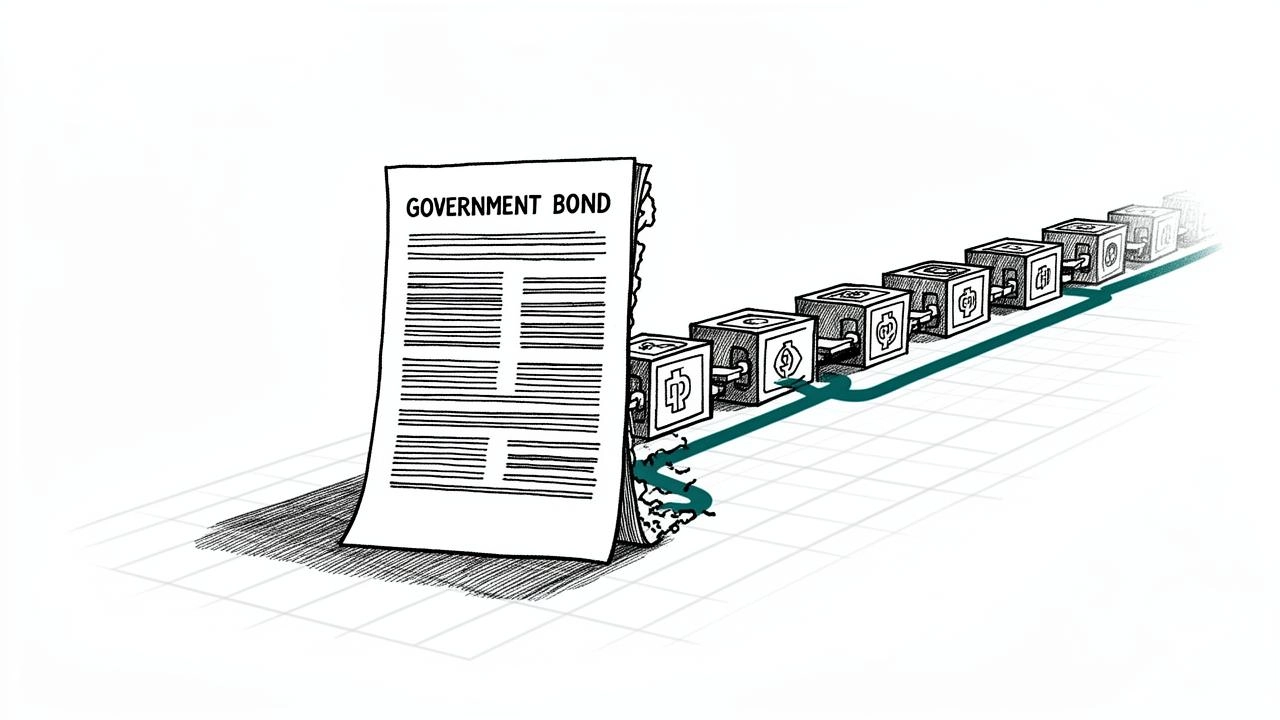
On November 9, 2026, the Japanese digital asset platform Progmat official platform signed a memorandum of cooperation with Digital Asset official announcement, planning to introduce sovereign assets represented by Japanese government bonds (JGB) into an institutional-grade blockchain network.
In the first phase, both parties will promote the tokenization of government bonds tJGB to connect with Canton Network official specifications, exploring the realization of around-the-clock on-chain settlement, seven days a week, twenty-four hours a day, while maintaining the legal validity and finality of settlement.
Tokenization of Sovereign Assets Touches Core Debt Infrastructure
The global sovereign bond market exceeds 70 trillion dollars, with Japan's government bond stock ranking second in the world. Over the past two years, tokenization practices have mainly focused on offshore short-term U.S. Treasury fund packaging, with underlying assets detached from sovereign settlement systems, and liquidity circulating only within the crypto ecosystem, failing to reach the core of interbank settlement.
Progmat's push for the native tokenization of Japanese government bonds as tJGB marks an institutional exploration from peripheral packaged funds to core sovereign credit. This evolution will be constrained by national-level credit tools with regional business hours, upgraded to digital targets with around-the-clock liquidity, reshaping the circulation path of sovereign debt.
Sub-Transaction Privacy Mechanism Breaks Institutional Broadcast Barriers
The transparent broadcast mechanism of public ledgers conflicts with institutional financial demands. Public blockchains require all nodes to synchronize every detail, exposing institutional holdings, counterparties, and rebalancing paths, making it easy to trigger front-running and squeezes, hindering large-scale participation by regulated giants.
The Canton Network official specifications built upon Daml smart contracts provide a sub-transaction-level privacy solution. The network only allows trading parties to verify their respective data shards, enabling atomic synchronous settlement across institutions without broadcasting details to the entire network, closely aligning with banking compliance requirements.
Penetrating the Ledger System to Achieve Around-the-Clock Settlement
The traditional bond secondary market heavily relies on depository institutions' business windows, commonly adopting T+1 or T+2 models. Market closures, holidays, and time zone differences lead to high on-route fund occupation and accumulate counterparty default risks, limiting the turnover efficiency of cross-currency capital.
tJGB deeply integrates contract logic with the securities transfer ledger under current legal principles. While fully maintaining legal validity and settlement finality, it breaks the rigid constraints of physical business windows, realizing an around-the-clock settlement process for bonds and funds, seven days a week, twenty-four hours a day.
Activating Collateral Reserves to Open Up Cross-Time Zone Repo Networks
In the multi-trillion dollar global collateral and repo trading market, Japanese government bonds are a core safe asset. Traditional clearing channels stagnate during market closures, leading quality sovereign bonds into periodic dormancy, preventing institutions from flexibly allocating liquidity across time zones.
Combining tokenized deposits with compliant yen stablecoins, tJGB can transform into an instantly allocatable collateral available around the clock. Institutions facing sudden margin calls or overnight liquidity demands across time zones can achieve immediate pledging and financing, significantly reducing default risks caused by clearing time differences.
Financial Consortium Collaboratively Promotes Practical Testing and Verification
Local Japanese financial giants have fully engaged in system construction. The Mitsubishi UFJ Financial Group announcement jointly involves three of its institutions in collaboration, focusing on testing the feasibility of synchronized delivery of government bond tokens and digital fiat currencies, verifying the capacity of interbank repo transactions to be fully on-chain.
The digital asset co-creation alliance working group under Progmat officially launched the second phase of practical verification in November 2026. This phase will test the issuance of tJGB, tokenized deposits, and stablecoins in the Canton production environment, validating repo business and gradually connecting with mainstream collateral platforms domestically and internationally.
免责声明:本文章仅代表作者个人观点,不代表本平台的立场和观点。本文章仅供信息分享,不构成对任何人的任何投资建议。用户与作者之间的任何争议,与本平台无关。如网页中刊载的文章或图片涉及侵权,请提供相关的权利证明和身份证明发送邮件到[email protected],本平台相关工作人员将会进行核查。


