Author: Pink Brains
Translation: Deep Tide TechFlow
Deep Tide Introduction: The AI computing power race is evolving into a massive debt game. As top banks tighten risk control, only opening credit to giants with independent cash flow, over 200 small and medium-sized emerging cloud providers (Neoclouds) are facing liquidity exhaustion and brutal reshuffling, forcing computing power collateral loans to accelerate their search for new paths.
On-chain credit agreements represented by USD.AI and GLX are capitalizing on the opportunity, providing high-yield funding through stablecoin savings pools, penetrating hardware ownership and first lien rights using dedicated vehicles (SPV). Moving from single holding to secondary debt distribution, on-chain finance is reconstructing the liquidity base of physical computing assets.

Elon Musk previously stated that for emerging cloud providers (Neoclouds) lacking independent business cash flow outside of AI data centers, the doors of traditional debt markets have almost completely closed.
Musk bluntly mentioned on social media: "In the past few weeks, the debt market has almost cut off funding to all companies lacking substantial external revenue from data centers. SpaceX has just completed a $40 billion debt financing for GPUs, but that was because we have an investment-grade credit rating backed by Starlink and rocket launch business."
SpaceX signed a legally binding $40 billion financing lease agreement to acquire NVIDIA Vera Rubin architecture chips, led by Apollo and Goldman Sachs, with delivery expected to be completed by the end of the year. SpaceX refers to it as the largest single GPU financing deal in history.
In Musk's view, over 200 emerging cloud providers in the U.S. are inevitably sliding toward a brutal wave of large-scale bankruptcy and mergers.
The credit market has long factored in this risk into asset pricing. The credit default swaps (CDS) of emerging cloud giant CoreWeave hit a historical high in mid-October, implying a more than 60% probability of default within the next 5 years. Gartner further predicts that by 2030, more than 80% of emerging cloud providers will be unable to maintain independent operations.
However, the underlying fervent demand for computing power continues to grow. According to Silicon Data's emerging cloud index, the hourly rental price of B200 chips on professional GPU cloud platforms rose from $5.78 to $6.47 between September 28 and October 27.
High rental prices are pushing cloud service providers to acquire more GPUs, with funding for hardware purchases mainly coming from debt financing. Major cloud giants can still obtain credit from Wall Street banks, but small operators with only a few hundred GPUs are unable to step through the bank's door.
As noted by Social Capital, even NVIDIA's H100 chips, which went public in 2022, now have rental prices that are 45% higher than at the end of last year. Despite two new generations of architectures being introduced, the gap in demand for computing power is so vast that the prices of older models are rising instead.
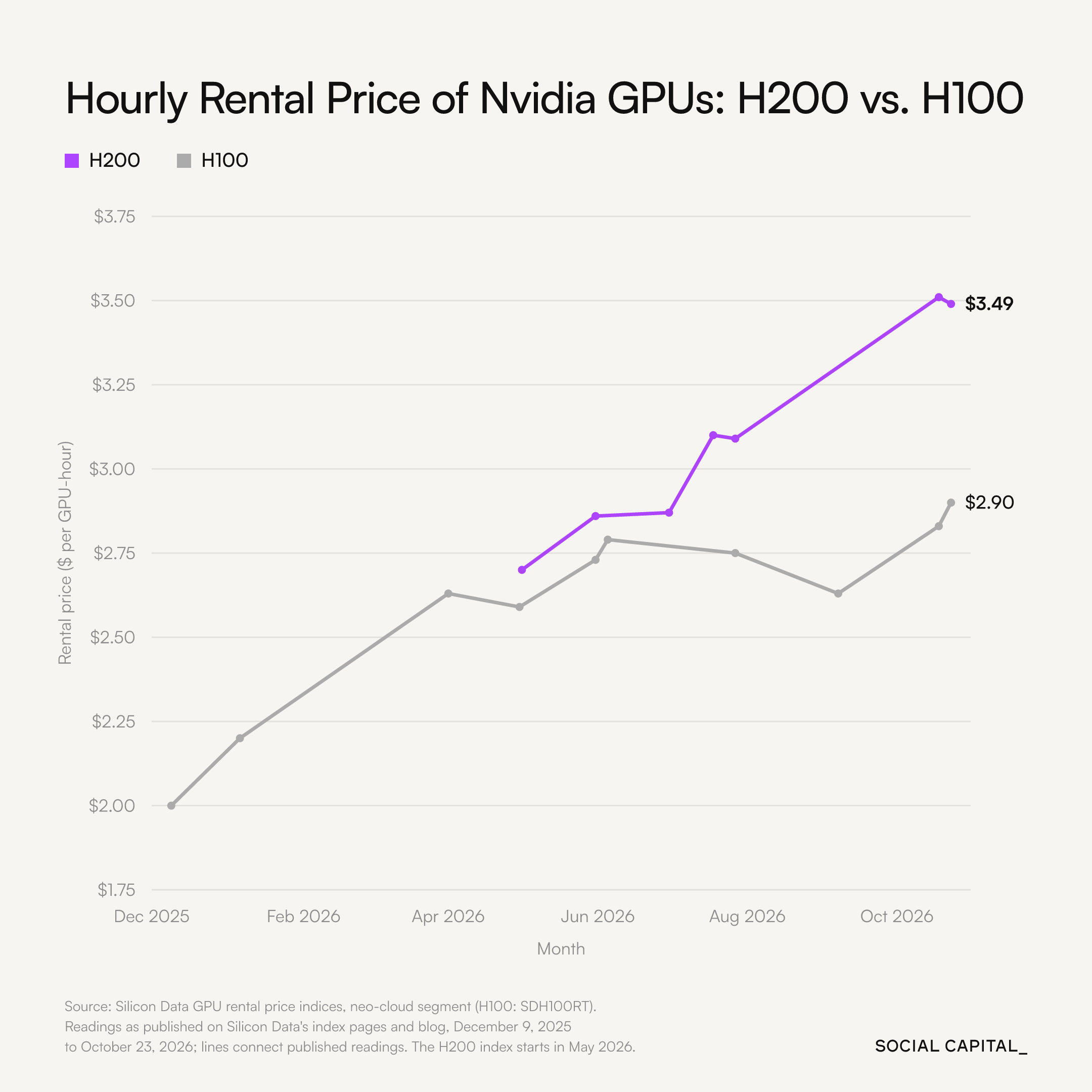
Figure: Trend of rental cost increase for NVIDIA H100
This has created a massive credit vacuum. Physical GPUs are being transformed into pledgable financial underlying assets, while on-chain credit agreements funded by stablecoin savings pools are rapidly penetrating market blind spots unreachable by traditional banks.
The funding gap behind the prosperity of AI computing power
Before diving deeper, it is necessary to clarify a few core concepts:
GPU: The core chip for training and running AI models, NVIDIA B200 and B300 are currently mainstream computing power models.
Emerging Cloud (Neocloud): Cloud service providers that specifically lease GPU computing power, such as CoreWeave, Nebius, Lambda, Crusoe, and hundreds of small and medium operators; while Amazon AWS, Google Cloud, and Microsoft Azure are referred to as hyperscale cloud providers.
SOFR (Secured Overnight Financing Rate): The U.S. overnight borrowing rate secured by U.S. Treasury securities, which serves as the pricing benchmark for most commercial loans in the U.S. Loan interest rates are typically quoted as "SOFR + x%", with lower x indicating a higher level of trust from lenders in borrowers.
Today's AI computing power is essentially a debt-driven leverage game. According to statistics from American Compute, since 2023, there have been 110 publicly disclosed GPU and data center financing projects, injecting a total of $197 billion in new funds. Notably, 92% of this funding is expected to be raised in 2025 and 2026.
Major Wall Street banks firmly control this avenue. Of the 49 transactions definitively disclosing lenders since July 2025, 32 were led by JPMorgan Chase, Goldman Sachs, Morgan Stanley, or Mitsubishi UFJ Financial Group (MUFG).
Debt pricing emphasizes tenant credit rather than the chip itself. In 2026, the loan interest rates secured by investment-grade lease agreements generally range from SOFR + 2.25% to 3.0% while rates for non-rated or below investment-grade loans can go as high as SOFR + 4.5% to 5.5%, or fixed rates of 9% to 10%.
CoreWeave secured the largest loan on the public list while also paying the highest risk premium (3 percentage points higher than Nebius). At an interest rate of SOFR + 5.50%, this largest emerging cloud giant in the U.S. is effectively borrowing funds at a sub-investment grade cost.
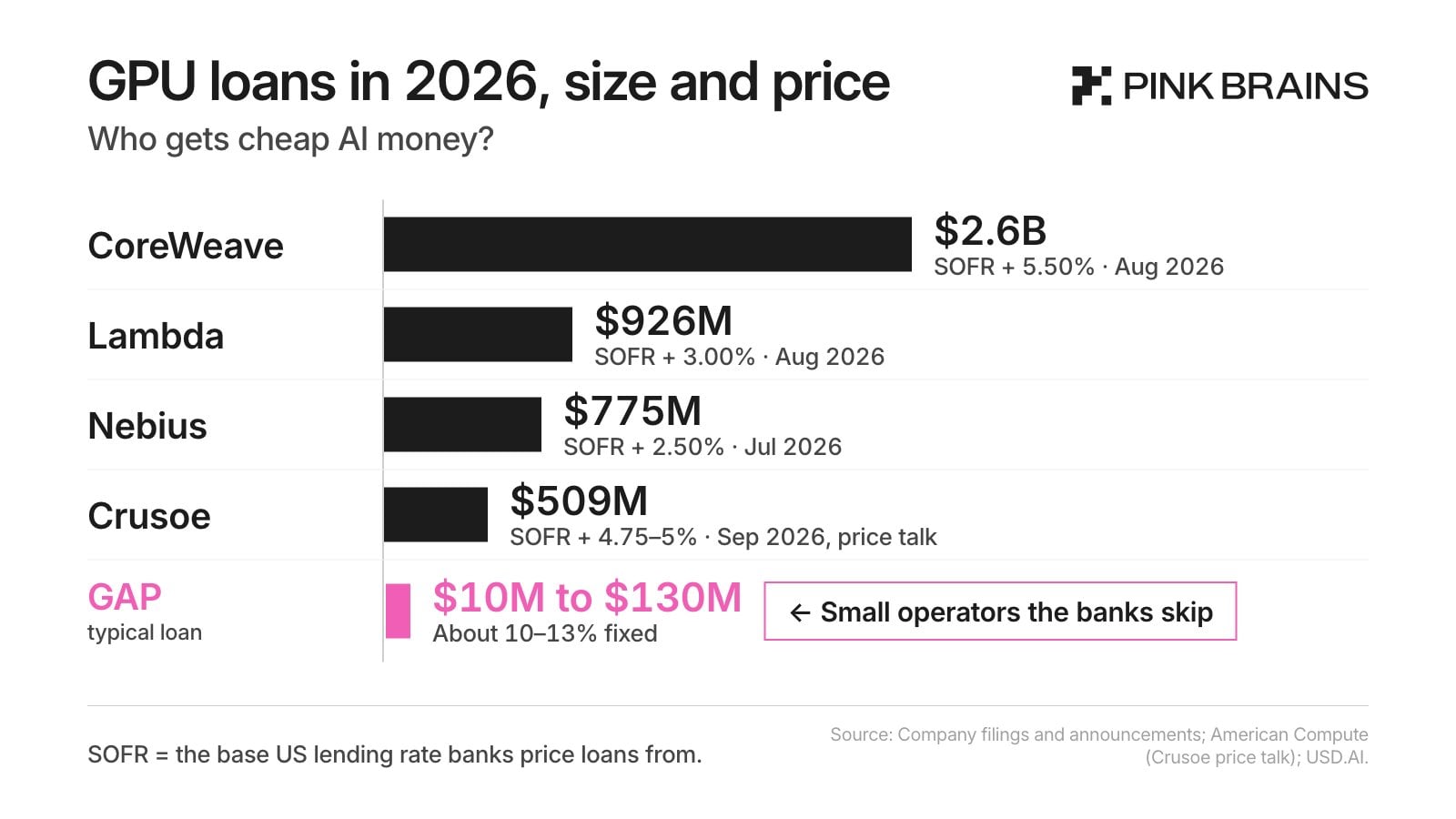
Figure: Distribution of GPU computing debt interest spreads in 2026
Super-sized buyers typically skip ordinary corporate credit loans in favor of specialized vehicles (SPV). An SPV is an independent legal entity responsible for financing the procurement of chips and renting them back to operators. This structure tightly isolates hardware assets, leasing contracts, and corresponding liabilities within a separate container, completely decoupling them from other businesses of the parent company.
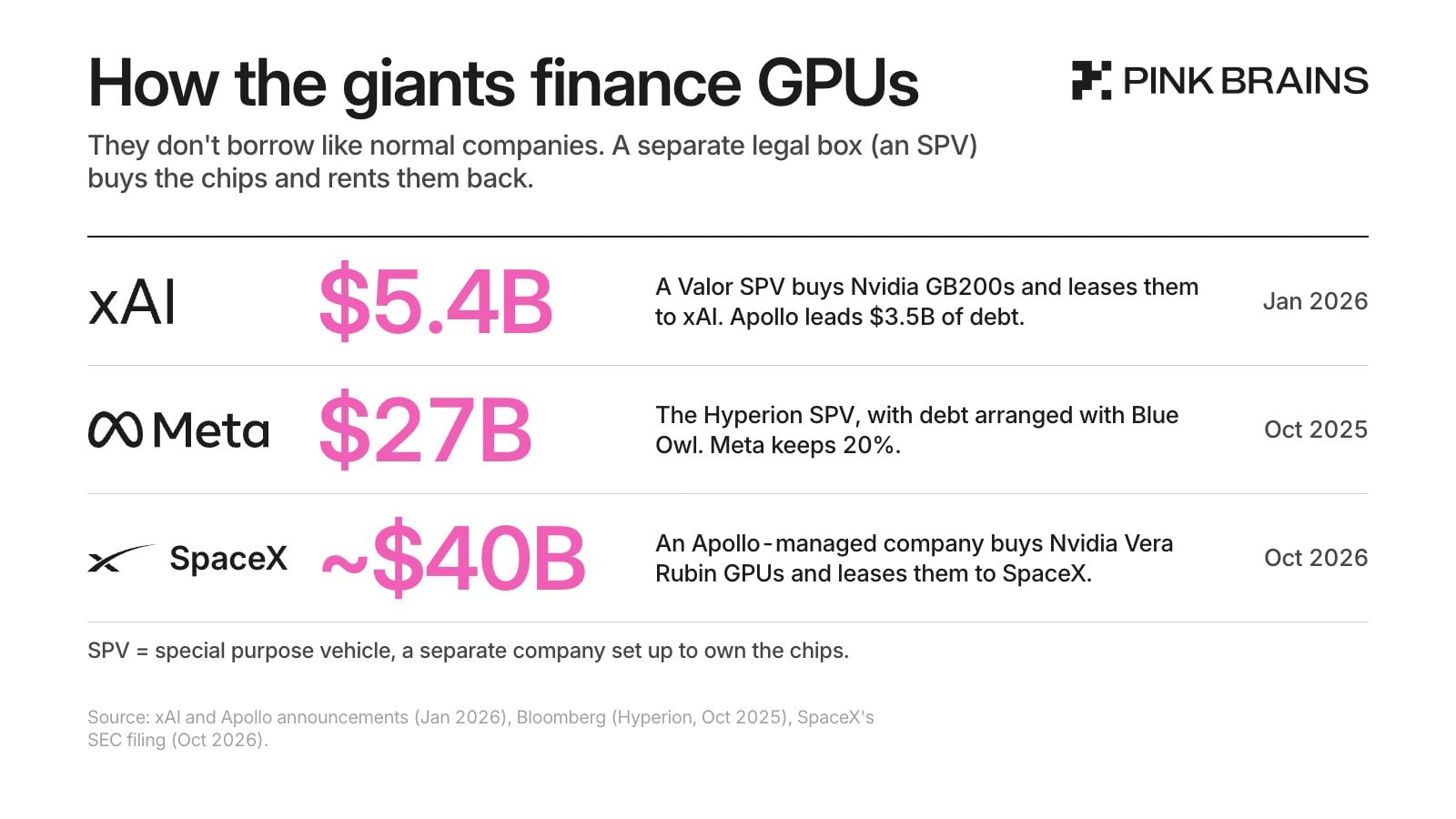
Figure: SPV isolation structure used by traditional computing buyers
This structure operates smoothly at the top echelons of the industry, but encounters economic bottlenecks during downward penetration. Constructing a bank-level SPV can cost between $200,000 and $500,000 in legal and financial setup costs, with approval cycles lasting several months. For financing amounts below $50 million, the fixed costs are too high for banks to process.
This has created a massive "middle missing": Hundreds of medium-sized cloud service providers with hundreds to thousands of chips are struggling in the traditional financial system due to the lack of investment-grade lease backing.
On-chain collateral loans: Moving Wall Street SPVs on-chain
The rise of on-chain credit is precisely to fill this intermediate gap. Protocols like USD.AI have lightweighted and coded Wall Street's SPV mechanism, bringing it down to medium-sized computing asset lending.
As of the latest statistics, USD.AI has initiated 20 financings, disbursing a total of $531 million in loans. The amount of single loans ranges from hundreds of thousands to $128.9 million.
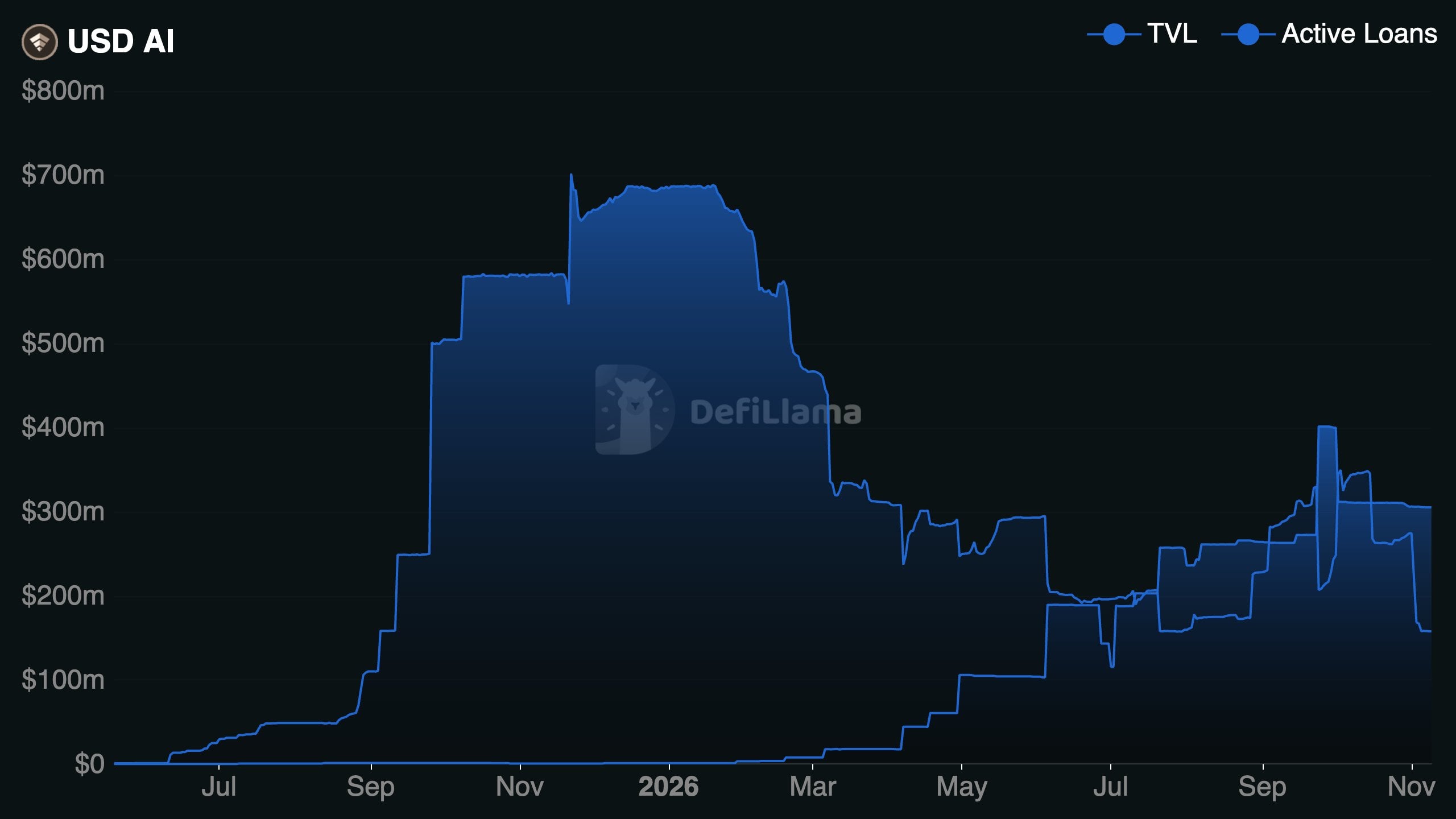
Figure: Total loan scale issued by USD.AI
Interest paid by borrowers is significantly higher than that of traditional large banks. USD.AI's interest rate tiers start at 7% for those with investment-grade leases, climbing to 15% for those without long-term lease agreements.
Among the 15 USD.AI loans tracked between January and early August 2026, the actual execution rates fell within the range of 10% to 15%, with a median of 12%. In comparison, banks offer fixed rates of 9% to 10% for sub-investment-grade borrowers. The main selling point of on-chain loans is not their affordability, but their availability and speed: USD.AI claims loan approvals can be completed in as little as 7 days.
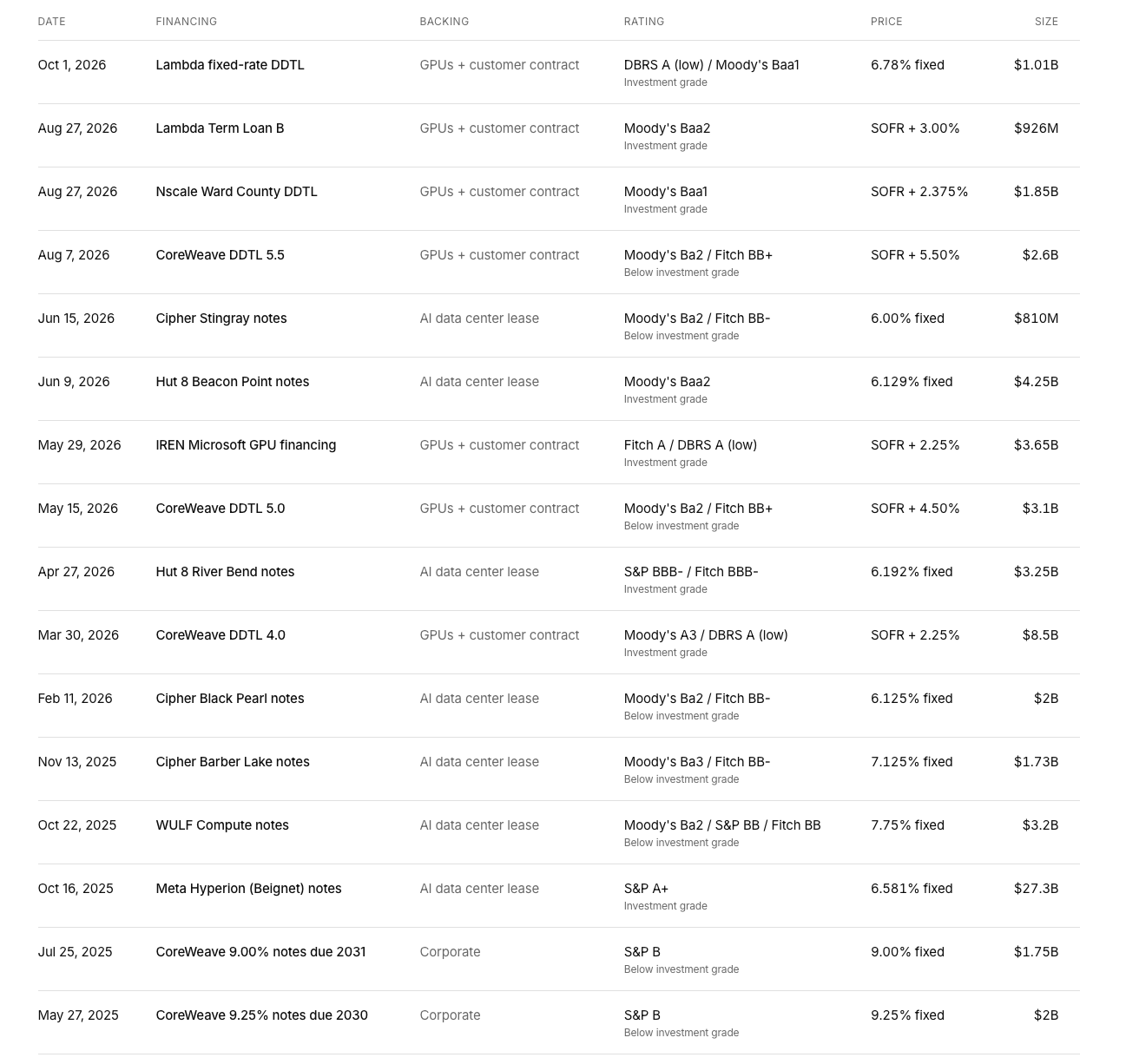
Figure: Rate ladder for USD.AI loans
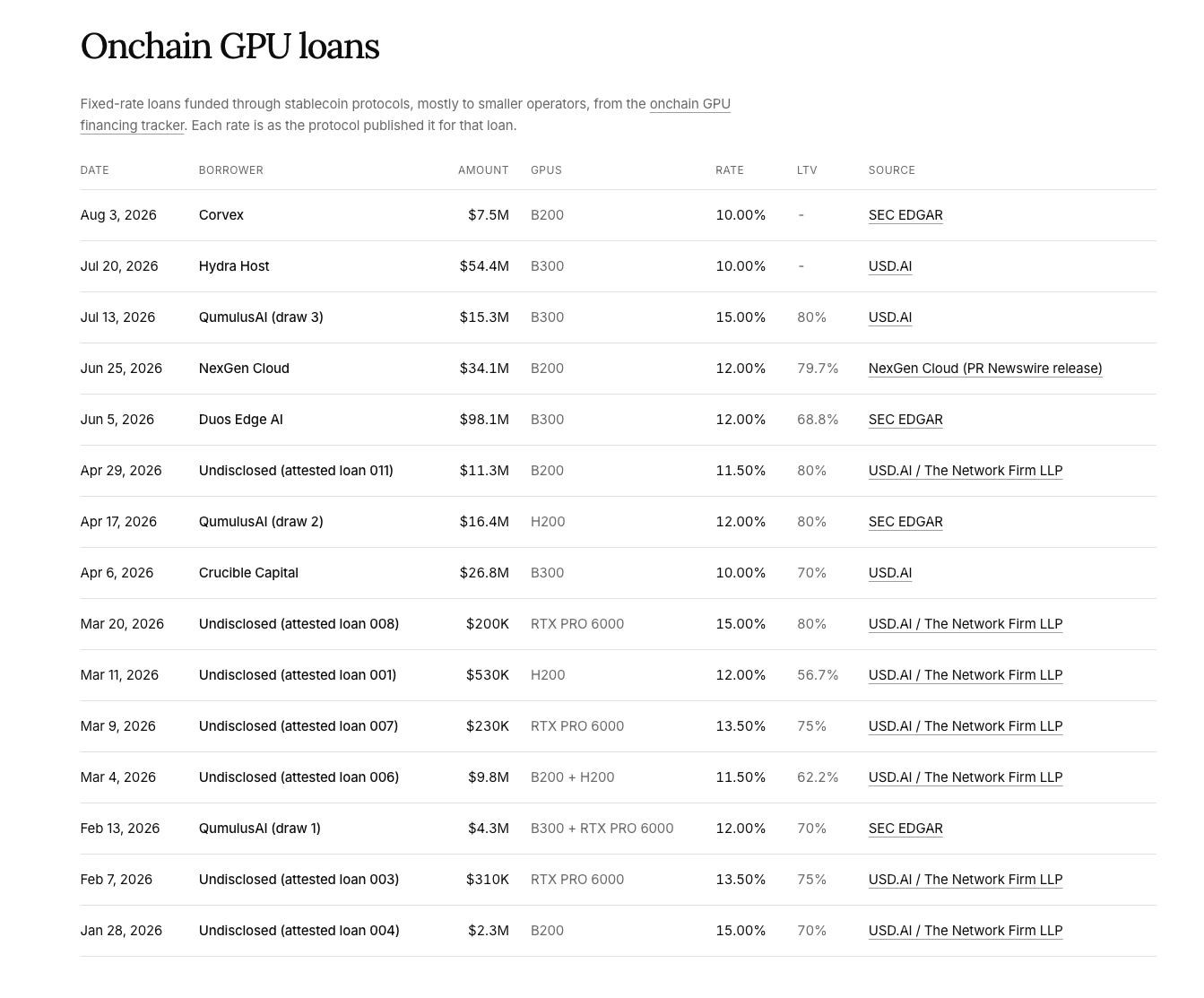
Figure: Comparison of computing loan rates for different ratings
In the event of borrower default, the disposal agent will first attempt to maintain SPV operations under alternative operators' management, or sell the entire entity at a price that can fully repay the lender. The borrower's SPV holds GPU hardware ownership, while USD.AI holds the first lien on the servers and the entire shareholding of the SPV.
Loan amounts typically cover 70% to 80% of hardware procurement costs, with the remainder raised by the borrower, held in a third-party escrow until the servers are installed in the data center and performance verified. Afterward, revenues from leasing computing power will be prioritized to repay principal and interest. Only after all restructuring avenues have failed will servers be auctioned off one by one through an IT asset disposal professional (ITAD).
The entire business operation flow is clear and controllable:
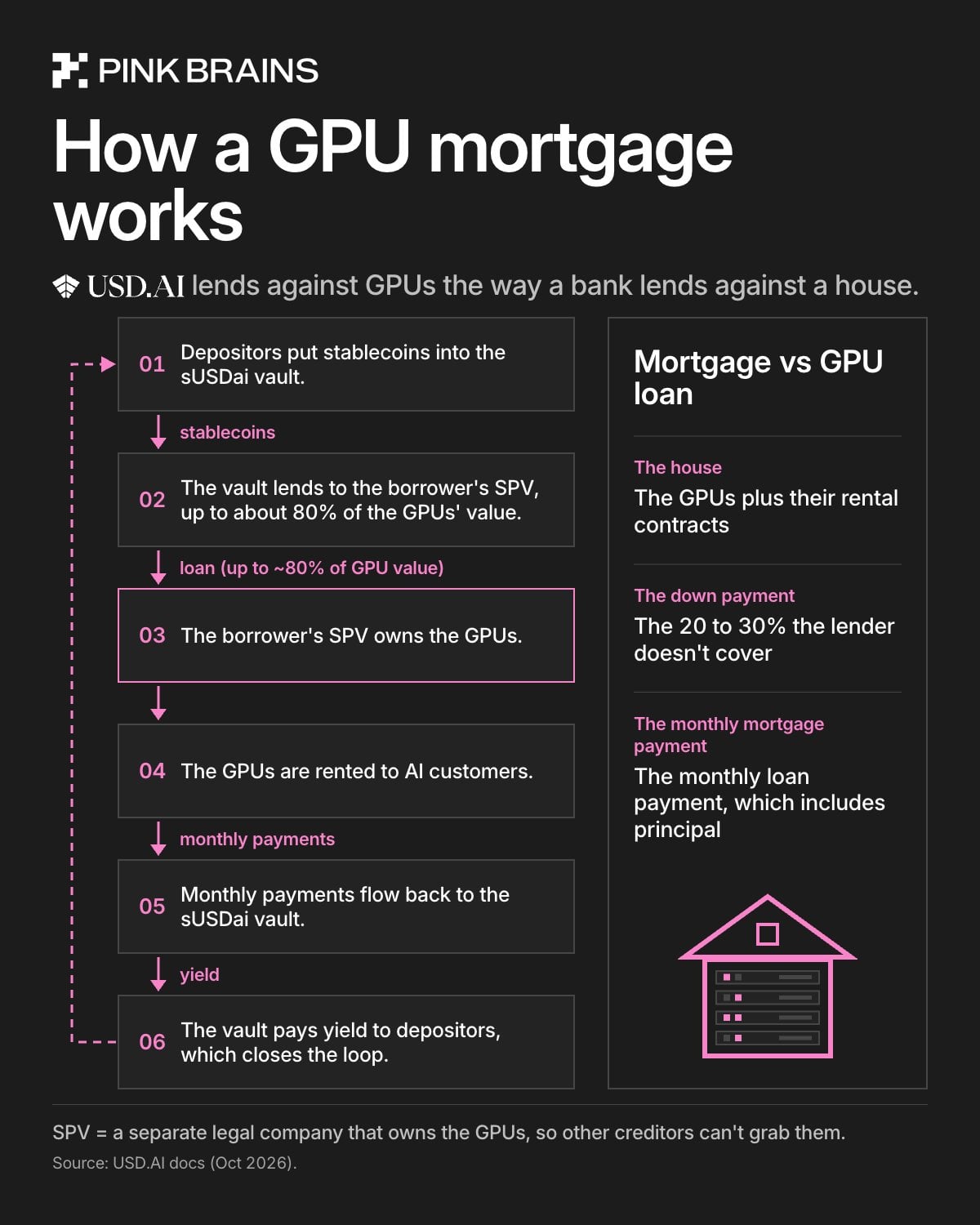
Figure: Full process of USD.AI computing collateral loan execution
People may question: traditional houses last for a hundred years, while advanced GPUs have a golden window period of only 2 to 3 years; how can such mortgage loans be established? In fact, GPU collateral loans are more akin to auto loans, needing to face the reality of rapid depreciation of the underlying asset.
Due to this, USD.AI's loan terms are generally kept around 3 years, never issuing long-term liabilities. Furthermore, the latest risk control rules only accept top-tier architecture chips as qualified collateral: NVIDIA B200, B300, GB200, GB300, VR200, as well as AMD's MI455X and MI430X. In addition, the protocol has introduced a residual value insurance of 150 basis points per year (deducted from pledged income) to hedge against the risk of realized depreciation of second-hand chips.
Income sources and liquidity mismatch of sUSDai
USDai is supported 1:1 by PayPal's stablecoin PYUSD, which includes U.S. Treasury bonds as its underlying reserves, which do not generate interest.
Users who deposit USDai into the pledge contract receive interest-bearing certificates sUSDai. The sUSDai savings pool funds computing loans and captures lending interest. Only holders of sUSDai truly bear the credit default risk of GPUs. To match asset-side liquidity, the redemption mechanism processes every 30 days in bulk, while the loan asset cycle is about 3 years.
The benchmark yield target set by the treasury is 7%.
On November 1, the annualized yield of sUSDai was 6.53%, and USD.AI subsequently injected 127,927.66 USDai into the treasury to maintain it at 7%. From January 2026 to early June, the actual annualized yield of sUSDai has remained around 7.0%.
The interest rate paid by borrowers (median around 12%) presents a spread of around 5% compared to the returns received by depositors (around 7%). This excess funds are allocated to several core links: 150 basis points of residual value insurance fees per year, 10% net interest share taken by the protocol, and the cash income of idle funds at Treasury bond rates.
According to DefiLlama data, USD.AI generated a total fee of $4.87 million and a protocol net income of $487,000 in October. Income constituted 10% of total fees, corresponding exactly to the net interest margin taken by the protocol from sUSDai earnings. Over the past year, the protocol has generated a cumulative gross income of $24.75 million.
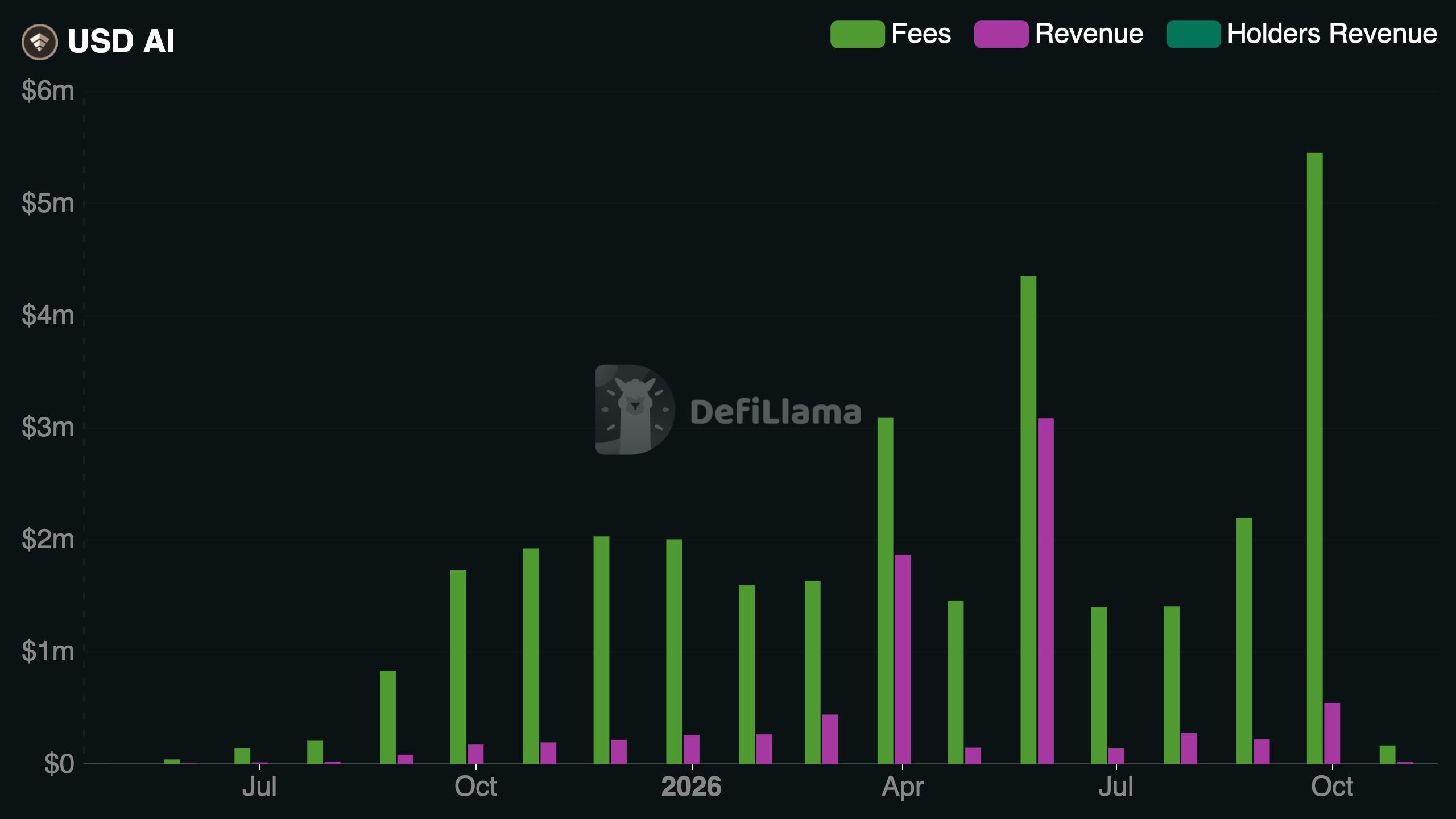
Figure: Trends of USD.AI protocol fees and income
However, the capital inflow once significantly exceeded actual lending capacity. While treasury deposits approached a historical peak of $700 million, only approximately $1 million of computing assets were actually loaned out, with the massive inflow being primarily driven by expectations of token airdrops.
As of mid-October, the scale of active loans increased to $177 million, with another $134 million in custody awaiting chip delivery, which closely aligns with DefiLlama's recorded $309.5 million in active loans.
While idle cash can earn Treasury bond income, it falls far short of the yield from GPU loans. Accelerating the activation of idle liquidity is the core driving force behind the emergence of the secondary debt distribution network GLX.
GLX structure: From holding loans to distribution circulation
For USD.AI, fully holding a single loan for 3 years means bearing the default risk throughout. Additionally, as borrowing cloud providers grow and gain bank credit, they often turn to cheaper traditional refinancing channels, such as Sharon AI, which completed borrowing at a fixed rate of 9.95%.
Mismatch in time also brings implicit redemption pressure. Deposit users can apply for withdrawal every 30 days, but the released loan assets have durations up to 3 years. Such duration mismatches in assets and liabilities have previously led to the collapse of crypto lending platforms like Celsius. Although the 30-day queue mechanism can delay liquidity squeezes, it does not eliminate the underlying mismatch in liquidity.
Launched on October 1, GLX (GPU Loan Exchange) breaks the rigid one-to-one binding between deposits and loans. In this new model, sUSDai is only responsible for issuing initial bridging loans. Once the loan has undergone several months of normal repayment testing and formed mature assets, the protocol packages and sells them to external professional asset management institutions, with the cash returned being used to initiate new loans.
The loan lifecycle circulation structure under GLX is as follows:
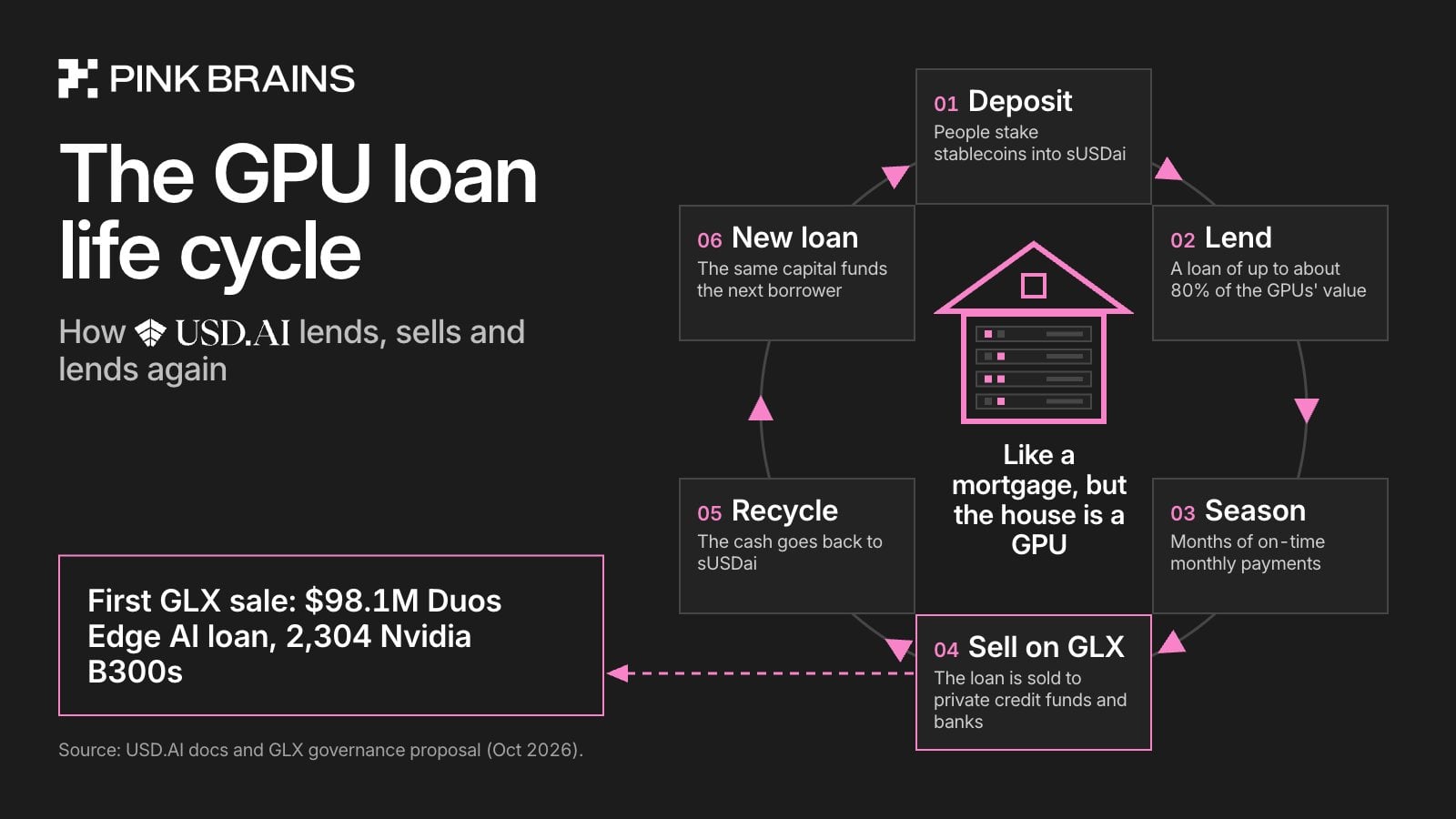
Figure: GLX debt transfer and re-loaning cycle structure
External institutions can even co-invest directly at the time the loan is initiated. On October 29, credit giant Silver Point Capital, managing $48 billion, and Victory Park Capital under Janus Henderson, jointly provided NexGen Cloud with a $106 million 4-year senior secured loan through GLX, supporting its deployment of 1,728 NVIDIA B300 chips in Finland.
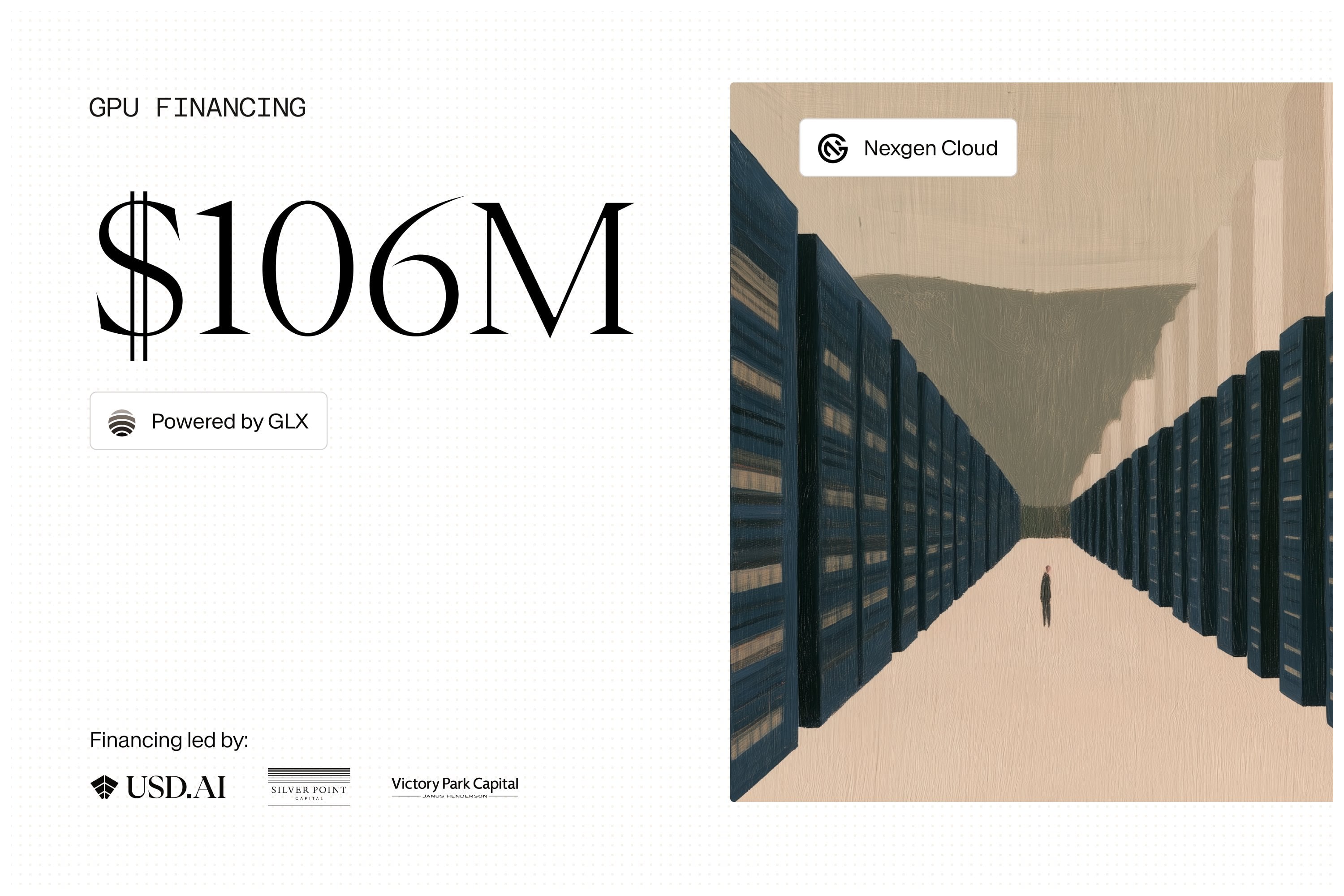
Figure: USD.AI joint institutional financing announcement for NexGen Cloud of $106 million
The scale of computing assets circulating through GLX has surpassed $200 million. USD.AI's governance proposal has set strict risk control red lines for the sale of these secondary assets:
The minimum sale price must be at face value (100), with an official suggested selling price of 100.5 or higher;
Only when redemption requests exceeding 30 days are greater than protocol available liquidity is it allowed to activate a 99.5 discount floor;
60% of the profits from premium sales belong to the operating entity USD.AI Inc., while 40% is allocated to the earnings reserve pool to support sUSDai in maintaining a 7% benchmark yield; sales at par or discounts do not generate profit sharing;
Buyers must be strictly isolated from the originating entity in terms of equity and interest relationships.
For instance, a $10 million loan sold at 100.5 generates a $50,000 premium divided at a 60/40 ratio ($30,000 goes to the operating entity, and $20,000 to the reserve pool). More importantly, the 2% to 3% initiation fees collected by USD.AI, alongside the recovered $10 million principal loaned out again, would generate an additional $200,000 to $300,000 for the protocol. The commercial essence of GLX lies not in earning thin asset spreads but in the rapid cyclical lending volume.
The first complete exit case: Duos Edge AI
On June 5, 2026, USD.AI announced a 3-year, $98.1 million loan to Duos Edge AI, a subsidiary of Nasdaq-listed Duos Technologies. The collateral for this loan consists of 2,304 NVIDIA B300 chips, managed through infrastructure service provider Hydra Host via its Brokkr platform.
This loan adopts a completely non-recourse SPV structure. Even if bad debts occur, USD.AI can only dispose of SPV assets and their chips, with no legal recourse against the parent company Duos.
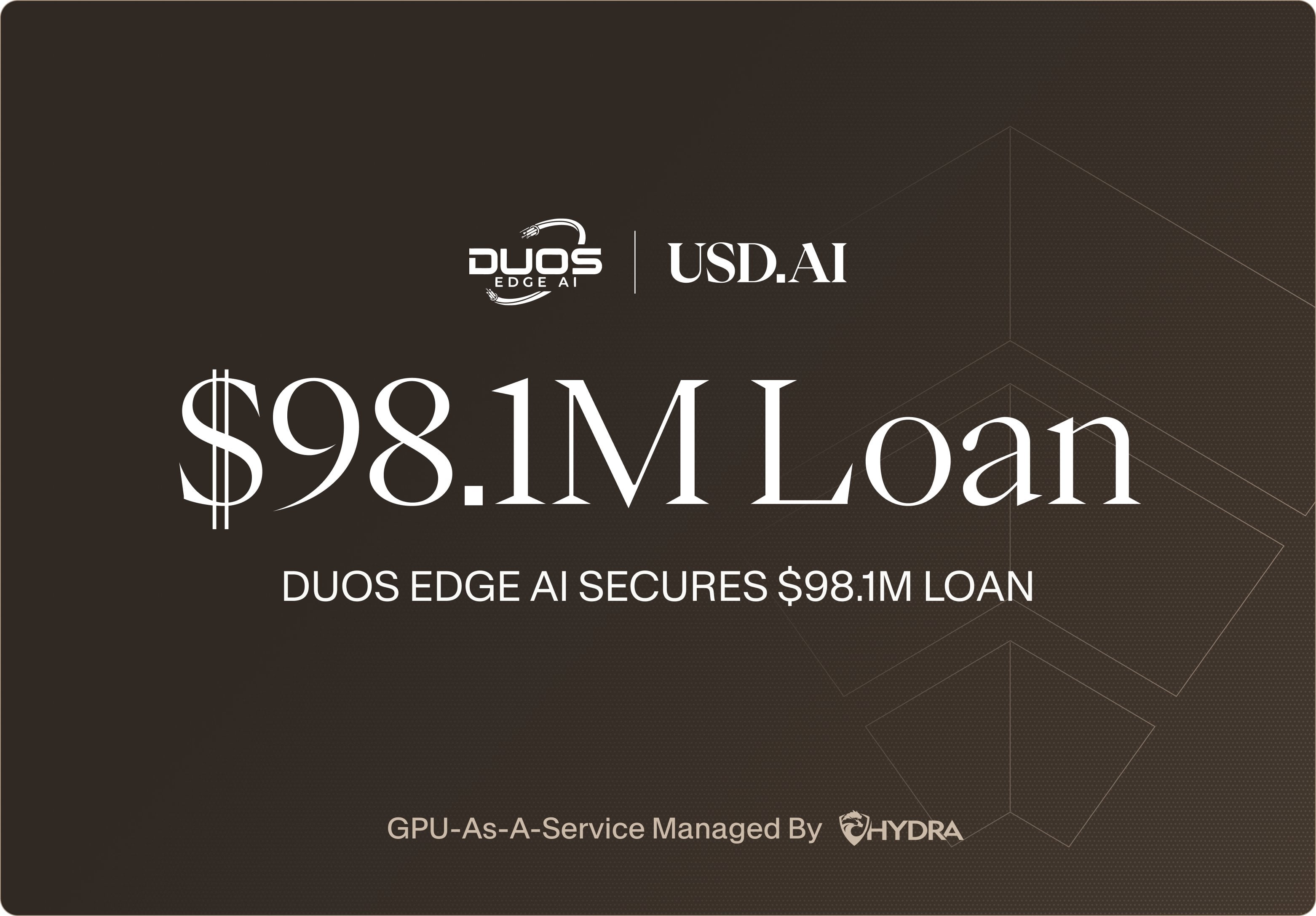
Figure: USD.AI issues $98.1 million loan to Nasdaq subsidiary Duos Edge AI
In September of this year, another computing operator, Axe Compute, fully acquired this SPV entity from Duos. As a core part of the transaction terms, Axe Compute paid off all principal and interest debts on the SPV's account, totaling approximately $87.8 million. This allowed Axe to gain a mature computing cluster with a 5-year long-term lease expected to generate $364.6 million in cash flow.
Thus, USD.AI achieved a 100% recovery of funds, both principal and interest, in less than 4 months, reinvesting the principal into the next round of lending cycles.
CHIP token value capture and buyback logic
For holders of the native governance token CHIP, all the value accumulation from the above business flywheel ultimately converges on the protocol's 10% commission on the net spread captured from sUSDai. The higher the proportion of successfully loaned funds in the pool, the larger the cash flow scale the protocol captures.
The bi-directional mechanism of GLX further amplifies this flywheel effect. While the sale of loans transfers subsequent interest income and initiation fees belong to USD.AI Inc., the cash returned can be quickly lent out again at a high interest rate of around 12%, avoiding funds being idled under the 4% to 5% Treasury bond yield.
The token buyback program has now officially launched. USD.AI has begun to route net interest margin income from sUSDai to buy back CHIP in the open market.
After deducting the foundational daily operating expenses of the CHIP Foundation, 100% of the net interest margin from sUSDai will be used to buy back CHIP, with no fixed buyback amount or schedule currently established. Furthermore, USD.AI Inc may also use its excess initiation fees for buybacks, and 60% of the income from loan transfers will also be subject to its reinvestment lead.
As of the buyback price calculated on October 26, CHIP's circulating market value is around $90 million (2 billion tokens in circulation multiplied by $0.0448). Before deducting foundation costs, the buyback program could repurchase approximately 2.5% of the circulating supply annually (based on data from the past year), which could reach 6.5% if calculated based on the current business growth rate.
Two days before the formal launch of the buyback route, on October 26, USD.AI Inc proactively used $1 million USDC to buy back 22,343,372 CHIP tokens at an average price of $0.044756 in the open market, accounting for 1.1% of the total circulation. The scale of this single strategic buyback equaled the total of ordinary buybacks in the past five to six months.
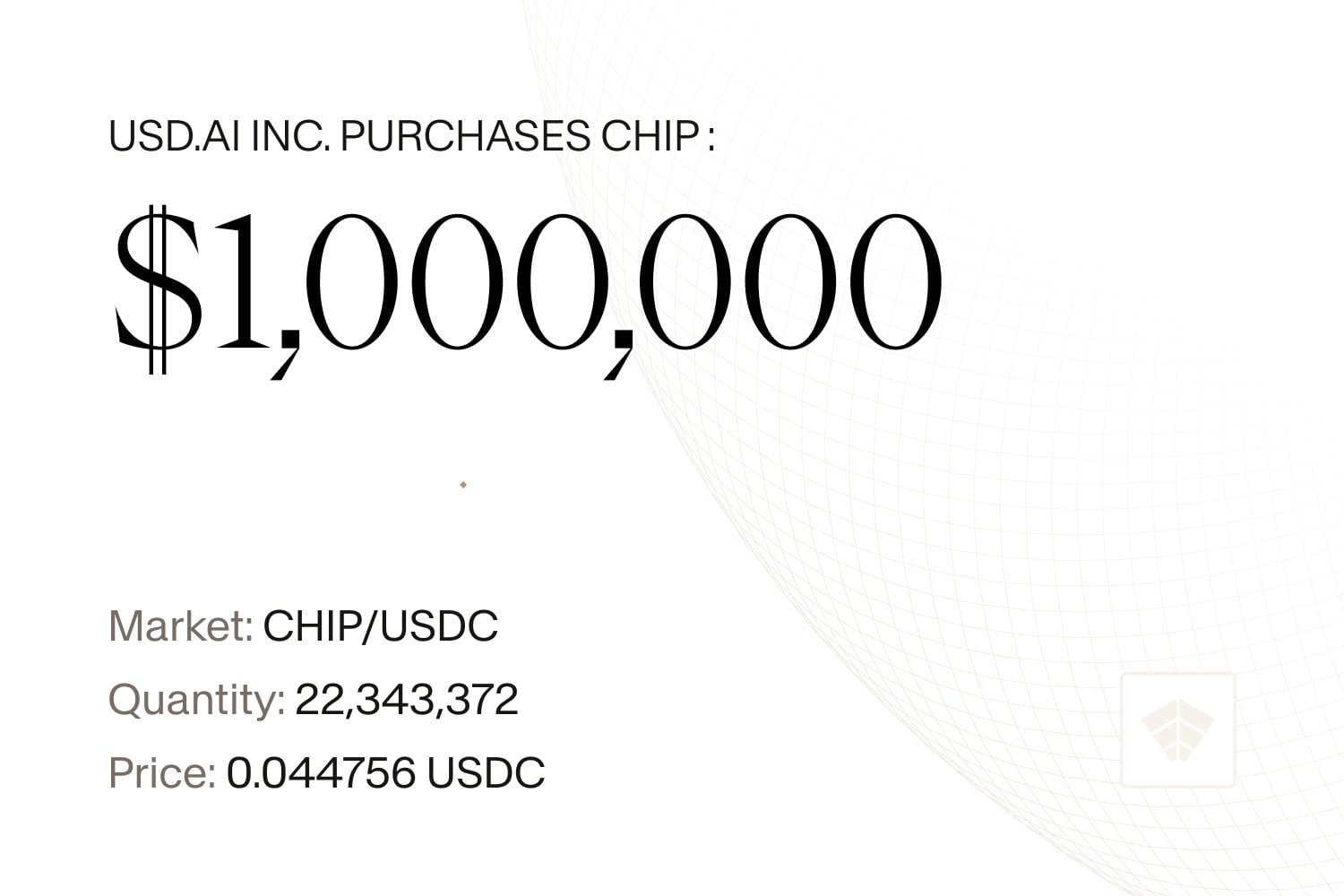
Figure: USD.AI Inc announces a $1 million buyback of CHIP tokens
The long-term goal set by the protocol is for the number of CHIP tokens repurchased each period to surpass the token issuance volume released as staking rewards. The inflation rate of CHIP has dropped from 3% in the first quarter to 2.25% in the second quarter. Once the buyback scale exceeds new token outputs, token releases will switch to a monthly mode driven entirely by real protocol income.
Most traditional DeFi projects' buybacks rely on on-chain trading fees, while CHIP's buyback engine is deeply embedded in the real-world GPU physical lending interest, with its expansion pace entirely depending on the growth of the physical computing power credit ledger.
Globally, the on-chain lenders currently account for less than 1% of the total $48.4 billion in GPU-backed debt raised in the U.S. by 2026. If calculated at a borrowing interest rate of about 12% and a protocol share of 10%, every 1% market share captured by on-chain funds could generate approximately $5.8 million in buyback funds annually (around 6.5% of the current market value); if market penetration rises to 5%, the annual buyback will consume one-third of the circulating supply.
The future and potential risks of on-chain GPU finance
For GPU mortgage lending to function, the underlying collateral must generate robust rental cash flows, and current market rental rates for computing power are still on the rise. However, its greatest risk remains anchored in the physical asset side: the rapid depreciation of GPU hardware, as new generations of NVIDIA architectures often lead to a double whammy of rental rates and second-hand sales prices for old chips, while the small and medium-sized cloud providers served by on-chain institutions are high turnover risk zones.
Yet, several key catalysts are driving the accelerated expansion of on-chain computing credit:
Traditional commercial banks have almost closed the doors to small players as risk controls tighten, while fragmented regulatory policies across states significantly favor on-chain institutions that can complete bridge financing rapidly;
Post-U.S. midterm elections, stricter approval of land and energy consumption for large centralized data centers is forcing computing power construction to migrate toward more decentralized small and medium-sized clusters, inherently aligning with the flexible lending scales of several million to tens of millions of dollars of on-chain protocols;
The sovereign demand for computing power in overseas markets is growing explosively. NVIDIA's sovereign AI revenue this year has tripled to over $30 billion, led by Canada, France, the Netherlands, Singapore, and the UK. The computing power demand from these countries and regions is being largely met by local emerging clouds such as NexGen Cloud and Sharon AI, which are core target customers for on-chain lending protocols like USD.AI.
It is undeniable that on-chain GPU finance is still a blue ocean, accounting for less than 1% of the overall computing debt market in 2026. In this extremely vertical track, USD.AI occupies about 93% of the on-chain market share, followed closely by GAIB, Forum Markets, and Falcon Finance.
This is not investment advice (NFA). The growth in the scale of protocol business does not necessarily equate to a proportional rise in the secondary market price of the token.
免责声明:本文章仅代表作者个人观点,不代表本平台的立场和观点。本文章仅供信息分享,不构成对任何人的任何投资建议。用户与作者之间的任何争议,与本平台无关。如网页中刊载的文章或图片涉及侵权,请提供相关的权利证明和身份证明发送邮件到[email protected],本平台相关工作人员将会进行核查。


