Original | Odaily Planet Daily (@OdailyChina)
Author | Azuma (@azuma_eth)
"I've seen rug projects, but I've never seen a project this shameless."
This is the community's honest assessment of a newly issued DePIN project, Puffpaw.
Just last week, this project, which had previously raised 6 million dollars but had gone silent due to a downturn in ecological and narrative support, suddenly announced a token issuance and airdrop. However, this was not the team's genuine intention to "give back to the community"; all operations were merely to reap benefits in another avenue (predictive market).
Once a "Star" Project
Although its current presentation is extremely unappealing, Puffpaw was once a legitimate project that secured funding. As a decentralized physical infrastructure network (DePIN) built on Berachain, Puffpaw promoted the "Vape-to-Earn" concept, attempting to use smart electronic cigarette hardware to record users' smoking data and provide token incentives.
With the previous hype surrounding consumer-grade hardware narratives and the initial buzz around Berachain's ecosystem, Puffpaw successfully completed a seed round of funding for 6 million dollars led by Lemniscap, with notable institutions such as Folius Ventures and Spartan Group participating, subsequently garnering significant community funding in its smart e-cigarette node pre-sale and genesis NFT sale.
However, as the excitement around the Berachain ecosystem waned and the narrative for the DePIN sector cooled, Puffpaw gradually faded from public view, with project progress nearly stagnating and community engagement falling into prolonged silence.
Token Issuance Surprise and Outrageous Airdrop Lockup
Just when the community had nearly accepted that the project had died, Puffpaw suddenly resurfaced last week (more than half a year since its last update), announcing the launch of token VAPE and airdrop.
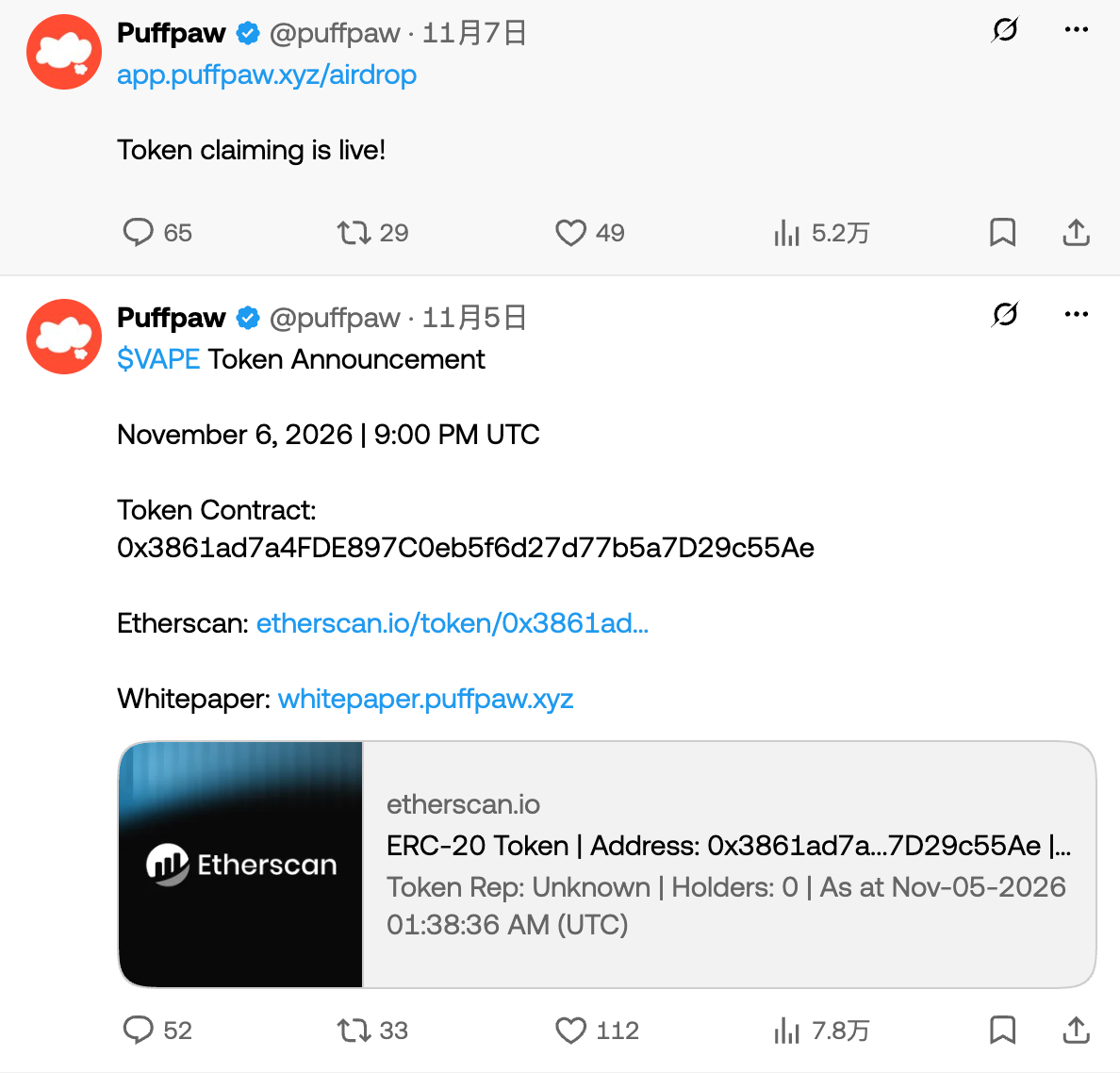
However, what awaited early supporters was not excitement but outright humiliation.
As a project that raised 6 million dollars, VAPE launched with no support from any centralized exchanges (CEX), deploying only an extremely thin liquidity pool (about tens of thousands of dollars) on a decentralized exchange (DEX).
The design around the airdrop was even more shameless. Many early users who had participated in interactions since 2024 had spent two to three hundred dollars to purchase the genesis NFT or device, ultimately receiving airdrops worth only dozens of dollars. What’s more outrageous is that the meager airdrop came with a linear unlock period of 156 weeks (about 3 years).
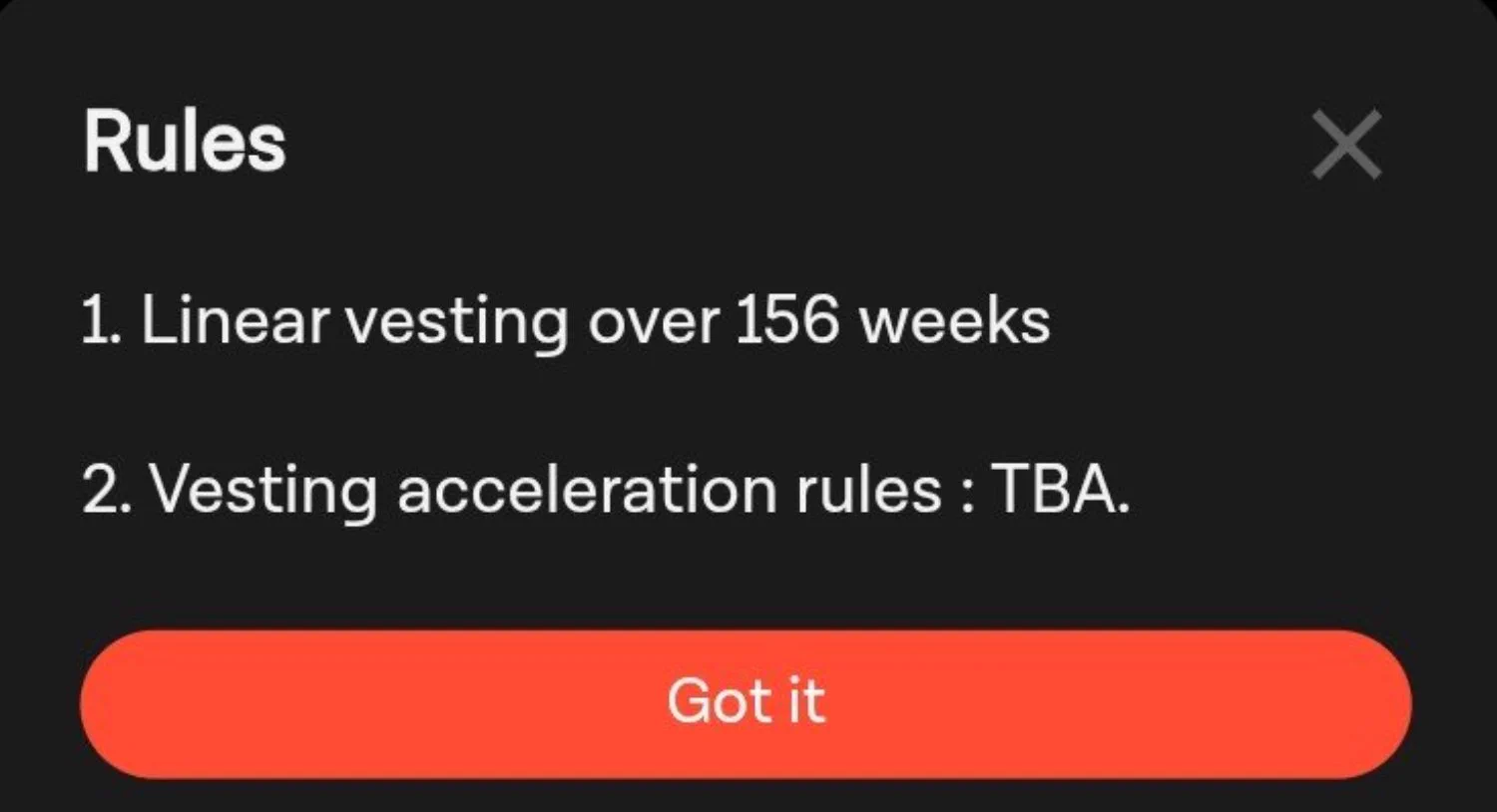
This meant that the actual selling pressure at launch was deliberately isolated, with almost all tokens held in the hands of the project team—on-chain data shows that team-associated addresses control 97% to 99.88% of the circulating token supply.
Why This Approach? The Trick Lies in the Predictive Market
If they weren't planning to list the token or cultivate liquidity in the secondary market to gradually offload, why did Puffpaw go through all the trouble to issue a token and conduct an airdrop? The answer isn't in the DEX but in another market—Polymarket.
Previously, an event had already been launched on Polymarket regarding "What will Puffpaw’s FDV exceed one day after launch (50 million dollars / 100 million dollars / 200 million dollars / 300 million dollars / 400 million dollars)," and the purpose of the Puffpaw team's control of the market was precisely to control the token's market value accurately, thus profiting from betting on that event.
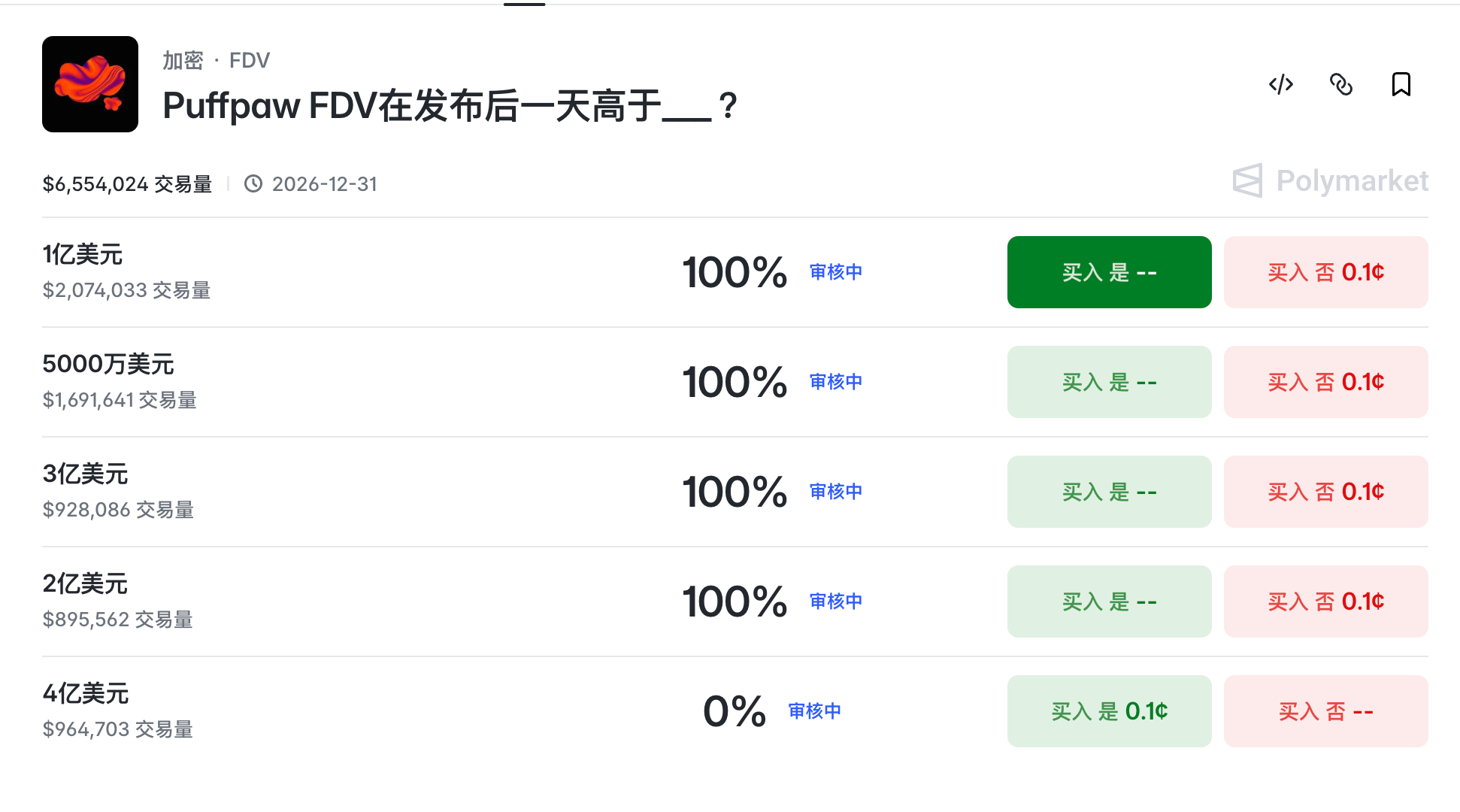
Previously, due to Puffpaw's prolonged silence and lack of any news about token issuance, the probabilities of various levels of YES options for the event on Polymarket were very low (the event will expire at the end of 2026 and will be considered NO if no token is issued), allowing the Puffpaw team to accumulate YES tokens at very low costs across all levels and then use their fully controlled tokens to "draw the line" precisely.
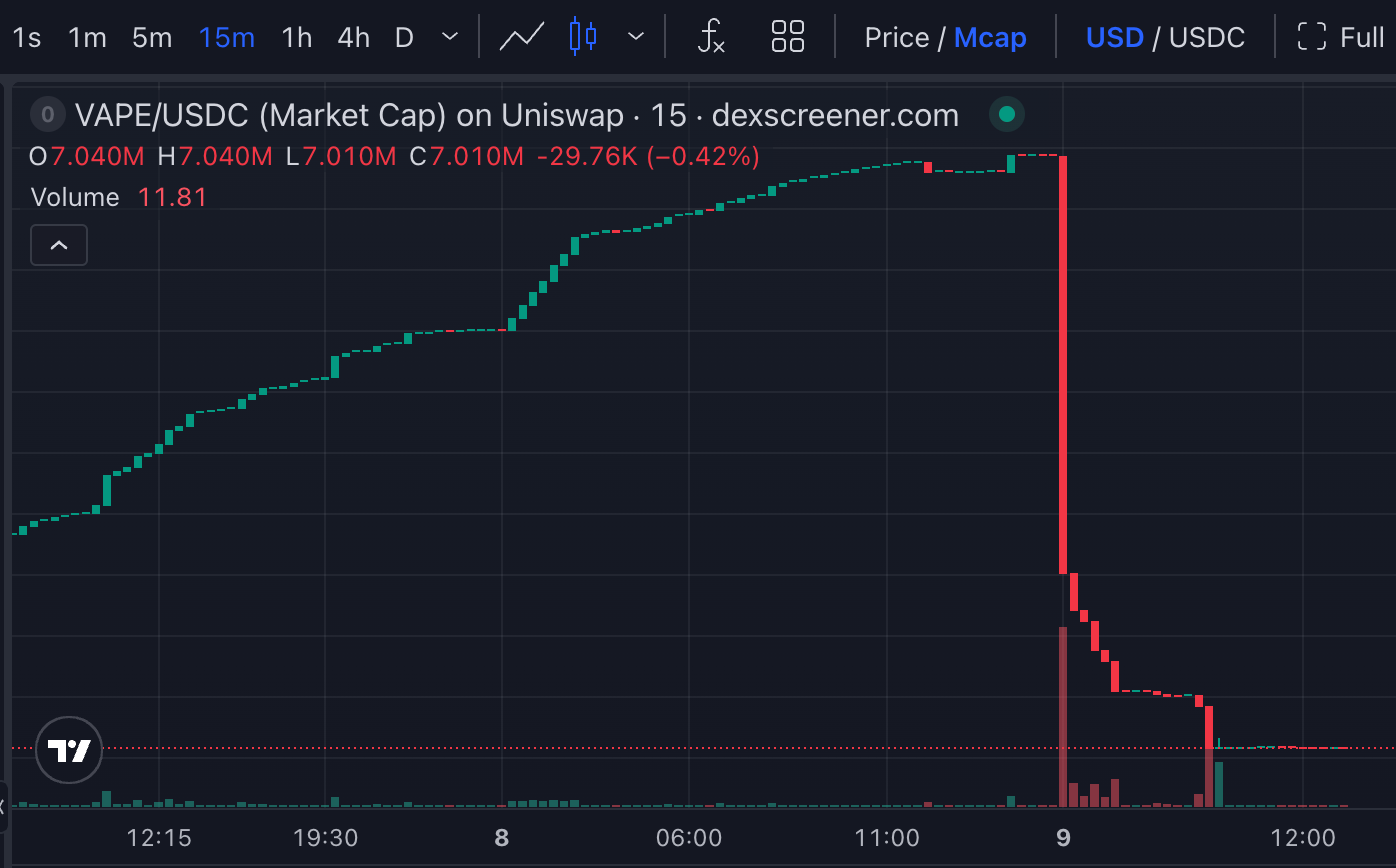
The performance of VAPE's price after launch also confirmed this. Within the first day post-launch, VAPE clearly displayed a "stair-step" trend (with each bar showing almost no upper or lower shadows, gradually elevated by controlled efforts), with FDV precisely controlled to just below 400 million dollars.
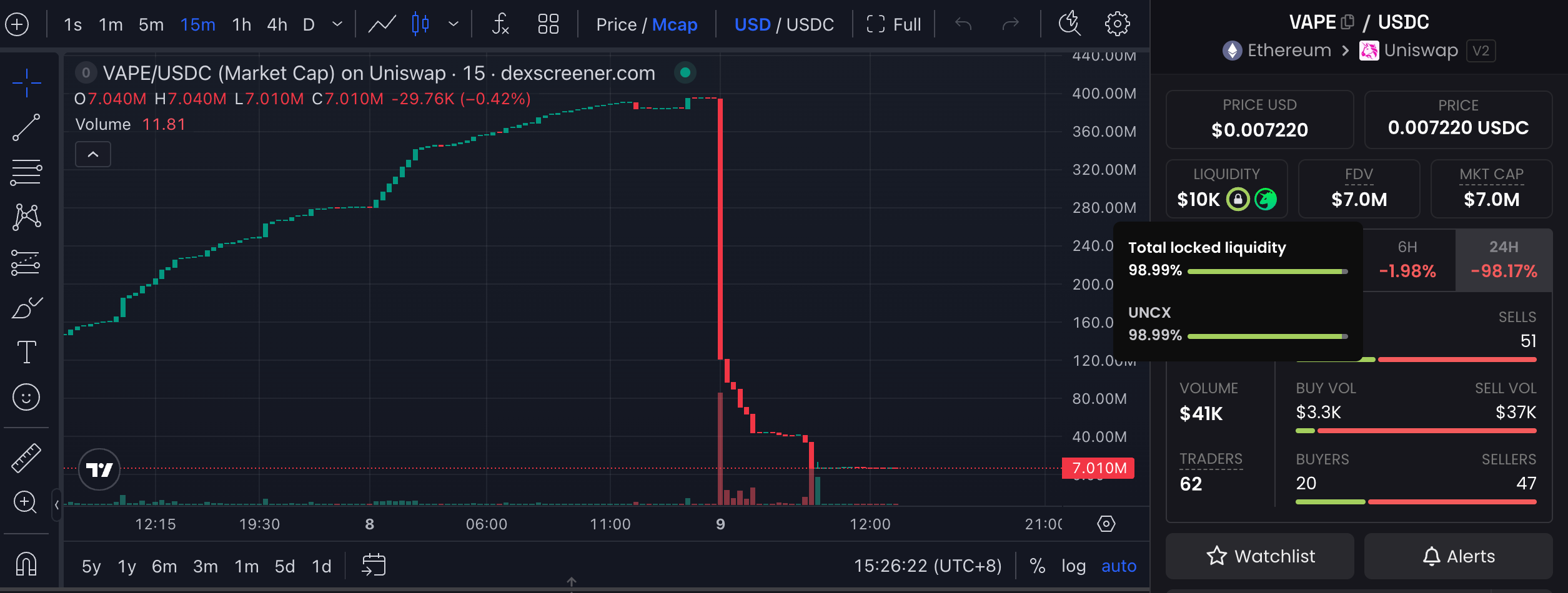
Once the price maintained the duration needed to trigger the predictive market condition, VAPE fulfilled its historical mission. Immediately following this was a blatant crash. Due to the very shallow pool, a small amount of tokens flooding out directly pierced through the bottom, and VAPE's FDV plummeted from nearly 400 million dollars to only 7 million dollars.
In this process, because the on-chain pool lacked the depth for retail investors to take over, the project team actually did not make much money from the token sale itself, but the collapse of the token price was already of no concern to them—the harvest on the main battlefield had already been completed in the predictive market.
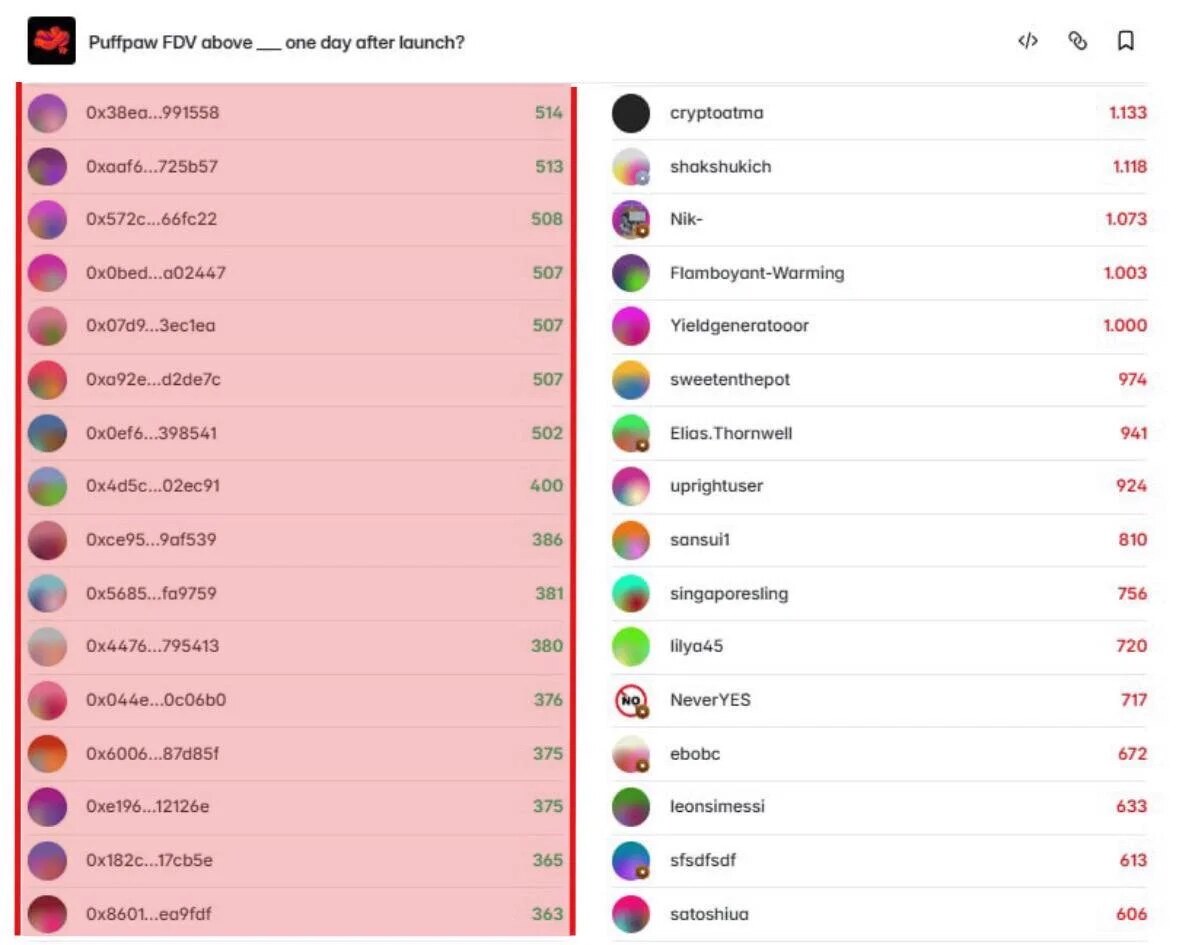
This is not the community wilfully slandering the Puffpaw team; on-chain data analyst Atlantis liquidity unearthed even more substantial anomalies—in Polymarket's Puffpaw FDV prediction market, there were a total of 1285 wallets holding positions, with as many as 1259 wallets (around 98%) that had never traded any other market on Polymarket—they were newly created solely to bet on Puffpaw's FDV, and it is not hard to guess who's behind them.
Polymarket Still Not Settled, Community Continues to Raise Objections
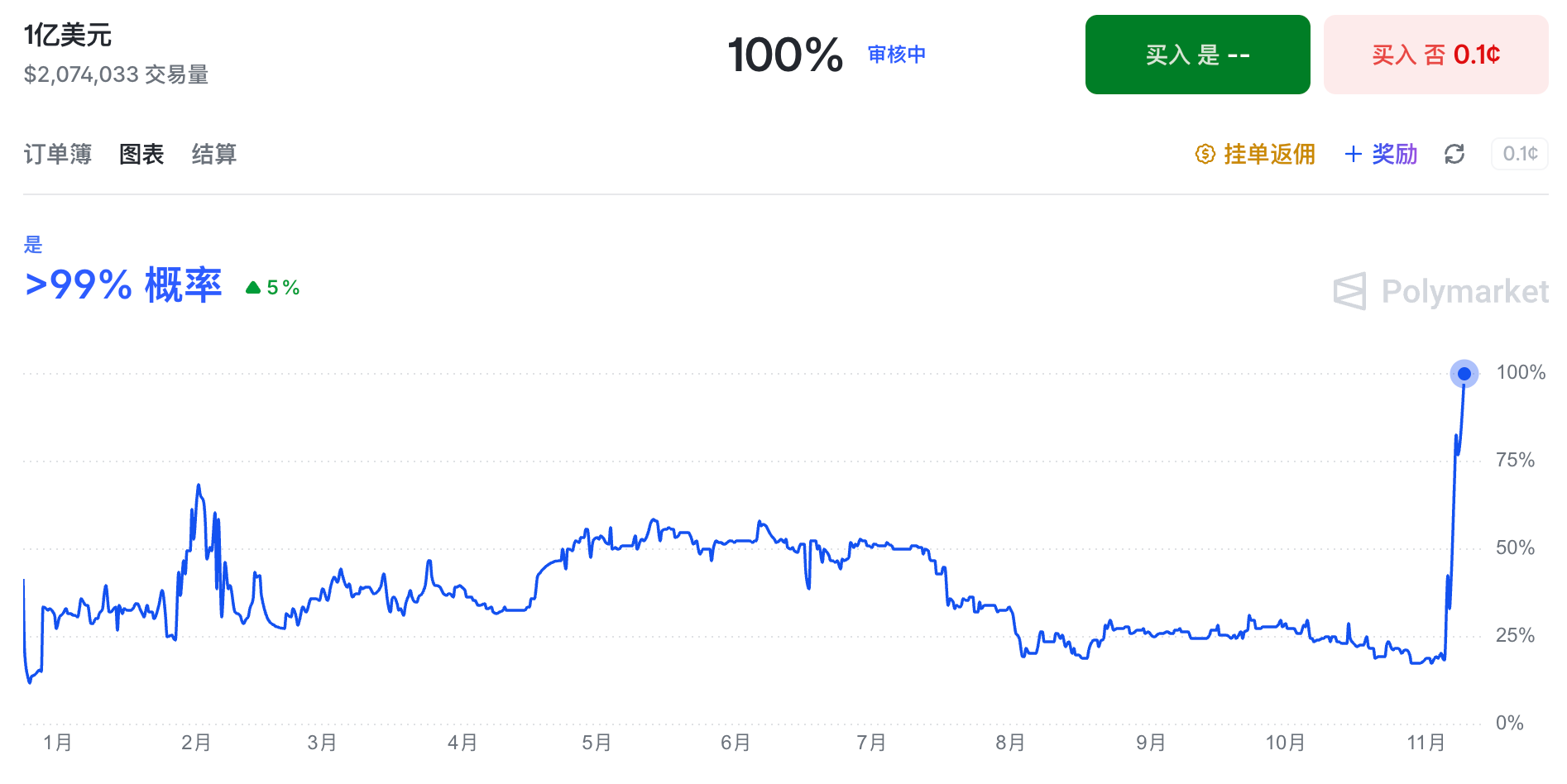
As of the writing, in the relevant events on Polymarket, the probabilities for 50 million dollars, 100 million dollars, 200 million dollars, and 300 million dollars levels have all risen to 100%, while the probability for the 400 million dollars level has dropped to 0, making it look like Puffpaw's harvesting operation has completed a closed loop, but due to the extremely unpalatable presentation, the final funding settlement is stuck halfway.
Faced with such blatant manipulation, the counterparties on Polymarket (traders betting NO) and the community chose to strike back collectively, continuously questioning the settlement proposal.
Polymarket's page shows that the results for the various levels of the relevant event have been subjected to two "dispute challenges" (Disputed); according to Polymarket's oracle mechanism, when the market results encounter two consecutive disputes, all five sub-markets have entered the final review stage, and the results will be decided by votes from UMA token holders, with this round of voting expected to end on November 11.
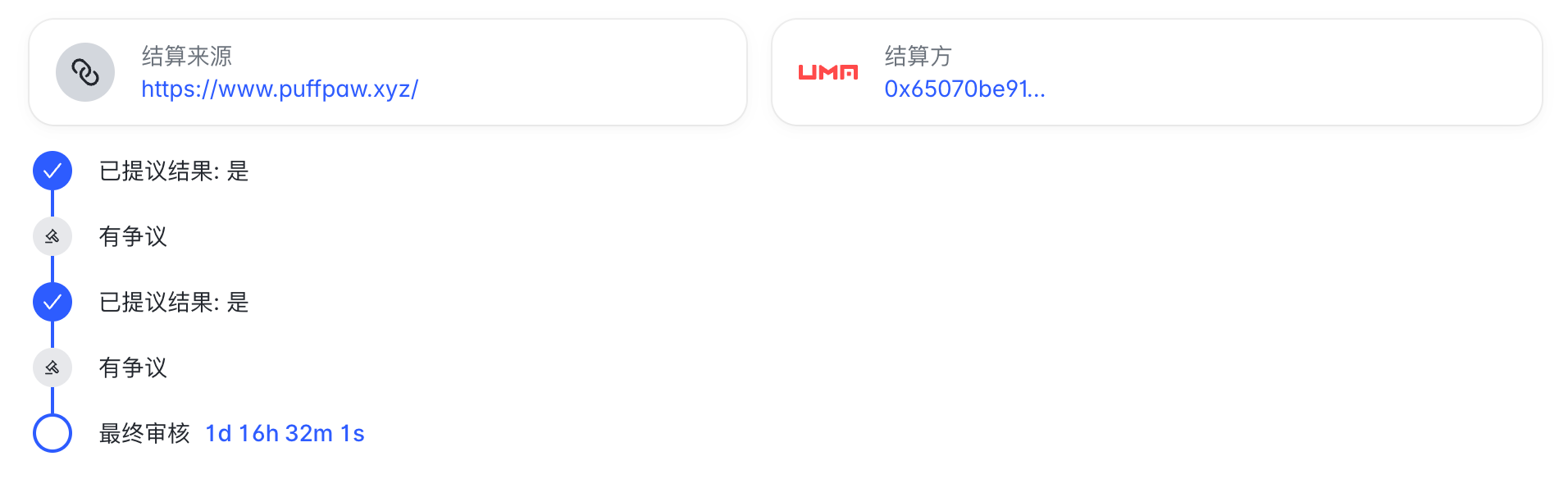
Around this decision, the community is currently embroiled in a fierce debate between "procedural justice" and "result justice."
The opposing side against payout (supporting NO) believes that if such obvious malicious manipulation and fraud can go through smoothly to settle, it would be tantamount to fostering a culture of wrongdoing and might even encourage more similar projects to choose this path of vitality; the supporting side for payment (supporting YES) argues that although Puffpaw's actions are extremely disgraceful, as long as VAPE truly meets the "launch and FDV threshold" conditions set by Polymarket in literal terms, it should be settled as YES; if the rules are overturned post-facto merely because it "looks like a scam," then the contractual certainty of the predictive market will no longer exist.
No matter how UMA ultimately decides, this farce has already proven to be absurd enough. Whether Puffpaw's meticulously arranged scheme of "using empty hands to catch a wolf" can smoothly pocket the money will soon have an answer.
免责声明:本文章仅代表作者个人观点,不代表本平台的立场和观点。本文章仅供信息分享,不构成对任何人的任何投资建议。用户与作者之间的任何争议,与本平台无关。如网页中刊载的文章或图片涉及侵权,请提供相关的权利证明和身份证明发送邮件到[email protected],本平台相关工作人员将会进行核查。


