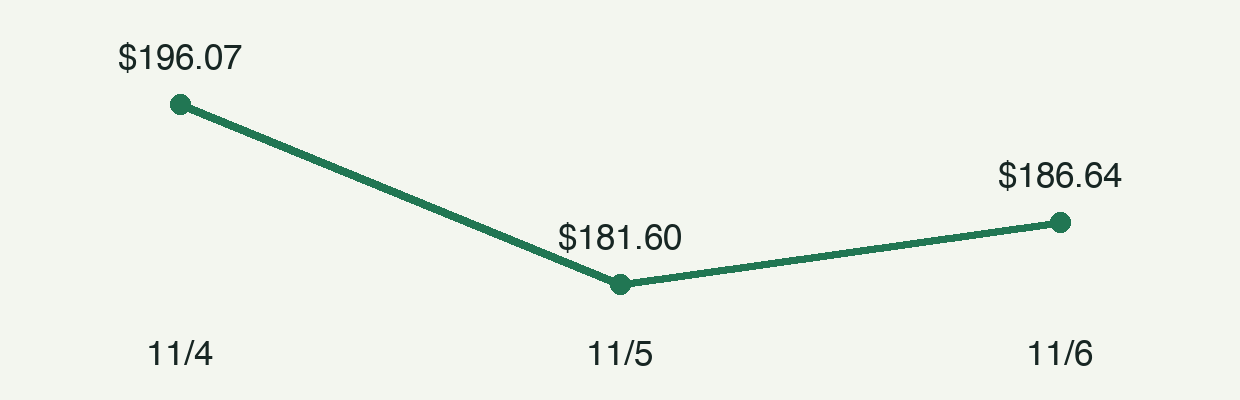
Golden Finance and Panews cited Telegram source A reporting that NVIDIA CEO Jensen Huang recently admitted to an extramarital affair and publicly apologized. The incident immediately shifted from a personal scandal to a corporate governance issue: the same source mentioned that the NVIDIA Board of Directors has initiated an investigation into this matter, but the scope and timetable of the investigation have not yet been disclosed. In this context, NVIDIA's US stock dropped more than 3% in after-hours trading, which is a clear negative price signal given the already thin liquidity in that trading period. The problem is that NVIDIA is not just an ordinary tech stock; it is a leading semiconductor and AI chip company by market capitalization worldwide. Its stock price has long been seen as a barometer for AI narratives and growth stock risk appetite. When a “leader” stumbles at the governance level and its stock price experiences significant fluctuations in after-hours trading, the market will be forced to reassess confidence in the entire AI and high beta trading chain. The cryptocurrency market operates year-round, with trading times highly overlapping with U.S. after-hours and Asian sessions. In recent years, tech growth stocks and BTC, ETH have shown aligned risk appetites at several stages. High-volatility assets often face position reductions together when risk sentiment turns off; moreover, the ongoing high interest rate environment centered around the U.S. amplifies the attractiveness of cash and short-term dollar assets. Sudden governance shocks to “core anchor” risk assets like NVIDIA make cross-asset position adjustments more likely. Meanwhile, tokens and projects in the crypto market related to AI, computation power, and GPU resources rely, in part, on the strength of the traditional market's AI narrative. BTC is repeatedly described as a decentralized asset not reliant on single corporate governance. This comparison will also be reconsidered by traders during the event's escalation. This article aims to track how the governance shock from the AI leader alters global macro risk appetites and flows of capital, reshaping the pricing structure of BTC, ETH, and crypto assets around the computational narrative through cross-asset interactions.
Scandal Exposes Valuation Vulnerabilities: NVIDIA Becomes an Emotion Indicator
In recent years, NVIDIA has leveraged AI GPUs to achieve significant market capitalization growth, being regarded as one of the core suppliers of global AI infrastructure and seen as the price and emotional anchor for the entire AI narrative. It holds a high weight in the Nasdaq, S&P index, and many active and passive funds, almost forming the “recognized core” of global growth stock portfolios. In such a structure, any negative news from management is no longer just company gossip but quickly magnified into a systemic signal for the entire AI asset chain and the growth stock market. Jensen Huang's admission of an affair and public apology, coupled with the initiation of the Board of Directors’ investigation, brings the matter directly into corporate governance procedures, prompting traders to use “Board investigation” instead of “personal ethics” to characterize risk. This places an emotional bomb on the most crowded growth stocks in the world.
NVIDIA itself stands at the intersection of high valuations and extremely crowded trades, with the market already discussing whether it represents a core target of a new “AI bubble.” Following the formal investigation into the governance scandal, the after-hours stock price fell over 3%, forming a clear negative price signal in the thin liquidity environment of after-hours trading. Many would instinctively see this as an early sign of “the bubble beginning to burst” rather than an isolated moral event. Historically, scandals involving executives of large publicly listed companies often lead to valuation discounts and increased risk premiums. Investors need to demand higher returns to compensate for potential compliance risks, management turmoil, and strategic execution disturbances. In the current high-interest rate environment centered around the U.S., already constrained risk appetites tighten further, leading funds to be more cautious towards all high beta assets—whether AI growth stocks or crypto tokens closely tied to computational narratives—thereby naturally positioning NVIDIA as a key indicator for gauging whether this round of emotional repricing is spreading.
3% Drop in After-Hours: U.S. Stock Risk Sentiment Spillover to Crypto
After the governance risk of NVIDIA was amplified, the AI leader fell over 3% in a single day of after-hours trading, immediately recognized by global traders as a signal of pushing the “risk button.” After-hours trading volume is typically far lower than during the day, and minor sell-offs are enough to drive prices down. Emotional sell-offs get magnified in the order book, and a 3% drop in such a large cap stock signifies not just the pricing of a personal scandal but a re-evaluation of risk premiums for the entire AI and growth stock sectors. Trading desks in New York, London, and Singapore see this long bearish candlestick in after-hours trading as the emotional anchor of the evening: if even the core chips of AI are being dumped in after-hours trading, the reasons for holding other high-volatility assets need to be re-examined in risk models.
This emotional anchor rapidly transmits through the risk management channels of cross-asset institutions into the crypto markets. Multi-asset quantitative funds and hedge funds are actively trading in both U.S. stocks and crypto markets; their models automatically assess the overall risk of high beta assets such as BTC and ETH during significant volatility in traditional markets. Following the signal of NVIDIA’s over 3% drop in after-hours trading, preemptive position reductions and de-leveraging often occur before fundamental discussions arise. The cryptocurrency market operates year-round; its trading time conveniently overlaps with U.S. after-hours and Asian sessions, and when tech growth stocks and BTC, ETH have shown correlated risk appetites in recent years, a sudden negative signal from the AI leader is often viewed as a trigger for overall “risk-off” sentiment: position management extends from tech stocks into tokens of computational narratives on-chain and then extends to mainstream cryptocurrencies. In the high-interest rate environment, funds pull some exposure from a unified high-volatility asset pool, opting for tighter balances between dollar cash and more decentralized assets that bear less corporate governance risk.
AI Narrative Interrupted: Computational Stocks' Retreat Suppresses On-Chain AI Narratives
When NVIDIA, a nearly monopolistic supplier of GPUs in large model training, cloud inference, and high-performance computing, experiences more than a 3% price drop in after-hours trading, the linear narrative that “AI will only rise” is called into question for the first time. NVIDIA's stock price itself serves as the emotional and valuation anchor for the global AI and growth stock sectors. Once this anchor sends clear negative price signals in the thinner liquidity of after-hours trading, traditional market AI-themed stocks are no longer seen as risk-free growth narratives but as part of a high beta asset pool, following overall risk appetites being reduced. This loosening of narrative will transmit to on-chain: tokens primarily focused on computational power, AI agents, and data markets are essentially priced under the macro story of “AI permeates everything” and “GPU scarcity premium.” Once this narrative is interrupted, the optimistic assumptions in valuation models must be discounted again.
Historical experiences have shown multiple times that when theme stocks in traditional markets begin to retreat, corresponding on-chain themes often cool off simultaneously—previous examples include the metaverse, gaming stocks, and related tokens. The current round of retreat triggered by NVIDIA's negative news will prompt the market to re-examine the long-term space and short-term pricing of GPU resource markets and computational leasing on-chain. Emotional impacts combined with a preference for cash returns under high-interest rates are likely to push these assets deeper into valuation discount ranges. Internally within crypto, thematic altcoins tend to decline more than BTC and top market cap assets during periods of falling risk appetite; funds prefer to withdraw from high-expectation, high-story AI sectors and shrink positions into more liquid and mature narrative mainstream coins like BTC and ETH. This round of cooling in AI themes, driven by the price retreat of computational leaders, is likely to reinforce the flight of funds from on-chain AI narratives back to BTC and ETH as defensive allocations in the short term.
Capital Flight or Bottom Fishing? The Tug of War Between BTC and the Dollar
In the high interest rate environment centered around the U.S., Huang's scandal is interpreted by many multi-asset traders as a “governance risk signal”: when an AI leader exposes management uncertainties, high beta assets like U.S. stocks and crypto will be questioned if they are overexposed. The most direct path is to retrieve some risk budget from tech stocks and on-chain assets, temporarily parking it in dollar cash and short-duration dollar assets. At times when yields are significantly higher than in previous years, such hedged positions can offset emotional volatility without “lying flat” and giving up returns. For institutions, rebalancing among U.S. stocks, Treasuries, currencies, and crypto will prioritize starting from the most volatile and highly leveraged assets. BTC and thematic tokens are naturally included in the list of those to be reduced in this latest risk assessment.
Another path carries more narrative weight: the NVIDIA event is seen as a localized corporate governance issue rather than a termination of the entire AI narrative. Some funds choose to use the high-interest, geospatial uncertainty backdrop to increase positions in assets that “do not rely on a single company or management,” viewing “decentralized governance” as a structural hedge against traditional equity. BTC has long been compared to “digital gold” in mainstream discourse, and its characteristic of not being influenced by board or CEO actions is amplified when governance scandals erupt. Thus, in the short term, high-leverage, high-volatility on-chain assets—including thematic coins surrounding AI and computation—may bear the brunt of pressure, while BTC, which can carry the “anti-corporate governance risk” narrative, may maintain or even enhance its relative attractiveness in the medium to long term within cross-asset allocation considerations.
From NVIDIA to On-Chain: What Signals Should We Watch?
Huang's extramarital affair, public apology, and the board investigation have pulled NVIDIA, once viewed as the “holy grail of AI,” back into the realities of corporate governance and valuation vulnerabilities: the over 3% after-hours drop is just the first slap of price reality, and what truly determines whether this evolves into a global risk appetite suppression is whether selling continues in the next day trading session, whether the investigation reveals deeper governance fractures, and whether the overall growth stocks continue to weaken. For the crypto market, BTC, ETH, and thematic tokens related to AI and computation might present divergences in this process: if traders view the event as a warning for a crowded AI long position, high beta AI sector tokens will possibly be the first to be reduced, as funds waver between dollar cash and relatively “de-governance” BTC, while ETH takes on more roles of liquidity and structural allocation during periods of falling risk appetite. In the coming days to weeks, the performance of NVIDIA during day trading, progress of the Board investigation, and volatility of U.S. growth stock indices—whether they synchronize or create a lagged reaction with the prices, trading volumes, and on-chain capital flows of BTC, ETH, and AI-related tokens—will serve as critical coordinates for judging whether this scandal is merely a localized shock or a periodic inflection point in risk appetite; at a time when information still largely comes from second-hand reports such as Telegram and details are yet to be disclosed, we must avoid exaggerating a singular event into a systemic crisis while remaining vigilant to the cross-market transmission of sentiment, basing asset decisions on observed real prices and capital behavior.
Join our community to discuss and grow stronger together!
Exclusive Hyperliquid benefits for AiCoin: https://app.hyperliquid.xyz/join/AICOIN88
Exclusive Aster benefits for AiCoin: https://www.asterdex.com/zh-CN/referral/9C50e2
On-chain Telegram community: https://t.me/AiCoinWhaleData
On-chain community: https://www.aicoin.com/link/chat?cid=N6OVMor5g
AiCoin on-chain Twitter: https://x.com/aicoinwhaledata
免责声明:本文章仅代表作者个人观点,不代表本平台的立场和观点。本文章仅供信息分享,不构成对任何人的任何投资建议。用户与作者之间的任何争议,与本平台无关。如网页中刊载的文章或图片涉及侵权,请提供相关的权利证明和身份证明发送邮件到[email protected],本平台相关工作人员将会进行核查。